

Picture a thriving organic farm where honeybees dance between wildflower borders, beneficial insects patrol vegetable rows hunting pests, and songbirds nest in hedgerows while earthworms enrich the soil below. This isn’t a distant agricultural fantasy—it’s the everyday reality of organic farms that embrace regenerative agriculture practices designed to nurture biodiversity.
While conventional farms often become biological deserts, organic farms function as vibrant ecological sanctuaries supporting 30% more species on average. The connection is straightforward: by eliminating synthetic pesticides and fertilizers, rotating diverse crops, maintaining natural habitats, and building healthy soil, organic farmers create welcoming environments where countless organisms can flourish. Each earthworm, pollinator, and soil microbe plays a vital role in creating resilient food systems that benefit everyone—from the farmer managing healthier crops with fewer inputs to the consumer enjoying nutrient-dense produce grown in living soil.
Understanding this biodiversity advantage matters whether you’re deciding which vegetables to buy at the farmers market, planning your backyard garden, or dreaming of starting your own farm. The organisms thriving on organic farms aren’t just nice to have—they’re essential workers providing free pest control, pollination services, nutrient cycling, and climate resilience. When you support biodiverse organic farms, you’re investing in ecosystems that actively restore nature while producing food, proving that agriculture can heal rather than harm our planet’s precious web of life.
What Biodiversity Really Means on an Organic Farm
When you visit an organic farm, biodiversity isn’t just an abstract environmental concept. It’s the buzzing symphony of different pollinators visiting heirloom tomato flowers, the variety of cover crops enriching the soil between planting seasons, and the beneficial insects keeping pest populations naturally balanced.
Biodiversity operates on three interconnected levels that make organic farms thrive. Genetic diversity means growing multiple varieties of the same crop rather than relying on a single type. Sarah Chen, who runs a certified organic vegetable operation in Oregon, plants five different lettuce varieties each season. “When late blight hit our region, some varieties struggled while others flourished,” she explains. “That genetic variety saved our harvest.”
Species diversity is what most people picture: the range of different plants, animals, insects, and microorganisms sharing the farm ecosystem. On a biodiverse organic farm, you’ll find heritage wheat growing alongside nitrogen-fixing clover, with beneficial wasps and ladybugs patrolling for aphids, while earthworms work tirelessly below ground. This variety creates natural pest control and eliminates the need for synthetic chemicals.
Ecosystem diversity takes the widest view, encompassing different habitats within the farm landscape. Marcus Williams transformed his Tennessee organic farm by preserving woodland edges, maintaining wetland areas, and creating hedgerows between fields. “These diverse ecosystems became home to dozens of bird species that control insect pests better than any spray ever could,” he shares.
Together, these three levels create resilient farming systems that produce nutrient-dense food while supporting wildlife. Understanding this framework helps you recognize truly biodiverse farms when shopping at farmers markets or choosing where to source your organic produce. It’s nature’s insurance policy and productivity booster rolled into one.
The Living Web: How Diverse Farms Feed Themselves
Underground Allies: The Soil Food Web
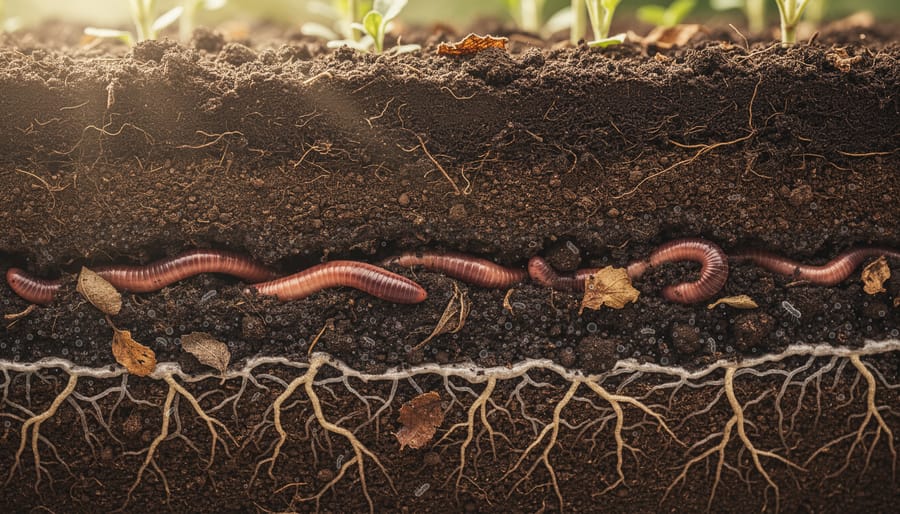
Beneath every thriving organic farm lies a hidden world teeming with life. The soil food web is nature’s ultimate recycling system, where billions of microscopic workers transform organic matter into plant-available nutrients. Think of it as an underground city where everyone has a job to do.
Bacteria and fungi are the primary decomposers, breaking down crop residues, cover crops, and compost into nutrients that plants can absorb. Mycorrhizal fungi form partnerships with plant roots, extending thread-like networks that act like nature’s internet, helping plants access water and nutrients from greater distances. In return, plants share sugars they’ve made through photosynthesis, creating healthy soil ecosystems that thrive without synthetic fertilizers.
Earthworms are the engineers of this underground world, creating tunnels that improve drainage and aeration while their castings provide rich, slow-release nutrients. A single acre of healthy organic soil can contain over a million earthworms, each one working tirelessly to build soil structure.
Ontario farmer Maria Chen discovered this firsthand when she transitioned to organic methods. “After three years without chemicals, our earthworm population exploded,” she shares. “The soil became so rich and crumbly that our crops needed less water and showed better disease resistance.”
This living soil approach eliminates the need for synthetic inputs while building long-term soil fertility, creating a self-sustaining system that gets better with time.
Above Ground Partners: Pollinators and Predators
When you walk through an organic farm bursting with diverse plantings, you’re witnessing nature’s pest control team at work. The variety of flowering plants, cover crops, and hedgerows creates a welcoming habitat for beneficial insects that become the farmer’s best allies.
Pollinators like native bees, butterflies, and hoverflies are drawn to farms with diverse flowering plants throughout the growing season. These insects don’t just pollinate crops—many are also predators in their larval stages. Hoverfly larvae, for example, can devour up to 400 aphids before reaching adulthood. By planting a succession of blooming species, farmers ensure these helpful insects stick around all season long.
Predatory insects like ladybugs, lacewings, and ground beetles thrive where there’s plant diversity because it provides shelter, alternative food sources, and overwintering sites. When pest populations spike, these beneficial insects are already established and ready to respond. This natural balance dramatically reduces the need for any interventions, even organic-approved ones.
Michigan farmer Sarah Chen noticed this firsthand after establishing wildflower strips around her vegetable fields. “Within two seasons, I saw a huge increase in ladybugs and parasitic wasps,” she shares. “My aphid problems practically disappeared, and I’m spending less time managing pests and more time harvesting.”
For home gardeners, the principle applies equally well. Plant a variety of herbs, flowers, and vegetables together to create your own pollinator paradise. Leaving some areas a bit wild—with native plants and minimal disturbance—gives beneficial insects the diverse habitat they need to flourish.
Practical Strategies Organic Farmers Use to Build Biodiversity
Crop Rotation and Polycultures
Crop rotation stands as one of organic farming’s most powerful biodiversity boosters. By changing what grows in each field from season to season, farmers create diverse habitats that support different beneficial insects, soil microorganisms, and wildlife throughout the year. This practice naturally disrupts pest and disease cycles since many harmful organisms are plant-specific and can’t survive when their preferred host isn’t available.
Polycultures take this diversity even further by growing multiple crop species together in the same space. Think of a traditional corn-beans-squash combination where tall corn provides support for climbing beans, while broad squash leaves shade the soil and suppress weeds. This companion planting mimics nature’s diversity, attracting varied pollinators and beneficial predators that keep pest populations in check.
Sarah Chen, an Ontario organic farmer, shares her success: “Since implementing seven-year rotations with cover crop polycultures, I’ve seen monarch butterflies return and haven’t needed any pest interventions for three seasons.”
For home gardeners, try rotating vegetable families annually and pairing tomatoes with basil or carrots with onions to create your own biodiverse mini-ecosystem.
Hedgerows, Wildflower Strips, and Field Margins
Field edges become vibrant ribbons of life on organic farms when farmers intentionally create hedgerows, wildflower strips, and protected margins. These features transform what might be barren borders into thriving corridors that shelter beneficial insects, birds, and small mammals throughout the seasons.
Hedgerows serve as nature’s highways, allowing wildlife to move safely between habitats while providing nesting sites and winter protection. Native shrubs and trees like hawthorn, elderberry, and wild rose offer berries and seeds that sustain birds and pollinators year-round.
Wildflower strips planted alongside crop fields create spectacular displays while serving a practical purpose. These colorful bands attract predatory insects like ladybugs and lacewings that naturally control crop pests, reducing the need for any interventions. They also support native bees and butterflies essential for pollination.
Mary Chen, an organic vegetable grower in Vermont, shares her experience: “After establishing wildflower margins three years ago, I noticed aphid problems decreased significantly. The beneficial insects now do the pest management for me, and customers love visiting during peak bloom season.”
For home gardeners, even a small unmowed strip along your garden’s edge can make a difference, providing similar benefits on a smaller scale.

Cover Cropping and Green Manures
Between main crop seasons, organic farmers plant cover crops like clover, rye, and vetch to keep fields productive and alive. These hardworking plants create a protective blanket that prevents soil erosion while their roots feed an incredible underground ecosystem of bacteria, fungi, and earthworms.
When turned back into the soil as green manure, cover crops deliver nutrients naturally without synthetic fertilizers. Different cover crop species attract unique beneficial insects and pollinators, adding layers of diversity to the farm. Crimson clover, for example, feeds early-season bees while fixing nitrogen for future crops.
Sarah Chen, who runs a five-acre organic vegetable operation in Ontario, shares her experience: “Since switching to diverse cover crop mixes, I’ve noticed healthier soil structure and fewer pest problems. My earthworm population has tripled, and that tells me everything about my soil’s vitality.”
For home gardeners, try planting buckwheat or field peas in empty beds between seasons to mimic these farm-scale benefits.
Integrated Livestock Systems
When livestock and crops work together, farms truly come alive. Integrated livestock systems bring chickens, sheep, cattle, or pigs into crop rotation areas, where they perform multiple beneficial functions. As animals graze cover crops or crop residues, they naturally fertilize the soil with nutrient-rich manure, reducing the need for external inputs. Their foraging behaviors help control weeds and pests while their hooves gently aerate compacted soil.
This practice creates diverse habitats that attract beneficial insects, ground-nesting birds, and small mammals. Ontario farmer Sarah Mitchell rotates her laying hens through vegetable beds between seasons, noting that the chickens control pests while adding fertility. The result? Healthier soil teeming with earthworms and microorganisms, plus a more resilient ecosystem. For home gardeners, even a small backyard chicken flock can provide similar benefits, turning your garden into a miniature biodiversity hub while producing fresh eggs.

Real Results: A Farmer’s Success Story
When Sarah Mitchell purchased her 40-acre farm in Vermont five years ago, the land was exhausted. Years of monoculture corn production had left the soil compacted, pest populations out of control, and yields declining steadily. Today, her thriving organic farm tells a completely different story, one where biodiversity became the key to transformation.
Sarah started small, dedicating just five acres to her biodiversity experiment. She planted hedgerows along field margins, established wildflower strips between crop rows, and created three small pollinator meadows. Within the first season, she noticed beneficial insects appearing in numbers she’d never seen before. Ladybugs and lacewings began naturally controlling aphid populations that previously required intervention.
The challenges weren’t insignificant. Sarah admits the first two years tested her patience. Converting depleted land takes time, and her initial yields dipped slightly as the ecosystem rebalanced itself. Neighbors questioned her unconventional approach, wondering why she’d “waste” productive land on flowers and shrubs.
But the results spoke for themselves. By year three, Sarah’s soil organic matter increased from 2.1% to 4.3%, measured through annual testing. Earthworm populations tripled, creating natural aeration that eliminated her need for mechanical tillage. Her vegetable yields matched and then exceeded her pre-conversion numbers, while pest damage dropped by 60%.
Perhaps most impressive was her bottom line. With reduced input costs and premium prices for her certified organic produce, Sarah’s profit margins improved by 35%. She now grows over twenty crop varieties, rotating them strategically to maximize both soil health and market opportunities.
Today, Sarah hosts regular farm tours, sharing her biodiversity journey with aspiring farmers and curious consumers. Her message is clear: working with nature rather than against it isn’t just environmentally sound, it’s economically smart. What started as a leap of faith became proof that biodiversity and productivity can flourish together.
What This Means for Your Plate (And Your CSA Box)
When you choose produce from a biodiverse organic farm, you’re getting more than just pesticide-free vegetables. Research consistently shows that crops grown in biologically rich soil systems contain higher levels of essential nutrients, including vitamins, minerals, and antioxidants. The complex web of soil microorganisms helps plants access and absorb nutrients more effectively than simplified farming systems.
You’ll also notice the difference in taste. That heirloom tomato from your CSA box bursts with flavor because the plant had access to diverse soil biology and wasn’t bred solely for shipping durability. The varied growing conditions on biodiverse farms allow crops to develop their full flavor profiles naturally.
From a food safety perspective, biodiverse farms tend to have fewer pest and disease problems because the ecosystem naturally regulates itself. When beneficial insects, birds, and microorganisms are present in healthy populations, they keep potential crop threats in check without chemical interventions.
When selecting an organic farm or CSA membership, ask questions that reveal their biodiversity practices. Do they maintain hedgerows, pollinator gardens, or wildlife corridors? How many crop varieties do they grow each season? Do they use cover crops and crop rotation? Farmers genuinely committed to biodiversity love talking about these practices.
Look for farms that describe themselves as regenerative or agroecological, terms that signal a deeper commitment to ecosystem health beyond basic organic certification. Visit the farm if possible. You should see flowering plants throughout the growing season, observe butterflies and bees, and notice diverse plantings rather than monoculture rows.
Take Sarah Chen’s approach at Meadowbrook Farm, where CSA members receive a weekly newsletter explaining which beneficial insects they’ve spotted and how companion plantings are protecting their crops. This transparency demonstrates both knowledge and commitment to working with nature rather than against it.
Starting Small: Biodiversity Tips for Home Gardens
You don’t need acres of land to support biodiversity—your backyard or balcony can become a thriving mini-ecosystem with a few thoughtful changes. Start by choosing native plants and flowers that naturally attract local pollinators like bees, butterflies, and hummingbirds. These plants have evolved alongside native wildlife and require less water and maintenance than exotic varieties.
Ditch the synthetic pesticides and fertilizers, even in small spaces. These chemicals eliminate beneficial insects along with pests, disrupting the natural balance your garden needs. Instead, welcome helpful predators like ladybugs and lacewings that naturally control aphids and other nuisances. A healthy garden finds its own equilibrium when you give nature a chance.
Create simple habitat features that invite wildlife to stay. Leave a small pile of logs or rocks in a corner for ground beetles and salamanders. Install a shallow water dish for birds and beneficial insects. Let a section of your lawn grow a bit wild—those “weeds” often provide crucial food sources for pollinators during different seasons.
Compost your kitchen scraps and yard waste to build rich, living soil teeming with microorganisms. This mirrors what organic farmers do on larger scales and reduces your waste while feeding your plants naturally.
Even a windowsill herb garden grown without chemicals contributes to a healthier local environment. Every small action creates ripples, connecting your space to the broader movement toward sustainable, biodiverse landscapes. Your garden becomes part of the solution, demonstrating that supporting biodiversity starts right where you are.
Organic farming exemplifies regenerative agriculture in its purest form—not just sustaining the land, but actively healing it while producing nourishing food. Every biodiverse organic farm becomes a sanctuary where pollinators thrive, soil organisms flourish, and natural systems regain their balance. This isn’t just agriculture; it’s ecosystem restoration happening one season at a time.
You can champion this vital work with your everyday choices. Join a Community Supported Agriculture (CSA) program to connect directly with biodiverse organic farms in your region. Shop at farmers markets where you can meet growers who prioritize wildlife habitat alongside crop production. Ask farmers about their practices—many love sharing how they nurture beneficial insects or protect hedgerows.
Consider this: when you support an organic farm, you’re investing in far more than your weekly vegetables. You’re backing ecosystem stewards who understand that healthy farms must work with nature, not against it. These farmers cultivate abundance for countless species while feeding their communities.
The future of our food system depends on recognizing farms as living ecosystems deserving our protection and support. Every purchase from a biodiverse organic farm casts a vote for a healthier planet—one where agriculture restores rather than depletes the natural world around us.
