
Land access remains the single greatest barrier for new farmers entering agriculture, with farmland prices climbing 7% annually while beginning farmer incomes struggle to keep pace. Yet thousands of CSA farmers across North America have cracked this code, building thriving operations without purchasing land outright.
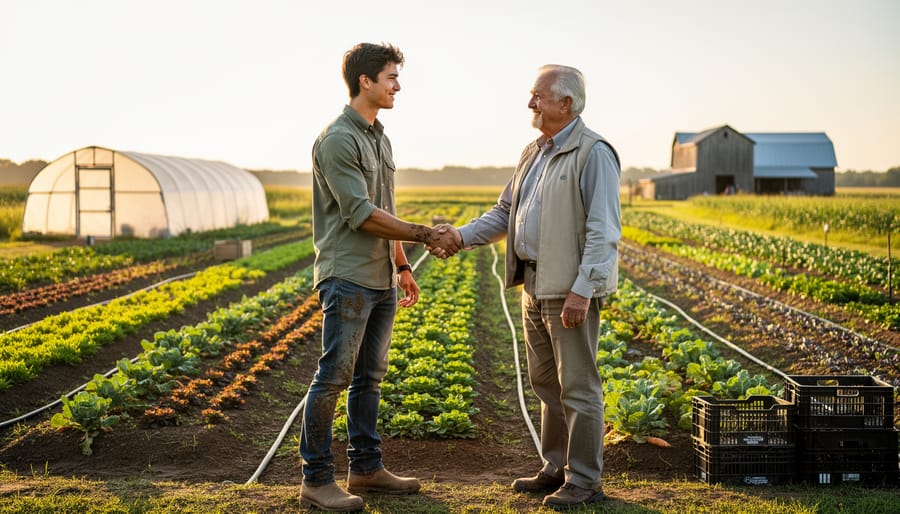
Consider Sarah Mitchell, who launched her 50-member CSA on leased land with just $15,000 startup capital. She negotiated a five-year lease with a retiring farmer, offering land stewardship and a percentage of profits instead of cash rent. Within three years, her operation generated enough revenue to transition to a lease-to-own arrangement.
The economics are straightforward: traditional land ownership requires $200,000-$500,000 in capital for even modest acreage, while creative tenure arrangements—leases, partnerships, incubator farm programs, and land trusts—reduce initial investment to $10,000-$50,000. This difference determines whether starting a farm remains a distant dream or an achievable goal.
Understanding land resource economics means recognizing that land access is a solvable puzzle, not an insurmountable wall. The farms feeding your community didn’t all start with inherited wealth or bank loans. They started with farmers who understood the true costs of land, explored unconventional pathways, and built relationships with landowners seeking agricultural legacies over maximum profit.
This guide breaks down the real numbers behind land access and reveals proven strategies working farmers use to secure their ground and build sustainable operations from the soil up.
Why Land Access Matters More Than Ever for CSA Farmers
The dream of starting a CSA farm often collides with a sobering reality: farmland prices have skyrocketed beyond reach for most new farmers. Over the past two decades, agricultural land values have increased by over 150% in many regions, while farmer incomes haven’t kept pace. For aspiring organic growers hoping to launch a CSA operation, this creates an impossible equation where traditional land ownership simply isn’t feasible.
The barriers extend beyond purchase prices. Even when farmers can afford a down payment, securing financing proves challenging. Banks often hesitate to fund small-scale organic operations, viewing them as riskier than conventional farms. Young farmers face additional hurdles, typically lacking the capital, credit history, or collateral that lenders require. This financial squeeze means talented growers with solid business plans and community support still can’t access the essential ingredients for farm success.
The ripple effects touch entire communities. When new farmers can’t access land, local food systems stagnate. Fewer CSA farms mean reduced fresh, organic produce options for families seeking healthier alternatives. It limits the economic impact of CSA farms on regional economies, from job creation to keeping food dollars circulating locally.
Consider Sarah, who spent five years working on established farms, learning organic techniques and building customer relationships. Despite her experience and 80 committed CSA members ready to support her venture, she couldn’t secure land. Her story isn’t unique—studies show land access ranks as the number one barrier for beginning farmers.
The traditional ownership model also ties up enormous capital that could otherwise fund infrastructure, equipment, or operating expenses during lean seasons. For CSA operations running on thin margins, this makes financial sustainability nearly impossible. The good news? Alternative land access models are emerging that address these challenges while supporting thriving, community-connected farms.
Understanding Land Tenure: What It Really Means for Your Farm
Ownership vs. Leasing: The Real Cost Comparison
Choosing between purchasing and leasing land represents one of the most significant financial decisions for CSA farmers. Each option carries distinct advantages worth understanding before committing.
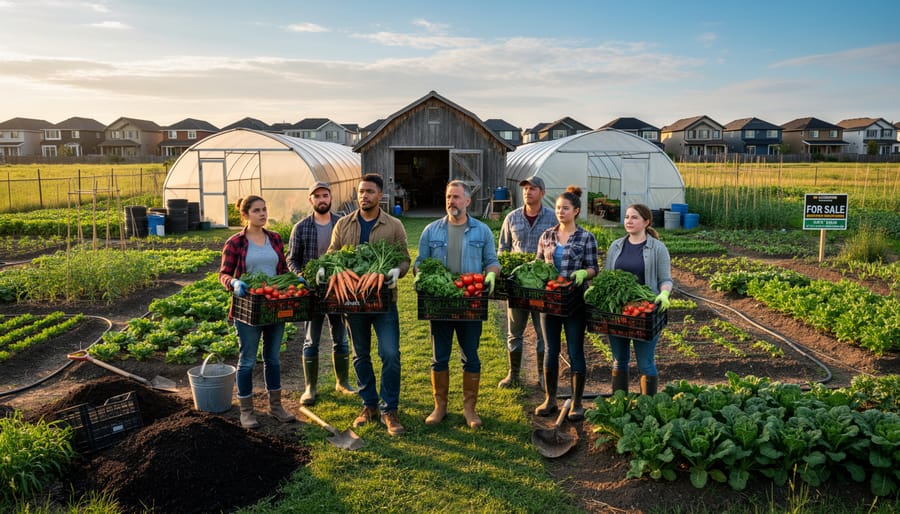
Buying land requires substantial upfront capital—often $3,000 to $15,000 per acre depending on location—but builds equity over time. You gain complete control over improvements, crop rotation decisions, and infrastructure investments. For farmers planning to operate for 10+ years, ownership typically proves more economical. Consider Maria’s story: she purchased 5 acres in Vermont for $45,000. After seven years of running her CSA, her land appreciated to $65,000 while supporting 60 member families.
Leasing minimizes initial investment, typically ranging from $50 to $300 per acre annually. This flexibility allows new farmers to test their business model without massive debt. You can redirect capital toward equipment, seeds, and marketing while maintaining mobility if circumstances change. However, lease agreements may restrict certain practices or offer limited security for long-term planning.
The sweet spot? Many successful CSA farmers start with leasing arrangements, building customer relationships and refining operations. As revenue stabilizes, they transition to purchasing land, often with established cash flow supporting mortgage payments. This staged approach reduces financial risk while working toward ownership goals that align with sustainable farming dreams.
Creative Arrangements That Are Changing the Game
Accessing farmland doesn’t always mean buying it outright or signing a traditional lease. Creative models are emerging that address both affordability and long-term security for farmers who want to grow sustainably.
Community land trusts remove land from the speculative market by holding it in perpetual trust, then leasing it to farmers at affordable rates. This approach keeps farmland permanently available for agriculture while reducing the capital barrier for new growers. Farmers can often purchase buildings and improvements while leasing the land itself, building equity without the full burden of land ownership.
Cooperative ownership models pool resources among multiple farmers, spreading costs and risks. Members share land, equipment, and sometimes marketing expenses, making farming viable for those who couldn’t afford it solo. These arrangements work particularly well alongside innovative funding models that further reduce financial barriers.
Incubator farm programs offer perhaps the most accessible entry point. Beginning farmers receive parcels of prepared land, shared infrastructure, mentorship, and business training for a modest fee. After typically two to four years, graduates move on with practical experience and market connections, ready to secure their own permanent land.
These arrangements demonstrate that creativity and collaboration can unlock opportunities where traditional economics creates roadblocks, making sustainable farming accessible to passionate growers regardless of their starting capital.
The Hidden Economics of CSA Land Use
When you’re running a CSA farm, every decision about your land creates a ripple effect through your entire business model. Unlike conventional farms that can pivot crops based on market prices, CSA farmers make land use commitments months before members even sign up. This unique economic puzzle shapes everything from what you plant to how much you invest in permanent infrastructure.
The economics start with your land tenure situation. If you’re leasing year-to-year, you’ll think twice before installing that $15,000 walk-in cooler or planting perennial crops like asparagus that take three years to mature. Short-term land access means you’ll focus on annual vegetables with quick returns, even if those aren’t the most profitable long-term choices. One farmer I spoke with in Ontario postponed building a wash station for five years because her lease renewal was uncertain, costing her countless hours of inefficient harvesting practices.
Land tenure security directly influences your crop planning diversity too. Members expect variety in their boxes, but growing 40 different crops requires significant land investment and infrastructure. Farmers with owned land or long-term leases can dedicate space to succession planting and trial crops, while those with uncertain tenure stick to tried-and-true vegetables that guarantee member satisfaction in the short term.
Here’s where the economics get interesting: your member retention strategies become tied to your land decisions. High member turnover means constantly recruiting new subscribers, which pulls resources away from land improvements. But when you retain 80 percent of members annually, you can confidently invest in soil building, permanent beds, and irrigation systems that pay off over multiple seasons.
The sweet spot? Farmers with secure land access can plan three to five years ahead, creating regenerative systems that improve both soil health and profitability. They’re not just farming for this season’s harvest, they’re building equity in their land’s productive capacity.
Farmer Success Story: Building a Thriving CSA on Leased Land
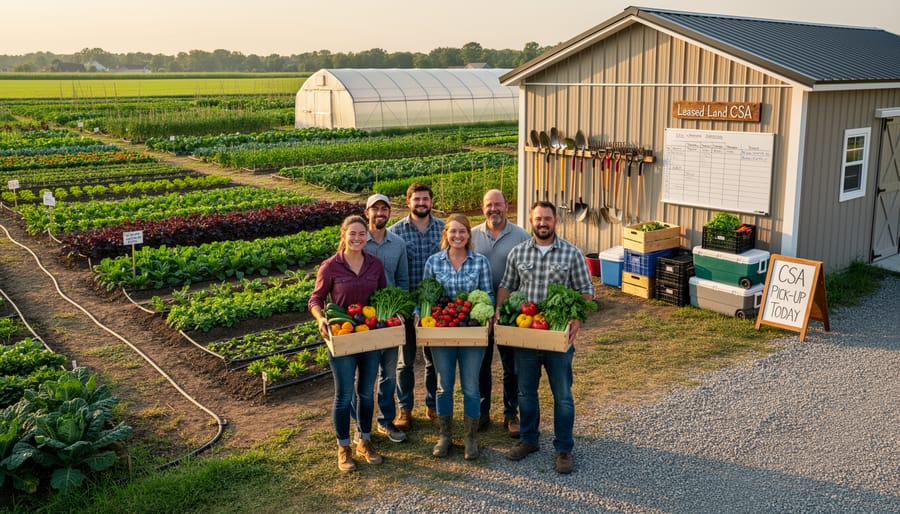
When Maya Chen started her CSA operation in 2019, she had farming knowledge, business savvy, and passionate customers lined up—but no land of her own. Today, her Harvest Moon CSA serves 150 member families on 12 acres of leased farmland just outside Portland, Oregon, proving that land ownership isn’t a prerequisite for farming success.
Maya’s journey began with a creative five-year lease agreement with a retiring farmer. Rather than paying cash rent upfront, she negotiated a profit-sharing arrangement for the first two years, giving 15% of gross sales to the landowner while she established her operation. This arrangement reduced her initial financial risk and allowed her to invest in infrastructure instead.
“The key was showing the landowner my detailed business plan,” Maya explains. “I demonstrated how my CSA model would generate steady income while improving soil health through organic practices. That convinced him I was serious and capable.”
Her lease included permission to build a walk-in cooler, install drip irrigation, and construct a small packing shed. Maya invested approximately $25,000 in improvements, negotiating a reimbursement clause that guarantees her 75% back if the lease isn’t renewed. This protected her investment while giving the landowner valuable farm infrastructure.
The economic advantages of leasing became clear quickly. Without a mortgage or land purchase costs, Maya channeled resources into what mattered most: seeds, season extension equipment, and marketing. Her startup costs totaled $45,000 compared to the estimated $250,000 she would have needed for land purchase plus improvements.
Challenges certainly arose. In year three, Maya faced uncertainty when the landowner considered selling. She proactively researched grant programs for beginning farmers and discovered opportunities for long-term lease support through state agricultural programs. This preparation gave her confidence and negotiating leverage, ultimately securing a ten-year lease extension with a right of first refusal if the property sells.
Maya’s advice for aspiring CSA farmers? “Don’t let lack of land ownership stop you. Focus on building strong relationships, maintaining excellent communication with landowners, and creating win-win agreements. Leasing gave me the flexibility to start farming years earlier than I could have otherwise, and my business is thriving because of it.”
Making the Numbers Work: Practical Strategies for Land Access
Partner with Landowners Who Share Your Vision
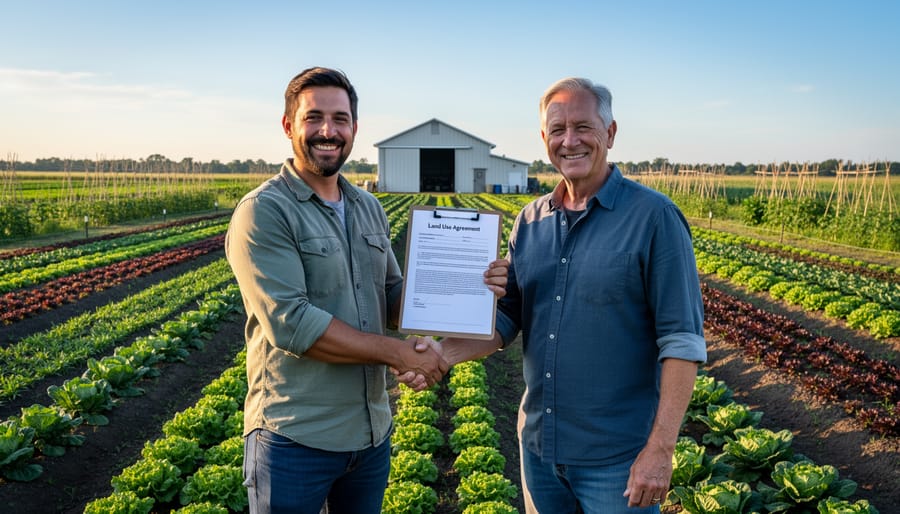
Finding landowners who believe in sustainable agriculture can transform your CSA dream into reality. Start your search by connecting with local agricultural organizations, attending farm bureau meetings, and reaching out through farmer networks in your community. Many landowners, especially those nearing retirement, want to see their land continue feeding people rather than sitting idle or being developed.
When approaching potential partners, come prepared with a clear vision of your farming goals and how you’ll care for their land. Share your commitment to soil health and sustainable practices – many sympathetic landowners deeply care about land stewardship and will appreciate your dedication to improving rather than depleting their property.
Beyond rent payments, consider what else you can offer. Some farmers provide landowners with a weekly CSA share, giving them a tangible connection to what’s growing on their property. Others offer to maintain fences, clear overgrown areas, or help with property tax benefits through agricultural use exemptions. One successful CSA farmer in Vermont built a strong relationship by inviting her landowner to seasonal farm dinners, creating a sense of shared purpose.
Focus on transparency and regular communication. Share your successes and challenges, invite landowners to walk the fields with you, and demonstrate how your farming practices enhance their land’s long-term value and ecological health.
Tap Into Farmland Access Programs
Finding affordable farmland doesn’t mean you’re on your own. Numerous programs exist specifically to help aspiring farmers overcome the land access barrier. Land trusts are nonprofit organizations that preserve agricultural land and often offer affordable lease opportunities to beginning farmers. These arrangements typically include long-term leases at below-market rates, giving you stability to build your operation.
Agricultural easements provide another pathway by restricting land to farm use permanently, which reduces purchase prices while protecting farmland from development. Many states offer tax incentives for landowners who participate, creating win-win scenarios.
Beginning farmer programs through organizations like the National Young Farmers Coalition connect newcomers with resources, mentorship, and sometimes direct land access. The USDA’s Farm Service Agency administers grants and low-interest loans designed specifically for new farmers, including the Microloan Program perfect for CSA startups.
Start your search locally by contacting your state’s agricultural department, regional land trusts, and Cooperative Extension offices. Many successful CSA farmers began through incubator farm programs that provide land, equipment, and training. Some communities are even exploring cooperative ownership models where multiple farmers share land costs and resources, making sustainable agriculture accessible to more people.
Design Your Operation Around Land Flexibility
When land security isn’t guaranteed, smart farmers design operations they can adapt or relocate if needed. Think portable infrastructure like hoop houses, movable chicken coops, and raised beds rather than permanent greenhouses or fixed barns. This approach protects your investment while building valuable assets you own outright.
Consider phased investment strategies that match your lease terms. If you have a three-year agreement, focus initial resources on soil building and quick-return crops before committing to perennial plantings or expensive infrastructure. Many successful CSA farmers start with annual vegetables and cover crops, gradually expanding into berries or orchards only after securing longer-term arrangements.
Keep detailed records of your soil improvements and infrastructure investments. These become negotiating tools for lease renewals or compensation if you need to relocate. Some farmers have successfully negotiated land purchases after proving their operation’s viability through careful, incremental growth. Remember, flexibility isn’t about thinking small—it’s about building a resilient business that can thrive regardless of land tenure changes.
The path to securing farmland for your CSA doesn’t have to feel like an impossible dream. Throughout this exploration of land resource economics, we’ve uncovered a fundamental truth: there are multiple creative pathways to access land, and the traditional model of outright purchase is just one option among many. Whether through leasehold arrangements, cooperative ownership, incubator programs, or innovative partnerships with landowners, aspiring farmers are finding ways to cultivate their vision without insurmountable financial barriers.
Remember that every thriving CSA you admire today started with someone taking that first step despite uncertainty. The farmers who succeeded understood that land access is a puzzle requiring creative problem-solving, not a locked door. They combined knowledge of land economics with resourcefulness, community building, and persistence.
Your next step might be researching available farmland in your area, reaching out to land trusts, or connecting with established farmers who’ve navigated these waters. Consider starting small with a lease arrangement while building your customer base and farming skills. Attend workshops on farmland access, join farming networks, and don’t hesitate to propose innovative arrangements to landowners who share your sustainable agriculture values.
The land is there, and the tools to access it economically are within your reach. By applying these economic principles with creativity and determination, you’re not just planning a farm—you’re contributing to a more sustainable, locally connected food system. Your CSA journey begins now.
