Daily Archives

2 Articles

How Smart Farmers Are Securing Farmland Without Breaking the Bank

Posted by darrell on
0
Business and Economic Impact
How Smart Farmers Are Securing Farmland Without Breaking the Bank

Land access remains the single greatest barrier for new farmers entering agriculture, with farmland prices climbing 7% annually while beginning farmer incomes struggle to keep pace. Yet thousands of CSA farmers across North America have cracked this code, building thriving operations without purchasing land outright.

Consider Sarah Mitchell, who launched her 50-member CSA on leased land with just $15,000 startup capital. She negotiated a five-year lease with a retiring farmer, offering land stewardship and a percentage of profits instead of cash rent. Within three years, her operation generated enough revenue to transition to a lease-to-own arrangement.

The economics are straightforward: traditional land ownership requires $200,000-$500,000 in capital for even modest acreage, while creative tenure arrangements—leases, partnerships, incubator farm programs, and land trusts—reduce initial investment to $10,000-$50,000. This difference determines whether starting a farm remains a distant dream or an achievable goal.

Understanding land resource economics means recognizing that land access is a solvable puzzle, not an insurmountable wall. The farms feeding your community didn’t all start with inherited wealth or bank loans. They started with farmers who understood the true costs of land, explored unconventional pathways, and built relationships with landowners seeking agricultural legacies over maximum profit.

This guide breaks down the real numbers behind land access and reveals proven strategies working farmers use to secure their ground and build sustainable operations from the soil up.

Why Land Access Matters More Than Ever for CSA Farmers

The dream of starting a CSA farm often collides with a sobering reality: farmland prices have skyrocketed beyond reach for most new farmers. Over the past two decades, agricultural land values have increased by over 150% in many regions, while farmer incomes haven’t kept pace. For aspiring organic growers hoping to launch a CSA operation, this creates an impossible equation where traditional land ownership simply isn’t feasible.

The barriers extend beyond purchase prices. Even when farmers can afford a down payment, securing financing proves challenging. Banks often hesitate to fund small-scale organic operations, viewing them as riskier than conventional farms. Young farmers face additional hurdles, typically lacking the capital, credit history, or collateral that lenders require. This financial squeeze means talented growers with solid business plans and community support still can’t access the essential ingredients for farm success.

The ripple effects touch entire communities. When new farmers can’t access land, local food systems stagnate. Fewer CSA farms mean reduced fresh, organic produce options for families seeking healthier alternatives. It limits the economic impact of CSA farms on regional economies, from job creation to keeping food dollars circulating locally.

Consider Sarah, who spent five years working on established farms, learning organic techniques and building customer relationships. Despite her experience and 80 committed CSA members ready to support her venture, she couldn’t secure land. Her story isn’t unique—studies show land access ranks as the number one barrier for beginning farmers.

The traditional ownership model also ties up enormous capital that could otherwise fund infrastructure, equipment, or operating expenses during lean seasons. For CSA operations running on thin margins, this makes financial sustainability nearly impossible. The good news? Alternative land access models are emerging that address these challenges while supporting thriving, community-connected farms.
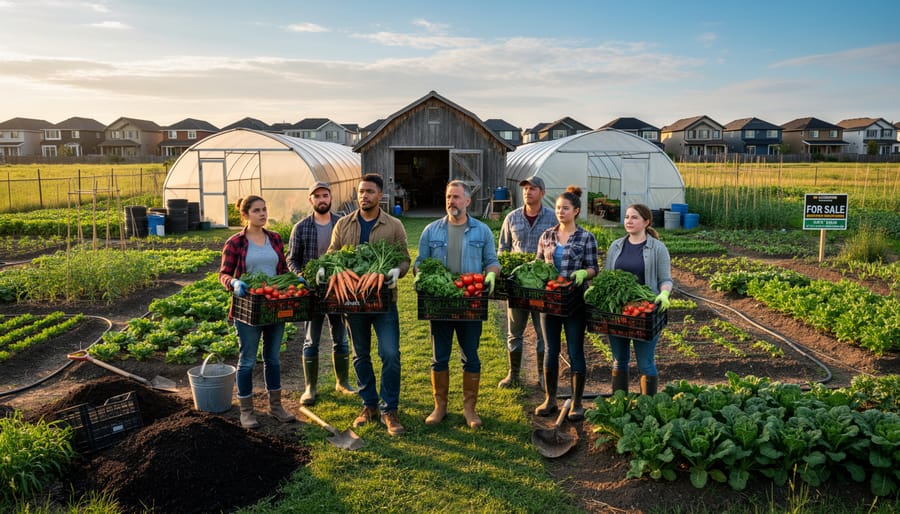
Young farmer walking through rows of leafy greens on small organic farm at sunset
Small-scale CSA farmers face unique challenges in accessing affordable farmland while building sustainable operations.

Understanding Land Tenure: What It Really Means for Your Farm

Ownership vs. Leasing: The Real Cost Comparison

Choosing between purchasing and leasing land represents one of the most significant financial decisions for CSA farmers. Each option carries distinct advantages worth understanding before committing.

Buying land requires substantial upfront capital—often $3,000 to $15,000 per acre depending on location—but builds equity over time. You gain complete control over improvements, crop rotation decisions, and infrastructure investments. For farmers planning to operate for 10+ years, ownership typically proves more economical. Consider Maria’s story: she purchased 5 acres in Vermont for $45,000. After seven years of running her CSA, her land appreciated to $65,000 while supporting 60 member families.

Leasing minimizes initial investment, typically ranging from $50 to $300 per acre annually. This flexibility allows new farmers to test their business model without massive debt. You can redirect capital toward equipment, seeds, and marketing while maintaining mobility if circumstances change. However, lease agreements may restrict certain practices or offer limited security for long-term planning.

The sweet spot? Many successful CSA farmers start with leasing arrangements, building customer relationships and refining operations. As revenue stabilizes, they transition to purchasing land, often with established cash flow supporting mortgage payments. This staged approach reduces financial risk while working toward ownership goals that align with sustainable farming dreams.

Creative Arrangements That Are Changing the Game

Accessing farmland doesn’t always mean buying it outright or signing a traditional lease. Creative models are emerging that address both affordability and long-term security for farmers who want to grow sustainably.

Community land trusts remove land from the speculative market by holding it in perpetual trust, then leasing it to farmers at affordable rates. This approach keeps farmland permanently available for agriculture while reducing the capital barrier for new growers. Farmers can often purchase buildings and improvements while leasing the land itself, building equity without the full burden of land ownership.

Cooperative ownership models pool resources among multiple farmers, spreading costs and risks. Members share land, equipment, and sometimes marketing expenses, making farming viable for those who couldn’t afford it solo. These arrangements work particularly well alongside innovative funding models that further reduce financial barriers.

Incubator farm programs offer perhaps the most accessible entry point. Beginning farmers receive parcels of prepared land, shared infrastructure, mentorship, and business training for a modest fee. After typically two to four years, graduates move on with practical experience and market connections, ready to secure their own permanent land.

These arrangements demonstrate that creativity and collaboration can unlock opportunities where traditional economics creates roadblocks, making sustainable farming accessible to passionate growers regardless of their starting capital.

The Hidden Economics of CSA Land Use

When you’re running a CSA farm, every decision about your land creates a ripple effect through your entire business model. Unlike conventional farms that can pivot crops based on market prices, CSA farmers make land use commitments months before members even sign up. This unique economic puzzle shapes everything from what you plant to how much you invest in permanent infrastructure.

The economics start with your land tenure situation. If you’re leasing year-to-year, you’ll think twice before installing that $15,000 walk-in cooler or planting perennial crops like asparagus that take three years to mature. Short-term land access means you’ll focus on annual vegetables with quick returns, even if those aren’t the most profitable long-term choices. One farmer I spoke with in Ontario postponed building a wash station for five years because her lease renewal was uncertain, costing her countless hours of inefficient harvesting practices.

Land tenure security directly influences your crop planning diversity too. Members expect variety in their boxes, but growing 40 different crops requires significant land investment and infrastructure. Farmers with owned land or long-term leases can dedicate space to succession planting and trial crops, while those with uncertain tenure stick to tried-and-true vegetables that guarantee member satisfaction in the short term.

Here’s where the economics get interesting: your member retention strategies become tied to your land decisions. High member turnover means constantly recruiting new subscribers, which pulls resources away from land improvements. But when you retain 80 percent of members annually, you can confidently invest in soil building, permanent beds, and irrigation systems that pay off over multiple seasons.

The sweet spot? Farmers with secure land access can plan three to five years ahead, creating regenerative systems that improve both soil health and profitability. They’re not just farming for this season’s harvest, they’re building equity in their land’s productive capacity.
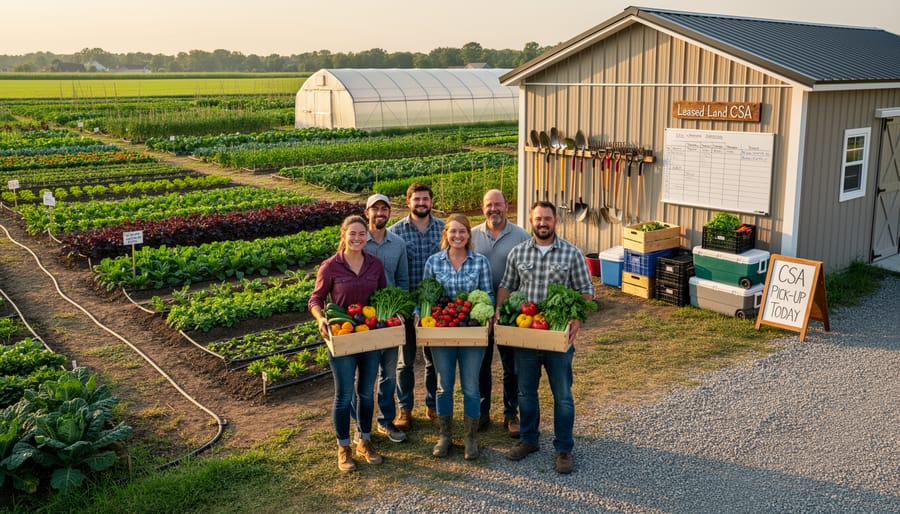
Farmer couple standing in vegetable field holding baskets of fresh harvested produce
Successful CSA farmers demonstrate that building a thriving operation on leased land is achievable with the right strategies.

Farmer Success Story: Building a Thriving CSA on Leased Land

When Maya Chen started her CSA operation in 2019, she had farming knowledge, business savvy, and passionate customers lined up—but no land of her own. Today, her Harvest Moon CSA serves 150 member families on 12 acres of leased farmland just outside Portland, Oregon, proving that land ownership isn’t a prerequisite for farming success.

Maya’s journey began with a creative five-year lease agreement with a retiring farmer. Rather than paying cash rent upfront, she negotiated a profit-sharing arrangement for the first two years, giving 15% of gross sales to the landowner while she established her operation. This arrangement reduced her initial financial risk and allowed her to invest in infrastructure instead.

“The key was showing the landowner my detailed business plan,” Maya explains. “I demonstrated how my CSA model would generate steady income while improving soil health through organic practices. That convinced him I was serious and capable.”

Her lease included permission to build a walk-in cooler, install drip irrigation, and construct a small packing shed. Maya invested approximately $25,000 in improvements, negotiating a reimbursement clause that guarantees her 75% back if the lease isn’t renewed. This protected her investment while giving the landowner valuable farm infrastructure.

The economic advantages of leasing became clear quickly. Without a mortgage or land purchase costs, Maya channeled resources into what mattered most: seeds, season extension equipment, and marketing. Her startup costs totaled $45,000 compared to the estimated $250,000 she would have needed for land purchase plus improvements.

Challenges certainly arose. In year three, Maya faced uncertainty when the landowner considered selling. She proactively researched grant programs for beginning farmers and discovered opportunities for long-term lease support through state agricultural programs. This preparation gave her confidence and negotiating leverage, ultimately securing a ten-year lease extension with a right of first refusal if the property sells.

Maya’s advice for aspiring CSA farmers? “Don’t let lack of land ownership stop you. Focus on building strong relationships, maintaining excellent communication with landowners, and creating win-win agreements. Leasing gave me the flexibility to start farming years earlier than I could have otherwise, and my business is thriving because of it.”

Making the Numbers Work: Practical Strategies for Land Access
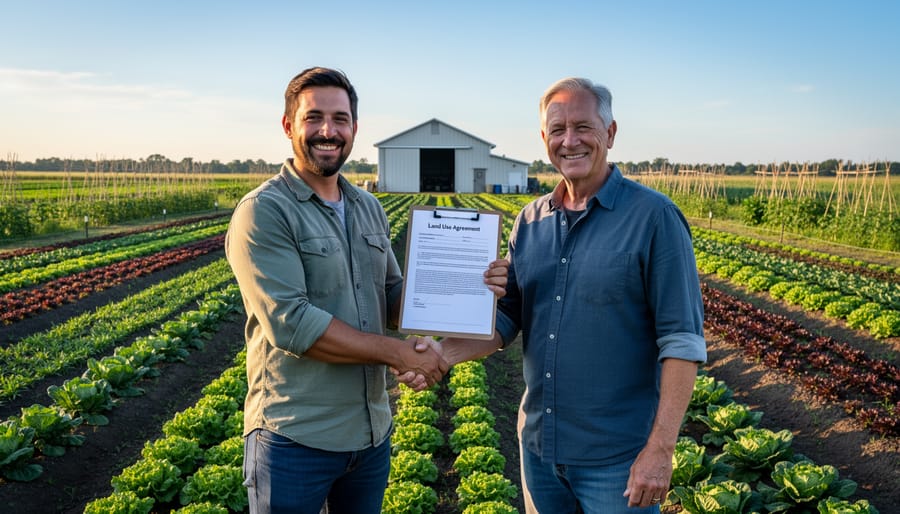
Two farmers shaking hands in agreement in front of barn and farmland
Building strong relationships with landowners creates mutually beneficial arrangements that help CSA farmers access land affordably.

Partner with Landowners Who Share Your Vision

Finding landowners who believe in sustainable agriculture can transform your CSA dream into reality. Start your search by connecting with local agricultural organizations, attending farm bureau meetings, and reaching out through farmer networks in your community. Many landowners, especially those nearing retirement, want to see their land continue feeding people rather than sitting idle or being developed.

When approaching potential partners, come prepared with a clear vision of your farming goals and how you’ll care for their land. Share your commitment to soil health and sustainable practices – many sympathetic landowners deeply care about land stewardship and will appreciate your dedication to improving rather than depleting their property.

Beyond rent payments, consider what else you can offer. Some farmers provide landowners with a weekly CSA share, giving them a tangible connection to what’s growing on their property. Others offer to maintain fences, clear overgrown areas, or help with property tax benefits through agricultural use exemptions. One successful CSA farmer in Vermont built a strong relationship by inviting her landowner to seasonal farm dinners, creating a sense of shared purpose.

Focus on transparency and regular communication. Share your successes and challenges, invite landowners to walk the fields with you, and demonstrate how your farming practices enhance their land’s long-term value and ecological health.

Tap Into Farmland Access Programs

Finding affordable farmland doesn’t mean you’re on your own. Numerous programs exist specifically to help aspiring farmers overcome the land access barrier. Land trusts are nonprofit organizations that preserve agricultural land and often offer affordable lease opportunities to beginning farmers. These arrangements typically include long-term leases at below-market rates, giving you stability to build your operation.

Agricultural easements provide another pathway by restricting land to farm use permanently, which reduces purchase prices while protecting farmland from development. Many states offer tax incentives for landowners who participate, creating win-win scenarios.

Beginning farmer programs through organizations like the National Young Farmers Coalition connect newcomers with resources, mentorship, and sometimes direct land access. The USDA’s Farm Service Agency administers grants and low-interest loans designed specifically for new farmers, including the Microloan Program perfect for CSA startups.

Start your search locally by contacting your state’s agricultural department, regional land trusts, and Cooperative Extension offices. Many successful CSA farmers began through incubator farm programs that provide land, equipment, and training. Some communities are even exploring cooperative ownership models where multiple farmers share land costs and resources, making sustainable agriculture accessible to more people.

Design Your Operation Around Land Flexibility

When land security isn’t guaranteed, smart farmers design operations they can adapt or relocate if needed. Think portable infrastructure like hoop houses, movable chicken coops, and raised beds rather than permanent greenhouses or fixed barns. This approach protects your investment while building valuable assets you own outright.

Consider phased investment strategies that match your lease terms. If you have a three-year agreement, focus initial resources on soil building and quick-return crops before committing to perennial plantings or expensive infrastructure. Many successful CSA farmers start with annual vegetables and cover crops, gradually expanding into berries or orchards only after securing longer-term arrangements.

Keep detailed records of your soil improvements and infrastructure investments. These become negotiating tools for lease renewals or compensation if you need to relocate. Some farmers have successfully negotiated land purchases after proving their operation’s viability through careful, incremental growth. Remember, flexibility isn’t about thinking small—it’s about building a resilient business that can thrive regardless of land tenure changes.

The path to securing farmland for your CSA doesn’t have to feel like an impossible dream. Throughout this exploration of land resource economics, we’ve uncovered a fundamental truth: there are multiple creative pathways to access land, and the traditional model of outright purchase is just one option among many. Whether through leasehold arrangements, cooperative ownership, incubator programs, or innovative partnerships with landowners, aspiring farmers are finding ways to cultivate their vision without insurmountable financial barriers.

Remember that every thriving CSA you admire today started with someone taking that first step despite uncertainty. The farmers who succeeded understood that land access is a puzzle requiring creative problem-solving, not a locked door. They combined knowledge of land economics with resourcefulness, community building, and persistence.

Your next step might be researching available farmland in your area, reaching out to land trusts, or connecting with established farmers who’ve navigated these waters. Consider starting small with a lease arrangement while building your customer base and farming skills. Attend workshops on farmland access, join farming networks, and don’t hesitate to propose innovative arrangements to landowners who share your sustainable agriculture values.

The land is there, and the tools to access it economically are within your reach. By applying these economic principles with creativity and determination, you’re not just planning a farm—you’re contributing to a more sustainable, locally connected food system. Your CSA journey begins now.

Why Your CSA’s Busiest Season Is When Weeds Win (And How to Plan Ahead)

Posted by darrell on
0
Seasonal Planning and Management
Why Your CSA’s Busiest Season Is When Weeds Win (And How to Plan Ahead)

Prepare mulch materials and cover crop seeds before your CSA season begins—stocking up on straw, wood chips, and quick-growing covers like buckwheat means you’ll have weed-suppression tools ready when planting demands every daylight hour. Time your bed preparation to minimize the weed seed bank by creating a “stale seedbed” two weeks before planting: till or broadfork the soil, let weed seeds germinate, then quickly flame weed or shallowly cultivate before transplanting your crops.

Implement a zone-based weeding schedule that prioritizes high-value crops and visible areas first. Your tomatoes, peppers, and salad greens deserve weekly attention, while winter squash in back fields can tolerate biweekly passes. This approach keeps member-facing beds pristine without burning out your crew during peak harvest weeks.

Layer your weed management by combining techniques rather than relying on a single method. Landscape fabric in permanent pathways, dense crop spacing in beds, and strategic hand-weeding of perennials creates multiple barriers that overwhelm weed pressure. One Vermont CSA farmer reduced her weeding time by 40% simply by planting lettuce and greens at tighter spacing—the crop canopy shaded out competitors while maintaining excellent yields.

Block out thirty-minute morning sessions specifically for weed patrol before the day’s heat and harvest demands take over. These consistent, manageable chunks prevent small weed problems from becoming season-derailing catastrophes, keeping your growing season productive and your sanity intact.

Understanding Growing Season Weed Pressure on CSA Farms

Vegetable garden rows showing both crops and weeds growing vigorously during summer growing season
During peak growing season, optimal conditions for crops also create the perfect environment for aggressive weed growth, creating competition for resources.

The Perfect Storm: Warmth, Moisture, and Growth

Here’s the beautiful irony of peak growing season: those same warm temperatures, generous rainfall, and long sunny days that make your tomatoes thrive and your lettuce flourish are precisely what weeds crave too. When conditions are perfect for your CSA crops, they’re equally perfect for opportunistic plants competing for the same resources.

Think of it as nature’s ultimate challenge. During June through August, when your vegetables are producing the harvest that keeps your CSA members delighted, weeds are racing to outpace them. Purslane spreads across pathways, lamb’s quarters tower over young seedlings, and crabgrass quickly fills any bare soil between rows. At Green Valley Farm in Vermont, farmer Maria Chen noticed that a single week of neglecting weeding during July resulted in nearly three times the labor needed to catch up later.

The moisture from irrigation systems or summer thunderstorms doesn’t discriminate between the plants you want and those you don’t. Meanwhile, that nitrogen-rich compost you carefully applied to nourish your vegetables feeds everything equally. Understanding this competition is the first step toward developing realistic management strategies that work with your demanding CSA schedule rather than against it.

Critical Windows: When Weeds Do the Most Damage

Understanding when weeds pose the greatest threat can save you countless hours and protect your harvest. The most critical window occurs during the first 3-4 weeks after planting or transplanting, when your crops are establishing their root systems. During this vulnerable phase, even small weeds can compete aggressively for water, nutrients, and sunlight, potentially reducing yields by 50% or more.

Think of it like this: your seedlings are babies trying to get established, while weeds are bullies stealing their lunch money. Young crops simply can’t compete effectively until they develop a strong canopy that shades out competition.

For most vegetables, keeping fields weed-free from emergence through the first month is your golden opportunity. Sarah Chen, who runs a thriving CSA in Vermont, learned this lesson early. “I used to think I could catch up on weeding later,” she shares. “But once I started focusing on those first few weeks with intensive mulching and hand-weeding, my yields jumped dramatically.”

The second critical period hits mid-season during flowering and fruit set, when crops need maximum resources. Even established weeds can steal moisture during dry spells, impacting quality and production. Mark your calendar for these windows and prioritize weed management accordingly—it’s your best investment for a successful growing season.

Pre-Season Planning: Set Yourself Up for Success

Map Your Weed Trouble Spots

Before you can tackle weeds effectively, you need to know where they thrive on your farm. Take time during the off-season to walk your fields with a notebook or smartphone, documenting areas where certain weeds dominated last year. Note which beds had the worst pressure and what types of weeds appeared most frequently.

Create a simple sketch map of your CSA plots, marking trouble spots with different colors for various weed types. Pay special attention to edges, irrigation zones, and areas where certain crops struggled. This visual reference becomes invaluable when planning your weeding season.

Many successful CSA farmers photograph problem areas throughout the season, building a digital record that reveals patterns over time. You might discover that perennial weeds cluster near specific water sources or that certain beds consistently need extra attention. Armed with this knowledge, you can prioritize prevention efforts, adjust crop rotations, or schedule targeted cultivating sessions before weeds gain the upper hand.

Stale Seedbed Technique: The Early Bird Advantage

Imagine giving your crops a running start before the race even begins. That’s exactly what the stale seedbed technique offers busy CSA farmers. Here’s how it works: prepare your planting beds two to three weeks before your actual planting date. Till or cultivate the soil, create your beds, and then wait. During this waiting period, dormant weed seeds near the surface will germinate, creating that first flush of weeds.

Just before planting day, lightly cultivate or flame weed these young seedlings. This eliminates thousands of potential competitors without disturbing deeper soil layers that harbor more weed seeds. When you plant your crops, they emerge into a relatively weed-free environment, giving them the competitive edge they need during those critical early weeks.

Sarah Chen, who runs a thriving CSA operation in Vermont, swears by this method. “It bought us at least two extra weeks before needing our first cultivation pass,” she shares. “Those two weeks made a massive difference during spring’s hectic transplanting schedule.”

The technique works best for direct-seeded crops like carrots, beans, and salad greens. While it requires some advance planning, the payoff in reduced mid-season weeding makes it worthwhile for time-crunched farmers managing multiple plantings.

Mulch Staging and Material Prep

Getting ahead on mulch preparation can save you countless hours during peak planting season. Start by sourcing organic mulches like straw, wood chips, or shredded leaves in late winter or early spring when suppliers are well-stocked and prices are often lower. Local arborists frequently offer free wood chips, making them a budget-friendly option for CSA operations.

Store your mulch in a dry, accessible location near your growing beds. Use tarps or pallets to keep materials off the ground and prevent decomposition before you’re ready to apply them. Consider creating dedicated staging areas for different mulch types, which streamlines application when time is precious.

Before the growing season hits, break down compressed bales and check moisture levels. Slightly aged wood chips work better than fresh ones, which can tie up nitrogen. Many successful CSA farmers pre-load wheelbarrows or garden carts with mulch positioned strategically around their fields, allowing for quick application between transplanting tasks. This simple prep work transforms mulching from a time-consuming chore into a swift, efficient operation that keeps weeds at bay when your schedule becomes demanding.

Tool Maintenance and Equipment Readiness

Before the growing season kicks into high gear, take time to inspect and prepare your equipment. Sharp hoe blades, well-maintained wheel cultivators, and properly functioning flame weeders make weed control significantly faster and more effective. A dull hoe can double your weeding time while damaging plant roots. Check fuel levels and ignition systems on flame weeders, oil moving parts on cultivators, and replace worn handles that could cause blisters during long work sessions. Many successful CSA farmers dedicate a full weekend in early spring to tool maintenance, knowing that broken equipment during peak season means lost productivity and stressed crops. Having backup tools on hand saves precious hours when something breaks mid-task.

Strategic Crop Placement for Natural Weed Suppression

Fast-Growing Cover Crops Between Plantings

During transition periods between main crops, fast-growing cover crops become your secret weapon against weeds. Think of these quick-maturing plants as living mulch that fills gaps in your planting schedule. Buckwheat, for example, can germinate within three days and establish thick coverage in just four to six weeks, effectively smothering weed seedlings before they gain a foothold.

Succession planting with fast covers works beautifully alongside strategic crop rotation. After harvesting early spring greens, sow buckwheat or field peas to maintain soil coverage until your summer transplants are ready. Winter rye planted after fall crops prevents weed establishment during dormant months while building soil organic matter.

Sarah Chen, a third-year CSA farmer in Ontario, cut her weeding time by forty percent using this approach. She plants oats between crop cycles, then terminates them by tarping two weeks before the next planting. The decomposing oat residue feeds beneficial soil organisms while blocking light from weed seeds.

Choose covers that match your timeline. Buckwheat excels for six to eight week gaps, while radishes work perfectly for shorter three to four week transitions, breaking up compacted soil as a bonus.

Dense Plantings and Living Mulches

One of nature’s smartest tricks for weed management is simply leaving no room for them to grow. Dense plantings work by creating a living canopy that shades the soil, preventing weed seeds from getting the light they need to germinate. This approach is especially valuable for CSA operations because it doubles as a way to increase crop diversity and harvest yields from the same footprint.

Consider planting lettuce, spinach, and other greens at closer intervals than traditional spacing guidelines suggest. The plants will naturally fill in gaps, creating a lush ground cover that blocks sunlight from reaching potential weeds below. You can also interplant fast-growing crops like radishes between slower-maturing plants such as tomatoes or peppers. By the time your main crop needs the space, the quick growers have already been harvested and enjoyed by your CSA members.

Living mulches take this concept further by intentionally planting low-growing cover crops beneath taller vegetables. White clover, for instance, can carpet the ground between broccoli or Brussels sprouts, suppressing weeds while fixing nitrogen in the soil. This creates a win-win situation where your maintenance needs decrease and soil health improves.

Sarah Martinez, who runs a successful CSA in Vermont, transformed her weed management by embracing dense plantings. “I used to spend hours weeding pathways,” she shares. “Now I fill every available space with productive plants or beneficial ground covers. My members love the variety, and I love reclaiming my weekends.” The key is planning your bed layouts to maximize these companion planting opportunities from the start of the season.

Time-Efficient Weed Management During Peak Season

The ‘Little and Often’ Approach

One of the most effective weed management strategies sounds deceptively simple: spend 15-20 minutes every few days addressing weeds rather than waiting for marathon weekend sessions. This approach works particularly well during critical crop stages like seedling establishment and early transplant growth when weeds compete most aggressively for nutrients and light.

Think of it like tending a campfire. Regular attention keeps small problems from becoming infernos. When you catch weeds as tiny seedlings, you can quickly hand-pull or hoe them with minimal soil disturbance. Wait two weeks, and those same weeds develop extensive root systems that require significantly more effort to remove.

Sarah Chen, who manages a thriving CSA in Vermont, swears by her morning weed walks. “I grab my coffee and a hoe, spending just 20 minutes targeting problem areas before starting other tasks,” she shares. “By catching weeds early and consistently, I’ve cut my total weeding time by nearly half compared to my first season.”

The key is consistency during vulnerable periods. Focus your short sessions on newly planted beds and areas where crops are emerging. Once plants establish canopy cover, they naturally suppress many weeds, reducing your maintenance burden considerably for the remainder of the season.

Triage Weeding: What to Tackle First

Not all weeds pose the same threat to your harvest, so smart prioritization is essential during your busiest months. Start by focusing on high-value crops first. Your tomatoes, peppers, and specialty greens that command premium prices at market deserve immediate attention. These beds should be kept as weed-free as possible since competition directly impacts your revenue.

Next, tackle weeds before they go to seed. A single pigweed can produce hundreds of thousands of seeds, creating problems for years to come. When you spot flowering weeds anywhere on your farm, make them priority number one regardless of location.

Consider the growth stage of your crops too. Newly transplanted seedlings need immediate protection since they’re most vulnerable to weed competition in their first three weeks. Meanwhile, established plants with full canopies can often outcompete weeds on their own, buying you time to focus elsewhere.

Sarah Chen, who manages a three-acre CSA in Vermont, swears by her color-coded field map. Red flags mark urgent beds needing immediate weeding, yellow indicates moderate priority, and green means it can wait another week. This simple visual system helped her reduce weeding time by thirty percent while actually improving crop quality. She checks and updates her map every Monday morning, keeping her crew focused on what truly matters.

Getting CSA Members Involved

One of the most rewarding aspects of weed management is turning it into a community-building opportunity. U-pick weeding events transform this challenging task into a social gathering where members can connect with the land and each other while earning fresh produce credits. Many CSA farms successfully host monthly work parties on Saturday mornings, offering share discounts or extra vegetables in exchange for a few hours of help.

Work share programs provide another excellent avenue for engagement. Members commit to regular weeding sessions throughout the season, gaining hands-on farming experience while reducing labor costs. This approach complements seasonal staffing strategies by creating a reliable volunteer base during peak growing months.

Educational workdays add a learning component, where farmers demonstrate proper weeding techniques, mulching methods, and weed identification skills. These sessions empower members with practical knowledge they can apply in their home gardens. Consider pairing workdays with farm tours or harvest celebrations to maximize participation and create memorable experiences that deepen member commitment to your CSA community.

Farmer using hand cultivation tool to remove weeds around young vegetable plants
Simple cultivation tools like wheel hoes and stirrup hoes allow farmers to manage weeds efficiently during the busiest times of the season.

Quick-Hit Tools and Techniques

Maximize weed control efficiency during your busiest months with these time-saving tools. A wheel hoe becomes your best friend for managing pathways between crop rows, allowing you to cultivate multiple beds quickly without bending. For early-morning sessions, try flame weeding with a propane torch to quickly eliminate young weed seedlings along bed edges before they establish deep roots. Target your hand-pulling efforts strategically by focusing on problem areas where weeds compete directly with crops or those going to seed. Keep a sharp stirrup hoe handy for quick surface cultivation that severs weed roots just below soil level. These techniques let you stay ahead of weeds without sacrificing precious hours better spent harvesting and tending your vegetables.

Real CSA Success Story: Sarah’s Three-Season Transformation

When Sarah Thompson started her CSA operation in northern Vermont, she spent nearly 15 hours each week during peak season battling weeds in her two-acre vegetable plots. By the end of her first summer, she was exhausted, her crops looked scraggly, and she seriously questioned whether she could continue farming.

“I was constantly stressed and falling behind,” Sarah recalls. “Weeds were outpacing everything I planted, and I couldn’t keep up with harvest schedules because I was always scrambling to clear pathways.”

Everything changed when Sarah implemented a structured three-season weed management plan. She started in late winter by mapping out her entire growing season, identifying problem areas from the previous year, and ordering materials for a new approach.

During her second season, Sarah focused on prevention. She invested in landscape fabric for pathways, increased her mulch coverage from two inches to four inches in bed perimeters, and planted cover crops in fallow areas immediately after harvest. She also blocked out dedicated time each morning for quick weed checks rather than letting problems accumulate.

The results were noticeable within weeks. Her weeding time dropped to about eight hours weekly, and her vegetables showed improved growth with reduced competition for nutrients and water.

By her third season, Sarah had refined her system even further. She introduced flame weeding for pathway maintenance, established a straw mulch rotation system, and trained her volunteer crew on early weed identification. Her weekly weeding time decreased to just four hours, and her harvest yields increased by 30 percent.

“The transformation wasn’t just about the weeds,” Sarah explains. “Having a solid plan gave me mental space to actually enjoy farming again. I’m not reactive anymore. I’m in control of my landscape instead of it controlling me.”

Today, Sarah shares her weed management calendar with new CSA farmers in her region, helping them avoid the burnout she nearly experienced.

Well-maintained CSA farm field with healthy crops and minimal weed pressure during growing season
Strategic planning and consistent weed management practices result in productive, manageable CSA fields even during the busiest growing season.

Your Growing Season Weed Management Calendar

Early Season (Spring)

Spring is your golden opportunity to get ahead of weeds before they take over your CSA beds. Start by clearing winter debris and performing a thorough bed preparation while soil temperatures are still cool. This is the perfect time to lay down landscape fabric or organic mulches like straw or wood chips in pathways and around perennial crops, creating physical barriers that prevent weed seeds from germinating.

Focus on establishing clean, weed-free beds during planting. Many successful CSA farmers use the “stale seedbed” technique, preparing beds two weeks before planting to encourage weed germination, then lightly disturbing the top layer to eliminate those first flushes of weeds. This simple prevention step can reduce your summer weeding time by half.

Consider installing drip irrigation during this quieter period, which not only conserves water but also reduces weed growth by keeping pathways dry. Take advantage of spring’s cooler temperatures to establish dense plantings of early crops like lettuce and peas, which naturally shade out competing weeds as they mature.

Mid-Season (Summer)

Mid-summer is when your CSA operation hits full stride, but it’s also when weeds compete most aggressively for resources. This is the time to work smarter, not harder. Focus on consistent, shallow cultivation between rows using wheel hoes or hand tools, which disrupts weed seedlings without disturbing crop roots. Mulching becomes your best friend—apply a thick layer of straw or wood chips around established plants to suppress weeds and retain moisture during hot spells.

Coordinate your weeding schedule with seasonal harvest planning to maximize efficiency. Many successful CSA farmers tackle weeding during cooler morning hours, saving afternoons for harvesting and packing shares. Consider flame weeding for paths and between rows of heat-tolerant crops—it’s surprisingly effective and reduces hand labor.

Sarah from Green Valley Farm swears by her “Wednesday weeding crew,” where CSA members volunteer for a morning shift in exchange for extra produce. This community approach builds connection while keeping fields manageable during the busiest season. Remember, staying ahead of weeds now prevents seed production that causes problems for years to come.

Late Season (Fall)

As autumn arrives and your CSA beds start winding down, shift your focus to stopping weeds from replenishing the seed bank. This preventative work now saves you countless hours next spring. Pull any remaining flowering weeds before they go to seed—a single pigweed plant can produce over 100,000 seeds, so catching them early makes a huge difference.

After your final harvests, clear spent crop debris promptly and add a thick layer of mulch or plant cover crops like winter rye or crimson clover. These living mulches suppress late-season weed germination while adding organic matter and nutrients back into your soil. Many successful CSA farmers find that dedicated fall preparation cuts their spring weeding time nearly in half.

Consider this your investment in easier mornings next season. Walk your beds one last time, remove any persistent perennial weeds with their root systems intact, and tuck your garden in properly. Your future self will thank you when those pristine beds emerge ready for planting.

Managing weeds in your CSA doesn’t require perfection—it requires a plan. The most successful farmers we’ve spoken with emphasize that weed management is less about achieving pristine, weed-free fields and more about making strategic choices that fit within the reality of running a busy farm operation. Every small action you take adds up over the season, and more importantly, over multiple years.

Think of weed management as an investment in your farm’s future. Each time you mulch a bed, flame weed before planting, or spend fifteen minutes hand-pulling between tasks, you’re reducing next year’s weed seed bank. One CSA farmer in Vermont shared that after three seasons of consistent pre-emergent strategies and timely cultivation, her weeding time dropped by nearly 40 percent. Those cumulative benefits mean more time for other farm activities, better crop yields, and less physical strain on you and your crew.

Now is the perfect time to start planning for next season. Review what worked this year, identify your most problematic areas, and map out your rotation with weed pressure in mind. Remember, working smarter means choosing the right tool for each situation—whether that’s flame weeding for quick knockdown, landscape fabric for long-season crops, or strategic cover cropping during shoulder seasons. Your goal isn’t a magazine-perfect farm; it’s a productive, manageable system that serves your community while preserving your energy and enthusiasm for the work you love.