
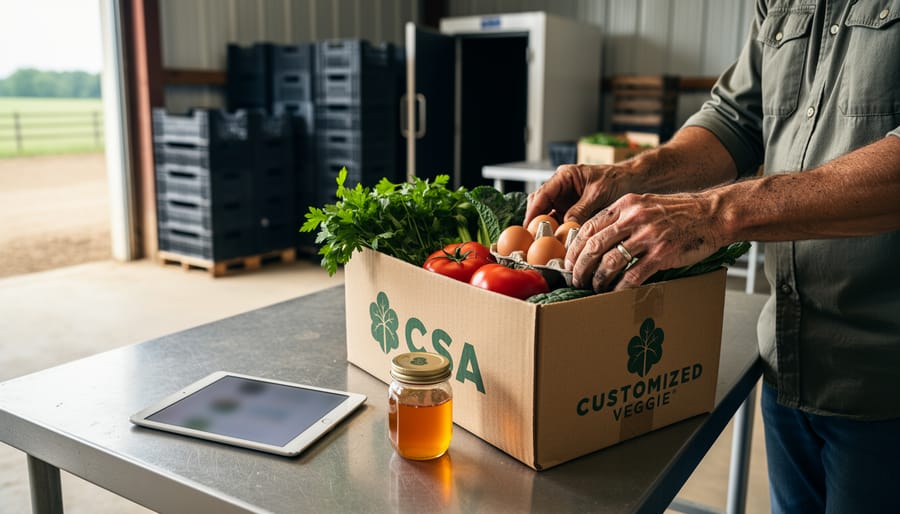
Order fulfillment in CSA farming means getting the right products into your members’ hands at the right time—whether that’s a standard veggie box, customized selections, or add-ons like eggs and honey. When Sarah Thompson of Green Valley Farm added customization options to her 50-member CSA, she discovered that managing individual preferences and add-on requests required a completely different system than packing uniform boxes. The challenge isn’t just about harvest planning anymore; it’s about tracking who wants extra tomatoes, who’s skipping this week, and ensuring the family that added a dozen eggs actually receives them. Many farmers expanding beyond basic box delivery find themselves drowning in spreadsheets and text messages, trying to remember which member requested what while racing against harvest deadlines. Understanding order fulfillment as a complete system—from how members place requests to how you pick, pack, and verify each customized order—transforms this chaos into a manageable process that actually saves time and reduces errors, letting you focus on what you do best: growing exceptional food for your community.
What Order Fulfillment Actually Means for Your CSA
For CSA farmers, order fulfillment means much more than just boxing up vegetables. It’s the complete journey that transforms what you harvest in the field into the perfect customized share that lands on your member’s doorstep.
Think of order fulfillment as everything that happens after a member places their order. Sarah from Green Valley Farm describes it perfectly: “It starts the moment someone chooses their box size and add-ons through our website, and doesn’t end until they’re unpacking fresh produce at home.” This process includes receiving and organizing orders, picking the right quantities from your cooler, customizing each box according to preferences, packing everything carefully, keeping produce fresh during transit, and coordinating delivery or pickup.
For CSAs, order fulfillment gets particularly interesting when members can customize their shares. Let’s say Jamie wants a standard box but swaps out kale for extra carrots, adds a dozen eggs, and requests no peppers. Your fulfillment process needs to track these preferences, ensure you have enough carrots and eggs set aside, and remember to skip the peppers when packing Jamie’s box.
The fulfillment cycle also includes quality control checks, communication with members about what’s in their box, managing inventory so you don’t oversell limited items, and handling the logistics of multiple pickup locations or delivery routes. When member Katie at Riverside CSA added honey and fresh-cut flowers as optional add-ons, her fulfillment process expanded to coordinate with local beekeepers and flower growers, creating a more complex but rewarding system.
Understanding this complete picture helps you identify where bottlenecks happen and where improvements can make your operation run smoother while keeping members happy.
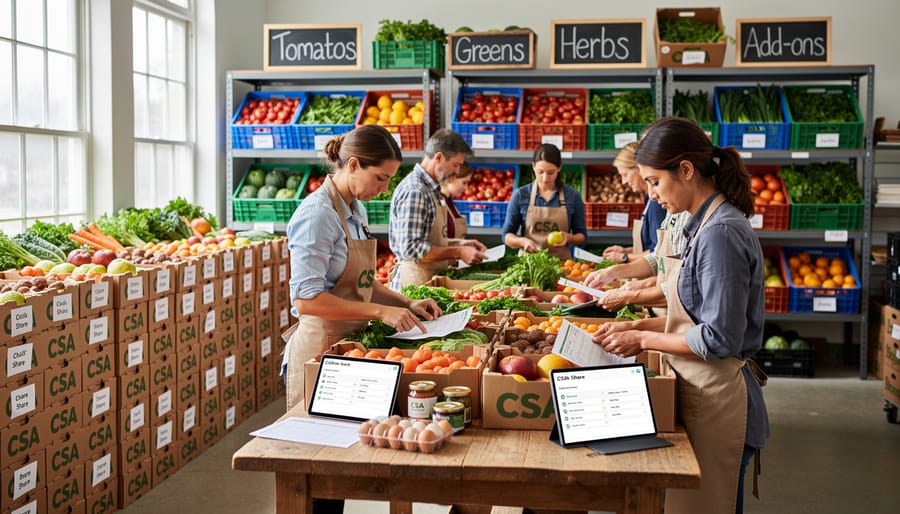
The Moving Parts: How Order Customization Changes Everything
When Members Want to Skip the Kale
Not every member loves every vegetable that shows up in their share, and that’s perfectly normal. When members request to skip the kale, swap out Brussels sprouts, or remove cilantro from their box, it creates an additional layer of complexity in your fulfillment process.
These customization requests mean your packing team needs clear systems to track individual preferences. One farmer in Vermont shared how member substitutions initially caused chaos in their pack shed until they implemented color-coded packing slips that flagged special requests. The key is creating a workflow that acknowledges these preferences without overwhelming your crew during peak harvest season.
Consider offering a simple substitution system rather than unlimited customization. For example, you might allow members to swap out one item per week for a comparable alternative from your harvest list. This gives members flexibility while keeping your fulfillment manageable. Some farms also maintain a “no kale” or “no spicy greens” preference list in their system that automatically adjusts boxes week after week.
Remember, accommodating these preferences strengthens member retention. People who feel heard and respected in their food choices tend to stay subscribed longer, making the extra fulfillment effort worthwhile for your farm’s sustainability.
Managing Preference Cards and Special Requests
One of the most rewarding aspects of running a CSA is getting to know your members personally, but those relationships also add an important layer to your order fulfillment process. Tracking preference cards transforms your operation from simple box packing into a personalized service that keeps members happy and reduces waste.
When members share information about food allergies, strong dislikes, or household size preferences, this data directly impacts your picking and packing workflow. For example, if a member is allergic to tomatoes, your team needs a system to flag their box during harvest season when tomatoes are abundant. Some farms use colored tags on delivery bins, while others incorporate preference alerts into their packing software.
Portion size preferences also matter significantly. A single-person household might need smaller quantities, while a family of five appreciates generous bunches. Successful farmers often create simple preference profiles for each member, making these adjustments routine rather than chaotic.
The key is building a simple, sustainable system that your packing team can follow consistently. Whether you use a digital spreadsheet, farm management software, or even laminated cards at packing stations, the goal remains the same: honoring member preferences while maintaining efficient workflow. This attention to detail builds loyalty and demonstrates that you truly value each relationship beyond the transaction.
Add-Ons: Your Farm’s Extra Revenue Stream (And Extra Work)
The Add-On Workflow Step-by-Step
Managing add-on orders doesn’t have to be overwhelming when you break it down into clear, manageable steps. Here’s how successful CSA farmers handle it from start to finish.
Start by reviewing your add-on orders as soon as your ordering window closes. This gives you time to harvest fresh items and source any products from partner farms. Create a simple spreadsheet or use your farm management software to generate a list organized by product type rather than by member. This way, you’ll know exactly how many jars of honey, bundles of herbs, or cartons of eggs you need to prepare.
Next, check your inventory levels and gather all add-on items in your packing area. Organizing your packing station with designated zones for different product categories makes the process much smoother. Keep a staging area where add-ons can be sorted by member before pickup day.
When packing day arrives, assemble your standard shares first, then add the customized items. Many farmers find it helpful to print pickup lists that clearly indicate which add-ons belong with each member’s order. Place these sheets directly on boxes or attach them to member bins.
Finally, train your pickup day volunteers or staff to double-check add-ons before members arrive. A quick verification system prevents mistakes and ensures every member gets exactly what they ordered, building trust and satisfaction in your farm’s service.
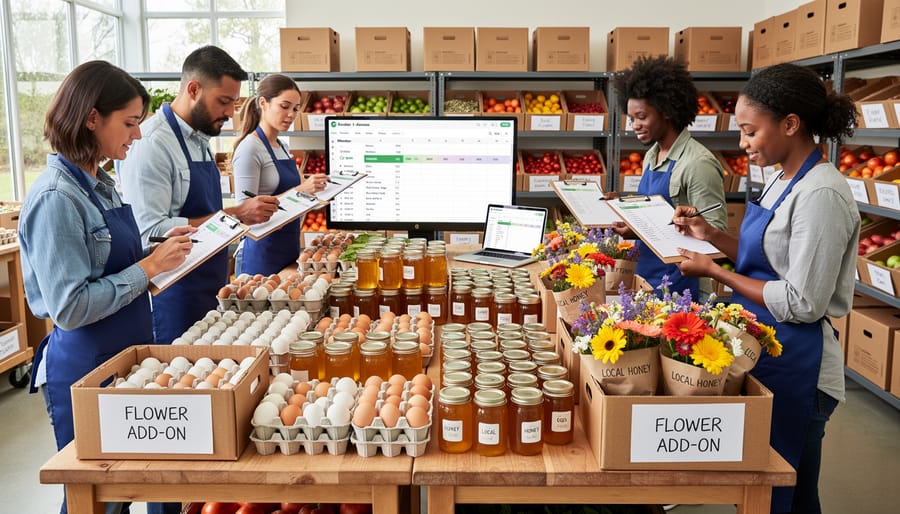
Common Add-On Fulfillment Headaches (And Solutions)
Even the most organized CSA operations hit snags when managing add-ons. Running out of popular items like farm-fresh eggs or artisan bread is a common frustration that leaves customers disappointed and farmers scrambling. The solution? Set clear inventory limits in your ordering system and consider a first-come, first-served approach. Emily from Sunrise Valley Farm shares: “We cap our fresh pasta add-on at 30 orders weekly. It sold out in two days initially, but members appreciated knowing the limit upfront.”
Tracking who ordered what becomes tricky when you’re juggling spreadsheets during harvest season. Investing in simple farm management software designed for CSAs can automate this headache, sending you organized pick lists sorted by member.
Payment collection creates another layer of complexity. Some members prepay while others prefer pay-as-you-go for add-ons. Establish one consistent payment method, whether that’s adding charges to existing accounts or requiring upfront payment at ordering. Clear communication about your payment policy prevents confusion and ensures you’re compensated fairly for the extra effort these customizations require.
Real-World Example: A Day in Order Fulfillment at Meadowbrook Farm
Let me introduce you to Sarah Chen, who runs Meadowbrook Farm, a 15-acre CSA operation in Vermont serving 150 members. Every Thursday, Sarah and her small team tackle what she calls “fulfillment day,” transforming freshly harvested produce into customized boxes ready for Friday pickup.
Sarah’s week starts Monday when members log into their online portal to customize their weekly shares. “We offer a standard box, but about 70% of our members swap at least one item,” Sarah explains. “Someone might exchange kale for extra carrots, while another adds a dozen eggs or our homemade pesto.”
By Wednesday evening, Sarah reviews all customization requests and prints picking lists organized by crop type. Thursday morning at 6 AM, her team begins harvesting based on actual orders rather than estimates. “This reduced our food waste by nearly 40%,” she notes proudly.
The real magic happens in their pack shed. Sarah has created stations for different fulfillment steps. First, standard items get portioned into reusable boxes. Then comes the customization station, where team members swap out items according to each member’s preferences. Finally, add-ons like fresh flowers, bread from a partner bakery, and value-added products get tucked into designated boxes.
Sarah color-codes everything. Green tags mean standard boxes, yellow indicates customizations, and orange marks add-on purchases. “It sounds simple, but this system keeps us organized when we’re packing 150 unique orders in four hours,” she says.
What started as an overwhelming process has become streamlined through practice and smart organization. Sarah’s advice? “Start small with customizations. We began allowing just three swap options and gradually expanded as we learned what worked. Order fulfillment doesn’t have to be complicated, but it does require a system that fits your farm’s rhythm.”
Simple Systems That Make Fulfillment Smoother
You don’t need fancy technology to run a smooth fulfillment operation. Many successful CSA farmers start with simple, reliable systems that grow alongside their business.
Begin with the basics: a well-organized packing checklist. Create a master list for each share size that includes standard items and spaces for customizations. Sarah from Green Valley Farm laminated her checklists and uses dry-erase markers to check off items as they’re packed. This simple approach reduced her packing errors by 80% in the first season.
Physical organization matters tremendously. Designate specific zones in your packing area: one for standard items, another for add-ons, and a separate space for custom requests. Label everything clearly with large, readable signs. Color-coding works wonders too. Try using different colored bins or tags for various share sizes or special dietary modifications.
Paper order forms still work beautifully for smaller operations. Keep them organized in a binder divided by pickup day, with members listed alphabetically. This old-school method provides a reliable backup even if technology fails.
When you’re ready to go digital, start simple. Basic spreadsheet programs can track orders, create packing lists, and manage inventory without overwhelming you. Several affordable farm management software options designed specifically for CSAs offer templates that require minimal setup.
Batch similar tasks together for efficiency. Pack all standard shares first, then move to customizations, and finish with add-ons. This assembly-line approach, combined with streamlining pickup day procedures, keeps your workflow moving smoothly.
Remember, the best system is one you’ll actually use consistently. Start small, test what works for your farm, and adjust as needed. Many farmers find that combining low-tech reliability with selective technology creates the perfect balance for their operation.
Why Getting This Right Matters for Your Farm’s Success
Getting order fulfillment right isn’t just about logistics—it directly impacts your farm’s bottom line and long-term sustainability. When members consistently receive their correct customized orders on time, satisfaction soars. Happy members renew their subscriptions year after year, providing the steady income stream your farm needs to plan and grow confidently.
Think about it: every forgotten add-on or mixed-up box represents more than just an error. It’s a missed opportunity to strengthen the personal connection that makes CSA special. Members who feel heard and valued become your biggest advocates, referring friends and family to your farm.
On the flip side, fulfillment mistakes eat into profitability through wasted product, extra delivery trips, and time spent managing complaints. By streamlining your order fulfillment process—from harvest planning to delivery route efficiency—you free up hours to focus on growing great food and building community.
Consider Sarah’s small farm in Ontario: after implementing a better fulfillment system, her member retention jumped from 65% to 89% in one season. The predictable revenue allowed her to invest in season extension infrastructure, further increasing farm profitability.
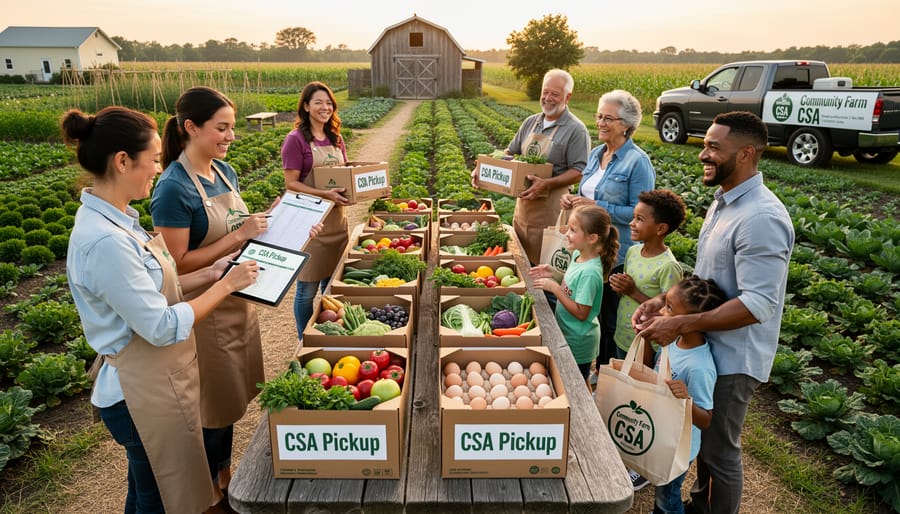
Starting small is your best path forward. You don’t need a perfect system on day one—just a commitment to organization and genuine care for your members. Begin with one or two simple add-ons, use basic tools like spreadsheets or clipboards, and refine your process as you grow. Remember, happy CSA members aren’t looking for perfection; they’re looking for fresh food, honest communication, and the personal touch that only a local farm can provide. When you treat each order with attention and build those relationships, your members become loyal advocates who help your farm thrive for seasons to come.
