
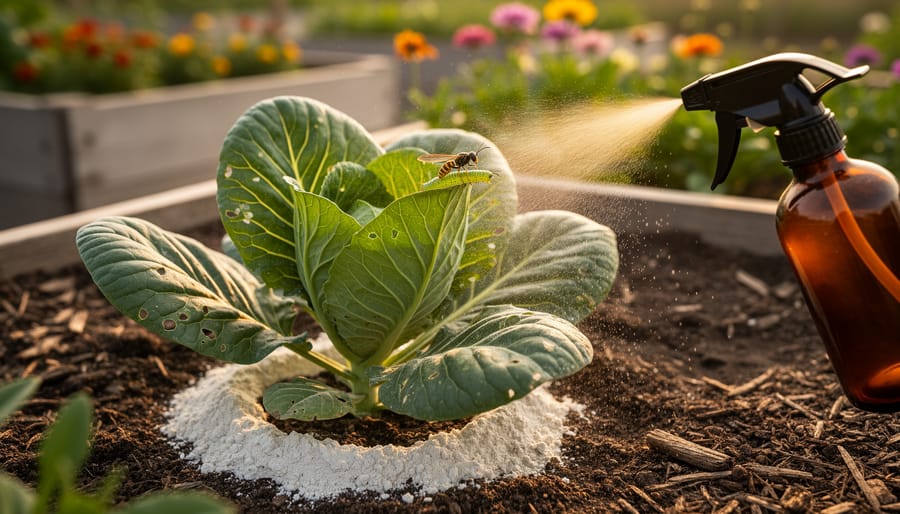
Identify your pest problem before reaching for any solution—even organic pesticides work best when you know exactly what you’re fighting and can time applications to target vulnerable life stages. Natural pesticides fall into three distinct categories that every sustainable grower should understand: biological controls using living organisms like beneficial nematodes or Bacillus thuringiensis bacteria, botanical pesticides derived from plants such as neem oil or pyrethrin, and mineral-based options like diatomaceous earth or copper sprays.
Start with the least disruptive option first. Biological pesticides target specific pests without harming beneficial insects, making them ideal for maintaining garden ecosystem balance. When Sarah Chen introduced parasitic wasps to her quarter-acre market garden in Vermont, she eliminated cabbage worm damage by 90% without spraying anything at all. Botanical pesticides offer broader action when problems escalate, though they require careful timing since many break down quickly in sunlight. Apply neem oil in early morning or evening to maximize effectiveness and protect pollinators during their active hours.
Reserve mineral pesticides for persistent problems or preventative protection against fungal diseases. These options often have longer residual effects but can impact soil chemistry with repeated use, so rotate your approaches seasonally. Understanding these three categories empowers you to create an integrated pest management strategy that protects your crops while nurturing the complex web of life that makes organic growing successful. The goal isn’t eliminating every pest—it’s maintaining balance where your plants thrive alongside the beneficial organisms that support them naturally.
What Makes a Pesticide ‘Agroecological’?
When most people hear “pesticide,” they picture chemical sprays that eliminate every bug in sight. But in agroecological farming, pesticides serve a fundamentally different purpose. Rather than waging war against nature, agroecological pest management works in harmony with it, treating challenges as opportunities to strengthen your farm’s natural defenses.
The key difference lies in philosophy and approach. Conventional pest control typically relies on synthetic chemicals designed to quickly kill target pests, often disrupting entire ecosystems in the process. Agroecological methods, on the other hand, focus on ecosystem management, building biodiversity and resilience so your farm can naturally regulate pest populations. Think of it as supporting your immune system rather than constantly taking antibiotics.
This approach requires rethinking what we mean by “pesticide.” In organic and agroecological contexts, these products come from natural sources like plants, minerals, or beneficial microorganisms. They work more gently, targeting specific problems while preserving the helpful insects and soil organisms that keep your garden thriving.
Sarah Martinez, who runs a successful CSA operation in Ontario, describes her shift in thinking: “I stopped asking ‘How do I kill this pest?’ and started asking ‘Why is this pest here, and what’s out of balance?’ Once I focused on building healthy soil and attracting beneficial insects, my pest problems practically solved themselves.”
This holistic perspective means that agroecological pesticides are always used as part of a broader strategy, never as standalone solutions. They’re the safety net, not the foundation.
Type 1: Biological Pesticides (Biopesticides)
Microbial Pesticides
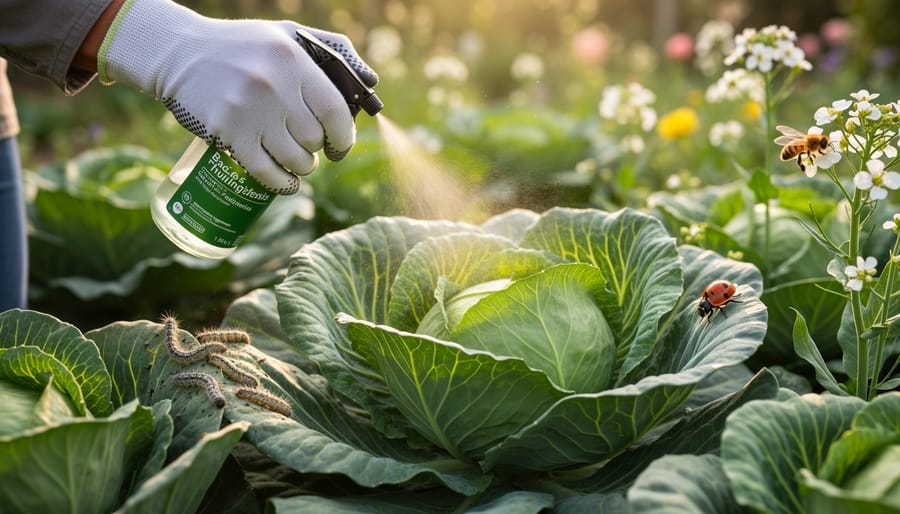
Nature has its own pest control army, and microbial pesticides harness these tiny warriors to protect your crops. These living organisms—bacteria, fungi, and viruses—work like precision tools, targeting specific pests while leaving beneficial insects, pollinators, and other garden helpers completely unharmed.
The star player in this category is Bacillus thuringiensis, commonly called Bt. This naturally occurring soil bacterium produces proteins that are toxic to caterpillars but harmless to humans, pets, and beneficial insects. When caterpillars ingest Bt-treated plants, the proteins disrupt their digestive system, stopping them from feeding within hours. It’s particularly effective against cabbage worms, tomato hornworms, and other leaf-munching larvae. Apply Bt in the early morning or evening when caterpillars are actively feeding, and reapply after rain.
Another effective option is Beauveria bassiana, a fungus that naturally infects soft-bodied insects like aphids, whiteflies, and thrips. The fungal spores attach to the pest’s body, penetrate its outer shell, and grow inside, eventually killing it. This works best in humid conditions and may take several days to show results.
Ontario farmer Maria Chen shares her success: “After switching to Bt for my organic brassicas, I finally conquered cabbage worms without harming the ladybugs and lacewings that patrol my garden. It’s been a game-changer for maintaining my organic certification while keeping plants healthy.”
These microbial pesticides work best as preventive measures or when pest populations are young and small.
Plant-Derived Pesticides
Nature provides some of the most effective pest control solutions right in our gardens and forests. Plant-derived pesticides, also called botanical insecticides, harness the protective compounds that plants have evolved over millions of years to defend themselves against pests.
Neem oil, extracted from the neem tree native to India, stands out as a versatile organic pest fighter. It works by disrupting insect hormones, preventing larvae from maturing while also acting as a feeding deterrent. Many organic farmers swear by weekly neem applications during growing season to manage aphids, whiteflies, and spider mites. The beauty of neem is its gentle impact on beneficial insects like bees and ladybugs when applied correctly.
Pyrethrum, derived from chrysanthemum flowers, delivers quick knockdown action against a broad spectrum of insects. It attacks the nervous systems of pests rapidly, making it ideal for immediate infestations. However, its fast breakdown in sunlight means you’ll need to time applications for early morning or evening.
Essential oils from rosemary, peppermint, and clove offer another botanical approach. These work primarily as repellents and contact killers, perfect for smaller garden areas or greenhouse settings.
Within integrated pest management strategies, these plant-derived options shine brightest when combined with other practices. Sarah Chen, an Oregon vegetable grower, rotates neem treatments with beneficial insect releases and has reduced pest damage by 80 percent. She emphasizes patience: “Botanical pesticides work with nature’s timeline, not against it.” The key is consistency, proper timing, and remembering that these tools work best as part of a holistic approach rather than standalone solutions.
Real Farm Success: Maria’s Vineyard Story
Maria Rodriguez transformed her five-acre California vineyard after persistent pest issues pushed her to rethink her approach. “I was spending over $3,000 annually on synthetic pesticides, and the grape leafhoppers kept coming back stronger,” she shares.
Three years ago, Maria made the switch to biological pesticides, starting with Bacillus thuringiensis for caterpillar control and introducing beneficial nematodes for soil-dwelling pests. The transition wasn’t without hurdles. “The first season was rough,” Maria admits. “I had to learn patience and accept that biological control works differently—it’s about balance, not elimination.”
She now uses pheromone traps for monitoring and releases lacewings to manage aphid populations naturally. Her biggest challenge was adjusting her expectations around pest damage thresholds. “I learned that a few chewed leaves don’t mean crop failure.”
The results speak for themselves: Maria’s input costs dropped by 40%, her soil health improved dramatically, and she achieved organic certification. “My wines actually taste better now,” she says with pride. “Customers tell me they can taste the difference when grapes grow in truly healthy soil.”
Best Practices for Using Biopesticides
Getting the most from biopesticides requires thoughtful timing and application. Apply them early in the morning or late evening when beneficial insects are less active and conditions are cooler. Since many biopesticides contain living organisms, they work best when temperatures are moderate and humidity is present.
Store biopesticides properly in cool, dry locations away from direct sunlight, and always check expiration dates since their active ingredients can lose potency over time. Mix only what you’ll use immediately, as prepared solutions often don’t keep well.
Combine biopesticides with other sustainable practices for better results. Rotate different biopesticide types to prevent pest resistance, and integrate them with companion planting, crop rotation, and habitat creation for beneficial insects. One Michigan CSA farmer shared how pairing Bt applications with strategic marigold borders reduced her pest problems by 70% while creating a haven for pollinators.
Remember that biopesticides work preventatively and may take longer than synthetic options. Monitor your crops regularly, apply at the first sign of pests, and be patient. You’re building a balanced ecosystem, not just eliminating problems.
Type 2: Botanical and Mineral-Based Pesticides
Mineral Pesticides in Action
Mineral-based pesticides have been protecting crops for centuries, and they remain valuable tools in organic farming today. Unlike synthetic chemicals, these naturally occurring substances offer effective pest management while fitting perfectly into sustainable growing systems.
Sulfur stands as one of the oldest fungicides still in use. When applied as a fine dust or wettable powder, sulfur particles disrupt fungal spores, preventing diseases like powdery mildew, rust, and black spot from taking hold. Many organic orchardists swear by sulfur sprays during humid spring weather when fungal pressure peaks. The key limitation? Sulfur can harm beneficial insects if overused, and it becomes less effective in temperatures above 90 degrees Fahrenheit, sometimes even causing leaf burn in extreme heat.
Copper compounds work wonders against bacterial diseases such as fire blight and bacterial spot. These minerals create an inhospitable surface environment where bacteria simply cannot thrive. Small-scale vegetable growers often apply copper sprays preventatively during wet periods when bacterial infections spread most rapidly.
| Mineral Type | Target Issues | Best Application Timing | Organic Certified |
|---|---|---|---|
| Sulfur | Fungal diseases | Early morning, cool weather | Yes |
| Copper | Bacterial problems | Before rain events | Yes |
| Diatomaceous Earth | Soft-bodied insects | Dry conditions | Yes |
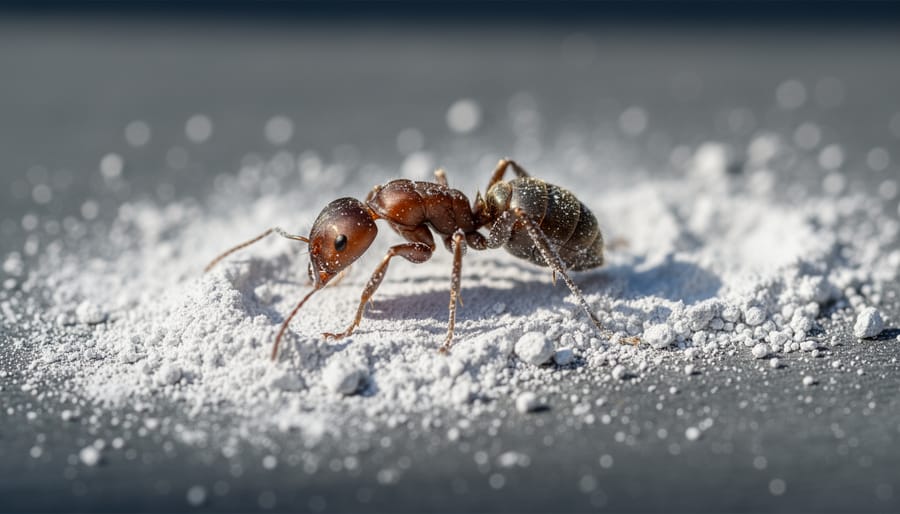
Diatomaceous earth takes a completely different approach. These microscopic fossilized algae create sharp edges that pierce insect exoskeletons, causing dehydration. It works brilliantly against slugs, beetles, and aphids when applied as a barrier around plant bases.
The main consideration with mineral pesticides is persistence. Copper can accumulate in soil over time, potentially affecting soil health. The sustainable approach means using these tools strategically and sparingly, rotating with biological controls, and always monitoring for actual pest pressure rather than spraying preventatively out of habit.
Soap and Oil Sprays
Soap and oil sprays represent some of the gentlest yet effective pest control methods available to organic gardeners. These low-impact solutions work by suffocating soft-bodied insects like aphids, whiteflies, spider mites, and mealybugs, making them perfect for anyone committed to sustainable growing practices.
Insecticidal soaps use potassium salts of fatty acids to break down insect cell membranes on contact. You can purchase ready-made products like Safer Brand Insect Killing Soap, or create your own by mixing 1-2 tablespoons of pure liquid castile soap with one quart of water. Just avoid dish detergents, as they often contain degreasers and additives that can harm plants.
Horticultural oils, including neem oil and dormant oils, coat insects and their eggs, disrupting their life cycles. These work especially well during dormant seasons when you can apply heavier concentrations without damaging foliage. During the growing season, lightweight summer oils protect delicate leaves while still controlling pests.
Sarah Chen, an organic farmer in Vermont, swears by her weekly neem oil routine. “I spray early morning or evening when beneficial insects are less active,” she shares. “It’s kept my tomatoes pest-free for three seasons without harsh chemicals.”
Application timing matters tremendously. Always test on a small plant area first, spray during cooler parts of the day to prevent leaf burn, and reapply after rain. Remember, direct contact is essential since these sprays don’t have residual effects. With consistent application and proper timing, soap and oil sprays become powerful allies in your organic pest management toolkit.
Environmental Considerations
Here’s the truth many gardeners don’t realize: just because a pesticide is natural or organic doesn’t mean it’s completely harmless. Even botanical pesticides like neem oil can harm beneficial insects if applied carelessly, and products containing copper can accumulate in soil over time, affecting microbial communities essential for soil health.
Responsible use means following label instructions precisely, targeting applications only where needed, and timing treatments to protect beneficial species. Consider your farm’s watershed too—runoff from any pesticide can impact nearby water systems. The goal isn’t perfection but mindful stewardship, using the least toxic option at the right time and always prioritizing prevention through healthy soil and biodiversity first.
Type 3: Behavioral and Physical Control Pesticides
Pheromone Traps and Mating Disruptors
These clever pest management tools work like nature’s version of mixed signals. Pheromone traps use synthetic versions of insects’ natural chemical messengers to lure male pests into traps, while mating disruptors saturate your garden with these same scents, making it impossible for males to locate females. The beauty? Beneficial insects like ladybugs and bees aren’t affected since each pheromone is species-specific.
Codling moth pheromone traps are garden heroes for apple and pear growers, capturing males before they can mate and reducing the next generation’s numbers. For vegetable gardens, tomato pinworm disruptors work wonders by preventing reproduction without harming pollinators or predatory insects. Oriental fruit moth dispensers help stone fruit enthusiasts protect their peaches and plums organically.
Sarah, an organic orchardist in Washington, shares her success: “After switching to pheromone disruption three years ago, my codling moth damage dropped from 30% to just 5%, and my beneficial insect populations have thrived.”
These methods require patience since they prevent future generations rather than eliminating current pests immediately. However, they’re incredibly effective as part of an integrated approach, especially when combined with physical barriers and careful monitoring of your crops throughout the growing season.
Physical Barriers and Deterrents
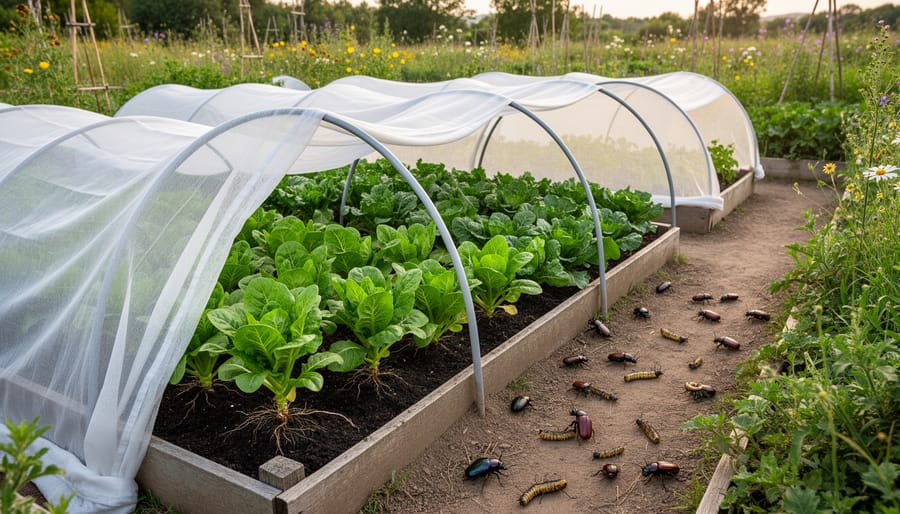
Sometimes the best pest control doesn’t involve sprays at all. Physical barriers create a protective shield between your crops and hungry pests, offering immediate protection without any environmental concerns.
Row covers are garden workhorses, lightweight fabric sheets that float over plants to exclude insects while allowing sunlight and water through. They’re particularly effective against flea beetles, cabbage moths, and cucumber beetles. Just remember to remove them when plants need pollination.
For slug and snail problems, copper tape works like magic. These pests won’t cross copper barriers due to a natural chemical reaction with their slime. Apply tape around raised beds or individual pots for season-long protection.
Reflective mulches confuse aphids and whiteflies by disrupting their ability to locate host plants. Silver or aluminum-coated plastic mulches work especially well for squash and tomatoes during early growth stages.
Sticky traps capture flying insects before they can cause damage. Yellow attracts whiteflies and aphids, while blue draws thrips. Position them at plant canopy height for best results.
Maria, an organic farmer in Vermont, combines row covers with beneficial insect releases. “The covers protect young plants during their vulnerable stage, then I remove them and let my ladybugs take over,” she explains. This integrated approach maximizes protection while minimizing labor and supporting natural ecosystem balance.
Creating Your Integrated Approach
The real magic happens when you weave these three pesticide types together into a customized pest management plan. Think of it as creating layers of defense that work in harmony with nature rather than against it.
Start by observing your garden or farm regularly. Walk your rows each morning with coffee in hand, checking for pest activity and beneficial insect populations. This behavioral control forms your foundation. Remove affected plant parts, adjust watering schedules, and practice crop rotation to discourage pests before they become problematic.
Next, invite biological allies into your space. Plant flowering borders to attract parasitic wasps and ladybugs. Consider purchasing beneficial nematodes for soil-dwelling pests. When problems arise despite these efforts, reach for your botanical options as targeted interventions rather than blanket solutions.
One small-scale farmer in Oregon shared how this approach reduced her pest losses by 60% while actually increasing biodiversity on her three-acre plot. She scouts daily, releases lacewings bi-weekly during peak season, and keeps neem oil as her backup plan.
Remember, successful integrated pest management means accepting some crop damage as part of a healthy ecosystem. Your goal isn’t perfection but balance, creating a resilient growing system that sustains itself season after season while producing abundant, chemical-free harvests.
Choosing the Right Pesticide Type for Your Garden
Making smart pesticide choices starts with understanding that the goal isn’t perfection—it’s balance. The most successful gardeners and farmers approach pest management like a ladder, always starting at the bottom with the gentlest options and climbing only when necessary.
Your decision-making process should follow a strategic assessment:
- Identify the pest accurately and research its life cycle to determine vulnerable stages
- Evaluate the actual damage level—minor cosmetic issues rarely justify intervention
- Consider your crop type and harvest timeline, as edible crops require extra caution
- Check weather conditions and pest pressure intensity in your specific microclimate
- Start with biological controls or physical barriers before moving to other options
- Reserve botanical pesticides for moderate pressure when monitoring shows escalating issues
- Use mineral-based solutions only when facing severe infestations that threaten crop viability
Remember that timing matters tremendously. Sarah Martinez, an organic berry farmer in Oregon, shares her philosophy: “I watch my plants daily during peak season. Catching aphids early means a strong spray of water works wonders. Wait too long, and I’m reaching for neem oil.”
Your ecological goals should guide every choice. If you’re cultivating habitat for pollinators and beneficial insects, prioritize targeted biological controls over broad-spectrum botanicals. Container gardeners often find that combining preventive practices—crop rotation, companion planting, healthy soil—reduces their need for any pesticides dramatically. The least disruptive option that effectively manages your specific problem is always the right choice.
Effective pest management in agroecological systems isn’t about finding the one perfect pesticide solution. Instead, it’s about understanding all three types—biological, botanical, and mineral-based—and knowing when and how to use each one thoughtfully. The real magic happens when these tools become part of a broader ecosystem management strategy that includes crop rotation, companion planting, habitat diversity, and soil health.
Think of pesticides as just one instrument in your sustainable farming orchestra. Sarah, a third-generation farmer who transitioned to organic methods five years ago, puts it perfectly: “I used to think going organic meant choosing between pests or chemicals. Now I realize it’s about creating a system where healthy soil and beneficial insects do most of the work, and these gentler pesticides are my backup plan, not my first line of defense.”
Whether you’re tending a backyard vegetable garden or planning your own small-scale farming venture, start by observing your ecosystem. Notice which beneficial insects are already present. Test your soil. Build relationships with plants that attract natural predators. When pest pressure does require intervention, you’ll be equipped to choose the right biological, botanical, or mineral option for that specific situation.
Ready to see these principles in action? Connect with local CSA farms in your area. Many offer farm tours, workshops, and volunteer opportunities where you can witness integrated pest management firsthand and learn from experienced growers who’ve perfected the balance.
