
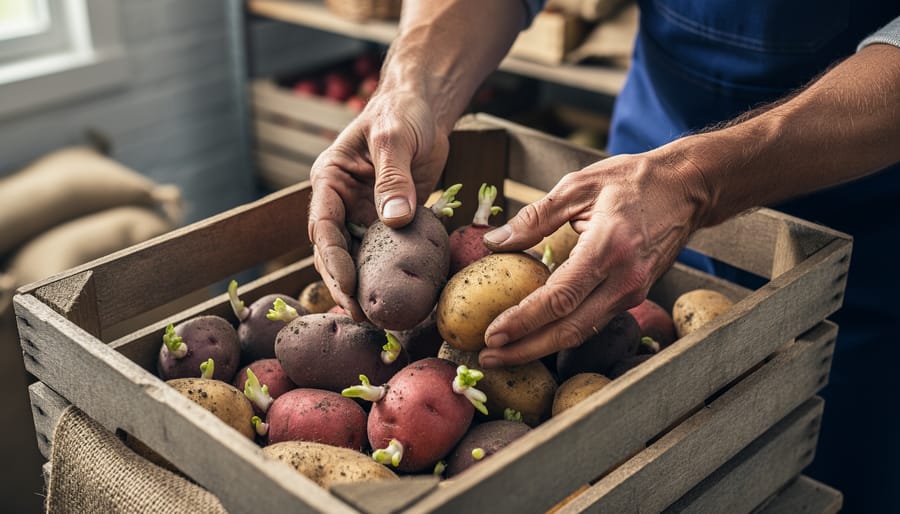
Select certified organic seed potatoes from reputable suppliers who test for diseases like late blight and potato virus Y, ensuring your crop starts with the healthiest possible foundation. Store your seed potatoes in a cool, dark place between 38-45°F with good air circulation for 2-3 weeks before planting to encourage proper sprouting and vigor.
Save your best-performing tubers each season by choosing plants that produce abundant, uniform potatoes and show strong disease resistance throughout the growing season. This simple selection process, practiced by generations of farmers, gradually adapts varieties to your specific soil conditions and local climate while preserving genetic diversity that commercial agriculture often overlooks.
The difference between ordinary potatoes and true seed potatoes matters more than most gardeners realize. Seed potatoes carry the living blueprint of varieties developed over centuries, some dating back to indigenous cultivation practices in the Andes Mountains. When you choose organic seed stock, you’re participating in a vital chain of preservation that keeps heirloom varieties alive and maintains alternatives to the limited commercial varieties dominating grocery store shelves.
Your seed potato choices directly impact your harvest quality, disease resistance, and long-term garden sustainability. Organic certification guarantees these seeds were grown without synthetic pesticides or fungicides, meaning they’ve already proven their natural resilience. Whether you’re planting a backyard garden bed or managing a small farm operation, understanding proper seed selection and storage transforms your potato patch from a casual hobby into a meaningful contribution to food security and agricultural biodiversity.
What Makes Organic Seed Potatoes Different
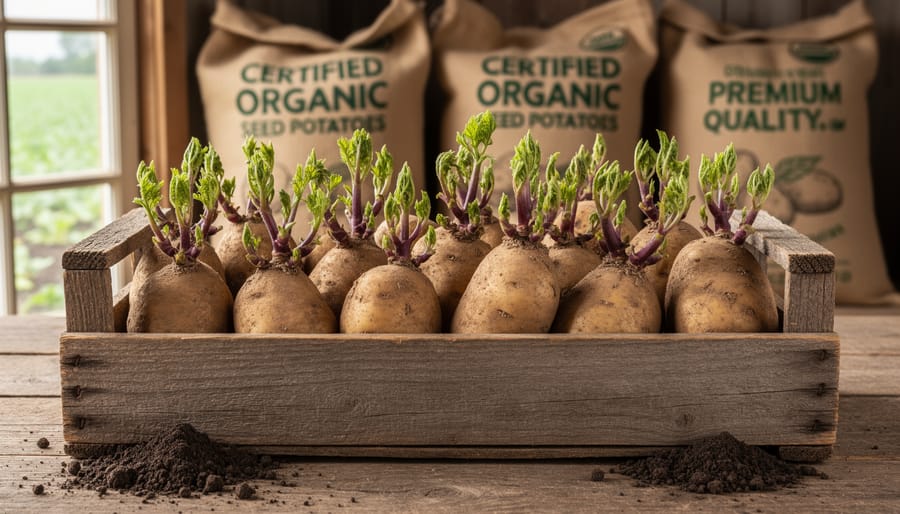
Certification Standards You Should Know
When shopping for organic seed potatoes, understanding certification standards helps you make informed decisions. The USDA organic certification requirements ensure your seed potatoes meet strict guidelines that protect both soil health and your final harvest.
Certified organic seed potatoes cannot be treated with synthetic fungicides, chemical sprout inhibitors, or conventional pesticides. This means no chlorpropham (a common sprout suppressant) or synthetic seed treatments. The potatoes must be grown in soil that’s been free from prohibited substances for at least three years, using only approved organic fertilizers and pest management techniques.
The certification guarantees that growers receive seed stock cultivated through natural methods like crop rotation, composting, and biological pest control. This matters because healthier seed potatoes, free from chemical residues, typically produce more vigorous plants with stronger disease resistance. For home gardeners and small farmers, choosing certified organic seed potatoes means you’re starting with genetics that haven’t been compromised by synthetic treatments, giving your crop the best foundation for success while supporting sustainable agriculture practices that benefit the broader ecosystem.
Disease-Free vs. Disease-Resistant Varieties
When shopping for organic seed potatoes, you’ll encounter two important terms that aren’t interchangeable: disease-free certification and disease-resistant varieties. Understanding both will set you up for a thriving potato harvest.
Disease-free certification means your seed potatoes have been inspected and tested to ensure they’re not carrying common potato diseases like late blight, bacterial ring rot, or viruses. This certification is crucial because many potato diseases live inside the tuber without visible symptoms, ready to spread throughout your garden once planted. Think of it as a clean bill of health for your starting material.
Disease-resistant varieties, on the other hand, refer to the potato’s genetic makeup. These varieties have been bred to naturally fight off or tolerate specific diseases. For example, some varieties resist late blight better than others, giving you an extra layer of protection.
Here’s the key: you want both. Starting with certified disease-free seed potatoes of a disease-resistant variety gives you the best chance of success, especially in organic systems where synthetic pesticides aren’t an option. Sarah Chen, an organic farmer in Vermont, learned this firsthand. After struggling with recurring disease issues, she switched to certified disease-free, resistant varieties and saw her yields increase by forty percent. Smart seed selection truly makes all the difference.
The Crisis Facing Organic Seed Potato Diversity
Walk into any garden center today, and you’ll likely find the same handful of potato varieties: Yukon Gold, Russet, perhaps a Red Pontiac. But just a century ago, gardeners could choose from hundreds of distinct potato varieties, each with unique flavors, textures, and growing characteristics. This narrowing selection reflects a quiet shift happening in our food system, one that affects everyone who cares about what ends up on their plate.
The diversity of potato varieties available as organic seed has been steadily declining over recent decades. Many treasured heirloom varieties that once thrived in home gardens and small farms are becoming increasingly difficult to find. When farmers like Tom Henderson in Ontario searched for certified organic seed potatoes beyond the standard commercial varieties, he discovered that thoughtful organic seed selection required persistence and networking with other growers.
Why does this matter? Each potato variety carries genetic traits adapted to specific conditions. Some resist particular diseases, others handle drought better, and many possess flavors you simply can’t find in supermarket bins. As our climate becomes less predictable, having access to diverse potato genetics isn’t just about preserving culinary heritage; it’s about ensuring food security. If one variety fails in changing conditions, others may thrive.
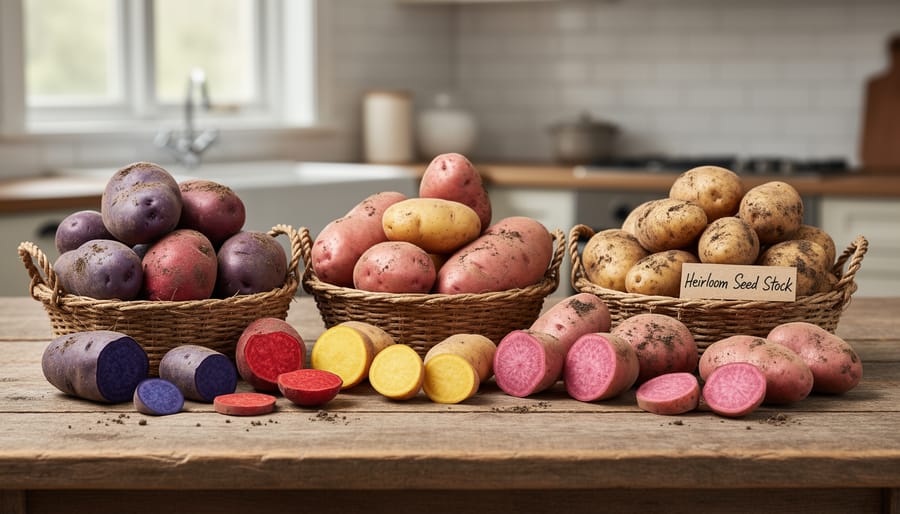
The good news is that passionate growers and seed savers are working to reverse this trend. Small seed companies and community seed libraries are preserving rare varieties, while home gardeners are rediscovering the satisfaction of growing something truly unique. By choosing to grow and save diverse potato varieties, you’re participating in something bigger than your backyard garden.
How Seed Preservation Works for Potatoes
Selecting the Best Seed Stock
Choosing the right potatoes to save as seed stock makes all the difference in building a resilient, productive garden year after year. Start by observing your plants throughout the growing season, marking the healthiest, most vigorous performers with a stake or flag. Look for disease-free plants with robust foliage and strong stems that showed good resistance to pests and environmental stresses.
When harvest time arrives, select tubers from your best-performing plants. Ideal seed potatoes are typically egg to medium-sized, about 1.5 to 3 inches in diameter. While larger potatoes are tempting, medium-sized tubers often produce more consistent results and are easier to cut for planting. Avoid saving potatoes from plants that showed signs of disease, stunted growth, or poor yields, as these traits can carry forward.
Consider variety performance carefully. Did certain varieties thrive in your specific microclimate and soil conditions? These local champions deserve priority in your seed-saving efforts. Organic farmer Maria Santos from Vermont shares her approach: “I always save seed from the variety that gave me the most abundant, beautiful harvest. Over five years, my saved Kennebecs have adapted beautifully to my clay-heavy soil.” This selection process gradually improves your seed stock’s adaptation to your unique growing conditions, creating a more sustainable and successful potato crop.
Storage Conditions That Prevent Disease
Proper storage creates the foundation for disease-free seed potatoes and successful planting seasons. Think of it as giving your seed stock a cozy winter retreat where they can rest and stay healthy until spring arrives.
Temperature control is your first priority. Store organic seed potatoes between 38-40°F, which keeps them dormant without triggering sprouting or encouraging rot. A basement, root cellar, or insulated garage often works perfectly. Avoid temperatures below 32°F, as freezing damages the cellular structure, or above 50°F, which prompts premature sprouting and weakens the tubers.
Humidity matters just as much as temperature. Aim for 90-95% relative humidity to prevent shriveling while avoiding condensation that invites fungal diseases. If your storage area feels too dry, place shallow pans of water nearby or lightly mist the surrounding air, not the potatoes themselves. Conversely, excessive moisture requires better ventilation to keep diseases at bay.
Complete darkness preserves quality by preventing the development of solanine, a toxic compound that turns potatoes green. Even brief light exposure can compromise your seed stock, so store them in opaque containers or covered bins.
Ventilation keeps air circulating without creating drafts. Good airflow prevents moisture buildup and removes ethylene gas naturally released during storage. Use slatted wooden crates or mesh bags rather than sealed plastic containers, and arrange them with space between layers.
Regular monitoring catches problems early. Check your seed potatoes monthly, removing any showing soft spots, unusual odors, or disease symptoms. This simple practice has helped countless organic farmers, like Minnesota grower Sarah Chen, maintain 98% viability rates season after season through attentive storage management.
Improvement Through Selection and Adaptation
What to Select For in Your Climate
Your local climate plays a starring role in determining which seed potato varieties will thrive in your garden. Start by observing your growing season length. Short-season gardeners in northern regions should prioritize early-maturing varieties that can produce a full crop before the first frost. Conversely, if you’re blessed with a longer growing season, you have more flexibility to experiment with mid-season and late varieties.
Water availability matters tremendously. In drought-prone areas, seek out varieties known for producing decent yields with less moisture. Some heritage varieties have adapted to specific regional conditions over generations, making them natural champions for water-wise gardening. Cold-hardy varieties are essential for gardeners facing unpredictable spring weather or early autumn frosts.
Pay attention to disease pressures common in your area too. If late blight regularly visits your region, choosing resistant varieties can save your crop. Many organic farmers have found success by implementing climate adaptation strategies that match varieties to their specific microclimates.
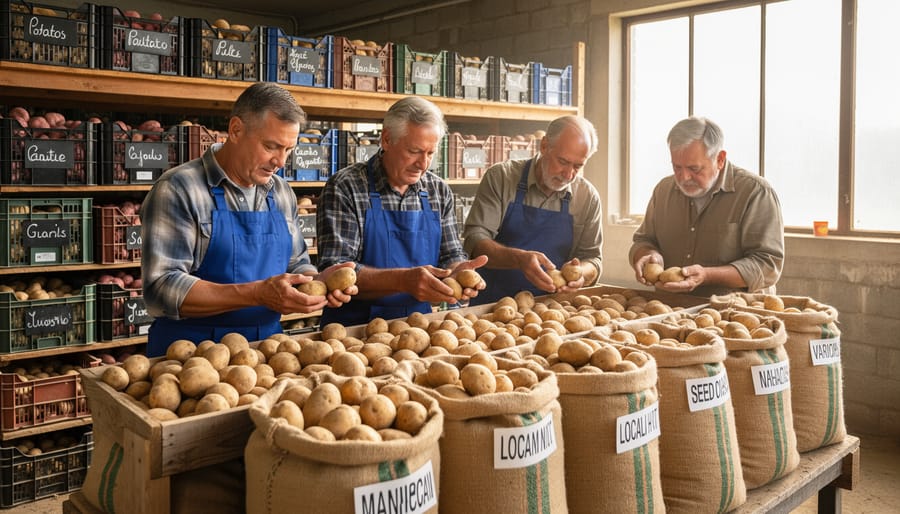
Talk to neighboring gardeners and local seed savers about what performs well in your area. Their experience is invaluable for identifying varieties that consistently deliver in your unique conditions, helping you build a resilient, productive potato patch year after year.
Keeping Records for Better Results
Good record-keeping transforms your seed potato selection from guesswork into an organized improvement program. Start simple by creating a garden journal or spreadsheet to track essential information from each growing season. Note which potato plants produced the most tubers, showed disease resistance, or thrived in challenging weather conditions. Include details like planting dates, harvest weights, and any pest or disease observations.
Many successful organic growers use a color-coded tagging system during the growing season, marking their best-performing plants with ribbons or stakes. This makes it easy to identify which potatoes to save for next year’s seed stock. Take photos throughout the season to document growth patterns and any issues that arise.
Sarah Chen, an organic farmer in Vermont, credits her detailed records for helping her develop a potato variety perfectly suited to her microclimate. “After five years of tracking performance, I identified three plants that consistently outperformed the rest. Now my entire seed stock comes from those superior genetics,” she shares.
Your records become increasingly valuable over time, revealing patterns and helping you make smarter selection decisions. Even basic notes about what worked and what didn’t will guide your seed-saving journey toward better harvests each year.
Sourcing Quality Organic Seed Potatoes
Finding quality organic seed potatoes starts with identifying certified suppliers who prioritize disease-free stock and genetic integrity. Look for vendors displaying USDA Organic certification or equivalent regional standards, ensuring your seed potatoes meet stringent growing requirements without synthetic chemicals or treatments.
Timing matters significantly when sourcing seed potatoes. Place orders in late winter (January through February) for spring planting, as popular varieties sell out quickly. Fall plantings require ordering by late summer. Early ordering also gives you first pick of freshly harvested, properly stored tubers with optimal sprouting potential.
When evaluating suppliers, check for transparent growing practices and willingness to share information about variety origins, disease testing protocols, and storage conditions. Reputable suppliers provide detailed variety descriptions, including days to maturity, flavor profiles, and regional adaptability. Read customer reviews focusing on seed viability, shipping quality, and customer service responsiveness.
Local seed savers and regional seed libraries offer treasure troves of adapted varieties with proven performance in your climate. Connect with these passionate growers through farmers markets, agricultural extension offices, or online gardening communities. Many heritage variety enthusiasts happily share knowledge alongside seeds, offering invaluable growing tips specific to your area.
Specialty suppliers focusing exclusively on potatoes typically maintain broader variety selections than general seed companies. These dedicated growers often preserve rare heirlooms and experiment with disease-resistant breeding lines. Building relationships with reliable organic seed sources ensures consistent access to quality stock year after year.
Consider joining regional seed exchanges or potato-growing associations where members share experiences and sometimes trade varieties. These networks provide community support while expanding your access to diverse, locally-adapted organic seed potatoes. Remember, investing in quality seed potatoes from trustworthy sources pays dividends through healthier plants, better yields, and superior flavor.
Real Farmers Making a Difference
Meet Tom Stearns, co-founder of High Mowing Organic Seeds in Vermont, who’s been championing organic seed potato preservation for over two decades. What started as a small operation has grown into a mission-driven company that maintains dozens of certified organic potato varieties, including rare heirlooms that were nearly lost to time. Tom’s approach focuses on rigorous selection, saving only the healthiest tubers from disease-free plants each season.
The challenge? Building a sustainable system when organic seed potatoes cost more to produce and face stricter regulations than conventional alternatives. Tom’s team overcame this by creating detailed growing protocols and partnering with dedicated growers who understand the long game. They test varieties across different climates, ensuring farmers from Maine to Montana can find potatoes suited to their region. The impact ripples outward: home gardeners now have access to unique varieties like Rose Gold and Purple Viking, while small farms can source reliable organic seed that performs year after year.
Across the country in Washington’s Skagit Valley, the Organic Seed Alliance works directly with farmers to improve potato genetics through participatory plant breeding. Their approach brings growers into the selection process, letting them choose traits that matter most in real-world conditions: disease resistance, storage quality, and flavor.
One participating farmer, Maria Chen, helped develop a late blight-resistant variety specifically adapted to Pacific Northwest conditions. She spent five years selecting and replanting the strongest performers from her fields. The result? A robust potato that thrives in her cool, wet climate without synthetic fungicides. Maria now shares seed with neighboring farms, creating a local network of growers who support each other’s success.
Both stories illustrate how dedication to organic seed potato preservation creates lasting change. These farmers aren’t just growing food; they’re stewarding genetic diversity, proving that sustainable practices can meet modern agricultural challenges while keeping precious varieties alive for future generations.
Every choice we make as consumers, gardeners, and community members contributes to the bigger picture of food security and environmental health. By choosing organic seed potatoes, you’re casting a vote for biodiversity, soil health, and resilient farming practices. Whether you’re purchasing certified organic seed potatoes from local growers, starting your own small-scale preservation project in your backyard, or simply asking questions at farmers’ markets about seed sources, you’re part of a growing movement.
Consider supporting farmers who prioritize variety preservation and organic methods. Many started just like you, with curiosity and a few seed potatoes. Share heirloom varieties with friends and neighbors, creating a local seed network that strengthens community food resilience. Even small steps matter: storing a portion of your harvest for next season’s planting or choosing suppliers committed to sustainable agriculture creates ripple effects far beyond your garden.
The future of our food system depends on collective action. Your informed decisions today help preserve genetic diversity, support ethical farming practices, and ensure that future generations can enjoy the incredible variety and nutritional benefits that organic seed potatoes offer.
