
Daily Archives

5 Articles

Transform Your Garden Planning: How Collaborative CSA Groups Make Growing Easier

Posted by darrell on
0
Seasonal Planning and Management
Transform Your Garden Planning: How Collaborative CSA Groups Make Growing Easier

Transform your growing season by joining forces with fellow gardeners and farmers in a collaborative planning group. These dynamic communities bring together diverse expertise, shared resources, and collective buying power to amplify everyone’s success. Whether you’re mastering CSA planning fundamentals or coordinating neighborhood garden efforts, collaborative planning groups offer practical solutions to common challenges.

Picture shared seed orders that cut costs by 40%, coordinated planting schedules that ensure year-round harvests, and experienced mentors providing real-time guidance during critical growing phases. Local food systems thrive when growers connect, share knowledge, and support each other’s agricultural journey.

By pooling resources, sharing equipment, and leveraging collective experience, these groups transform individual efforts into resilient food networks. Start small with just 3-4 committed members, focus on clear communication channels, and watch your agricultural community flourish through the power of collaboration.

Diverse group of community gardeners collaboratively planning their growing season
Group of diverse gardeners gathered around a planning table with garden maps and seed catalogs

What Makes a Collaborative Planning Group Work

Shared Knowledge and Experience

Members of collaborative planning groups benefit immensely from the wealth of collective knowledge shared within the community. Experienced gardeners often mentor newcomers, sharing time-tested techniques for pest management, soil improvement, and crop rotation. This exchange of expertise helps prevent common mistakes and accelerates the learning curve for beginners.

The diversity of experience within these groups is particularly valuable, as members often specialize in different areas. While one gardener might excel at growing heirloom tomatoes, another might have extensive knowledge of companion planting or natural pest control methods. Members can also learn from each other’s experiments and failures, creating a supportive environment where both successes and challenges contribute to the group’s collective wisdom.

Regular meetings and informal conversations allow members to discuss seasonal challenges, share innovative solutions, and adapt traditional growing methods to local conditions. This collaborative learning environment helps everyone become more skilled and confident gardeners while building lasting community connections.

Resource Pooling

Resource pooling is a cornerstone of successful collaborative planning groups, creating a shared economy that benefits all members. Members typically contribute various gardening tools, equipment, and supplies to a communal pool, reducing individual expenses and ensuring everyone has access to necessary resources. This might include larger items like tillers and wheelbarrows, as well as smaller tools like pruning shears and watering cans.

Seed sharing is particularly valuable, allowing members to exchange heirloom varieties and successful cultivars. Many groups maintain a seed library, documenting which varieties thrive in local conditions. Some groups also share cold frames, greenhouse space, and storage facilities for harvested produce.

Beyond physical resources, members often pool their knowledge and skills. Experienced gardeners might share their expertise in composting or pest management, while others contribute organizational or marketing skills. This collaborative approach not only makes gardening more affordable but also strengthens community bonds and ensures sustainable resource use.

Starting Your Own Planning Group

Finding Like-minded Gardeners

Finding like-minded gardeners for your collaborative planning group can be both exciting and rewarding. Start by reaching out to your local community garden, where you’ll often find enthusiasts who share your passion for sustainable growing. Social media platforms, particularly Facebook groups and Instagram, are excellent resources for connecting with fellow gardeners in your area.

Don’t overlook community bulletin boards at garden centers, health food stores, and farmers’ markets. These spaces often attract people interested in organic growing and sustainable practices. Local agricultural extension offices frequently host workshops and events where you can meet potential group members while learning new skills.

Consider joining neighborhood apps like NextDoor or attending sustainable living meetups to find nearby gardeners. Your local library or community center might also host gardening clubs or workshops where you can network. Remember to be clear about your collaborative planning group’s goals when reaching out – whether it’s sharing resources, knowledge exchange, or working together on larger projects.

Word-of-mouth remains powerful, so let friends, family, and colleagues know you’re looking to form a group. Sometimes the best connections come through personal recommendations from people who understand your vision and values.

Setting Group Goals and Guidelines

Establishing clear goals and guidelines is crucial for any collaborative planning group’s success. Start by organizing a kickoff meeting where all members can contribute their ideas and expectations. Create a shared mission statement that reflects the group’s collective vision for sustainable growing practices and how to maximize your garden’s productivity.

Set specific, measurable objectives that align with your growing season and available resources. These might include production targets, volunteer hour commitments, or community outreach goals. Document these agreements in writing, making sure to address:

• Meeting frequency and communication methods
• Decision-making processes
• Resource sharing guidelines
• Individual responsibilities and roles
• Conflict resolution procedures
• Time commitments and deadlines

Consider creating a simple charter that members can sign, demonstrating their commitment to the group’s success. Regular check-ins help ensure everyone stays aligned with these guidelines while allowing flexibility for adjustments as the group evolves. Remember that clear expectations from the start prevent misunderstandings and strengthen group cohesion.

Planning Tools and Techniques

Digital Collaboration Platforms

Today’s digital tools make group planning easier and more efficient than ever. Popular platforms like Trello and Asana help teams organize tasks with visual boards and checklists, perfect for tracking planting schedules and harvest rotations. For real-time communication, Slack channels enable quick updates and file sharing, while WhatsApp groups work great for smaller teams needing to coordinate daily activities.

Google Workspace offers collaborative documents and spreadsheets that multiple members can edit simultaneously – ideal for maintaining crop plans and volunteer schedules. For virtual meetings, Zoom and Microsoft Teams provide reliable platforms for face-to-face discussions when in-person gatherings aren’t possible.

Farm-specific apps like Agrivi and Cropster can supplement these general tools, offering features tailored to agricultural planning. Remember to choose platforms that all group members can easily access and use, keeping the learning curve manageable for everyone involved. Free versions of most tools offer enough features for basic group coordination.

Multiple screens showing garden planning apps and digital collaboration tools
Split-screen view of various digital garden planning tools and apps on different devices

Seasonal Planning Strategies

Successful collaborative planning groups thrive on well-coordinated seasonal planting schedules that maximize growing space and yield throughout the year. Start by creating a shared calendar where members can map out their crop rotations and planting intentions. This helps prevent overlap and ensures diverse produce availability throughout the growing season.

Consider dividing your planning into three main phases: early spring cool-weather crops, summer heat-loving vegetables, and fall/winter hardy plants. Each member can take responsibility for different crop families, rotating them annually to maintain soil health and prevent pest issues. Using digital tools like shared spreadsheets or farming apps helps track succession planting dates and harvest windows.

Monthly planning meetings allow members to adjust schedules based on weather patterns, market demands, and group needs. Remember to factor in crop-specific growing times and local frost dates when coordinating your group’s planting calendar.
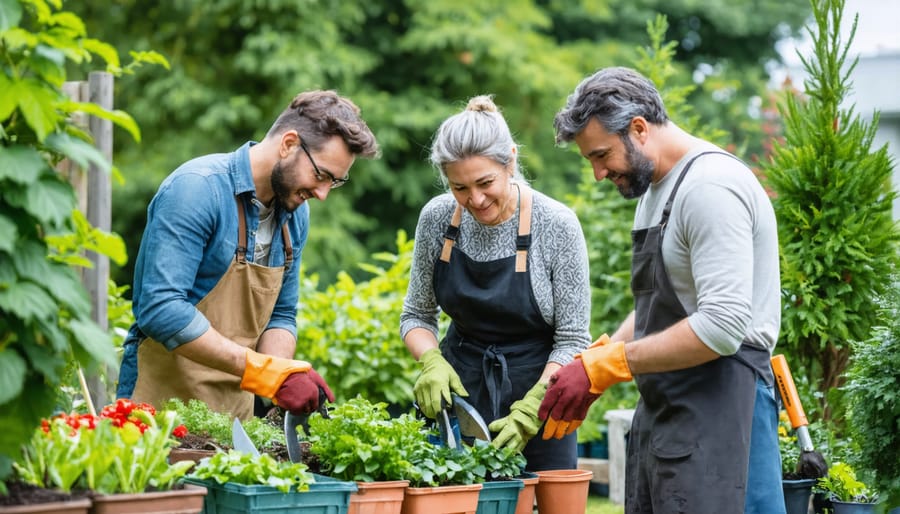
Active community garden members sharing resources and working collaboratively
Community members working together in a shared garden space, sharing tools and expertise

Success Stories and Real Examples

The power of collaborative planning groups comes alive through real-world success stories. In Vermont, the Intervale Food Hub transformed from a small farmers’ meeting into a thriving network of 40+ producers coordinating seasonal harvests and shared distribution. Their collaborative approach helped reduce food waste by 30% and increased member farmers’ profits by an average of 25%.

In Seattle, the Urban Farming Collective started with just six backyard gardeners sharing tools and knowledge. Within three years, they’ve grown to include 50 households, three community gardens, and a successful weekly market stand. Their shared planning system allows members to coordinate crop rotations and ensure a diverse harvest throughout the growing season.

The Bay Area Growers Alliance showcases how technology can enhance collaboration. Using digital planning tools, their 25 small-scale farmers coordinate planting schedules and share equipment. This cooperation has helped members reduce operational costs by 40% while expanding their collective CSA program to serve over 500 families.

Rural Minnesota’s Four Seasons Collaborative demonstrates the power of mentorship within planning groups. Experienced farmers partner with newcomers, sharing generations of growing wisdom. Their structured planning meetings have helped launch 12 new organic farms in the past five years, with a 90% success rate for new farmers.

These examples highlight how collaborative planning groups can scale from small neighborhood initiatives to regional networks. The key to success lies in clear communication, shared goals, and a willingness to adapt and learn together. Whether starting small or joining an established group, these success stories show the tremendous potential of agricultural collaboration.

Joining or starting a collaborative planning group can transform your gardening or farming journey from a solitary endeavor into a rewarding community experience. By working together, members share not just tools and resources, but also valuable knowledge, innovative ideas, and mutual support that helps everyone succeed. The collective approach reduces individual workload while maximizing productivity through shared expertise and coordinated efforts.

Whether you’re an experienced gardener or just starting out, these groups offer a supportive environment to learn, grow, and contribute to your local food system. The benefits extend beyond the garden fence, creating lasting friendships, strengthening community bonds, and building a more resilient local food network.

Ready to get started? Look for existing collaborative planning groups in your area through local gardening clubs, community centers, or farming organizations. If you can’t find one, consider gathering like-minded individuals and starting your own. Remember, every thriving garden community started with just a few passionate people coming together with a shared vision. Take that first step today, and become part of this growing movement toward sustainable, community-based agriculture.

Red Clover Varieties That Thrive When Climate Throws a Curveball

Posted by darrell on
0
Seed Preservation and Biodiversity
Red Clover Varieties That Thrive When Climate Throws a Curveball

Select red clover varieties based on your specific climate zone, with cold-hardy types like ‘Marathon’ thriving in northern regions and heat-tolerant ‘Southern Belle’ adapting well to southern environments. Plant multiple varieties simultaneously to extend harvest periods and boost resilience while growing a greener community. Focus on disease-resistant cultivars like ‘Freedom’ and ‘Arlington’ in humid areas where fungal pressure is high. Modern varieties such as ‘Starfire’ and ‘Kenland’ offer enhanced drought tolerance and improved nitrogen fixation, making them ideal choices for organic farming systems facing climate uncertainties. The diverse range of red clover varieties available today represents centuries of careful breeding, resulting in plants that combine traditional hardiness with modern environmental adaptability.

Heritage Red Clover Varieties

Comparative view of tall Mammoth Red Clover next to shorter Medium Red Clover plants
Side-by-side comparison of Mammoth and Medium Red Clover plants showing size differences

Mammoth Red Clover

Mammoth Red Clover, also known as Trifolium pratense var. perenne, stands out as one of the most resilient red clover varieties available. This robust plant can reach impressive heights of up to 3-4 feet, making it a favorite among farmers looking for substantial biomass production. What sets Mammoth apart is its exceptional adaptability to diverse climate conditions, from the cool regions of Canada to the warmer southern states.

Many sustainable farmers have found success integrating Mammoth Red Clover into their rotation systems, particularly in areas prone to drought or temperature fluctuations. Its deep root system not only helps prevent soil erosion but also enables the plant to access nutrients and moisture from deeper soil layers. You can often find Mammoth Red Clover seeds at local seed libraries and agricultural suppliers.

This variety typically produces one substantial harvest per season, making it ideal for hay production and soil improvement programs. Its cold hardiness and disease resistance have made it particularly popular in northern farming regions where growing conditions can be challenging.

Medium Red Clover

Medium Red Clover stands as one of the most widely cultivated varieties, beloved by farmers and gardeners for its exceptional adaptability and reliable performance. This variety typically grows to heights of 18-24 inches, producing vibrant purple-pink blooms that attract beneficial pollinators throughout the growing season. What makes Medium Red particularly special is its quick establishment and impressive regrowth capabilities after cutting.

Known for its outstanding winter hardiness and drought tolerance, Medium Red Clover thrives in various soil conditions, though it performs best in well-drained, fertile soils with a pH between 6.0 and 7.0. Farmers appreciate its dual-purpose nature – it serves excellently as both a nutrient-rich forage crop and a powerful soil builder, fixing nitrogen and improving soil structure.

This variety typically produces two to three harvests per season and maintains productivity for about two to three years, making it an ideal choice for sustainable rotation systems and organic farming practices.

Modern Climate-Ready Varieties

Drought-Tolerant Varieties

Several red clover varieties have been specifically developed to thrive in drought conditions, making them excellent choices for regions with limited rainfall or water restrictions. Kenland Select and Cherokee are standout performers, demonstrating remarkable resilience during extended dry periods while maintaining good forage quality.

AU Red Ace, developed by Auburn University, has proven particularly successful in the southeastern United States, where hot, dry summers can challenge traditional varieties. This variety features a deeper root system that helps it access water from lower soil layers during drought conditions.

One farmer in Montana reported excellent results with Freedom! MR, a newer variety that combines drought tolerance with improved disease resistance. Its vigorous growth habit and ability to bounce back after dry spells make it particularly valuable for sustainable farming systems.

For small-scale growers, Marathon is an excellent choice, as it establishes quickly and maintains good ground cover even during water-stressed conditions. Its extensive root system not only helps with drought tolerance but also improves soil structure and prevents erosion.

To maximize success with drought-tolerant varieties, establish them during cooler seasons when moisture is more readily available, allowing root systems to develop fully before facing drought conditions.

Detailed view of drought-tolerant red clover plant displaying adaptive features
Close-up of drought-resistant red clover variety showing thick waxy leaves and deep root structure

Heat-Resistant Cultivars

Several red clover cultivars have been specifically developed to thrive in warmer climates, offering farmers and gardeners reliable options for heat-stressed environments. The FL24 variety, developed in Florida, stands out for its exceptional heat tolerance and ability to maintain productivity during hot summer months. This variety produces robust foliage even when temperatures consistently exceed 85°F (29°C).

Another notable heat-resistant cultivar is Cherokee, which was bred in Alabama and demonstrates excellent persistence in the southeastern United States. It combines heat tolerance with good disease resistance, making it particularly valuable for organic farming systems in warm regions.

Australian-bred varieties like Redquin and Rubitas have also gained popularity for their ability to withstand prolonged dry spells and high temperatures. These cultivars typically feature deeper root systems and waxy leaf coatings that help reduce moisture loss during hot weather.

For best results in hot climates, these heat-resistant varieties should be planted during cooler seasons to establish strong root systems before summer arrives. Many farmers report success with fall planting, allowing the plants to develop before facing their first heat challenge.

Growing Success with Red Clover

Soil and Climate Considerations

Red clover varieties thrive in different soil and climate conditions, making it essential to choose the right variety for your specific growing environment. Most red clover types prefer well-draining, fertile soils with a pH between 6.0 and 6.8, but some newer varieties show improved tolerance for slightly acidic conditions.

For areas with harsh winters, look for cold-hardy varieties like ‘Arlington’ or ‘Marathon,’ which can withstand temperatures well below freezing. These varieties have developed stronger root systems and crown protection mechanisms that help them survive winter stress. In contrast, varieties like ‘Kenland’ and ‘Cherokee’ are better suited for southern regions, showing excellent heat and drought tolerance.

Soil moisture plays a crucial role in variety selection. While all red clovers need adequate water, some varieties handle periodic flooding better than others. ‘Mammoth’ types generally show better tolerance to wet conditions, while medium-type clovers often perform better in moderately dry soils.

Local success stories show that matching varieties to specific microclimates makes a significant difference in crop establishment and longevity. For instance, farmers in the Pacific Northwest have found great success with varieties that resist root rot in wet winter conditions, while those in the Midwest often choose varieties with better drought tolerance for summer survival.

Consider your soil type, typical rainfall patterns, and seasonal temperature extremes when selecting your red clover variety. This thoughtful matching process will significantly improve your chances of establishing a successful and sustainable clover stand.

Visual guide displaying soil types and climate requirements for various red clover varieties
Infographic showing optimal soil conditions and climate zones for different red clover varieties

Maintenance and Care

Maintaining healthy red clover stands requires consistent attention and proper management techniques. Start by monitoring soil pH levels, keeping them between 6.0 and 6.8 for optimal growth. Regular soil testing every two to three years helps ensure your clover receives the nutrients it needs.

In established stands, avoid cutting too low or too frequently, as this can weaken the plants. Wait until your red clover reaches about 25% bloom before harvesting or mowing, and leave at least 3-4 inches of growth to promote quick recovery. During dry periods, reduce cutting frequency to prevent stress on the plants.

Weed management is crucial in the first year when clover plants are establishing. Once established, a healthy stand naturally suppresses most weeds. Consider overseeding thin areas in early spring or late summer to maintain stand density and productivity.

Watch for common pest issues like root weevils or crown borers, but avoid chemical pesticides when possible. Beneficial insects usually provide adequate natural control. During wet seasons, monitor for fungal diseases and improve air circulation if needed by reducing planting density.

For long-term success, implement a rotational grazing system if using red clover for forage. This prevents overgrazing and allows plants to recover between grazing periods. With proper care, red clover stands can remain productive for 2-3 years in most climates.

Red clover varieties offer remarkable versatility for farmers and gardeners committed to sustainable farming practices. From the hardy Mammoth Red to the adaptable Medium Red and the innovative Freedom varieties, each type brings unique benefits to our fields and gardens. These varieties not only enhance soil health through nitrogen fixation but also provide valuable forage for livestock and support essential pollinators in our ecosystems.

As climate challenges continue to impact agriculture, choosing the right red clover variety becomes increasingly important. Whether you’re a small-scale gardener or managing larger acreage, incorporating these resilient plants into your rotation can significantly improve soil structure and fertility while reducing the need for synthetic inputs.

Remember that success with red clover starts with selecting varieties suited to your local climate and intended use. By preserving traditional varieties and embracing newer, climate-adapted options, we can build more resilient food systems for future generations. Consider joining local seed-saving networks and sharing your experiences with fellow growers to help maintain these valuable plant resources in our communities.

CSA Farms and Schools Join Forces: Growing Tomorrow’s Food Leaders Today

Posted by darrell on
0
Community Partnerships and Networks
CSA Farms and Schools Join Forces: Growing Tomorrow’s Food Leaders Today

Educational collaboration transforms communities when schools and local farms unite to create living classrooms. By building sustainable food networks, these partnerships give students hands-on experience with sustainable agriculture while providing farmers with dedicated markets and educational opportunities.

Students harvest knowledge alongside crops, learning about food systems, environmental stewardship, and nutrition through direct experience. Farmers share generations of expertise, teaching practical skills that textbooks alone cannot convey. School gardens become outdoor laboratories where science, math, and environmental studies naturally interconnect.

These collaborations extend beyond traditional classroom walls, fostering community connections that support local agriculture while preparing the next generation of conscious consumers and potential farmers. Through seasonal farm visits, cooking demonstrations, and school garden programs, students develop lasting connections to their food sources and the people who grow it.

Why CSA Farms Make Perfect Outdoor Classrooms

Hands-On Learning Benefits

The magic of hands-on learning comes alive in farm settings, where students engage all their senses while discovering the intricacies of sustainable agriculture. Working directly with soil, plants, and natural systems creates lasting impressions that textbooks simply can’t match. Students learn to observe weather patterns, understand seasonal changes, and grasp complex ecological relationships through real-world experience.

On the farm, mathematical concepts come to life through crop planning and yield calculations. Science lessons unfold naturally as students explore soil composition, plant growth cycles, and local ecosystems. These tangible experiences help students retain information better and develop practical problem-solving skills they can apply across various subjects.

Moreover, farm-based learning builds confidence and responsibility. Students take ownership of their projects, from seed to harvest, developing patience and perseverance along the way. The collaborative nature of farm work also strengthens social skills and team-building abilities, creating well-rounded learning experiences that extend far beyond traditional classroom walls.

Diverse group of young students learning to harvest carrots with guidance from a CSA farmer
Elementary school students harvesting vegetables with a farmer in a CSA field

Real-World Food Systems Education

Farm visits provide students with invaluable hands-on experiences that bridge the gap between classroom learning and real-world food systems. When children step onto a working farm, they witness firsthand how their food grows, meet the farmers who cultivate it, and understand the benefits of CSA membership for both consumers and producers. These immersive experiences allow students to plant seeds, harvest vegetables, and learn about sustainable farming practices through engaging activities.

Through these educational partnerships, students develop a deeper appreciation for agriculture while gaining practical knowledge about nutrition, environmental stewardship, and seasonal eating. Many participating farms offer guided tours that showcase composting systems, irrigation methods, and crop rotation practices. Students often return home excited to share their newfound knowledge with family members, creating a ripple effect that strengthens community connections to local food systems.

The impact of these visits extends beyond the field trip itself, as teachers can incorporate farm-based learning into various subjects, from science and math to social studies and nutrition education.

Successful Farm-School Partnership Models

Field Trip Programs

Field trips to local farms offer students immersive learning experiences that bring agricultural education to life. These structured visits typically include guided tours of farming operations, hands-on planting activities, and interactive demonstrations of sustainable farming practices. Students get to witness firsthand how vegetables grow, learn about composting methods, and understand the journey from seed to harvest.

Many farms design age-appropriate activities that align with school curriculum standards. Elementary students might participate in seed-starting workshops or simple harvesting activities, while high school students can engage in more complex lessons about soil science and ecosystem management. Popular activities include collecting eggs from chicken coops, tasting fresh produce, and learning about beneficial insects in the garden.

These programs often culminate in practical activities like preparing a farm-fresh meal or creating take-home projects such as potted herbs. Some farms even offer extended programs where students can return throughout the growing season to witness the full cycle of crop development. This continuous engagement helps foster a deeper connection to agriculture and food systems while providing valuable experiential learning opportunities.

Professional farmer teaching students about composting in their school garden space
CSA farmer demonstrating composting techniques in a school garden

School Garden Mentorship

CSA farmers play a vital role in helping schools establish and maintain thriving garden programs. These experienced growers share their expertise through regular visits, hands-on demonstrations, and ongoing mentorship. They guide teachers and students through the entire growing process, from soil preparation and seed selection to harvest and composting techniques.

Many farmers offer seasonal planning workshops, helping schools align their garden activities with the academic calendar. They demonstrate proper tool usage, teach sustainable pest management strategies, and share water conservation methods that students can easily understand and implement.

The mentorship often extends beyond basic gardening skills. Farmers frequently help schools develop curriculum connections, showing how the garden can enhance lessons in science, math, and nutrition. Some even assist in organizing garden clubs and after-school programs, creating lasting connections between students and sustainable agriculture.

This partnership ensures that school gardens remain productive learning spaces throughout the year, while giving students access to real-world farming expertise.

Classroom Farmer Visits

Having farmers visit classrooms creates powerful learning experiences that bring agriculture to life for students. When farmers share their stories and knowledge directly with children, it creates lasting impressions about where food comes from and how it’s grown. Students get to ask questions, handle real farm tools and products, and learn about sustainable growing practices from experts who live it daily.

These visits often include hands-on activities like seed starting, soil testing, or produce tastings that make the learning experience memorable and fun. For farmers, classroom visits provide opportunities to connect with the next generation, share their passion for agriculture, and build community support for local food systems.

Many schools report increased student interest in gardening, healthier eating habits, and greater appreciation for farming after farmer visits. These interactions also help children understand seasonal eating and environmental stewardship, creating more informed future consumers who value sustainable agriculture.

Starting Your Own Farm-School Connection

Visual flowchart outlining key steps for creating educational partnerships between farms and schools
Infographic showing steps to establish a farm-school partnership

Initial Planning Steps

When establishing an educational collaboration program, start by forming a core planning team that includes representatives from both the farm and educational institution. This team should connect with local farmers and educators who have experience with similar programs to gather insights and best practices.

Begin with a clear assessment of available resources, including land, tools, and potential teaching spaces. Consider both indoor and outdoor learning environments that can accommodate different types of activities throughout the growing season. Document existing facilities and identify any necessary improvements or adaptations.

Next, outline specific learning objectives that align with both agricultural education goals and standard curriculum requirements. Create a timeline that corresponds with the natural farming calendar while considering the academic schedule. This helps ensure activities coincide with optimal growing conditions and student availability.

Develop a budget that accounts for materials, transportation, and potential staff training needs. Include contingency plans for weather-related changes and seasonal variations. Consider creating a simple evaluation framework to measure program success and gather feedback from participants.

Finally, establish communication protocols between all stakeholders, including teachers, farm staff, administrators, and parents. Draft clear guidelines for safety, supervision, and emergency procedures. Remember to build in flexibility to accommodate different learning styles and abilities while maintaining focus on hands-on, experiential learning opportunities.

Safety and Logistics

Safety should always be the top priority when hosting student groups on your farm. Start by conducting a thorough risk assessment of your property, identifying potential hazards like equipment storage areas, water features, or livestock zones. Create clear boundaries and designated safe zones for different activities.

Establish proper student-to-chaperone ratios based on age groups and activities. We recommend one adult supervisor for every five young children or eight older students. Ensure all visiting staff and chaperones understand emergency procedures and have access to first aid supplies.

Consider weather-related factors when planning visits. Have indoor or covered spaces available for sudden weather changes, and establish clear cancellation policies for severe conditions. Provide handwashing stations and ensure proper sanitation facilities are accessible to all visitors.

Prepare detailed information packets for schools covering essential logistics like parking arrangements, appropriate clothing, and any necessary permission forms. Include emergency contact information and specific health considerations, such as allergies to plants or animals.

Insurance coverage is crucial – verify that your farm’s liability insurance covers educational activities. Many farms partner with schools to ensure both parties are properly protected under their respective insurance policies.

Remember to maintain clear communication channels with school administrators before, during, and after visits. Creating a shared understanding of responsibilities and expectations helps ensure smooth, safe, and enriching educational experiences for everyone involved.

Measuring Success and Growing Impact

Tracking the success of educational collaborations helps ensure meaningful impact while identifying areas for growth and improvement. Start by establishing clear metrics that align with your program’s goals, such as student participation rates, knowledge retention, and engagement levels. Regular surveys of both students and teachers can provide valuable feedback about the effectiveness of hands-on activities and learning materials.

Document the tangible outcomes of your program through photos, testimonials, and harvest data. Many successful farm-school partnerships maintain portfolios showcasing student projects, garden yields, and community events. This documentation not only helps measure progress but also serves as powerful material for grant applications and community outreach.

Consider implementing pre and post-assessments to measure changes in students’ understanding of sustainable agriculture and healthy eating habits. Track behavioral changes too, such as increased vegetable consumption or student-initiated environmental projects.

To grow your impact, start small and scale gradually based on proven success. Network with other farms and schools to share best practices and resources. Many successful programs began with a single classroom partnership before expanding to multiple grade levels or schools. Look for opportunities to collaborate with local organizations, master gardeners, and nutrition experts to enhance your educational offerings.

Remember that success isn’t just about numbers – celebrate small victories and personal transformations that demonstrate the lasting impact of connecting children with sustainable agriculture.

Educational collaboration between farms and schools creates powerful opportunities for hands-on learning, sustainable agriculture education, and community building. By bringing together farmers, educators, and students, we can cultivate a deeper understanding of our food systems while inspiring the next generation of sustainable agriculture leaders. Whether you’re a farmer looking to share your knowledge or an educator seeking to enrich your curriculum, taking that first step toward collaboration can transform lives and strengthen our local food communities. Start small, build relationships, and watch as these partnerships grow into thriving educational experiences that benefit everyone involved. The time to act is now – reach out to local schools or farms in your area and explore the possibilities of creating meaningful educational connections that will last for years to come.

How Smart Farmers Are Building Food Networks That Actually Work

Posted by darrell on
0
Community Partnerships and Networks
How Smart Farmers Are Building Food Networks That Actually Work

Transform your farm’s reach through innovative digital networks that blend traditional CSA partnerships with modern connectivity. Today’s successful farmers harness social media, mobile apps, and virtual marketplaces to create vibrant food communities that transcend geographical boundaries. By combining weekly harvest updates, real-time crop availability notifications, and interactive farm tours through live streaming, small-scale producers now cultivate deeper connections with their customers while maximizing operational efficiency.

These digital innovations democratize access to fresh, local food while preserving the intimate farmer-consumer relationship that makes sustainable agriculture unique. Smart scheduling systems, collaborative delivery networks, and community-driven platforms have revolutionized how small farms operate, creating resilient local food systems that benefit both producers and consumers. The future of farming isn’t just about growing food—it’s about growing networks that nourish communities through technology-enabled human connections.

Group of diverse farmers reviewing online orders on mobile devices at a farm stand
Farmers using tablets and smartphones to manage digital marketplace orders

Digital Farmers Markets: The New CSA Revolution

Online Ordering Systems That Actually Help Small Farms

Today’s small farms are embracing user-friendly digital platforms that make direct-to-consumer sales easier than ever. These innovative ordering systems go beyond basic e-commerce, offering features specifically designed for Community Supported Agriculture and farm-to-table operations. Popular platforms like Local Food Marketplace and Harvie let farmers showcase their seasonal produce, manage subscriptions, and coordinate deliveries all in one place.

What makes these systems special is their flexibility. Farmers can easily update inventory in real-time, send automated harvest notifications to customers, and manage multiple pickup locations. Some platforms even integrate weather forecasts to help with harvest planning and customer communications.

Small farms are reporting significant time savings using these tools. Instead of juggling spreadsheets and phone calls, they can focus on growing food while their ordering system handles the logistics. Many platforms also offer mobile apps, making it simple for farmers to update listings from the field and for customers to modify their orders on the go.

The best part? These systems are becoming more affordable and easier to set up, making them accessible to even the smallest farming operations.

Mobile Apps Connecting Farms to Tables

Mobile technology has revolutionized how farmers connect with their customers, creating efficient pathways from field to fork. Leading the charge is FarmLink, an app that enables small-scale farmers to post real-time updates about their harvest availability, allowing restaurants and home cooks to source ingredients directly from local producers. The app’s built-in messaging system and scheduling tools have helped reduce food waste by 40% among participating farms.

Another success story is LocalHarvest GO, which combines GPS tracking with inventory management to help consumers find the nearest farmers’ markets and CSA pickup locations. The app features profiles of local farmers, complete with their growing practices and specialty crops, helping build trust and transparency in the food system.

For urban farmers, GrowConnect has become an essential tool, linking rooftop gardens and community plots with neighborhood residents. The app’s payment processing system and delivery coordination features have made it easier for small-scale producers to manage their business operations while focusing on what they do best – growing food.

These innovative platforms are transforming local food systems, making fresh, sustainably grown produce more accessible to communities while supporting small-scale farmers.

Collaborative Distribution Solutions

Shared Transportation Networks

Local farmers are discovering the power of collaboration through shared transportation networks, creating efficient and cost-effective delivery systems that benefit both producers and consumers. In Vermont’s Champlain Valley, a group of five organic farms has pioneered a cooperative delivery program that’s revolutionizing how they reach their customers.

The “Green Mountain Food Route” exemplifies this innovative approach. Instead of each farm making individual deliveries, they coordinate their schedules and share delivery vehicles. On Mondays, one truck collects produce from all participating farms and handles deliveries to Burlington’s restaurants. Wednesdays are dedicated to CSA drop-offs, while Fridays focus on farmers’ market deliveries.

In California’s Central Coast region, twelve small farms have pooled resources to purchase a refrigerated truck they share on a rotating schedule. This collaboration has reduced their individual transportation costs by 60% while expanding their delivery range. They’ve even developed a smart scheduling app that helps coordinate pickups and maximize route efficiency.

The Hudson Valley Farm Hub in New York has created a similar network, where farms coordinate deliveries based on geographic zones. This system not only cuts fuel costs and reduces environmental impact but also ensures fresher produce reaches customers faster. Their collaborative approach has become a model for other farming communities nationwide, proving that working together creates stronger, more sustainable local food systems.

Collection of delivery vans and trucks from different local farms coordinating deliveries
Small farm delivery vehicles gathered at a distribution hub

Community Food Hubs

Community food hubs are revolutionizing the way we connect with our food system, serving as vital bridges between local farmers and consumers. These innovative distribution centers act as both physical and virtual marketplaces, making fresh, locally grown produce more accessible to communities while providing farmers with reliable sales channels.

These hubs typically operate as centralized facilities where multiple farms can aggregate their harvests, making it easier for restaurants, schools, and families to source local ingredients. Many successful hubs have implemented smart scheduling systems and online platforms that allow customers to pre-order produce, reducing food waste and ensuring farmers harvest exactly what’s needed.

What makes these hubs particularly effective is their ability to solve common distribution challenges. By pooling resources, smaller farms can share delivery costs and access larger markets they couldn’t reach independently. Some hubs have even introduced mobile market programs, bringing fresh produce directly to underserved neighborhoods and food deserts.

The impact extends beyond convenience – these hubs strengthen local economies by keeping food dollars within the community. They also serve as educational centers, hosting workshops on cooking, preservation, and sustainable living. Through these activities, food hubs are helping to rebuild local food systems and create more resilient communities.

Interior of shared cold storage facility showing produce storage and digital monitoring systems
Modern community cold storage facility with IoT sensors

Smart Storage Solutions

Community Cold Storage Systems

Community cold storage systems are revolutionizing how local food networks preserve and distribute fresh produce. These shared facilities offer small-scale farmers and gardeners access to professional-grade cooling technology that would be cost-prohibitive for individual operations. By pooling resources, communities can maintain optimal temperature and humidity levels for different types of produce, significantly extending shelf life and reducing food waste.

These systems typically feature multiple temperature zones to accommodate various produce needs. Root vegetables might be stored at 55°F with moderate humidity, while leafy greens require near-freezing temperatures and high humidity levels. Many facilities incorporate energy-efficient designs, using solar power and innovative cooling technologies to minimize environmental impact.

Success stories include the Green Valley Food Hub, where 12 local farms share a converted shipping container equipped with climate controls and inventory management systems. This collaboration has extended their selling season by months and reduced spoilage by 40%.

Some communities have taken the concept further by creating mobile cold storage units that can travel between farms during harvest seasons. These portable solutions help farmers maintain produce quality during transportation and temporary storage at farmers’ markets, ensuring customers receive the freshest possible products while minimizing food waste throughout the distribution chain.

IoT Monitoring for Food Safety

IoT technology is revolutionizing food safety by creating smart monitoring systems that protect produce from farm to table. These innovative networks use sensors to track crucial factors like temperature, humidity, and storage conditions in real-time, ensuring optimal freshness and safety for consumers.

Small-scale farmers are now implementing affordable sensor systems that alert them when storage conditions drift outside ideal ranges. For example, wireless temperature monitors in cold storage units send instant notifications to farmers’ smartphones if temperatures rise above safe levels, preventing crop loss and maintaining quality.

Smart labels and QR codes allow consumers to trace their produce’s journey and verify storage conditions throughout the supply chain. This transparency builds trust and helps farmers demonstrate their commitment to food safety.

Many local farms are combining these monitoring systems with automated climate control in greenhouses and storage facilities. When sensors detect unfavorable conditions, systems automatically adjust ventilation, cooling, or humidity levels to protect produce quality.

For organic farmers, IoT monitoring helps maintain certification standards by documenting growing conditions and tracking potential contamination risks. This technology not only improves food safety but also reduces waste and strengthens connections between farmers and their communities through increased transparency and trust.

Building Resilient Networks

Building resilient farming networks requires a combination of strategic planning and community engagement. Successful networks often start with identifying core partners who share similar values and commitment to sustainable agriculture. These partnerships might include fellow farmers, local restaurants, food co-ops, and dedicated customers who become long-term supporters.

Regular communication plays a vital role in network sustainability. Monthly newsletters, social media updates, and farm events help maintain engagement and create a sense of community. Many thriving networks also implement flexible distribution systems that can adapt to seasonal changes and unexpected challenges.

Consider the story of Green Valley Farm Collective, which strengthened its network by organizing monthly skill-sharing workshops. Farmers teach each other specialized techniques while building lasting relationships that support everyone during challenging times. This approach has helped them weather market fluctuations and natural disasters more effectively.

Technology can enhance network resilience through online ordering systems, shared delivery routes, and collaborative planning tools. However, the human element remains crucial. Successful networks often establish mentorship programs, creating bridges between experienced farmers and newcomers.

Cross-promotional activities, such as farm-to-table events and collaborative CSA boxes, help diversify offerings and distribute risk. Remember to document successful strategies and learn from challenges – this institutional knowledge becomes invaluable as your network grows and evolves over time.

As we look to the future of farming, creative network innovations continue to reshape how farmers connect with their communities and grow their businesses. The integration of digital platforms, mobile apps, and smart farming technologies has opened new possibilities for sustainable agriculture. Successful farmers are increasingly combining traditional growing methods with modern networking tools to build stronger relationships with consumers and improve operational efficiency.

The outlook is promising, with more farmers adopting hybrid approaches that blend in-person experiences with digital convenience. Key takeaways include the importance of maintaining authentic connections while leveraging technology, focusing on community engagement, and staying adaptable to changing consumer preferences.

As we move forward, expect to see more innovative solutions emerging, from blockchain-based transparency systems to AI-powered crop planning tools, all working together to create a more resilient and connected local food system. The future of farming lies in finding the perfect balance between technological advancement and the timeless values of sustainable agriculture.

Climate Change Is Reshaping Your Food Supply: What Local Farmers Already Know

Posted by darrell on
0
Educational Programs and Partnerships
Climate Change Is Reshaping Your Food Supply: What Local Farmers Already Know

Climate change’s impact on agriculture represents one of the most pressing challenges facing our global food security today. Rising temperatures, unpredictable rainfall patterns, and extreme weather events are fundamentally altering how we grow food across every continent. From California’s drought-stricken orchards to Southeast Asia’s flooded rice paddies, farmers worldwide are witnessing firsthand how shifting climate patterns disrupt traditional growing seasons and threaten crop yields.

These changes aren’t just affecting large-scale farming operations – they’re reshaping local food systems and challenging small-scale farmers in unprecedented ways. Recent studies indicate that key staple crops could see yield reductions of up to 30% by 2050 if current climate trends continue. Meanwhile, shifting precipitation patterns are making water management increasingly complex, while new pest and disease pressures emerge in previously unaffected regions.

Yet within these challenges lie opportunities for innovation and adaptation. Forward-thinking farmers are embracing climate-smart agriculture techniques, developing resilient crop varieties, and implementing water-conservation strategies. By understanding the intricate relationship between climate and agriculture, we can work together to secure our food future while building more sustainable and resilient food systems for generations to come.

This article explores how climate change is transforming agriculture and food production, and more importantly, what we can do about it.

How Climate Change Is Affecting Growing Seasons

Temperature Pattern Changes

Traditional growing seasons are becoming increasingly unpredictable as climate change disrupts long-established temperature patterns. Farmers and gardeners are experiencing earlier spring thaws followed by devastating late frosts that can wipe out tender seedlings and fruit tree blossoms. These frost date fluctuations make it challenging to plan planting schedules and protect vulnerable crops.

Meanwhile, extended heat waves during summer months are putting unprecedented stress on plants and soil health. Many regions are seeing record-breaking temperatures that last weeks longer than historical averages. These prolonged hot spells can cause crops to bolt prematurely, reduce fruit set, and increase water requirements dramatically.

The impact is particularly noticeable in temperature-sensitive crops like tomatoes, peppers, and leafy greens. When nighttime temperatures remain consistently high, many vegetables struggle to produce fruit or develop bitter flavors. Local farmers are adapting by using shade cloth, selecting heat-tolerant varieties, and adjusting planting dates to work with these new patterns. Some are even experimenting with season extension techniques like high tunnels to create more controlled growing environments.

Infographic comparing traditional and current growing seasons affected by climate change
Side-by-side comparison showing traditional growing season timeline versus current shifted timeline with visual temperature and frost date markers

Rainfall Reliability

Farmers increasingly face unpredictable rainfall patterns that challenge traditional growing seasons and crop planning. While some regions experience more frequent and intense droughts, others deal with excessive rainfall and flooding – both extremes that can devastate crops and soil health.

Take Maria Rodriguez, a small-scale organic farmer in California, who has adapted to irregular precipitation by installing rainwater harvesting systems and drought-resistant irrigation methods. “We used to rely on consistent spring rains,” she explains, “but now we need backup plans for both drought and flood scenarios.”

Weather data shows that many agricultural regions are experiencing longer dry spells between rainfall events, even when annual precipitation totals remain similar. This creates challenges for crop establishment and growth cycles. Some farmers are responding by diversifying their crops, choosing varieties with different moisture needs, and implementing water-smart farming techniques like mulching and cover cropping.

Understanding these changing patterns helps farmers make informed decisions about what to plant and when, while building resilience into their growing systems through improved soil management and water conservation practices.

Local Food Security Challenges

Local farmer examining crops damaged by drought and extreme weather
Farmer inspecting drought-stressed crops in a field, with visible signs of crop damage and dry soil

Crop Yield Changes

Recent studies show dramatic shifts in crop yields worldwide as our climate continues to change. Staple crops like wheat, rice, and corn are particularly vulnerable, with some regions seeing yield reductions of 10-25% for every degree Celsius increase in global temperature. These changes aren’t uniform – while some northern regions are experiencing longer growing seasons, many traditional agricultural areas are struggling with unprecedented challenges.

Take corn, for example. Farmers in the Midwest have noticed their yields becoming more unpredictable, with some experiencing up to 40% reduction during extreme heat waves. Meanwhile, rice farmers in Southeast Asia are battling increased flooding and saltwater intrusion, which has led to significant crop losses in recent years.

The story isn’t all doom and gloom though! Some crops are showing remarkable resilience. Quinoa, traditionally grown in South America’s varied climates, has demonstrated impressive adaptability to changing conditions. Similarly, drought-resistant varieties of sorghum are gaining popularity among forward-thinking farmers.

Local farmer Sarah Johnson from Green Valley Farm shares her experience: “We’ve started diversifying our crops and experimenting with heat-tolerant varieties. Our sweet potatoes are actually doing better than ever, and we’ve successfully introduced new crops like amaranth that love the warmer temperatures.”

Understanding these yield changes helps farmers make informed decisions about what to grow and when to plant, ensuring food security for future generations while adapting to our changing climate.

Food Supply Chain Disruptions

Recent extreme weather events have significantly disrupted local food supply chains, creating challenges for farmers and consumers alike. When severe storms, floods, or droughts strike, they can damage roads and infrastructure, making it difficult to transport fresh produce from farms to markets. These disruptions often lead to food spoilage, increased prices, and reduced availability of seasonal products.

Small-scale farmers like Sarah Johnson from Vermont have found creative solutions to weather-related distribution challenges. “We’ve started partnering with neighboring farms to share delivery routes and storage facilities,” she explains. “This cooperation helps us maintain reliable service even when weather conditions are challenging.”

Community-supported agriculture (CSA) programs have proven particularly resilient during weather-related disruptions. Their direct-to-consumer model minimizes transportation needs and allows for flexible delivery schedules. Some CSAs have implemented innovative backup plans, such as alternative pickup locations and weather-proof storage solutions.

To strengthen local food distribution networks, many communities are establishing food hubs and regional storage facilities. These facilities serve as central collection points where farmers can safely store produce during extreme weather events, ensuring a more stable supply to local markets and restaurants. This infrastructure investment helps create a more resilient local food system that can better withstand climate-related challenges.

Adaptive Solutions from Local Farmers

Resilient Farming Techniques

Farmers worldwide are adapting to climate challenges through innovative and resilient techniques that protect both their crops and the environment. Many are turning to organic farming practices combined with modern technology to create sustainable solutions.

Cover cropping has emerged as a powerful tool, with farmers planting beneficial plants during off-seasons to protect soil health and prevent erosion. These crops also capture carbon dioxide, helping to combat climate change while improving soil fertility.

Water-smart irrigation systems, including drip irrigation and soil moisture sensors, help farmers use water more efficiently. Some have implemented rainwater harvesting systems and constructed swales to maximize natural water resources.

Crop diversification has proven crucial for farm resilience. By growing multiple varieties of crops, farmers reduce their risk of total crop failure and create healthier ecosystems. Many are also experimenting with drought-resistant varieties and heritage seeds that are better adapted to extreme weather conditions.

Local farmer Sarah Jensen in Vermont shares her success with these methods: “By implementing these resilient techniques, we’ve actually increased our yield while using fewer resources. The key is working with nature, not against it.”

Agroforestry systems, which integrate trees with crops and livestock, provide additional benefits like natural shade, wind protection, and enhanced biodiversity. This approach helps create more stable microclimates that can better withstand extreme weather events.

Crop Diversity Strategies

Farmers across the globe are embracing crop diversity as a powerful strategy to build resilience against climate change. By moving away from monoculture farming and incorporating a variety of crops, they’re creating agricultural systems that can better withstand extreme weather events and changing growing conditions.

Take Sarah Miller’s farm in Vermont, for example. She transformed her previously corn-only operation into a thriving mixed-crop farm featuring beans, squash, and heritage grain varieties. “Different crops have different strengths,” Sarah explains. “When one crop struggles with weather conditions, others often succeed, helping ensure we always have a harvest.”

This approach of agricultural diversification offers multiple benefits. Deep-rooted crops like sunflowers can help prevent soil erosion during heavy rains, while nitrogen-fixing plants such as legumes naturally enrich the soil. Farmers are also experimenting with companion planting, where complementary crops grow together to enhance pest resistance and improve yields.

Many farmers are rediscovering traditional crop varieties that show remarkable resilience to climate stresses. These heritage varieties, often adapted to specific local conditions over generations, can thrive with less water and resist extreme temperatures better than modern commercial varieties.

To support climate resilience, farmers are also staggering planting dates and mixing early and late-maturing varieties. This spreading of risk ensures that even if one planting fails due to unexpected weather events, others can still produce a successful harvest.

Modern greenhouse showcasing diverse crop varieties and adaptive farming techniques
Diverse array of climate-resilient crops in a local farm’s greenhouse using advanced irrigation systems

What Consumers Can Do

Supporting Local Food Systems

Supporting local food systems is one of the most effective ways to build resilience against climate change impacts while strengthening your community. Community Supported Agriculture (CSAs) programs offer a direct partnership between farmers and consumers, providing fresh, seasonal produce while ensuring farmers receive fair compensation for their work.

Start by locating nearby farmers’ markets and CSA programs through local food directories or agricultural extension offices. Many farms also offer farm-based education programs, allowing you to learn about sustainable farming practices while supporting local agriculture.

Consider these practical steps to support local food systems:
– Subscribe to a CSA share for regular deliveries of fresh, seasonal produce
– Shop regularly at farmers’ markets and engage with vendors about their growing practices
– Join or start a community garden
– Volunteer at local farms during harvest seasons
– Participate in food preservation workshops to extend the life of seasonal produce
– Support restaurants and grocers that source ingredients locally

Remember that even small actions matter. Starting with just one weekly farmers’ market visit or splitting a CSA share with neighbors can make a meaningful difference. Local food systems not only reduce transportation emissions but also promote biodiversity through varied crop rotation and help preserve regional farming traditions for future generations.

Climate-Smart Food Choices

Making climate-conscious food choices is one of the most impactful ways to support sustainable living practices and reduce your carbon footprint. Start by embracing seasonal, locally grown produce, which typically requires less transportation and storage. Shop at farmers’ markets or join a Community Supported Agriculture (CSA) program to access fresh, regional foods while supporting local farmers.

Consider reducing meat consumption, particularly beef, as livestock farming contributes significantly to greenhouse gas emissions. When buying meat, opt for locally raised, grass-fed options from small-scale farmers who use regenerative practices. Plant-based proteins like legumes, nuts, and whole grains offer nutritious alternatives with a lower environmental impact.

Choose organic produce when possible, as organic farming methods typically use fewer synthetic inputs and help maintain soil health. Look for foods with minimal packaging, and bring reusable bags and containers for shopping. Pay attention to food certifications like Fair Trade and Rainforest Alliance, which often indicate more sustainable farming practices.

Reduce food waste by planning meals, properly storing produce, and composting scraps. Growing some of your own food, even if just herbs on a windowsill, connects you directly to the food system while reducing transportation emissions. Remember, small changes in daily food choices can collectively make a significant difference in addressing climate change.

The impact of climate change on our food systems is significant, but there’s hope in taking action at the local level. By supporting local farmers who use climate-resilient practices, we can help build a more sustainable food future. Consider joining a CSA program, shopping at farmers’ markets, or starting your own climate-smart garden. Every small step counts – from choosing seasonal produce to reducing food waste at home. Together, we can create stronger, more resilient local food systems that better withstand climate challenges while providing fresh, nutritious food for our communities. The future of farming depends on our collective efforts to adapt to changing conditions and support sustainable agricultural practices. Let’s take action today to ensure a healthy harvest tomorrow.