
Smart Farming Technology That’s Revolutionizing Small-Scale Agriculture
 darrell on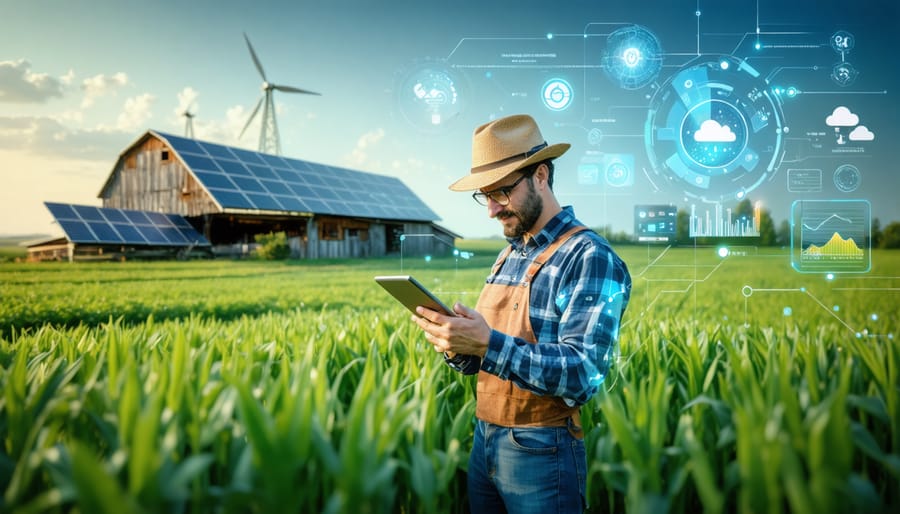
Modern farming technologies are transforming small-scale agriculture, making sustainable food production more efficient and accessible than ever before. From automated irrigation systems to IoT devices in agriculture, innovative solutions are helping local farmers maximize yields while minimizing resource use. These advancements aren’t just for large industrial operations – they’re specifically designed to support small-scale farmers and CSA operations in growing better food more sustainably.
Smart sensors now monitor soil moisture, nutrient levels, and plant health in real-time, allowing farmers to make data-driven decisions about water and resource management. Precision farming tools, once exclusive to large operations, have become affordable and user-friendly enough for small farms to implement. These technologies not only boost productivity but also support the core values of sustainable agriculture: environmental stewardship, resource conservation, and community-focused farming.
For local farmers looking to embrace these innovations, the journey toward tech-enabled farming has never been more achievable or rewarding.
Precision Agriculture Tools for Small Farms
Smart Irrigation Systems
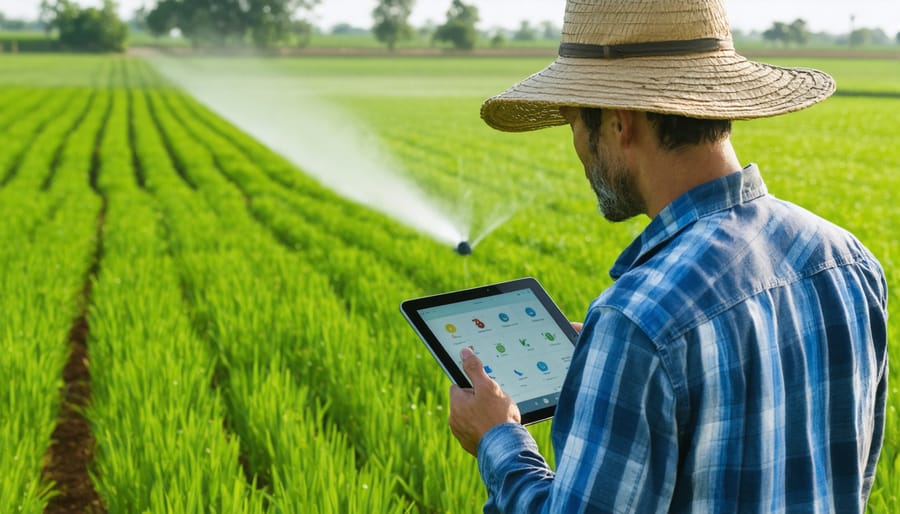
Smart irrigation systems are revolutionizing the way small-scale farmers manage water resources. These innovative solutions combine soil moisture sensors, weather monitoring, and automated controls to deliver precise amounts of water exactly when and where crops need it most.
At the heart of these systems are soil moisture sensors that continuously monitor water levels at different depths. When moisture drops below optimal levels, the system automatically triggers irrigation, preventing both under and over-watering. Many farmers report water savings of 30-50% after implementing these systems.
Local farmer Sarah Martinez shares, “Since installing smart irrigation on my two-acre vegetable farm, I’ve cut my water usage in half while improving crop yields. The mobile app lets me monitor everything from anywhere, which is a game-changer during busy harvest seasons.”
These systems can be scaled to fit any operation, from backyard gardens to larger market farms. Many include features like zone-specific watering schedules, rain sensors that prevent unnecessary irrigation during wet weather, and integration with local weather forecasts to optimize watering cycles.
For those concerned about initial costs, many agricultural extension offices offer grants and technical support for implementing water-saving technologies.
Weather Monitoring Stations
Modern weather monitoring stations have become a game-changer for small farms, offering affordable ways to track crucial climate data. These compact systems typically include sensors for temperature, humidity, rainfall, wind speed, and soil moisture – all the essentials for making informed farming decisions.
Many farmers are finding success with wireless weather stations that connect directly to smartphone apps, making it easy to check conditions from anywhere on the farm. For around $200-300, these systems provide real-time updates and historical data, helping farmers predict frost risks, plan irrigation schedules, and determine the best times for planting and harvesting.
Local farmer Sarah Chen shares, “Our weather station helped us save our tomato crop last season by alerting us to an unexpected cold snap. The investment paid for itself in just one season.” Some stations even integrate with automated irrigation systems, allowing for precise water management based on actual weather conditions.
For those just starting out, basic rain gauges and temperature sensors can be a stepping stone to more advanced systems. The key is choosing technology that matches your farm’s specific needs and scale.
Data-Driven Crop Management
Mobile Apps for Farm Management
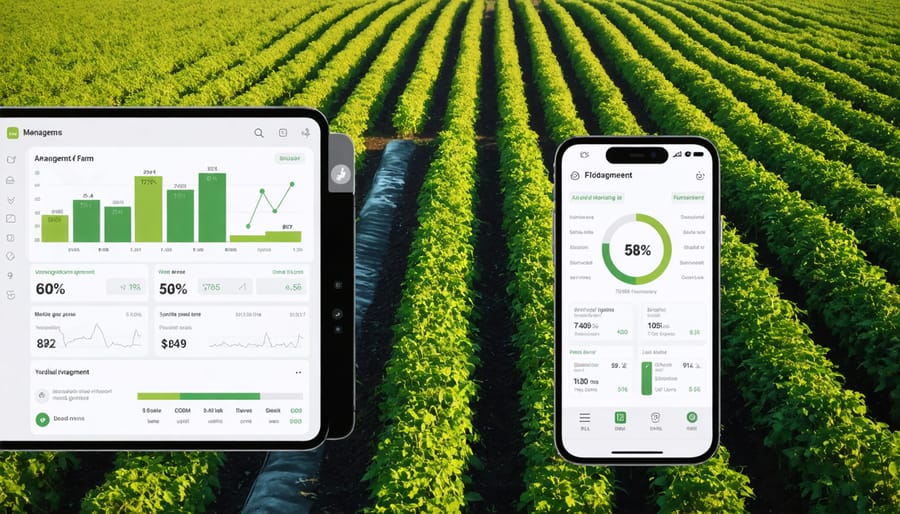
Modern farming has gone digital, with a variety of user-friendly mobile apps revolutionizing how small-scale farmers manage their operations. These powerful tools transform smartphones into essential farming companions, helping growers track everything from seed to harvest with just a few taps.
Popular apps like Agrivi and FarmLogs allow farmers to create detailed planting schedules, monitor crop growth stages, and record harvest data. Local farmer Sarah Martinez shares, “Using these apps has helped me make better data-driven farming decisions and increased my CSA’s efficiency by 30%.”
Many apps now include features specifically designed for organic growers, such as pest identification guides, weather alerts, and soil health tracking. The Farm Manager app, for instance, helps CSA farmers plan their succession planting and manage member distributions more effectively.
Free options like Tend make it easy for beginners to start digital record-keeping without a significant investment. These apps often include cloud backup features, ensuring valuable farming data isn’t lost even if a device is damaged in the field.
For those new to farm management apps, starting with basic features like planting calendars and harvest logs can build confidence before exploring more advanced capabilities.
Soil Testing Technology
Modern soil testing has evolved far beyond the simple pH strips of yesterday. Today’s farmers can access a wealth of soil data right from their smartphones using portable digital analyzers that provide instant readings of nutrient levels, moisture content, and soil composition. These handheld devices, about the size of a trowel, can scan soil samples and deliver comprehensive results within minutes.
Real-time soil monitoring systems now use wireless sensors planted throughout fields to continuously track soil health. These smart sensors transmit data to farmers’ devices, alerting them to potential issues before they become visible problems. For example, local farmer Sarah Martinez saved her tomato crop last season by responding to early warnings of nitrogen deficiency from her sensor network.
Advanced spectral analysis tools can now detect beneficial microorganisms and potential pathogens in soil samples, helping farmers maintain optimal soil biology for organic growing. These technologies also measure organic matter content and decomposition rates, crucial information for maintaining healthy soil.
The most exciting development might be the integration of artificial intelligence with soil testing. AI systems can analyze soil data patterns over time, helping farmers predict and prevent potential issues while optimizing their soil amendment strategies for better yields and sustainability.
Sustainable Energy Solutions
Solar-Powered Farm Equipment
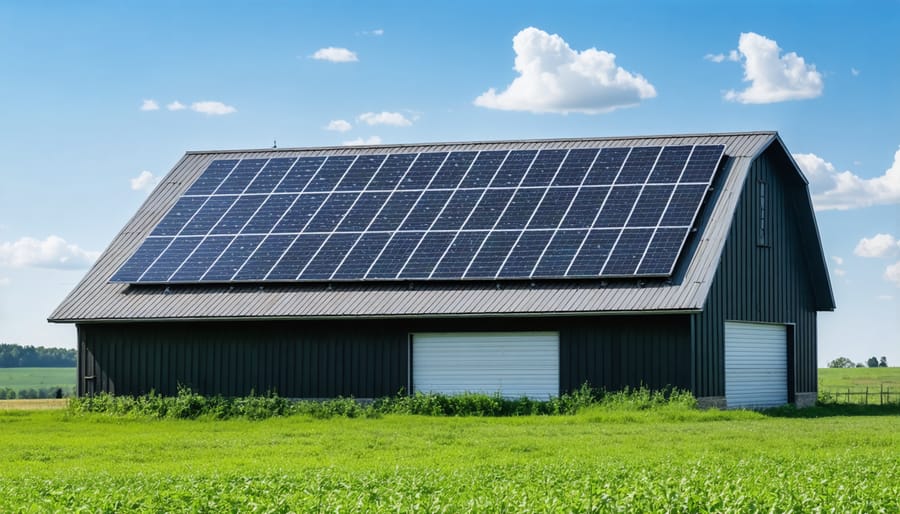
Solar power is revolutionizing small-scale farming with practical, cost-effective solutions that help farmers reduce their carbon footprint and operating costs. Innovative solar-powered irrigation systems are making it easier for farmers to water their crops efficiently, using smart controllers that adjust watering schedules based on weather conditions and soil moisture levels.
Small farms are increasingly adopting solar-powered cold storage units, which help preserve harvested produce without relying on grid electricity. These units are particularly valuable for farms in remote locations or areas with unreliable power supply. Solar-powered fence chargers have also become popular among livestock farmers, providing a sustainable solution for rotational grazing systems.
Other applications include solar ventilation fans for greenhouses, which help regulate temperature and humidity while reducing energy costs. Some farmers are even using portable solar generators to power small tools and equipment during field work. These practical applications demonstrate how solar technology can make small-scale farming more sustainable and economically viable.
Energy-Efficient Storage Systems
Modern storage systems are revolutionizing how small-scale farmers preserve their harvests while minimizing energy consumption. Solar-powered cold storage units have become game-changers, allowing farmers to keep produce fresh without relying on traditional power grids. These units use phase-change materials that absorb heat during the day and release it at night, maintaining consistent temperatures.
Local farmer Sarah Chen implemented a solar cold storage system last year, reducing energy costs by 70% while extending her vegetables’ shelf life by up to two weeks. “It’s amazing how we can harness natural energy to keep our produce fresh,” she shares.
Smart monitoring systems now allow farmers to track temperature, humidity, and ethylene levels through mobile apps, ensuring optimal storage conditions. Combined with modified atmosphere packaging, these technologies help reduce food waste and maintain product quality. Some innovative systems even use geothermal cooling and natural ventilation to create energy-efficient root cellars, perfect for storing root vegetables and preserving the harvest year-round.
Real Farm Success Stories
The Thompson Family Farm in Vermont revolutionized their 15-acre CSA operation by implementing smart irrigation sensors and automated greenhouse controls. “We reduced our water usage by 40% while increasing crop yields,” shares Sarah Thompson. Their investment in these modern farming solutions paid for itself within two growing seasons.
At Green Valley CSA in Oregon, farmers Mike and Lisa Chen integrated a mobile app-based harvest planning system. “Before, we spent hours each week planning harvests and managing member communications. Now, the app automatically generates picking lists and sends updates to our members,” explains Lisa. Their streamlined operation now serves 30% more families with the same staff.
Rising Sun Farm in New Mexico demonstrates how drone technology can benefit smaller operations. Owner James Martinez uses a basic agricultural drone for crop monitoring. “I can spot irrigation issues or pest problems before they become serious. What used to take days of walking the fields now takes 30 minutes,” he notes. The farm’s crop loss decreased by 25% in the first year of drone implementation.
In Massachusetts, River Brook Farm transformed their CSA pickup experience using digital check-in stations. “Members love the flexibility of self-service pickup, and we love the reduced administrative work,” says owner Maria Rodriguez. The system also tracks member preferences and automatically generates weekly newsletters based on available produce.
Perhaps most inspiring is Stone Creek CSA in Michigan, where farmer Ben Wilson implemented soil moisture sensors and weather stations. “The data helps us make better decisions about planting times and irrigation schedules,” he explains. Their system sends alerts directly to smartphones, allowing the team to respond quickly to changing conditions. The result? A 35% reduction in crop losses due to weather-related issues and more consistent harvests throughout the season.
These success stories show how even small-scale farms can benefit from thoughtful technology adoption, making CSA operations more efficient and sustainable while maintaining their community-focused values.
The integration of new technologies in farming represents an exciting frontier for sustainable agriculture. From precision irrigation systems to data-driven crop management, these innovations are making it easier than ever for farmers to grow food efficiently while protecting our environment. Small-scale farmers who embrace these tools are reporting increased yields, reduced water usage, and better crop quality – all while maintaining their commitment to organic practices.
Looking ahead, we can expect even more accessible and affordable technologies to emerge. Smartphone apps for pest identification, affordable sensor systems, and automated greenhouse controls are just the beginning. As these tools become more widespread, they’re creating opportunities for both experienced farmers and newcomers to succeed in sustainable agriculture.
The future of farming lies in finding the right balance between traditional wisdom and modern innovation. By thoughtfully adopting new technologies, farmers can enhance their operations while staying true to organic principles. This combination of old and new promises a more sustainable, productive, and environmentally conscious future for agriculture – one where local food systems can thrive and feed our communities for generations to come.