Daily Archives

3 Articles

Zone 9 Perennial Seed Success: Keep Your Garden Blooming Year After Year

Posted by darrell on
0
Seed Preservation and Biodiversity
Zone 9 Perennial Seed Success: Keep Your Garden Blooming Year After Year

Transform your Zone 9 garden into a self-sustaining paradise by saving perennial plant seeds from heat-loving favorites like Echinacea, Black-Eyed Susans, and Salvias. Plant drought-resistant perennials like Lantana, Verbena, and Russian Sage in well-draining soil during fall months, allowing their extensive root systems to establish before summer heat arrives. Harvest seeds when flower heads turn brown and crispy, storing them in paper envelopes within airtight containers at 40°F for maximum viability. Strategic placement of these perennials – taller varieties like Penstemon and Rudbeckia at the back, mid-height Gaillardia in the center, and ground-covering Verbena in front – creates a layered, professional-looking garden that blooms reliably year after year in Zone 9’s warm climate.

Best Perennial Flowers for Zone 9 Seed Saving

Heat-Loving Perennials

Zone 9’s warm climate and long growing season create the perfect environment for heat-loving perennials to thrive. Plants like Lantana, Salvia, and Mexican Sunflower flourish in these conditions, offering vibrant blooms throughout most of the year. The striking Purple Coneflower (Echinacea) not only adds bold color but also attracts beneficial pollinators to your garden.

Blanket Flower (Gaillardia) proves particularly resilient in zone 9’s heat, producing cheerful daisy-like blooms in warm sunset colors. Russian Sage and Yarrow stand up beautifully to both heat and drought, creating impressive displays with minimal maintenance. For stunning vertical interest, consider adding Verbena bonariensis, whose tall, airy stems dance in summer breezes while providing nectar for butterflies.

Black-eyed Susan and Coreopsis varieties offer reliable yellow blooms that can handle intense sunshine. For shaded areas, try Japanese Anemone or Hardy Begonia, which provide late-season color when other perennials are fading. These hardy plants establish strong root systems during their first year, returning bigger and better with each passing season.

Vibrant display of heat-tolerant perennial flowers suitable for zone 9 gardens
Collection of popular zone 9 perennial flowers including Lantana, Salvia, and Echinacea in full bloom

Long-Blooming Varieties

Several perennial varieties in zone 9 offer spectacular extended blooming periods, making them ideal for continuous garden color and seed production. Black-eyed Susans flourish from early summer through fall, producing abundant seeds that readily self-sow. Blanket flowers (Gaillardia) deliver vibrant blooms from spring until frost, with easy-to-collect seeds that maintain high germination rates.

Salvias are particularly well-suited to zone 9’s climate, flowering for months while attracting pollinators. Both the traditional purple varieties and the striking red varieties produce seeds throughout their extended blooming season. Coneflowers stand as another reliable choice, blooming from June through October and offering seeds that birds love – save some for yourself before they feast!

For shaded areas, Japanese Anemones provide elegant late-season flowers and seeds, while Verbena bonariensis offers airy purple blooms that seem to float above other plants from summer through fall. These long-bloomers not only create stunning garden displays but also ensure a steady supply of seeds for future plantings and sharing with fellow gardeners.

Seed Collection Techniques

Timing Your Harvest

Timing is crucial when collecting perennial flower seeds in zone 9. Most seeds reach maturity in late summer to early fall, but each flower species has its unique schedule. Watch for these tell-tale signs of seed readiness: pods turning brown and crispy, seed heads becoming dry and darker in color, or flowers developing fluffy seed heads like those of coneflowers and black-eyed susans.

For morning glories and other pod-forming flowers, wait until the pods turn brown and begin to crack. Collect them just before they split completely to prevent seed loss. Daisy-family flowers, like zinnias and marigolds, are ready when their petals have completely dried and fallen off, leaving behind firm, dark seeds.

In zone 9’s warm climate, seeds often mature earlier than in cooler regions. Plan your collection on a dry, sunny day after morning dew has evaporated but before afternoon heat peaks. Avoid collecting seeds during humid conditions or after rain, as moisture can lead to mold during storage.

Some flowers, like salvias and lantanas, may produce seeds throughout the growing season. Regular monitoring helps you catch seeds at their peak maturity, ensuring the best germination rates for next season’s garden.

Process of collecting seeds from a dried Black-Eyed Susan flower head
Step-by-step demonstration of seed collection from a mature Black-Eyed Susan flower head

Processing and Cleaning

After collecting your perennial flower seeds, proper cleaning and processing ensures the best storage conditions and germination rates. Start by spreading your collected seeds on a clean, dry paper towel and removing any debris, petals, or seed pods. For seeds in pods or with attached fluff (like coneflowers or salvias), gently separate them using a fine-mesh strainer or by hand.

Let the cleaned seeds air dry completely for 5-7 days in a well-ventilated area away from direct sunlight. Zone 9’s humidity can affect drying time, so ensure seeds are thoroughly dried before storage to prevent mold growth. You can test if seeds are ready by trying to bend them – properly dried seeds should snap rather than fold.

For seeds with stubborn chaff, try using a simple winnowing method: pour seeds from one container to another in front of a small fan on low speed. The lighter chaff will blow away while the heavier seeds fall into the catching container.

Label each batch of seeds immediately after cleaning with the plant name, collection date, and any specific notes about the parent plant. This documentation helps track seed viability and breeding success in future growing seasons.

Proper Seed Storage

Temperature and Humidity Control

In zone 9’s warm climate, maintaining ideal storage conditions for perennial flower seeds requires careful attention to temperature and humidity levels. Proper seed storage methods are crucial for preserving seed viability, especially during hot summers and humid periods.

Store seeds in a cool, dry location with temperatures between 35-50°F (1.7-10°C). A dedicated drawer in your refrigerator works perfectly, but ensure seeds are completely dry before storing to prevent mold growth. Use moisture-absorbing packets or food-grade diatomaceous earth in storage containers to combat zone 9’s higher humidity levels.

For long-term storage, maintain relative humidity below 40%. Consider using airtight glass jars or moisture-proof seed storage envelopes. Label everything clearly with the date and flower variety. Check stored seeds monthly for any signs of moisture or pest activity.

During particularly humid seasons, run a dehumidifier in your seed storage area or create a modified climate-controlled space using a small wine cooler set to the appropriate temperature range. This extra effort will reward you with higher germination rates and healthier seedlings next growing season.

Storage Containers and Organization

Proper storage of your perennial flower seeds is crucial for maintaining their viability in zone 9’s warm climate. Glass mason jars with airtight lids work excellently as primary storage containers, protecting seeds from humidity and unwanted pests. For smaller quantities, paper envelopes or small kraft paper bags are perfect, as they allow seeds to breathe while preventing moisture buildup.

Create detailed labels for each seed variety, including the plant name, collection date, and expected viability period. Consider using waterproof labels or permanent markers to prevent fading in our humid environment. Small silica gel packets can be added to storage containers to absorb excess moisture, particularly important during our humid summers.

Organize your seed collection by bloom time or plant family, making it easier to plan your seasonal plantings. A simple index card system or spreadsheet can help track your inventory. Store containers in a cool, dark place with consistent temperature – a dedicated cabinet or drawer in an air-conditioned space works well. Aim for storage temperatures between 35-50°F with relative humidity below 50% for optimal seed longevity.
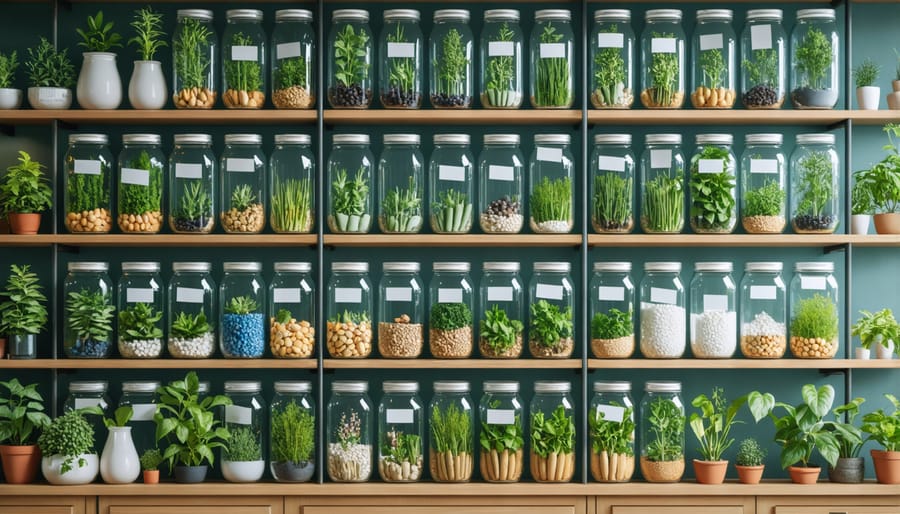
Properly labeled and stored perennial flower seeds in airtight glass containers
Organized seed storage system showing labeled glass jars with silica gel packets

Seed Viability Testing

Before planting your saved perennial flower seeds, it’s essential to check their viability to ensure successful germination. The good news is that testing seed viability can be done easily at home using simple methods that any gardener can master.

The most reliable method is the paper towel test. Take 10 seeds from your collection, place them on a damp paper towel, and fold it over to keep the seeds moist. Put the towel in a plastic bag and keep it in a warm spot around 70-75°F. Check daily and mist with water if needed. After 7-10 days, count how many seeds sprouted. If 8 or more germinate, you have excellent viability; 5-7 indicates moderate viability, while fewer than 5 suggests you may need fresh seeds.

For larger seeds, you can try the float test. Place the seeds in a container of water and wait 15 minutes. Seeds that sink are usually viable, while floating seeds are often empty or damaged. However, this method isn’t foolproof, as some healthy seeds naturally float.

In zone 9’s warm climate, seeds can lose viability more quickly due to heat and humidity. Store tested seeds in airtight containers with silica gel packets to absorb excess moisture. Keep them in a cool, dark place like a basement or refrigerator to extend their life span.

Remember that different perennial species have varying seed longevity. Some may remain viable for 2-3 years, while others might only last a season. Testing a small batch before planting your entire garden can save time and ensure better results in your zone 9 garden.

Growing perennial flowers from seeds in zone 9 offers endless possibilities for creating a sustainable and vibrant garden that returns year after year. By selecting native and well-adapted varieties, practicing proper seed collection and storage techniques, and understanding the unique growing conditions of your Mediterranean climate, you can establish a thriving flower garden that benefits both local pollinators and the environment.

Remember to start seeds at the right time, typically in early fall or late winter in zone 9, and provide appropriate care during their establishment period. Consider creating a seed exchange network with fellow gardeners in your area to share successful varieties and maintain genetic diversity in your garden. This not only helps preserve heirloom varieties but also builds a stronger gardening community.

As you develop your perennial garden, focus on sustainable practices like mulching, water conservation, and natural pest control methods. By saving your own seeds and growing perennials, you’re not just creating beauty – you’re contributing to a more sustainable future while enjoying the rewards of a garden that becomes more magnificent with each passing season.

Solar-Powered Farms: How Renewable Energy is Revolutionizing Modern Agriculture

Posted by darrell on
0
Agroecology and Ecosystem Practices
Solar-Powered Farms: How Renewable Energy is Revolutionizing Modern Agriculture

Imagine an agricultural system that works in perfect harmony with nature – that’s exactly how modern agroecosystems transform your farm into a living powerhouse. These intricate networks of crops, soil microorganisms, beneficial insects, and natural processes create self-sustaining cycles that boost productivity while protecting our environment.

Unlike conventional farming, agroecosystems mimic natural ecosystems by integrating multiple species, maximizing resource efficiency, and minimizing external inputs. They represent a revolutionary approach to agriculture that combines traditional farming wisdom with cutting-edge ecological science. From small urban gardens to large-scale operations, these systems are proving that productivity and environmental stewardship can go hand in hand.

Today’s farmers are discovering that by working with nature rather than against it, they can create resilient, productive landscapes that generate abundant harvests while building soil health, supporting biodiversity, and helping combat climate change. As we face increasing environmental challenges, agroecosystems offer a promising path forward for sustainable food production that nourishes both people and planet.

Understanding Modern Agroecosystems

The Farm as an Ecosystem

A farm is more than just a place where crops grow and animals graze – it’s a vibrant ecosystem where countless elements work together in harmony. Like natural ecosystems, farms feature complex relationships between living organisms and their environment. Plants, insects, soil microorganisms, livestock, and wildlife all play crucial roles in maintaining the farm’s health and productivity.

In this interconnected system, each component serves multiple purposes. Cover crops protect the soil and provide habitat for beneficial insects. Livestock contribute natural fertilizer while helping to manage vegetation. Pollinators support crop production while beneficial insects help control pests naturally. Even weeds can play positive roles by preventing soil erosion and supporting biodiversity.

The soil itself is a thriving ecosystem, home to billions of microorganisms that break down organic matter, cycle nutrients, and maintain soil structure. Understanding these relationships helps farmers work with nature rather than against it. By viewing their farm as an ecosystem, farmers can make management decisions that support these natural processes, leading to more resilient and sustainable agricultural systems.

Energy Flow in Agricultural Systems

Traditional agricultural systems rely heavily on energy inputs at various stages of food production. From tilling the soil to harvesting crops, farmers traditionally depended on manual labor, animal power, and fossil fuels to keep their operations running. Today, many farms are transitioning to more sustainable energy practices by incorporating smart farming technologies and renewable energy sources.

Energy flows through an agricultural system in multiple ways: solar energy powers photosynthesis in crops, mechanical energy drives farm equipment, and thermal energy maintains optimal growing conditions in greenhouses. Understanding these energy pathways helps farmers optimize their resource use and reduce operational costs.

Modern farmers are increasingly adopting solar panels, wind turbines, and biogas digesters to generate clean energy on-site. These sustainable solutions not only decrease dependency on fossil fuels but also create opportunities for farms to become energy independent. Some innovative farmers even generate surplus power, which they can sell back to the grid, creating an additional revenue stream while contributing to a more sustainable food system.

Diagram depicting energy flows and interconnections in a modern agroecosystem
Infographic showing energy flow diagram in an agroecosystem, illustrating connections between solar power, wind energy, and farming operations

Renewable Energy Solutions for Farms

Aerial photograph of agricultural land with solar panels installed between crop rows
Aerial view of a modern farm with solar panels integrated alongside crop fields, showing the coexistence of agriculture and renewable energy

Solar Power in Agriculture

Solar power has become a game-changer in modern agriculture, offering farmers sustainable solutions for powering their operations while reducing energy costs. From solar-powered irrigation systems to greenhouse climate control, this renewable energy source is transforming how farms operate.

Many farmers are installing solar panels on barn roofs and unused land to generate electricity for various farm operations. These systems can power everything from water pumps and electric fencing to cold storage facilities and processing equipment. For example, dairy farmer Sarah Johnson in Wisconsin reduced her monthly energy bills by 75% after installing a solar array to power her milking parlor and cooling systems.

Solar-powered irrigation systems are particularly valuable in remote areas where grid connection is expensive or unavailable. These systems use photovoltaic panels to pump water from wells or reservoirs, providing reliable irrigation while eliminating fuel costs and reducing carbon emissions.

Smart greenhouse operations benefit significantly from solar technology. Solar panels can power ventilation fans, heating systems, and automated controls while providing partial shade for sensitive crops. Some innovative farmers even use semi-transparent solar panels that allow specific light wavelengths to pass through, optimizing both energy generation and plant growth.

The initial investment in solar equipment is often offset by government incentives, tax credits, and significant long-term energy savings. Plus, many farmers generate excess power they can sell back to the grid, creating an additional revenue stream for their operations.

Wind Energy Integration

Wind energy integration in agroecosystems offers farmers a sustainable way to power their operations while maintaining productive agricultural land. Modern wind turbines can coexist harmoniously with crops and livestock, taking up minimal ground space while generating clean electricity for farm operations.

Many farmers have discovered that wind turbines can provide reliable power for irrigation systems, barn ventilation, and equipment charging. For example, the Johnson Family Farm in Iowa installed two medium-sized turbines that now power their entire dairy operation, including milk storage facilities and automated feeding systems.

The space between turbines remains fully functional for growing crops or grazing livestock. Some farmers have reported that the gentle air mixing from turbines can help protect crops from frost and reduce humidity-related plant diseases. Additionally, the rental income from hosting wind turbines provides farmers with a steady secondary revenue stream, helping to stabilize farm income during challenging growing seasons.

Getting started with wind energy doesn’t always require large investments. Small-scale turbines can power individual farm buildings or specific operations, allowing farmers to test the benefits before expanding. Local agricultural extension offices often provide guidance on wind resource assessment and available incentives for renewable energy projects.

Remember to consider factors like average wind speeds, local zoning regulations, and grid connection requirements when planning wind energy integration. Many successful farm operations start small and gradually expand their renewable energy capacity as they see the benefits firsthand.

Biomass and Biogas Systems

On modern farms, waste isn’t really waste anymore – it’s an opportunity for energy generation! Biomass and biogas systems transform agricultural byproducts into valuable renewable energy sources, perfectly aligning with circular agriculture principles. These systems collect organic materials like crop residues, animal manure, and food processing waste, converting them into usable energy through various processes.

Biogas digesters are becoming increasingly popular on farms, breaking down organic matter to produce methane-rich biogas that can power generators or heat farm buildings. For example, dairy farmer Sarah Thompson installed a biogas system that converts cow manure into enough electricity to power her entire milking operation and farmhouse, with surplus energy sold back to the grid.

Biomass systems, on the other hand, directly burn agricultural waste to generate heat or electricity. Wood chips from pruned orchards, corn stalks, and other crop residues can fuel biomass boilers, providing sustainable heating for greenhouses and farm buildings. These systems not only reduce waste and energy costs but also create valuable byproducts like nutrient-rich fertilizer that can be returned to the soil.

The beauty of these systems lies in their ability to close the loop on farm waste while generating clean, renewable energy. Many farmers report significant reductions in their energy bills and environmental impact after implementing these solutions.

Real Success Stories: Farms Leading the Way

Side-by-side comparison of traditional farm and its renewable energy upgrade
Split image showing before/after transformation of a family farm implementing renewable energy systems, featuring solar panels and wind turbines

Small-Scale Success

Small-scale success stories in agroecosystems often emerge from family farms that embrace diversity and natural cycles. The Martinez family in California transformed their 5-acre plot into a thriving ecosystem by integrating fruit trees, vegetables, and free-range chickens. Their innovative approach includes using chicken manure as fertilizer while the birds help with pest control, creating a self-sustaining cycle that has doubled their crop yield.

In Vermont, the Green Mountain Farm demonstrates how small-scale operations can maximize efficiency through companion planting. By growing corn, beans, and squash together – known traditionally as the “Three Sisters” method – they’ve reduced water usage by 30% while improving soil health. Their success has inspired neighboring farms to adopt similar practices.

The Wilson’s Urban Homestead in Oregon showcases how even a one-acre plot can become a productive agroecosystem. They’ve implemented vertical growing systems, rainwater harvesting, and beneficial insect gardens, producing enough food to feed their family of four with surplus for local farmers’ markets. Their clever use of space and natural resources proves that size isn’t a limiting factor in creating successful agroecosystems.

These examples show that small-scale farming can be both environmentally sustainable and economically viable when natural systems are properly understood and integrated. Each success story demonstrates how working with nature, rather than against it, leads to resilient and productive agricultural systems.

Large-Scale Transformation

Commercial farms across the globe are increasingly embracing agroecosystem principles, leading to remarkable transformations in agricultural practices. Take the Polyface Farm in Virginia, for example, where Joel Salatin has pioneered a rotational grazing system that mimics natural ecosystems. His approach has turned 550 acres into a highly productive operation that supports cattle, chickens, pigs, and rabbits while improving soil health year after year.

In California’s Central Valley, Lundberg Family Farms demonstrates how large-scale rice production can work in harmony with nature. Their operation incorporates wildlife-friendly farming practices, including flooding fields during winter to create temporary wetlands for migrating birds. They’ve also implemented solar panels to power their processing facilities, combining renewable energy with sustainable agriculture.

The Rodale Institute’s farming operations showcase how organic farming can be scaled up without sacrificing productivity. Their long-term studies have proven that organic systems can match or exceed conventional yields while building soil health and sequestering carbon. They utilize cover crops, crop rotation, and natural pest management strategies across hundreds of acres.

These success stories highlight how commercial operations can successfully transition to more sustainable practices while maintaining profitability. Many have reported reduced input costs, improved soil quality, and enhanced biodiversity, proving that ecological farming principles can work at any scale.

Getting Started with Renewable Energy

Assessment and Planning

Evaluating an agroecosystem’s energy needs starts with a comprehensive site assessment that considers multiple factors, including climate conditions, available resources, and existing infrastructure. Farmers should track their current energy usage patterns across all operations, from irrigation systems to storage facilities, to identify areas where renewable solutions could be most impactful.

Creating an energy management plan involves mapping out both short-term and long-term goals while considering seasonal variations in energy demands. This planning process should align with climate-resilient farming practices to ensure sustainable outcomes.

Key assessment steps include:
– Analyzing solar exposure and wind patterns
– Evaluating water resources and flow rates
– Calculating current energy costs and consumption
– Identifying peak usage periods
– Assessing available space for renewable energy installations

Consider starting with small-scale pilot projects to test different solutions before making larger investments. Many farmers find success by implementing a mix of renewable energy sources, such as combining solar panels for irrigation with biomass for heating. Remember to factor in potential incentives and grants when evaluating the financial feasibility of different options.

Resources and Support

Numerous resources and support systems are available to help farmers and gardeners develop successful agroecosystems. The USDA offers several grant programs, including the Environmental Quality Incentives Program (EQIP) and Conservation Stewardship Program (CSP), which provide financial assistance for implementing sustainable practices.

Local extension offices serve as valuable knowledge hubs, offering free consultations, soil testing services, and workshops on sustainable farming techniques. Many states also provide tax incentives for implementing renewable energy systems and water conservation methods in agricultural operations.

For beginners, organizations like the Sustainable Agriculture Research and Education (SARE) program offer detailed guides, online courses, and mentorship opportunities. Community-supported agriculture (CSA) networks can provide both financial and operational support through member investments and shared resources.

Additionally, various non-profit organizations offer microloans and technical assistance specifically for small-scale farmers transitioning to sustainable practices. These resources often include guidance on certification processes, marketing strategies, and connecting with local food networks, making the journey to sustainable farming more accessible and financially viable.

The integration of renewable energy in agroecosystems represents a powerful step toward a more sustainable and resilient agricultural future. As we’ve seen through numerous success stories, farmers who embrace solar, wind, and biogas technologies not only reduce their carbon footprint but also enjoy significant cost savings and increased energy independence.

Looking ahead, the outlook for renewable energy in agroecosystems is incredibly promising. Technological advancements continue to make sustainable energy solutions more affordable and efficient, while growing consumer demand for environmentally responsible farming practices drives further adoption. Innovative approaches like agrivoltaics, which combines solar panels with crop production, showcase how renewable energy can complement rather than compete with traditional farming activities.

The benefits extend beyond individual farms to entire communities. Local food systems powered by renewable energy create jobs, strengthen regional food security, and help build climate-resilient agricultural practices. Small-scale farmers are finding that renewable energy installations can provide additional income streams while supporting their primary agricultural operations.

For those considering the transition to renewable energy, there’s never been a better time to start. Government incentives, improved storage solutions, and decreasing installation costs make sustainable energy more accessible than ever. By embracing these technologies, farmers can position themselves at the forefront of agricultural innovation while contributing to a more sustainable food system for future generations.

How CSA Farms Transform Communities Through Social Work Principles

Posted by darrell on
0
CSA Fundamentals and Benefits
How CSA Farms Transform Communities Through Social Work Principles

The Council on Social Work Education’s (CSWE) nine core competencies serve as the bedrock of modern social work practice, transforming how community-supported agriculture (CSA) programs address food justice and social equity. These fundamental competencies – from ethical practice to community engagement – provide CSA organizers with a powerful framework to build more inclusive, sustainable food systems that serve diverse communities.

By integrating professional ethics, cultural competence, and evidence-based practice, CSA programs can move beyond simply providing fresh produce to become catalysts for social change. Whether working with limited-resource families, addressing food deserts, or creating educational programs for youth, these competencies enable agricultural initiatives to tackle complex social challenges while promoting environmental stewardship.

As local food systems evolve to meet growing community needs, understanding and implementing these core competencies becomes crucial for CSA managers, farm educators, and community organizers. This practical guide explores how each CSWE competency translates into actionable strategies for creating more equitable, accessible, and sustainable food networks that truly serve all members of our communities.

Multi-ethnic group harvesting vegetables together at a community farm
Diverse group of community members and farmers working together in a CSA garden

Fostering Community Engagement Through CSA Programs

Building Meaningful Relationships

CSA programs excel at building stronger, more inclusive communities by fostering meaningful connections between farmers and their members. These relationships go beyond simple transactions, creating a supportive network that benefits both parties. Farmers get to know their members personally, understanding their preferences and dietary needs, while members gain insight into the challenges and triumphs of local agriculture.

Regular farm visits, harvest celebrations, and volunteer opportunities allow members to participate directly in food production, creating lasting bonds with their farmers and fellow CSA members. Many CSAs also organize educational workshops, cooking demonstrations, and family-friendly events that bring people together around shared values of sustainable agriculture and healthy eating.

These connections often extend beyond the growing season, with members becoming long-term advocates for local food systems and sustainable farming practices. Through social media groups, newsletters, and community gatherings, CSAs create spaces for meaningful dialogue about food security, environmental stewardship, and local economic development.

Cultural Competency in Food Systems

Cultural competency in CSA programs goes beyond simply offering diverse produce varieties. Successful CSA farmers recognize and honor the various cultural food traditions within their communities, adapting their growing plans to meet these diverse needs. This might include cultivating specific ethnic crops, providing recipes that reflect different cultural cooking styles, and ensuring communications are accessible in multiple languages.

Many CSAs now collaborate with cultural community leaders to better understand dietary preferences and traditional farming practices. For example, some programs grow traditional Asian greens alongside typical Western vegetables, while others include heritage varieties from Latin American cuisine. These efforts help create more inclusive food systems that celebrate and preserve cultural food traditions.

To enhance cultural competency, CSA programs often organize multicultural cooking demonstrations, harvest festivals, and educational workshops that highlight diverse farming techniques. This approach not only serves various community needs but also enriches the overall CSA experience for all members, fostering cross-cultural understanding and appreciation through shared food experiences.

Social Justice in Local Food Access

Economic Accessibility Programs

Social workers in CSA programs play a vital role in making fresh, local produce accessible to all community members through innovative economic programs. By implementing sliding scale payment systems, farms can serve diverse economic backgrounds while helping to boost your local economy. These flexible payment structures allow members to pay based on their income level, ensuring that nutritious food remains within reach for families facing financial challenges.

Many successful CSAs integrate with food assistance programs like SNAP (Supplemental Nutrition Assistance Program) and WIC (Women, Infants, and Children), making it easier for eligible participants to use their benefits for fresh produce. Social workers help coordinate these partnerships and guide members through the enrollment process, removing barriers to participation.

Some innovative CSAs have established community fund programs where more financially secure members can contribute additional funds to support reduced-cost shares for others. This creates a sustainable model of community support while maintaining the farm’s economic viability. Social workers also connect members with additional resources like cooking classes, nutrition education, and budgeting workshops to maximize the value of their CSA participation.

By focusing on economic accessibility, social workers ensure that local organic produce becomes a realistic option for all community members, regardless of their financial situation.

CSA farm stand displaying prices and payment options including 'Pay what you can' and 'EBT accepted here' signs
Farm stand with sliding scale payment signage and EBT acceptance

Educational Outreach Initiatives

Educational outreach initiatives in sustainable food systems blend social work principles with agricultural education to create lasting community impact. Social workers partner with local farms, schools, and community organizations to develop programs that teach sustainable farming practices while addressing food security and social justice issues.

These initiatives often include hands-on workshops where community members learn about organic growing methods, composting, and seasonal crop planning. Social workers facilitate these learning experiences while ensuring programs remain accessible to diverse populations, including low-income families and historically underserved communities.

Youth education programs are particularly effective, combining classroom learning with practical garden experience. Students participate in planting, harvesting, and preparing fresh produce while learning about nutrition, environmental stewardship, and food justice. These programs often incorporate culturally relevant growing practices and recipes, honoring diverse community traditions.

Social workers also organize community education events focused on food preservation, cooking demonstrations, and farmers’ market operations. These sessions build practical skills while fostering community connections and promoting food system literacy. Through collaborative partnerships with local farmers, participants gain firsthand knowledge of sustainable agriculture while developing a deeper understanding of food production challenges and solutions.

By integrating social work competencies into agricultural education, these programs create meaningful change in how communities understand and interact with their food systems, promoting both environmental and social sustainability.

Advancing Human Rights Through Sustainable Agriculture

Environmental Justice

Community Supported Agriculture (CSA) programs play a vital role in promoting environmental justice and ecological sustainability in underserved communities. Through sustainable agriculture practices, CSAs help address food inequities while preserving natural resources and promoting biodiversity. These programs work to ensure that all community members, regardless of socioeconomic status, have access to fresh, nutritious produce while supporting environmental stewardship.

CSAs implement various strategies to promote ecological justice, including offering sliding-scale payment options, accepting SNAP benefits, and establishing community gardens in food desert areas. They also provide educational workshops on composting, water conservation, and organic farming methods, empowering residents to become environmental stewards in their neighborhoods.

By partnering with local social workers, CSAs create programs that address both environmental and social justice concerns. These collaborations often result in innovative solutions like youth farming programs, senior citizen garden initiatives, and cross-cultural farming exchanges that celebrate diverse agricultural traditions while promoting sustainable practices.

The success of these programs demonstrates how combining social work principles with sustainable agriculture can create lasting positive change in communities while protecting our environment for future generations.

Labor Rights and Fair Practices

Fair labor practices are foundational to ethical social work in agricultural settings. CSA programs must prioritize the well-being of all farm workers through comprehensive policies that ensure safe working conditions, fair wages, and reasonable hours. This includes providing proper safety equipment, regular breaks, and protection from hazardous materials or extreme weather conditions.

Social workers advocate for farm worker rights by establishing clear communication channels between management and laborers, facilitating conflict resolution, and ensuring access to healthcare and workers’ compensation. They help implement transparent wage structures that reflect the value of agricultural labor and support workers’ financial stability.

Cultural competency plays a vital role, as many farm workers come from diverse backgrounds. Social workers help create inclusive environments that respect cultural differences, language needs, and traditional farming practices. They also support workers’ rights to organize and participate in decision-making processes that affect their working conditions.

Training programs and skill development opportunities should be readily available, allowing workers to advance their careers and increase their earning potential. Social workers help design and implement these educational initiatives while ensuring they’re accessible and culturally appropriate. By prioritizing fair labor practices, CSA programs create sustainable working environments that benefit both workers and the broader agricultural community.

Research-Informed CSA Practices

Measuring Community Impact

Effective community impact measurement is essential for CSA programs that aim to transform local communities through sustainable agriculture. Successful programs typically employ a mix of quantitative and qualitative assessment tools to track their progress and outcomes. These include participant surveys, food access metrics, and regular community feedback sessions.

Key measurement areas often focus on:
– Number of families served through food assistance programs
– Increase in local food accessibility
– Community engagement levels
– Educational program participation rates
– Economic impact on local farmers
– Environmental sustainability indicators

Many CSAs use digital tracking systems to monitor distribution patterns and member satisfaction, while maintaining detailed records of harvest yields and resource allocation. Regular assessment helps programs adjust their strategies to better serve community needs and demonstrate their value to stakeholders.

Regular outcome evaluation enables CSAs to identify areas for improvement and celebrate successes, creating a continuous cycle of community-centered growth and development.

Data visualization showing statistics on food access improvement, community engagement, and environmental benefits of CSA programs
Infographic showing positive community impact metrics of CSA programs

Continuous Program Improvement

Community feedback is the cornerstone of effective social work practice, and successful practitioners consistently refine their approaches based on input from those they serve. This involves regularly gathering feedback through surveys, community meetings, and one-on-one conversations with clients and stakeholders. Social workers must stay attuned to changing community needs and adapt their services accordingly.

Effective program improvement also requires careful documentation and analysis of outcomes. Social workers track the success of their interventions, identify areas for growth, and implement evidence-based adjustments to enhance service delivery. This might involve modifying counseling techniques, updating resource referral networks, or restructuring program schedules to better accommodate community members.

The process is inherently collaborative, often involving team meetings where social workers share insights, discuss challenges, and brainstorm solutions. Professional development plays a crucial role, with practitioners staying current on emerging best practices through continuing education, peer supervision, and engagement with professional networks. This commitment to continuous improvement ensures that social work services remain relevant, effective, and responsive to evolving community needs.

Policy Practice in Local Food Systems

CSAs play a vital role in shaping local food policies and advocating for sustainable agriculture practices. Through community engagement and grassroots organizing, these organizations work to influence policy decisions that affect food access, land use, and farming regulations.

Successful CSA programs often partner with local government officials, social workers, and community leaders to develop initiatives that support small-scale farmers and expand access to fresh, healthy food. These partnerships have led to innovative programs like double-up food bucks at farmers’ markets, zoning changes that protect farmland, and farm-to-school programs that connect local growers with educational institutions.

Many CSAs engage in policy practice by organizing member advocacy days, where participants can learn about food policy issues and communicate directly with their representatives. They also collaborate with social workers to identify barriers to food access and develop solutions that address community needs. This might include establishing mobile markets in food desert areas or creating sliding-scale payment options for low-income families.

Social workers within CSA programs often help document the impact of local food systems on community well-being, gathering data that supports policy advocacy efforts. They may track metrics like improved nutrition outcomes, increased food security, and economic benefits to local farmers. This evidence-based approach strengthens proposals for policy changes and funding requests.

By combining social work principles with agricultural expertise, CSAs create powerful advocacy networks that promote food justice and sustainable farming practices while ensuring their communities have a voice in local food policy decisions.

Community Supported Agriculture programs exemplify the core competencies of social work by creating meaningful connections between farmers and communities while addressing systemic food access challenges. Through direct farmer-consumer relationships, CSAs build trust and understanding across diverse populations, fostering social justice and equitable food distribution. These programs demonstrate ethical practice by prioritizing transparency in growing methods and pricing, while ensuring fair compensation for farmers’ labor.

By engaging with local schools, food banks, and community organizations, CSAs advance human rights and social justice through innovative sliding-scale payment options and food assistance partnerships. They create lasting change by educating communities about sustainable agriculture, nutrition, and environmental stewardship. The collaborative nature of CSAs reflects social work’s emphasis on engaging with individuals and communities to promote positive outcomes.

CSAs serve as practical examples of how social work principles can transform local food systems. They address food insecurity through policy advocacy, community organization, and direct service delivery. By incorporating diverse voices in decision-making processes and adapting to community needs, these programs demonstrate cultural competency and responsiveness.

The success of CSAs in creating lasting community change shows how social work competencies can be effectively applied outside traditional settings. Through this integration of social work principles and sustainable agriculture, CSAs continue to build more resilient, equitable, and connected communities.