
Turn Wild Plants Into Restaurant-Worthy Meals (Without Poisoning Yourself)
 darrell on
Learn to distinguish edible wild plants from toxic look-alikes by examining three key features: leaf arrangement, stem characteristics, and root structure. Start with easily identifiable species like dandelions, chickweed, and wild garlic that have no poisonous twins in your region.
Harvest during morning hours after dew has dried but before midday heat sets in, which preserves flavor compounds and nutritional value. Take only what you’ll use within 24 hours, leaving at least two-thirds of any plant population to ensure regeneration for future foragers and local wildlife.
Wash wild foods thoroughly in cold water three times to remove soil, insects, and potential contaminants, then blanch leafy greens for 30 seconds to reduce bitterness and neutralize mild toxins present in some edible species.
The connection between foraging and sustainable living runs deeper than simply finding free food. When you gather wild ingredients, you’re participating in a food system that requires zero pesticides, no transportation emissions, and minimal environmental impact. You develop the same seasonal awareness that guides organic farmers and CSA members, understanding which foods appear in spring versus fall and how weather patterns affect availability.
This guide bridges the gap between plant identification and actual cooking, offering you tested techniques for transforming foraged ingredients into memorable meals. You’ll discover how to balance wild flavors with cultivated produce, preserve your harvest through proper storage methods, and develop confidence in safely expanding your edible plant repertoire throughout the seasons.
Safety First: The Non-Negotiable Rules of Wild Foraging
Before you venture into the woods with your basket, let’s talk about the most important aspect of foraging: keeping yourself safe. The golden rule here is simple but absolutely non-negotiable: you must be 100% certain of your identification before consuming any wild plant. If there’s even the slightest doubt, leave it alone. Unlike store-bought produce, there’s no safety net with wild foods, and some toxic plants can cause serious harm or worse.
Start by foraging with experienced local experts who know your region’s plants intimately. Consider joining foraging groups, taking guided walks, or working with master gardeners who often have deep knowledge of native species. These connections prove invaluable, especially when you’re learning to distinguish edible plants from their dangerous look-alikes. For instance, wild carrot closely resembles poison hemlock, and only subtle differences separate them.
Location matters tremendously. Avoid foraging near roadsides where plants absorb heavy metals and exhaust pollutants, or areas that might have been treated with pesticides or herbicides. Stay clear of industrial sites, railroad tracks, and conventional farmland borders. Instead, seek out pristine forests, your own chemical-free garden spaces, or properties where you have permission and know the land management history.
Invest in quality field guides specific to your region and use multiple resources to confirm identifications. Cross-reference plant characteristics across seasons, as appearance changes dramatically from spring to fall. Take clear photos from various angles and document the habitat where you found each species.
Here’s something many new foragers don’t realize: even correctly identified edible plants can cause reactions in some individuals. Just like conventional foods, wild edibles can trigger allergies or digestive sensitivities. Always try new wild foods in small amounts first, and introduce only one new species at a time so you can identify any adverse reactions. Think of it like introducing solid foods to a baby – slow and methodical wins the day.
Building Your Forager’s Toolkit
Field Equipment Essentials
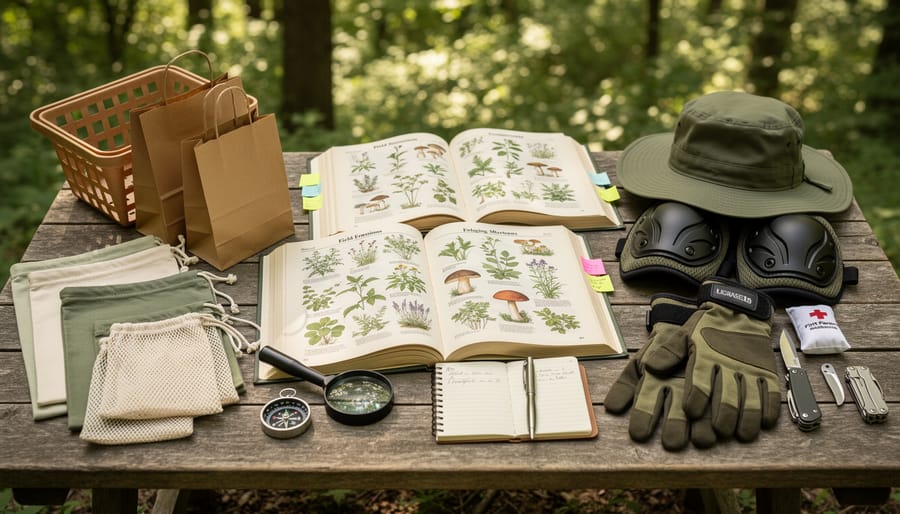
Having the right equipment makes foraging safer, more efficient, and more enjoyable. Start with breathable mesh baskets or paper bags rather than plastic, which can trap moisture and cause delicate finds like mushrooms to deteriorate quickly. I learned this lesson the hard way when my first chanterelle haul turned soggy!
Keep sturdy gardening gloves handy for handling prickly plants like nettles or working around thorny brambles. A good folding knife helps harvest cleanly without damaging the parent plant, ensuring it returns next season.
For identification, carry a reliable regional field guide specific to your area. While smartphone apps like iNaturalist and Picture This offer convenient digital identification with photo-recognition features, they shouldn’t replace your judgment. Use them as helpful companions alongside traditional guides, not sole authorities.
Consider investing in a small magnifying glass for examining key identification features like leaf patterns or spore prints. Many experienced foragers also pack a small notebook to record locations, dates, and growing conditions of successful finds. This builds your personal foraging map over time, turning each outing into valuable knowledge for future harvests. Remember, proper equipment supports both your safety and the long-term health of wild food sources.
Kitchen Prep Tools for Wild Ingredients
Once you’ve gathered your wild treasures, having the right kitchen tools makes processing and preserving your foraged bounty much easier and more enjoyable. A quality salad spinner tops the list for anyone bringing home wild greens like chickweed, lamb’s quarters, or wood sorrel. These leafy finds often harbor tiny insects and forest debris, so multiple rinse-and-spin cycles ensure you’re serving clean, crisp greens to your family.
A food dehydrator becomes invaluable for extending your harvest throughout the year. Wild mushrooms, berries, and herbs dry beautifully, concentrating their flavors and preventing waste. Look for models with adjustable temperature settings to handle delicate greens versus heartier mushrooms. If you’re just starting out, even a basic four-tray dehydrator opens up tremendous preservation possibilities.
Proper storage containers protect your hard work from spoilage. Glass jars with airtight seals work wonderfully for dried goods like rose hips, elderberries, and mushroom powders. For fresh foraged items, breathable produce bags or containers with ventilation holes help wild greens stay fresh longer than plastic bags, which trap moisture and accelerate decay.
Consider adding a mortar and pestle for grinding dried ingredients into seasonings and teas. Many foragers also swear by their mesh strainers in various sizes for cleaning small berries and removing stems. These simple tools bridge the gap between forest and table, helping you safely prepare wild foods while honoring the time you spent gathering them. With proper equipment, processing foraged ingredients becomes a rewarding extension of your sustainable living journey.
Seasonal Foraging Calendar: What to Find When
Spring Awakening: Tender Greens and Early Shoots
Spring brings a burst of tender, nutrient-dense wild greens that are perfect for kitchen newcomers to foraging. Dandelions are everywhere and entirely edible—harvest young leaves before flowers appear for the mildest flavor, excellent in salads or sautéed with garlic. The crowns, dug carefully with a dandelion fork, can be roasted until crispy.
Ramps, those prized wild leeks, grow in shaded woodlands and offer both edible leaves and bulbs. Sustainable harvesting is crucial here: take only one leaf per plant or harvest just 10 percent of any patch, allowing populations to regenerate. Their garlicky flavor enhances pastas, eggs, and compound butters.
Fiddleheads, the coiled fronds of ostrich ferns, require proper preparation. Always cook them thoroughly by boiling for 10-15 minutes or steaming for 10-12 minutes to eliminate natural toxins. Never eat them raw. Their asparagus-like taste pairs beautifully with lemon butter.
Wild garlic carpets forest floors with its distinctive aroma. Snip leaves with scissors rather than pulling entire plants. Use them fresh in pesto, soups, or as garnish.
Spring preparation tip: Bring a damp cloth to wrap delicate greens immediately after harvesting, keeping them fresh until you reach your kitchen.
Summer Abundance: Berries, Flowers, and Herbs
Summer transforms the foraging landscape into a generous buffet of flavors and colors. This is prime time for wild berries – look for juicy blackberries trailing along woodland edges, tart wild strawberries hiding in meadows, and blueberries dotting hillsides. When harvesting, pick only fully ripe berries and leave plenty for wildlife and regeneration.
Elderflowers bloom in creamy clusters throughout June and July, perfect for crafting delicate cordials or fritters. Harvest flower heads on dry mornings when their fragrance peaks, and shake gently to remove any insects before use.
Don’t overlook purslane, a succulent groundcover often dismissed as a weed. This omega-3 rich green thrives in gardens and disturbed soil, offering a lemony crunch for salads and stir-fries. Snip tender stems and leaves regularly to encourage continuous growth.
Summer’s abundance means frequent harvesting opportunities, but respect grows slowly. Take only what you’ll use immediately, and rotate your foraging spots to allow plants time to recover. Early morning collection ensures peak freshness and flavor for your kitchen creations.
Fall Harvest: Nuts, Mushrooms, and Root Vegetables
As temperatures drop, autumn reveals hidden treasures beneath fallen leaves and forest floors. Acorns become abundant under oak trees—while they require leaching to remove bitter tannins, they transform into nutritious flour perfect for baking. Look for plump, brown acorns without holes or cracks, then shell and soak them in changing water until the bitterness disappears.
Wild mushrooms like hen-of-the-woods and oyster mushrooms thrive on decaying hardwoods during fall rains. Always consult expert guides and never consume mushrooms without absolute certainty of identification. When in doubt, photograph and verify with local mycological societies before harvesting.
Jerusalem artichokes grow wild along roadsides and field edges, their knobby tubers hiding underground. Dig carefully around stems to harvest these nutty-tasting roots that roast beautifully or add crunch to salads.
Preserving your fall bounty extends enjoyment through winter months. Dehydrate mushrooms and acorn flour, pickle root vegetables, or explore various food storage techniques to maximize your harvest. Remember, sustainable foraging means taking only what you need while leaving plenty for wildlife and regeneration.
Cleaning and Preparing Wild Ingredients
The Triple-Wash Method for Greens
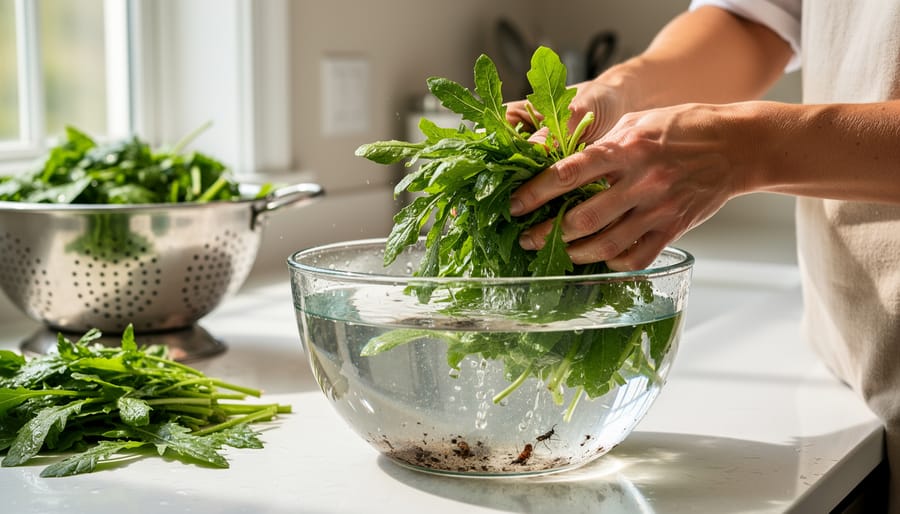
Wild greens carry more than just dirt from the forest floor. They can harbor tiny insects, grit, and debris that won’t wash away with a simple rinse. Here’s how to clean them properly using the triple-wash method, a technique I learned from experienced foragers who know that thorough cleaning makes all the difference.
Start by filling a large bowl or clean sink with cool water. Submerge your greens completely and gently agitate them with your hands, allowing any debris to settle at the bottom. This first wash removes the bulk of visible dirt and any insects seeking shelter in the leaves.
Lift the greens out rather than draining the water, which would just redistribute the sediment. Discard the dirty water and refill your basin. Repeat the gentle swishing process for your second wash. You’ll likely notice the water is cleaner but still shows some cloudiness.
For the third and final wash, use fresh cool water one more time. The water should now run clear when you agitate the greens. This confirms your wild harvest is ready for cooking.
Pat the greens dry with clean towels or use a salad spinner. This final step ensures better texture when cooking and helps seasonings adhere properly to the leaves.
Dealing with Bitterness and Strong Flavors
Wild foods often pack powerful flavors that can surprise your palate. Many foraged greens like dandelion leaves, burdock, and wild mustards contain compounds that create bitter or astringent tastes as natural defense mechanisms. The good news? A few simple preparation techniques can transform these intense flavors into delicious, palatable dishes.
Blanching is your first line of defense against bitterness. Drop your wild greens into boiling water for 30-60 seconds, then immediately plunge them into ice water. This quick heat treatment breaks down some of the bitter compounds while preserving the vegetable’s vibrant color and nutrients. For particularly stubborn specimens, try a double blanch using fresh water each time.
Soaking works wonders for roots and tubers with strong flavors. Slice your foraged finds thinly and submerge them in cold water for several hours or overnight, changing the water two to three times. This gentle process draws out water-soluble compounds responsible for harsh tastes. I’ve watched beginning foragers completely change their opinion of wild foods after learning this technique.
Multiple water changes during cooking help too. When boiling wild vegetables, drain and refresh the cooking water once or twice during the process. Each change removes more of those challenging flavors. Think of it as rinsing away what you don’t want while keeping the nutritious goodness intact.
Remember, some bitterness adds character to dishes. Start with these techniques and adjust based on your taste preferences and the specific plants you’re preparing.
Essential Cooking Techniques for Wild Foods
Blanching and Shocking: Taming Wild Greens
Blanching and shocking is a game-changer when you’re working with assertive wild greens like dandelion, mustard, or dock. This simple two-step technique mellows out intense bitterness while keeping those gorgeous greens looking vibrant on your plate. Here’s how it works: bring a large pot of salted water to a rolling boil, then drop in your cleaned greens for just 1-3 minutes. The hot water softens the plant fibers and leaches out some of those bitter compounds. Immediately transfer the greens to a bowl of ice water to halt the cooking process. This ice bath locks in that brilliant green color and preserves heat-sensitive nutrients like vitamin C.
The beauty of this method is its flexibility. Younger greens need less time, while tougher, more mature leaves benefit from the full three minutes. After shocking, squeeze out excess moisture and use your greens in sautés, pasta dishes, or grain bowls. You’ll find that blanching transforms even the most challenging foraged finds into delicious, approachable ingredients that rival anything from the farmers market.
Sautéing Wild Mushrooms and Vegetables
Sautéing wild mushrooms and vegetables brings out incredible depth of flavor when done thoughtfully. Start with a heavy-bottomed skillet over medium-high heat and choose quality fats like grass-fed butter, olive oil, or a combination of both. The key is getting your pan hot enough that mushrooms sizzle immediately upon contact, which prevents them from releasing too much moisture and becoming soggy.
Add your foraged mushrooms in a single layer, resisting the urge to stir for the first few minutes. This allows a beautiful golden-brown crust to develop, concentrating those earthy flavors. Season with just salt and freshly cracked pepper initially, letting the natural taste shine through. Wild greens like lamb’s quarters or nettles should be added toward the end of cooking, as they wilt quickly and can become bitter if overcooked.
Timing matters tremendously. Dense mushrooms like hen of the woods need about 8-10 minutes, while delicate chanterelles require only 4-5 minutes. Finish with fresh herbs and a squeeze of lemon to brighten the dish and honor these precious ingredients you’ve sustainably harvested from nature.
Infusions and Extracts: Capturing Wild Flavors
Preserving wild flavors through infusions and extracts lets you enjoy foraged ingredients year-round while building your sustainable pantry. Start with herb-infused oils using plants like wild garlic, rosemary, or oregano. Simply fill a clean jar with your washed, completely dried herbs and cover with olive oil. Let it steep for two to four weeks in a cool, dark place, shaking occasionally. Strain and store in the refrigerator for up to three months.
Wild flower vinegars showcase delicate flavors beautifully. Elderflowers, rose petals, and violet blossoms create stunning results. Fill a jar halfway with flowers, add white wine or apple cider vinegar, and steep for three to four weeks before straining.
For simple syrups, combine equal parts sugar and water, bring to a boil, then pour over foraged mint, pine needles, or spruce tips. Cool and strain after 24 hours. These syrups elevate beverages and desserts while reducing food waste.
Foraged teas are perhaps the easiest preservation method. Dry collected leaves like nettle, raspberry leaf, or mullein on screens in a well-ventilated area, then store in airtight containers away from light.
Fermentation and Pickling Techniques
Preserving your foraged treasures extends their enjoyment well beyond harvest season. Lacto-fermentation transforms wild greens like dandelion leaves, garlic mustard, and ramps into tangy, probiotic-rich foods. Simply submerge your cleaned wild edibles in a 2-3% salt brine, weight them down, and let beneficial bacteria work their magic at room temperature for 3-7 days. The same fermentation methods used for garden vegetables apply beautifully to foraged finds.
Quick pickling offers another accessible preservation option. Combine equal parts vinegar and water with sugar and salt, bring to a boil, then pour over foraged fiddleheads, wild mushrooms, or pickleweed in sterilized jars. This technique captures peak-season flavors while creating pantry staples that brighten winter meals. One forager’s tip: label your jars with harvest dates and locations to track which wild spots produce the tastiest results year after year.
Recipe Ideas to Showcase Your Foraged Finds
Wild Greens Pesto and Herb Blends
Wild greens pesto transforms foraged ingredients into a versatile condiment that preserves your harvest and adds vibrant flavor to countless dishes. The beauty of this approach is its adaptability—you can create delicious pestos using whatever wild greens you’ve gathered, from tender chickweed and mineral-rich lamb’s quarters to peppery garlic mustard leaves.
Start with about two cups of washed and dried wild greens, removing any tough stems. Combine them with a third cup of nuts or seeds (walnuts, sunflower seeds, or pine nuts work wonderfully), two cloves of garlic, and half a cup of olive oil in a food processor. Pulse until you reach your desired consistency, then stir in a quarter cup of grated cheese and season with salt and pepper to taste. For a dairy-free version, simply add nutritional yeast instead of cheese for that savory umami flavor.
Store your pesto in clean jars, covering the surface with a thin layer of olive oil to prevent oxidation. It’ll keep refrigerated for up to two weeks or frozen for several months. Use it on pasta, spread it on sandwiches, stir it into soups, or toss it with roasted vegetables. This simple preservation technique helps you enjoy the fruits of your foraging adventures long after the season ends.
Simple Salads That Let Wild Flavors Shine
Wild greens like dandelion, purslane, and chickweed pack intense flavors that shine brightest when balanced thoughtfully. The key is treating these foraged treasures with the same respect you’d give farmer’s market greens while acknowledging their bolder personalities.
Start with a simple citrus vinaigrette to mellow bitter greens. Mix lemon juice, olive oil, and a touch of honey to create harmony with strong-flavored wild mustards or dock leaves. For peppery watercress or nasturtium, try a creamy dressing with Greek yogurt and fresh herbs to soften their bite.
Texture matters too. Combine tender chickweed with crunchy nuts or seeds, adding familiar elements that help adventurous eaters embrace new flavors. Soften woody stems by massaging heartier greens like lamb’s quarters with olive oil before dressing.
Remember the 10 percent rule: start by mixing foraged greens with 90 percent familiar lettuces, gradually increasing wild ingredients as your palate adjusts. This gentle approach helps your community share members discover these nutrient-dense additions without overwhelming their taste buds, creating a bridge between backyard foraging and everyday meals.
Incorporating Foraged Foods into Everyday Meals
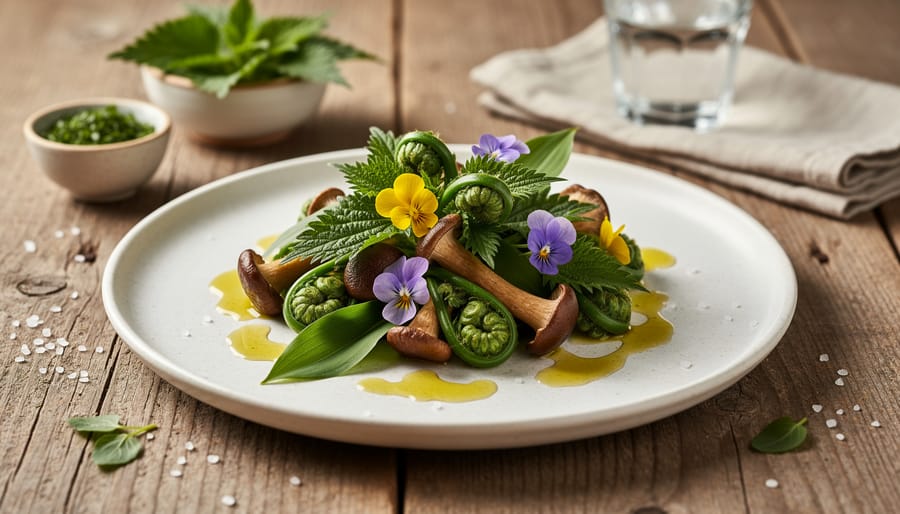
Wild foods blend beautifully into everyday cooking, transforming simple meals into nutrient-rich adventures. Start by adding young dandelion greens or chickweed to morning omelets alongside your garden vegetables. Tender wild garlic leaves elevate pasta dishes with their subtle, garlicky punch, while nettle leaves work wonderfully in soups when treated like spinach. Simply blanch them first to remove the sting.
Wild mushrooms like chanterelles or morels add earthy depth to risottos and cream sauces. Toss wild greens into salads, blend them into pesto, or fold them into quiche alongside your CSA box ingredients. The principles of cooking with local ingredients apply perfectly to foraged foods.
Begin by substituting just one wild ingredient in familiar recipes. A local forager in Ontario shares her tip: treat wild foods like premium herbs and greens, using them to enhance rather than overwhelm dishes. This gentle approach helps you develop confidence while discovering which wild flavors your family enjoys most.
Connecting Foraging to Community Supported Agriculture
Foraging beautifully complements Community Supported Agriculture by diversifying what you bring to your table throughout the growing season. Many CSA farmers already incorporate wild foods into their operations, recognizing that these nutrient-dense plants grow abundantly alongside cultivated crops without requiring additional resources or land.
Sarah Mitchell, who runs a 40-acre organic farm in Ontario, discovered that teaching her CSA members about foraging created unexpected benefits. “I started including wild garlic mustard and lamb’s quarters in spring share boxes with recipe cards,” she explains. “Members loved learning they could find these same greens growing wild in their neighborhoods. It deepened their connection to seasonal eating and reduced our spring workload since we were managing invasive species anyway.”
This integration strengthens local food systems by expanding the definition of local food beyond farm boundaries. Wild foods bridge the gaps between CSA delivery weeks and extend harvest seasons naturally. Early spring ramps and late fall rosehips provide fresh ingredients when cultivated crops are scarce.
Progressive farms now offer foraging workshops as CSA membership perks, creating community while educating members about sustainable harvesting. These workshops typically cover proper identification, ethical gathering techniques, and preparation methods for wild edibles found near the farm or in members’ own backyards.
Tom Rodriguez transformed his struggling farm by adding value-added products featuring foraged ingredients. His wild berry preserves and foraged herb salts became CSA favorites, creating additional income streams while celebrating regional biodiversity. “Foraging made our farm more resilient,” Tom shares. “We weren’t solely dependent on cultivated crops anymore.”
For CSA members, foraging skills mean you’re never without fresh ingredients. Between delivery weeks, you can supplement your farm box with wild greens, berries, and herbs, making your membership stretch further while deepening your understanding of local ecosystems and seasonal rhythms that farmers know intimately.
Your journey into foraging doesn’t need to begin with exotic mushrooms or obscure greens. Start with the easily identifiable plants that grow abundantly in your region—dandelions, purslane, or wild garlic are excellent beginner choices. These common wild foods offer remarkable flavor and nutrition while minimizing identification risks. As your confidence grows, you’ll naturally expand your repertoire, discovering new ingredients that transform your kitchen into a celebration of local, seasonal eating.
Foraging connects us to sustainable living in profound ways. When you gather wild foods responsibly, you’re reducing your carbon footprint, supporting biodiversity, and participating in the most local food system imaginable. Every foraged meal strengthens your understanding of the landscape around you and deepens your relationship with the changing seasons. Just like joining a community-supported agriculture program, foraging makes you an active participant in your food story rather than a passive consumer.
Remember that every expert forager once stood where you are now, guidebook in hand, wondering which plants were safe to harvest. Take your time, join local foraging groups, and never consume anything you cannot identify with complete certainty. The rewards extend far beyond the dinner plate—you’ll gain wilderness skills, environmental knowledge, and the extraordinary satisfaction of preparing meals from ingredients you gathered yourself.
Step outside, start observing, and let your culinary adventure begin. The wild pantry awaits, and nature is remarkably generous to those who approach with respect, curiosity, and patience.