
Sales Tax on Farm Shares: What Every CSA Farmer Needs to Know Right Now
 darrell on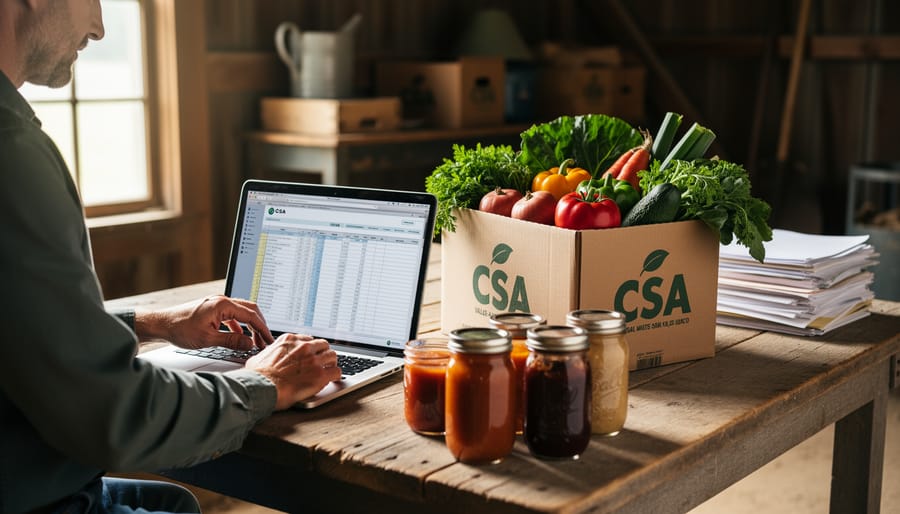
Register with your state’s tax authority within 30 days of your first sale to obtain a sales tax permit—most states offer free online registration that takes less than 20 minutes. Download your state’s agricultural exemption guide to identify which CSA products qualify as tax-exempt farm products versus taxable prepared foods, since the distinction dramatically affects your collection obligations.
Set up a simple spreadsheet tracking each member’s payment, delivery date, and applicable tax rate by zip code if you serve multiple jurisdictions. Many CSA farmers discover they’re already compliant because fresh produce sold directly from the farm is exempt in most states, though add-ons like prepared soups or value-added products typically require collection.
Contact three neighboring CSA operations to learn their compliance approaches—experienced farmers often share practical solutions that accountants miss. This peer knowledge proves invaluable, much like understanding worker classification compliance requires insights from those who’ve navigated the system successfully.
Schedule quarterly 15-minute reviews of your sales records to verify you’ve collected tax where required and maintained proper documentation. This habit prevents year-end scrambles and potential penalties while keeping your focus on growing food rather than managing tax complications.
The reality? Sales tax compliance feels overwhelming initially, but most CSA farmers find it becomes routine within one season. Your commitment to feeding your community with fresh, organic produce deserves protection through proper compliance—and the process is more straightforward than you might fear.
Why Sales Tax Gets Confusing for CSA Operations
CSA operations occupy an interesting space that can puzzle even experienced accountants. Unlike a traditional farm stand where you sell a basket of tomatoes for cash, CSAs operate on a membership model that creates genuine gray areas in sales tax law.
Here’s where it gets tricky: when you sell a tomato at a farmers market, most states treat that as a straightforward agricultural product sale. Many states exempt these direct farm sales from sales tax to support local agriculture. But what happens when someone pays you $500 in February for a season’s worth of vegetables they’ll receive from June through October? Are you selling produce, or are you selling a membership? The answer varies by state, and sometimes even by how you structure your paperwork.
Some states view CSA shares as prepaid produce sales, which might qualify for agricultural exemptions. Others see them as service agreements or club memberships, which could be taxable. A few states split hairs even further, distinguishing between “true shares” where members assume crop risk versus “subscriptions” that guarantee certain deliveries.
Take Sarah, who runs Meadowbrook Farm in Virginia. She discovered her CSA shares were tax-exempt as agricultural sales, but the value-added products she included, like her homemade jams, weren’t. Meanwhile, her friend operating a similar CSA just two states over faced completely different rules.
The membership structure also complicates collection timing. Do you charge tax on the full share price upfront, or calculate it weekly as you deliver? What about members who pay in installments? These questions don’t have universal answers, which is precisely why CSA farmers need guidance specific to their situation and location.

The Basic Rules: When CSA Shares Are Taxable (and When They’re Not)
Food Exemptions in Most States
Here’s some encouraging news for CSA farmers: most states recognize that basic grocery items are essentials and exempt them from sales tax. This typically includes fresh fruits, vegetables, herbs, and other unprocessed foods—exactly what you’re growing and sharing with your community! If your CSA focuses on farm-fresh produce like leafy greens, tomatoes, carrots, and seasonal fruits, chances are you won’t need to collect sales tax on these items in most states.
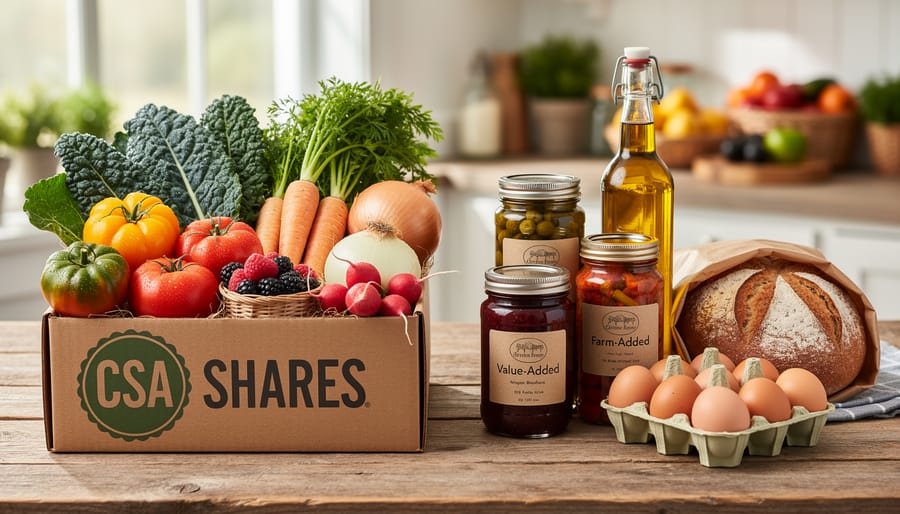
However, there’s an important distinction to understand. While raw produce usually gets a pass, processed or prepared foods often don’t. If you’re adding value-added products to your CSA shares—like homemade jams, baked goods, or prepared salads—these items might be taxable even if the fresh produce isn’t. The line between exempt and taxable can sometimes blur, so it’s worth checking your state’s specific guidelines.
Some states also consider how food is sold. For example, if you’re selling at a farmers market versus delivering CSA boxes, the rules might differ slightly. The good news? Most states want to support access to healthy, locally grown food, which means the tax regulations generally work in favor of small-scale farmers offering fresh produce to their communities.
When You Do Need to Collect Tax
While fresh produce usually gets a pass, certain items in your CSA shares will likely require you to collect sales tax. Understanding these categories helps you stay compliant and avoid surprises down the road.
Value-added products are the most common taxable items. When you transform raw ingredients into something new, tax typically applies. This includes homemade jams, jellies, canned goods, and baked breads. That delicious strawberry preserves made from your farm’s berries? Taxable. Fresh strawberries? Usually exempt. The key difference is the processing and preparation involved.
Prepared foods also trigger tax obligations in most states. If you’re offering ready-to-eat items like salads, sandwiches, or meal kits with pre-chopped vegetables and sauces, these generally fall into the taxable category. The convenience factor matters here – foods requiring minimal preparation before eating typically face taxation.
Flowers and ornamental plants, while beautiful additions to CSA shares, are usually taxable. Even though they’re farm-grown, they’re not intended for consumption, which removes them from agricultural exemptions in many states.
Non-food items round out the taxable category. Farm merchandise like t-shirts, tote bags, or cooking utensils included in shares or sold separately will need sales tax collected. Some farmers have found success offering these as separate optional purchases to simplify their bookkeeping.
The good news? Many CSA operators successfully navigate these requirements by keeping clear records and separating taxable from non-taxable items on their invoices. A little organization goes a long way toward making tax season manageable.
The Membership vs. Product Sale Question
Here’s the thing that trips up many CSA farmers: tax authorities typically view CSA shares as product sales rather than memberships, even though we often use membership language in our marketing. While members pay upfront for a season’s worth of produce, you’re essentially selling agricultural products, not offering a membership service like a gym or club.
This distinction matters because product sales usually trigger sales tax obligations, whereas true memberships often don’t. Some states do recognize legitimate agricultural exemptions that might apply to your CSA, but you’ll need to verify this with your state’s revenue department. The key is understanding how your specific state classifies CSA transactions.
Take Sarah from Green Valley Farm, who learned this lesson early. She initially treated her CSA as a membership program and didn’t collect sales tax. After a friendly audit, she discovered her state considered her shares taxable product sales. By working proactively with her accountant, she quickly got compliant and now builds sales tax into her pricing structure from the start, keeping everything transparent for her members.
State-by-State Differences Every CSA Should Know
Here’s the reality: sales tax rules for CSAs aren’t one-size-fits-all. What works for a farmer in Vermont might land you in hot water in California. Each state has its own approach to taxing farm products, and understanding your specific state’s requirements is essential for staying compliant.
The good news? Most states exempt unprepared food from sales tax, which often includes fresh produce from your CSA boxes. However, the devil is in the details. Some states consider CSA memberships a prepayment for goods and exempt them entirely. Others view them as advance sales requiring tax collection. A few states fall somewhere in between, depending on how you structure your shares.
Take Sarah Chen, who runs Green Valley Farm in Oregon. When she expanded her CSA to include homemade jams and honey, she discovered that while her vegetables remained tax-exempt, her value-added products required sales tax collection. This common scenario trips up many farmers who diversify their offerings.
Your first step is visiting your state’s Department of Revenue website. Look specifically for agricultural exemptions and food sales guidelines. Many states offer plain-language guides designed for farmers. Don’t hesitate to call their helpline with questions about your specific situation.
Consider these common state approaches: Some states exempt all farm-fresh produce regardless of how it’s sold. Others require tax on processed or prepared foods but not raw ingredients. A few states have unique programs recognizing CSA memberships as agricultural transactions deserving special treatment.
Remember that bordering states often have vastly different rules. If you’re near a state line and serve members in multiple states, you might need to register and collect taxes in each one. This complexity is manageable with proper research and record-keeping.
Document your findings and review your state’s requirements annually. Tax laws evolve, and staying informed protects both you and your members from unexpected liabilities down the road.
Getting Properly Registered and Set Up
Do You Need a Sales Tax Permit?
Whether you need a sales tax permit depends largely on what you’re selling and where you’re located. Most states require permits when you regularly sell taxable goods, but here’s the good news: many states offer exemptions for agricultural products sold directly to consumers.
Start by checking your state’s definition of exempt farm products. In many areas, fresh produce, eggs, honey, and other unprocessed agricultural goods qualify for exemptions. However, if you’re selling value-added items like jams, baked goods, or prepared foods, you’ll likely need to collect sales tax on those items.
Most states also have economic thresholds. If your annual sales fall below a certain amount (often between $1,000 and $5,000), you might not need to register immediately. However, once you cross that threshold, registration becomes mandatory.
Consider Sarah’s story from Green Valley Farm. She started her CSA selling only fresh vegetables and didn’t need a permit. When she expanded to include homemade pesto and pickles, she registered for a sales tax permit to stay compliant. Just like with food safety compliance, staying ahead of requirements protects your business and builds trust with your members.
The Registration Process Made Simple
Getting registered for sales tax doesn’t have to feel overwhelming. Think of it as planting seeds for your CSA’s long-term success. Most state tax authorities have made the process surprisingly straightforward, and you can often complete everything online in under an hour.
Start by visiting your state’s Department of Revenue website and look for the business registration or sales tax permit section. You’ll typically need your business information handy, including your federal EIN, business structure details, and an estimate of your expected monthly sales. Many CSA farmers find it helpful to have their farm’s physical address and banking information ready as well.
The registration form will ask about your products and whether you qualify for any agricultural exemptions. Be honest about your business activities. If you’re selling raw vegetables from your farm, make sure to indicate this, as many states offer specific guidance for agricultural producers.
Processing times vary by state, but most applications are approved within one to two weeks. Some states even provide instant approval for online applications. Once approved, you’ll receive your sales tax permit number, which you’ll need to display and use when filing returns.
Sarah Chen, who runs Green Valley Farm CSA in Oregon, shares this tip: “I set a reminder to complete my registration three months before my first harvest. This gave me plenty of buffer time and let me focus on farming when the busy season hit.”
Keeping Records That Make Tax Season Easy
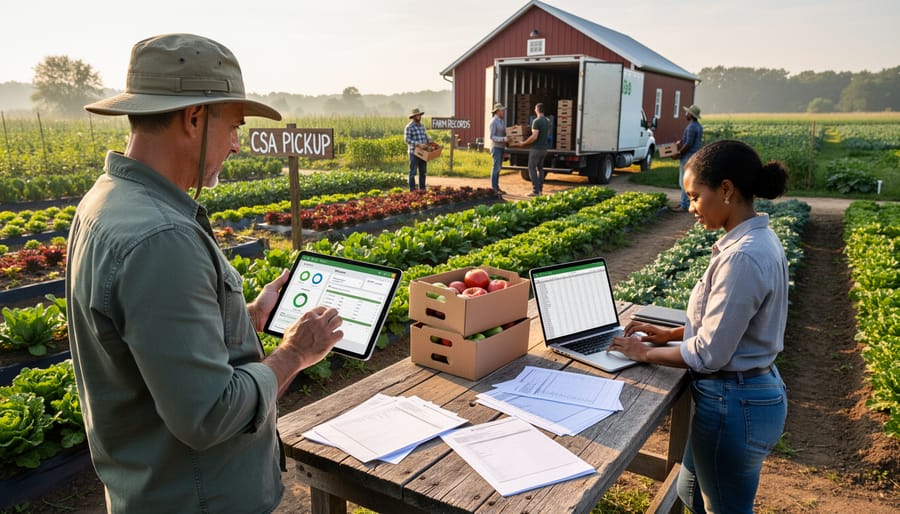
Good record-keeping transforms tax season from stressful to straightforward. Start by maintaining a dedicated spreadsheet or accounting software to track every sale, noting the date, customer name, amount, and whether sales tax was collected. Keep all invoices, receipts, and payment records organized by month. Many CSA farmers find success using simple tools like QuickBooks or even Google Sheets to monitor their transactions.
Document your exempt sales separately, especially when accepting SNAP benefits or selling qualifying items. Take photos of your sales locations and keep copies of your exemption certificates. Store everything digitally with cloud backup for easy access during audits. One Vermont CSA operator shared how organizing receipts weekly saved them hours during tax filing and helped them catch a beneficial deduction they’d almost missed. Consistent weekly record-keeping beats scrambling at year-end every time.
Smart Systems for Collecting and Tracking Sales Tax
Managing sales tax doesn’t have to be complicated, even for small-scale CSA operations. The key is finding a system that matches your farm’s size and technical comfort level while keeping you organized and compliant.
For farmers just starting out or running smaller CSAs with fewer than 50 members, a well-designed spreadsheet can work wonders. Create columns for member names, payment dates, amounts collected, taxable sales, tax collected, and tax remitted. This simple approach costs nothing and gives you complete visibility into your records. Many successful CSA farmers have started here, tracking everything manually until their operations grew.
As your membership expands, consider dedicated bookkeeping software like QuickBooks or FreshBooks. These platforms automatically calculate sales tax based on your location and rates, generate reports for filing, and integrate with your bank accounts. The investment typically ranges from $15 to $50 monthly, but the time saved during tax season makes it worthwhile. Small farm owner Maria Chen from Pennsylvania shares that switching to accounting software cut her tax prep time in half while eliminating calculation errors that previously caused anxiety.
For farms seeking agriculture-specific solutions, platforms like Farmigo or Harvie include built-in sales tax management alongside membership coordination and delivery scheduling. These systems understand the unique nature of CSA operations, handling everything from calculating taxes on add-on products to generating exemption certificates for wholesale transactions.
Regardless of which system you choose, maintain consistent habits. Record every transaction promptly, reconcile your records monthly, and back up your data regularly. Set calendar reminders for filing deadlines so you’re never caught off guard.
The best system is one you’ll actually use consistently. Start simple, stay organized, and upgrade as your farm grows. Compliance becomes much less daunting when you have reliable tools supporting your efforts.
Real Stories: How Other CSA Farmers Handle Compliance
Learning from fellow farmers who’ve successfully navigated sales tax compliance can make the process feel less daunting. Here are some real-world examples that show it’s entirely manageable.
Sarah runs Greenleaf Farm CSA in Vermont and initially felt overwhelmed by tax requirements. Her solution? She dedicated one afternoon each month to recording sales and filing returns. “I treat it like any other farm task,” she explains. “Once I got into the routine, it takes me less than an hour monthly.” Sarah’s tip: Keep a simple spreadsheet updated weekly so month-end becomes quick and easy.
Tom and Maria at Sunrise Valley Farm in Oregon discovered their state exempted most direct agricultural sales. “We spent weeks worrying before realizing we only needed to collect tax on our value-added products like jams and pickles,” Tom shares. Their lesson learned was to contact their state department of revenue directly rather than assuming the worst. This clarity helped them focus their record-keeping efforts where it actually mattered.
Meanwhile, Jennifer from Harvest Moon CSA in North Carolina automated her process using affordable farm management software. The system calculates tax automatically and generates reports for filing. “It was worth the small monthly fee for the peace of mind,” she notes. Jennifer also learned that staying compliant with sales tax made handling government program compliance much smoother when she started accepting SNAP benefits.
The common thread among these farmers? They all emphasized starting simple, asking questions early, and building compliance into their regular routines rather than treating it as a separate burden. Their success proves that with the right approach, sales tax compliance becomes just another manageable aspect of running a thriving CSA.
Common Mistakes to Avoid
Even the most diligent CSA farmers can stumble into sales tax pitfalls, but understanding these common mistakes helps you build a smoother, more compliant operation from the start.
One frequent oversight involves add-on products. Many farmers correctly handle sales tax for their core vegetable shares but forget about extras like eggs, honey, baked goods, or flowers. Here’s the thing: while your produce might be exempt, these supplementary items often aren’t. The solution? Create a simple checklist of all products you offer and verify the tax status of each one with your state’s revenue department. Sarah from Green Valley Farm learned this the hard way when an audit revealed she hadn’t collected tax on her popular herb bundles for two seasons. Now she reviews her product list quarterly.
Missing filing deadlines ranks as another common stumble. Life on a farm gets busy, especially during peak harvest season. Set up calendar reminders two weeks before each deadline, and consider scheduling a specific day each month as your “paperwork day.” Many states offer automated filing systems that can send you reminders and streamline the process.
Inconsistent collection practices create confusion for both you and your members. If you charge tax on某member purchases but not others, you’re asking for trouble. Document your policies clearly in your membership agreements and train anyone handling sales to follow the same procedures.
Finally, keeping poor records compounds every other mistake. Invest in simple accounting software or even a well-organized spreadsheet system. Track every transaction, exemption certificate, and filing confirmation. When tax time arrives, you’ll thank yourself for maintaining clean, accessible records throughout the year. Remember, compliance doesn’t have to be complicated when you build good habits into your routine.
Getting Help When You Need It
You’re not alone in navigating sales tax compliance, and reaching out for help is one of the smartest decisions you can make for your CSA. Think of it as investing in your farm’s long-term success rather than an admission of uncertainty.
Start with your state’s agricultural department, which often provides free resources specifically tailored to farm businesses. Many states have agricultural extension offices with specialists who understand the unique challenges farmers face with compliance requirements. These folks speak your language and get what you’re dealing with.
Farm organizations like your local farmers’ market association or regional CSA networks are goldmines of practical advice. Fellow farmers have likely wrestled with the same questions you have, and many are happy to share what they’ve learned. Some organizations even host workshops on tax compliance and business management.
Consider working with an accountant or bookkeeper experienced in agricultural businesses. Yes, it’s an expense, but the peace of mind and time saved often outweigh the cost. They can handle registration, quarterly filings, and help you avoid costly mistakes. Look for professionals who already work with farms in your area.
Online resources abound too. Many state revenue department websites offer webinars, downloadable guides, and FAQs designed for small businesses. The key is not trying to figure everything out alone. Successful farmers know when to ask for help, allowing them to focus on what they do best: growing amazing food for their communities.
Navigating sales tax compliance might seem daunting at first, but here’s the good news: once you understand your state’s requirements and set up a simple system, it becomes just another routine part of running your CSA. Think of it like crop rotation or harvest planning – essential for your farm’s health, but totally manageable with the right approach.
The most important step is taking action now rather than waiting. Register with your state if required, keep clear records of your transactions, and set aside a few minutes each month to review your sales tax obligations. Many successful CSA farmers have found that addressing compliance early saves them from headaches down the road and gives them peace of mind.
Remember, staying compliant isn’t just about following rules – it’s about protecting the farm business you’ve worked so hard to build. When your tax affairs are in order, you can redirect that mental energy toward what truly matters: nurturing your soil, growing nutrient-dense food, and strengthening connections with your community members. Your dedication to feeding people deserves a solid foundation, and sales tax compliance is simply one more way to ensure your CSA thrives for years to come.