
How Organic No-Till Farming Builds Healthier Soil (And Cuts Your Workload in Half)
 darrell on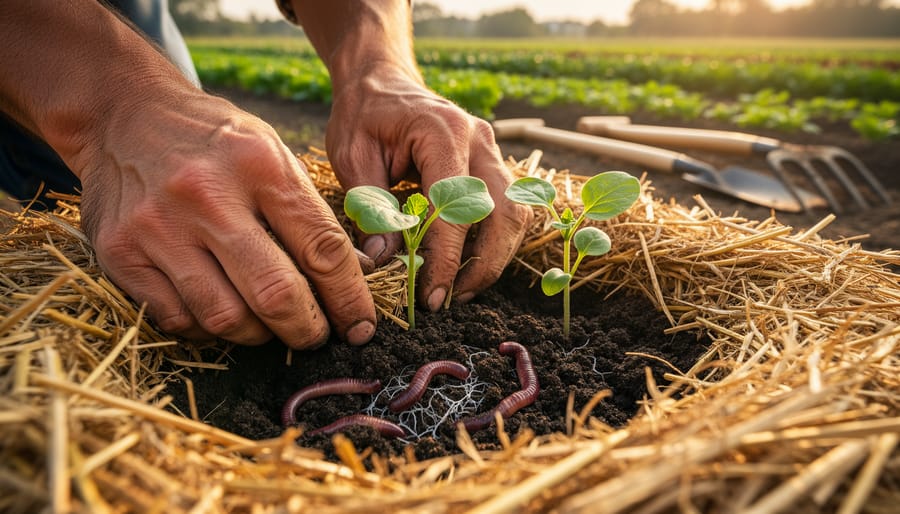
Picture this: rich, healthy soil teeming with life, bountiful harvests year after year, and not a single pass with a plow. That’s the promise of organic no-till farming, a revolutionary approach that’s transforming how we grow food while healing the earth beneath our feet.
For decades, we’ve been told that turning soil is essential for successful farming. But forward-thinking farmers across the country are proving otherwise. By keeping the soil structure intact and relying on natural processes instead of synthetic chemicals, they’re building resilience into their land while producing exceptional crops.
No-till farming protects the intricate web of microorganisms, fungi, and earthworms that create truly fertile soil. When you stop disrupting this underground ecosystem, something magical happens. The soil becomes a carbon sink rather than a carbon source, water retention improves dramatically, and your plants develop stronger, deeper root systems that can weather droughts and resist pests naturally.
The beauty of this approach lies in its accessibility. Whether you’re managing five acres or a backyard garden, organic no-till methods can work for you. You don’t need expensive equipment or chemical inputs. Instead, you’ll rely on cover crops, mulch, and strategic planning to suppress weeds and build fertility.
The journey requires patience and a willingness to observe how nature farms itself. But the rewards go beyond healthier soil and cleaner harvests. You’ll spend less time fighting your land and more time working with it, creating a sustainable system that gets better with each passing season.
What Makes Organic No-Till Different from Traditional Farming
Traditional farming typically involves turning over the soil before each planting season using plows, discs, or tillers. This practice, while familiar to many, disrupts soil structure, exposes beneficial organisms to harsh conditions, and can accelerate erosion. Organic no-till farming takes a completely different approach by leaving the soil largely undisturbed while building health naturally.
In organic no-till systems, farmers work with nature rather than against it. Instead of breaking up the soil, they use techniques like cover cropping, mulching, and specialized equipment that creates narrow planting slots without inverting entire beds. Think of it as surgery versus demolition: you’re making precise interventions rather than tearing everything apart and starting over.
The core principles revolve around protecting soil biology and structure. Every time soil is tilled, it releases carbon, destroys fungal networks, and disrupts the intricate ecosystem of microorganisms that help plants thrive. No-till farming preserves these natural systems while still managing weeds and preparing seedbeds, all without synthetic chemicals that conventional farmers might use.
Many people assume organic farming requires tillage for weed control since herbicides aren’t an option. While some soil disturbance may occur initially, organic no-till and conservation tillage practices minimize this impact dramatically. Methods like dense cover crops, strategic mulching, and flame weeding offer effective alternatives.
Farmers are making the switch for compelling reasons: healthier soil that holds more water during droughts, reduced fuel and labor costs, improved carbon sequestration, and better long-term productivity. Take Sarah Chen, a vegetable farmer in Ontario, who reduced her tractor hours by sixty percent after transitioning to no-till methods while actually increasing her yields.
The transition requires patience and learning, but the rewards extend beyond the farm gate, creating nutrient-dense food while regenerating the land for future generations.
The Science Behind Leaving Soil Undisturbed
Building the Soil Food Web
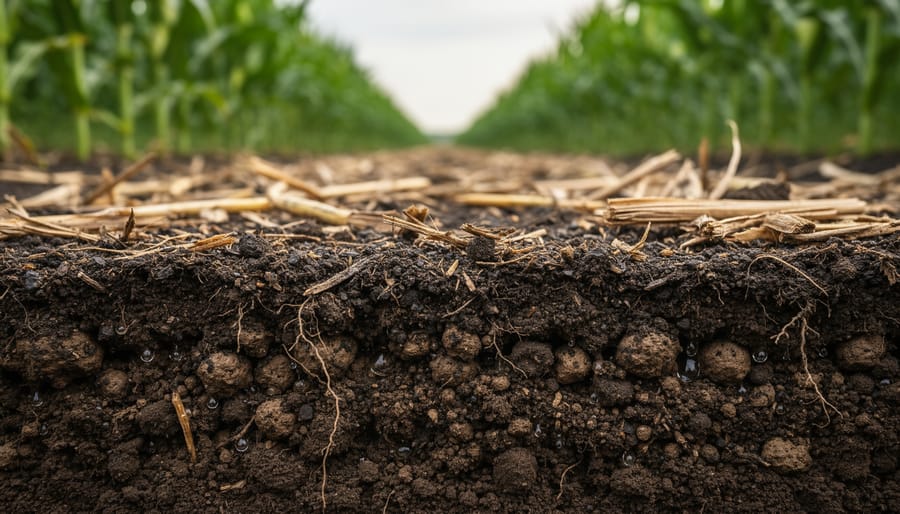
When you leave the soil undisturbed, something magical happens beneath the surface. Think of your soil as a bustling underground city where countless organisms work together to create the perfect growing environment. No-till farming protects and nurtures this complex community, known as the soil food web.
At the heart of this system are mycorrhizal fungi, which form thread-like networks that extend far beyond plant roots. These beneficial fungi act like nature’s internet, connecting plants and helping them access water and nutrients from distant soil pockets. When you till, you essentially tear apart these delicate networks, forcing plants and fungi to start over from scratch each season.
Bacteria also thrive in undisturbed soil, breaking down organic matter and releasing nutrients in forms plants can readily absorb. Earthworms create natural aeration channels while depositing nutrient-rich castings. Ground beetles, beneficial nematodes, and countless other organisms all play crucial roles in maintaining organic soil health.
The beauty of no-till is that these organisms do the heavy lifting for you. They build soil structure, suppress disease, cycle nutrients, and create resilience against drought and pests. By simply leaving the soil intact and adding organic mulches, you’re feeding this underground workforce and letting nature handle the complex chemistry of soil fertility.
Carbon Storage That Actually Works
When you walk across undisturbed no-till soil, you’re standing on one of nature’s most effective carbon capture systems. Unlike tilled fields where soil structure gets destroyed and carbon escapes into the atmosphere, no-till farming keeps carbon locked safely underground where it belongs.
Here’s how it works: Living roots, decomposing plant matter, and thriving soil microorganisms create a complex underground network that traps carbon. When soil remains undisturbed, this network stays intact, continuously pulling carbon dioxide from the air and storing it in the ground. Think of it as a natural savings account that keeps growing year after year.
The benefits extend beyond climate health. Carbon-rich soil holds more water during droughts, resists erosion during heavy rains, and provides better nutrition to your crops. It’s a perfect example of how regenerative agriculture creates win-win situations for farmers and the environment.
Take Ontario farmer James Chen, who documented a 30% increase in soil organic matter over five years using no-till methods. His farm now sequesters an estimated 2 tons of carbon per acre annually while producing healthier vegetables with less irrigation. That’s productive farming that actually heals the planet, not just sustains it.
Practical Methods for Organic No-Till Farming
Cover Crops as Your Living Mulch
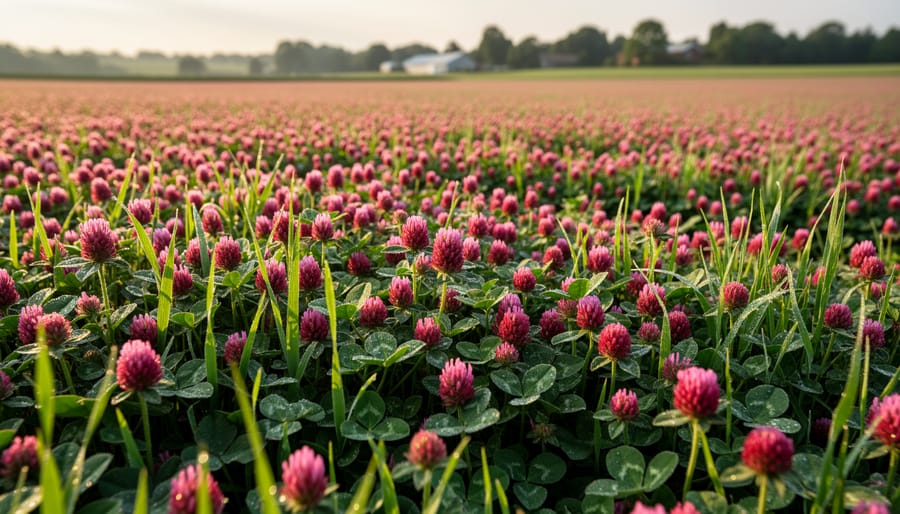
Cover crops are nature’s multitaskers in your no-till system, working as living mulch that protects and enriches your soil simultaneously. Think of them as your green army, crowding out weeds while building organic matter underground. Popular choices include crimson clover, hairy vetch, and cereal rye, each bringing unique benefits to your fields.
Selecting the right cover crop depends on your climate, planting season, and what you’re growing next. Winter-hardy varieties like rye establish quickly and suppress early spring weeds, while legumes like clover fix nitrogen for your following crops. Many successful organic farmers combine different species to maximize benefits, pairing nitrogen-fixers with deep-rooted varieties that break up compacted soil naturally.
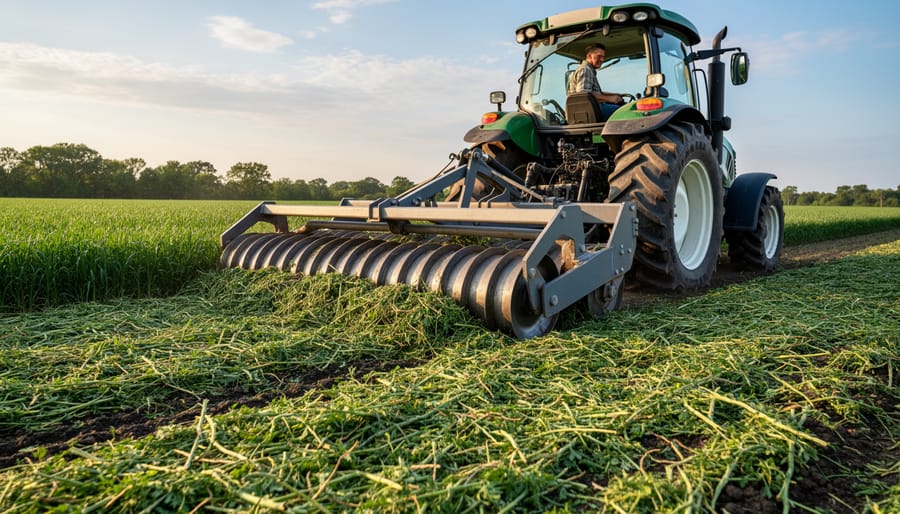
The real magic happens when you integrate cover crops with crop rotation strategies for year-round soil protection. Timing is crucial for termination without tillage. Methods include crimp-rolling at flowering stage, which kills the cover crop while creating a nutrient-rich mat, or mowing repeatedly to exhaust plant energy reserves. Some growers use tarps or heavy mulch to smother covers before planting.
Sarah Martinez, an Ohio organic farmer, shares: “Switching to crimped rye as living mulch cut my weeding time by sixty percent while my soil organic matter jumped two points in three years.”
Mulch Strategies That Control Weeds Naturally
Organic mulch serves as your frontline defense against weeds in no-till systems, creating a physical barrier that blocks sunlight and prevents weed seeds from germinating. Think of it as replacing the buried weeds from tillage with a protective blanket that does the same job, naturally.
Straw mulch remains a farmer favorite for vegetable gardens and row crops. Apply it 3-4 inches deep between rows after transplanting, and watch it suppress weeds while moderating soil temperature and retaining moisture. Just ensure you source weed-seed-free straw to avoid introducing new problems.
Wood chips work beautifully for perennial beds and orchard systems. They break down slowly, feeding soil biology over time while keeping weeds at bay for multiple seasons. Apply 4-6 inches initially, then top up annually as they decompose.
Compost serves double duty as both mulch and fertilizer. While it doesn’t suppress weeds quite as effectively as straw or wood chips, a 2-3 inch layer still provides significant weed control while directly feeding your plants and soil microorganisms.
Sarah Jenkins, an organic market gardener in Vermont, transformed her weeding routine by combining compost with straw. “I went from spending three hours daily pulling weeds to maybe 30 minutes weekly,” she shares. Her secret? Layering an inch of compost topped with three inches of straw right after planting.
Specialized Equipment and Tools
Transitioning to organic no-till farming becomes much more manageable with the right equipment, and there’s good news for farmers at every budget level. The tools you choose will depend on your farm size, crops, and financial resources, but you don’t need to invest in everything at once.
For cover crop management, a roller-crimper is essential. This tool flattens and crimps cover crops, creating that protective mulch layer while terminating the plants mechanically. Budget-conscious farmers can start with a simple homemade roller using salvaged materials and pipe, while commercial models from manufacturers like I&J Manufacturing or Rodale Institute designs offer durability and efficiency for larger operations.
No-till seeders are game-changers, allowing you to plant directly through crop residue without disturbing the soil. Options range from affordable push seeders like the Earthway precision garden seeder for small-scale growers to tractor-mounted models such as those from Great Plains or John Deere for commercial farms. The Jang seeder offers a middle-ground solution that many market gardeners swear by.
Hand tools matter too. Broadforks help aerate compacted soil without inverting layers, while hoes designed for shallow cultivation can manage weeds between crop rows. Many successful organic no-till farmers recommend starting small with basic tools and gradually upgrading as you learn what works best for your specific conditions.
Remember, farmer ingenuity often trumps expensive equipment. Many pioneers in this field began by adapting existing tools or building their own solutions before investing in specialized machinery.
Overcoming Common Challenges in No-Till Systems
Managing Weeds Without the Plow
Weed management is often the biggest concern for farmers transitioning to organic no-till, but with the right approach, it’s completely manageable. The key is preventing weeds before they become a problem rather than constantly fighting them after they emerge.
Think of mulch as your frontline defense. A thick layer of organic material, typically 4-6 inches of materials like straw, wood chips, or compost, blocks sunlight and prevents most weed seeds from germinating. Combined with proper timing, you can dramatically reduce weed pressure. Plant your crops when they’re most vigorous and competitive, giving them a head start over emerging weeds.
Cover cropping becomes your strategic partner in weed suppression. Species like cereal rye and crimson clover don’t just build soil, they also outcompete weeds and create a dense mat that smothers unwanted plants. When you terminate these covers by crimping or cutting them down, they form a natural mulch barrier that continues protecting your soil throughout the growing season.
For persistent weeds that do break through, shallow cultivation tools like stirrup hoes work wonders without disturbing your soil structure. Regular monitoring and quick action when weeds are small makes the job much easier. Many farmers also integrate natural pest control methods alongside their weed management strategies for a holistic approach.
Canadian farmer Marie Chen shares her success: “Once I built up my mulch layers and got my cover crop rotations dialed in, weeding time dropped by seventy percent. It just takes patience in those first couple seasons.”
What to Expect During Your First Few Seasons
Starting your organic no-till journey requires patience and realistic expectations. The first year can be challenging as your soil biology adjusts to this gentler approach. You might see yields dip by 10-25% initially, which is completely normal. Think of it as an investment in your soil’s future health.
During the transition, your soil is essentially relearning how to function without mechanical disturbance. The first season focuses on establishing cover crops and building that precious top layer of organic matter. You’ll notice the most dramatic improvements between years two and three as beneficial microorganisms multiply and soil structure develops.
Take Sarah Martinez, a Pennsylvania farmer who documented her transition. She experienced a 20% yield decrease her first year growing organic no-till tomatoes, but by year three, she was exceeding her previous conventional yields while using fewer inputs. Her secret? Staying committed to the process and celebrating small wins, like improved soil moisture retention and earthworm populations.
By season three or four, most farmers report matching or surpassing their previous yields with significantly healthier soil. You’ll observe better water infiltration, reduced compaction, and a thriving ecosystem beneath your feet. The timeline varies based on your starting soil condition and climate, but consistency with cover cropping and compost applications accelerates progress.
Remember, you’re not just changing farming methods; you’re rebuilding an entire underground ecosystem. Give yourself grace during this learning curve.
Real Farmers Making No-Till Work
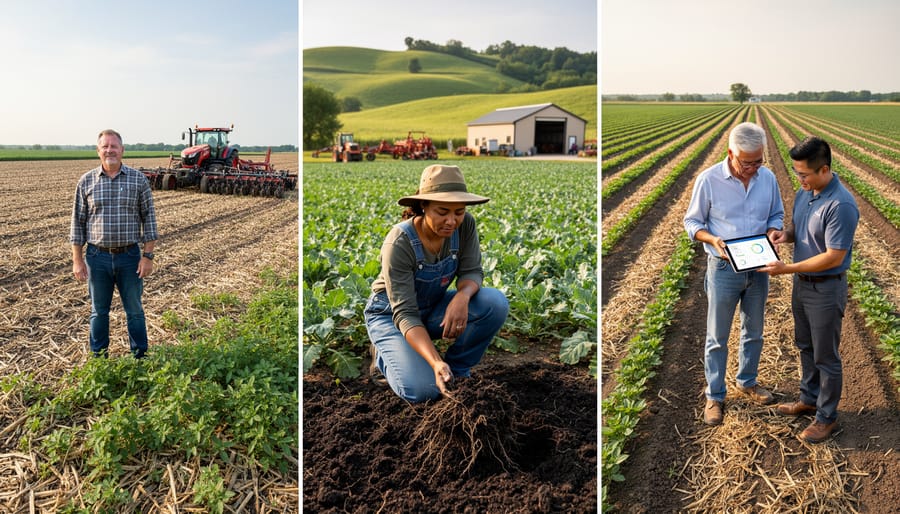
Nothing proves a concept quite like real-world results, and organic no-till farming has champions across diverse landscapes and farm scales who are making it work beautifully.
Take Singing Frogs Farm in California, where Paul and Elizabeth Kaiser transformed a half-acre plot into a highly productive vegetable operation. By eliminating tillage and building soil with compost applications, they’ve achieved remarkable yields while reducing water use by 50%. Their secret? Permanent raised beds, intensive crop rotations, and thick compost mulching that never disturbs the soil structure. Paul reports that their soil carbon levels have tripled in just five years, and earthworm populations have exploded. The lesson they emphasize most is patience during the transition period and the importance of keeping soil covered year-round.
Across the country in Pennsylvania, Jeff Moyer at the Rodale Institute has pioneered roller-crimper technology for organic grain production. His system uses cover crops like cereal rye that are rolled flat at the perfect stage to create a weed-suppressing mat, allowing soybeans or other cash crops to be planted directly through the mulch. Over two decades, this approach has maintained yields comparable to tilled organic systems while dramatically improving soil health metrics. Jeff’s biggest takeaway is timing—getting the cover crop termination just right makes or breaks the system.
Meanwhile, Gabe Brown in North Dakota started experimenting with no-till after financial hardship forced him to think differently. Though not certified organic, his principles translate directly: diverse cover crop cocktails, integrated livestock, and zero soil disturbance. He’s documented a 150% increase in organic matter and eliminated synthetic inputs entirely. His advice for beginners is to start small and learn from mistakes without judgment.
Down in Georgia, Crystal Stewart runs a small-scale market garden using tarping and mulching instead of tillage. She’s found that occultation tarps effectively prepare beds without turning soil, and her customer base has grown steadily as produce quality improved with better soil biology.
These farmers prove that organic no-till isn’t one-size-fits-all—it’s adaptable to vegetables, grains, and diverse climates. The common thread? Commitment to soil health, willingness to experiment, and understanding that building biology takes time but pays dividends.
Starting Your Own No-Till Journey
Ready to embrace no-till farming? The journey begins with a single step, and the good news is you don’t need to transform your entire operation overnight. Starting small is actually the smartest approach, allowing you to learn and adapt as you go.
Begin by designating a test plot, whether it’s a garden bed or a small field section. This manageable space becomes your learning laboratory where mistakes won’t be costly. Start by stopping all tillage immediately and apply a thick layer of organic mulch like straw, leaves, or wood chips. Aim for 4-6 inches to suppress weeds effectively while the soil biology begins its transformation beneath.
Next, focus on building your knowledge foundation. Seek out local organic farmers already practicing no-till methods and ask if you can visit their operations. Their real-world insights are invaluable. Online resources abound too, from university extension programs to farmer-led forums where practitioners share techniques and troubleshoot challenges together. Books like “The Living Soil Handbook” by Jesse Frost offer detailed guidance for beginners.
Consider investing in basic tools suited to no-till systems. A broadfork for gentle soil aeration, a wheel hoe for shallow cultivation, and quality tarps for occultation are excellent starting points that won’t break the bank.
Track your progress through photos and notes documenting soil changes, weed pressure, and crop performance. This record becomes your personalized guide for expansion. Remember, many successful no-till farmers started exactly where you are now, with curiosity and a small patch of ground. Each season brings new understanding, and before you know it, you’ll be sharing your own success story with the next generation of aspiring no-till growers.
Transitioning to organic no-till farming isn’t just about changing how you work the land—it’s about embracing a philosophy that puts soil health first while making your life easier. The dual rewards of building rich, living soil and reducing the backbreaking labor of repeated tillage make this approach incredibly worthwhile. Your soil becomes more resilient with each season, holding moisture better, feeding plants more efficiently, and requiring less intervention over time.
That said, no-till is genuinely a learning process. What works beautifully in one garden or field might need tweaking in another. You’ll discover which cover crop combinations thrive in your climate, how much compost your soil truly needs, and which mulching techniques give you the best results. This journey of observation and adjustment is part of what makes regenerative farming so rewarding.
If you’re curious to see these methods in action, connecting with local Community Supported Agriculture (CSA) farms is an excellent starting point. Many CSAs have embraced organic no-till practices and welcome visitors eager to learn. You’ll gain firsthand insights, ask questions, and often discover a community of like-minded growers willing to share their experiences.
Remember, every no-till bed you establish is an investment in the future. You’re not just growing food—you’re becoming a soil steward, participating in something much bigger than a single harvest. The microorganisms, earthworms, and beneficial fungi you nurture today will continue building fertility for years to come, creating a legacy of healthier land and more abundant harvests.


