
Why Organic Greenhouse Farming Actually Protects the Planet Better
 darrell on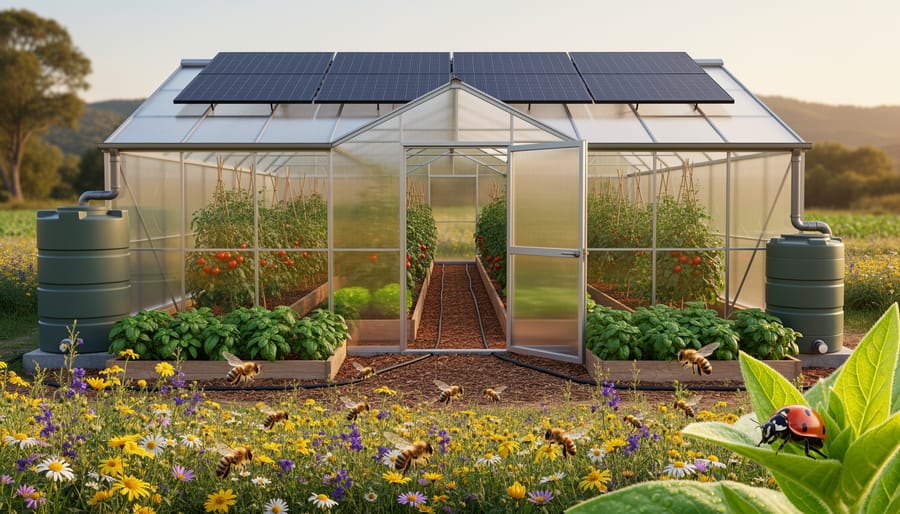
Stand in any grocery store aisle, and you’ll face a choice that feels increasingly urgent: conventional or organic? Behind that decision lies a bigger question reshaping how we grow food. Organic farming promises healthier soil, cleaner water, and thriving ecosystems, but does it actually deliver on these claims when we examine the science?
The stakes couldn’t be higher. With agriculture occupying nearly 40% of Earth’s land and contributing significantly to greenhouse gas emissions, the farming methods we support directly impact our planet’s future. Yet navigating the conversation around organic farming’s environmental impact means cutting through decades of marketing hype and conflicting studies to find real answers.
The truth is nuanced but encouraging. Organic practices build soil that acts like a carbon-capturing sponge, eliminate synthetic pesticides that contaminate watersheds, and create habitats where pollinators and beneficial insects flourish. From small community-supported agriculture operations to larger certified organic farms, growers are proving that feeding people and protecting nature aren’t mutually exclusive goals.
This isn’t about perfection or claiming organic farming solves every environmental challenge agriculture faces. Rather, it’s about understanding how specific practices like crop rotation, composting, and natural pest management create measurable benefits for ecosystems while producing the food your family needs. Whether you’re choosing what to buy or considering starting your own growing journey, the environmental case for organic deserves a closer, honest look.
What Makes Organic Greenhouse Farming Different
Organic greenhouse farming operates on a fundamentally different philosophy than conventional agriculture. At its heart, this approach completely prohibits synthetic pesticides, herbicides, and chemical fertilizers. Instead, farmers rely on nature’s own toolkit to nurture healthy plants and protect them from pests and diseases.
Think of it as working with the environment rather than against it. Organic greenhouse growers use compost, cover crops, and natural amendments to build vibrant, living soil teeming with beneficial microorganisms. This focus on soil health creates a foundation that naturally supports stronger, more resilient plants.
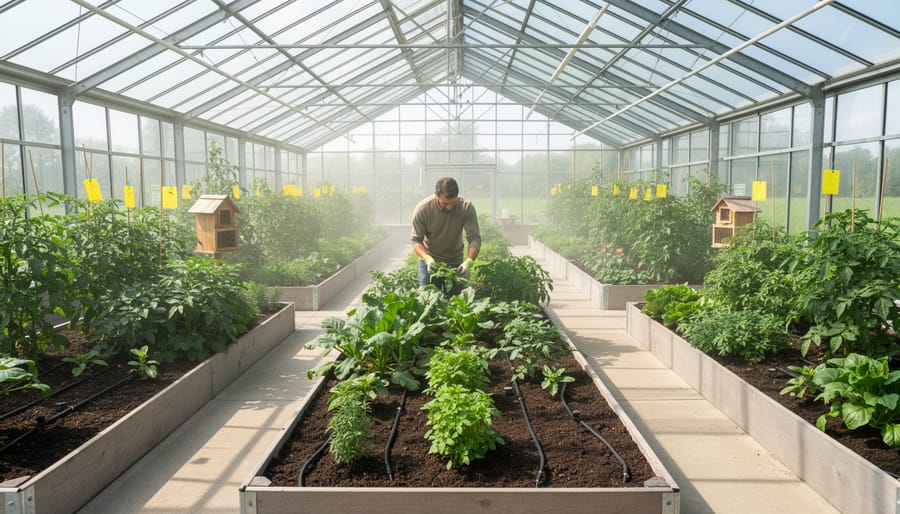
Pest management gets creative in organic greenhouses. Rather than reaching for chemical sprays, farmers introduce beneficial insects like ladybugs and lacewings that feast on crop-damaging pests. They might hang sticky traps, use plant-based oils, or companion plant strategically to keep unwanted visitors at bay. One successful organic tomato grower in Vermont shared how introducing parasitic wasps eliminated her aphid problem completely, without a single chemical spray.
What makes greenhouses particularly exciting for organic farming is the enhanced control they provide. The enclosed environment allows farmers to fine-tune temperature, humidity, and airflow, creating ideal growing conditions while making it easier to manage pests naturally. This controlled setting means fewer pest invasions compared to open fields, reducing the need for interventions altogether.
The greenhouse structure also protects crops from extreme weather and allows for extended growing seasons, meaning communities can enjoy fresh, organic produce year-round. This combination of protective infrastructure and organic principles creates an environment where sustainable practices truly thrive, delivering food that’s better for both people and the planet.
How Organic Greenhouses Protect Soil Health
Building Living Soil Instead of Depleting It
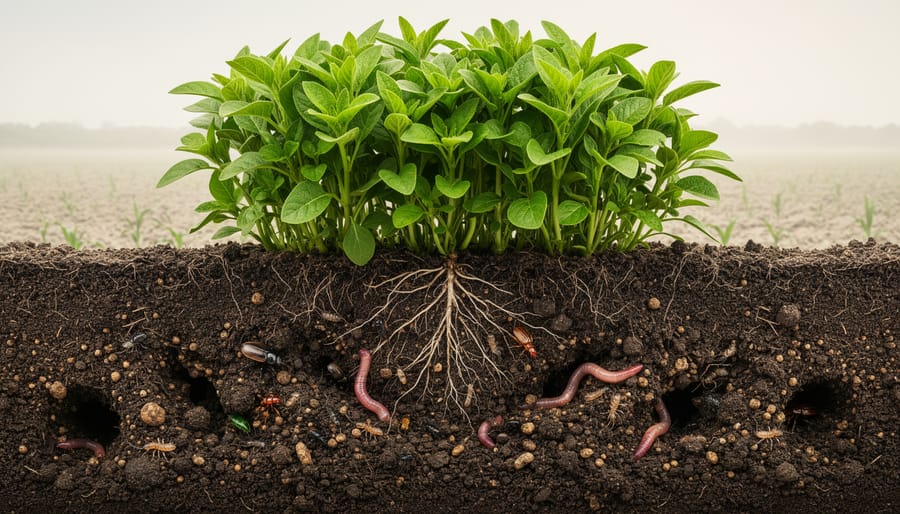
Organic farming works with nature rather than against it, building thriving organic soil ecosystems that get healthier year after year. Instead of relying on synthetic fertilizers that provide quick fixes but deplete soil structure, organic farmers feed the soil through composting, cover cropping, and crop rotation. These practices encourage beneficial microorganisms, earthworms, and fungi that create rich, crumbly soil teeming with life.
This approach does something remarkable: it turns soil into a carbon sink. As organic matter breaks down, it locks carbon deep underground rather than releasing it into the atmosphere. Studies show that organic farms can sequester up to 450 additional pounds of carbon per acre annually compared to conventional methods.
Take Sarah Chen, an organic vegetable grower in Ontario, who transformed her depleted farmland into fertile ground within five years using compost tea and legume cover crops. Her soil now holds moisture better during droughts and requires fewer inputs each season. This regenerative cycle means organic farms can maintain productivity indefinitely while actually improving their land, creating a sustainable foundation for future generations.
Preventing Nutrient Runoff and Water Contamination
One of organic farming’s standout environmental benefits is its ability to protect our water systems from harmful contamination. Unlike conventional methods that rely heavily on synthetic fertilizers and pesticides, organic greenhouse farming uses natural alternatives that break down safely without leaving toxic residues.
When chemical fertilizers wash off fields during rainfall, they carry nitrogen and phosphorus into streams, rivers, and lakes, triggering algae blooms that deplete oxygen and create dead zones where fish can’t survive. Organic farmers prevent this by building healthy soil that acts like a sponge, holding nutrients in place rather than letting them escape into waterways.
Consider the story of Maria Rodriguez, an organic greenhouse farmer in California’s Central Valley. After transitioning from conventional to organic methods, local water testing showed a 60% reduction in nitrate levels in nearby irrigation channels within just three years. She credits her composting program and cover cropping strategy for keeping nutrients where they belong—feeding her plants, not polluting the community’s water supply.
The impact extends beyond individual farms. Research from the Rodale Institute demonstrates that organic systems can reduce groundwater contamination by up to 94% compared to chemical-intensive farming. For communities relying on wells and surface water, this protection isn’t just environmental—it’s essential for public health and ecosystem preservation.
The Water Efficiency Advantage
Water is one of our planet’s most precious resources, and organic greenhouse farming takes its conservation seriously. Unlike traditional outdoor farming that relies heavily on rain or flood irrigation, organic greenhouses employ smart water conservation strategies that make every drop count.
At the heart of these systems is drip irrigation, which delivers water directly to plant roots with remarkable precision. This targeted approach can reduce water usage by up to 60% compared to conventional sprinkler systems, ensuring plants get exactly what they need without waste. Many organic greenhouse operations take this further by implementing closed-loop water recycling systems that capture and reuse runoff, creating a nearly zero-waste water cycle.
The environmental benefits extend far beyond just using less water. Because organic farming eliminates synthetic pesticides and chemical fertilizers, there’s no toxic runoff contaminating nearby streams, rivers, or groundwater supplies. This protection of water sources creates healthier ecosystems for fish, wildlife, and downstream communities who depend on clean water.
Take Sarah Mitchell, an organic greenhouse farmer in British Columbia, who installed a rainwater harvesting system alongside her drip irrigation setup. She now provides 80% of her crops’ water needs from captured rainfall, while her water recycling system prevents any contamination from reaching local waterways. Her success demonstrates how organic methods protect both water quantity and quality.
For environmentally conscious consumers, supporting organic greenhouse farms means backing operations that treat water as the valuable resource it is. Every organic tomato or pepper you purchase represents farming practices that keep our rivers clean, conserve water for future generations, and prove that productive agriculture can work in harmony with nature’s limits.
Biodiversity Thrives in Organic Greenhouses
Natural Pest Control That Protects Ecosystems
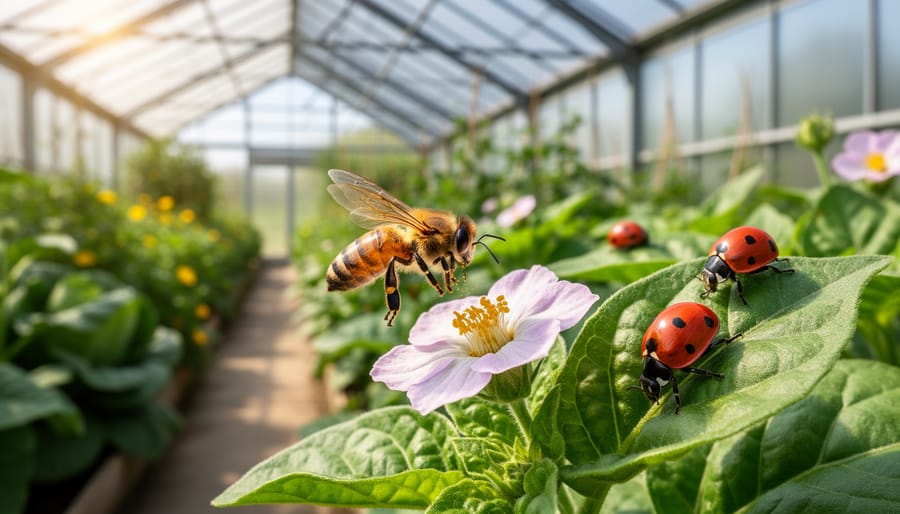
Organic farms embrace nature’s own defense system rather than relying on chemical pesticides that can harm beneficial insects, soil organisms, and waterways. One of the most effective strategies involves encouraging beneficial insects like ladybugs, lacewings, and parasitic wasps that naturally prey on crop-damaging pests. These helpful predators keep pest populations in check without disrupting the broader ecosystem.
Companion planting is another clever technique where farmers strategically place certain plants together. For example, marigolds repel aphids while attracting pollinators, and basil planted near tomatoes deters hornworms. These natural pest control methods create a balanced farm environment where plants support each other.
Sarah Chen, an organic vegetable farmer in British Columbia, transformed her pest management after introducing flowering hedgerows around her fields. “Within two seasons, my beneficial insect population tripled, and aphid damage dropped by 70 percent,” she shares. “I haven’t sprayed anything in three years.”
By working with nature instead of against it, organic farms protect pollinators, preserve biodiversity, and maintain healthier ecosystems. This approach proves that effective pest management doesn’t require harmful chemicals that contaminate our environment and food supply.
Energy and Carbon Footprint Considerations
When it comes to energy consumption, organic greenhouses present both challenges and promising solutions. The truth is, greenhouse farming—whether organic or conventional—requires energy for heating, cooling, and lighting. However, the energy story isn’t quite as straightforward as you might think.
Traditional greenhouses can be energy-intensive, relying heavily on fossil fuels to maintain optimal growing conditions year-round. Organic operations face similar energy demands, but many are leading the charge in innovative, low-impact solutions. The difference often lies in the philosophy: organic farmers tend to embrace energy efficiency as part of their holistic approach to sustainability.
Many organic greenhouse operations are integrating renewable energy sources like solar panels and geothermal systems to reduce their carbon footprint. Take the example of Green Acre Farm in Vermont, where farmer Sarah Mitchell installed solar arrays that now power 80% of her greenhouse operations. “It was a significant upfront investment,” Sarah shares, “but it aligned with our commitment to truly sustainable growing practices. We’re not just avoiding synthetic chemicals—we’re building a farm that works in harmony with nature from the ground up.”
Passive heating and cooling techniques are game-changers in organic greenhouse design. Strategic placement of thermal mass materials, automated ventilation systems, and shade cloths can significantly reduce energy needs. Some farmers use compost heat recovery systems, where decomposing organic matter naturally warms greenhouse spaces during colder months.
The carbon footprint comparison becomes more nuanced when you consider the full picture. While greenhouses require energy, they also enable year-round local food production, eliminating transportation emissions from distant farms. Organic practices further reduce carbon impact by building soil health, which sequesters carbon from the atmosphere.
The reality? Energy challenges exist, but innovative organic farmers are proving that sustainable greenhouse operations aren’t just possible—they’re becoming increasingly practical and economically viable.
Real Farmers Making Real Environmental Impact
Nothing demonstrates organic farming’s environmental benefits quite like real-world organic success stories from greenhouse growers who’ve made measurable changes.
Take the Rodriguez family’s greenhouse operation in Southern Ontario. After transitioning to organic methods three years ago, they implemented a comprehensive composting system that diverted 15 tons of organic waste annually from landfills. By introducing beneficial insects instead of synthetic pesticides, they reduced their water consumption by 30% since chemical residues no longer contaminated their irrigation runoff. The results speak volumes: soil testing now shows a 45% increase in organic matter content, and they’ve documented 12 new pollinator species visiting their greenhouse vents during summer months.
Similarly, Green Valley Greenhouses in British Columbia transformed their operation by adopting organic practices focused on soil regeneration. Owner Sarah Chen replaced conventional fertilizers with homemade compost tea and cover crop rotations between growing seasons. Within two years, her operation reduced purchased inputs by 60% while maintaining yields. Local water quality monitoring showed a notable decrease in nutrient runoff from her property. Sarah also installed rainwater collection systems that now provide 80% of her irrigation needs, significantly reducing municipal water demand.
Both operations report unexpected benefits beyond environmental metrics. The Rodriguez family noticed improved plant resilience during heat stress, while Sarah’s crops showed better flavor profiles that commanded premium prices at farmers markets. These farmers prove that organic greenhouse practices deliver tangible environmental improvements while maintaining productive, profitable operations. Their experiences demonstrate that sustainable farming isn’t just theory—it’s a practical pathway to measurable positive change.
The Challenges Organic Greenhouse Farmers Face
Let’s be real—organic greenhouse farming isn’t without its hurdles. Understanding these challenges upfront helps you make informed decisions and set realistic expectations.
The initial investment can feel daunting. Organic greenhouses often require quality compost systems, beneficial insect habitats, and proper infrastructure for crop rotation. You’re looking at higher startup costs compared to conventional methods. However, many farmers find these investments pay off through premium pricing and dedicated customer bases willing to support sustainable practices.
Labor intensity is another significant consideration. Without synthetic pesticides, you’ll spend more time monitoring crops, hand-removing pests, and maintaining soil health through composting and cover cropping. This means either dedicating more of your own time or hiring additional help. The upside? This hands-on approach often leads to deeper knowledge of your crops and earlier detection of potential problems.
Yield variations can be tricky, especially during your first few seasons. Organic systems take time to establish balance—beneficial insects need to colonize, soil microbiomes need to develop, and you’ll refine your techniques through experience. Sarah Chen, an organic greenhouse farmer in Vermont, shares that her tomato yields increased by 40 percent once her soil ecosystem matured after three seasons.
Certification requirements add another layer of complexity, involving detailed record-keeping and waiting periods. Yet many farmers view this process as valuable, creating systems that improve their overall farm management.
The good news? These challenges are absolutely solvable with patience, education, and community support from fellow organic growers.
So, is organic greenhouse farming better for the environment? The evidence points to a resounding yes—with some important nuances. While no farming system is perfect, organic greenhouses offer clear advantages through healthier soil, reduced water pollution, enhanced biodiversity, and elimination of synthetic pesticides. These practices create ecosystems that work with nature rather than against it.
The beauty of organic greenhouse farming lies in its scalability. Whether it’s a small family operation or a larger commercial venture, these farms demonstrate that environmental stewardship and food production can go hand-in-hand. Take Sarah Chen, who transformed her conventional greenhouse into an organic operation and saw both her soil health and customer base flourish within two years.
Ready to support this positive change? Start by joining a Community Supported Agriculture (CSA) program from a local organic greenhouse farm. Visit farmers markets and ask growers about their practices—building these connections helps you understand where your food comes from. Even small choices matter: purchasing organic greenhouse produce signals market demand for sustainable farming methods. Consider volunteering at local organic farms or starting your own small greenhouse project. Every environmentally conscious decision creates ripples of positive impact, supporting farmers who are nurturing both the land and our future.