What Is NAD+ Nasal Spray? A Research Overview
 darrell on

NAD+ nasal spray is a liquid formulation of nicotinamide adenine dinucleotide, a molecule every living cell uses to turn food into usable energy, delivered as a mist through the nose instead of by pill, injection, or IV drip. The idea behind NAD+ nasal spray is that the thin, well-supplied lining inside the nostrils might offer a quicker route into the body than digestion would.
Whether that idea holds up is the real question. NAD+ itself is well studied. Nasal delivery of it is a much newer conversation, and the research is thinner than the marketing suggests.
If you care about whole-food nutrition, this matters. The body builds NAD+ from vitamin B3 found in everyday foods like mushrooms, legumes, whole grains, and fresh greens. A garden-fresh meal remains a solid foundation for your cellular energy.
This overview explains what the spray is, how it’s meant to work, and where the evidence stands, so you can separate what’s been studied from what’s simply been promised.
What NAD+ Means in Plain Language

Think of a garden. Sunlight and healthy soil biology don’t become a tomato on their own; something has to help the plant turn those raw inputs into growth. NAD+ plays a similar helper role inside your cells, helping turn the food you eat into energy your body can actually use.
NAD+ (short for nicotinamide adenine dinucleotide) is found in every living cell, in people, plants, and animals alike. It takes part in the chemical steps that release energy from food, and it also supports the cell’s routine repair work. Researchers often discuss it in connection with aging because measured levels appear to decline as we get older, though scientists are still working out what that decline means for health.
Here’s a quick glossary of terms you’ll see throughout this article:
- NAD+
- A molecule present in every cell that helps convert nutrients into usable energy and supports cell repair.
- Coenzyme
- A helper molecule that enzymes need in order to do their jobs, a bit like a tool that lets a worker finish a task.
- Mitochondria
- The tiny energy-producing structures inside cells, often called the cell’s power plants.
- Precursor (NMN/NR)
- A building-block compound, such as nicotinamide mononucleotide or nicotinamide riboside, that the body can convert into NAD+.
- Bioavailability
- How much of a substance actually reaches the bloodstream and becomes available for the body to use.
- Intranasal delivery
- Giving a substance as a mist or drops through the nose instead of swallowing it.
The good news for anyone who loves fresh food is that your body already makes NAD+ from dietary building blocks, including niacin (vitamin B3). You’ll find niacin in mushrooms, peas, whole grains, and other produce, which is one more reason a colorful plate from the local farm stand does your cells a favor.
How a Nasal Spray Is Meant to Work
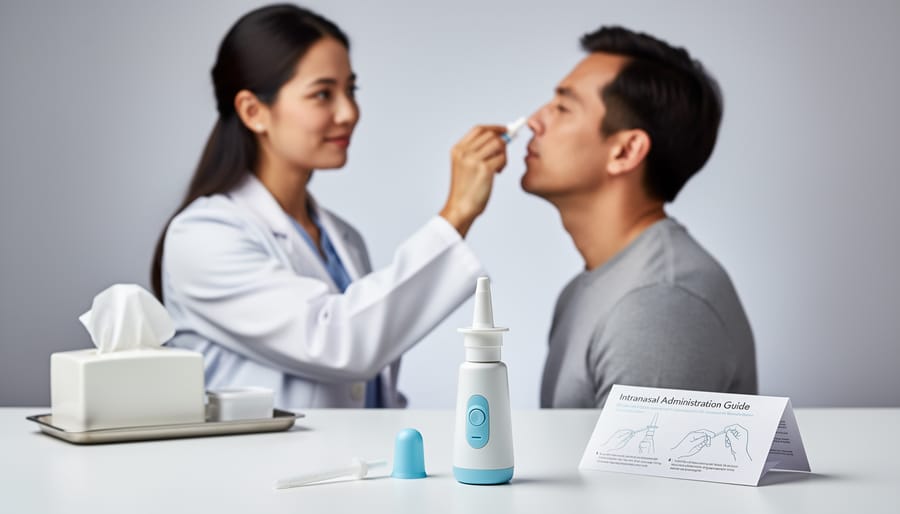
The inside of your nose is lined with thin, moist tissue that’s packed with tiny blood vessels. It also sits close to nerve pathways that lead toward the brain. That’s why some medicines, like certain allergy and migraine treatments, are given as a nasal mist instead of a pill.
The idea behind a NAD+ nasal spray borrows from that logic. Spray the liquid into the nose, and in theory the molecule could be absorbed through that lining without ever passing through the stomach.
Here’s why that’s appealing. When you swallow a supplement, it travels through your digestive system, where stomach acid, enzymes, and the liver can break parts of it down before it reaches your bloodstream. A nasal spray skips that trip. Think of it like watering a plant at the roots instead of misting the leaves and hoping some of it soaks in. The route changes, and supporters hope that means more of the active ingredient makes it where it’s going.
That’s the theory. It’s a reasonable-sounding one, but it isn’t the same as proof.
Here’s the part worth being upfront about. Most NAD+ research so far has looked at oral precursors (the building blocks your body uses to make NAD+), injections, or IV infusions. Published human data on NAD+ nasal sprays specifically is very limited. We don’t yet have solid answers on how much NAD+ actually gets absorbed this way, whether it reaches cells in a meaningful amount, or whether it does anything useful once it does.
So the idea is interesting, and it deserves careful study, but it’s still an open question.
What the Research Does and Doesn’t Show
The research on NAD+ is deeper than most people expect, but it is also narrower than the marketing around nasal sprays suggests. Think of it like soil science: we understand a great deal about how healthy soil works, but that doesn’t mean every product sold to “boost” it has been tested in a real field.
Here’s how the evidence breaks down in rough tiers:
- Well-supported: NAD+ is essential to basic cell function, including energy metabolism and DNA repair.
- Emerging: Taking oral precursors like NR or NMN appears to raise NAD+ levels measured in the blood.
- Unproven: Nasal sprays improving energy, focus, or aging markers in people.
Most foundational work comes from lab and animal studies. These show that NAD+ takes part in how cells turn nutrients into energy and manage stress. That’s valuable science, but results in cells and rodents don’t always carry over to people.
In humans, the best-studied approach involves oral precursors. Several small trials suggest that supplements such as NR and NMN can raise blood NAD+ levels. What’s less clear is whether a higher blood number translates into meaningful benefits like more energy, sharper thinking, or slower aging. Studies so far tend to be short and modest in size.
Intranasal delivery has its own research track, mostly looking at other compounds. Scientists have explored the nose as a route for certain medicines and peptides, partly because of its proximity to nerve pathways. That work is interesting context, but it can’t simply be applied to NAD+, since each compound behaves differently.
This is where the gap shows. Large, well-controlled human trials on NAD+ nasal sprays specifically are still lacking, so claims about their effects rest mostly on theory and early-stage reasoning rather than solid proof.
A few habits help you read this landscape wisely. Look for peer-reviewed studies rather than product pages, and check whether research involved people, animals, or cells. Treat bold promises with healthy curiosity, much like you’d ask a farmer how a crop was actually grown before taking a label at face value.
Ways People Talk About Using NAD+ Nasal Spray
When people talk about NAD+ nasal spray, a few themes come up again and again. Many say they’re after steadier daily energy and sharper focus. Others are curious about healthy aging, since NAD+ levels are often discussed alongside getting older. Some mention recovery support after hard workouts or long days. These are popular claims, not proven outcomes, and solid human evidence for the nasal form is still thin.
It also helps to know where the spray sits among the other options. Oral capsules usually contain precursors such as NR or NMN, which the body converts into NAD+. Injections and IV therapy deliver NAD+ directly into the body, but they’re given in clinical settings and carry their own considerations. The nasal spray is the newer, less-studied route, and it isn’t a stand-in for any of the others.
Here’s the grounded part. The habits with the strongest track record for supporting cellular health are refreshingly simple: eating colorful produce, moving your body every day, and sleeping well. Fruits, vegetables, mushrooms, peas, and whole grains supply the building blocks your cells use to make their own NAD+. If you’re curious where to begin, a weekly box of seasonal vegetables is a friendly start, and exploring health-conscious organic food can help you decide what fits your household. You can also read about the CSA health benefits that come from eating fresh, local, and in season.
A backyard garden works too. A few tomato plants and a row of greens put you outside, moving, and eating what you grew.
Safety, Quality, and Questions to Ask First
Before trying any new supplement or spray, talk with a healthcare provider. That advice matters most if you’re pregnant, nursing, managing a health condition, or taking medications. A professional can weigh your full picture, and that’s something no article can do.
It also helps to know that supplement products aren’t all created equal. Quality and regulation vary a lot, and what’s on the label doesn’t always match what’s in the bottle. A nasal spray also isn’t a stand-in for food. Whole foods deliver fiber, vitamins, and plant compounds that work together in ways a single ingredient can’t copy.
Think about how CSA members approach their farm share. They ask the farmer where the food was grown, how it was raised, and what went into the soil. Bring that same curiosity to any wellness product. A few good questions to ask:
– Is there independent, third-party testing, and can you see the results?
– Is the ingredient list complete and easy to read, with amounts listed?
– Does the company explain where its ingredients come from and how it makes them?
– Are the claims modest and honest, or do they promise dramatic results?
If a brand can’t answer these plainly, that tells you something. A little homework up front is a simple, low-stress way to stay in the driver’s seat of your own health decisions.
Common Questions About NAD+ Nasal Spray
Here are short answers to the questions readers ask most often. None of this is medical advice, so run any specific plan past a healthcare provider.
Is NAD+ nasal spray the same as NAD+ supplements?
Not quite. Most supplements are oral precursors, such as NR or NMN, that the body converts into NAD+. A nasal spray delivers NAD+ itself as a mist through the nose, and it’s a much less studied route.
Does research prove it works?
No. Lab work on NAD+ is strong, and some human studies of oral precursors exist. Large, well-controlled trials on nasal sprays specifically are still missing, so claims about energy or focus remain unproven.
How is it different from eating NAD+-supporting foods?
Foods like mushrooms, peas, and whole grains supply building blocks your body uses in its own time, along with fiber and other nutrients. A spray skips that process entirely, and it can’t replace what a varied diet provides.
Is it safe for everyone?
Safety data is limited, so it’s wise to check with a provider first. That goes double if you’re pregnant, nursing, managing a health condition, or taking medications.
So what should you look for in a product? Start with a transparent ingredient list, third-party testing, and clear sourcing. Be wary of bold promises, since good science rarely sounds like a sales pitch. It’s the same instinct farm-fresh shoppers use when they ask a grower how their food is raised.
If your real goal is better everyday vitality, the basics still carry the most weight. Colorful local produce, daily movement, and good sleep are well established, and nutrition-focused CSAs make a friendly place to begin building those habits.
NAD+ nasal spray is an intriguing idea, but it’s still an emerging one. The science behind NAD+ itself is real and fascinating, yet direct human research on the spray form is limited, so it makes sense to stay curious without getting swept up in big promises. If you’re considering it, talk with a healthcare provider first, and look for sources you can trust.
Meanwhile, the basics still do a lot of heavy lifting. Fresh, local, organic food, a little time outdoors, and good sleep are well-loved habits for a reason. A backyard bed of tomatoes or a weekly CSA box is a simple, delicious way to build farm-fresh wellness into everyday life, from the garden straight to your table.