
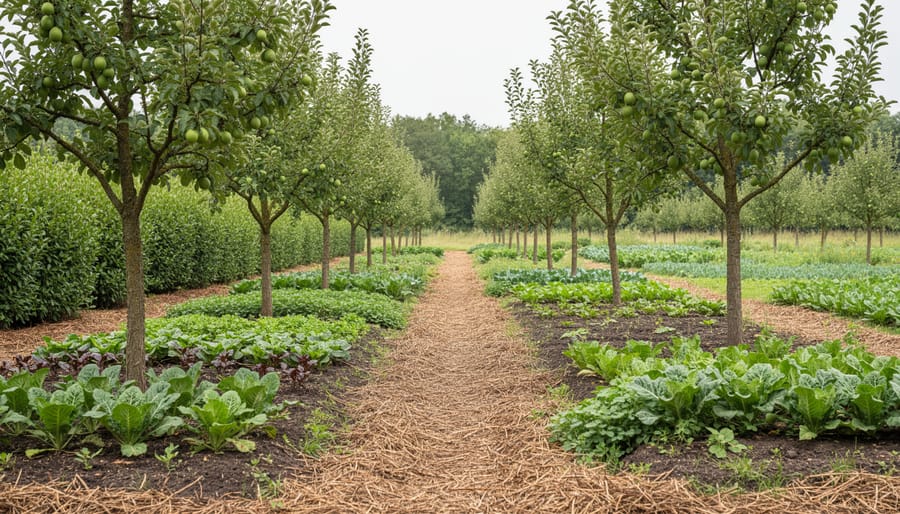
Agroforestry is sustainable when designed and managed to regenerate soil, conserve water, and provide long-term yields without degrading the land or ecosystem. By intentionally combining trees, crops, and often livestock in the same space, these systems build resilience against drought, erosion, and pest pressure while delivering food, timber, and income year after year.
The question isn’t whether agroforestry can be sustainable in theory. It’s whether farmers can make it work on real ground, with real budgets and timelines. The answer depends on choosing the right combination of plants for your climate, understanding how trees and crops interact as they mature, and committing to a timeframe that extends beyond a single growing season. Unlike monoculture systems that extract nutrients faster than they return, well-designed agroforestry creates a feedback loop where organic matter accumulates, beneficial insects thrive, and the land becomes more productive over time.
Across organic farms and community-supported agriculture (CSA) operations in 2026, agroforestry has moved from experimental plots to core production strategies. Farmers are integrating fruit and nut trees into vegetable beds, planting nitrogen-fixing shrubs along field edges, and using fast-growing timber species to shelter sensitive crops. These aren’t abstract environmental benefits. They translate to lower input costs, diversified revenue streams, and farms that weather climate extremes better than their conventional neighbors.
This article breaks down exactly how agroforestry systems function, which types suit different landscapes and goals, and what makes them viable for the long haul.
What Agroforestry Sustainability Really Means
Sustainability in agroforestry means building farming systems that endure across generations without depleting the resources they depend on. It’s not just about avoiding harm, it’s about actively regenerating soil, water, and ecosystems while keeping farms profitable and communities thriving. When farmers ask if agroforestry is sustainable, they’re really asking whether these practices can deliver reliable results year after year without requiring costly external inputs or degrading the land.
The answer rests on what are known as the three pillars of sustainability: environmental health, economic viability, and social well-being. All three must work together. A system that protects the environment but bankrupts the farmer isn’t sustainable. Neither is one that turns a profit while eroding topsoil or exploiting workers.
- Agroforestry
- The intentional integration of trees, crops, and sometimes livestock within the same farming system to create mutually beneficial relationships.
- Ecosystem Services
- The benefits nature provides, such as pollination, water filtration, carbon storage, and soil fertility, that support both farm productivity and broader environmental health.
- Environmental Pillar
- Maintaining or improving natural resources like soil, water, and biodiversity so they remain functional for future generations.
- Economic Pillar
- Ensuring farms generate enough income to support the people who run them, covering costs and providing a livable return on investment.
- Social Pillar
- Supporting fair labor practices, strong communities, and knowledge-sharing that keeps farming culture alive and resilient.
Conventional monoculture farming typically prioritizes short-term yields, relying on synthetic fertilizers and pesticides to compensate for simplified ecosystems. Agroforestry takes the opposite approach. By diversifying plants and animals across the landscape, it builds complexity that self-regulates over time. Trees fix nitrogen, create windbreaks, and store carbon. Crops benefit from improved microclimates. Livestock graze beneath tree canopies, spreading fertility as they move. This layered design reduces dependency on external inputs while strengthening the farm’s ability to weather droughts, market shifts, and pest pressures.
How Agroforestry Systems Work
The Role of Trees in the System
Trees function as the structural backbone of agroforestry systems, delivering multiple functions simultaneously. Their deep roots break up compacted soil layers, creating channels for water infiltration and pulling nutrients from depths annual crops can’t reach. When leaves drop and roots die back, this organic matter enriches the topsoil with nitrogen, phosphorus, and carbon, building fertility year after year.
The carbon benefits are substantial. Research shows that agroforestry stores more carbon than traditional row cropping because trees lock up carbon in both above-ground biomass and root systems. A mature tree can sequester hundreds of pounds of CO₂ annually while sheltering crops below.
Tree canopies also alter the farm’s microclimate. They reduce wind speeds by up to 50%, protecting delicate plants and preventing topsoil erosion. Shade from strategically placed trees lowers ground temperatures in summer, reducing water stress for crops and livestock. In winter, windbreaks trap snow, creating insulating layers and boosting soil moisture when the thaw arrives.
For water cycles, tree roots act like sponges, absorbing heavy rains and releasing moisture slowly. This stabilizes groundwater levels and reduces runoff. Meanwhile, the canopy becomes habitat for birds, beneficial insects, and pollinators that support the entire farm ecosystem.
Integration with Crops and Livestock
Farmers layer crops and livestock beneath and around trees by matching each element’s light, nutrient, and space requirements. Annual vegetables like squash or beans grow in the sunny alleys during spring and summer, while the tree canopy is still light. Shade-tolerant perennials such as ramps, ginger, or berry bushes occupy the transition zones where dappled light prevails as trees mature.
Livestock, often sheep, goats, or chickens, graze the understory, eating weeds and fertilizing the soil with manure. Rotational timing matters: animals move through paddocks after crops are harvested or before new plantings emerge, preventing trampling and overgrazing. Tree roots mine deep nutrients and bring them to the surface through leaf drop, which decomposes and feeds shallow-rooted crops.
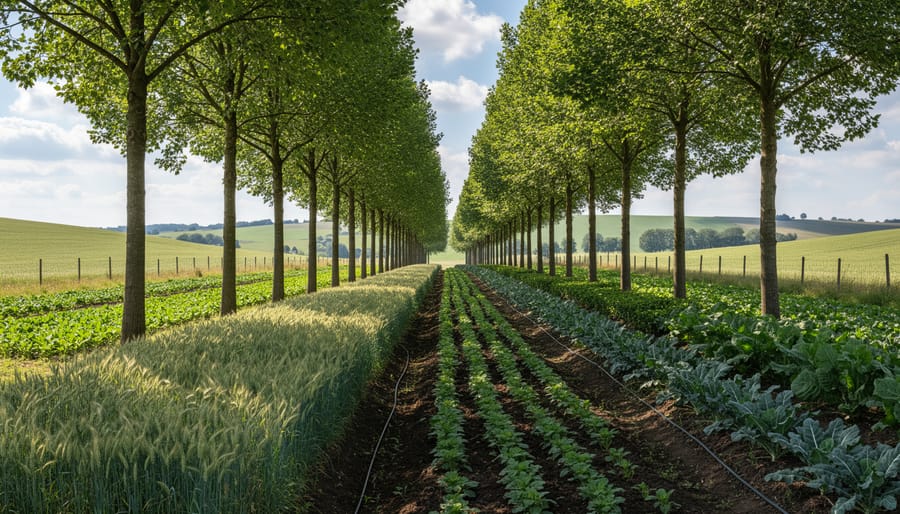
Spacing determines success. Wide alleys (20 to 40 feet) allow enough sunlight for full-sun crops even as trees grow. Closer spacing suits shade crops or livestock systems where forage quality improves under partial canopy. Farmers adjust planting dates and pruning schedules to keep light levels balanced, ensuring every layer contributes without competing destructively. This stacked use of vertical and horizontal space turns a single acre into multiple productive zones.
Main Types of Agroforestry Practices
Alley Cropping
Alley cropping arranges trees in parallel rows with wide spaces, the alleys, where you grow annual or perennial crops. The tree rows might be fruit or nut species, nitrogen-fixing legumes, or timber trees, depending on your farm goals and climate. Crops in the alleys benefit from windbreak effects, improved soil moisture retention, and gradual nutrient inputs as tree leaves decompose. This setup spreads income across multiple harvests: you sell grain, vegetables, or hay from the alleys while trees mature into longer-term products like apples, pecans, or lumber. Because trees and crops occupy different vertical and root zones, competition stays manageable with proper spacing, and the diversified system buffers against single-crop failures or market swings.
Silvopasture
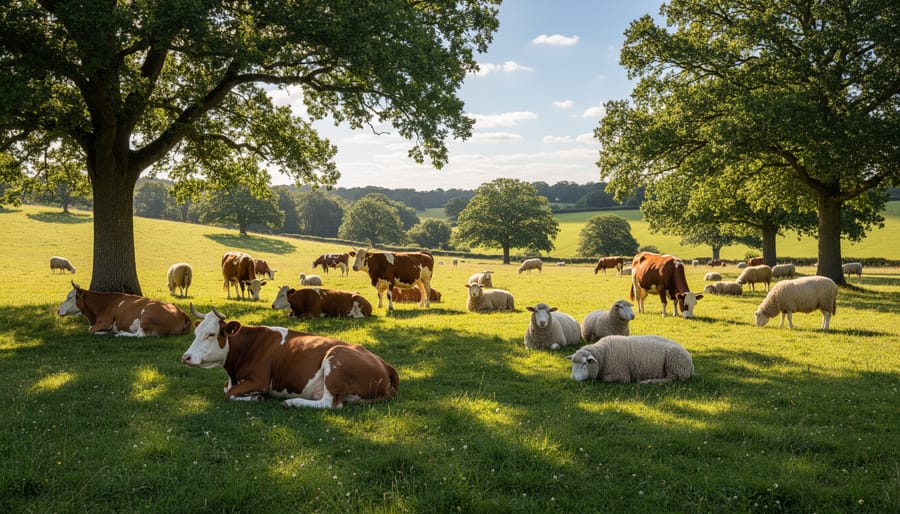
Silvopasture integrates trees, forage plants, and grazing livestock in a single managed system. Farmers plant scattered trees or tree rows across pastures where cattle, sheep, goats, or poultry graze. The trees provide shade that reduces heat stress in animals, especially during summer months, improving weight gain and milk production. Tree roots reach deeper soil layers than pasture grasses, pulling up nutrients that eventually cycle back through leaf drop and manure decomposition.
This arrangement improves forage quality because shaded grasses stay greener longer and contain higher protein levels than sun-scorched pasture. The trees sequester significant carbon in wood and soil while livestock continue generating income during the years trees mature. Farmers often select nut or fruit trees to add a second revenue stream, walnuts, chestnuts, or apples, alongside meat or dairy production. Silvopasture works well on organic farms seeking diversified income without expanding acreage.
Forest Farming
Forest farming transforms existing woodlands into productive growing spaces by cultivating specialty crops beneath the tree canopy. Instead of clearing trees, farmers work with the forest’s natural shade and humidity to grow high-value products like shiitake mushrooms on logs, ginseng in leaf litter, or shade-loving berries and medicinal herbs.
This practice suits organic growers targeting niche markets where customers pay premium prices for forest-grown goods. The overhead canopy regulates temperature and moisture while leaf fall builds soil organic matter naturally. Forest farming requires minimal external inputs since the ecosystem largely manages itself, making it exceptionally sustainable for farmers with wooded acreage who want to generate income without disrupting established tree cover or converting land to open fields.
Windbreaks and Riparian Buffers
Windbreaks consist of single or multiple rows of trees planted perpendicular to prevailing winds, reducing wind speed across fields by up to 50% within a protected zone that extends 10 to 20 times the tree height. This protection prevents topsoil loss, reduces crop moisture stress, and creates microclimates that can boost yields in adjacent rows by 10 to 20%.
Riparian buffers are tree and shrub plantings along streams, ponds, or drainage ditches. They filter runoff before it enters waterways, trapping sediment and agricultural nutrients that would otherwise degrade water quality. These buffers also stabilize stream banks, reduce flooding risk, and create wildlife corridors connecting habitat patches across the farm landscape. Both practices deliver measurable ecosystem services while requiring minimal land, typically just a few rows or a 15- to 30-foot buffer strip.
Ecosystem Services Delivered by Agroforestry
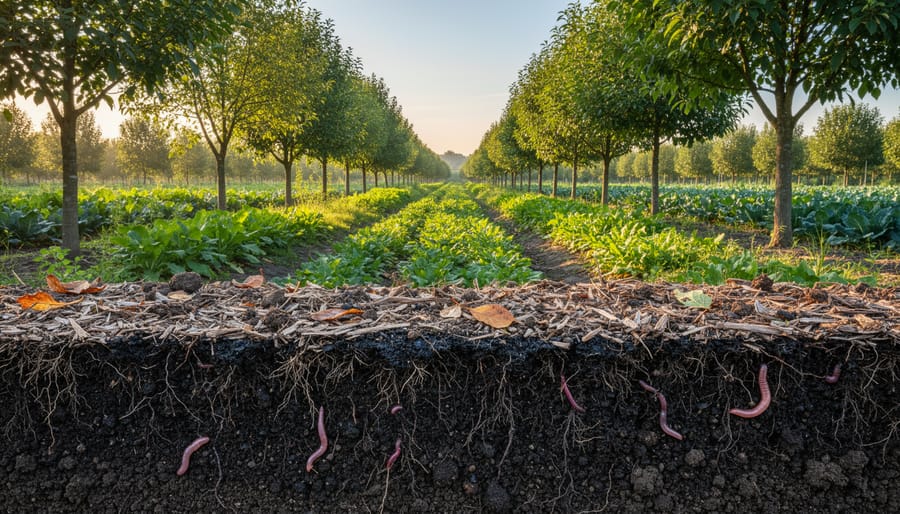
Agroforestry systems function as working ecosystems that deliver measurable benefits far beyond crop yields. These ecosystem services, the natural processes that support life and productivity, explain why agroforestry stands out as a sustainable farming approach. When you integrate trees with crops and livestock, you activate a suite of ecological functions that strengthen your farm’s resilience while supporting the wider community.
Carbon storage ranks among the most valuable services agroforestry provides. Trees sequester atmospheric carbon dioxide in their woody biomass and root systems, while also pumping carbon into the soil through leaf litter and root exudates. A well-designed silvopasture or alley cropping system can store several tons of carbon per hectare annually, helping offset farm emissions and potentially qualifying for carbon credit programs that generate income.
Water regulation improves dramatically when trees enter the landscape. Deep tree roots break up compacted soil layers, increasing infiltration during heavy rains and reducing runoff that carries topsoil and nutrients off-site. During dry periods, those same roots access deeper moisture and create humid microclimates that reduce crop water stress. Riparian buffers along streams filter agricultural runoff, protecting water quality for downstream communities while maintaining habitat corridors.
The creation of pollinator habitat transforms farm productivity. Trees and hedgerows provide season-long forage, nesting sites, and shelter for bees, butterflies, and other beneficial insects. This translates to better fruit set, increased yields in pollinator-dependent crops, and reduced reliance on rented honeybee hives, a cost savings that shows up immediately in your operating budget.
Soil conservation happens naturally as tree canopies intercept rainfall, roots bind soil particles, and leaf litter builds organic matter. Erosion rates drop measurably compared to bare annual cropping systems, preserving your farm’s most valuable asset. Healthier soil structure also improves nutrient cycling, reducing fertilizer needs.
Biodiversity flourishes in agroforestry environments. The structural complexity of mixed tree-crop systems supports everything from soil microbes to songbirds, creating a balanced ecosystem where pest populations stay in check and beneficial organisms thrive. This biological diversity acts as insurance against disease outbreaks and climate variability, stabilizing production across seasons.
How Agroforestry Is Used on Organic and CSA Farms
On organic and CSA farms, agroforestry offers practical ways to diversify income while building resilience into the farm’s ecology and business model. Many CSA operators integrate nut trees like hazelnuts or chestnuts along field edges, providing members with unique seasonal shares that stand out from conventional produce boxes. These perennials require minimal annual input once established, making them ideal for certified organic operations that prioritize low-intervention management.
Fruit trees planted in alley cropping systems between vegetable rows create layered production. A farm might harvest strawberries and lettuce in spring, then apples and pears later in the season from the same acreage. This staggered harvest spreads labor demands and extends the CSA delivery calendar, keeping members engaged longer and reducing the feast-or-famine cash flow common in vegetable-only operations.
Some farms venture into value-added products like jams, syrups, or specialty mushrooms cultivated under forest canopies. These items command premium prices at farmers’ markets and bolster CSA share value without requiring additional tillable land. Timber species like black walnut can serve as a long-term savings account, maturing over decades while providing shade and wildlife habitat in the interim.
Agroforestry also enhances the farm’s visual appeal, a crucial asset for agritourism. Tree-dotted landscapes invite farm tours, school visits, and u-pick events that generate revenue and deepen community ties. While city farming models face space constraints, rural CSA farms with room to experiment find that agroforestry systems create the diversified, attractive, ecologically sound operations that members actively want to support.
Measuring Long-Term Sustainability in Agroforestry
Judging whether agroforestry truly delivers on sustainability requires more than anecdotes. Farmers and researchers track specific indicators over years or decades to see if these systems maintain productivity, protect resources, and stay economically viable. Soil health metrics form the foundation: regular testing for organic matter percentage, nutrient levels, and water infiltration rates reveals whether the soil is improving or degrading. A thriving agroforestry system typically shows rising organic matter and faster water absorption compared to conventional tillage, signaling better structure and fertility.
Carbon accounting has become another critical measure. Trees sequester carbon in their trunks, branches, and roots, while healthier soil stores more carbon underground. Some farmers now use farm tech solutions like soil carbon sensors and remote mapping to quantify these gains and qualify for carbon credit programs. Biodiversity indices track the variety and abundance of species on the farm, from soil microbes to pollinators and birds. More diverse ecosystems tend to be more resilient to pests, disease, and climate swings.
Economic return on investment matters just as much as environmental outcomes. Farmers monitor profit per acre over time, factoring in upfront establishment costs, delayed yields from trees, and eventual income from timber, nuts, fruit, or livestock. Key indicators include:
- Soil organic matter percentage and trend over five-year intervals
- Water infiltration rates measured before and after tree integration
- Species diversity counts for plants, insects, birds, and soil organisms
- Profit per acre tracked annually, including diversified revenue streams
- Carbon credits potential based on verified sequestration rates
When these indicators hold steady or improve across a decade or more, the system proves its sustainability. If yields drop, soil degrades, or income stagnates, adjustments are needed. Long-term monitoring separates hopeful claims from real-world performance.
Common Questions About Agroforestry Sustainability
Farmers and gardeners considering agroforestry often wonder whether the investment of time and money will pay off. The upfront costs vary widely depending on the scale and type of system you choose. A simple windbreak or alley cropping setup might require just a few hundred dollars for tree stock and fencing, while a full silvopasture conversion on several acres could run into the thousands. Most organic farms spread the expense over multiple seasons, starting with one practice on a portion of their land before expanding.
Timing is another common concern. Unlike annual crops that produce within months, agroforestry systems need patience. Tree crops typically take three to seven years to mature enough for harvest, though you’ll see ecosystem benefits, improved soil, windbreaks, pollinator habitat, within the first two growing seasons. Many CSA farmers diversify income during this establishment phase by continuing annual vegetable production between young tree rows or by raising livestock under the canopy.
Does agroforestry require more labor?
Initial setup demands hands-on work for planting, mulching, and establishing trees. Once mature, though, perennial systems often need less intensive management than annual crops.
Can I get organic certification for agroforestry?
Yes. Certified organic standards cover tree crops, forest farming, and integrated livestock systems, provided you follow approved practices for pest management and soil amendments without prohibited substances.
Does it work in dry climates?
Absolutely. Drought-tolerant tree species and strategic water harvesting make agroforestry viable in arid regions, where trees actually help conserve moisture and reduce evaporation from the soil.
What about pest management?
Agroforestry systems create habitat for beneficial insects and natural predators, reducing reliance on interventions, though understanding organic pest types still helps when challenges arise.
Climate compatibility is real, not a barrier. From temperate zones to subtropical regions, farmers adapt agroforestry to local conditions by selecting appropriate tree species and matching them to existing crops and livestock. Biodiversity flourishes in these systems, supporting pollinators naturally rather than relying on artificial pollination solutions. Start by observing what trees already thrive on your land and consulting with local extension services or experienced agroforestry practitioners in your region.
Agroforestry stands out as a genuinely sustainable farming approach because it addresses all three pillars at once: environmental health, economic viability, and social well-being. The systems we’ve explored deliver real ecosystem services that compound over time, from carbon storage and soil regeneration to water quality improvement and habitat creation. These aren’t theoretical benefits. They show up in healthier crops, more resilient land, and diversified income streams that buffer farms against market volatility and climate extremes.
That said, agroforestry isn’t a quick fix. Trees take years to mature, and the learning curve can feel steep when you’re integrating multiple elements on the same piece of land. You’ll need patience, careful observation, and a willingness to adapt as your system develops. But the payoff extends far beyond your own farm boundaries. Agroforestry strengthens entire communities by supporting pollinators, filtering runoff before it reaches waterways, and creating landscapes that people want to visit and protect.
If you’re curious about getting started, reach out to agroforestry farmers in your region. Many are happy to share lessons learned, and seeing a mature system in person makes the concepts click faster than any article can. Start with one practice that matches your land and goals, maybe a windbreak along your northern edge or a few rows of nut trees in an underused pasture. Small experiments teach you what works without overwhelming your operation, and they set the foundation for a farming system that truly lasts.
