
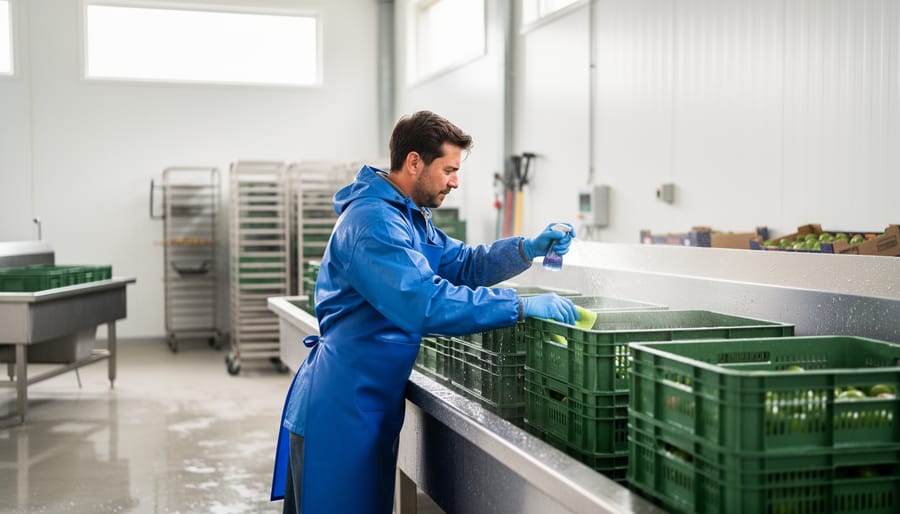
Clean and sanitize all harvest containers, bins, and tools between each use with a three-step process: remove visible dirt with potable water, wash with approved food-safe detergent, then apply a sanitizing solution like diluted hydrogen peroxide or peracetic acid, allowing proper contact time before air-drying completely.
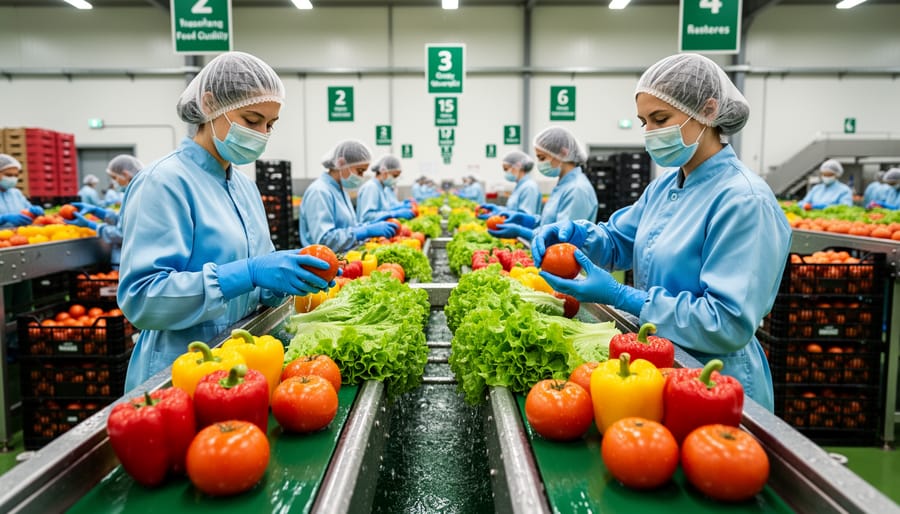
Establish dedicated zones in your packhouse to prevent cross-contamination—create separate areas for incoming dirty produce, washing and processing, and final packing, ensuring workers and equipment move in one direction only through these spaces. This simple flow pattern dramatically reduces the risk of recontaminating clean produce with field soil or pathogens.
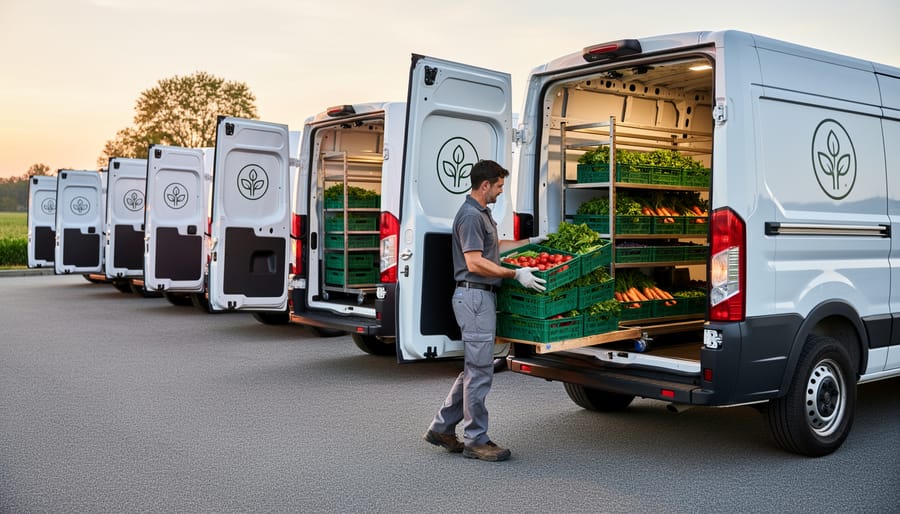
Implement a daily vehicle cleaning schedule for any trucks or trailers transporting your harvest, focusing on removing plant debris and soil from floors, walls, and tie-down points before sanitizing surfaces that contact produce containers. Small-scale farmer Maria Chen from Vermont found that spending just 15 minutes after each delivery route cut her produce spoilage by nearly 40 percent within the first season.
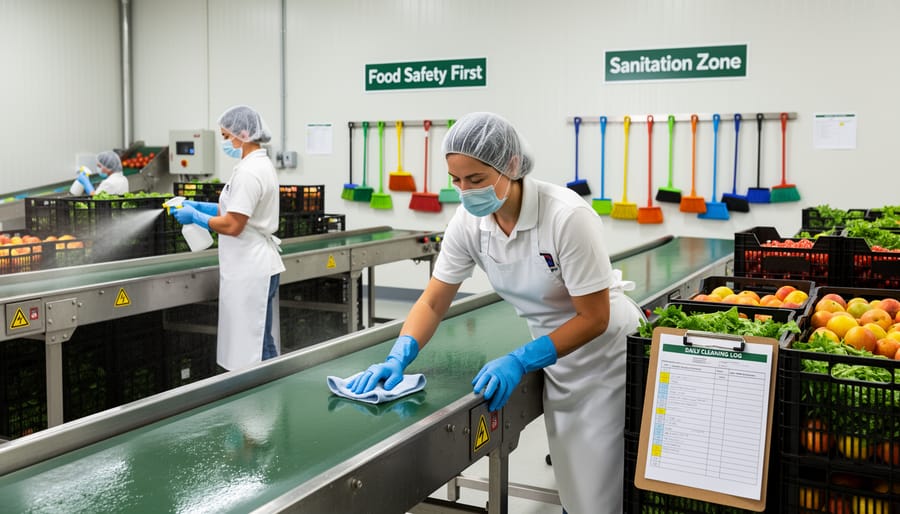
Keep detailed cleaning logs for both packhouse operations and transport vehicles, recording dates, products used, and which team member completed the task. These records not only help you maintain consistency but also demonstrate your commitment to food safety when working with restaurants, farmers markets, or wholesale buyers who increasingly request documentation.
Start with one area—perhaps your harvest bins or delivery van—and master these protocols before expanding to your entire operation. Building sustainable sanitation habits takes time, but each small improvement protects your customers and strengthens your farm’s reputation for quality and reliability.
Why Sanitation Matters More Than You Think
The Farm-to-Table Risk Chain
From the moment your freshly picked lettuce leaves the field, it enters a journey where contamination risks multiply at every stop. Understanding this farm-to-table risk chain helps you protect both your customers and your farm’s reputation.
Contamination can sneak in through surprisingly simple touchpoints. Unwashed harvest bins, dirt-caked vehicle floors, or even a worker’s hands between bathroom breaks can introduce harmful bacteria. Field soil containing E. coli or Salmonella can easily transfer to clean surfaces if you’re not vigilant about your order fulfillment processes.
Your packhouse serves as the critical crossroads where produce transitions from field conditions to food-safe packaging. This is where proper washing, cooling, and sorting should happen in designated clean zones. Transport vehicles present another vulnerability point, especially if they’ve previously hauled compost, animals, or unwashed equipment.
The good news? Small-scale farmers like Maria from Green Valley Farm found that implementing simple protocols at these control points reduced contamination incidents by 90 percent. She focuses on three key areas: dedicated harvest containers that never touch the ground, daily vehicle sanitizing schedules, and clear handwashing stations at packhouse entry points. These straightforward measures create protective barriers throughout your supply chain.
What’s at Stake for CSA Farmers
For CSA farmers, the stakes around sanitation and safety extend far beyond regulatory compliance—they touch the very heart of what makes community-supported agriculture thrive. Your reputation is built on trust, and a single foodborne illness incident can undo years of relationship-building with members who’ve invested in your farm’s success.
Customer retention depends heavily on confidence in your practices. CSA members choose local farms partly because they want to know where their food comes from and how it’s handled. Demonstrating visible commitment to cleanliness in your packhouse and delivery vehicles reinforces that trust and sets you apart from conventional options.
Legal liability presents real financial risks for small operations without the insurance cushions larger farms may carry. Even unintentional contamination can result in costly recalls, medical claims, or lawsuits that could devastate a small farm’s finances. While this isn’t meant to create fear, it’s important to recognize that proper sanitation protocols protect both your customers and your livelihood.
The good news? Many CSA farmers find that implementing strong safety practices actually strengthens member loyalty. When you share your sanitation protocols through newsletters or farm tours, members appreciate the transparency and feel even more connected to their food source.
Essential Sanitation Practices for Your Packhouse
Daily Cleaning Routines That Work
Establishing a consistent end-of-day cleaning routine protects your harvest and keeps your operation running smoothly. Start by removing all produce and debris from surfaces, then proceed with a systematic three-step process: rinse, wash, and sanitize.
Begin by rinsing surfaces and reusable bins and crates with cool water to remove soil and organic matter. Next, wash using food-safe detergents specifically approved for organic operations. Look for products certified by OMRI or similar organizations that won’t leave harmful residues on food-contact surfaces.
For sanitizing, hydrogen peroxide-based solutions or diluted vinegar work well for organic farms. Mix one tablespoon of food-grade hydrogen peroxide per gallon of water, or use a vinegar solution at 5% concentration. Apply thoroughly to all surfaces, letting it sit for the recommended contact time, usually 30 seconds to one minute.
Pay special attention to high-touch areas like door handles, scales, and tool handles. Clean and sanitize harvest knives, pruners, and sorting equipment daily, storing them in designated clean zones.
Water management matters too. Use spray bottles instead of running water when possible to conserve resources, and ensure proper drainage to prevent standing water where bacteria can multiply. Sarah from Green Valley Farm shares: “Since implementing our daily cleaning checklist, we’ve seen zero quality issues and our inspections go smoothly. It takes just 20 minutes but makes all the difference.”
Deep Cleaning Schedules
While daily cleaning tackles immediate concerns, deep cleaning routines address the buildup that happens over time in places your quick wipe-down might miss. Schedule weekly intensive cleaning sessions to scrub floors with approved sanitizers, paying special attention to corners and floor drains where organic matter loves to hide. Monthly deep cleans should extend upward to walls and ceiling areas, using extension tools to reach high corners and light fixtures where dust and debris accumulate.
Don’t forget your cooling systems and ventilation areas. These spaces can harbor mold and bacteria if neglected, potentially contaminating your carefully harvested produce. Remove and clean fan guards, inspect ductwork, and wipe down refrigeration unit interiors monthly.
Create a rotating schedule that tackles different zones each week so nothing gets overlooked. Sarah Martinez, who runs a small CSA operation in Vermont, color-codes her cleaning calendar and involves her whole team in monthly deep cleaning days. “We make it a group effort with music and snacks,” she shares. “Everyone knows which area they’re responsible for, and we’ve never had a food safety issue.” Keep detailed logs of your deep cleaning activities, noting any problem areas that need extra attention or repairs.
Personal Hygiene Standards for Workers
Your workers are your first line of defense in maintaining food safety, so establishing clear personal hygiene standards creates a foundation for clean, safe produce. Start by installing handwashing stations at strategic points—near restrooms, at packhouse entrances, and wherever workers handle fresh produce. Stock these stations with soap, clean water, paper towels, and visible signage reminding everyone when to wash their hands.
Protective clothing makes a real difference in preventing contamination. Provide clean aprons or smocks, hair nets or caps, and food-safe gloves when appropriate. Many successful small farms have found that designating specific clothing for packhouse work—kept separate from field clothes—significantly reduces dirt and debris transfer.
Your illness policy should be straightforward: anyone experiencing symptoms like vomiting, diarrhea, or open wounds shouldn’t handle produce. This isn’t about being harsh; it’s about protecting your customers and your farm’s reputation. One organic CSA operator shared how implementing a simple “stay home when sick” policy with paid sick time actually reduced overall illness among staff and prevented potential food safety issues.
Building a culture of cleanliness starts with training and leading by example. Hold brief seasonal refreshers on hygiene practices, explain the “why” behind each rule, and celebrate when your team maintains high standards. When everyone understands they’re protecting families who trust your farm, personal hygiene becomes a shared value rather than just another requirement.
Keeping Your Delivery Vehicles Clean and Safe
Before and After Each Run
Establishing consistent cleaning routines between deliveries protects both your products and customers while maintaining the integrity of your organic operation. These quick protocols take just minutes but make a significant difference in preventing cross-contamination.
Start each delivery day by sweeping vehicle floors and cargo areas to remove dirt, debris, and plant material from previous loads. Follow with a damp wipe-down of all contact surfaces using approved sanitizing solutions. Pay special attention to door handles, tailgates, and any shelving where produce containers rest.
Between stops, conduct visual inspections of your cargo area. Check for spills, damaged produce, or accumulated moisture that could harbor bacteria. Keep a small cleaning kit in your vehicle with microfiber cloths, approved sanitizer spray, and a handheld broom for quick touch-ups. This practice becomes especially important when optimizing delivery route efficiency, as more frequent stops mean more opportunities for contamination.
After completing your route, perform a thorough end-of-day cleaning. Remove all containers, sweep thoroughly, and sanitize surfaces. Check floor mats for wear and moisture accumulation, as these can become breeding grounds for pathogens. Document your cleaning activities in a simple logbook to maintain good safety records and identify patterns that might need adjustment in your protocols.
Temperature Control and Air Quality
Clean vehicles and properly controlled temperatures work hand-in-hand when it comes to keeping produce fresh during transport. A sanitized delivery vehicle is your first line of defense, but temperature and airflow deserve equal attention.
Start by ensuring your transport vehicle’s interior surfaces are free from dirt, spills, and residues that can harbor bacteria. These contaminants not only pose safety risks but can also affect air quality inside the cargo area. Regular cleaning with food-safe sanitizers creates the foundation for maintaining produce quality.
Proper ventilation prevents moisture buildup and ethylene gas accumulation, both of which accelerate spoilage. Ethylene-sensitive crops like leafy greens and broccoli particularly benefit from good air circulation. Consider installing battery-powered fans in non-refrigerated vehicles for short hauls.
Temperature monitoring is equally crucial. Invest in simple thermometers to track conditions throughout your route. Many small-scale farmers successfully use insulated coolers with ice packs for deliveries under two hours. Sarah Chen, who runs a 5-acre organic farm in Ontario, shares this tip: “I keep frozen water bottles in my delivery van year-round. They maintain cool temperatures in summer and cost nothing to prepare.”
Remember, consistent temperatures matter more than perfect temperatures. Fluctuations stress produce and shorten shelf life, so plan efficient delivery routes that minimize exposure time.
Dealing with Spills and Organic Residue
When accidents happen during transport, quick action prevents contamination and keeps your vehicle fresh. First, remove any damaged produce immediately to prevent spreading bacteria or mold to healthy items. Keep a spill kit in your vehicle containing absorbent towels, food-safe sanitizer spray, and disposable gloves.
For liquid spills from leaking produce, blot the area thoroughly with absorbent materials, then clean with a mild soap solution followed by a food-safe sanitizing spray. Allow surfaces to air dry completely before loading new produce. Sarah, a CSA farmer in Vermont, shares her tip: “I line my crates with absorbent paper during berry season. It catches any juice before it reaches the truck bed.”
Combat odors by sprinkling baking soda on affected areas after cleaning, letting it sit for 15 minutes, then vacuuming. Between deliveries, prop doors open to promote air circulation and prevent moisture buildup that encourages bacterial growth. Regular preventive cleaning is easier than dealing with entrenched odors or contamination.
Choosing the Right Cleaning Products and Tools
Organic-Approved Sanitizing Solutions
When transitioning to organic-approved sanitizing solutions, you’ll discover several effective options that meet certification standards while keeping your produce safe. Hydrogen peroxide stands out as a powerhouse cleaner, breaking down into water and oxygen without leaving harmful residues. Many certified organic farms use food-grade hydrogen peroxide at 3-5% concentrations for sanitizing surfaces and equipment between harvest batches.
Organic acids like citric acid and acetic acid (vinegar-based solutions) offer another reliable pathway for sanitation. These natural antimicrobials effectively reduce bacterial loads on contact surfaces while remaining completely acceptable under organic protocols. Sarah Martinez, who operates a certified organic CSA in Vermont, shares that switching to citric acid solutions not only met her safety requirements but also eliminated harsh chemical odors in her packhouse, creating a more pleasant environment for her team.
Peracetic acid, though more technical sounding, is actually a combination of acetic acid and hydrogen peroxide that biodegrades quickly and works exceptionally well in cold water conditions. This makes it particularly valuable during early season harvests when water temperatures are low.
When selecting products, always verify OMRI listing or similar organic certification to ensure compliance. Remember that proper concentration and contact time matter more than product choice, so follow manufacturer guidelines carefully for maximum effectiveness.
Essential Equipment for Effective Cleaning
Having the right tools makes sanitation faster and more effective, especially when you’re managing a busy harvest season. Start with a variety of brushes—stiff-bristled scrub brushes for hard surfaces, soft brushes for delicate equipment, and bottle brushes for reaching inside containers. A quality pressure washer is worth the investment, allowing you to blast away debris from crates, bins, and vehicle beds in minutes rather than hours of manual scrubbing.
Dedicated sanitizing bins in different sizes help you organize your cleaning workflow. Use color-coded bins to prevent cross-contamination—one color for pre-wash items, another for sanitized equipment. Many small farmers swear by three-bin systems: wash, rinse, and sanitize.
Don’t overlook smaller essentials like spray bottles for spot-cleaning, microfiber cloths that won’t leave lint behind, and rubber gloves in multiple sizes for your team. A simple squeegee helps dry surfaces quickly, reducing slip hazards and preventing water spots that can harbor bacteria.
Sarah, who runs a CSA operation in Vermont, shares this tip: “I keep a cleaning caddy in both my packhouse and truck. Everything I need is portable and ready to go, making it easy to maintain standards even during hectic harvest days.”
Creating Your Sanitation Action Plan
Record-Keeping Made Simple
Good record-keeping might seem like extra paperwork, but it’s actually your best friend when it comes to protecting your farm and proving your commitment to safety. Documentation creates a clear trail of your cleaning activities, which becomes invaluable during organic certifications or food safety audits. Think of it as your farm’s safety story, showing inspectors and customers that you take hygiene seriously.
The good news? Your system doesn’t need to be complicated. Many successful farmers use simple daily checklists posted right in their packhouse, where workers can initial each cleaning task as they complete it. Marta, who runs a thriving CSA in Ontario, keeps a binder with cleaning logs for each week alongside her food traceability records. She notes the date, task completed, products used, and who did the cleaning. This five-minute daily habit saved her hours during her organic certification renewal.
Digital tools can help too. Free smartphone apps or simple spreadsheets work wonderfully for tracking sanitizing schedules and product inventory. The key is consistency—choose whatever method you’ll actually use regularly. Remember, these records aren’t just bureaucratic requirements; they’re proof of your dedication to delivering safe, clean produce to the families who trust you.
Real Stories from the Field
When Maria Santos took over her family’s 5-acre CSA operation in Vermont, she inherited outdated harvest bins and a haphazard cleaning routine. Customer complaints about wilted greens prompted her to overhaul the entire system. She invested in food-grade plastic bins, established a three-step washing protocol for all harvest containers, and designated separate areas for dirty and clean equipment. Within two months, member retention jumped from 68% to 94%. “It wasn’t just about cleaner produce,” Maria explains. “Members could see we took their health seriously, and that built incredible trust.”
Across the country in Oregon, James Chen faced a different challenge. His farmers market customers loved his organic tomatoes until a surprise health inspection revealed his delivery van doubled as his family vehicle on weekends. The wake-up call led James to purchase a used refrigerated van exclusively for farm use and implement daily sanitation checklists. He now proudly displays his inspection scores at his market booth. Sales increased 40% the following season, and he credits transparency about his improved practices.
For Katie Brewster in North Carolina, the game-changer was simply organizing her wash station. She installed separate sinks for different crop types and color-coded all cleaning tools. What seemed like a small adjustment dramatically reduced cross-contamination risks and cut her prep time by nearly half. Her restaurant clients noticed the difference immediately, with chefs commenting on consistently higher quality greens.
These farmers prove that improving sanitation doesn’t require massive budgets. Start with one area, document your progress, and share your commitment with customers. The investment in proper practices pays dividends in customer loyalty and peace of mind.
Investing in sanitation and safety isn’t just about meeting regulations—it’s about protecting the future of your farm and honoring the trust your community places in you. Every cleaning protocol you implement and every safety practice you establish contributes to the longevity of your operation and the wellbeing of those who enjoy your harvest.
The journey toward excellent sanitation doesn’t require perfection from day one. Start with small, manageable improvements: establishing a weekly cleaning schedule, organizing your washing area more efficiently, or simply documenting what you’re already doing well. These incremental steps build momentum and create lasting habits that strengthen your entire operation.
Remember, the care you put into maintaining clean packhouses and vehicles reflects the same dedication you bring to nurturing your crops from seed to harvest. Your CSA members choose local organic produce because they value knowing where their food comes from and trusting the hands that grow it. When you prioritize sanitation and safety, you’re not just protecting produce—you’re safeguarding relationships, building community confidence, and ensuring that your farm continues to thrive for seasons to come. Your commitment to these practices is an investment in both your harvest and your legacy.
