
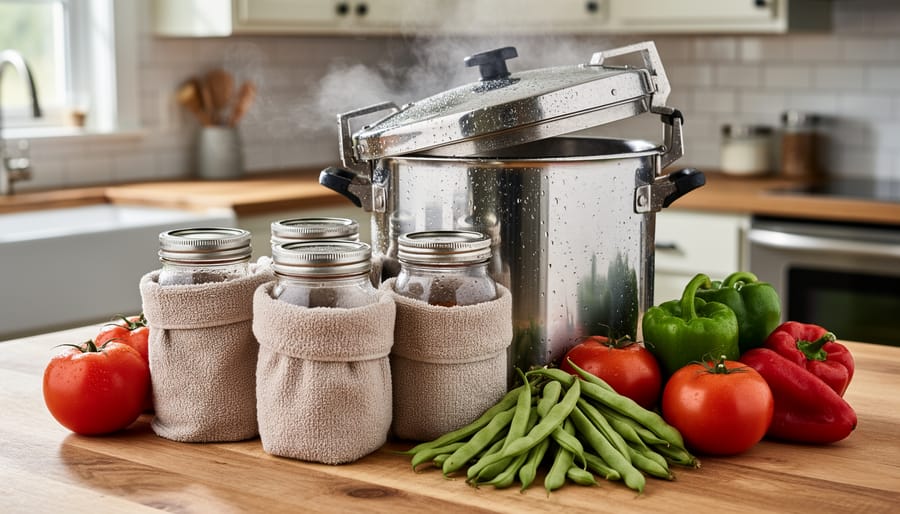
Heat preservation canned food temperature refers to the precise thermal thresholds required to safely eliminate harmful bacteria while locking in nutrients during the canning process, typically between 212°F for high-acid foods and 240°F for low-acid varieties.
Getting temperature right isn’t just a food safety checkbox. It’s the difference between jars that nourish your family through winter and those that spoil within weeks or, worse, harbor invisible dangers like botulism. For CSA members and home gardeners drowning in August’s tomato glut or September’s bean harvest, understanding these temperature principles transforms peak-season abundance into year-round eating security.
The science is straightforward but unforgiving. Each food type demands specific heat levels held for exact durations to destroy pathogens without cooking away the vitamins, minerals, and flavors you grew so carefully. Water bath canning works beautifully for acidic foods like pickles and jams, while pressure canning becomes non-negotiable for vegetables, meats, and anything with a pH above 4.6.
This guide breaks down the temperature requirements that keep your preserved food safe, explains how different preservation methods generate and maintain heat, and walks through practical techniques used by successful small-scale farmers who’ve built thriving value-added businesses around their canning operations. You’ll discover which foods need which temperatures, how to verify your equipment maintains those levels, and common pitfalls that compromise both safety and nutrition. Whether you’re putting up your first dozen jars or scaling to a commercial kitchen, mastering heat preservation means your hard-won harvest feeds you properly all year long.
What Is Heat Preservation in Canned Food Temperature?
Heat preservation in canned food temperature refers to the controlled application and maintenance of specific heat levels throughout the canning process to destroy harmful microorganisms while protecting the nutritional value of preserved foods. This scientific principle hinges on reaching and sustaining temperatures high enough to eliminate pathogens like Clostridium botulinum, which can thrive in the low-oxygen environment inside sealed jars, yet not so extreme that they strip away the vitamins and minerals that make your CSA produce valuable in the first place.
The process works through thermal energy transfer: heat penetrates the jar’s contents, raising the internal temperature to a safe threshold that halts bacterial growth and enzyme activity. For home canners working with seasonal farm share bounty, understanding this temperature relationship transforms preservation from guesswork into reliable food safety. When you process tomatoes at 212°F in a water bath or green beans at 240°F in a pressure canner, you’re not just heating food arbitrarily, you’re executing a precise scientific method that balances microbial destruction against nutrient retention.
- Heat Preservation
- The sustained application of thermal energy during canning to eliminate spoilage organisms while maintaining food quality and nutritional content.
- Headspace Temperature
- The temperature of the air gap between the food and the jar lid, which affects vacuum seal formation and heat distribution during processing.
- Thermal Processing
- The phase where jars are exposed to controlled heat for a specified duration, ensuring the food’s center reaches pathogen-killing temperatures.
- Cooling Curves
- The rate at which canned foods decrease in temperature after processing, influencing seal integrity and continued enzyme inactivation.
What sets heat preservation apart from simple cooking is its dual purpose: immediate sterilization through high temperature exposure, followed by the creation of anaerobic conditions that prevent recontamination. The vacuum seal formed during cooling keeps new bacteria out, while the initial heat treatment has already neutralized what was inside. This combination gives properly canned CSA vegetables and fruits their remarkable shelf stability, letting you enjoy August’s tomatoes in February without refrigeration.
How Heat Preservation Temperature Control Works
The Thermal Processing Phase
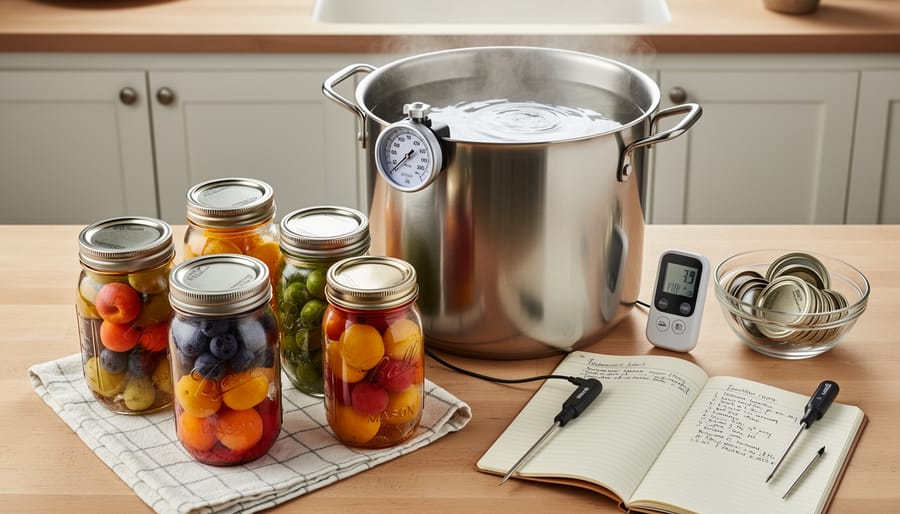
The thermal processing phase kicks off when you place sealed jars into boiling water or a pressure canner. Within minutes, the internal temperature of your CSA vegetables begins climbing toward the target range needed for safe preservation. This rapid heating doesn’t just warm the food, it initiates a crucial transformation that makes home canning possible.
As temperatures rise above 140°F, harmful microorganisms start to weaken. The real magic happens between 212°F and 250°F, depending on your canning method. At these temperatures, the destruction of bacteria by heat becomes highly effective, neutralizing pathogens like Clostridium botulinum that could otherwise thrive in your sealed jars. The sustained heat penetrates to the jar’s center, reaching every bean, tomato slice, or corn kernel from your farm share.
What’s remarkable is that this same heat treatment preserves most vitamins and minerals when done correctly. Water-soluble vitamins like vitamin C experience some loss, but overall nutritional value remains high, far better than letting fresh produce spoil unused in your fridge.
Temperature Maintenance and Cooling
After the initial heat treatment destroys harmful bacteria, the cooling phase becomes equally critical for preserving your CSA vegetables’ nutritional value. Rapid temperature drops can cause nutrient loss, particularly water-soluble vitamins like C and B-complex that leach out when condensation forms inside jars.
The ideal cooling process maintains gradual temperature reduction, typically dropping from processing heat to room temperature over 12 to 24 hours. This controlled descent allows the jar contents to contract slowly, creating the vacuum seal that prevents recontamination. When you rush cooling by placing hot jars in cold water or drafty areas, you risk thermal shock that cracks jars and incomplete seals that let spoilage organisms back in.
During cooling, the lid’s sealing compound softens from residual heat, then firms as it cools, bonding to the jar rim. You’ll hear that satisfying “ping” as each lid pulls down and seals. This process works best when jars cool undisturbed on towels or racks away from temperature extremes.
For your farm share produce, patient cooling means those summer tomatoes and green beans retain more of their original vitamin content months later.
Types of Heat Preservation Methods for Canned Foods
Water Bath Canning
Water bath canning operates at 212°F, the temperature at which water boils at sea level. This approach works for high-acid foods (pH below 4.6) because the acidic environment naturally inhibits bacterial growth, making the lower temperature sufficient for safety. When your CSA box arrives loaded with tomatoes, berries, peaches, or cucumbers for pickling, these are perfect candidates for boiling-water processing for high-acid foods.
The process requires submerging filled jars in boiling water for a specific duration based on jar size and altitude. At this temperature, yeasts, molds, and most bacteria die off, while the heat drives air from the jar to create a vacuum seal during cooling. Processing times range from ten minutes for small jars of jam to forty-five minutes for quart jars of whole tomatoes.
These time-tested canning methods preserve vitamin C and antioxidants reasonably well in your farm-fresh produce. Tomatoes, pickled vegetables, fruit preserves, salsas, and chutneys all thrive with water bath canning. The key is maintaining that rolling boil throughout processing and adjusting time upward if you live above 1,000 feet elevation, where water boils at lower temperatures.
Pressure Canning
Pressure canning uses higher temperatures than water bath methods, making it essential for preserving low-acid foods like green beans, corn, carrots, and other vegetables commonly found in your CSA delivery. While water bath canning reaches 212°F, pressure canners achieve temperatures of 240 to 250°F for low-acid foods by creating a pressurized environment. This elevated heat is necessary to destroy Clostridium botulinum spores, which can survive at boiling temperature but are eliminated at these higher ranges.
The pressure canner’s sealed environment traps steam, building pressure that raises the boiling point of water. At 10 to 15 pounds of pressure (depending on your altitude and canner type), you create the conditions needed to safely preserve proteins and low-acid vegetables. This method allows CSA members to make produce last longer while retaining valuable nutrients like vitamin C and B vitamins that might otherwise deteriorate with improper processing. The key is maintaining steady pressure throughout the recommended processing time, ensuring every jar reaches the target temperature at its center.
Steam Canning
Steam canning has gained traction among CSA members as a faster, more energy-efficient alternative to traditional water bath methods for high-acid foods. This technique uses atmospheric steam rather than boiling water to achieve the necessary 212°F processing temperature.
The method works by heating a small amount of water in the base of a specialized steam canner. As steam rises and surrounds the jars, it transfers heat directly through convection. Most CSA vegetables and fruits suitable for water bath canning, including tomatoes, pickles, jams, and chutneys, process well with steam, completing in roughly the same time.
Steam canning offers practical advantages when you’re facing a bumper crop from your farm share. The canner uses only 1-2 quarts of water versus the 7-8 gallons a water bath requires, reducing both heating time and kitchen humidity during summer preservation sessions. The lightweight equipment makes it easier to handle multiple batches.
However, steam canning isn’t suitable for low-acid foods requiring pressure processing, and you’ll need an approved steam canner with a temperature indicator to ensure safe processing. Always verify that your specific produce and recipe are approved for steam canning before proceeding.
Temperature Ranges and Their Impact on Nutrition
Different nutrients respond to heat in distinct ways, which is why understanding temperature ranges helps you stop nutrient loss from your CSA harvest. Water-soluble vitamins like vitamin C and several B vitamins start degrading around 180°F, while fat-soluble vitamins A and E tolerate higher temperatures better. The sweet spot for most home canning falls between 212°F for water bath methods and 240°F for pressure canning, hot enough to destroy pathogens but not so extreme that it obliterates nutritional value.
Processing time matters just as much as peak temperature. Those gorgeous heirloom tomatoes from your farm share retain about 90% of their lycopene when processed at 212°F for the minimum safe time, but holding them at that temperature for twice as long drops retention to around 70%. Minerals like calcium, iron, and potassium stay stable across all canning temperatures, which is good news for preserving leafy greens and beans.
Here’s what happens to specific nutrients at different temperature points:
- Vitamin C degrades rapidly above 180°F; process berries and peppers at minimum safe times to preserve it
- Folate in green beans and spinach retains best at 240°F for shorter durations rather than lower temperatures for longer periods
- Beta-carotene in carrots and squash actually becomes more bioavailable with heat processing between 212-240°F
- Polyphenol antioxidants in stone fruits survive best when canned immediately after harvest, regardless of temperature method
Your freshest CSA produce preserves best because enzymes haven’t had time to degrade nutrients before canning begins. Blanching vegetables from your farm box for 2-3 minutes at 212°F before packing jars deactivates enzymes that would otherwise continue breaking down vitamins during storage. This pre-treatment step, combined with quick processing at the correct temperature for your food’s acid level, locks in the nutritional benefits you’re counting on for winter meals.
Practical Uses for CSA Members
Managing Your Weekly Farm Share
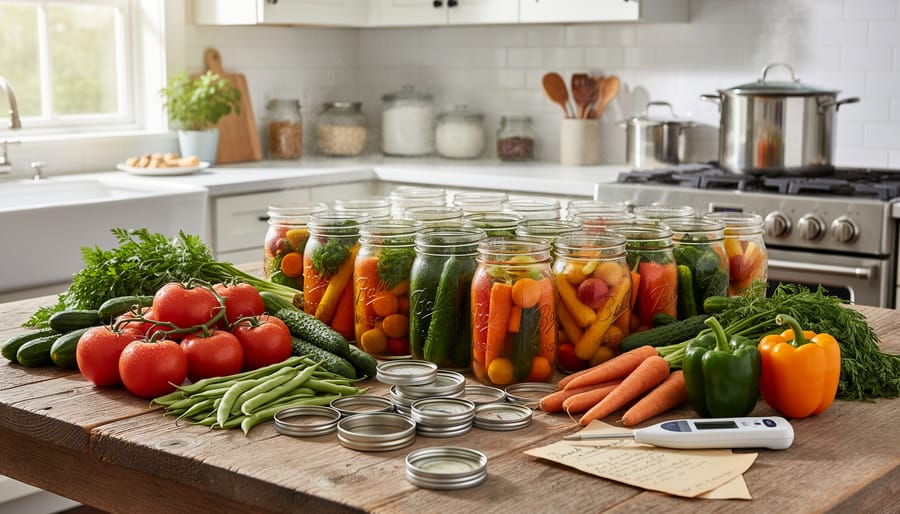
When your CSA box arrives each week, resist the urge to can everything at once. Instead, group items by their acidity and required processing method. High-acid tomatoes, cucumbers, and berries can go straight into water bath canning at 212°F, while low-acid vegetables like green beans and carrots need pressure canning at higher temperatures.
Sort produce immediately: refrigerate what you’ll eat fresh within three days, and prioritize canning anything showing soft spots within 24 hours to lock in nutrients before they degrade. Check your month-by-month produce calendar to anticipate peak abundance weeks when you’ll need extended canning sessions.
Set aside three-hour blocks for pressure canning sessions since the warm-up and cool-down phases can’t be rushed without compromising safety. Water bath canning fits smaller time windows, you can process a batch of pickles or jam in under 90 minutes. Pack jars the night before if needed, but never start heating them until you’re ready to complete the full process that same day.
Success Story: Sarah’s Summer Tomato Preservation
Sarah Martinez joined Valley View CSA in 2020, overwhelmed by 40 pounds of peak-season tomatoes arriving every August. “They’d ripen faster than I could use them,” she recalls. After attending a local canning workshop, she learned that maintaining 212°F for 45 minutes in water bath canning preserved both safety and nutrients, vitamin C retention exceeded 85% compared to refrigeration alone.
She now dedicates two Saturdays each August to processing tomatoes at proper temperatures, tracking her thermometer religiously. “I discovered that rushing the warm-up phase compromised texture, while holding steady heat created restaurant-quality sauce,” Sarah explains. Her pantry now holds 60 jars annually, supplying her family with farm-fresh nutrition through winter.
Sarah’s system extends beyond tomatoes. She adapted temperature timing for peppers, green beans, and pickles using seasonal canning recipes as guides. Her advice? “Invest in a reliable thermometer and never rush the process. Proper heat preservation means my family eats genuinely local food year-round, not just during growing season.”
Common Temperature Mistakes to Avoid
Home canners eager to preserve their CSA haul often make preventable temperature mistakes that undermine safety or nutrition. Recognizing these errors helps you protect your investment in local, organic produce.
The most dangerous mistake is failing to reach and maintain required processing temperatures. Pressure canners must reach 240°F for low-acid foods like green beans and corn. Stopping early or assuming “close enough” creates conditions where botulinum spores survive. Always use a tested recipe and verify your pressure gauge accuracy yearly.
Rushing the cooling process ranks second among common errors. Opening the canner lid immediately or running cold water over jars causes rapid temperature drops that compromise seals and can crack jars. Natural cooling also allows time for heat to penetrate the jar center fully. Let pressure canners return to zero pressure naturally, then wait ten minutes before opening.
Underestimating the impact of jar size on processing creates hidden risks. A quart jar of tomato sauce requires longer processing than a pint because heat travels more slowly through greater mass. Using the wrong time for your jar size leaves cool spots where bacteria thrive.
Temperature inconsistency during processing happens when canners reduce heat too much mid-process to prevent vigorous boiling. This drops internal temperatures below the safety threshold. Maintain steady heat throughout the recommended time, gentle boiling is normal and necessary.
Starting with cold jars in hot water or hot jars in cold water creates thermal shock that cracks glass and wastes hours of work. Match jar temperature to water temperature before processing, and your carefully preserved CSA bounty will remain intact.
Frequently Asked Questions
CSA members who start preserving their farm share often have specific questions about temperature control. These answers address the most common concerns about heat preservation in home canning.
What temperature should I maintain for water bath canning my CSA tomatoes?
Water bath canning requires maintaining a rolling boil at 212°F (100°C) at sea level for the duration of your processing time. High-acid foods like tomatoes, pickles, and fruit preserves need this consistent temperature to eliminate harmful microorganisms while preserving nutrients.
Do I need to adjust temperatures if I live at high altitude?
Temperature remains the same, but processing time increases with altitude because water boils at lower temperatures above sea level. Add 5 minutes for every 3,000 feet above sea level for water bath canning, or adjust pressure for pressure canning according to USDA guidelines.
Can I reprocess jars that didn’t seal properly?
You can reprocess within 24 hours using the same temperature and time requirements, though you’ll lose some additional nutrients with the second heat exposure. After 24 hours, it’s safer to refrigerate and consume the food within a week rather than reprocess.
How much nutrition do I lose through heat preservation?
Properly temperature-controlled canning typically retains 60-80% of heat-sensitive vitamins like vitamin C, while minerals and fiber remain largely intact. This compares favorably to fresh produce stored for weeks, which can lose 50% or more of certain nutrients.
The key to successful canning lies in following tested temperature guidelines rather than experimenting. Your local extension office can provide altitude-specific charts and answer questions about unusual CSA items you want to preserve. Many CSA farms also host canning workshops where experienced members share their temperature control techniques and troubleshooting strategies for common crops in your area.
Types or components
Understanding the key elements that work together during canning helps CSA members control temperature effectively and preserve their harvest safely.
Heat Source: Your burner or heating element must deliver consistent, measurable heat. Gas stoves offer quick temperature adjustments, while electric coils provide steady output once calibrated. For pressure canning those low-acid CSA vegetables, reliability matters more than speed.
Thermal Mass: The water or steam surrounding your jars acts as a thermal battery, distributing heat evenly and maintaining target temperatures throughout processing. Insufficient water creates hot spots that compromise preservation.
Sealed Container: Mason jars with two-piece lids form an airtight barrier once processed. The vacuum seal that forms during cooling prevents recontamination and locks in the nutritional benefits you’re working to preserve.
Temperature Monitoring: Accurate thermometers and pressure gauges aren’t optional, they’re your safety net. Guessing temperatures risks both nutrition loss and dangerous bacterial survival.
Insulation: Your canner’s design, including lid fit and material thickness, determines how efficiently it maintains processing temperatures without constant fuel input, especially during those longer processing times required for root vegetables from your farm share.
Mastering heat preservation temperature isn’t just about food safety, it’s about honoring the work your farmers put into growing nutrient-dense produce. When you control temperature precisely during canning, you’re locking in the vitamins, minerals, and antioxidants that make your CSA share so valuable. Those peak-season tomatoes, peppers, and green beans retain their nutritional punch months after harvest, giving your family real food security.
Start small if you’re new to temperature-controlled canning. Pick one or two favorite CSA items and practice getting the temperatures right. Use a reliable thermometer, follow tested processing times, and don’t rush the cooling phase. You’ll quickly develop confidence as you see those perfectly sealed jars lining your pantry shelves.
The beauty of understanding heat preservation is that it transforms your relationship with seasonal abundance. Instead of feeling overwhelmed when thirty pounds of beets arrive in your farm share, you’ll see opportunity. You’re not just preserving food; you’re preserving the connection to your local food system, supporting sustainable agriculture, and ensuring your household enjoys farm-fresh nutrition year-round.
Your farmers grew it with care. You can preserve it with the same intention.
