
Daily Archives

3 Articles

Smart Farm Tech: How Bioresource Engineering is Saving Our Food Future

Posted by darrell on
0
Agroecology and Ecosystem Practices
Smart Farm Tech: How Bioresource Engineering is Saving Our Food Future

Revolutionizing modern agriculture through engineering innovation has become essential as global food demands surge and environmental challenges intensify. Bioresource and agricultural engineering merges cutting-edge technology with sustainable farming practices, creating solutions that maximize crop yields while minimizing environmental impact. From precision irrigation systems that reduce water consumption by up to 30% to AI-powered drones that monitor crop health in real-time, this rapidly evolving field transforms how we grow food and manage natural resources.

Today’s agricultural engineers develop smart farming solutions that help small-scale organic farmers compete effectively while maintaining crop diversity. These innovations include vertical farming systems that produce 10 times more food per square foot than traditional methods, soil sensors that optimize nutrient delivery, and automated harvesting systems that reduce food waste by 25%.

By combining traditional farming wisdom with modern engineering principles, this field creates practical solutions for sustainable agriculture. Whether it’s developing drought-resistant irrigation systems or designing energy-efficient greenhouse technologies, bioresource and agricultural engineering paves the way for a future where farming is both productive and environmentally responsible. For local farmers and gardening enthusiasts alike, these advancements offer accessible tools to grow food more efficiently while protecting our planet’s precious resources.

Engineering Nature’s Diversity: The Basics of Bioresource Technology

What is Bioresource Engineering?

Bioresource engineering is an innovative field that combines engineering principles with agricultural and biological sciences to create sustainable solutions for food production and natural resource management. It focuses on developing technologies and systems that help farmers work more efficiently while protecting our environment. Think of it as a bridge between traditional farming wisdom and modern engineering innovation.

This discipline encompasses everything from designing smart irrigation systems and renewable energy solutions to creating better methods for processing and storing agricultural products. Engineers in this field work on exciting projects like developing precision farming equipment, creating bio-based materials, and implementing waste management systems that turn agricultural byproducts into valuable resources.

For today’s farmers and environmentally conscious producers, bioresource engineering offers practical tools to increase crop yields while reducing water usage and minimizing environmental impact. It’s particularly valuable for organic farmers who need specialized equipment and systems that align with sustainable farming practices while maintaining efficiency and productivity.

The Tech-Nature Partnership

Modern engineering works hand in hand with nature to create more sustainable and efficient farming systems. Think of it as a respectful partnership where technology enhances what nature already does well. For example, smart irrigation systems now use soil moisture sensors to deliver water exactly when and where plants need it, mimicking natural rainfall patterns while conserving precious resources.

Precision agriculture tools help farmers understand their soil’s unique characteristics, allowing them to work with the land’s natural properties rather than against them. Drones and satellite imaging can monitor crop health and identify pest issues early, enabling targeted interventions that reduce the need for broad chemical applications.

Engineers are also developing innovative solutions that support beneficial insects and natural pollinators. From designing specialized habitats to creating automated monitoring systems that track biodiversity, these technologies help maintain healthy ecosystems while improving crop yields.

By blending engineering innovation with natural farming principles, we’re creating agricultural systems that are both highly productive and environmentally sustainable. This partnership shows how technology can enhance rather than replace nature’s wisdom.

Smart Solutions for Crop Diversity

Precision Farming Systems

Modern farming has been revolutionized by precision farming technologies that help farmers manage their crops with incredible accuracy. These smart systems combine GPS mapping, soil sensors, and data analytics to create detailed field maps showing variations in soil type, moisture levels, and nutrient content. This allows farmers to apply exactly what each area needs – whether that’s water, fertilizer, or pest control – reducing waste while maximizing crop health.

Take Sarah Miller’s 200-acre organic farm in Iowa, for example. By implementing moisture sensors and automated irrigation, she reduced water usage by 30% while increasing her tomato yield. Her system sends real-time alerts to her smartphone, letting her know exactly when different sections of her field need attention.

These precision systems also help maintain crop diversity by creating optimal growing conditions for different plant varieties. Drones equipped with multispectral cameras can spot early signs of plant stress or disease, allowing farmers to address issues before they spread. Smart tractors use AI-guided systems to plant seeds at perfect depths and spacing, while robotic harvesting assists with timing and gentle handling of delicate crops.

For smaller farms and gardens, simplified versions of these technologies are becoming more accessible. Mobile apps can now analyze soil samples through smartphone photos, while affordable sensor systems help monitor garden conditions. This democratization of precision farming tools means more growers can benefit from data-driven decision-making while maintaining sustainable practices.

Autonomous agricultural robot navigating through rows of different crops while collecting data
Advanced precision farming equipment using GPS and sensors in a diverse crop field

Seed Banking Innovation

Seed banking has evolved from traditional storage methods to cutting-edge engineering solutions that safeguard our agricultural future. Modern seed banks now utilize sophisticated climate control systems, automated monitoring, and specialized packaging materials to maintain optimal storage conditions for millions of seed varieties.

One of the most exciting innovations is cryogenic preservation, where seeds are stored at ultra-low temperatures using liquid nitrogen. This technology allows seeds to remain viable for decades or even centuries, providing a crucial backup for our food systems. Engineers have developed specialized containers with multiple insulation layers and smart sensors that maintain consistent temperatures while minimizing energy consumption.

Digital tracking systems now play a vital role in seed management. Advanced database platforms help track genetic information, viability testing results, and storage conditions for each seed sample. These systems can alert staff to potential issues before they become problems, ensuring the preservation of valuable genetic resources.

Local seed banks are also benefiting from engineering innovations. Smaller-scale solutions include solar-powered cooling systems and humidity-controlled storage units that run on renewable energy. These developments make seed preservation more accessible to farming communities worldwide.

Success stories include the Svalbard Global Seed Vault, which combines natural cold storage with engineering innovations to protect over one million seed samples. Meanwhile, community seed banks in India are using simple yet effective engineering solutions like modified clay containers with built-in ventilation systems to preserve local varieties.

Engineers are also developing new methods for seed viability testing, including non-destructive imaging techniques and AI-powered analysis tools that can predict germination rates with increasing accuracy. These advances help ensure that stored seeds remain viable for future generations while minimizing waste in testing procedures.

Interior view of a high-tech seed bank showing organized storage systems and monitoring equipment
Modern seed bank facility with temperature-controlled storage units

Building Resilient Farm Systems

Climate-Smart Infrastructure

Climate-smart infrastructure combines innovative engineering solutions with sustainable farming practices to help agricultural systems adapt to climate change while reducing environmental impact. These adaptations include smart irrigation systems that use weather data and soil moisture sensors to optimize water usage, reducing waste and ensuring crops receive exactly what they need.

Greenhouse designs have evolved to incorporate passive solar heating, automated ventilation, and thermal mass storage, helping farmers extend growing seasons while minimizing energy consumption. Some modern greenhouses even utilize transparent solar panels, generating clean energy while allowing sufficient light for plant growth.

Innovative drainage systems help manage increasingly unpredictable rainfall patterns, protecting crops from both flooding and drought. These systems often include water capture and storage solutions, allowing farmers to save water during wet periods for use during dry spells.

Smart sensors and IoT devices monitor environmental conditions, crop health, and resource usage in real-time, enabling farmers to make data-driven decisions. This technology helps optimize resource use while maximizing crop yields and quality.

Many farmers are also implementing climate-resistant structures like high tunnels and shade houses, which protect crops from extreme weather events while maintaining natural growing conditions. These structures are often designed with modular components, making them adaptable to changing climate conditions and farming needs.

Success Story: In California’s Central Valley, farmer Maria Rodriguez reduced water usage by 40% after implementing smart irrigation and moisture monitoring systems, while maintaining crop yields during drought conditions.

Water Management Systems

Modern water management systems have revolutionized how we approach agricultural irrigation, making farming more sustainable and efficient than ever before. These innovative solutions combine sensors, automation, and data analytics to deliver precise amounts of water exactly when and where crops need it.

Take Sarah Miller’s 20-acre organic farm in California, for example. By implementing smart drip irrigation and soil moisture sensors, she reduced water usage by 40% while maintaining healthy crop yields. Her system automatically adjusts watering schedules based on weather conditions, soil moisture levels, and plant growth stages.

Popular water-saving techniques include:
– Precision drip irrigation that delivers water directly to plant roots
– Rainwater harvesting systems for natural water collection
– Soil moisture sensors that prevent over-watering
– Weather-based irrigation controllers
– Greywater recycling systems for non-food crops

These technologies not only conserve water but also help prevent soil erosion and nutrient leaching. Many systems now integrate with smartphone apps, allowing farmers to monitor and adjust irrigation settings remotely. Some even use artificial intelligence to predict water needs based on historical data and current conditions.

For small-scale farmers and home gardeners, simple solutions like timer-controlled drip systems and rain barrels can make a significant difference in water conservation while maintaining healthy plants.
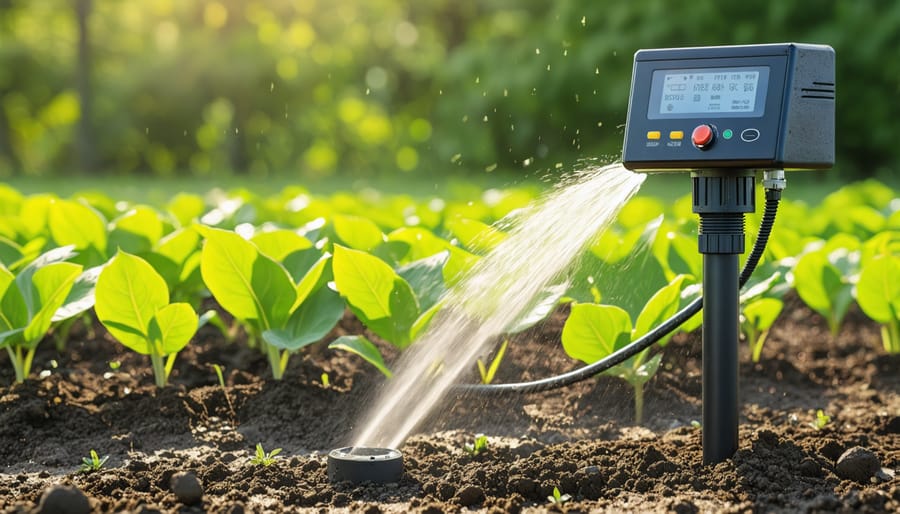
Automated drip irrigation system with digital controls and environmental sensors in agricultural field
Smart irrigation system with soil moisture sensors and automated controls

Soil Health Technology

Modern agricultural engineering has revolutionized soil health management through innovative technologies that help farmers maintain optimal growing conditions. Smart sensors now allow real-time monitoring of soil moisture, nutrient levels, and microbial activity, enabling farmers to make data-driven decisions about irrigation and fertilization.

Take Sarah Miller’s organic farm in Vermont, for example. By implementing soil mapping technology and precision agriculture tools, she reduced water usage by 30% while improving her tomato yields. The system alerts her when specific soil zones need attention, allowing for targeted interventions rather than blanket treatments.

Advanced soil testing equipment has made it easier for farmers to understand their soil’s composition and needs. Portable devices can instantly analyze pH levels, organic matter content, and mineral concentrations, providing immediate feedback for adjustment decisions. These tools are particularly valuable for organic farmers who rely heavily on maintaining natural soil fertility.

Erosion prevention technologies have also evolved significantly. Computer-aided design helps engineers develop effective terracing systems and water management solutions tailored to specific terrain conditions. Additionally, new biodegradable materials for soil stabilization offer environmentally friendly alternatives to traditional synthetic options.

These engineering solutions are making sustainable farming more accessible and efficient, helping farmers work in harmony with natural processes while maximizing productivity.

Real Farm Success Stories

Let’s explore how three innovative farms have transformed their operations through bioresource engineering solutions. At Green Valley Organics in California, owner Sarah Chen implemented a smart irrigation system that reduced water usage by 40% while increasing crop yields. The system uses soil moisture sensors and weather data to deliver precise amounts of water exactly when plants need it.

In Wisconsin, the Miller Family Farm revolutionized their dairy operation by installing a biodigester that converts animal waste into renewable energy. Not only does this power their entire 200-acre farm, but they also sell excess electricity back to the grid. The nutrient-rich byproduct serves as an organic fertilizer for their crops, creating a perfect closed-loop system.

Perhaps the most inspiring story comes from Sunshine Acres in Texas, where former tech professional James Rodriguez combines vertical farming with automated climate control. His innovative setup uses 90% less water than traditional farming methods while producing five times more leafy greens per square foot. The system’s sensors monitor temperature, humidity, and nutrient levels, automatically adjusting conditions for optimal plant growth.

These success stories demonstrate how bioresource engineering can transform traditional farming practices. Small changes, like installing moisture sensors or implementing waste-to-energy systems, can lead to significant improvements in efficiency and sustainability. The key is starting small, measuring results, and gradually expanding successful solutions across the farm operation.

Today, these farms serve as learning centers for other farmers interested in sustainable agriculture, proving that bioresource engineering solutions can be both environmentally friendly and economically viable.

Bioresource and agricultural engineering stands at the forefront of creating a more sustainable future for farming. By bridging the gap between traditional agricultural practices and innovative technology, these engineering solutions help farmers produce more food while using fewer resources. From developing water-efficient irrigation systems to creating smart sensors that monitor soil health, the field continues to evolve and adapt to modern challenges.

The impact of bioresource engineering extends beyond the farm gate, touching every aspect of our food system. It enables farmers to reduce their environmental footprint while maintaining productivity, helps preserve precious natural resources, and contributes to food security for growing populations. Success stories from farms across the globe demonstrate how engineering solutions have helped reduce water usage by up to 40% and decreased energy consumption while improving crop yields.

Looking ahead, bioresource engineering will play an increasingly vital role in addressing climate change challenges and ensuring sustainable food production. As we face growing environmental pressures, these innovative approaches offer hope for a future where agriculture can thrive while protecting our planet’s resources for generations to come.

Sacred Seeds: How Ancient Ceremonies Shape Traditional Indigenous Farming

Posted by darrell on
0
Cultural Agriculture Practices
Sacred Seeds: How Ancient Ceremonies Shape Traditional Indigenous Farming

Long before modern agriculture transformed our landscapes, Indigenous peoples cultivated a profound relationship with the land through farming practices that still offer vital lessons for today’s environmental challenges. These time-tested methods, developed over thousands of years, represent more than just agricultural techniques – they embody a holistic approach to food production that honors natural cycles while ensuring sustainable yields.

From the Three Sisters companion planting of corn, beans, and squash to sophisticated water management systems that conserved precious resources, Indigenous farming practices demonstrate an intimate understanding of local ecosystems. These methods didn’t just produce food; they actively enhanced soil fertility, protected biodiversity, and strengthened community bonds through shared agricultural ceremonies and harvests.

Today, as we face unprecedented environmental challenges and food security concerns, these ancestral farming practices offer practical solutions for sustainable agriculture. Their principles of working with nature rather than against it provide a blueprint for regenerative farming methods that could help heal our planet while feeding its growing population.

The Sacred Circle of Planting

Blessing the Seeds

For many indigenous communities, the act of blessing seeds before planting is more than just a spiritual ceremony – it’s a time-honored practice that connects farmers to their land and crops. These blessing ceremonies typically occur in early spring, when farmers gather to share seeds and prepare for the growing season.

During these ceremonies, elders often lead prayers and songs while burning sacred herbs like sage or sweetgrass. Seeds are carefully arranged in special vessels, sometimes with offerings of tobacco or corn pollen. What makes these rituals particularly remarkable is how they combine spiritual elements with practical farming wisdom.

The gathering serves as a natural opportunity for seed selection and knowledge sharing. Farmers carefully examine seeds for quality, discuss successful varieties from previous seasons, and exchange planting advice. This communal approach helps preserve crop diversity and ensures the survival of heritage varieties that are well-adapted to local growing conditions.

Modern research suggests these ceremonial practices may have additional benefits. The careful handling and inspection of seeds during blessings helps identify potential issues before planting, while the timing of these ceremonies often coincides with optimal planting periods based on natural cycles.

Elder conducting seed blessing ritual with traditional ceremonial items and seeds
Indigenous elder performing a traditional seed blessing ceremony, holding sacred seeds in a ceremonial bowl

Moon Phase Planting

For countless generations, indigenous farmers have synchronized their planting schedules with the moon’s phases, recognizing the profound connection between lunar cycles and plant growth. This time-tested practice stems from the understanding that the moon’s gravitational pull affects not only ocean tides but also the movement of water within soil and plants.

During the new moon, when gravitational pull is strongest, water rises in both soil and plant tissue. Many indigenous communities choose this time to plant crops that produce their yields above ground, like corn, beans, and squash. They’ve observed that seeds planted during this phase tend to swell and germinate more quickly due to increased water absorption.

The full moon phase is traditionally reserved for root crops such as potatoes, carrots, and onions. Indigenous farmers noticed that the decreasing gravitational pull during this period encourages strong root development and helps establish hardy plants. These lunar-based planting decisions are often accompanied by ceremonies that honor the moon’s role in agriculture and express gratitude for its guidance in food production.

Modern studies have begun to validate these ancestral practices, showing that timing plantings with lunar phases can indeed influence crop success rates.

Growing with Gratitude

Rain Ceremonies

Throughout history, indigenous communities have developed sophisticated traditional water management practices that combine spiritual ceremonies with practical farming techniques. These rain ceremonies, often performed at specific times during the growing season, demonstrate a deep understanding of local weather patterns and ecosystem relationships.

Many indigenous cultures perform ceremonies that involve song, dance, and offerings to honor water spirits and maintain balance in nature. The Hopi people’s rain dances, for instance, incorporate specific movements that mirror cloud formations and falling rain, while their timing often coincides with seasonal monsoon patterns.

These ceremonies serve multiple practical purposes beyond their spiritual significance. They bring communities together to prepare fields before expected rainfall, organize collective water management efforts, and share knowledge about weather indicators. The timing of these rituals often aligns perfectly with natural climate cycles, showing how indigenous farmers developed precise environmental awareness through generations of observation.

Modern farmers are increasingly recognizing the wisdom embedded in these ceremonies, particularly as climate change affects traditional growing seasons. By studying these practices, we can better understand sustainable water management and community-based approaches to agriculture.

Traditional rain ceremony being performed in agricultural fields by indigenous community members
Group of indigenous farmers performing a rain dance ceremony in traditional attire amid growing crops

Plant Spirit Communication

Many indigenous farming communities maintain a deep spiritual connection with their crops through ceremonies that serve both cultural and practical purposes. These rituals often involve careful observation of plant health, growth patterns, and early detection of potential issues. Farmers engage in meditation and prayer walks through their fields, during which they carefully observe leaf colors, stem strength, and overall crop vitality.

Traditional ceremonies often coincide with critical growing phases, allowing farmers to monitor crop development while maintaining cultural practices. These spiritual connections have proven remarkably effective in identifying early signs of plant stress and implementing indigenous pest management techniques before problems escalate.

Many communities perform dawn ceremonies where farmers spend quiet moments with their crops, noting subtle changes in plant behavior and health. This mindful approach helps them detect issues like moisture stress or nutrient deficiencies before visible damage occurs. Some tribes use sacred smoking ceremonies with specific herbs that naturally repel insects while promoting plant vigor.

Modern organic farmers are increasingly recognizing the value of these observation-based practices, incorporating regular “plant walking” sessions into their routines to maintain closer connections with their crops and catch potential problems early.

Harvest Rituals and Community

First Fruits Ceremonies

First Fruits ceremonies represent a vital tradition among indigenous communities worldwide, serving as both spiritual celebrations and practical methods for managing harvest distribution. These ceremonies typically mark the beginning of harvest season, when the first crops become ready for gathering. Communities come together to express gratitude for the earth’s abundance and share the initial harvest in a way that strengthens social bonds and ensures equitable food distribution.

Many indigenous groups consider it essential to perform these ceremonies before consuming any newly harvested foods. For example, in the Pacific Northwest, salmon ceremonies honor the first catch of the season, while in the Southwest, green corn ceremonies celebrate the initial maize harvest. These practices help regulate harvest timing, preventing over-collection and ensuring enough seeds remain for next season’s planting.

The ceremonies often involve careful food preservation techniques, with elders teaching younger generations how to properly store and distribute resources throughout the year. This knowledge transfer helps maintain food security during lean seasons and preserves traditional agricultural wisdom.

Modern farming communities have begun incorporating elements of First Fruits ceremonies into their harvest festivals, recognizing their value in promoting sustainable consumption patterns and community-supported agriculture. These celebrations remind us that successful farming isn’t just about production – it’s about fostering a respectful relationship with the land and ensuring everyone in the community has access to nutritious food.

Indigenous community members participating in first fruits harvest ceremony with traditional crops
Community harvest celebration showing traditional first fruits ceremony with displayed crops and ceremonial items

Seed Saving Rituals

For indigenous communities, seed saving is more than just a practical farming task – it’s a sacred ritual that connects generations and honors the relationship between people and plants. These traditional seed preservation methods often begin with careful observation throughout the growing season, identifying the strongest and most resilient plants.

During harvest time, many communities hold ceremonies where elders and experienced farmers gather to select seeds from the healthiest plants. These seeds are often blessed through prayer, song, or smoke cleansing rituals using sacred herbs like sage or sweetgrass. The selected seeds are then carefully cleaned and dried, often in special ceremonial baskets woven specifically for seed storage.

Many indigenous groups store their seeds in clay vessels or natural containers, keeping them in cool, dark places. Some communities maintain special seed houses or storage areas where seeds are protected not just physically, but spiritually through regular ceremonies and offerings. These spaces are often tended by designated seed keepers who understand both the practical and spiritual aspects of seed preservation.

The sharing of seeds between families and communities is also deeply ceremonial, often accompanied by traditional songs, stories, and teachings about each plant variety’s history and proper care. These exchanges help maintain genetic diversity while strengthening community bonds and ensuring food sovereignty for future generations.

Modern Applications

Today’s farmers and gardeners are increasingly turning to indigenous agricultural wisdom to enhance their sustainable farming practices. By incorporating traditional ceremonial approaches with modern techniques, they’re achieving remarkable results in soil health, crop diversity, and overall farm sustainability.

Many organic farmers now practice traditional blessing ceremonies before planting, finding that this mindful approach helps them better plan their growing seasons and maintain stronger connections with their land. Others have adopted indigenous companion planting methods, often integrating ceremonial elements that celebrate the relationships between different plant species.

The Three Sisters method – planting corn, beans, and squash together – remains one of the most successful examples of indigenous wisdom in modern agriculture. Contemporary farmers who follow this practice, including its traditional ceremonial aspects, report improved soil fertility and reduced pest problems while maintaining deeper cultural connections to their work.

Water blessing ceremonies have inspired modern irrigation practices that emphasize water conservation and respect for this vital resource. Some farmers now incorporate traditional moon-phase planting with modern scheduling tools, finding that this combination leads to better germination rates and hardier crops.

These practices aren’t just about agriculture – they’re helping create more resilient food systems. By blending ancient wisdom with contemporary farming techniques, we’re developing more sustainable approaches to feeding our communities while honoring the traditional knowledge that has sustained generations of indigenous farmers.

Indigenous ceremonial practices continue to offer valuable insights for modern sustainable agriculture. These time-tested methods, developed over generations of careful observation and spiritual connection to the land, demonstrate how farming can work in harmony with natural cycles. Today’s farmers and gardeners are increasingly embracing these traditional approaches, combining ancient wisdom with contemporary knowledge to create more resilient food systems. By honoring the ceremonial aspects of planting and harvesting, we not only preserve important cultural heritage but also maintain a deeper connection to our food and the earth. This mindful approach to agriculture reminds us that sustainable farming is about more than just producing food – it’s about nurturing relationships between people, plants, and the planet that sustains us all.

Ancient Farming Wisdom: How Indigenous Tools Still Shape Modern Agriculture

Posted by darrell on
0
Cultural Agriculture Practices
Ancient Farming Wisdom: How Indigenous Tools Still Shape Modern Agriculture

Indigenous agricultural practices stand as living testaments to centuries of environmental wisdom, offering proven solutions for today’s sustainability challenges. These time-tested methods, developed across generations by Native communities worldwide, demonstrate remarkable efficiency in resource management while maintaining ecological balance. From the sophisticated Three Sisters companion planting of corn, beans, and squash in North America to the ingenious terraced farming systems of the Andes, indigenous farming techniques have consistently outperformed modern industrial agriculture in terms of biodiversity preservation and climate resilience.

Beyond their historical significance, these ancestral practices provide vital blueprints for addressing contemporary food security concerns and environmental degradation. By integrating natural pest control, water conservation, and soil enrichment techniques perfected over millennia, indigenous agricultural methods offer practical alternatives to chemical-dependent farming. Their holistic approach to land stewardship not only ensures sustainable food production but also preserves cultural heritage and ecological knowledge essential for future generations.

Traditional Tools That Shaped the Land

Digging Sticks and Hand Hoes

Digging sticks and hand hoes represent some of the earliest and most ingenious agricultural tools developed by indigenous peoples worldwide. These simple yet remarkably effective implements transformed the way communities cultivated their land. The digging stick, typically crafted from hardwood and fire-hardened at one end, allowed farmers to break up soil, create planting holes, and harvest root crops with minimal soil disturbance.

Hand hoes evolved from these early tools, featuring stone, bone, or wooden blades attached to wooden handles. These tools proved particularly effective for weeding, creating furrows, and maintaining garden beds. Many indigenous communities still use variations of these tools today, especially in areas where mechanical cultivation isn’t practical or desired.

What makes these tools particularly remarkable is their sustainability – they’re crafted from local materials, require no fuel, and cause minimal soil compaction. Modern gardeners and small-scale farmers are increasingly returning to these time-tested tools, recognizing their effectiveness for precise plant spacing and selective weeding while maintaining soil health.

Collection of indigenous farming tools including wooden digging sticks and stone-headed hoes
Various traditional digging sticks and hand hoes made from wood and stone, displayed against a natural background

Stone and Wooden Implements

Indigenous communities crafted remarkably effective farming tools from locally available materials, primarily stone and wood. Digging sticks, made from hardwoods like oak and maple, were essential for creating planting holes and turning soil. These tools were often fire-hardened at the tip for increased durability and enhanced with stone or bone handles for better grip.

Stone implements played a crucial role in food processing and soil preparation. Hand-carved stone hoes, typically attached to wooden handles with leather bindings, helped break up soil and remove weeds. Granite and basalt grinding stones were used to process harvested grains and seeds, while specially shaped stone scrapers aided in preparing woody plants for basket-making and tool construction.

Many communities developed specialized wooden tools for specific crops. For example, corn planters featured notched spacing guides to ensure optimal planting distance, while curved wooden paddles helped separate grain from chaff. These tools were often passed down through generations, with each family adding their own modifications based on local growing conditions and specific crop needs.

What’s remarkable is how many of these time-tested designs continue to inspire modern sustainable farming tools, proving that sometimes the simplest solutions are the most effective.

Sustainable Harvesting Technologies

Native craftswoman creating traditional harvest basket using local plant materials
Indigenous woman weaving a traditional harvest basket using natural fibers

Gathering Baskets and Storage Solutions

Indigenous communities developed sophisticated methods for harvesting and storing their precious crops, combining practicality with sustainable materials. Traditional gathering baskets were crafted from locally sourced materials like willow, reed, and bark, carefully woven to create durable containers that allowed proper airflow while protecting the harvest.

These communities also mastered traditional seed preservation methods through innovative storage solutions. Underground storage pits, lined with grass and bark, maintained consistent temperatures and humidity levels ideal for preserving root vegetables and grains. Clay vessels sealed with natural waxes protected seeds and dried goods from moisture and pests.

Many indigenous groups used elevated storage platforms or “corn cribs” to keep their harvest safe from ground moisture and animals. These structures featured protective coverings made from bark or woven grass, allowing air circulation while shielding contents from rain. Some communities also developed smoke-drying techniques, using specially designed storage houses where preserved foods could be kept for months or even years.

These time-tested storage methods continue to inspire modern sustainable farming practices, proving that sometimes the most effective solutions are rooted in ancestral wisdom.

Crop-Specific Tools

Indigenous communities developed an impressive array of specialized tools tailored to specific crops, showcasing their deep understanding of plant needs. For grain crops like corn and quinoa, farmers used dibble sticks with multiple points to create precise planting holes at optimal depths. These tools often featured marks indicating proper spacing between seeds.

Root crop harvesting called for unique implements, such as the curved wooden potato hoe used by Andean farmers. This tool allowed gentle unearthing of tubers without damaging them. Similarly, the Japanese kuwa, a versatile hand hoe, was perfectly designed for maintaining rice paddies and harvesting root vegetables.

For climbing plants like beans and squash, indigenous farmers crafted support systems using local materials. The Three Sisters method employed corn stalks as natural trellises, while other communities created bamboo frameworks with specialized ties made from plant fibers.

Cotton farmers in Mesoamerica developed special wooden picks for harvesting, designed to protect both the plant and the valuable fiber. These tools featured smooth, rounded tips that prevented accidentally damaging the cotton bolls during collection.

Modern Applications of Indigenous Tools

Small-Scale Organic Farming

Modern small-scale organic farming has seen a remarkable revival of indigenous farming techniques, blending time-tested wisdom with contemporary sustainability needs. Many organic farmers now incorporate traditional tools like dibble sticks for precise seed placement and wooden hoes that minimize soil disruption while effectively managing weeds.

These ancestral tools prove particularly valuable in raised bed systems and intensive growing spaces, where careful soil management is crucial. Local farmers report that using traditional wooden implements helps maintain soil structure and promotes healthier root development compared to metal alternatives.

Sarah Running Bear, an organic farmer in Colorado, successfully integrates her grandmother’s companion planting methods with modern organic certification standards. She uses traditional corn planters alongside natural pest management techniques, achieving impressive yields while preserving soil health.

The beauty of these traditional tools lies in their simplicity and effectiveness. Many are crafted from locally sourced materials, reducing environmental impact while supporting local artisans. Today’s organic farmers often modify these tools slightly, adding ergonomic handles or adjustable features while maintaining their core sustainable principles.

For home gardeners and small-scale farmers, these indigenous tools offer an accessible entry point into sustainable agriculture, connecting modern growing practices with centuries of agricultural wisdom.

Contemporary farmer demonstrating use of indigenous-inspired farming tools in organic agriculture
Modern organic farmer using adapted traditional tools in a small-scale vegetable garden

Sustainable Agriculture Movement

Traditional indigenous tools and practices are experiencing a remarkable revival in the modern sustainable agriculture movement. These time-tested methods, developed over generations of careful environmental observation, are proving invaluable in addressing contemporary challenges like soil erosion, water conservation, and biodiversity loss.

Farmers and gardeners worldwide are rediscovering the wisdom of using manual tools like the dibble stick for precise seed placement and wooden hoes for gentle soil cultivation. These implements, crafted from natural materials, leave a minimal environmental footprint while promoting intimate connection with the land.

Indigenous practices like companion planting and natural pest management are being embraced by organic farmers who recognize their effectiveness in maintaining ecological balance. For example, the Three Sisters planting method – combining corn, beans, and squash – demonstrates how traditional knowledge can maximize soil nutrients and crop yields naturally.

The movement has also sparked interest in indigenous seed preservation techniques and water management systems. Many sustainable farms now incorporate ancient terracing methods and water-harvesting practices, proving that sometimes the most innovative solutions are rooted in ancestral wisdom.

This return to traditional tools and techniques isn’t just about preservation – it’s about building a more sustainable future by learning from our past.

Preserving Agricultural Heritage

The preservation of traditional farming wisdom isn’t just about honoring the past – it’s about securing our agricultural future. Preserving indigenous agricultural knowledge helps maintain crop diversity, ensures food security, and keeps centuries-old sustainable practices alive for future generations.

Many indigenous communities have passed down farming techniques through storytelling, hands-on teaching, and seasonal ceremonies. These methods often incorporate deep understanding of local ecosystems, weather patterns, and soil health that modern agriculture is only beginning to appreciate. For example, the Three Sisters companion planting technique – growing corn, beans, and squash together – demonstrates sophisticated knowledge of plant relationships and natural pest control.

Today, farmers and researchers are working alongside indigenous communities to document and integrate these time-tested practices into modern sustainable farming. Seed saving programs, cultural education initiatives, and farmer-to-farmer mentorship opportunities help bridge the gap between traditional and contemporary agriculture.

Young indigenous farmers are leading the way by combining ancestral knowledge with modern innovations. They’re creating farming programs that teach both traditional methods and new sustainable technologies, ensuring these practices remain relevant and practical in today’s world.

By maintaining these agricultural traditions, we’re not just preserving cultural heritage – we’re protecting valuable agricultural biodiversity and ecological wisdom that could help address modern challenges like climate change and food insecurity. These time-honored practices offer proven solutions for sustainable food production that benefit both people and the planet.

Indigenous agricultural tools and practices represent more than just historical artifacts – they embody generations of environmental wisdom and sustainable farming knowledge. These time-tested methods have proven their worth through centuries of successful food production while maintaining ecological balance. Today, as we face growing environmental challenges and the need for sustainable farming solutions, these traditional practices offer valuable insights for modern agriculture.

Many farmers are now successfully blending ancient techniques with contemporary methods, creating hybrid approaches that honor traditional knowledge while meeting current farming needs. From natural pest control methods to water conservation techniques, indigenous agricultural practices continue to demonstrate their relevance in today’s farming landscape.

By preserving and adapting these traditional tools and methods, we’re not just maintaining cultural heritage – we’re investing in a more sustainable agricultural future. The simplicity, efficiency, and environmental harmony of indigenous farming practices remind us that sometimes the most effective solutions have been with us all along, waiting to be rediscovered and reimagined for modern times.