
Daily Archives

4 Articles

Robotic Bees Are Saving Our Farms: The Future of Artificial Pollination Is Here

Posted by darrell on
0
Agroecology and Ecosystem Practices
Robotic Bees Are Saving Our Farms: The Future of Artificial Pollination Is Here

As honeybee populations decline worldwide, robotic pollinators are emerging as a groundbreaking solution to ensure food security and agricultural sustainability. These sophisticated machines, ranging from tiny drone bees to autonomous pollinating systems, combine artificial intelligence with precision engineering to perform one of nature’s most critical functions.

In fields and greenhouses across the globe, these mechanical marvels navigate between flowering crops, transferring pollen with remarkable accuracy. While they’ll never fully replace natural pollinators, these robots offer farmers a reliable backup system during periods of pollinator scarcity or in controlled environments where traditional pollinators struggle to thrive.

Recent innovations in robotic pollination technology have made these systems increasingly practical for real-world applications. From tomato greenhouses in Japan to apple orchards in the United States, farmers are successfully integrating these high-tech helpers into their growing operations. The technology not only supports crop yields but also provides valuable data about plant health and pollination patterns.

This fusion of robotics and agriculture represents more than just a technological achievement – it’s a crucial step toward building resilient food systems that can adapt to our changing environmental challenges while supporting sustainable farming practices.

Why We Need Robotic Pollinators Now

The Global Pollinator Crisis

Recent studies paint a concerning picture of global pollinator populations. While beneficial insects like bees, butterflies, and other pollinators play a crucial role in food production, their numbers have dropped dramatically. Over 40% of invertebrate pollinator species face extinction, with managed honey bee colonies showing annual losses of 30-40% in North America alone.

This decline threatens both our food security and ecosystem stability, as pollinators are responsible for one in every three bites of food we eat. Factors contributing to this crisis include pesticide use, habitat loss, climate change, and disease spread. The economic impact is substantial, with pollination services valued at $235-577 billion annually worldwide.

These alarming trends have sparked intense interest in developing technological solutions to support and supplement natural pollination systems, leading to innovations in robotic pollination.

Comparative visualization of bee population decline over time
Side-by-side comparison showing healthy bee populations from the past versus current declining numbers

Impact on Small-Scale Farming

Small-scale farmers and Community Supported Agriculture (CSA) operations are particularly vulnerable to pollinator decline. These farmers typically rely heavily on natural pollinators, with many practicing organic methods that support beneficial insect populations. When pollinator numbers drop, crop yields can decrease by 20-40%, threatening farm sustainability and local food security.

For farmers like Sarah Martinez, who runs a 5-acre organic vegetable farm in California, the impact is personal. “Without our pollinators, we’d lose about a third of our squash and cucumber crops,” she explains. “That directly affects our CSA members and farmers’ market customers.”

Robotic pollinators offer a potential safety net for these small operations. While the initial investment might seem steep, the technology could help farmers maintain consistent yields during pollinator shortages. Some farming cooperatives are exploring shared ownership models, making this technology more accessible to smaller operations while preserving their commitment to sustainable growing practices.

How Robotic Pollinators Work

Robotic bee drone pollinating a cherry blossom
Close-up photo of a micro-drone robotic pollinator hovering near a flower

Types of Artificial Pollinators

Scientists and engineers have developed several innovative approaches to artificial pollination, each designed to tackle specific challenges in different agricultural settings. The most common type is the bee-inspired micro-drone, which mimics the size and flight patterns of natural pollinators. These tiny robots use artificial intelligence to identify flowers and carry pollen between plants, making them ideal for greenhouse environments and small-scale farming operations.

Another fascinating design is the bubble-based pollinator, which uses soap bubbles loaded with pollen to deliver genetic material to flowers. This gentle approach works particularly well for delicate crops like pear and apple trees, where traditional mechanical methods might damage the blossoms.

Ground-based pollination robots offer a different solution, especially for crops with low-hanging flowers. These machines use advanced sensors and cameras to detect flowers and precisely deliver pollen using small brushes or air jets. They’re particularly effective in strawberry fields and other ground-level crops.

For larger agricultural operations, drone swarms represent the cutting edge of artificial pollination. These coordinated groups of aerial robots work together to cover vast areas efficiently, using GPS and computer vision to ensure thorough pollination coverage.

Each type of artificial pollinator comes with its own benefits and ideal applications, allowing farmers to choose the best solution for their specific crops and growing conditions. As technology advances, these systems become more efficient and accessible to farmers of all scales.

Integration with Traditional Farming

Integrating robotic pollinators into existing farming operations doesn’t have to be complicated. Like other smart farming technologies, these innovative devices can complement traditional methods rather than replace them entirely.

Farmers typically start by identifying high-priority crops that need consistent pollination and mapping out coverage areas. Many successful implementations begin with greenhouse operations, where controlled environments make it easier to manage and monitor robotic pollinators. These systems can be programmed to work alongside natural pollinators during peak flowering periods, ensuring optimal crop yields.

Local farmer Sarah Chen shares her experience: “We introduced robotic pollinators in our tomato greenhouse last season. The robots work early morning and late evening, while bees handle mid-day pollination. This tag-team approach has increased our yield by 23%.”

Key integration steps include:
– Installing charging stations at strategic locations
– Setting up navigation beacons or GPS markers
– Training staff on basic maintenance and troubleshooting
– Monitoring pollination patterns and adjusting schedules accordingly

For outdoor operations, farmers often use weather-resistant models that can coordinate with existing irrigation systems and field sensors. Many units now come with user-friendly interfaces that allow farmers to adjust settings based on crop cycles and weather conditions, making them accessible even for those new to agricultural robotics.

Real Success Stories from the Field

Small Farm Innovation

Green Acres CSA, a 15-acre farm in Vermont, has become a pioneer in implementing robotic pollinator technology. Owner Sarah Chen faced declining crop yields due to local pollinator population challenges but wasn’t ready to give up on her organic farming principles.

In 2022, Chen introduced a fleet of six autonomous pollinating drones to support her diversified vegetable and fruit operation. These small, bee-inspired robots work alongside the farm’s existing natural pollinators, focusing primarily on the farm’s two acres of greenhouse tomatoes and strawberries.

“The results have been remarkable,” Chen shares. “Our greenhouse tomato yields increased by 32% in the first season, and the strawberry production has become much more consistent.” The drones, programmed to work during specific daylight hours, navigate through the crops using AI-powered sensors to identify flowers ready for pollination.

The farm’s CSA members have embraced this innovative approach, particularly appreciating how the technology complements rather than replaces natural pollinators. Chen now hosts monthly educational tours, demonstrating how robotic pollinators can support small-scale organic farming while maintaining ecological balance. The success has inspired several neighboring farms to explore similar solutions for their operations.
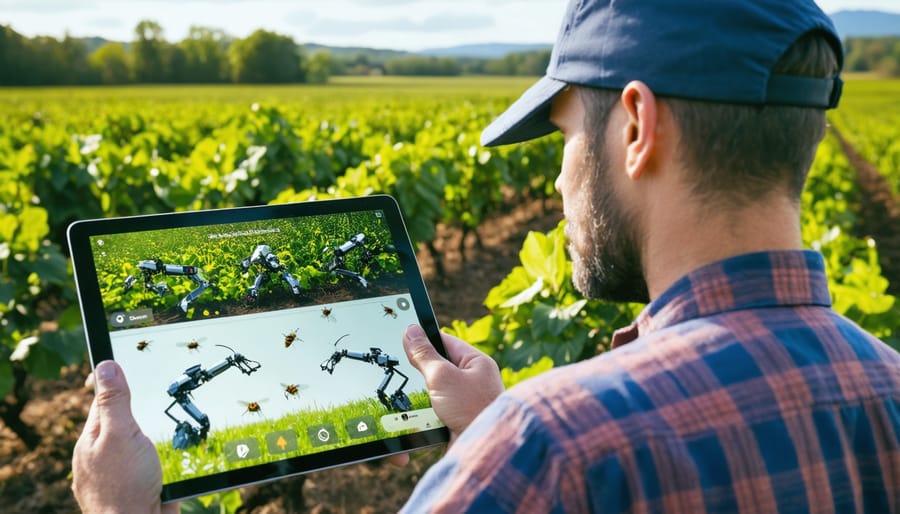
Farmer using digital interface to control robotic pollinators in field
Farmer monitoring tablet display showing robotic pollinator deployment across their orchard

Community Impact

Robotic pollinators are making a significant difference in local communities by helping maintain stable food production and supporting small-scale farmers. These innovative devices are proving particularly valuable in areas where natural pollinator populations have declined, ensuring that local farms can continue producing fresh fruits and vegetables for their communities.

In urban farming initiatives, robotic pollinators are helping rooftop gardens and community plots achieve better yields, making fresh produce more accessible to city residents. Small-scale farmers report up to 30% increase in crop yields when using these devices alongside natural pollinators, which directly translates to improved food security for their local communities.

These technological helpers are also creating new educational opportunities. Schools and community gardens are using robotic pollinators as teaching tools, helping students understand the importance of pollination while learning about sustainable agriculture and technology. This hands-on experience is inspiring a new generation to think creatively about solving environmental challenges.

The technology is particularly impactful during off-season growing in greenhouses and indoor farming facilities, where natural pollinators may not be present. This enables year-round local food production, reducing dependency on imported produce and strengthening community food resilience.

The Future of Farm Pollination

As we look ahead, robotic pollinators are poised to become an integral part of sustainable agriculture, working alongside both natural pollinators and regenerative farming practices. Emerging developments include swarm technology, where multiple smaller robots work together to pollinate large areas more efficiently, and advanced AI systems that can identify optimal pollination times for different crop varieties.

These innovations aren’t meant to replace our precious bees but rather to support them during population stress periods and in controlled environments like greenhouses. Farmers are already testing prototype units that combine pollination with crop monitoring, helping them make better decisions about plant health and harvest timing.

The impact on small-scale farming could be transformative. Imagine having a small fleet of portable pollinators that can help ensure consistent yields in your home garden or small farm, regardless of local pollinator populations. These robots could be particularly valuable for indoor farming operations and urban agriculture projects, where natural pollinators might have limited access.

Looking ahead, we can expect to see more affordable and user-friendly versions of these robots, making them accessible to smaller operations. This technology, combined with traditional farming wisdom, could help create more resilient and productive food systems for future generations.

As we face increasing challenges in global food production, robotic pollinators represent a promising solution to support our agricultural systems. These innovative devices work alongside natural pollinators, helping ensure crop yields remain stable even as bee populations fluctuate. By embracing this technology, farmers can adapt to changing environmental conditions while maintaining sustainable growing practices. Whether you’re a home gardener or professional farmer, staying informed about these developments in agricultural technology is crucial. The future of farming lies in finding the perfect balance between nature and innovation, and robotic pollinators are proving to be a vital piece of this puzzle. Together, we can support the evolution of sustainable agriculture while preserving our precious ecological systems for future generations.

These Agroforestry Ecosystem Services Make Your Farm More Profitable

Posted by darrell on
0
Agroecology and Ecosystem Practices
These Agroforestry Ecosystem Services Make Your Farm More Profitable

Ecosystem services transform ordinary farms into thriving, interconnected powerhouses of natural productivity. From the buzzing of pollinators in flowering cover crops to the silent work of soil microorganisms building rich, carbon-storing earth, these natural processes deliver an estimated $125 trillion in annual global benefits. Farmers worldwide are tapping into these services, creating multifunctional landscapes that simultaneously produce food, protect water resources, and enhance biodiversity. Whether it’s the shade-grown coffee farms of Costa Rica supporting migratory birds while boosting crop quality, or the silvopasture systems of North America where trees protect livestock while sequestering carbon, ecosystem services represent nature’s most powerful tools for sustainable agriculture. By understanding and nurturing these natural partnerships, farmers can reduce input costs, increase resilience, and build legacy farms that grow stronger with each passing season.

Carbon Storage: Nature’s Climate Solution

Aerial photograph of alternating rows of trees and crops in an agroforestry system
Aerial view of an agroforestry system showing tree rows integrated with crop fields, demonstrating carbon storage potential

Tree-Crop Integration Benefits

Trees and crops form a powerful partnership in sustainable farming systems, offering multiple benefits for both the environment and food production. By strategically planting trees alongside crops, farmers can increase carbon storage in both soil and plant biomass while maintaining or even boosting crop yields. For example, alley cropping systems, where rows of nut or fruit trees border annual crops, can store up to 5 times more carbon than conventional fields while providing additional income streams from tree products.

Shade-loving crops like coffee and cacao thrive under tree canopies, which protect them from extreme temperatures and reduce water stress. The trees’ deep roots also help prevent soil erosion and bring nutrients from deeper soil layers to the surface, naturally fertilizing nearby crops. Many farmers report improved soil health and reduced need for irrigation after incorporating trees, as the enhanced soil structure better retains moisture and organic matter.

This integration creates a win-win situation: greater climate resilience, improved biodiversity, and sustained crop productivity.

Soil Health Warriors at Work

Healthy soil cross-section showing earthworms, roots, and organic matter in agroforestry system
Close-up of rich soil with visible organic matter, earthworms, and root systems showing healthy soil structure

Nutrient Cycling Success Stories

In Costa Rica’s Guanacaste region, farmer Maria Rodriguez transformed her depleted coffee plantation through regenerative farming practices and strategic tree integration. By planting nitrogen-fixing Inga trees alongside her coffee crops, she witnessed a 40% increase in soil fertility within just three years. The trees not only enriched the soil but also provided natural shade and organic matter through leaf litter.

In Kenya’s Machakos County, smallholder farmer James Mutua introduced a mixed agroforestry system combining Grevillea robusta trees with maize crops. The results were remarkable: soil organic matter increased by 25%, water retention improved significantly, and crop yields doubled. The tree roots helped prevent erosion while continuously cycling nutrients from deeper soil layers to the surface.

Another success story comes from Brazil, where the Silva family restored degraded pastureland using a silvopasture system. By integrating native legume trees with grazing areas, they improved soil nitrogen content by 35% and increased grass productivity without chemical fertilizers. Their cattle now enjoy better nutrition while the soil continues to improve year after year.

Beneficial insects pollinating flowers in an agroforestry system
Beneficial insects like ladybugs and predatory wasps on native flowering plants between crop rows

Natural Pest Control That Actually Works

Creating Habitat for Helpful Insects

Creating a welcoming environment for beneficial insects for pest control is easier than you might think. Start by planting diverse flowering species that bloom throughout the growing season. Herbs like dill, fennel, and oregano attract helpful predatory insects, while marigolds and nasturtiums serve as natural pest deterrents.

Leave some areas of bare soil and create small brush piles for ground-dwelling insects to nest. Installing insect hotels – simple structures made from bundled hollow stems and drilled wooden blocks – provides safe shelter for solitary bees and other beneficial species.

Avoid using chemical pesticides, as these can harm helpful insects along with pests. Instead, maintain healthy soil through composting and mulching, which creates a balanced ecosystem where beneficial insects can thrive. Keep some flowering weeds like dandelions and clover in less-visible areas to provide additional food sources throughout the season.

Water Management Made Easy

Agroforestry practices offer remarkable solutions for efficient water management strategies, helping farmers maintain water quality while reducing consumption. Trees and shrubs act as natural filters, removing excess nutrients and pollutants from water as it moves through the soil. Their deep root systems improve soil structure, increasing water infiltration and reducing runoff.

Take Sarah’s story from Ontario, who integrated rows of willows and poplars along her vegetable fields. Within two years, she noticed a 30% reduction in irrigation needs and significantly clearer water in nearby streams. The trees’ canopy also provides shade, reducing evaporation and protecting crops from intense summer heat.

These systems create a win-win situation: while conserving water, they also build drought resilience. The combination of trees and crops creates multiple layers of vegetation that capture and retain moisture, forming a natural water management system that works year-round. Plus, fallen leaves add organic matter to the soil, further improving its water-holding capacity.

For farmers looking to implement similar systems, starting with native tree species along field boundaries or waterways is an excellent first step.

Agroforestry practices offer a wealth of ecosystem services that benefit both farmers and the environment. From improved soil health and increased biodiversity to enhanced water management and carbon sequestration, these natural systems work together to create more resilient and productive agricultural landscapes. By implementing agroforestry techniques, farmers can reduce their dependence on external inputs while building long-term sustainability into their operations. The success stories we’ve explored demonstrate that these practices not only support environmental conservation but also provide significant economic returns through diversified income streams and reduced operational costs. Whether you’re managing a small homestead or a larger farming operation, incorporating trees and sustainable practices into your agricultural system can help create a more sustainable and profitable future for generations to come. Start small, learn from experienced practitioners, and watch as your land transforms into a thriving ecosystem that gives back more than it takes.

Smart Water Management: How Your Farm Can Thrive With Less Water

Posted by darrell on
0
Agroecology and Ecosystem Practices
Smart Water Management: How Your Farm Can Thrive With Less Water

Transform your farm’s water management by integrating smart irrigation scheduling, soil moisture monitoring, and sustainable drainage systems into a cohesive strategy. Modern water resource management combines traditional wisdom with cutting-edge technology, allowing farmers to maximize crop yields while preserving precious water resources. Through regenerative farming practices, water conservation becomes part of a broader ecosystem approach, creating resilient agricultural systems that thrive even in challenging conditions.

Smart water management isn’t just about conservation – it’s about creating a balanced system where every drop serves multiple purposes. By capturing rainwater, recycling greywater, and maintaining healthy soil structure, farmers can reduce their dependence on external water sources while building natural drought resistance. This integrated approach connects water management with soil health, biodiversity, and climate resilience, forming a sustainable foundation for future farming generations.

Consider water as the lifeblood of your farm – flowing through interconnected systems that support both production and conservation goals. When managed holistically, water becomes a powerful tool for ecosystem restoration, profitable farming, and environmental stewardship.

Water-Smart Farming: Understanding the Basics

What Makes Water Management ‘Integrated’?

Integrated water management brings together all aspects of water use in a holistic approach, much like different instruments working together in an orchestra. It considers surface water, groundwater, rainwater harvesting, and water recycling systems as interconnected parts of a larger whole. Instead of managing these sources separately, farmers and water managers look at how they can work together to create a more sustainable and efficient system.

For example, a farm might collect rainwater during wet seasons, store it in retention ponds, and use it to supplement groundwater during dry periods. This same system might incorporate water recycling from wash stations, directing gently used water to irrigate non-food crops or support compost operations.

The “integrated” aspect also extends to considering various water needs across different seasons and purposes. A well-designed system accounts for drinking water, irrigation, livestock needs, and ecosystem services. It’s about finding smart ways to use and reuse water while maintaining water quality and supporting the natural environment. This approach helps create more resilient farming systems that can better withstand climate variations and water scarcity challenges.

The Water Cycle on Your Farm

Water is constantly moving through your farm in a fascinating cycle that connects soil, plants, and atmosphere. When rain falls on your fields, some water immediately soaks into the soil, while some flows across the surface. The water that infiltrates the soil becomes available to plant roots, which draw it up through their stems and release it into the air through transpiration.

Understanding this cycle helps you make better irrigation decisions. For example, healthy soil rich in organic matter acts like a sponge, holding more water for your crops. Plants also play a crucial role by creating their own microclimate – their leaf canopy reduces evaporation from the soil and increases humidity around the crops.

Local farmer Sarah Chen noticed her water needs decreased by 30% after improving her soil health: “Adding compost and using cover crops helped my soil retain more moisture. Now my plants are more resilient during dry spells.”

To work with the water cycle, consider these natural patterns when planning irrigation schedules, choosing crops, and implementing soil management practices. This knowledge helps create a more water-efficient and sustainable farming system.

Infographic of farm water cycle showing water movement through soil, plants, and atmosphere
Diagram showing the complete water cycle in an agricultural setting, including rainfall, irrigation, groundwater, and evaporation

Practical Water Conservation Strategies

Smart Irrigation Systems

Modern irrigation has evolved far beyond simple sprinkler systems, embracing smart farming technologies that maximize water efficiency while minimizing waste. These innovative systems use real-time data from soil moisture sensors, weather stations, and satellite imagery to deliver precise amounts of water exactly when and where crops need it.

At the heart of smart irrigation are soil moisture sensors that continuously monitor water levels at different depths. These sensors communicate with automated controllers that adjust watering schedules based on actual plant needs rather than fixed timers. Weather-based controllers add another layer of intelligence by factoring in rainfall forecasts, temperature, and evaporation rates.

Drip irrigation networks, enhanced by smart controls, deliver water directly to plant roots through small tubes with precise emitters. This targeted approach can reduce water usage by up to 70% compared to traditional irrigation methods while improving crop yields and quality.

Many farmers are now using mobile apps that provide instant access to their irrigation systems. These apps allow them to monitor soil conditions, adjust watering schedules, and receive alerts about potential issues – all from their smartphones. Some systems even integrate artificial intelligence to predict water needs based on historical data and current conditions, making water management more efficient than ever before.

Close-up of drip irrigation emitters delivering water to vegetable crops
Modern drip irrigation system in action, showing precise water delivery to crop roots

Soil Management for Better Water Retention

Effective soil management is a cornerstone of water conservation in agriculture. By improving soil health and structure, farmers can significantly increase their land’s water retention capacity, reducing irrigation needs while boosting crop productivity.

Adding organic matter through compost and cover cropping creates a sponge-like effect in the soil, allowing it to hold more water for longer periods. For every 1% increase in organic matter, soil can retain an additional 20,000 gallons of water per acre! Local farmer Sarah Martinez discovered this firsthand when she incorporated green manure crops into her rotation, reducing her irrigation needs by 30% in just two seasons.

Minimal tillage practices help maintain soil structure and prevent water loss through evaporation. Creating raised beds with proper spacing and mulching exposed soil surfaces further enhances water retention. Natural mulches like straw or wood chips not only conserve moisture but also gradually break down to feed soil organisms.

Incorporating biochar – a form of charcoal made from organic materials – can dramatically improve soil’s water-holding capacity. Its porous structure creates tiny reservoirs for both water and beneficial microorganisms. Combined with good drainage practices and appropriate soil amendments, these techniques create resilient soil systems that make the most of every drop of water.

Water Recycling and Catchment Systems

Water recycling and catchment systems play a vital role in sustainable water management, offering farmers and gardeners practical ways to maximize their water resources. One of the most effective methods is rainwater harvesting, which involves collecting and storing rainfall from rooftops, greenhouses, and other surfaces for later use.

Simple catchment systems can be created using gutters, downspouts, and storage tanks. Many farmers find success with above-ground tanks, which are easier to maintain and monitor. Underground cisterns offer another option, particularly useful in areas with limited space or extreme temperatures.

Greywater systems represent another valuable approach to water recycling. These systems collect gently used water from sinks, showers, and washing machines, filtering it for irrigation use. When properly designed, greywater systems can provide a reliable secondary water source while reducing overall water consumption.

Constructed wetlands serve a dual purpose in water management. These natural filtering systems clean and purify water while creating valuable wildlife habitat. Many farmers have successfully integrated small wetland areas into their operations, using them to treat and recycle agricultural runoff.

Success Story: Sarah Martinez, an urban farmer in Arizona, reduced her water usage by 60% after installing a comprehensive water recycling system. Her setup combines rainwater harvesting with a greywater system, allowing her to maintain productive gardens even during drought conditions.

Monitoring and Maintaining Your Water System

Essential Monitoring Tools

Effective water management starts with reliable monitoring tools that help farmers track and optimize their water usage. Today’s modern agricultural monitoring systems combine traditional methods with smart technology to provide accurate, real-time data.

Soil moisture sensors are essential tools that help farmers understand exactly when and how much to irrigate. These devices come in various forms, from simple probes to wireless sensors that send data directly to your smartphone. Flow meters installed in irrigation systems track water consumption and help identify potential leaks or inefficiencies.

Weather stations have become increasingly affordable and user-friendly, providing crucial data about rainfall, humidity, and evaporation rates. This information helps farmers make informed decisions about irrigation scheduling and water conservation strategies.

Digital water level indicators and pressure sensors monitor groundwater levels and water pressure in irrigation systems. These tools help prevent over-pumping and maintain optimal system performance.

Many farmers are now using smart irrigation controllers that automatically adjust watering schedules based on weather conditions and soil moisture levels. These systems can be managed remotely through mobile apps, making water management more convenient and precise.

Water quality testing kits are also vital tools, helping farmers monitor pH levels, dissolved minerals, and potential contaminants to ensure optimal crop health while maintaining sustainable water use practices.

Farmer analyzing real-time soil moisture data on digital device while standing in crop field
Farmer using tablet to monitor soil moisture sensors in field

Seasonal Adjustments

Effective water management requires adapting strategies throughout the year to match seasonal variations in rainfall, temperature, and crop water needs. During spring, focus on capturing and storing rainfall through water harvesting systems and preparing soil with organic matter to improve water retention. This is also the ideal time to maintain and repair irrigation systems before peak growing season.

Summer demands the most careful water management, as high temperatures increase evaporation rates. Implementing drip irrigation, using mulch to reduce water loss, and scheduling irrigation during early morning or late evening helps maximize water efficiency. Many successful farmers use soil moisture sensors to fine-tune their irrigation timing and prevent over-watering.

Fall presents opportunities to assess water usage patterns from the growing season and make adjustments for the following year. It’s also the perfect time to install new water conservation features like rainwater collection systems or improve existing drainage infrastructure.

Winter planning should focus on analyzing annual water data, maintaining storage systems, and preparing for spring. In regions with winter precipitation, capturing and storing this moisture becomes crucial for early spring planting. Smart farmers use this quieter season to develop detailed water management plans that account for crop rotation and predicted weather patterns.

Remember that seasonal adjustments should be flexible, responding to both historical patterns and real-time weather conditions. Regular monitoring and documentation help create more efficient water management strategies year after year.

Success Stories: Real Farms, Real Results

Let’s explore how real farms are transforming their water management practices and reaping incredible benefits. The Martinez Family Farm in California’s Central Valley stands as a shining example of integrated water management success. After implementing a combination of drip irrigation and soil moisture sensors in 2019, they reduced their water consumption by 40% while increasing crop yields by 25%.

In Vermont, Blue Mountain Organics revolutionized their operation by creating a closed-loop water system. They collect rainwater from greenhouse roofs, filter it through a constructed wetland, and store it in underground tanks. This system now provides 80% of their irrigation needs, saving them thousands of dollars annually while protecting local groundwater resources.

Desert Sun Farms in Arizona demonstrates how smart technology can transform water efficiency. Their automated irrigation system, coupled with weather monitoring stations, allows precise water delivery based on real-time crop needs. Since implementation, they’ve cut water usage by 50% and increased their tomato production by 30%.

In the Pacific Northwest, River Valley Community Farm took a collaborative approach. They partnered with neighboring farms to create a shared water management plan, including restored riparian zones and coordinated irrigation schedules. This community-based strategy has improved water quality in local streams while ensuring fair access for all participants.

Small-scale success stories are equally inspiring. The Thompson’s five-acre market garden in Michigan integrated rainwater harvesting with mulching and companion planting. Their diverse system now requires 60% less irrigation water than conventional methods, while producing abundant crops for their CSA program.

These success stories share common elements: careful planning, willingness to innovate, and commitment to long-term sustainability. Each farm adapted water management strategies to their unique conditions, proving that integrated approaches can work at any scale. Their experiences show that initial investments in water management infrastructure typically pay for themselves within 2-3 growing seasons through reduced water costs and improved crop yields.

The key takeaway from these examples is that successful water management isn’t one-size-fits-all. It’s about finding the right combination of techniques for your specific situation while remaining open to adjusting and improving over time.

Integrated water resources management offers a powerful framework for creating sustainable, resilient agricultural systems that benefit both farmers and the environment. By adopting these practices, farmers can significantly reduce water waste, improve crop yields, and contribute to long-term environmental stewardship. Success stories from small-scale organic farmers show that even modest changes in water management can lead to meaningful results. Whether you’re managing a large farm or a backyard garden, implementing these strategies helps preserve our precious water resources for future generations. Start small, monitor your progress, and gradually expand your water conservation efforts. Remember, every drop counts in building a more sustainable agricultural future. Together, we can create farming systems that are both productive and environmentally responsible while ensuring food security for our communities.

Sacred Seeds: How Ancient Farmers Created Our Modern Food Heritage

Posted by darrell on
0
Cultural Agriculture Practices
Sacred Seeds: How Ancient Farmers Created Our Modern Food Heritage

Seeds have been the silent architects of human civilization, shaping our societies long before the first cities emerged from ancient valleys. From the Fertile Crescent’s earliest farmers who carefully selected and stored grain seeds 12,000 years ago, to Indigenous communities developing sophisticated seed-saving techniques across continents, these tiny powerhouses of life have been humanity’s most precious inheritance.

The story of seeds is fundamentally the story of human survival and innovation. Ancient civilizations developed intricate systems for seed preservation, treating these genetic treasures as currency more valuable than gold. The Aztecs created floating gardens to protect rare varieties, while Asian cultures perfected the art of seed fermentation for longevity. These time-tested methods laid the foundation for modern agriculture and continue to influence how we preserve biodiversity today.

As we face unprecedented environmental challenges, understanding our ancestral relationship with seeds becomes more crucial than ever. Their history isn’t just about agriculture – it’s a testament to human ingenuity and our enduring connection to the earth.

The Origins of Seed Saving

From Wild to Cultivated

The journey from wild plants to cultivated crops marks one of humanity’s greatest achievements. Around 12,000 years ago, our ancestors began observing which plants produced the most nutritious and abundant seeds. They noticed that certain plants were easier to harvest and stored better than others, leading to intentional selection of the most desirable traits.

Early farmers in the Fertile Crescent began collecting and replanting seeds from plants with larger grains, sturdier stems, and more predictable growth patterns. This marked the beginning of agricultural domestication, transforming wild grasses into wheat and barley, and small berries into juicy fruits.

Through careful observation and selection over generations, farmers developed crops that were dramatically different from their wild ancestors. For example, ancient corn started as a tiny grass called teosinte, with seeds that could barely feed a mouse. Over thousands of years of selection, it evolved into the large, nutrient-rich ears of corn we know today.

First Seed Storage Methods

Ancient civilizations developed ingenious methods to store and preserve their precious seeds, ensuring survival through harsh seasons and establishing the foundations of agriculture. Early farmers in Mesopotamia and Egypt created clay vessels and sealed containers specifically designed to protect seeds from moisture, pests, and temperature fluctuations. These containers were often buried underground in cool, dry locations.

Native American tribes developed sophisticated seed storage techniques using natural materials like dried gourds, woven baskets treated with natural preservatives, and leather pouches. They would often hang these containers from rafters, keeping seeds safe from rodents while allowing air circulation.

In ancient China, seeds were commonly stored in carefully sealed ceramic jars with aromatic herbs and ash, which naturally repelled insects. Many communities worldwide also practiced the art of seed smoking, where they would expose seeds to controlled amounts of smoke to protect them from pests and extend their viability.

These time-tested methods laid the groundwork for modern seed preservation techniques, and many of these practices are still used by traditional farmers today.

Archaeological artifacts of clay pots used for storing seeds in ancient civilizations
Ancient clay seed storage vessels from Mesopotamia showing traditional preservation methods

Traditional Seed Exchange Systems

Seed Festivals and Ceremonies

Throughout history, communities worldwide have celebrated seeds through vibrant festivals and gatherings that honor the cycle of planting and harvest. These events, often tied to agricultural calendars, serve as both practical seed exchanges and spiritual ceremonies. Many indigenous cultures continue to practice sacred seed ceremonies that emphasize the deep connection between people, plants, and the earth.

The Native American Three Sisters Festival celebrates the planting of corn, beans, and squash, while India’s Pongal festival honors the sun god and the harvest with seed blessing rituals. In the Andes, farmers gather annually for the Pachamama ceremony, sharing ancestral seed varieties and traditional farming knowledge.

Modern seed festivals have evolved from these ancient traditions, with seed swaps becoming popular community events where gardeners exchange heirloom varieties and share growing tips. These gatherings help preserve genetic diversity, strengthen local food systems, and keep cultural farming practices alive for future generations. Many festivals now include workshops on seed saving techniques, connecting ancient wisdom with contemporary sustainable agriculture.

Group of indigenous people sharing and exchanging traditional crop seeds during a cultural ceremony
Indigenous community members participating in a traditional seed exchange ceremony

Indigenous Seed Networks

Indigenous communities across the Americas developed sophisticated seed networks that sustained crop diversity for thousands of years. Through carefully established trade routes and cultural exchanges, these communities shared seeds and agricultural knowledge, ensuring food security and genetic diversity. These indigenous farming practices created resilient food systems that adapted to various climates and conditions.

Seed keeping was more than just agriculture – it was deeply woven into cultural ceremonies and community relationships. Native communities developed specialized techniques for seed selection, storage, and distribution, often designating specific families or individuals as seed keepers who maintained the genetic heritage of their crops.

The Three Sisters planting method – combining corn, beans, and squash – exemplifies how these networks preserved companion planting wisdom. Communities would exchange different varieties of these crops, adapting them to local growing conditions while maintaining genetic diversity. Many of these traditional seed varieties and farming techniques continue to influence modern organic farming and food sovereignty movements today.

Time-Tested Preservation Methods

Collection of traditional seed storage containers made from natural materials
Traditional bamboo and clay seed storage containers from various cultures

Natural Storage Solutions

Throughout history, farmers and gardeners developed ingenious traditional seed preservation methods to ensure their precious seeds remained viable for future plantings. Clay pots and vessels were among the most common storage containers, offering natural temperature regulation and protection from moisture. These porous containers allowed seeds to “breathe” while keeping them dry and safe from pests.

In many cultures, woven baskets lined with dried leaves or clay served as excellent seed storage options. Indigenous communities often used smoke-treated gourds and sealed them with natural waxes or resins to create airtight containers. The smoke treatment helped prevent insect infestations and fungal growth.

Underground storage pits, known as seed cellars or cache pits, were popular in regions with extreme temperatures. These natural refrigerators maintained consistent cool temperatures and humidity levels ideal for seed longevity. Some communities stored seeds wrapped in animal hides or sealed in animal bladders, which provided excellent protection against moisture and pests.

High-elevation storage rooms and dedicated seed houses were common in agricultural societies, where natural air circulation and controlled humidity helped preserve seed viability. Many of these time-tested storage methods continue to inspire modern seed saving practices, proving that sometimes the simplest solutions are the most effective.

Wisdom in Selection

Throughout history, farmers and gardeners developed sophisticated methods for selecting the best seeds to ensure bountiful future harvests. They carefully observed which plants produced the most vigorous offspring, showed resistance to diseases, and adapted well to local conditions. This wisdom, passed down through generations, formed the foundation of early agricultural success.

Traditional seed selection often involved choosing seeds from plants that flowered earliest, produced the largest fruits, or survived harsh weather conditions. Many cultures had specific rituals around seed selection, like harvesting during certain moon phases or selecting seeds from plants growing in the middle of the field, where they showed the truest expression of their characteristics.

Indigenous communities worldwide practiced the art of choosing seeds from multiple healthy plants rather than just one, understanding the importance of maintaining genetic diversity. They would often select seeds from plants showing desirable traits like drought tolerance or pest resistance, creating locally adapted varieties perfectly suited to their growing conditions.

Color, size, and weight were key indicators of seed quality. Experienced farmers would float seeds in water, keeping only the ones that sank, as these were typically the most viable. They also examined seeds for uniformity and lack of damage, knowing that even small imperfections could affect germination rates.

These time-tested selection methods continue to influence modern organic farming practices, proving that ancient wisdom remains relevant in today’s agricultural landscape.

Living Legacy: Modern Seed Saving

In today’s world of industrial agriculture, a growing movement of seed savers is keeping traditional practices alive while adapting them for modern times. These dedicated individuals and organizations serve as bridges between ancient wisdom and contemporary needs, preserving not just seeds but entire food cultures and agricultural heritage.

Many modern seed savers combine time-tested methods with new technology. While our ancestors might have stored seeds in clay pots or dried gourds, today’s preservationists use climate-controlled storage facilities and precise humidity monitors. However, the basic principles remain unchanged: keep seeds dry, cool, and protected from pests.

Community seed libraries have emerged as vibrant hubs where gardeners and farmers exchange not only seeds but also knowledge. These grassroots initiatives often maintain detailed digital catalogs while honoring traditional record-keeping methods. Seed swaps, once a casual practice among neighboring farmers, have evolved into organized events that bring together diverse communities of growers.

Indigenous communities continue to play a crucial role in seed preservation, maintaining varieties that have been passed down through countless generations. Their traditional knowledge is increasingly recognized as vital for developing resilient food systems that can adapt to climate change.

Organizations like Seed Savers Exchange and Native Seeds/SEARCH blend modern scientific understanding with traditional practices. They maintain vast collections of heirloom varieties while documenting the cultural stories and growing methods associated with each seed type.

The rise of urban farming has given seed saving new relevance. City dwellers are learning these ancient skills, often adapting them to small spaces and container gardens. This modern interpretation of seed saving helps ensure that diverse food crops continue to thrive, even as our living environments change.

Through social media and online platforms, today’s seed savers share tips, successes, and challenges with a global community. This digital connection allows traditional practices to spread far beyond their original geographical boundaries, creating a worldwide network of seed stewards committed to preserving our agricultural heritage.

As we look toward the future of agriculture, preserving traditional seed saving knowledge becomes increasingly vital. Our ancestors’ time-tested methods of selecting, storing, and sharing seeds have sustained communities for thousands of years. This wisdom, passed down through generations of farmers and gardeners, represents not just agricultural techniques, but also cultural heritage and food security. By maintaining these practices, we protect crop diversity, enhance local food systems, and ensure future generations can grow resilient, adapted varieties. Whether you’re a backyard gardener or small-scale farmer, learning and practicing traditional seed saving helps keep this precious knowledge alive while contributing to a more sustainable and food-secure world. Let’s honor our agricultural heritage by becoming active participants in this ancient and essential practice.