
Why Your Mushroom Compost Is the Secret to Growing Better Mushrooms (And Everything Else)
 darrell on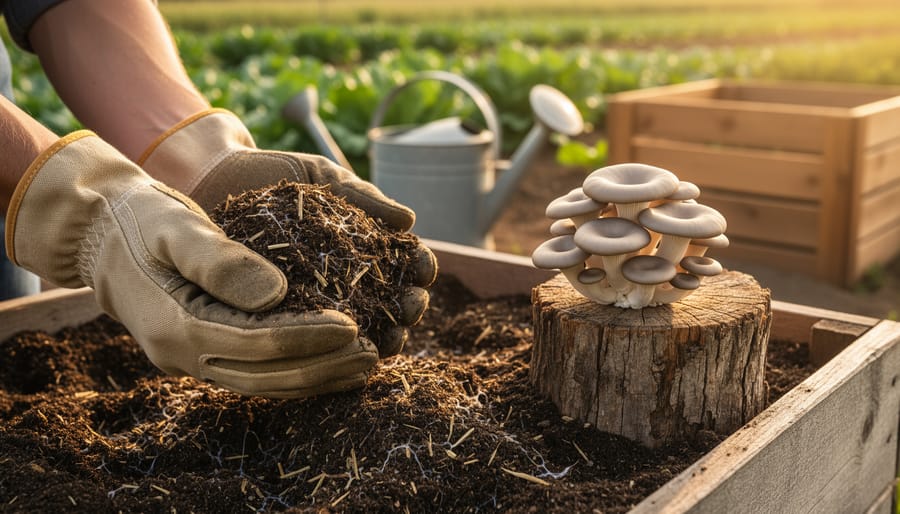
Layer nitrogen-rich materials like coffee grounds, grass clippings, and vegetable scraps with carbon sources such as straw, cardboard, and dried leaves in a 1:2 ratio to create the ideal growing medium for oyster, shiitake, and button mushrooms. Maintain moisture levels at 60-70% by spritzing your compost pile daily, ensuring it feels like a wrung-out sponge when squeezed. Pasteurize your finished compost at 140-160°F for 2-3 hours to eliminate competing organisms while preserving beneficial microbes that support mushroom mycelium growth.
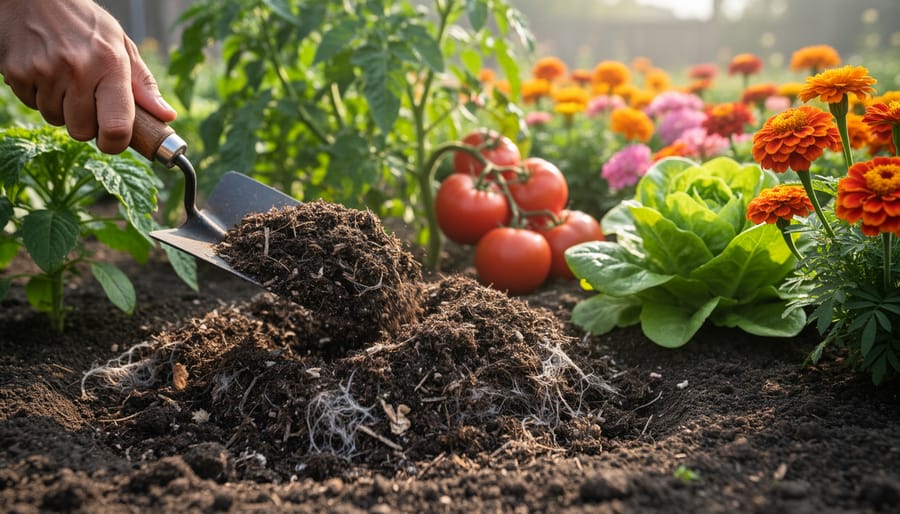
Source spent mushroom substrate from local organic farms through your regional CSA network, where this nutrient-dense byproduct costs significantly less than creating compost from scratch. This dark, crumbly material transforms garden beds by improving soil structure, increasing water retention by up to 50%, and delivering slow-release nutrients throughout the growing season. Mix spent mushroom compost at a 2:1 ratio with native soil for vegetable gardens, or use it as a top dressing around fruit trees and ornamental plants.
Connect with nearby mushroom cultivators who practice sustainable agriculture to establish a circular system where you provide raw composting materials in exchange for finished substrate. Many small-scale mushroom farmers welcome this arrangement since disposing of spent compost presents logistical challenges. Store your mushroom compost in covered bins to prevent nutrient leaching from rain, and apply it within six months for maximum effectiveness. Whether you’re growing your own gourmet mushrooms or enriching your vegetable garden, understanding both sides of mushroom composting opens doors to remarkable yields and reduced waste.
What Makes Mushroom Compost Different From Regular Compost

The Life Cycle: From Fresh Substrate to Spent Mushroom Compost
The journey of mushroom compost is a fascinating transformation story. It begins as fresh substrate, a carefully crafted mixture of organic materials like straw, hay, chicken manure, and gypsum. This nutrient-rich blend undergoes a controlled composting process, reaching temperatures that eliminate harmful pathogens while creating the perfect environment for mushroom mycelium to thrive.
During cultivation, mushroom growers maintain precise conditions of temperature, humidity, and airflow. As mushrooms grow and are harvested over several weeks, they consume a significant portion of the substrate’s nutrients. Once the growing cycle completes and production declines, what remains is called spent mushroom substrate or spent mushroom compost.
Here’s the exciting part: this “spent” material is far from worthless. While mushrooms have extracted many nutrients, the compost still retains tremendous value for gardeners. It’s rich in organic matter, contains beneficial microorganisms, and has a near-neutral pH that most plants love. The composting process has also broken down complex organic materials into forms that are more readily available to garden plants.
Many local organic farms and mushroom cultivation operations offer spent mushroom compost to gardeners at reasonable prices, creating a perfect circular economy. This practice embodies sustainable agriculture at its finest, turning what could be waste into a valuable soil amendment. For home gardeners, it’s an affordable way to improve soil structure, retain moisture, and boost plant health while supporting local farmers who practice environmentally responsible growing methods.
Building Your Own Mushroom Growing Compost at Home
Essential Ingredients and Where to Find Them Locally
Creating nutrient-rich mushroom compost starts with gathering the right organic materials, and you’ll be surprised how many you can find right in your community. The foundation begins with a nitrogen-rich base like horse manure or chicken droppings, which you can often source from local stables, equestrian centers, or small-scale poultry farmers. Many are happy to share their excess for free or a small fee.
Your local feed store is another goldmine for ingredients. Look for wheat straw, hay, or cottonseed meal, which provide the carbon structure mushrooms love. These stores often carry gypsum too, which helps maintain proper texture and pH levels in your compost pile.
Connect with nearby farms through your area’s CSA networks to find brewers grain from craft breweries or coffee grounds from local roasters. One Michigan farmer I spoke with gets spent grain weekly from three local breweries, creating compost that produces incredible oyster mushroom yields.
Don’t overlook agricultural extension offices and farmers markets as networking spots. Strike up conversations with vendors about their composting materials, and you might discover neighbors with excess organic matter perfect for mushroom cultivation.
Remember to verify that all materials come from organic or pesticide-free sources, as chemical residues can harm mushroom mycelium. Building relationships with these local suppliers not only ensures quality ingredients but also strengthens your community’s sustainable agriculture network. Many experienced growers find that their best resources come from word-of-mouth recommendations within farming circles.
The Step-by-Step Composting Process
Creating your own mushroom compost is a rewarding journey that connects you directly to the growing process. The timeline typically spans 2-4 weeks, depending on your chosen method and mushroom variety.
Start by mixing your base ingredients in layers. Combine straw or agricultural waste with nitrogen-rich materials like chicken manure or coffee grounds at a ratio of roughly 4:1 carbon to nitrogen. Add water until the mixture feels like a wrung-out sponge—moist but not dripping. This initial phase takes 1-2 days and sets the foundation for building living soil that mushrooms will thrive in.
Next comes pasteurization, crucial for eliminating competing organisms. For hot composting, turn your pile every 2-3 days, monitoring internal temperatures. You’re aiming for 140-160°F for at least 3 days. Sarah Chen, an urban mushroom grower in Vancouver, shares this tip: “Use a compost thermometer—it’s a game-changer. Once I started tracking temperatures properly, my oyster mushroom yields doubled.”
For smaller batches, pasteurize substrate by soaking it in 160°F water for 1-2 hours, then drain thoroughly. This method works beautifully for shiitake and wine cap varieties.
The conditioning phase follows, lasting 5-10 days. During this time, beneficial microorganisms colonize the substrate while ammonia levels drop. Turn the mixture occasionally and check the smell—it should transition from pungent to earthy and sweet.
Your compost is ready when it’s dark brown, crumbly, and has that pleasant forest floor aroma. Different mushroom species have preferences: oysters tolerate fresher compost, while button mushrooms prefer fully conditioned substrate. Testing with a small batch helps you perfect timing for your chosen variety.
Matching Compost Recipes to Your Mushroom Variety
Not all mushrooms thrive on the same growing medium, and understanding these preferences is key to successful cultivation. Just as different vegetables need varying soil conditions, each mushroom variety has specific substrate requirements that support optimal growth and flavor development.
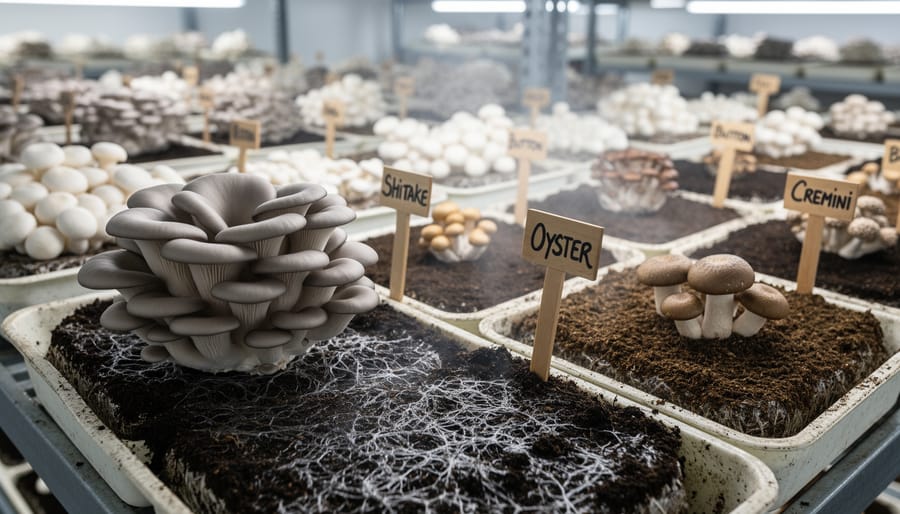
Oyster mushrooms are incredibly forgiving for beginners, making them a favorite among home growers. These adaptable fungi flourish on straw-based substrates. A simple recipe includes pasteurized wheat or oat straw combined with a small amount of coffee grounds (about 10-20% by weight). The straw provides structure while coffee grounds add nitrogen, creating an ideal balance. One grower in Oregon shared that she collects used coffee grounds from her local café each week, turning waste into abundant harvests of beautiful pearl and pink oyster mushrooms.
Button mushrooms (the classic white mushrooms found in grocery stores) require a more complex approach. They prefer composted horse manure mixed with straw, gypsum, and a bit of poultry manure. The traditional recipe involves a hot composting phase where temperatures reach 140-160°F, followed by pasteurization. This process creates the nutrient-rich substrate that button mushrooms love. While more involved, the results are worth the effort for those wanting to grow this popular variety.
Shiitake mushrooms need hardwood-based substrates since they naturally grow on logs in forests. For indoor cultivation, use a mixture of hardwood sawdust (oak, maple, or beech work wonderfully) supplemented with wheat bran or rice bran at about 10-20% of the total weight. The supplementation provides extra nutrition without overwhelming these wood-loving fungi. Many growers find success with pre-made shiitake sawdust blocks available from local mushroom farms.
Lion’s mane mushrooms prefer similar conditions to shiitake but benefit from slightly higher supplementation rates. A mixture of hardwood sawdust with 15-25% wheat bran creates the nutrient density these striking white mushrooms need to develop their characteristic cascading tendrils.
Start with oyster mushrooms to build confidence, then experiment with other varieties as your skills develop. Each successful harvest teaches valuable lessons about moisture, temperature, and timing that translate across different mushroom species.
From Mushroom Farm to Garden Gold: Using Spent Compost
Connecting with Local Mushroom Farms for Spent Compost
Finding mushroom farms that offer spent compost is easier than you might think. Start by exploring local organic networks and CSA directories in your area, as many mushroom producers participate in these community-supported agriculture programs. Local farmers’ markets are also excellent places to connect directly with growers.
When reaching out to farms, ask about their composting process and whether they use organic substrates. Find out how often spent compost becomes available and what pickup or delivery options they offer. Most importantly, inquire about pricing—many farms provide it free or at minimal cost since it’s a byproduct.
Building lasting relationships with producers benefits everyone. Consider becoming a CSA member to support their operation while securing regular access to compost. Share your gardening results with them too. One home gardener in Ontario transformed her backyard by partnering with a local mushroom farm, creating a thriving vegetable garden that now supplies her family year-round. These connections strengthen community food systems while giving you access to premium soil amendment that would otherwise go to waste.
Troubleshooting Common Mushroom Compost Problems
Even experienced composters encounter challenges when working with mushroom compost. Let’s explore common problems and their solutions to keep your composting journey on track.
Contamination from competing fungi or mold is perhaps the most frustrating issue. Green or black mold indicates unwanted organisms have taken hold. The solution starts with prevention: sterilize your substrate properly through pasteurization at 140-160°F for several hours. If contamination appears, remove affected areas immediately and increase airflow. Sarah from Ontario learned this lesson firsthand when her first batch turned green. After implementing proper sterilization techniques aligned with organic practices, her success rate jumped to 90 percent.
Unpleasant ammonia odors signal nitrogen overload or inadequate aeration. Turn your compost pile more frequently and add carbon-rich materials like straw or shredded leaves to balance the nitrogen. Proper moisture levels matter too – your compost should feel like a wrung-out sponge, not dripping wet.
Poor mushroom yields often stem from incorrect moisture, temperature, or lighting conditions. Mushrooms need 80-95 percent humidity and specific temperature ranges depending on species. Check that your growing environment maintains consistency and adjust as needed.
Nutrient imbalances in spent mushroom compost typically show up as excessive salts affecting plant growth. Aging your spent compost for 6-12 months before garden application resolves this issue naturally. You can also blend it with other materials rather than using it alone.
When troubleshooting, remember that patience and observation are your best tools. Keep detailed notes about conditions and adjustments – this knowledge becomes invaluable for future batches and helps you develop intuition for what your compost needs.
Real Success: How One CSA Farm Transformed Their Operation with Mushroom Composting
When Sarah Martinez took over Green Valley CSA in Oregon three years ago, she faced a common challenge: what to do with the growing mountain of plant waste and how to improve her depleted soil without breaking the bank. Her solution came from an unexpected source, transforming her 5-acre operation into a thriving model of circular agriculture.
Sarah started small, converting an unused barn section into a mushroom growing area. She began with oyster mushrooms, using straw and her own farm waste as the growing substrate. Within six months, she was producing 50 pounds of gourmet mushrooms weekly for her CSA boxes. But the real game-changer was what happened next.
The spent mushroom substrate became her secret weapon. After each growing cycle, Sarah composted the nutrient-rich material and applied it throughout her vegetable beds. The results were remarkable. Her tomato yields increased by 35 percent in the first season, and soil tests showed a 40 percent improvement in organic matter content within 18 months.
The challenges were real, though. Sarah admits the learning curve was steep. Temperature control in the mushroom growing area proved tricky during summer months, and she lost two batches to contamination before mastering sterilization techniques. She invested about $3,000 initially in basic equipment and climate control systems.
Her advice for farmers considering this approach? Start with one mushroom variety and scale gradually. She emphasizes joining online mushroom growing communities for troubleshooting support and recommends keeping detailed records of substrate recipes and growing conditions.
Today, Green Valley CSA has waiting lists for both their vegetable shares and mushroom subscriptions. The composting cycle has reduced Sarah’s fertilizer costs by 60 percent while creating an additional revenue stream. She now mentors other local farmers interested in replicating her integrated system, proving that sustainable practices and profitability can grow together.
Mushroom composting opens doors to incredible sustainability benefits while saving you money and connecting you with your local food community. Whether you’re creating nutrient-rich substrate for growing your own mushrooms or enriching your garden beds with spent mushroom compost, you’re participating in a beautiful cycle that transforms waste into abundance. The environmental impact alone makes this practice worthwhile—reducing landfill waste, sequestering carbon, and building healthier soil ecosystems right in your backyard.
Start small if you’re new to this. A simple bin of spent mushroom compost mixed into your vegetable garden can show you immediate results. As you gain confidence, consider expanding to mushroom cultivation or partnering with local farmers who might share or sell their spent substrate. Many CSA programs now include mushroom growers who are eager to connect with community members interested in composting.
Your next steps are simple: visit a nearby mushroom farm to source spent compost, join a local gardening group to share knowledge and resources, or start your first small mushroom growing project at home. The learning curve is gentle, the rewards are substantial, and the connections you’ll make along the way enrich both your garden and your community. Take that first step today—your soil will thank you.


