Daily Archives

2 Articles

How Cooperative Principles Transform Your Local CSA Into a Thriving Community

Posted by darrell on
0
Business and Economic Impact
How Cooperative Principles Transform Your Local CSA Into a Thriving Community

Community Supported Agriculture thrives when built on the seven cooperative principles established by the International Cooperative Alliance in 1995. These aren’t abstract guidelines—they’re the practical foundation that turns a farm subscription into a resilient community partnership.

Understanding these principles helps you recognize why your CSA operates differently from a typical business transaction. When you join a CSA, you’re not just buying vegetables. You’re becoming a member-owner who shares both the harvest abundance and the risk of crop challenges. You vote on farm decisions, contribute volunteer hours during planting season, and connect directly with the farmers growing your food.

The seven principles—voluntary membership, democratic control, economic participation, autonomy, education, cooperation among cooperatives, and concern for community—create the framework that makes CSAs remarkably durable during difficult seasons. They explain why your farmer hosts workshops on soil health, why you pay upfront before seeds go in the ground, and why neighboring farms collaborate instead of compete.

For aspiring farmers, these principles offer a proven roadmap for building member loyalty and financial stability. For current members, they clarify your role beyond picking up your weekly share. When drought threatens tomatoes or pests attack the cabbage, these cooperative structures determine whether your CSA weathers the storm together or dissolves under pressure.

The principles transform isolated consumers and stressed farmers into interdependent partners working toward shared food security and environmental stewardship.

What Makes a CSA Truly Cooperative?

At first glance, many CSA programs might seem like straightforward farm businesses where customers pre-pay for produce. However, when a CSA operates as a true cooperative, something fundamentally different happens. The relationship transforms from a simple buyer-seller transaction into shared ownership and collective decision-making.

Traditional farm businesses operate with the farmer making all decisions about what to grow, when to harvest, and how to distribute. Customers are simply purchasers with no say in operations. In contrast, cooperative CSAs invite members to participate in governance, share financial risks and rewards, and collectively shape the farm’s direction. This isn’t just about buying vegetables—it’s about building community resilience through agriculture.

The distinction matters because cooperative structures create deeper connections between people and their food sources. When members have voting rights on what crops get planted or how surplus funds get allocated, they become invested stakeholders rather than passive consumers. This engagement often leads to higher retention rates and stronger community bonds.

Consider the story of Green Valley Farm Cooperative in Vermont. When unexpected flooding destroyed early spring crops, cooperative members voted to share the loss equally rather than demanding refunds. They also organized volunteer work parties to help rebuild damaged infrastructure. This level of commitment rarely happens in standard CSA arrangements because the cooperative principles—particularly mutual support and shared responsibility—had already woven members into the farm’s fabric.

Understanding these cooperative principles helps both farmers and members create more resilient local food systems. Whether you’re starting a CSA or joining one, recognizing the difference between cooperative ownership and conventional business models empowers you to build something truly sustainable and community-centered.

Diverse group of CSA members holding harvest boxes filled with fresh vegetables at community farm
CSA members gather at their local farm to collect their weekly harvest shares, embodying the cooperative spirit of shared agriculture.

The Seven Cooperative Principles That Power Your CSA

1. Voluntary and Open Membership: Building Your Farm Community

The beauty of CSAs lies in their welcoming spirit. True to the first cooperative principle, successful CSA farms open their doors to anyone who shares a passion for fresh, local food, regardless of income, experience, or background. This inclusive approach strengthens the farm community and builds diversity that enriches everyone involved.

Many CSAs actively work to remove financial barriers through sliding-scale pricing, payment plans, and accessibility programs that ensure families of all income levels can participate. Some farms offer work-share options where members contribute labor in exchange for reduced share costs, creating opportunities for those who want to learn farming skills while accessing nutritious produce.

Take Green Valley Farm in Vermont, for example. Farmer Maria Rodriguez noticed her member base didn’t reflect her diverse community. She introduced scholarship shares, partnered with local nonprofits, and added flexible pickup locations near public transit. Within two seasons, her membership grew by 40 percent, bringing together teachers, construction workers, retirees, and students who now share recipes and volunteer together at harvest festivals.

Consider how your CSA welcomes newcomers. Are signup forms simple and available in multiple languages? Do pickup locations accommodate various schedules and transportation options? These small adjustments transform a farm from a business into a thriving community hub.

2. Democratic Member Control: Giving Everyone a Voice

In a true cooperative, each member gets one vote—regardless of how much they contribute financially. This democratic approach ensures that CSA farms remain responsive to their communities rather than being controlled by a few large stakeholders. At annual general meetings, members typically vote on important decisions like membership fees, crop selections, distribution schedules, and even long-term farm investments.

Successful CSAs strike a delicate balance between democratic input and farmer expertise. While members have valuable perspectives on what vegetables they’d love to see in their boxes, farmers bring essential knowledge about soil conditions, seasonal realities, and crop viability. Many farms create member advisory committees that meet quarterly to discuss upcoming seasons and address concerns, making everyone feel heard while respecting agricultural expertise.

Harvest Hills Farm in Vermont demonstrates this principle beautifully. They hold monthly potlucks where members can informally share feedback and vote on experimental crops for the following year. This approach has strengthened their member retention strategies while keeping the farm manageable. One year, members voted to add Asian greens after several families requested them, which became their most popular addition.

Regular communication through newsletters, surveys, and farm visits keeps the democratic process alive beyond formal meetings, ensuring everyone’s voice shapes the farm’s direction.

CSA members and farmers voting with raised hands during outdoor farm meeting
CSA members participate in democratic decision-making during an annual farm meeting, ensuring every voice is heard in shaping their cooperative.

3. Member Economic Participation: Sharing Risks and Rewards

When you join a CSA, you’re not just buying vegetables—you’re investing in your local food system and sharing in both the bounty and the uncertainties of the growing season. Understanding how CSA payments work reveals the heart of this cooperative principle.

Members typically pay upfront at the season’s start, providing essential capital that farmers use for seeds, equipment, soil amendments, and labor costs. This financial commitment means you’re sharing the risks inherent in farming. If early frost damages the tomato crop or drought reduces cucumber yields, your share reflects that reality. Conversely, when conditions favor abundant harvests, everyone celebrates with overflowing boxes of fresh produce.

This risk-sharing model creates genuine partnership. Take Green Valley Farm, where members experienced a challenging year when late blight affected their potato crop. Rather than abandoning the farm, members rallied together, understanding that their continued support ensured the farm’s survival and future abundance.

The rewards extend beyond produce. Members often receive additional benefits like farm events, u-pick opportunities, and preserved goods when harvests exceed expectations. Some CSAs distribute surplus through food banks, embodying the cooperative spirit of equitable sharing.

This economic participation strengthens community bonds while ensuring farmers receive fair compensation and financial stability, making sustainable agriculture viable for future generations.

4. Autonomy and Independence: Keeping Your CSA Member-Focused

CSAs thrive when they stay true to their members and community, even when opportunities arise to partner with larger organizations or retailers. This principle is about maintaining your independence and making decisions that reflect your members’ values, not outside corporate interests.

When Green Valley Farm CSA was approached by a regional grocery chain to supply produce, they faced a tough choice. The income was tempting, but they knew it would divert resources from their members. After a member survey, they declined the offer and instead focused on expanding their own program. Member Sarah recalls, “They chose us over profit, and that loyalty goes both ways. I’ve been a member for eight years now.”

Your CSA should control its own destiny. This means being selective about grants that come with strings attached, partnerships that might compromise your organic standards, or distribution agreements that could prioritize outside buyers over your member shares. When you do collaborate with others, whether it’s equipment sharing with neighboring farms or joint educational events, ensure these relationships enhance rather than dilute your mission. Keep communication channels open with members about any potential partnerships, letting them weigh in on decisions that affect their food source and community investment.

5. Education, Training, and Information: Growing Knowledge Together

Education forms the backbone of a thriving CSA community, transforming members from passive consumers into active participants in sustainable agriculture. When farmers open their gates for seasonal farm tours, they create powerful learning opportunities where members can witness organic growing methods firsthand, understand crop rotation systems, and see how natural pest management actually works in the fields.

Many successful CSAs host regular workshops throughout the growing season, covering topics like composting techniques, seed saving, and preserving the harvest. These hands-on sessions empower members to extend sustainable practices into their own backyards and kitchens. Weekly newsletters serve as educational touchpoints, explaining what’s in each share box, sharing seasonal recipes, and highlighting the connection between farming decisions and the food members receive.

One inspiring example comes from Green Valley Farm, where farmer Maria transformed her CSA by hosting monthly “meet your vegetables” events. Members learned why heirloom tomatoes have different growing needs than hybrids and discovered the nutritional benefits of eating seasonally. Within two years, her retention rate jumped to 92 percent as members developed deeper appreciation for the challenges and rewards of organic farming.

This educational commitment creates informed advocates who understand that misshapen carrots taste just as sweet and that seasonal availability connects them to nature’s rhythms. Knowledge sharing strengthens the entire cooperative, building a community united by understanding and respect for sustainable food production.

Farmer teaching CSA members about vegetable growing techniques during hands-on greenhouse workshop
Farm education workshops help CSA members learn sustainable growing practices and deepen their connection to food production.

6. Cooperation Among Cooperatives: Stronger Together

No CSA operates in isolation. The sixth cooperative principle recognizes that farmers and food communities grow stronger when they work together. Many CSAs collaborate with neighboring farms to share equipment like tractors, seeders, or washing stations, reducing individual costs and making sustainable farming more accessible to new growers.

Regional food hubs represent cooperation in action. Multiple CSAs might coordinate distribution centers, allowing members to pick up produce from several farms at one convenient location. This collaboration expands variety for members while reducing delivery costs for farmers. Some CSAs even share member databases, helping each other fill shares during slower seasons.

Knowledge sharing strengthens the entire local food movement. Experienced CSA farmers mentor newcomers through regional networks, sharing insights on crop rotation, pest management, and member retention strategies. When one farm’s tomato crop fails but another has abundance, cooperative relationships enable produce swaps that keep all member shares full.

Take Green Valley Farms in Oregon, where three CSA operations jointly purchased a commercial kitchen. Now all three offer value-added products like jams and sauces, creating winter income streams none could afford alone. Their cooperative spirit transformed individual struggles into collective success, proving that collaboration cultivates resilience in ways competition never could.

7. Concern for Community: Beyond the Farm Gate

The seventh cooperative principle extends the CSA’s positive influence far beyond individual farm transactions. When CSAs embrace concern for community, they become catalysts for broader sustainable development and social good.

Environmental stewardship stands at the heart of this principle. CSA farms often implement regenerative practices that sequester carbon, protect watersheds, and create wildlife habitat. These efforts benefit everyone in the region, not just members. Many CSAs also share their expertise through workshops on composting, organic gardening, and water conservation, spreading sustainable practices throughout their communities.

The community impact multiplies through partnerships with local food banks. Gleaning programs allow volunteers to harvest excess produce for donation, addressing food insecurity while reducing waste. Some CSAs dedicate specific growing beds to food bank contributions, ensuring fresh, nutritious produce reaches those who need it most.

Job creation represents another vital contribution. CSAs provide meaningful employment for farmworkers, apprentices, and interns, often offering training that helps aspiring farmers launch their own operations. These positions support local economies and keep agricultural knowledge alive in communities.

Take Evergreen Farm CSA in Ontario, which partners with three food banks, employs eight seasonal workers, and hosts monthly conservation workshops open to the public. Their farm manager, Chen, shares: “We’re not just growing vegetables; we’re growing community resilience. When our members see how their participation supports broader initiatives, it deepens their commitment to the cooperative model.”

This principle reminds us that thriving CSAs strengthen entire communities, creating ripple effects of positive change that extend well beyond the farm gate.

Real Success: A CSA Cooperative That Lives These Principles

Hidden Spring Farm in Vermont stands as a shining example among cooperative success stories, demonstrating how the seven cooperative principles can transform a struggling farm into a thriving community hub. When farmers Maria and Tom Chen took over the 40-acre property in 2018, they faced mounting debts and dwindling membership. Their turnaround came from fully embracing cooperative values.

The farm started by implementing open membership, welcoming anyone regardless of income level. They created a sliding-scale payment system and work-share options, growing their membership from 35 to 180 families within two years. This democratic approach extended to decision-making too. Members now vote on crop selections each winter, with the Chens hosting potluck planning meetings where everyone has equal say in the upcoming season’s harvest.

Financial transparency became a game-changer. The Chens began sharing monthly budget reports and involving members in major purchases. When the greenhouse needed replacing, members understood the costs and rallied together, contributing both funds and labor. This openness built trust that traditional CSAs often struggle to achieve.

Education flourished through weekly farm newsletters explaining organic practices, monthly workshops on food preservation, and apprenticeship programs for aspiring farmers. Members learned why certain crops failed and celebrated successes together, deepening their connection to the land.

The cooperative spirit extended beyond their farm too. Hidden Spring partnered with three neighboring CSAs to share equipment, bulk-order seeds, and coordinate crop planning to reduce competition. They also donate 10 percent of their harvest to local food banks, addressing food insecurity while building community goodwill.

Today, Hidden Spring Farm has a two-year waiting list and has helped launch four new cooperative CSAs using their model. The Chens attribute their success to treating members as true partners, not just customers, proving that cooperative principles create resilient, joyful farming communities.

Bringing Cooperative Values to Your CSA Experience

Whether you’re considering joining a CSA or already participating in one, understanding cooperative principles can transform your experience from a simple transaction into a meaningful partnership. Here’s how to bring these values to life in your own food community.

When choosing a CSA, start by asking key questions that reveal cooperative principles in action. Does the farm offer member input opportunities, even informally? How transparent are they about pricing, growing practices, and challenges they face? Can members visit the farm and connect with where their food grows? These questions help you identify farms that genuinely embrace cooperative values rather than just offering a subscription service.

For current members looking to participate more actively, start small. Attend farm events when possible – even one visit per season deepens your connection and understanding. Share feedback with your farmer about what you’re enjoying or finding challenging in your share. Many farmers adjust their growing plans based on member preferences when they hear from you. Consider volunteering for a work shift or helping with distribution if your schedule allows. These simple actions strengthen the cooperative relationship.

Farmers can encourage cooperative participation by creating easy entry points. Monthly newsletters sharing farm updates, harvest predictions, and honest challenges build transparency. Optional member surveys about crop preferences demonstrate democratic decision-making. Hosting quarterly potlucks or farm days creates community among members who might otherwise never meet.

Remember Sarah Chen, the urban farmer we met earlier? She credits her CSA’s success to monthly check-ins where members vote on trial crops for the following season. This simple practice embodies cooperative principles while making members feel genuinely invested in the farm’s future. Your CSA can become more cooperative through small, consistent actions that prioritize relationships alongside the vegetables themselves.

The seven cooperative principles aren’t just theoretical guidelines—they’re the foundation for building food systems that genuinely serve communities and support sustainable agriculture. When CSAs embrace these values, they create something far more meaningful than a simple transaction between farmer and consumer. They cultivate resilient networks where members share both harvests and risks, where democratic decision-making ensures everyone’s voice matters, and where education transforms casual produce buyers into advocates for regenerative farming practices.

If you’re already part of a CSA, take a moment to recognize how these principles shape your experience. Notice how voluntary membership connects you with like-minded individuals, or how member education days deepen your appreciation for seasonal eating. If you’re not yet involved, consider seeking out a cooperative CSA in your area or connecting with neighbors who might want to start one together.

Every membership represents a vote for transparent farming practices, fair farmer compensation, and environmental stewardship. By choosing cooperative CSAs, you’re joining a growing movement that proves sustainable agriculture isn’t just possible—it’s practical, profitable, and powerful. Your weekly produce box becomes more than dinner ingredients; it’s your contribution to building a food system that nourishes people, supports farmers, and regenerates the land for future generations.
How Small Farms Are Revolutionizing Local Food Distribution (Without the Middleman)

Posted by darrell on
0
Local Food Systems and Distribution
How Small Farms Are Revolutionizing Local Food Distribution (Without the Middleman)

Establish a centralized collection point where multiple farmers can aggregate their harvest, reducing individual transportation costs by up to 60% and creating consistent volume that attracts wholesale buyers. Partner with existing food hubs or cooperative warehouses that already have refrigeration infrastructure and delivery routes—this eliminates the need for costly individual storage facilities while connecting you to established retail networks.

Implement a shared distribution schedule that combines orders from several farms into single delivery runs. Small-scale farmer cooperatives using this approach report cutting fuel expenses in half while expanding their customer reach from local farmers markets to regional grocery chains and restaurants. Your warehouse hub becomes the critical link between field and table, transforming individual farm operations into a competitive collective.

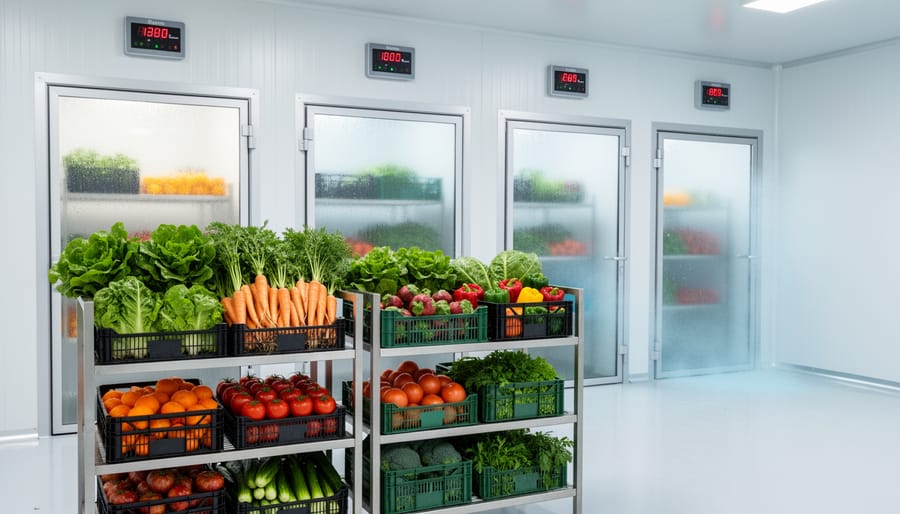
Design your logistics around temperature-controlled zones that accommodate different produce types simultaneously. Root vegetables, leafy greens, and delicate berries each require specific storage conditions—successful distribution centers create separate climate areas within one facility, preserving quality from harvest to delivery. This multi-zone approach allows you to diversify your product offerings without compromising freshness.

Track inventory using simple digital systems that provide real-time updates to retail partners. Transparency in available quantities prevents over-ordering and reduces waste, building trust with buyers who need reliable supply chains. When restaurants and stores can see exactly what’s coming from local farms, they’re more likely to feature seasonal produce prominently, creating demand that sustains your distribution network year-round.

Why Local Farms Need Smart Warehouse Logistics

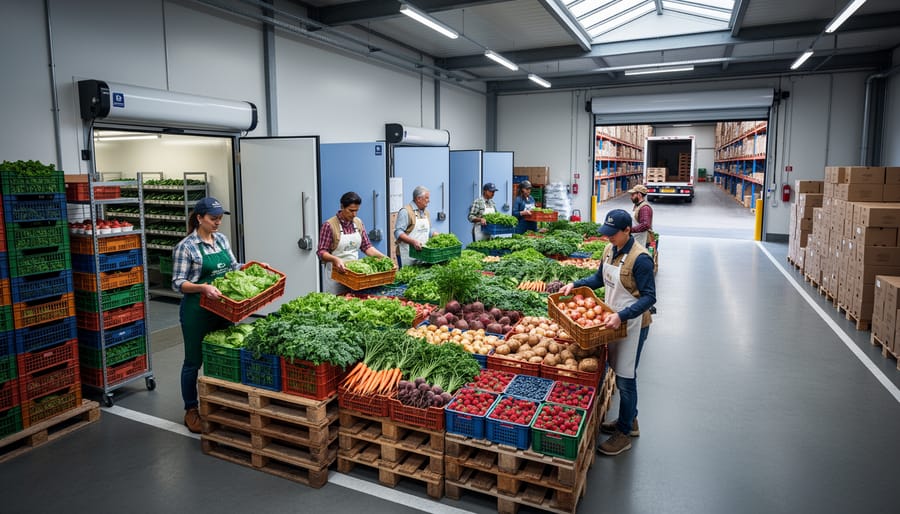
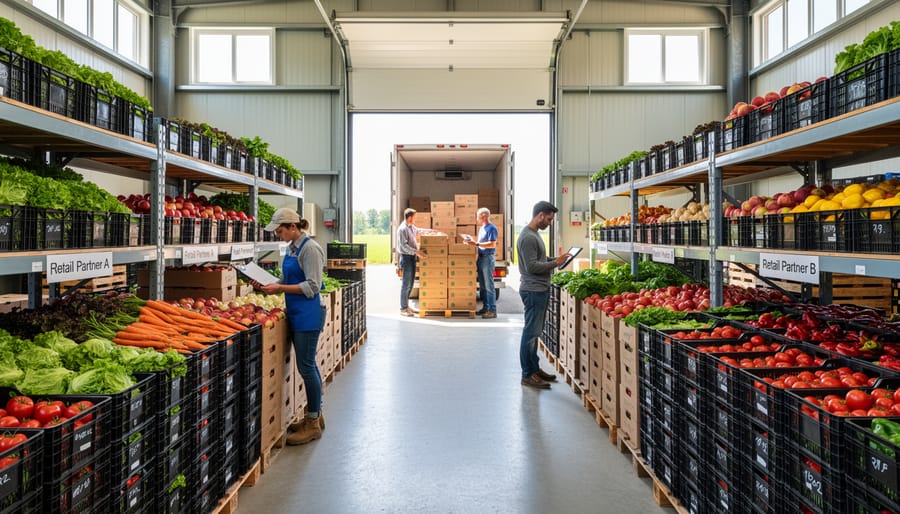
Organized farm warehouse interior with fresh vegetables in crates on shelving
Proper warehouse organization allows small farms to efficiently store and distribute fresh produce to multiple retail partners.

The Fresh Food Challenge: Time is Money

When you’re dealing with fresh organic produce, every hour counts. Unlike shelf-stable goods, your carefully grown tomatoes, leafy greens, and berries have a biological clock ticking from the moment they’re harvested. This is where smart warehouse logistics become your best friend in fighting food waste and protecting your profits.

Think of your distribution center as a preservation station. The faster produce moves through your system, the more days of freshness your customers enjoy at home. Efficient warehouse operations can add crucial days to shelf life by minimizing handling time and maintaining optimal temperature controls throughout storage and distribution.

Here’s a real-world example: Green Valley Cooperative in Oregon reduced their produce waste from 18% to just 6% by implementing a first-in-first-out tracking system and same-day processing for delicate items like berries and salad greens. They invested in temperature-zoned storage areas and trained staff to prioritize speed without sacrificing care.

Small changes make big differences. Consider organizing your warehouse layout so the most perishable items are closest to loading docks. Use clear labeling with harvest dates, and establish partnerships with retailers who understand the value of ultra-fresh organic produce. Remember, time saved in the warehouse translates directly to quality delivered and waste avoided.

Small Scale, Big Coordination

Running a small farm operation means juggling multiple distribution channels from one central location, and that’s where smart coordination becomes essential. Unlike large-scale operations, small farms often serve diverse customers simultaneously—delivering to local restaurants on Tuesday mornings, setting up farmers market displays on Saturdays, and preparing CSA boxes for Wednesday pickups.

The key to managing this complexity lies in creating a simple, organized system at your storage facility. Many successful farmers use color-coded bins or designated zones within their cooler or barn to separate orders for different channels. For instance, restaurant orders might occupy one shelf, while CSA shares fill another, preventing mix-ups during busy packing days.

Consider partnering with local food hubs to streamline coordination. These collaborative spaces can handle some distribution legwork, allowing you to focus on growing quality produce.

Communication tools also make coordination smoother. Shared spreadsheets, simple inventory apps, or even group text threads help you track what’s going where and when. One Vermont farmer reduced packing errors by 80% simply by implementing a checklist system and dedicating specific harvest days to each distribution channel. Remember, efficient coordination doesn’t require expensive technology—just thoughtful planning and consistent routines that work for your unique operation.

Essential Components of a Farm Distribution Hub

Cold Storage and Temperature Zones

Different types of produce have varying cooling requirements to maintain freshness during storage and distribution. Leafy greens and herbs need temperatures around 32-36°F with high humidity, while tomatoes and peppers prefer warmer conditions at 50-55°F to preserve flavor and texture. Root vegetables typically store well at 32-40°F with moderate humidity levels.

For small-scale farmers and cooperatives, implementing effective cold chain solutions doesn’t require industrial-sized walk-in coolers. Consider creating temperature zones using multiple chest freezers converted to refrigerators with external thermostats, or partitioning a single cooler with insulated curtains. Affordable options include purchasing used dairy coolers or repurposing shipping containers with basic cooling units installed.

Many successful farm cooperatives start with one multi-purpose cooler set at 36°F, storing temperature-sensitive items separately in insulated boxes. As your operation grows, you can gradually expand to accommodate specific temperature zones. Simple monitoring systems with digital thermometers help track conditions and ensure product quality throughout the distribution process.

Walk-in cooler with organized produce in temperature-controlled zones
Cold storage with multiple temperature zones helps preserve different types of produce and extend shelf life for organic vegetables.

Receiving and Quality Control Stations

Setting up an efficient receiving station is your first line of defense for quality assurance. When produce arrives from fields or partner farms, designate a clean, shaded area with proper temperature control to prevent spoilage. Create a simple intake checklist that includes harvest time, temperature readings, and visual inspection notes. This helps track freshness and identify any issues immediately.

Quality control doesn’t need to be complicated. Train your team to look for common indicators like proper color, firmness, and absence of damage or disease. Use standardized grading criteria so everyone evaluates produce consistently. One successful cooperative we know implemented a traffic light system—green for immediate distribution, yellow for quick sale, and red for composting—which streamlined their sorting process dramatically.

Prepare dedicated zones for washing, trimming, and packing. Keep sanitized bins and containers nearby for different quality grades. Label everything clearly with variety, source farm, and arrival date. This organization saves precious time during distribution rushes and reduces handling damage.

Consider investing in simple tools like digital thermometers, calibrated scales, and moisture meters. These affordable additions provide objective data that protects both your reputation and your farming partners’ hard work while ensuring customers receive the freshest possible organic produce.

Packing and Staging Areas

Once your orders are picked and ready, the packing and staging area becomes your warehouse’s command center for final preparation. This is where individual orders get organized by retail customer—whether that’s a grocery store, restaurant, or farmers market booth—making loading day smooth and stress-free.

Think of this space as your assembly line for success. Group each retailer’s products together in designated zones, clearly labeled with customer names and delivery routes. Many successful farm cooperatives use color-coded tags or bins to prevent mix-ups. One organic farm collective in Oregon shared how they reduced loading errors by 80 percent simply by organizing their staging area by delivery route rather than by product type.

Keep your most frequently ordered items near the loading dock to minimize travel time. Temperature-sensitive products like leafy greens and berries should have their own refrigerated staging zone, separate from hearty root vegetables that can handle brief temperature variations.

Create a simple checklist system for each order—this helps your team verify quantities and catch any missing items before trucks depart. Consider investing in mobile carts or dollies to move staged orders efficiently, reducing physical strain on your team while speeding up the loading process.

Creating Efficient Distribution Routes

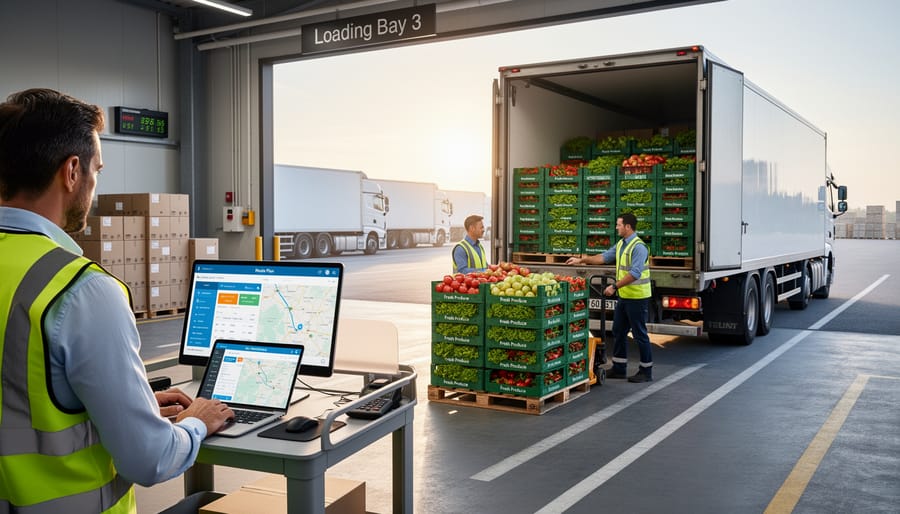
Farm delivery van loaded with organized produce boxes ready for distribution
Efficient route planning and organized loading ensure fresh produce arrives at retail partners in optimal condition.

Route Planning Tools That Actually Work for Small Farms

You don’t need expensive software to plan efficient delivery routes for your farm. Many successful small-scale farmers have discovered that affordable technology tools can transform their distribution process without breaking the bank.

Start with free options like Google Maps, which allows you to plot multiple stops and optimize your sequence. Simply enter your delivery addresses, and the app calculates the most efficient path, saving you fuel costs and precious time.

For farms making regular weekly deliveries, consider apps like Route4Me or MapQuest for Business. These platforms help you create consistent routes that become familiar over time, reducing stress and improving reliability for your customers.

Sarah, a vegetable farmer from Ontario, shared how she reduced her delivery time by 40 percent simply by grouping customers by neighborhood and planning routes the night before. She uses a printed map with color-coded stops, proving that sometimes low-tech solutions work beautifully.

Remember to factor in traffic patterns, customer availability windows, and any special handling requirements for delicate produce. Building a 15-minute buffer between stops helps accommodate unexpected delays while maintaining your commitment to delivering fresh, quality produce on schedule.

Coordinating Delivery Windows with Retailers

Building strong relationships with your retail partners starts with understanding their unique receiving schedules. Grocery stores typically prefer early morning deliveries before opening, while restaurants often need fresh produce during mid-morning lulls between breakfast and lunch rushes. Markets may have specific loading dock times to avoid customer congestion.

Start by reaching out to each buyer to discuss their preferences. Ask about their busiest days, preferred delivery windows, and any loading dock restrictions. Many successful organic farmers keep a shared digital calendar where retailers can see available delivery slots and reserve times that work best for them.

Consider grouping deliveries by geographic area to maximize fuel efficiency and time management. For example, you might serve all downtown restaurants on Tuesdays and Thursdays, while covering suburban stores on Wednesdays and Fridays. This route optimization reduces your carbon footprint while keeping delivery costs manageable.

Communication is key when schedules shift. Weather delays, unexpected harvests, or vehicle issues happen. Send courtesy text updates if you’re running behind, and most retailers will appreciate the transparency. One farmer’s cooperative in Oregon found that consistent communication reduced order cancellations by 40 percent and strengthened long-term partnerships.

Remember to build buffer time into your schedule. Those extra fifteen minutes between stops provide breathing room for traffic, quick conversations with chefs about upcoming seasonal items, and the flexibility that makes distribution sustainable long-term.

Inventory Management Without the Headaches

First In, First Out for Perishables

When dealing with organic produce, timing is everything. The FIFO method—First In, First Out—is a simple yet powerful practice that ensures the oldest products leave your warehouse first, while newer arrivals wait their turn. Think of it like rotating groceries in your home refrigerator, but on a warehouse scale.

For organic farmers and food hubs, FIFO isn’t just good practice—it’s essential. Unlike conventional produce treated with preservatives, organic fruits and vegetables have shorter shelf lives and need to reach consumers while they’re at peak freshness. By implementing FIFO, you minimize spoilage and maintain the quality that your customers expect from locally grown organic food.

The beauty of FIFO lies in its straightforward approach. Date incoming shipments clearly, organize your storage so older stock sits at the front, and train your team to always pull from this designated area first. Many successful farm cooperatives have reduced waste by up to 30% simply by adopting this practice. Not only does this protect your bottom line, but it also honors the hard work that went into growing that produce and supports your commitment to reducing food waste in your community.

Simple Tracking Systems That Scale

Starting your distribution tracking doesn’t require expensive technology. Many successful small farms begin with simple spreadsheets to monitor inventory, delivery routes, and customer orders. A basic Excel or Google Sheets template can track what you’re harvesting, where it’s going, and when deliveries happen.

As your operation grows, consider affordable farm management software designed specifically for small-scale producers. Programs like Farmigo, Local Line, or Harvie offer subscription-based platforms that handle everything from customer ordering to delivery scheduling, typically costing between $50-200 monthly. These systems scale with you, adding features as needed.

Take inspiration from Green Valley Farm in Oregon, which started with a simple notebook system and gradually transitioned to cloud-based software as their CSA membership doubled. Their advice? Don’t overcomplicate early on. Focus on tracking three essentials: what you have, where it needs to go, and when it arrives.

The key is choosing a system you’ll actually use consistently. Whether that’s a handwritten ledger or an app, reliable tracking helps prevent waste, improves customer satisfaction, and makes tax season considerably easier. Start simple, stay consistent, and upgrade only when your current system becomes a bottleneck rather than a helpful tool.

Cooperative Distribution: Sharing Resources, Sharing Success

The Power of Farm Cooperatives

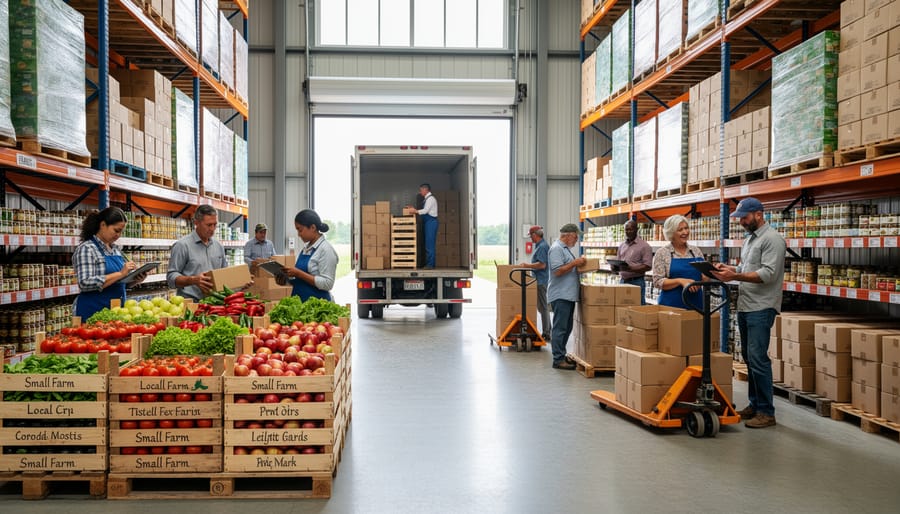
When small farms join forces through cooperative models, they unlock opportunities that would be impossible to achieve alone. By pooling resources, farmers can share warehouse space, refrigeration units, and delivery vehicles, dramatically cutting individual operating costs. Instead of each farm investing thousands in storage facilities, cooperatives distribute these expenses across multiple members, making professional logistics accessible to operations of all sizes.

The market reach expands exponentially too. A single farm might struggle to supply a grocery store’s weekly demand, but a cooperative can offer diverse products year-round, making them attractive partners for retailers and restaurants. Take the story of Maria and Tom, two organic vegetable growers who joined their local food hub. Previously, they each drove separate routes for CSA pickups and farmer’s market deliveries. Through their cooperative, they now coordinate one efficient route serving twenty restaurants, reducing fuel costs by sixty percent while tripling their customer base.

Cooperatives also provide collective bargaining power for better pricing on packaging materials, insurance, and transportation services. Members share knowledge about distribution timing, quality control standards, and customer preferences, creating a learning community that elevates everyone’s success. This collaborative approach transforms isolated farming into a connected network where individual strengths complement each other, building resilient local food systems.

Farmers collaborating in shared warehouse distribution facility
Farm cooperatives allow multiple small producers to share warehouse facilities and distribution costs while expanding their market reach.

Real-World Success: The Valley Fresh Cooperative Story

When five small organic farms in California’s Central Valley joined forces in 2019, they faced a common challenge: individually, none could afford proper cold storage or reliable distribution routes. Their solution? Valley Fresh Cooperative pooled resources to lease a 5,000-square-foot refrigerated warehouse and hired a shared logistics coordinator.

The results transformed their businesses. Within eighteen months, member farms reduced post-harvest losses by 40% and expanded their retail partnerships from three to fifteen local stores. “Before the cooperative, I was making delivery runs in my pickup truck three times a week,” shares founding member Maria Santos, who grows heirloom tomatoes and leafy greens on her 12-acre farm. “Now our coordinator consolidates orders and makes efficient routes. I’ve gained back two full days each week to focus on farming.”

The cooperative’s shared warehouse system includes temperature-controlled zones for different produce types, a small packing area for value-added products, and a simple inventory management system. Each farm contributes monthly fees based on volume usage, making costs predictable and manageable.

Their success inspired neighboring counties to explore similar models, proving that strategic collaboration can level the playing field for small-scale organic producers competing in regional markets.

Technology That Makes Sense for Small Operations

Farm Management Software Basics

Managing your farm’s distribution doesn’t require complex corporate software. Today’s farm management platforms are designed specifically for small-scale growers like you, making it easier to track harvests, manage orders, and coordinate deliveries without overwhelming technology.

These user-friendly tools help you organize customer subscriptions, generate packing lists, and monitor inventory in real-time. Many platforms integrate seamlessly with efficient distribution systems, allowing you to streamline everything from field to market. Popular options include Harvie, Local Line, and Farmigo, each offering features tailored to CSA operations and direct-to-consumer sales.

Start simple by choosing software that matches your current scale. Most platforms offer free trials, letting you explore features like route planning and customer communication tools. As Sarah from Meadowbrook Farm discovered, adopting basic farm management software reduced her administrative time by half, giving her more hours to focus on growing quality organic produce. The investment pays for itself through improved efficiency and happier customers.

Communication Tools for Retail Partners

Keeping retail partners connected doesn’t require complicated systems. Many successful farm cooperatives use straightforward digital tools that streamline communication and reduce phone tag. WhatsApp Business and similar messaging apps work beautifully for sending delivery updates, confirming orders, and sharing photos of available produce. These free platforms let you create broadcast lists for weekly availability announcements while maintaining individual conversations with each store.

For order management, simple shared spreadsheets or basic inventory apps like Sortly or FreshTrends help track what’s been ordered and delivered without expensive software investments. Some farmers find success with group ordering platforms specifically designed for local food systems, which allow retail partners to browse available products and place orders directly from their phones.

Digital payment solutions like Square or Venmo simplify invoicing and reduce paperwork. Consider sending photo confirmations of delivered orders—it builds trust and creates documentation everyone appreciates. One Vermont cooperative found that a simple weekly email with colorful produce photos increased their retail orders by 40 percent, proving that clear, friendly communication truly makes the distribution process smoother for everyone involved.

Smart warehouse logistics aren’t just about efficiency—they’re about empowerment. When local farms take control of their distribution systems, whether through cooperatives, food hubs, or shared warehouse spaces, they gain the freedom to build businesses on their own terms. You’re no longer at the mercy of distant distributors or unpredictable market forces. Instead, you’re creating direct relationships with retailers who value quality, transparency, and the story behind every tomato and bunch of kale.

These distribution networks do more than move produce from field to store. They strengthen entire communities by keeping food dollars local, reducing transportation emissions, and ensuring that fresh, organic produce reaches families who care about what they eat. The farmers we’ve highlighted throughout this article prove that smart logistics make sustainable farming not just viable, but thriving.

Ready to get involved? If you’re a farmer, start by connecting with neighboring growers to explore cooperative opportunities or visit local food hubs to understand their requirements. Research warehouse options that align with your scale and budget, and don’t hesitate to start small—even a shared cooler space can transform your distribution capabilities.

For consumers, your choices matter tremendously. Ask your local retailers about their farm partnerships, request locally grown options, and visit farmers markets to understand the challenges growers face. When you support farms with strong distribution systems, you’re investing in a food system that values people, planet, and exceptional flavor in every bite.