OSHA Doesn’t Regulate Your Farm Stand (Here’s Who Actually Does)
 darrell on
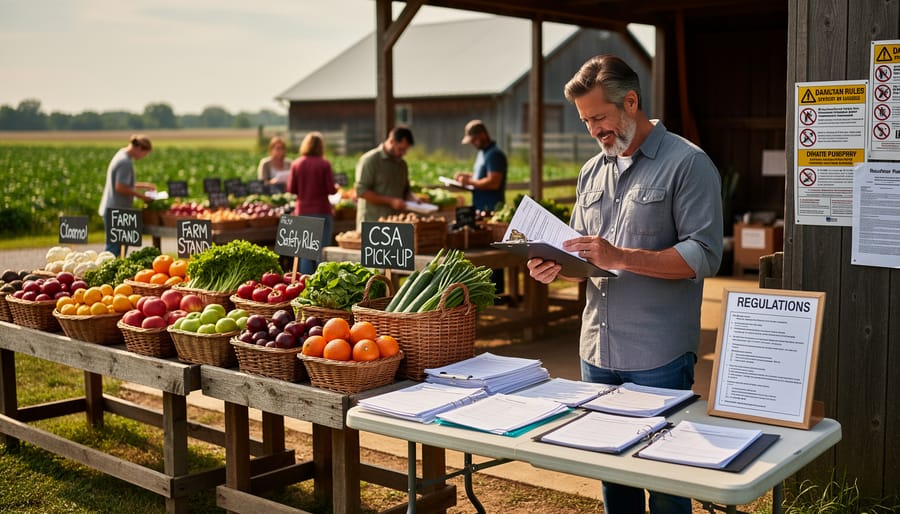
Understand that OSHA (Occupational Safety and Health Administration) doesn’t regulate food safety—the FDA and your local health department do. This common confusion trips up many new farmers and CSA operations, but clarifying which agency oversees what will save you time and compliance headaches.
Contact your local health department first to determine which regulations apply to your specific operation, as requirements vary dramatically between states and even counties. Small-scale farmers selling directly to consumers often face different rules than those distributing through retailers or restaurants.
Register your farm operation with your state’s agriculture department and food safety division to receive tailored guidance on licensing, inspections, and food handling requirements specific to your products and sales channels.
Implement Good Agricultural Practices (GAPs) even if not legally required, focusing on worker hygiene, water quality testing, proper storage temperatures, and equipment sanitation. These practices protect your customers and build trust in your brand.
Maintain detailed records of your food safety procedures, cleaning schedules, temperature logs, and supplier information. Documentation proves compliance during inspections and helps you quickly trace any potential contamination issues.
While OSHA won’t inspect your food products, they do regulate worker safety on your farm. Ensure proper training for equipment use, provide adequate sanitation facilities for employees, and maintain safe working conditions to avoid penalties.
The regulatory landscape for small food producers emphasizes prevention and transparency rather than punishment. By understanding the correct agencies and implementing straightforward safety measures, you’ll confidently navigate compliance while focusing on growing nutrient-dense food for your community.
The OSHA Confusion: What They Actually Regulate
Let’s clear up a common misconception right from the start. When people search for “OSHA food safety regulations,” they’re often looking in the wrong place. OSHA, the Occupational Safety and Health Administration, doesn’t actually regulate food safety at all. Their job focuses entirely on protecting workers, not consumers.
Think of it this way: OSHA makes sure your employees don’t get hurt on the job, while agencies like the FDA and USDA ensure the food you’re producing is safe to eat. It’s an important distinction that confuses many new farmers and food entrepreneurs.
So when does OSHA come into play on farms? They step in when you have employees working in potentially hazardous conditions. This includes operating machinery, handling pesticides, working in confined spaces like silos, or managing heavy equipment. If you’re running a farm stand with employees, OSHA requirements for proper lifting techniques, electrical safety, and emergency protocols apply to protect your workers.
For many small-scale organic farms and CSA operations, OSHA regulations become relevant once you hire your first employees. Even if you’re growing the most beautiful heirloom tomatoes using sustainable practices, you’ll need to ensure your workers have safe conditions, proper training, and access to things like clean drinking water and restroom facilities.
The confusion often stems from the fact that both worker safety and food safety matter in agricultural settings. But they’re governed by completely different agencies with different inspection processes and requirements. Understanding this distinction helps you navigate the regulatory landscape more confidently and ensures you’re meeting the right standards for both your team and your customers.
The Real Food Safety Regulators Your CSA Needs to Know
FDA and the Food Safety Modernization Act (FSMA)
While OSHA handles worker safety, the Food Safety Modernization Act represents the FDA’s comprehensive approach to preventing foodborne illness in the food supply chain. For small farms and CSAs, understanding FSMA is essential for maintaining legal compliance while serving your community.
The Produce Safety Rule is FSMA’s most relevant component for local growers. It establishes science-based standards for growing, harvesting, packing, and storing fruits and vegetables. These standards cover areas like water quality, soil amendments, worker health and hygiene, and equipment sanitation. However, the FDA recognized that small-scale operations shouldn’t face the same regulatory burden as large industrial farms.
This is where exemptions become your friend. Farms with average annual produce sales of twenty-five thousand dollars or less during the previous three years are completely exempt from the Produce Safety Rule. Many CSA operations fall comfortably within this threshold, especially when starting out.
Qualified exempt status offers another pathway for small producers. If your farm sells most of its food directly to consumers or local retailers within your state or within 275 miles, and your annual food sales average less than five hundred thousand dollars, you may qualify. You’ll need to maintain basic documentation and provide information about your farm name and business contact details to customers.
Sarah Chen’s ten-acre organic CSA in Vermont operates under qualified exempt status, serving eighty member families. She keeps simple records of her sales channels and posts her farm information at her pickup location, maintaining compliance while focusing on growing nutrient-dense vegetables for her community.
State and Local Health Department Requirements
While OSHA focuses on workplace safety, food safety regulations actually fall under different agencies depending on where you operate. Understanding your local requirements is essential for running a successful small-scale food operation.
State health departments establish their own food safety codes, which often exceed federal standards. These regulations cover everything from food handling procedures to facility requirements. Before selling produce or value-added products, contact your state’s department of agriculture and local health department to understand specific licensing requirements. Each jurisdiction has unique rules, so what works in one county may not apply in another.
Cottage food laws offer exciting opportunities for small producers wanting to sell items like jams, baked goods, or dried herbs. Most states allow home-based production of certain low-risk foods without commercial kitchen licensing, though sales limits and approved product lists vary significantly. Some states permit online sales and shipping, while others restrict sales to direct transactions only.
For those operating farm stands and farmers markets, requirements differ from brick-and-mortar establishments. Many jurisdictions offer simplified permits for seasonal vendors, though you’ll still need proper food handling certifications and may require temporary food establishment permits.
Success story: Maria’s organic herb farm in Vermont started with cottage food law sales before expanding to three farmers markets. She recommends joining your state’s small farm association, where experienced farmers share navigation tips for local regulations.
Creating a compliance checklist specific to your location protects your business while building customer trust in your sustainable farming practices.
When Federal Regulations Don’t Apply to You
Good news for many small-scale farmers: you might qualify for significant regulatory exemptions! If you’re running a CSA or farm stand, the FDA’s Food Safety Modernization Act includes provisions specifically designed with operations like yours in mind.
The qualified exemption applies when your farm has annual food sales under $500,000 and more than half of those sales go directly to consumers, local restaurants, or retailers within your state or within 275 miles. This direct-to-consumer model is exactly how most CSAs and farmers markets operate naturally.
What does this mean practically? You’ll face simplified recordkeeping requirements rather than complex compliance protocols. However, you’re still expected to follow basic food safety practices and maintain records proving you qualify for the exemption.
Take Sarah’s organic vegetable CSA in Vermont as an example. With 150 member families and weekend farmers market sales totaling around $200,000 annually, she qualifies for the exemption while maintaining excellent safety standards through simple practices like proper washing stations and temperature monitoring.
Remember, exemption doesn’t mean ignoring food safety altogether. Building trust with your community means demonstrating your commitment to clean, safe produce through transparent practices and open communication about your growing methods.
Essential Food Safety Practices for Local Food Distributors
Good Agricultural Practices (GAPs) Made Simple
Good Agricultural Practices might sound intimidating, but they’re really just common-sense approaches to growing safe, healthy food. Think of GAPs as your farm’s safety toolkit, designed to protect both you and your customers.
Let’s start with water quality. Whether you’re irrigating crops or washing harvested vegetables, clean water is essential. Test your water sources regularly, especially if you’re using well water or surface water from ponds or streams. Many local extension offices offer affordable testing services that check for harmful bacteria like E. coli.
Soil amendments deserve careful attention too. While compost enriches your soil beautifully, it needs proper treatment first. Composted manure should reach temperatures high enough to kill pathogens, typically maintained for several weeks. A simple compost thermometer becomes your best friend here, ensuring your amendments are both nutritious and safe.
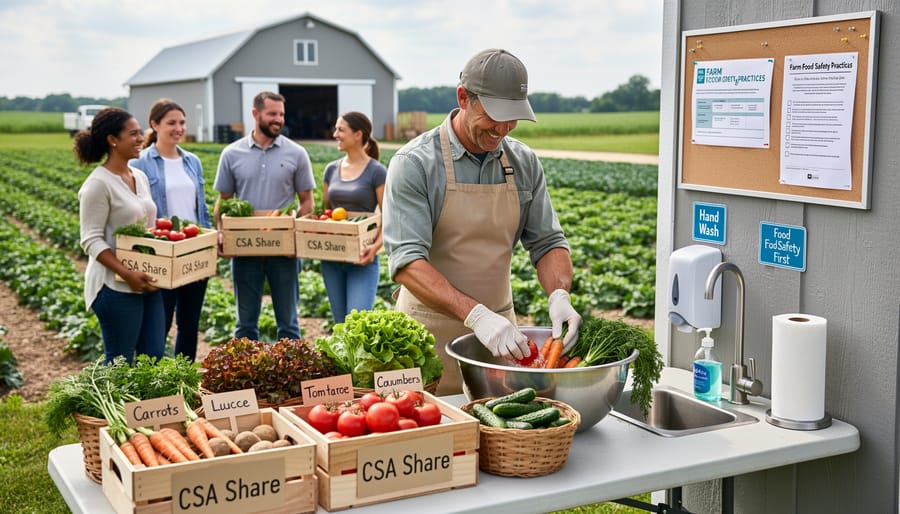
Worker hygiene protects everyone involved in food production. Provide handwashing stations near your fields and packing areas with soap and clean water. Encourage your team to wash hands after bathroom breaks, before handling produce, and after touching animals or soil. It’s straightforward but incredibly effective.
Harvest handling completes the safety circle. Use clean containers and tools, keep harvested produce cool and shaded, and avoid letting fresh vegetables touch the ground. One inspiring farmer I know shares that implementing these simple practices not only improved food safety but also extended the shelf life of her produce, delighting CSA members with fresher vegetables. These practices aren’t burdensome regulations; they’re investments in quality and community trust.
Temperature Control and Storage for CSA Boxes
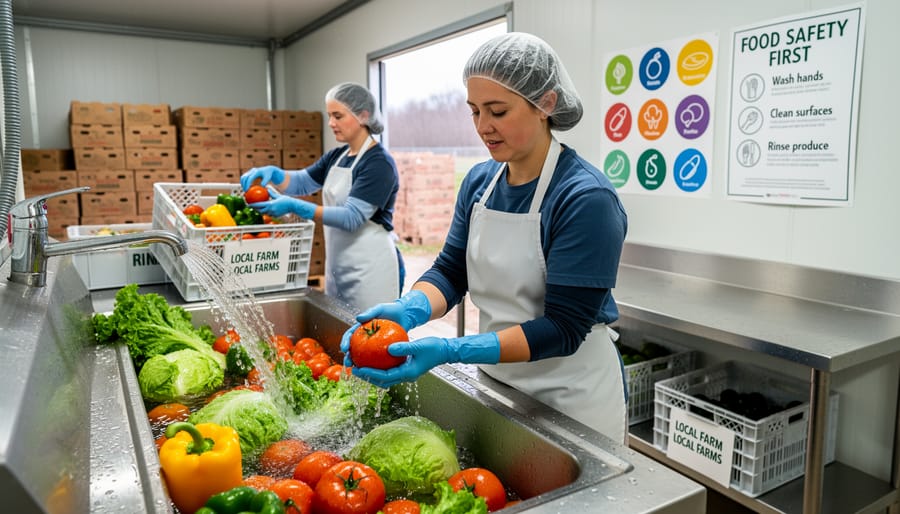
Keeping your CSA boxes fresh and safe starts with maintaining a proper cold chain from harvest to customer pickup. Wash all produce in clean, potable water immediately after harvesting, and cool it quickly to remove field heat. Leafy greens and delicate vegetables should reach 40°F or below within a few hours of harvest.
Store packed CSA boxes in clean refrigeration units or well-insulated coolers with ice packs if electric cooling isn’t available at your pickup location. Monitor temperatures regularly with a simple thermometer, keeping cold items at 41°F or below. Keep boxes off the ground on clean pallets or shelving to prevent contamination.
At pickup locations, limit the time boxes sit out at room temperature. Consider staggered pickup times or providing shaded areas with cooling options during warmer months. One successful CSA farmer shares that switching to insulated bags for summer deliveries reduced spoilage by 60 percent while keeping customers happy with crisp, fresh produce. Label boxes clearly with packing dates and storage instructions to help members maintain quality at home.
Documentation That Protects Your Farm
Smart record-keeping doesn’t have to be complicated, but it can save your farm during an inspection or food safety investigation. Start by maintaining simple logs of your daily practices—harvest dates, wash water temperature checks, and cleaning schedules work perfectly. Keep receipts for sanitizing products and equipment purchases, as these demonstrate your commitment to safe practices.
Consider creating a basic food safety plan that outlines your procedures, even if it’s just a few pages. Document employee training sessions with sign-in sheets and dates. Take photos of your wash stations, storage areas, and equipment to show your setup over time. Many successful small farmers keep a dedicated binder or digital folder that stores everything in one place.
If a customer concern arises, you’ll have evidence showing exactly what happened on that harvest day. One organic farmer shared how her detailed records helped resolve a complaint within hours, protecting both her reputation and business relationships. Remember, good documentation isn’t about expecting problems—it’s about protecting the sustainable farming practices you’ve worked so hard to build.
Building Trust Through Transparency (A Farmer’s Success Story)
Meet Sarah Chen, who runs Harvest Moon Farm, a 15-acre CSA operation in Vermont. When she started five years ago, Sarah faced a common challenge: convincing customers that her farm’s produce was safe, even though OSHA doesn’t regulate agricultural food safety. Instead of stopping at minimum FDA requirements, she decided to go further.
Sarah implemented a comprehensive food safety program that included written harvest protocols, regular water testing, detailed cleaning schedules for all equipment, and employee training sessions every quarter. She even created a simple traceability system using numbered harvest bins and daily logs. “It seemed like extra work at first,” Sarah admits, “but it became second nature quickly.”
The real transformation came when she started sharing these practices with her CSA members. Sarah posts weekly farm updates showing her team washing and sanitizing harvest containers, explains her soil testing schedule, and invites members to quarterly farm walks where they can see her food safety procedures in action. She even created a one-page document outlining her voluntary safety standards that new members receive during signup.
The results speak volumes. Sarah’s member retention rate jumped to 92 percent, and she maintains a waiting list of over 50 families. When a neighboring farm faced contamination concerns, Sarah’s members rallied around her because they understood her commitment to safety.
Her advice to other farmers? “Don’t hide behind the idea that regulations don’t apply to you. Show your customers what you do to keep their food safe. Take photos, share your processes, and be proud of going the extra mile. Transparency isn’t about being perfect—it’s about being honest and committed to continuous improvement.”
Your Action Plan: Getting Compliant Without Stress
Getting your food distribution operation compliant doesn’t have to feel overwhelming. Let’s break it down into manageable steps.
Start by identifying which regulations apply to your specific situation. Contact your state’s Department of Agriculture or Health Department to learn about local requirements for your operation size and product types. Many states offer different compliance tiers based on annual sales, with simplified rules for smaller producers.
Next, conduct a simple assessment of your current practices. Walk through your entire process from harvest to delivery, noting where food touches surfaces, how you handle temperature control, and your cleaning routines. This honest inventory helps you spot gaps without judgment.
Connect with your state’s Cooperative Extension office. These incredible resources offer free or low-cost workshops specifically designed for small-scale food producers. They understand the unique challenges you face and speak your language, not bureaucratic jargon.
If you’re pursuing organic certification, your certifying agency can be an unexpected ally. They’re already reviewing your practices and often provide guidance that overlaps with food safety requirements.
Join your local farmers’ market association or regional food hub network. Fellow farmers have walked this path and often share practical, real-world solutions. Sarah Chen, who runs a thriving CSA in Vermont, says her biggest breakthrough came from a casual conversation at a growers’ meeting where another farmer showed her an affordable sanitizing system.
Remember, compliance is about protecting your customers and your business. Take it one step at a time, and you’ll build a strong foundation for growth.
While OSHA may not be your farm’s food safety watchdog, embracing proper food safety practices remains essential for any sustainable farming operation. Think of food safety not as a bureaucratic hurdle, but as an act of community care that protects the families who trust you with their meals.
Local food producers who prioritize safety build lasting relationships with their customers and strengthen their farm’s reputation. When Sarah Martinez implemented comprehensive food handling protocols at her organic CSA operation, she noticed members weren’t just satisfied—they became advocates, bringing friends and family to join her farm shares.
Good food safety practices protect your consumers from illness while safeguarding the livelihood you’ve worked hard to build. A single foodborne illness incident can devastate a small farm’s reputation and community trust. By understanding the proper regulatory framework and voluntarily exceeding basic requirements, you demonstrate the same commitment to quality that drives your sustainable farming philosophy. Your dedication to safe, wholesome food production becomes part of your farm’s story and strengthens the local food movement for everyone.