Unlock the ancient wisdom of traditional seed preservation methods through six time-tested germination techniques that ensure vibrant, healthy plants. From the basic paper towel method to advanced stratification processes, these natural approaches tap into seeds’ innate potential to sprout and thrive. Whether you’re a backyard gardener or aspiring farmer, mastering these fundamental germination methods will dramatically improve your growing success. While modern technology offers new solutions, these proven techniques have sustained generations of farmers and continue to produce reliable results in home gardens and organic farms alike. Discover how temperature, moisture, and timing work together to awaken dormant seeds and kickstart your growing journey.
Traditional Water Soaking Method
Seeds soaking in clear glass containers with water at different temperatures
Hot Water Treatment
Hot water treatment is a simple yet effective method for breaking seed dormancy, particularly for hard-coated seeds like morning glory, moonflower, and some legumes. Start by heating water to temperatures between 170-180°F (77-82°C). Pour the hot water over your seeds in a heat-safe container and let them soak for 12-24 hours as the water gradually cools to room temperature. This process softens the seed coat, making it easier for water to penetrate and trigger germination.
For best results, use this method on fresh seeds, as older ones might be damaged by the heat. After soaking, drain the seeds and plant them immediately in moist soil. This technique works wonders for sweet peas, lupins, and nasturtiums, with success rates often reaching 80-90%. Remember to adjust soaking times based on seed size – larger seeds typically need longer soaking periods than smaller ones.
Natural Scarification Techniques
Sand Scarification
Sand scarification is a time-tested method that mimics nature’s way of breaking seed dormancy. By gently rubbing seeds between two pieces of sandpaper or mixing them with coarse sand, you create tiny scratches on the seed coat that allow water to penetrate more easily. This technique works particularly well for hard-coated seeds like morning glories, lupines, and sweet peas.
The process is simple: place your seeds between two sheets of medium-grit sandpaper and gently rub them for about 30 seconds, or mix them with coarse sand in a jar and shake for a minute. Be careful not to damage the seeds – you only need to create microscopic scratches. After scarification, seeds typically show dramatically improved germination rates, often sprouting within days instead of weeks.
Many experienced gardeners swear by this method, especially for native plant species that naturally rely on wind-blown sand for germination in their original habitats.
Step-by-step demonstration of seed scarification using natural sand
Smoke Treatment Method
The smoke treatment method, deeply rooted in indigenous seed practices, has been used for thousands of years to enhance seed germination. This fascinating technique involves exposing seeds to cool smoke or smoke-infused water, which triggers a natural response that breaks seed dormancy.
Many native plants, particularly those from fire-prone regions, have evolved to respond positively to smoke exposure. The process mimics the natural occurrence of wildfires, which historically cleared vegetation and prompted new growth cycles. Today, gardeners can recreate this effect using simple DIY methods or commercial smoke-water products.
To try this at home, create a smoke chamber by placing damp seeds in a container with small holes. Generate smoke by burning natural materials like dried grass, leaves, or wood chips in a controlled setting, and direct the cool smoke into the container for about 30 minutes. Alternatively, soak seeds in water that has been infused with smoke compounds.
This method works exceptionally well for native wildflowers, certain vegetables, and herbs. Many gardeners report higher germination rates and more vigorous seedlings when using smoke treatment. While it may seem unconventional, this time-tested technique offers a natural way to boost seed performance without using synthetic chemicals.
Remember to use caution when working with smoke and ensure proper ventilation. The rewards of this ancient method are worth the extra effort, connecting modern gardening with traditional wisdom.
Natural Stratification Process
Natural stratification harnesses Mother Nature’s wisdom by mimicking the conditions seeds experience in the wild. This time-tested method involves exposing seeds to natural weather cycles, particularly the cold temperatures of winter, to break their dormancy and trigger germination.
To practice natural stratification, start by collecting your seeds in late summer or fall. Place them in a breathable container, such as a burlap bag or mesh pouch, mixed with slightly damp sand or peat moss. The moisture level should be similar to a wrung-out sponge – just enough to keep the medium moist without being wet.
Bury the container outdoors in a well-draining spot, about 6-8 inches deep, and mark the location. The natural freeze-thaw cycles of winter will work their magic, gradually breaking down the seed’s hard outer coating and preparing it for spring growth. This method works particularly well for native perennials, fruit trees, and woodland plants that naturally require a cold period before germination.
Local farmer Sarah Thompson shares, “I’ve had incredible success with natural stratification for my berry bushes. The seeds emerge stronger and more vigorous than with artificial methods.” Remember to protect your buried seeds from curious animals by covering the spot with hardware cloth or chicken wire.
Come spring, retrieve your seeds and plant them according to their specific requirements. The natural conditioning they’ve received over winter often results in higher germination rates and hardier seedlings.
Fermentation Technique
Fermentation is a fascinating traditional method particularly effective for seeds like tomatoes, cucumbers, and some squash varieties. This technique involves letting the seeds ferment in their own pulp or in water for a few days, which helps break down the gelatinous coating that naturally inhibits germination.
To ferment seeds, start by scooping out the seeds along with their surrounding pulp into a clean glass jar. Add a small amount of water – just enough to cover the seeds – and let the mixture sit at room temperature for 2-4 days. During this time, you’ll notice a layer of white mold forming on top, which is completely normal and actually beneficial to the process.
The fermentation not only removes the protective gel coating but also helps eliminate seed-borne diseases that might affect germination. Once the fermentation is complete, rinse the seeds thoroughly in a fine-mesh strainer and spread them on a paper towel to dry completely before storage.
Many gardeners swear by this method, particularly for heirloom tomatoes, as it mimics the natural decomposition process and can result in higher germination rates.
Infographic showing moon phases and corresponding seed sowing times
Direct Sowing with Moon Phases
Ancient wisdom meets modern gardening in the practice of moon phase planting. This method follows lunar cycles, with seeds being sown during specific moon phases to enhance germination success. During the waxing moon (from new moon to full moon), the increasing gravitational pull is believed to draw water upward, making it an ideal time for planting above-ground crops. The full moon phase is particularly favorable for seed germination, as the increased moonlight and gravitational forces are thought to encourage stronger growth. Conversely, the waning moon period is traditionally reserved for root crops and bulbs. While scientific evidence for lunar planting remains limited, many experienced gardeners swear by this time-tested approach, incorporating it into their seasonal planting routines alongside modern growing techniques.
The wisdom of traditional seed germination methods continues to prove invaluable in today’s gardening and farming practices. By preserving and implementing these sustainable growing techniques, we not only honor our agricultural heritage but also ensure food security for future generations. Whether you’re a home gardener or professional farmer, these time-tested methods offer reliable, eco-friendly solutions that blend perfectly with modern sustainable agriculture, making them more relevant than ever in our changing climate.
Nestled in the heart of O’Fallon, Missouri, the Farmers & Artisans Market transforms an ordinary parking lot into a vibrant community hub every Saturday morning. Local farmers display just-picked produce alongside skilled artisans showcasing handcrafted jewelry, pottery, and homemade goods, creating a dynamic marketplace that celebrates both agriculture and art. This cherished weekend tradition brings together over 50 vendors from across the region, offering everything from farm-fresh eggs and seasonal vegetables to artisanal bread and handmade soaps.
Since its establishment in 2010, the market has become more than just a shopping destination—it’s a gathering place where neighbors connect, families discover the joy of eating seasonally, and local entrepreneurs build sustainable businesses. Live music, cooking demonstrations, and children’s activities make each visit a unique experience, while the market’s strict vendor guidelines ensure that every product is authentically local, supporting the community’s economy and agricultural heritage.
The Heart of O’Fallon’s Market Community
Market Location and Schedule
The O’Fallon Farmers & Artisans Market operates in the heart of downtown O’Fallon, Illinois, at 308 South Main Street. During peak season (May through October), the market welcomes visitors every Saturday from 8:00 AM to noon, rain or shine. A special mid-week market runs on Wednesdays from 3:00 PM to 7:00 PM, perfect for those seeking fresh produce after work.
The winter season (November through April) brings a modified schedule, with the market moving indoors to the O’Fallon Station. Winter markets are held on the second and fourth Saturdays of each month from 9:00 AM to 1:00 PM, ensuring year-round access to local goods. The spacious venue provides ample parking and shelter from the elements, while maintaining the warm, community atmosphere that makes this market special.
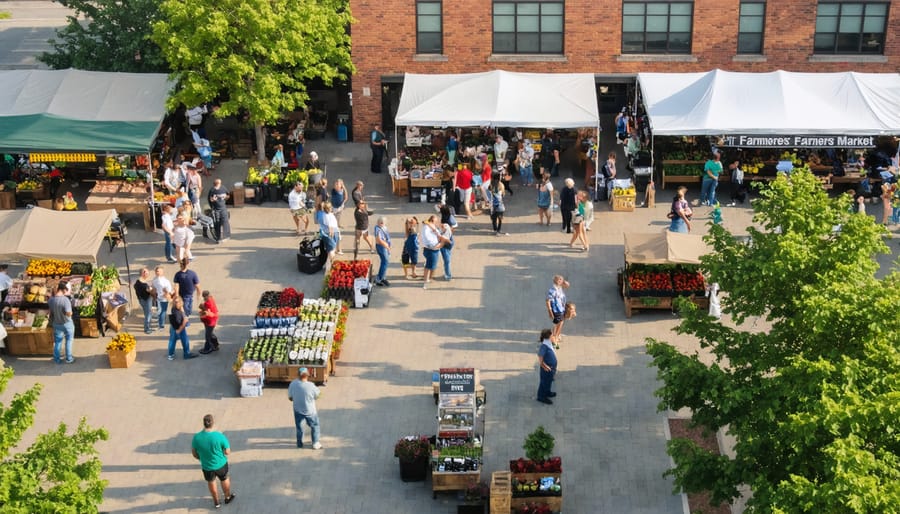
Aerial view of O’Fallon’s Farmers & Artisans Market during peak hours, showing vendor stalls and customer activity
Vendor Mix and Selection Process
The O’Fallon Farmers & Artisans Market maintains a careful balance of vendors through a rigorous selection process that prioritizes quality, authenticity, and local connections. Vendors must operate within a 100-mile radius of O’Fallon, ensuring true local representation. The market committee evaluates each application based on product uniqueness, production methods, and commitment to sustainable practices.
A 60-40 split between farmers and artisans is maintained throughout the season, with farmers getting priority during peak growing months. This ensures shoppers have access to fresh, seasonal produce while enjoying unique handcrafted items. New vendors are encouraged to review successful market display strategies before applying.
The selection process includes site visits to farms and workshops, allowing the committee to verify growing practices and craftsmanship firsthand. Preference is given to vendors who demonstrate sustainable methods, whether in farming or artisanal creation. This careful curation creates a diverse marketplace where traditional farming knowledge meets contemporary craftsmanship, offering visitors an authentic local shopping experience.
Successful Farm-Artisan Partnerships
From Field to Finished Product
At the O’Fallon Farmers & Artisans Market, the journey from farm to artisanal excellence comes alive through creative collaborations between local growers and craftspeople. Watch as fresh strawberries from Belle Valley Farms transform into handcrafted preserves at Sarah’s Sweet Spreads, or see how Miller’s Organic Lavender becomes a key ingredient in Natural Path Soaps’ signature collection.
Local baker Jean Thompson works directly with three market farmers to source fresh eggs, berries, and herbs for her famous breakfast pastries. She adjusts her weekly menu based on seasonal harvests, ensuring nothing goes to waste while creating unique flavor combinations that keep customers coming back for more.
Another inspiring example is the partnership between Green Meadows Farm and Wood & Clay Pottery. The potter creates custom fermentation crocks specifically designed for the farm’s organic cabbage crop, allowing them to produce small-batch sauerkraut year-round.
The market also features unique collaborations like honey-infused hand creams, farm-fresh herb bouquets paired with handmade vases, and seasonal produce baskets displayed in locally woven willow containers. These partnerships not only support our local economy but also showcase the incredible creativity and resourcefulness of our community’s farmers and artisans.
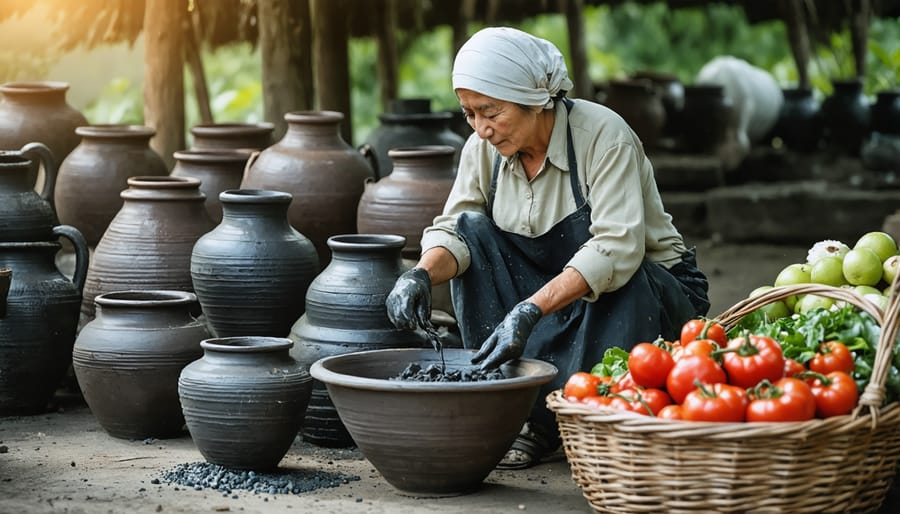
Local artisan creating pottery using locally sourced clay while displaying fresh farm produce
Shared Marketing and Brand Building
At the O’Fallon Farmers & Artisans Market, vendors have discovered that success grows stronger through collaboration. Market participants regularly join forces to create engaging displays that showcase complementary products, such as pairing fresh produce with handcrafted serving bowls or locally made preserves with artisanal breads.
These collaborative efforts extend beyond physical displays to shared marketing initiatives. Vendors frequently cross-promote each other on social media, tag fellow market members in their posts, and share each other’s stories to expand their collective reach. Many have created joint promotional materials that highlight the market’s diverse offerings and strengthen its overall brand identity.
The market’s popular “Featured Vendor” program rotates the spotlight among different sellers each week, with other vendors actively promoting the featured business. This community-driven approach has helped establish the market as a unified destination rather than just a collection of individual sellers.
Seasonal events and themed market days provide additional opportunities for vendor collaboration. During harvest festivals, for example, produce vendors might team up with craft vendors to offer complete fall decorating packages, while food artisans work with farmers to create special farm-to-table tastings.
Regular vendor meetings facilitate relationship building and idea sharing, allowing participants to identify new partnership opportunities and coordinate their offerings to better serve market visitors. This collaborative spirit has become a hallmark of the O’Fallon market’s success and continues to attract both vendors and customers.
Community Impact and Benefits
Economic Growth
The O’Fallon Farmers & Artisans Market has become a significant driver of local economic growth, creating a ripple effect throughout the community. Local vendors report an average 30% increase in their annual revenue since joining the market, with many expanding their operations and hiring additional staff to meet growing demand.
The market’s collaborative environment has sparked numerous successful business partnerships between farmers and artisans. For instance, local honey producers now supply to artisan bakers, while herb growers work with craft soap makers to create unique, locally-sourced products. These synergies have led to the creation of over 25 new small businesses in the past three years alone.
Beyond direct sales, the market has boosted tourism in O’Fallon, with visitors from neighboring communities regularly attending market days. Local restaurants have begun sourcing ingredients directly from market vendors, strengthening the farm-to-table movement in the area. The market also provides valuable opportunities for new entrepreneurs, offering mentorship programs and reduced-rate stalls for startup vendors.
This economic ecosystem has contributed an estimated $2.5 million annually to the local economy, demonstrating how community-based markets can serve as catalysts for sustainable economic development.
Infographic showing economic impact statistics of the market on local community
Cultural Enhancement
The O’Fallon Farmers & Artisans Market serves as a vibrant cultural hub where local traditions and modern community values seamlessly blend. Through thoughtful partnerships between farmers and artisans, the market has become instrumental in building thriving community markets that celebrate local heritage and craftsmanship.
These collaborations create unique learning opportunities, with artisans often incorporating locally grown materials into their crafts while farmers share traditional growing methods with younger generations. Weekly demonstrations showcase everything from cheese-making to pottery using local clay, helping preserve and pass down valuable cultural knowledge.
The market’s special events calendar features seasonal festivals that bring together diverse community members, from long-time residents to newcomers, fostering meaningful connections through shared experiences. Children’s workshops, cooking demonstrations, and cultural performances add layers of engagement that strengthen community bonds and create lasting memories.
By providing a platform where farmers and artisans can share their stories and expertise, the market helps maintain O’Fallon’s unique identity while embracing growth and innovation. This dynamic environment ensures that local traditions continue to evolve and remain relevant for future generations.
The O’Fallon Farmers & Artisans Market has grown into a vibrant community hub that celebrates local agriculture and craftsmanship. With increasing visitor numbers each season and a growing roster of vendors, the market continues to strengthen the bonds between local producers and consumers. The success of this thriving marketplace has inspired neighboring communities to develop similar initiatives, making it a model for sustainable local commerce.
Looking ahead, market organizers are planning to expand operating hours, introduce educational workshops, and create more opportunities for vendor-customer interactions. New partnerships with local schools and community organizations are in development to foster the next generation of farmers and artisans. As sustainability and support for local businesses become increasingly important to consumers, the O’Fallon Farmers & Artisans Market is well-positioned to remain a cornerstone of community life for years to come.
Fresh produce logistics stands at the intersection of time-sensitive delivery, temperature control, and sustainable distribution – making it one of the most challenging yet crucial aspects of our local food systems. Every day, thousands of small-scale farmers and food hub operators orchestrate complex networks to move delicate fruits and vegetables from field to table while maintaining peak freshness and minimizing waste.
The surge in local food movements and farm-to-table initiatives has transformed produce logistics from a behind-the-scenes operation into a critical differentiator for successful agricultural businesses. Modern consumers demand transparency in their food’s journey, creating new opportunities and challenges for distribution networks that prioritize both efficiency and sustainability.
Whether managing a small family farm or coordinating a regional food hub, mastering produce logistics requires balancing sophisticated cold chain management with cost-effective transportation solutions. Success depends on understanding not just the technical aspects of food preservation and delivery, but also the intricate dance of timing, route optimization, and relationship building with local partners.
This practical guide explores proven strategies for streamlining your produce distribution system while maintaining product quality and meeting growing consumer demands for locally sourced food.
The Last-Mile Challenge in Local Food Distribution
Aerial view of a small farm’s delivery van making multiple stops in a residential area, illustrating the last-mile distribution challenge
Common Distribution Bottlenecks
Small farms often face several key distribution challenges that can impact their ability to get fresh produce to market efficiently. Limited cold storage capacity is a common bottleneck, forcing farmers to either harvest smaller quantities more frequently or risk produce spoilage. Transportation poses another significant hurdle, particularly when serving multiple delivery points with varying schedules and requirements.
Labor shortages during peak harvest seasons can create delays in picking and packing, while inadequate packaging facilities may slow down the preparation process. Many small farms also struggle with order management, especially when juggling multiple sales channels like farmers’ markets, CSA programs, and restaurant deliveries.
Weather-related disruptions can throw carefully planned distribution schedules into disarray, particularly for farms without climate-controlled storage options. Additionally, the seasonal nature of produce creates intense periods of activity followed by slower periods, making it challenging to maintain consistent distribution infrastructure and staffing levels.
Despite these challenges, many small farms are finding creative solutions through cooperative arrangements, shared resources, and modern technology tools that help streamline their distribution processes.
Cost Impact on Local Food Systems
The cost of getting fresh produce from farm to table significantly impacts local food systems, often determining whether small-scale farmers can maintain viable businesses. Transportation expenses, including fuel, vehicle maintenance, and labor, typically account for 15-25% of a local farm’s operating costs. These logistics challenges directly influence produce pricing, with farmers needing to balance accessibility for consumers against their operational sustainability.
Many small farmers find creative solutions to manage these costs. Some form cooperatives to share delivery routes and split transportation expenses, while others partner with food hubs to consolidate distribution. For example, the Fresh Valley Farm Collective in Vermont reduced their delivery costs by 30% through shared transportation, allowing them to keep their produce affordable while maintaining fair profits.
However, rising fuel prices and increasing delivery demands can squeeze profit margins, particularly for farms serving urban areas from rural locations. To remain viable, some farmers implement minimum order requirements or delivery fees, while others explore innovative solutions like subscription-based delivery models or partnership with existing delivery services to optimize their distribution networks.
The most successful operations often combine multiple strategies, adapting their approach seasonally to maximize efficiency and maintain competitive pricing while ensuring their business remains sustainable.
Practical Micro-Logistics Solutions
Hub-and-Spoke Distribution Models
The hub-and-spoke distribution model has revolutionized how local farmers get their fresh produce to consumers efficiently. At its heart, local food hubs act as central collection points where farmers bring their harvests, which are then sorted, packed, and distributed to various delivery points like farmers’ markets, restaurants, and community pickup locations.
Picture a wheel: the hub is your central facility, while the spokes represent delivery routes to different neighborhoods or businesses. This setup dramatically reduces the time and miles each farmer needs to travel, as they only need to deliver to one central location instead of making multiple stops.
Take Fresh Roots Farm Collective as an example. By implementing this model, they’ve cut their delivery costs by 40% while serving twice as many customers. Their central hub in Burlington processes deliveries from 12 local farms and coordinates distribution to over 30 neighborhood pickup points.
The beauty of this system lies in its scalability and efficiency. Farmers can focus on growing great produce while sharing resources like cold storage, delivery vehicles, and administrative support. For consumers, it means fresher produce and more reliable delivery schedules. Plus, the reduced transportation needs make this model environmentally friendly, cutting down on fuel consumption and emissions.
To get started, farmers can join existing food hubs or collaborate with other local producers to create their own distribution network. The key is finding the right balance between hub location, delivery routes, and participating farms to maximize efficiency.
Diagram showing a hub-and-spoke distribution model with a central farm hub connected to multiple community pickup points
Tech-Enabled Route Optimization
Modern farmers are embracing tech-enabled distribution solutions to streamline their delivery routes and save precious time and resources. User-friendly apps and digital tools now make it easier than ever to plan efficient delivery schedules, optimize routes, and keep customers informed about their fresh produce deliveries.
Popular route optimization apps like Route4Me and Circuit help farmers map out the most efficient delivery sequences, taking into account factors like distance, delivery time windows, and even traffic patterns. These tools can reduce drive time by up to 30% while ensuring produce arrives at peak freshness.
Local farmer Sarah Martinez shares, “Using route planning software has completely transformed our delivery process. What used to take hours of manual planning now happens automatically, and we can serve more customers without adding delivery days.”
Many of these platforms also offer real-time tracking features, allowing customers to monitor their deliveries and receive automated notifications. This enhanced communication builds trust and reduces the time spent answering delivery-related questions.
For smaller operations, even free tools like Google Maps’ multiple destination feature can make a significant difference in planning more efficient routes. The key is finding the right technology that matches your operation’s scale and needs while remaining cost-effective.
Remember to factor in seasonal changes and varying harvest schedules when setting up your route optimization system. This flexibility ensures your delivery planning remains efficient year-round.
Community Pickup Points
Community pickup points have revolutionized local produce distribution by creating convenient neighborhood hubs where customers can collect their fresh fruits and vegetables. These designated collection spots reduce delivery costs and environmental impact while fostering community connections.
To establish effective pickup points, start by identifying accessible locations that can safely store produce for short periods. Popular options include community centers, local businesses, churches, or even volunteer hosts’ garages. The ideal location should offer protection from the elements, easy parking access, and flexible hours for collection.
Success story: The Green Valley Food Co-op transformed an unused corner store into a vibrant pickup hub, serving over 200 families weekly. They installed basic refrigeration units and created an organized shelf system for ambient-temperature produce, making distribution efficient and maintaining product freshness.
When managing pickup points, clear communication is essential. Implement a simple check-in system using paper logs or digital apps to track collections. Set specific time windows for pickup and send reminder notifications to ensure smooth operations. Many successful programs designate volunteer coordinators who oversee each location and help resolve any issues that arise.
Consider creating a community atmosphere at pickup points by providing recipe cards, hosting occasional tastings, or organizing brief educational sessions about seasonal produce. These touches help build lasting relationships between farmers and consumers while ensuring the long-term success of the distribution system.
Success Stories: Real Farm Solutions
The Cooperative Approach
In the world of local produce distribution, farmers are discovering that collaboration beats competition every time. Small-scale producers are forming cooperative networks to share resources, reduce costs, and streamline their delivery operations. These partnerships often start small, with neighboring farms coordinating delivery routes or sharing refrigerated truck space.
Success stories like the Mountain Valley Growers Coalition show how effective this approach can be. Five family farms in Colorado combined their resources to purchase a refrigerated van and develop a shared delivery schedule, cutting their individual transportation costs by 60%. They also established a joint cold storage facility, allowing them to extend their produce’s shelf life and better manage inventory.
Many cooperatives use digital tools to coordinate their efforts. Shared scheduling apps and inventory management systems help farmers track deliveries, manage routes, and ensure efficient distribution. Some groups even develop collective branding and marketing strategies, presenting a unified front to wholesale buyers and retail customers.
The benefits extend beyond cost savings. Farmers in cooperatives can offer a wider variety of produce, fill larger orders, and maintain more consistent supply chains. They’re also better positioned to negotiate with buyers and secure favorable contracts. Plus, the shared knowledge and experience within these networks help everyone improve their operations and adapt to changing market conditions.
For farmers considering this approach, starting with informal partnerships and gradually building more structured relationships often works best.
Farmers from different small farms collaborating at a shared distribution center, loading produce into delivery vehicles
Direct-to-Consumer Innovation
The landscape of produce logistics is being transformed by innovative direct farm-to-consumer connections that are reshaping how fresh produce reaches our tables. Farmers are embracing technology to create personalized shopping experiences through user-friendly mobile apps and websites, allowing customers to browse available produce and place orders directly from their phones.
Virtual farmers’ markets have emerged as a popular solution, where multiple local growers can showcase their harvest on a single platform. These digital marketplaces often feature real-time inventory updates, automated delivery scheduling, and secure payment processing, making it convenient for both farmers and consumers.
Subscription-based produce boxes have evolved beyond traditional CSA models, with customizable options and flexible delivery schedules. Some innovative farmers are incorporating QR codes on their packaging, linking to harvest dates, growing practices, and recipe suggestions, creating an interactive experience for customers.
Social media has become a powerful tool for building community around local produce, with farmers sharing behind-the-scenes glimpses of daily farm life, crop updates, and harvest announcements. Many are using Instagram Stories and Facebook Live to conduct virtual farm tours and cooking demonstrations, strengthening customer relationships and creating authentic connections.
Text message updates about harvest availability and weather-related changes have proven particularly effective for maintaining clear communication with customers, while online pre-ordering systems help reduce waste and ensure accurate harvest planning.
Getting Started with Your Own System
Assessment and Planning
Successful produce logistics starts with a thorough assessment of your current operations and needs. Begin by documenting your typical produce volume, peak seasons, and storage requirements. Consider factors like temperature-sensitive items, packaging needs, and delivery frequency to different locations.
Create a detailed inventory of your available resources, including storage facilities, transportation vehicles, and handling equipment. This baseline understanding helps identify gaps and opportunities for improvement. Survey your customers about their preferences and pain points to ensure your logistics plan addresses their needs.
When developing your implementation plan, start with clear objectives. Whether you’re aiming to reduce delivery times, minimize food waste, or expand your service area, these goals will guide your strategy. Break down your plan into manageable phases, considering seasonal variations and resource availability.
Map out your distribution routes efficiently, grouping deliveries by location and time windows. Consider implementing a pilot program with a small customer segment to test and refine your processes before scaling up. Establish key performance indicators (KPIs) like delivery accuracy, product freshness, and customer satisfaction to measure success.
Remember to build flexibility into your plan to accommodate unexpected changes in weather, harvest yields, or market demands. Local farmer Sarah Thompson shares, “Starting small and gradually expanding our distribution network helped us perfect our systems without overwhelming our resources.”
Resource-Efficient Implementation
Starting a produce distribution system doesn’t have to break the bank. Many successful local food distributors begin with minimal resources and scale up gradually. Consider starting with a shared storage space or partnering with existing facilities to reduce initial costs. Farmers’ markets and community centers often have underutilized cold storage that can be rented at affordable rates.
Transportation is another area where creative solutions can help. Start by coordinating with other local producers to share delivery routes and vehicles. This not only cuts costs but also reduces environmental impact. Some distributors have found success using cargo bikes for urban deliveries or establishing neighborhood pickup points instead of individual deliveries.
Technology doesn’t need to be expensive either. Free or low-cost apps can handle route planning and inventory management effectively. Many successful distributors start with simple spreadsheets before investing in more sophisticated systems.
Consider exploring creative funding solutions like community-supported agriculture (CSA) pre-payments or microloans from local food organizations. These options can provide the necessary capital without requiring substantial upfront investment.
Remember to start small and focus on efficiency. Begin with a core group of reliable customers and expand gradually as you optimize your operations. This approach allows you to build a sustainable system while maintaining quality service and managing costs effectively.
Effective produce logistics is the backbone of a thriving local food system, connecting farmers with consumers while maintaining product freshness and quality. By implementing smart storage solutions, optimizing delivery routes, and leveraging technology, small-scale producers can significantly improve their distribution efficiency. Remember that success in produce logistics isn’t just about moving products from point A to point B – it’s about building sustainable relationships with customers and creating resilient local food networks. Start small by focusing on one area of improvement, whether that’s investing in better cold storage or adopting route planning software. As your operation grows, gradually implement more sophisticated solutions while staying true to your commitment to fresh, local produce. Together, we can build stronger, more efficient local food systems that benefit both farmers and consumers while reducing food waste and environmental impact.
Transform your composting practice with the Johnson-Su bioreactor, a groundbreaking method that produces fungal-rich compost perfect for regenerative farming. Developed by Dr. David Johnson and his wife Hui-Chun Su at New Mexico State University, this static aerobic composting system creates a powerful soil amendment that dramatically boosts crop yields while sequestering carbon. Unlike traditional composting methods, the Johnson-Su approach requires no turning and operates at lower temperatures, fostering beneficial fungi and microorganisms that build soil health.
For small-scale organic farmers and CSA operations, this method offers a practical, low-cost solution to enhance soil fertility naturally. The resulting compost extract can be applied as a soil drench or foliar spray, delivering essential microbes directly to your crops. Research shows that Johnson-Su compost significantly improves plant vigor, disease resistance, and nutrient density in vegetables – exactly what CSA members value most in their produce.
Whether you’re managing a market garden or scaling up your organic operation, this innovative composting approach aligns perfectly with regenerative agriculture principles while demanding minimal labor and equipment investment.
What Makes Johnson-Su Composting Special?
The Science Behind the Magic
The magic of the Johnson-Su composting method lies in its ability to supercharge your garden’s growth by creating the perfect environment for beneficial microorganisms. The bioreactor’s unique design maintains consistent moisture levels and oxygen flow, creating ideal conditions for fungal growth and bacterial diversity.
Unlike traditional composting methods, the Johnson-Su approach doesn’t require turning, which allows fungal networks to develop undisturbed. These fungal communities, particularly mycorrhizal fungi, form intricate webs throughout the compost, breaking down complex organic materials into nutrients plants can easily absorb.
The method’s sustained moisture levels of 65-70% and regulated temperature between 21-32°C (70-90°F) create a thriving ecosystem for beneficial microbes. These conditions encourage the proliferation of actinobacteria, which produce natural antibiotics and growth-promoting compounds that help plants resist diseases and enhance their nutrient uptake.
The resulting compost is incredibly rich in diverse microbial life, containing billions of beneficial organisms per gram. This microscopic army works symbiotically with plant roots, improving soil structure and creating a self-sustaining cycle of soil health.
Why It’s Perfect for CSA Farms
The Johnson-Su composting method is tailor-made for CSA farms, offering several advantages that align perfectly with small-scale organic operations. For starters, it requires minimal equipment and labor once set up, allowing farmers to focus on other essential tasks during the busy growing season. The resulting biologically-rich compost is ideal for building healthy soil across multiple growing areas, which is crucial for CSA farms that typically grow diverse crops throughout the year.
The static nature of these compost bioreactors means they can be placed strategically around the farm, reducing transportation needs and making it easier to apply the finished product. Plus, the method’s focus on fungal-dominant compost particularly benefits perennial crops and fruit trees – common features in many CSA operations. The low-cost setup and minimal maintenance requirements make it an economically sustainable choice for small farms operating on tight margins.
Completed Johnson-Su bioreactor with visible aeration pipes and moisture monitoring system
Building Your Johnson-Su Bioreactor
Materials You’ll Need
To create your Johnson-Su bioreactor, you’ll need these basic materials, most of which are affordable and easily sourced:
Primary Structure:
– 5-foot length of 4-foot diameter concrete form tube
– 2 wooden pallets (one for base, one for cover)
– Hardware cloth or wire mesh (½-inch openings)
– Zip ties or wire for securing mesh
– PVC pipe (½-inch diameter) for aeration tubes
– Electric drill with ⅜-inch bit
Optional but Recommended:
– Landscape fabric or shade cloth for covering
– Thermometer for monitoring temperature
– Moisture meter
– Garden hose with spray nozzle
Cost-Saving Alternatives:
Instead of a concrete form tube, you can use cattle panels formed into a cylinder. Replace new pallets with reclaimed ones from local businesses. Old window screens can substitute for hardware cloth, while recycled irrigation tubing works well for aeration.
Additional Tools:
– Wheelbarrow for material transport
– Garden fork or shovel
– Heavy-duty scissors or wire cutters
– Work gloves
– Safety goggles
Most materials cost under $200 total, making this an affordable composting solution for small-scale farmers and gardeners.
Assembly Steps
Start by selecting a flat, well-draining area for your bioreactor. Create a circular base approximately 6 feet in diameter using concrete blocks or wooden boards. Install a sturdy center pole (at least 6 feet tall) in the middle, ensuring it’s perfectly vertical and securely anchored.
Roll out hardware cloth (1/4-inch mesh) to form a cylinder around the center pole, maintaining a 5-foot diameter. Secure the hardware cloth with wire ties or strong clips. Cover this structure with landscape fabric, leaving the top open. The fabric should overlap at the seam and be secured firmly to prevent gaps.
Create air holes by pushing 1/2-inch PVC pipes through the fabric and mesh at regular intervals, about 12 inches apart. These pipes should extend from the outer edge to near the center pole. Cut the pipes flush with the outer wall once installed.
Install a simple irrigation system at the top using a soaker hose arranged in a spiral pattern. This ensures even moisture distribution throughout the pile. Finally, add a protective cover or tarp over the top that can be easily removed for adding materials and monitoring the process.
Remember to leave enough space around your bioreactor for easy access during material loading and monitoring.
Making Perfect Compost
Choosing Your Ingredients
The success of your Johnson-Su compost largely depends on the careful selection of your starting materials. Aim for a balanced mix of carbon-rich (browns) and nitrogen-rich (greens) materials. Browns should include items like fallen leaves, straw, cardboard, and wood chips, while greens can consist of grass clippings, food scraps, and fresh plant material.
For optimal results, chop materials into smaller pieces (1-3 inches) to increase surface area and speed up decomposition. Avoid treated wood products, diseased plants, or materials contaminated with chemicals, as these can affect your chances of achieving organic compost certification.
Moisture content is crucial – materials should feel as damp as a wrung-out sponge. If using dry materials like straw or leaves, pre-moisten them before adding to your pile. Include about 10% soil or finished compost to introduce beneficial microorganisms. For best results, gather all materials before starting, ensuring you have enough to fill your bioreactor in one go, which typically requires about 3-4 cubic yards of mixed materials.
Cross-section diagram showing layers of materials inside an active Johnson-Su bioreactor
Monitoring and Maintenance
Successful Johnson-Su composting requires consistent monitoring and maintenance to achieve optimal results. The most critical factor is moisture content – the pile should feel like a wrung-out sponge, moist but not waterlogged. Check moisture levels weekly by squeezing a handful of material; if water drips out, it’s too wet. If it feels dry and crumbly, add water using a gentle spray.
Temperature monitoring is equally important. Use a compost thermometer to track the pile’s core temperature, which should stay between 130-150°F (54-66°C) during the active phase. While the Johnson-Su method doesn’t require turning, you’ll need to maintain proper aeration through the bioreactor’s pipe system. Check that air holes remain unblocked and clear any debris regularly.
Watch for settling of materials as decomposition occurs. As the pile naturally compresses, add fresh organic matter to maintain the desired height. The process typically takes about 12 months, during which you should notice gradual changes in texture and appearance. The material should become darker and more uniform over time.
Keep detailed records of temperature readings, moisture adjustments, and any additions to the pile. This documentation helps you understand the composting progression and make improvements for future batches. If you notice unpleasant odors, which shouldn’t occur in a properly maintained pile, check moisture levels and aeration immediately.
Applying Your Super-Charged Compost
Once your Johnson-Su compost reaches its mature state, you’ll have a powerful soil amendment that can revolutionize your CSA operations. This biologically rich compost is particularly effective when applied as a liquid extract or tea, making it perfect for both small and large-scale applications.
For direct soil application, spread a thin layer (about 1/4 inch) of the finished compost over your growing areas before planting. This approach maximizes the environmental impact of CSA farming by improving soil structure and reducing the need for chemical fertilizers.
Create a compost extract by mixing one part mature compost with five parts water. This solution can be applied through standard irrigation systems or used as a foliar spray. For best results, apply the extract during early morning or late afternoon when plants are most receptive to nutrient uptake.
When using the compost for seed starting, mix a small amount (about 10%) with your potting soil. This gives seedlings a strong start by introducing beneficial microorganisms right from the beginning.
Remember, a little goes a long way with Johnson-Su compost. Its high concentration of beneficial microorganisms means you’ll need less material compared to traditional composts, making it incredibly cost-effective for CSA operations. Store any unused compost in a cool, shaded area to maintain its biological activity until needed.
Farmer applying finished Johnson-Su compost to vegetable beds using a sprayer system
The Johnson-Su composting method offers a powerful, accessible way to enhance soil health and boost crop productivity while supporting sustainable farming practices. By following the simple steps outlined in this guide, you can create nutrient-rich, fungal-dominant compost that dramatically improves soil structure and plant health. Remember, patience is key – while the 12-month process might seem long, the resulting biologically active compost is worth the wait.
Whether you’re a small-scale farmer or home gardener, this method requires minimal equipment and maintenance, making it an ideal choice for anyone committed to organic growing practices. Start small, monitor your progress, and don’t hesitate to adjust the process to suit your specific needs. By implementing the Johnson-Su method, you’re not just making compost – you’re contributing to a healthier, more sustainable food system while reducing waste and building soil fertility for future generations.
Transform your backyard into a thriving ecosystem by joining a collaborative CSA gardening community that combines personal growing spaces with shared resources. Local food networks are revolutionizing how we grow, share, and consume fresh produce, creating resilient neighborhood food systems that benefit both the environment and community members. By connecting home gardeners with experienced farmers, eco-gardens CSA programs provide essential mentorship, shared tools, and collective buying power while maintaining individual growing autonomy. This innovative model helps members reduce costs, minimize waste, and maximize harvests through seasonal planning, seed sharing, and collaborative problem-solving. Whether you’re a seasoned gardener or just starting out, participating in an eco-gardens CSA offers a sustainable path to food independence while building lasting connections with like-minded growers in your area.
The Eco-Gardens CSA Difference
Community-Powered Growing
Our CSA model thrives on the power of shared knowledge and collective experience. Members don’t just receive fresh produce; they gain access to a vibrant community of garden enthusiasts and experienced farmers who are eager to share their growing wisdom. Through seasonal workshops, online forums, and mentorship programs, members learn time-tested techniques for successful organic gardening.
What makes our approach unique is the reciprocal relationship between CSA members and farmers. While members benefit from expert guidance, farmers gain valuable insights from home gardeners’ experiences with different varieties and growing conditions. This exchange creates a dynamic learning environment where everyone contributes to the community’s success.
We also organize regular garden visits and skill-sharing sessions, allowing members to see various growing methods in action. Whether you’re dealing with pest management challenges or seeking advice on companion planting, our community provides the support and knowledge needed to help your garden thrive. This collaborative approach ensures that every member has the resources and confidence to cultivate their own successful garden space.
Aerial view of a thriving community garden with multiple plots and shared spaces
Expert Garden Planning Support
Our experienced garden planners work alongside you to create a thriving home garden that complements your CSA share. Whether you’re a beginner or seasoned gardener, we provide personalized consultations to assess your space, soil conditions, and growing goals. Our experts help you select the right crops that align with your CSA schedule, ensuring you have fresh produce throughout the season without overwhelming overlap.
You’ll receive detailed planting calendars, crop rotation plans, and guidance on sustainable growing practices like companion planting and natural pest management. Monthly check-ins keep you on track, while our online resource library offers solution-focused support whenever you need it. We also organize seasonal workshops where members can learn advanced techniques and troubleshoot common gardening challenges together.
This collaborative approach helps you maximize your growing space while building confidence in your gardening abilities. Many members find that this expert guidance transforms their backyard plots into productive mini-farms that perfectly complement their CSA shares.
Your Personalized Garden Blueprint
Season-by-Season Planning
Season-by-season garden planning is at the heart of our CSA’s success. Our growing calendar begins in late winter when we carefully select heirloom seeds and map out planting schedules. By early spring, we’re starting seedlings in our greenhouse while preparing outdoor beds for cool-weather crops like peas, lettuce, and radishes.
Summer brings an abundance of activity as we transition to heat-loving vegetables such as tomatoes, peppers, and cucumbers. We use companion planting techniques to maximize space and promote natural pest control. Our succession planting strategy ensures continuous harvests throughout the growing season, providing members with fresh produce every week.
As autumn approaches, we focus on fall crops including root vegetables, brassicas, and hardy greens. We also begin planting cover crops in areas that have finished producing, enriching the soil for next season. During winter, we maintain crops in our greenhouse and high tunnels, offering members fresh greens even during the coldest months.
Throughout the year, we adjust our plans based on weather patterns, soil conditions, and member feedback. This flexible approach allows us to maintain biodiversity while meeting our community’s needs. We also encourage members to align their home gardens with our planting schedule, creating a harmonious growing cycle that complements their weekly CSA shares.
Companion Planting Strategies
Companion planting is a cornerstone of our eco-friendly gardening approach, maximizing space while promoting natural pest control and improved crop yields. We carefully pair plants that support each other’s growth and create beneficial microclimates in our garden beds.
Some of our most successful combinations include planting tomatoes with basil, which enhances flavor and repels unwanted insects, and surrounding brassicas (like cabbage and broccoli) with aromatic herbs that deter cabbage moths. Tall sun-loving plants provide natural shade for heat-sensitive crops, while low-growing plants act as living mulch, preserving soil moisture and preventing weed growth.
We follow the “Three Sisters” method, an ancient Native American technique of growing corn, beans, and squash together. The corn provides support for climbing beans, which fix nitrogen in the soil, while squash spreads along the ground, suppressing weeds and retaining moisture.
Our spacing strategy incorporates vertical gardening techniques to maximize growing area. We use trellises, stakes, and natural plant supports to grow upward, leaving room for root crops and leafy greens below. This intensive planting approach not only increases yield per square foot but also creates a diverse ecosystem that attracts beneficial insects and promotes natural pollination.
For home gardeners in our CSA program, we share these companion planting maps and spacing guides, helping them replicate these successful growing combinations in their own spaces.
At Eco-Gardens CSA, we believe that knowledge and resources are meant to be shared. Our robust community resource sharing program includes a tool library where members can borrow essential gardening equipment, from tillers to pruning shears. This helps reduce individual costs while promoting sustainable consumption.
Members gain access to our educational hub, featuring seasonal workshops, gardening tutorials, and hands-on training sessions led by experienced farmers. These learning opportunities cover various topics, from seed starting and composting to food preservation and seasonal cooking techniques.
Our online knowledge base houses a wealth of resources, including planting calendars, companion planting guides, and troubleshooting tips for common garden challenges. Members can also participate in our mentorship program, where seasoned gardeners share their expertise with newcomers.
Regular skill-sharing events allow members to exchange knowledge about specialized techniques like permaculture design, natural pest management, and water conservation methods. We also maintain a seed library, enabling members to preserve and exchange heritage varieties while promoting biodiversity in our gardens.
Through our mobile app, members can access real-time growing tips, connect with fellow gardeners, and schedule tool borrowing, making sustainable gardening more accessible and community-oriented than ever.
Group of diverse community members participating in a gardening workshop
Seasonal Workshops and Events
Throughout the year, Eco-Gardens CSA hosts a vibrant calendar of hands-on workshops and community events that bring members together to learn, share, and celebrate sustainable living. Our seasonal workshops are carefully designed to align with the natural farming calendar, offering practical knowledge that members can apply to their own gardens.
In spring, we kick off with seed starting and garden planning workshops, where experienced farmers demonstrate proper techniques for getting your garden off to a strong start. Summer brings popular farm-to-table cooking demonstrations, where local chefs show members creative ways to prepare seasonal produce. Members particularly enjoy our preservation workshops in late summer, learning traditional methods of canning, fermenting, and dehydrating the harvest bounty.
Fall workshops focus on garden cleanup, soil preparation, and composting techniques, while winter sessions cover topics like garden planning, seed saving, and sustainable living practices. We also host quarterly community potlucks where members share dishes made from their CSA produce, exchange recipes, and build lasting connections.
Special events include our annual Spring Plant Sale, Summer Farm Festival, and Fall Harvest Celebration. Children’s workshops run during school breaks, teaching the next generation about organic farming through fun, hands-on activities. All events are included in CSA membership, though some specialty workshops may require a small materials fee.
Getting Started with Eco-Gardens CSA
Getting started with Eco-Gardens CSA is a straightforward process that begins with reaching out to your local chapter. First, visit their website or contact the coordinator to learn about membership availability and seasonal schedules. Most chapters offer flexible membership options, from full shares to half shares, allowing you to choose what works best for your household.
Once you’ve secured your membership, you’ll receive a welcome packet containing the season’s planting calendar and garden planning tools. This is where the unique collaborative aspect comes into play. You’ll have the opportunity to participate in garden planning sessions, where experienced farmers help you design your home garden to complement your CSA share.
Schedule a site visit with an Eco-Gardens mentor who will assess your growing space and soil conditions. They’ll help you identify the best crops for your specific environment and skill level. New members typically start with easy-to-grow vegetables like tomatoes, lettuce, and herbs before progressing to more challenging crops.
Don’t forget to attend the orientation meeting, where you’ll meet fellow members and learn about volunteer opportunities. Many members find these community connections invaluable for sharing knowledge and resources. You’ll also receive information about pickup locations, times, and any additional programs like cooking classes or preservation workshops.
Remember, successful participation relies on regular communication with your coordinator and staying engaged with the community through workshops and events.
Eco-Gardens CSA offers a unique opportunity to become part of a thriving sustainable food community while enjoying fresh, organic produce throughout the growing season. By joining, you’re not just subscribing to a weekly harvest – you’re investing in local agriculture, supporting environmentally conscious farming practices, and contributing to a healthier planet. Whether you’re a seasoned gardener or just starting your journey toward sustainable living, our collaborative CSA model provides the perfect blend of professional guidance and hands-on experience. Take the first step today by reaching out to our farming team, attending one of our open house events, or signing up for our seasonal membership. Together, we can cultivate a greener future while enjoying the incredible bounty of naturally grown, seasonal produce right in our community.
Sustainable organic farming practices revolutionize modern agriculture through time-tested methods that work in harmony with nature. By integrating crop rotation, natural pest management, and soil enrichment techniques, organic farmers create resilient ecosystems that produce nutrient-dense food while protecting environmental health. These methods eschew synthetic pesticides and fertilizers in favor of biological solutions like companion planting, beneficial insects, and composting. From small family farms to large-scale operations, organic producers demonstrate how traditional wisdom combined with innovative approaches can yield abundant harvests while preserving soil fertility for future generations. This sustainable approach not only delivers superior food quality but also supports biodiversity, reduces water pollution, and helps mitigate climate change through improved carbon sequestration in healthy soils.
Soil Management: The Foundation of Organic Flavor
Split-frame comparison of rich organic soil with visible compost materials next to depleted soil
Natural Composting and Fertilization
Natural composting and fertilization form the backbone of organic soil management, creating nutrient-rich environments that produce healthier, more flavorful crops. Farmers use a variety of natural materials like kitchen scraps, yard waste, and animal manure to create compost that enriches the soil with essential nutrients. This living compost introduces beneficial microorganisms that help plants absorb nutrients more effectively.
Many organic farmers also implement crop rotation with nitrogen-fixing plants like legumes, which naturally fertilize the soil. Cover crops protect and nourish the soil during off-seasons, while green manure crops are tilled back into the field to add organic matter. These practices create a self-sustaining system that improves soil structure and water retention.
Local farmer Sarah Chen shares, “Since switching to natural composting methods, we’ve seen dramatic improvements in our produce quality. Our tomatoes are more flavorful, and our leafy greens are more nutrient-dense.” This approach not only enhances food quality but also reduces dependency on external inputs while building long-term soil health.
By avoiding synthetic fertilizers, organic farmers maintain soil biodiversity and prevent chemical runoff, creating a healthier ecosystem that produces more nutritious food.
Crop Rotation for Soil Health
Crop rotation stands as a cornerstone of organic farming, where different crops are planted in sequence across growing seasons. This time-tested practice naturally enriches soil health while preventing pest and disease buildup. By alternating between nutrient-demanding crops like tomatoes and soil-building plants like legumes, farmers maintain a natural balance in their fields.
For example, planting nitrogen-fixing beans after heavy-feeding corn helps replenish soil nutrients naturally. Following root crops with leafy greens allows different soil layers to rest and recover. This thoughtful planning directly impacts the seasonal availability of crops throughout the year.
Local farmer Sarah Martinez shares, “Rotating crops isn’t just about soil health – it’s about working with nature’s rhythm. When we follow these cycles, we see healthier plants, better yields, and more resilient soil ecosystem.” This approach also helps reduce dependency on external inputs while supporting beneficial insects and microorganisms that contribute to overall farm health.
Remember, healthy soil produces nutrient-dense food, making crop rotation essential for both environmental sustainability and food quality.
Natural Pest Management in Organic Farming
Beneficial Insects and Companion Planting
Beneficial insects are nature’s pest control experts, and organic farmers actively work to attract and maintain these helpful creatures in their fields. Ladybugs, praying mantises, and parasitic wasps naturally control harmful pests like aphids and caterpillars, reducing the need for interventions. Farmers create inviting habitats by planting flowering borders and maintaining diverse hedgerows that provide shelter and food for these beneficial insects.
Companion planting takes this natural approach further by strategically positioning plants that work together harmoniously. For example, planting marigolds near tomatoes helps repel harmful nematodes, while nasturtiums attract pollinators and act as trap crops for aphids. Herbs like basil and dill not only provide additional crops but also help protect neighboring vegetables from unwanted pests.
Success story: Local farmer Sarah Chen increased her garden’s productivity by 30% after implementing companion planting strategies and creating dedicated insect habitats. Her diverse garden now supports a thriving ecosystem where beneficial insects naturally manage pest problems, eliminating the need for any pest control products.
Ladybugs and praying mantis hunting harmful insects on vegetable plants
Physical Barriers and Natural Deterrents
Organic farmers rely on clever natural solutions to protect their crops from pests and unwanted wildlife. Physical barriers like row covers, netting, and fencing serve as the first line of defense, creating protective shields around valuable crops. These barriers effectively keep out insects, birds, and larger animals while still allowing sunlight and rain to reach the plants.
Natural deterrents play an equally important role in organic pest management. Companion planting uses aromatic herbs like marigolds, lavender, and mint to naturally repel harmful insects while attracting beneficial ones. Some farmers plant sacrificial crops around field edges to draw pests away from main crops. Others maintain hedgerows and buffer zones that provide habitat for natural predators like birds and beneficial insects.
Traditional techniques like installing owl boxes encourage natural pest control by attracting birds of prey that hunt rodents. Many farmers also use sticky traps, reflective tape, and motion-activated sprinklers as chemical-free ways to deter unwanted visitors. These physical and natural barriers work together as part of an integrated pest management system that protects crops while maintaining ecological balance.
Water Conservation and Management
Water management in organic farming goes beyond simply keeping crops hydrated – it’s about creating a sustainable system that preserves this precious resource while producing healthy, high-quality crops. Successful organic farmers employ smart irrigation techniques that work in harmony with nature’s cycles.
Drip irrigation systems are a cornerstone of water conservation in organic farming, delivering water directly to plant roots with minimal waste. These systems can reduce water usage by up to 60% compared to conventional sprinkler methods, while also preventing leaf diseases that can develop from excess moisture on foliage.
Many organic farmers complement their irrigation systems with mulching practices, using materials like straw, leaves, or compost to retain soil moisture and reduce evaporation. This natural approach not only conserves water but also suppresses weeds and enriches the soil as the mulch breaks down.
Rainwater harvesting has become increasingly popular among organic farmers. By collecting and storing rainwater in tanks or ponds, farms can reduce their reliance on groundwater and maintain a sustainable water supply during dry periods. Some innovative farmers have even designed swales and berms to naturally direct and retain water across their fields.
Soil health plays a crucial role in water management. Organic practices that build soil organic matter, like cover cropping and composting, improve the soil’s water-holding capacity. Healthy soil can retain up to 20 times its weight in water, making crops more resilient during dry spells.
Success story: Local organic farmer Sarah Chen reduced her farm’s water consumption by 40% after implementing a combination of drip irrigation and mulching practices, while maintaining excellent crop quality and yield.
Farmer examining and harvesting ripe organic tomatoes during peak season
Harvest Timing and Storage Practices
Successful organic farming relies heavily on precise harvest timing and effective storage practices to deliver the highest quality produce to consumers. Farmers carefully monitor crop maturity through various indicators, including color changes, texture, and size, to determine the optimal harvest window. For example, tomatoes are picked when they show the first blush of color, while root vegetables are harvested when their tops begin to die back naturally.
Many organic farmers practice sequential planting and harvesting, allowing them to maintain a steady supply of fresh produce throughout the growing season. This approach also helps reduce storage needs and ensures customers receive the freshest possible products.
To maintain produce freshness, organic farms employ various natural storage methods. Root cellars provide ideal conditions for storing potatoes, carrots, and other root vegetables, maintaining consistent temperature and humidity levels without artificial cooling. Dry storage areas with good air circulation are essential for onions, garlic, and winter squash.
Local organic farmer Sarah Martinez shares, “We time our harvests for early morning when vegetables are at their peak freshness. Everything goes directly into our cooling room, which uses geothermal energy to keep produce at optimal temperatures naturally.”
Some crops, like herbs and leafy greens, require immediate processing and storage in specialized humidity-controlled environments. Many organic farms use natural preservation techniques such as drying, fermenting, and cold storage to extend the life of their harvest while maintaining nutritional value and flavor integrity.
From Farm to Kitchen: Recipe Development
The journey from organic farm to kitchen creates a unique opportunity for recipe development that honors both seasonality and sustainable practices. When working with organic ingredients, chefs and home cooks alike find themselves naturally aligned with nature’s rhythm, crafting dishes based on what’s currently thriving in local fields.
Seasonal organic produce often arrives with superior flavor profiles, encouraging creative cooking approaches that let these natural tastes shine. For instance, heirloom tomatoes grown in organic soil develop deeper, more complex flavors that can transform a simple pasta sauce into something extraordinary. Similarly, organic herbs cultivated without synthetic pesticides offer more intense aromatics, requiring thoughtful portioning in recipes.
Recipe development with organic ingredients often involves working closely with local farmers to understand harvest times and crop availability. This partnership not only ensures the freshest ingredients but also helps cooks plan menus that reflect the natural growing cycle. Many successful farm-to-table restaurants have embraced this approach, building flexible menus that adapt to what organic farmers can sustainably produce throughout the year.
Organic farming practices form the foundation of a sustainable and flavorful food system that benefits both people and the planet. By working in harmony with nature through crop rotation, natural pest management, and soil enrichment techniques, organic farmers create environments where crops can thrive without synthetic inputs. These methods not only produce healthier, more nutritious ingredients but also ensure that seasonal produce reaches its full flavor potential. The dedication of organic farmers to these time-tested practices results in ingredients that chefs and home cooks treasure for their superior taste and quality. As more people recognize the connection between farming methods and food quality, organic agriculture continues to grow, offering an environmentally conscious path to exceptional seasonal ingredients that nourish both our bodies and the earth.
Organic sunflower oil’s inflammatory properties have sparked intense debate among skincare enthusiasts and health researchers alike. While many natural oils heal your skin, sunflower oil’s high linoleic acid content (around 60%) plays a crucial role in maintaining skin barrier function and reducing inflammation. However, the oil’s omega-6 fatty acid composition raises questions about potential inflammatory responses when consumed or applied topically. Recent scientific studies suggest that cold-pressed, organic sunflower oil specifically may offer anti-inflammatory benefits due to its preservation of natural antioxidants and vitamin E content – compounds often degraded in conventional processing methods. Understanding the distinction between organic and conventional sunflower oil production becomes essential for those seeking to harness its therapeutic properties while avoiding potential inflammatory triggers. This exploration delves into evidence-based findings about organic sunflower oil’s effects on inflammation, helping you make informed decisions about incorporating it into your wellness routine.
The Science Behind Organic Sunflower Oil
Essential Fatty Acids Profile
Organic sunflower oil contains a unique blend of essential fatty acids that play different roles in our body’s inflammatory response. The oil is particularly rich in omega-6 linoleic acid, making up about 60-70% of its fatty acid content. While omega-6 fatty acids are vital for healthy cell function, they can promote inflammation when consumed in excessive amounts compared to omega-3s.
However, organic sunflower oil also contains beneficial omega-9 oleic acid, especially in high-oleic varieties. These omega-9s help balance the inflammatory effects of omega-6s and support heart health. What makes organic sunflower oil special is that when it’s grown without synthetic pesticides, the natural fatty acid profile remains intact and unaltered.
The key to using organic sunflower oil healthfully lies in maintaining a balanced ratio of omega fatty acids in your overall diet. By combining sunflower oil with omega-3 rich foods like flax seeds or fatty fish, you can help maintain a healthy inflammatory response. Remember that cold-pressed organic varieties retain more of their natural fatty acid profile and beneficial compounds compared to conventionally processed oils.
Scientific diagram showing the molecular structure of sunflower oil’s key fatty acids and antioxidants
Antioxidant Properties
Organic sunflower oil is packed with powerful antioxidants, with vitamin E being the standout star. One tablespoon of this golden oil contains about 40% of your daily vitamin E needs, making it a potent defender against free radical damage in your body. This natural antioxidant helps protect your cells from oxidative stress and supports overall skin health.
Beyond vitamin E, organic sunflower oil contains other beneficial compounds like phenolic acids and beta-carotene. These antioxidants work together to neutralize harmful free radicals that can cause inflammation and cellular damage. When you choose organic sunflower oil, you’re getting these protective compounds in their purest form, free from pesticide residues that might interfere with their beneficial properties.
The antioxidant content in sunflower oil is particularly impressive when the oil comes from organically grown seeds. Organic farming practices often result in higher levels of these protective compounds, as plants naturally produce more antioxidants when they need to defend themselves against environmental stressors without the help of synthetic pesticides.
Remember that to preserve these beneficial antioxidants, it’s best to use organic sunflower oil in low-heat cooking or as a finishing oil.
Inflammatory Properties: Myth vs. Reality
Pro-inflammatory Factors
While organic sunflower oil is generally considered healthy, it does contain certain components that could potentially contribute to inflammation under specific circumstances. The main factor is its high omega-6 fatty acid content, particularly linoleic acid, which makes up about 60-70% of the oil. When consumed in disproportionate amounts compared to omega-3 fatty acids, these omega-6s may promote inflammatory responses in the body.
Heat processing can also affect the oil’s properties. When organic sunflower oil is exposed to high temperatures during extraction or cooking, it may form compounds called aldehydes and trans fats, which could trigger inflammatory responses. However, cold-pressed organic sunflower oil typically maintains its beneficial properties and is less likely to contain these potentially inflammatory compounds.
It’s worth noting that the oil’s vitamin E content actually helps combat inflammation, creating a complex relationship between pro- and anti-inflammatory properties. The key lies in how the oil is processed and used. Choosing cold-pressed organic sunflower oil and storing it properly in a cool, dark place helps minimize the formation of pro-inflammatory compounds.
For those sensitive to inflammation, moderation is essential. Consider using the oil in cold applications or low-temperature cooking, and balance it with other healthy fats in your diet, particularly those rich in omega-3s.
Anti-inflammatory Benefits
While some oils can trigger inflammatory responses in the body, organic sunflower oil actually offers several anti-inflammatory benefits when used properly. Its high concentration of vitamin E, an antioxidant powerhouse, helps combat oxidative stress and reduce inflammation throughout the body. Like many plant-based ingredients that naturally fight inflammation, organic sunflower oil contains beneficial compounds that support overall wellness.
The oil’s impressive omega-6 fatty acid content, particularly linoleic acid, plays a crucial role in maintaining skin barrier function and reducing inflammation when applied topically. When consumed as part of a balanced diet, these fatty acids help regulate immune responses and support healthy inflammatory processes in the body.
What makes organic sunflower oil particularly special is its high concentration of beta-sitosterol, a plant compound known for its anti-inflammatory properties. This natural compound helps soothe irritated skin and may help reduce internal inflammation when included in your diet.
For best results, choose cold-pressed organic sunflower oil, as this preservation method keeps all these beneficial compounds intact. The gentle extraction process ensures you get the maximum anti-inflammatory benefits while avoiding harmful chemicals or excessive heat that could compromise the oil’s healing properties.
Split image comparing inflamed vs. healthy skin with organic sunflower oil application
Skin Health Applications
Best Usage Practices
To make the most of organic sunflower oil’s benefits while minimizing any potential inflammatory responses, follow these simple guidelines. Start by performing a patch test on a small area of skin to ensure compatibility. Apply a few drops to clean, slightly damp skin, which helps the oil absorb better and achieve radiant skin.
For facial application, mix 2-3 drops with your favorite moisturizer rather than using it alone. This helps prevent potential pore-clogging while still delivering nourishing benefits. When using it as a body oil, apply immediately after showering while skin is still slightly wet.
Store your organic sunflower oil in a cool, dark place to prevent oxidation. Consider transferring it to a dark glass bottle if it comes in clear packaging. Use within 4-6 months of opening for optimal freshness and effectiveness.
For those with sensitive skin, dilute the oil with a carrier oil like organic jojoba or combine it with soothing ingredients like aloe vera. Apply only at night if you have naturally oily skin, and reduce usage during humid weather to prevent excess oil production.
Remember that quality matters – always choose cold-pressed, unrefined organic sunflower oil from reputable sources to ensure maximum benefits and minimal processing.
Potential Skin Reactions
While organic sunflower oil is generally well-tolerated, everyone’s skin is unique, and some individuals may experience sensitivity. Before using sunflower oil extensively on your skin, it’s wise to perform a simple patch test. Apply a small amount of the oil to the inside of your forearm and monitor the area for 24-48 hours for any signs of irritation, redness, or itching.
Common reactions that some people might experience include mild redness, temporary itching, or small bumps. These reactions are typically rare with pure organic sunflower oil, as it’s known for its gentle nature. However, if you have a known allergy to sunflowers or other plants in the Asteraceae family, you should avoid using sunflower oil altogether.
For those with especially sensitive or acne-prone skin, start with a small amount and gradually increase usage if no adverse reactions occur. It’s also worth noting that the quality of the oil matters – choose cold-pressed, organic options from reputable sources to minimize the risk of skin reactions from additives or processing chemicals.
If you experience any persistent irritation or severe reactions, discontinue use immediately and consult with a healthcare provider or dermatologist.
Various organic sunflower oil bottles showing certification labels and quality indicators
Choosing Quality Organic Sunflower Oil
When selecting organic sunflower oil for skincare, quality matters just as much as the organic certification. Look for cold-pressed varieties, as this extraction method preserves the oil’s beneficial compounds and nutrients. The oil should have a light yellow color and a mild, pleasant nutty aroma. Avoid oils that appear cloudy or have a strong, off-putting smell.
Check the packaging material – dark glass bottles or opaque containers protect the oil from light exposure, which can degrade its quality. The label should clearly state “100% organic” and include the certification details from recognized organizations.
Pay attention to the oil’s refinement level. While refined oils have a longer shelf life, unrefined organic sunflower oil contains more vitamins and antioxidants beneficial for skin health. However, ensure the oil is suitable for your intended use, as some formulations work better for specific skin types.
Storage conditions at the store are important indicators of quality. Oils kept in cool, dark places maintain their properties better than those exposed to heat and light. Check the production and expiration dates, opting for newer batches when possible.
Consider supporting local organic producers who can provide information about their farming practices and processing methods. Fresh, locally produced oils often offer superior quality and allow you to trace the product’s journey from seed to bottle.
While organic sunflower oil has sparked debates about its inflammatory properties, research suggests that moderation is key. When used appropriately, high-oleic organic sunflower oil can be part of a healthy diet with minimal inflammatory concerns. However, regular sunflower oil’s higher omega-6 content may contribute to inflammation if consumed in excess. For optimal health benefits, consider incorporating high-oleic varieties into your cooking routine, balancing it with other healthy fats like olive oil, and maintaining reasonable portion sizes. Those with specific health concerns or inflammatory conditions should consult their healthcare provider about including sunflower oil in their diet. Remember that choosing organic ensures you’re avoiding potentially harmful pesticides while supporting sustainable farming practices that benefit both our health and the environment.
Artisan vendors transform farmers markets and local food culture into vibrant hubs of creativity and craftsmanship, bringing handcrafted goods directly to conscious consumers. These skilled makers meticulously craft everything from small-batch preserves and artisanal breads to handmade soaps and unique pottery, each item telling a story of traditional techniques and modern innovation. Beyond mere sellers, artisan vendors serve as cultural ambassadors, preserving heritage crafts while adapting to contemporary market demands. Their presence at local markets creates an authentic shopping experience that connects communities with skilled craftspeople, supporting sustainable, small-scale production methods that prioritize quality over quantity. For aspiring makers and market enthusiasts alike, these vendors represent the perfect blend of entrepreneurial spirit and artistic excellence, proving that success in the local marketplace stems from genuine passion, unwavering quality standards, and meaningful customer relationships.
What Makes a Farmers Market Vendor ‘Artisanal’?
Craftsmanship and Traditional Methods
Artisan vendors distinguish themselves through their unwavering commitment to time-honored production methods and meticulous attention to detail. Each item they create tells a story of skilled hands shaping raw materials into unique pieces, often using techniques passed down through generations. Unlike mass-produced goods, artisanal products are crafted in small batches, allowing makers to maintain strict quality control and ensure every item meets their exacting standards.
These craftspeople often blend traditional methods with modern innovations while staying true to their artistic vision. Whether it’s a potter throwing clay on a wheel, a woodworker using hand tools to create beautiful furniture, or a baker kneading bread dough by hand, their work reflects a deep understanding of their materials and processes.
Many artisans spend years perfecting their skills, learning from mentors, and developing their own signature techniques. This dedication to craftsmanship not only produces superior products but also helps preserve cultural heritage and traditional skills for future generations.
Artisan baker kneading bread dough by hand on a rustic wooden table with locally sourced flour visible
Local Ingredient Sourcing
Artisan vendors pride themselves on building strong relationships with local farmers and producers, carefully selecting ingredients that meet their exacting standards. These partnerships often begin at farmers’ markets, where vendors connect directly with growers who share their commitment to quality and sustainability. Many artisan vendors visit farms personally to understand growing practices and ensure ingredient quality.
The selection process typically involves rigorous testing of ingredients from multiple sources before choosing preferred suppliers. Seasonal availability plays a crucial role, with many artisan vendors adapting their products based on what’s currently growing in their region. This farm-to-artisan relationship often results in unique collaborations, such as custom-growing specific herb varieties or preserving peak-season produce for year-round use.
These close partnerships benefit both parties: farmers gain reliable buyers for their premium produce, while artisans secure high-quality, traceable ingredients that set their products apart. Many successful artisans work with the same family farms for years, building trust and maintaining consistent quality standards.
Building Successful Farm-Artisan Partnerships
Creating Sustainable Supply Chains
Artisan vendors understand that the key to sustainable success lies in building strong, lasting relationships with local farmers. These partnerships often begin with regular visits to farms, where artisans can personally observe growing practices and discuss crop planning. Many successful artisans work directly with farmers to plan seasonal harvests, ensuring a steady supply of high-quality ingredients for their products.
Communication plays a vital role in these relationships. Successful artisans maintain open dialogue with their farming partners, often scheduling weekly check-ins to discuss upcoming needs and potential challenges. Some establish seasonal contracts that benefit both parties – farmers gain guaranteed sales, while artisans secure priority access to premium ingredients.
Many artisans also participate in crop planning sessions during the winter months, helping farmers determine which varieties to grow based on their specific needs. This collaborative approach often leads to exciting innovations, such as farmers growing specialized herbs or heritage vegetables specifically for artisan products.
To maintain supply chain resilience, experienced artisans typically work with multiple farmers, creating a network that can accommodate seasonal variations and unexpected challenges while supporting the local agricultural community.
Artisan cheesemaker and local dairy farmer discussing milk quality beside grazing cows
Seasonal Menu Planning
Successful artisan vendors understand that aligning their product offerings with local harvest schedules creates a dynamic and sustainable business model. By working closely with local farmers and monitoring seasonal availability, vendors can craft menus and products that showcase the best ingredients at their peak freshness.
Spring brings tender greens, asparagus, and early berries, perfect for light pastries and fresh preserves. Summer’s abundance allows for vibrant tomato-based products, fruit preserves, and herb-infused creations. Fall harvests inspire warming spice blends, pumpkin-based goods, and apple-centric treats. Winter calls for root vegetable products, preserved goods, and hearty, shelf-stable items.
This seasonal approach not only ensures the highest quality products but also helps build stronger relationships with local farmers. Many successful artisan vendors plan their production schedules months in advance, working directly with farmers to secure specialty crops and unique varieties. They often develop signature products that customers eagerly anticipate each season, creating a loyal following and sustainable business model.
To maintain year-round offerings, smart vendors complement their seasonal items with preserved goods and shelf-stable products made during peak harvest times.
Success Stories from the Market
From Farm Cheese to Market Favorite
Sarah Miller’s journey from small-batch cheese maker to farmers market sensation exemplifies the artisan vendor success story. Starting in 2018 with just two goats on her family’s Pennsylvania farm, she began experimenting with traditional cheese-making techniques passed down through generations.
Miller’s breakthrough came when she developed her signature lavender-infused chevre, combining locally sourced lavender with fresh goat cheese. This unique product quickly caught the attention of market-goers at the Lancaster Farmers Market, where she started with a modest table display and samples.
Through consistent quality and creative flavor combinations, Miller’s Mountain View Creamery grew from selling 20 pounds of cheese weekly to now producing over 200 pounds to meet demand. She’s expanded her product line to include seasonal varieties like spring ramp cheese and winter truffle brie, all while maintaining her commitment to small-batch production methods.
Her success stems from building strong relationships with customers, offering cheese-making workshops, and collaborating with other local vendors to create specialty products. Today, Mountain View Creamery products are featured in local restaurants and specialty shops, proving that artisan vendors can grow while maintaining their craft’s integrity.
Bread Baker’s Local Grain Revolution
Sarah Miller’s journey into artisanal bread making took an unexpected turn when she discovered the local grain revolution happening in her community. Working directly with three family farms within 50 miles of her bakery, she sources heritage wheat varieties that add distinct flavors to her sourdough loaves. These partnerships have transformed both her business and the local agricultural landscape.
The farmers, led by veteran grain producer Tom Henderson, now grow forgotten varieties like Red Fife and Turkey Red wheat specifically for Sarah’s needs. This collaboration has enabled the farmers to diversify their crops while providing Sarah with high-quality, traceable ingredients that her customers love.
Each weekend at the farmers market, Sarah displays educational cards showing which farm grew the grain for each bread variety. Her most popular creation, the Ancient Grains Sourdough, uses a blend of locally grown spelt and einkorn wheat, connecting her customers directly to the region’s agricultural heritage while supporting sustainable farming practices.
Starting Your Artisan Market Business
Essential Steps and Certifications
To become a certified artisan vendor, start by obtaining necessary business licenses and permits from your local government. Most jurisdictions require a basic business license, sales tax permit, and food handler’s certification if you’re selling edible products. Check with your state’s health department for specific requirements regarding food preparation and safety standards.
Consider joining professional organizations like the American Craft Council or local artisan guilds, which often provide valuable certifications and training programs. Many farmers markets require vendors to complete market-specific orientation programs and sign agreements regarding product authenticity and quality standards.
Insurance is crucial – secure both liability and product insurance to protect your business. If you’re planning to process payments, obtain proper merchant services certification. Some markets may require additional certifications specific to your product category, such as organic certification for food items or specific craftsmanship credentials for handmade goods.
Document your production processes and maintain detailed records of materials and methods used, as many markets conduct regular vendor audits to ensure authenticity and quality standards are maintained.
Building Your Market Presence
Successful artisan vendors know that building your market presence requires more than just great products. Start by creating an engaging booth display that reflects your brand’s personality and values. Use social media to share your story, showcase your crafting process, and announce market appearances. Develop relationships with regular customers by remembering their preferences and offering personalized recommendations.
Consider starting an email newsletter to keep customers informed about new products and market schedules. Collaborate with other vendors for cross-promotion opportunities and participate in seasonal market events. Offering samples and demonstrations can help attract curious shoppers and convert them into loyal customers.
Don’t forget to collect customer feedback and adapt your offerings accordingly. Many successful artisans also create loyalty programs or offer special discounts to repeat customers. Remember, authenticity and consistency in your brand message will help build trust and recognition in your local market community.
Vibrant farmers market stall displaying artisanal cheeses, breads, and preserves with clear product labeling
Artisan vendors play a vital role in creating vibrant, sustainable local food systems that benefit both producers and consumers. Their presence at farmers markets adds diversity to the shopping experience while preserving traditional crafts and food-making techniques that might otherwise be lost to mass production. These vendors bridge the gap between agriculture and artistry, transforming raw ingredients into unique, handcrafted products that carry the distinct flavors and character of their local regions.
The economic impact of artisan vendors extends beyond their individual businesses, creating ripple effects throughout the local economy. They support local farmers by purchasing ingredients directly, contribute to job creation, and help maintain the cultural heritage of their communities. Their success stories inspire new entrepreneurs and demonstrate the viability of small-scale, artisanal food production as a sustainable business model.
As consumers increasingly seek authentic, high-quality products with transparent origins, artisan vendors will continue to be essential players in local food systems. Their commitment to craftsmanship, sustainable practices, and community engagement helps build more resilient local economies while satisfying the growing demand for unique, locally-made products that tell a story and connect people to their food in meaningful ways.
Transform empty rooftops into thriving vegetable gardens, where innovative urban farmers across New York, Singapore, and London now produce thousands of pounds of fresh produce annually. From vertical hydroponic systems scaling office buildings to community gardens flourishing in abandoned lots, urban agriculture revolutionizes how cities feed themselves while building stronger, more sustainable communities.
Modern urban farming transcends traditional growing methods, embracing cutting-edge technologies like aquaponics in basement facilities, aeroponic towers in restaurant kitchens, and smart greenhouse systems atop supermarkets. These solutions maximize limited space while minimizing water usage and environmental impact, proving that agriculture can thrive in even the densest urban environments.
Picture a city where every neighborhood grows its own food: rooftop beehives pollinate container gardens, school courtyards house educational farming programs, and parking lots transform into productive greenhouse spaces. This isn’t just an environmentalist’s dream – it’s already happening in metropolitan areas worldwide, creating jobs, improving food security, and reducing carbon footprints through hyper-local food production.
Let’s explore how these innovative urban agriculture examples are reshaping our cities and providing blueprints for a more sustainable future.
Rooftop Gardens: Transforming Wasted Space into Food Havens
Brooklyn Grange: The World’s Largest Rooftop Soil Farm
Perched atop three buildings in New York City, Brooklyn Grange has revolutionized urban farming by creating the world’s largest rooftop soil-based farming operation. Since its inception in 2010, this innovative enterprise has transformed over 5.6 acres of unused roof space into thriving organic farms that produce more than 100,000 pounds of vegetables annually.
The farm’s success stems from its comprehensive approach to sustainable agriculture. Using a specialized blend of lightweight soil and careful structural engineering, Brooklyn Grange grows everything from leafy greens and tomatoes to herbs and flowers. Their innovative green roof system not only produces food but also helps manage stormwater runoff, reduce urban heat island effect, and create habitat for beneficial insects and birds.
Beyond food production, Brooklyn Grange has become a vital hub for strengthening local food networks through their CSA program, farmers markets, and partnerships with local restaurants. They’ve also developed educational programs and workshops that teach urban farming techniques to community members.
The farm’s business model combines agricultural revenue with hosting events, consulting services, and educational programming, proving that urban agriculture can be both environmentally and economically sustainable. Their success has inspired similar projects worldwide and demonstrates how unused urban spaces can be transformed into productive green areas that benefit both city residents and the environment.
Aerial view of Brooklyn Grange’s rooftop farm showing rows of vegetables and workers tending crops
Starting Your Own Rooftop Garden
Starting a rooftop garden can transform unused space into a thriving urban oasis. Begin by checking your building’s structural capacity – most roofs can support 30 pounds per square foot, but it’s essential to consult a structural engineer before proceeding. Next, assess your roof’s sun exposure and wind conditions to determine suitable plant varieties.
Container gardening works best for rooftop spaces. Choose lightweight materials like plastic or fabric grow bags rather than heavy ceramic pots. Create a solid foundation using deck tiles or outdoor carpeting to protect your roof’s surface. Install a simple irrigation system to ensure consistent watering, as rooftop gardens typically experience more evaporation than ground-level plots.
Start with hardy plants that can withstand wind and temperature fluctuations. Herbs like rosemary, thyme, and sage are excellent choices for beginners. Cherry tomatoes, peppers, and leafy greens also thrive in rooftop conditions. Consider vertical growing systems to maximize your space – trellises and wall-mounted planters can double your growing area.
Safety is paramount: install proper railings, create clear walkways between planting areas, and ensure easy access to water sources. Remember to check local regulations and obtain necessary permits. Many cities offer incentives for green roof projects, so research available programs in your area. Start small, learn from experience, and gradually expand your garden as you become more confident in your rooftop farming skills.
Community Gardens: Building Food Security Block by Block
P-Patch Program in Seattle
Seattle’s P-Patch Program stands as one of North America’s most successful community garden initiatives, serving over 3,000 urban gardeners across 90+ locations throughout the city. Established in 1973, the program has evolved from a single garden in Picardo Farm to a thriving network that combines traditional gardening practices with modern smart farming technologies.
Each P-Patch garden operates as a micro-community, where residents can rent plots ranging from 100 to 400 square feet. Gardeners grow organic vegetables, fruits, and flowers while participating in community building activities. The program particularly emphasizes inclusion, with 30% of plots reserved for low-income residents and several gardens featuring raised beds for accessibility.
What makes the P-Patch Program unique is its commitment to food security and community engagement. Gardeners collectively donate over 40,000 pounds of fresh produce annually to local food banks through the Giving Garden Program. The gardens also serve as outdoor classrooms, hosting workshops on organic gardening, composting, and sustainable urban farming practices.
The program’s success has inspired similar initiatives across other cities, demonstrating how urban agriculture can strengthen community bonds while providing fresh, local produce. Through careful planning and community involvement, these gardens have transformed unused urban spaces into vibrant green oases that support biodiversity and sustainable living practices.
Urban Food Forests
Urban food forests represent one of the most innovative approaches to community-based agriculture, transforming unused city spaces into edible landscapes that mimic natural forest ecosystems. Seattle’s Beacon Food Forest stands as a pioneering example, spanning seven acres and featuring hundreds of fruit trees, berry bushes, and edible plants freely available to local residents.
The Dr. George Washington Carver Edible Park in Asheville, North Carolina, showcases how food forests can thrive in smaller urban spaces. Established in 1997, it’s one of the oldest public food forests in North America, featuring over 40 different fruit and nut trees that provide fresh produce to the community year-round.
London’s Morden Hall Park Food Forest demonstrates how historical spaces can be transformed into productive urban agriculture sites. The project incorporates traditional British fruit varieties alongside modern permaculture design principles, creating an educational space that connects urban residents with their food heritage.
In Melbourne, Australia, the Food Forest Project has established several pocket forests throughout the city, each designed to provide fresh fruit, nuts, and herbs while serving as living classrooms for local schools. These mini-forests show how even small spaces can contribute significantly to urban food security.
These successful projects highlight how food forests can create sustainable food systems while building stronger communities and enhancing urban biodiversity.
Vertical Farming: Growing Up in the City
Interior of Aerofarms vertical farming facility showing multiple levels of leafy greens under LED lighting
Aerofarms: Industrial Scale Indoor Farming
AeroFarms has revolutionized urban agriculture by creating one of the world’s largest indoor vertical farming operations in Newark, New Jersey. Operating from a converted steel mill, this pioneering facility demonstrates how cutting-edge technology can transform urban food production.
Using their patented aeroponic growing system, AeroFarms grows leafy greens and herbs without soil, instead nurturing plants with a fine mist of nutrients. Their innovative approach includes LED lighting systems that optimize plant growth and efficient water management systems that use 95% less water than traditional farming methods.
The facility produces up to 2 million pounds of fresh produce annually, proving that vertical farming can operate at an industrial scale while maintaining sustainable practices. What makes AeroFarms particularly impressive is their ability to grow crops year-round, regardless of weather conditions, with harvests occurring every 10-14 days.
Their success has attracted attention from investors and sustainability advocates alike, leading to expansion projects in multiple cities. The company employs local workers and provides fresh, pesticide-free produce to nearby communities, demonstrating how urban agriculture can create jobs while improving food security.
AeroFarms’ model showcases the potential for technology-driven urban farming to address both environmental and social challenges, making it a blueprint for future urban agriculture projects worldwide.
Small-Scale Vertical Solutions
Small-scale vertical farming solutions make urban agriculture accessible to anyone, regardless of space limitations. Window farms are an excellent entry point, using recycled bottles arranged vertically to grow leafy greens, herbs, and small vegetables using hydroponic techniques. These systems can be easily installed in any sunny window, making them perfect for apartment dwellers.
Living walls, or green walls, offer another creative solution for small spaces. These can be as simple as pocket planters mounted on a wall or as sophisticated as modular systems with built-in irrigation. Many urban gardeners successfully grow everything from strawberries to trailing herbs on their vertical gardens, maximizing their growing space while creating stunning living art.
Balcony vertical gardens using stackable planters or tower gardens have become increasingly popular among city residents. These systems can accommodate a variety of plants, from salad greens to cherry tomatoes, in a footprint as small as four square feet. Success story: Sarah Chen in Seattle grows over 30 different herbs and vegetables on her 50-square-foot balcony using a combination of vertical planters and hanging systems.
DIY vertical solutions like pallet gardens and repurposed gutters mounted on walls or fences offer budget-friendly options for growing food vertically. These projects typically cost under $100 to set up and can produce fresh vegetables throughout the growing season. Remember to ensure adequate sunlight and proper drainage for any vertical growing system you choose.
Urban Aquaponics: Sustainable City Seafood
The Plant Chicago
Located in Chicago’s Back of the Yards neighborhood, The Plant Chicago stands as a shining example of innovative urban agriculture. This former meat-packing facility has been transformed into a 93,500-square-foot sustainable food production space, demonstrating how circular agriculture principles can thrive in an urban setting.
The facility’s crown jewel is its integrated aquaponic system, where tilapia fish provide nutrients for various leafy greens and herbs growing in water-based beds above. This efficient system produces both fresh fish and vegetables while using 90% less water than traditional farming methods.
What makes The Plant truly unique is its closed-loop ecosystem. Food scraps from the facility’s brewery and kombucha operation feed an anaerobic digester, which produces biogas to power the building. Meanwhile, spent grains from the brewery nourish mushrooms growing in climate-controlled rooms.
The Plant also serves as an educational hub, offering workshops and tours to inspire the next generation of urban farmers. Their success has sparked similar initiatives across Chicago, proving that sustainable urban agriculture can revitalize abandoned industrial spaces while providing fresh, local food to urban communities.
Small businesses within the facility, including a bakery and several food startups, benefit from shared resources and create a collaborative environment that strengthens the local food economy.
Working aquaponics system at The Plant Chicago showing fish tanks and connected growing beds
DIY Aquaponics Systems
DIY aquaponics systems are revolutionizing urban agriculture by combining fish farming with soilless plant cultivation in a sustainable, closed-loop system. Take Sarah Chen’s balcony setup in Seattle, where she grows lettuce, herbs, and raises tilapia in just 50 square feet. Her system produces fresh greens year-round while using 90% less water than traditional gardening methods.
Getting started with aquaponics is simpler than you might think. Many urban farmers begin with a basic setup: a fish tank connected to growing beds filled with clay pebbles or gravel. The fish waste provides nutrients for the plants, while the plants filter the water for the fish. Popular fish choices include tilapia, catfish, and goldfish, paired with leafy greens, herbs, and compact vegetables.
Marcus Rodriguez in Chicago transformed his garage into an aquaponics paradise using recycled IBC totes and PVC pipes. His system produces enough vegetables to feed his family of four and generates additional income through local restaurant sales. Key tips for success include maintaining proper water temperature (65-75°F), monitoring pH levels (6.8-7.0), and ensuring adequate aeration.
For beginners, start small with a single tank-and-grow-bed combination. Focus on hardy plants like lettuce, basil, and mint while you learn the system dynamics. Many urban aquaponics enthusiasts find success by joining local communities and sharing knowledge through workshops and social media groups.
Urban agriculture has proven to be more than just a trend – it’s becoming a vital solution for sustainable food production in our growing cities. From rooftop gardens in New York to vertical farms in Singapore, these innovative approaches are transforming unused urban spaces into productive food-growing environments while building stronger communities.
The impact of urban farming extends far beyond fresh produce. These initiatives create local jobs, reduce carbon emissions from food transportation, and provide educational opportunities for city residents. They’re also helping to address food security concerns in urban food deserts and creating new opportunities for entrepreneurship in the agricultural sector.
Looking ahead, urban agriculture is poised to play an even more significant role in our food systems. Advancing technologies like hydroponics and automated growing systems are making urban farming more efficient and accessible. Cities worldwide are updating zoning laws and creating policies to support urban agriculture initiatives, recognizing their value in creating more resilient and sustainable communities.
As more people embrace locally grown food and sustainable living, urban agriculture will continue to evolve and adapt. Whether it’s a community garden, a high-tech vertical farm, or a simple balcony garden, these urban growing spaces are helping to create a greener, more food-secure future for our cities. The success stories we’ve seen so far are just the beginning of what promises to be a transformative movement in how we grow and consume food in urban environments.
Ancient agricultural wisdom holds solutions to our most pressing modern farming challenges. Sustainable indigenous farming practices have sustained communities for millennia, working in harmony with natural ecosystems rather than against them. These time-tested methods – from companion planting and natural pest management to water conservation techniques – demonstrate remarkable resilience in the face of climate change.
Indigenous farmers traditionally plant diverse crops together, creating robust food systems that protect soil health while maximizing yields. The Three Sisters method of growing corn, beans, and squash together exemplifies this brilliance: corn provides structure for beans to climb, beans fix nitrogen in the soil, and squash leaves shade the ground to retain moisture and prevent weed growth. This agricultural approach reflects a deeper understanding of nature’s interconnectedness, treating the land not as a resource to be exploited, but as a living system to be nurtured.
Today, as we grapple with environmental challenges and food security concerns, these ancestral farming techniques offer proven solutions for sustainable agriculture. By studying and adopting indigenous agricultural practices, modern farmers can build more resilient food systems while honoring the cultural heritage that developed these sophisticated growing methods.
Traditional Farming Methods That Honor the Earth
Three Sisters Companion Planting
The Three Sisters planting method stands as one of the most ingenious agricultural innovations developed by indigenous peoples, particularly among the Haudenosaunee (Iroquois) nations. This companion planting technique combines corn, beans, and squash in a mutually beneficial growing relationship that maximizes space and nutrients.
Tall corn stalks serve as natural poles for climbing beans to grow upward, while the beans fix nitrogen in the soil, feeding both the corn and squash. The large squash leaves spread across the ground, creating living mulch that helps retain soil moisture and suppress weeds. Their prickly vines also deter pests and other unwanted visitors from the garden.
To create a Three Sisters garden, start by planting corn in mounds about 4 feet apart when the soil warms in spring. Once the corn reaches about 6 inches tall, plant pole beans around each stalk. A week later, add squash seeds between the mounds. This timing allows each sister to establish itself without overwhelming the others.
Beyond their agricultural synergy, these three crops provide complete nutritional benefits when eaten together. Corn offers carbohydrates, beans provide protein, and squash delivers essential vitamins and minerals. This sustainable growing method continues to inspire modern gardeners while honoring indigenous agricultural wisdom.
Three Sisters garden plot showing corn stalks with climbing beans and squash spreading below
Natural Pest Management Systems
Indigenous communities have long practiced sophisticated traditional pest control methods that work in harmony with nature. These time-tested approaches focus on prevention and natural balance rather than elimination, creating resilient farming systems that protect crops while preserving beneficial insects and soil health.
Companion planting stands at the forefront of these practices, with strong-smelling herbs like marigolds, sage, and tobacco planted alongside crops to naturally repel unwanted insects. Many communities also utilize strategic crop rotation patterns, preventing pest populations from establishing themselves in specific areas while maintaining soil fertility.
Physical barriers made from local materials, such as ash circles around plants or woven grass screens, effectively deter crawling insects and other pests. Some groups also employ natural pest deterrents like neem oil, hot pepper solutions, and garlic sprays – recipes passed down through generations.
Indigenous farmers often encourage natural predators by creating habitat spaces for beneficial insects, birds, and small animals that feed on crop-destroying pests. This approach maintains a healthy ecosystem where nature does most of the pest management work.
These methods not only protect crops but also preserve the delicate balance of local ecosystems, demonstrating how traditional wisdom continues to offer sustainable solutions for modern farming challenges.
Modern Indigenous Harvest Festivals
Indigenous harvest festival celebration showing traditional dancing and agricultural displays
Seasonal Celebration Calendar
Throughout the year, Indigenous communities honor their deep connection to the land through vibrant agricultural celebrations that reflect their sacred agricultural traditions. Here’s a seasonal guide to some of the most significant celebrations:
Spring (March-May):
– First Seeds Ceremony (March): Communities gather to bless seeds before planting
– Thunder Moon Festival (April): Celebrating the return of spring rains
– Green Corn Moon (May): Honoring the first sprouts emerging from the soil
Summer (June-August):
– Strawberry Festival (June): Giving thanks for the first fruits of the season
– Green Corn Ceremony (July): Marking the ripening of young corn
– Harvest Moon Celebration (August): Beginning of the main harvest season
Fall (September-November):
– Three Sisters Harvest (September): Celebrating corn, beans, and squash
– Wild Rice Moon (October): Traditional wild rice gathering ceremonies
– Giving Thanks Feast (November): Expressing gratitude for the year’s abundance
Winter (December-February):
– Winter Stories Festival (December): Sharing agricultural wisdom through storytelling
– Sacred Fire Ceremony (January): Keeping ancient farming knowledge alive
– Seed Exchange Gathering (February): Communities swap heritage seeds
Each celebration features traditional songs, dances, and feasts that strengthen community bonds while passing down essential agricultural knowledge to younger generations. These gatherings aren’t just ceremonies – they’re living calendars that guide planting times, harvest periods, and sustainable land management practices that have sustained Indigenous communities for millennia.
Community Learning Through Festivals
Agricultural festivals in indigenous communities serve as vibrant, living classrooms where traditional farming wisdom is passed down through generations. These celebrations go far beyond mere entertainment, acting as crucial platforms for preserving and sharing agricultural knowledge that has been refined over centuries.
During these gatherings, elders and experienced farmers demonstrate time-tested planting techniques, seed saving methods, and natural pest control strategies. Young community members learn through hands-on participation in traditional harvest celebrations, where they engage in activities like crop selection, proper harvesting techniques, and post-harvest storage practices.
These festivals often feature workshops where participants learn to identify beneficial plants, understand weather patterns through traditional indicators, and master companion planting arrangements. The knowledge sharing happens organically through storytelling, songs, and practical demonstrations, making complex agricultural concepts accessible and memorable.
Food plays a central role in these gatherings, with community feasts showcasing traditional crops and cooking methods. These meals become teaching moments about nutrition, food preservation, and the cultural significance of various indigenous crops. Elders share stories about specific varieties of plants, their medicinal properties, and their role in maintaining ecosystem balance.
Many festivals also include seed exchange ceremonies, where farmers trade heritage seeds and share growing tips specific to different varieties. This practice not only preserves genetic diversity but also strengthens community bonds and ensures the continuation of indigenous agricultural knowledge.
The timing of these festivals often aligns with natural growing cycles, teaching participants about seasonal changes and their impact on farming practices. Through games, ceremonies, and collaborative activities, attendees learn to read environmental cues and understand the delicate relationship between weather patterns, soil health, and successful crop production.
Multi-generational knowledge sharing showing elder teaching young people about traditional farming techniques
Getting Involved: From Observer to Participant
Finding Local Indigenous Agriculture Events
Discovering local indigenous agriculture events is easier than ever, thanks to various online and community resources. Start by checking your local tribal community websites and social media pages, which often maintain calendars of upcoming agricultural celebrations, harvest festivals, and educational workshops.
Many public libraries and community centers partner with indigenous organizations to host seasonal events that showcase traditional farming practices. Sign up for their newsletters or visit their bulletin boards regularly to stay informed about upcoming gatherings.
Farmers’ markets are excellent networking hubs for connecting with indigenous farmers and learning about upcoming events. Many vendors are happy to share information about traditional growing methods and community celebrations. Look for market stands featuring native crops and traditional foods – these vendors often know about or participate in indigenous agricultural events.
University agricultural extension offices frequently organize educational programs focused on indigenous farming practices. Their websites typically list workshops, seminars, and field days where you can learn directly from indigenous farmers and knowledge keepers.
Social media platforms like Facebook and Instagram are valuable tools for finding events. Follow hashtags like #IndigenousAgriculture, #NativeFarming, and #TraditionalFoods to discover gatherings in your area. Local food sovereignty groups and native seed preservation organizations also regularly post about upcoming events and learning opportunities.
Don’t forget to check with local museums and cultural centers, which often host seasonal celebrations and educational programs centered around indigenous agricultural traditions.
Respectful Participation Guidelines
When attending indigenous agricultural festivals and events, it’s essential to approach these gatherings with respect and cultural awareness. Always ask permission before taking photographs, especially during ceremonial activities or when capturing images of sacred plants and farming implements. Remember that many traditional farming practices are deeply intertwined with spiritual beliefs and customs.
Dress modestly and appropriately for the occasion, and be mindful of any specific dress codes communicated by event organizers. When participating in demonstrations or workshops, listen attentively to elders and knowledge keepers, and avoid interrupting or challenging traditional methods being shared.
If you’re invited to taste traditional foods or participate in ceremonies, accept graciously but wait for instructions on proper protocol. Some plants and spaces may be considered sacred, so follow designated pathways and only handle or harvest plants when explicitly invited to do so.
Support indigenous communities by purchasing authentic, locally made products and foods when available. Avoid appropriating or commercializing traditional agricultural practices without proper attribution and permission. Take time to learn about the specific tribe or community hosting the event, as agricultural practices can vary significantly between different indigenous groups.
Ask questions respectfully and be open to learning, but understand that some knowledge may be protected and not meant for sharing outside the community. Your genuine interest and respectful participation help preserve and celebrate these vital agricultural traditions for future generations.
As we look to build a more sustainable and resilient food system, the wisdom of indigenous agricultural practices becomes increasingly valuable. These time-tested methods, developed over generations of careful observation and adaptation, offer profound lessons in working harmoniously with nature while maintaining productive food systems.
Communities play a vital role in preserving this agricultural heritage. By participating in seed-saving programs, attending traditional farming workshops, and supporting indigenous-led agricultural initiatives, we can ensure these valuable practices continue to thrive and evolve. Many communities are now creating partnerships between indigenous elders and young farmers, facilitating the transfer of knowledge that might otherwise be lost.
The benefits of embracing indigenous agricultural wisdom extend beyond farming techniques. These practices often strengthen community bonds, promote environmental stewardship, and help maintain cultural identity. Local food sovereignty movements, inspired by indigenous approaches, are helping communities reconnect with their food systems and traditional ecological knowledge.
Looking ahead, it’s crucial that we not only preserve these practices but also adapt them thoughtfully for contemporary challenges. By combining traditional wisdom with modern sustainable innovations, we can create resilient agricultural systems that honor the past while preparing for the future. Through active community engagement and respectful learning, we can ensure that indigenous agricultural knowledge continues to inform and inspire generations to come.

 darrell on