Daily Archives

2 Articles

What USDA Organic Standards Really Mean for Your CSA Farm

Posted by darrell on
0
Policy, Law & Certification
What USDA Organic Standards Really Mean for Your CSA Farm

Understanding USDA organic certification transforms your CSA operation from a local endeavor into a nationally recognized source of verified organic produce. The certification process requires documenting every aspect of your farming practices, from seed selection to harvest methods, but this rigor builds consumer trust that translates directly into member retention and premium pricing.

Review the National Organic Program standards focusing on three core requirements: maintaining soil health through approved amendments and crop rotation, using only substances on the National List of allowed materials, and keeping detailed records that trace every input back to its certified organic source. Your farm needs a three-year transition period where you follow all organic practices before crops can be certified, though you can market transitional produce during this time.

Create a comprehensive Organic System Plan that maps your fields, lists all inputs with their organic certifications, details your pest management strategies using cultural and biological controls, and outlines buffer zones separating your operation from conventional neighbors. This living document becomes your roadmap for compliance and your proof during annual inspections.

Calculate certification costs against potential benefits by comparing annual fees ranging from $400 to $2,000 plus inspector travel expenses against the 20-30% price premium most certified CSAs command and increased member confidence. Many farmers report that certification simplified their marketing message and opened doors to wholesale accounts requiring USDA verification.

Connect with certified CSA farmers in your region who navigate these same challenges successfully. Their experiences reveal practical solutions for record-keeping systems, approved pest control timing, and maintaining certification while experimenting with new crops that keep members excited about their weekly shares.

Breaking Down USDA Organic Standards: The Foundation
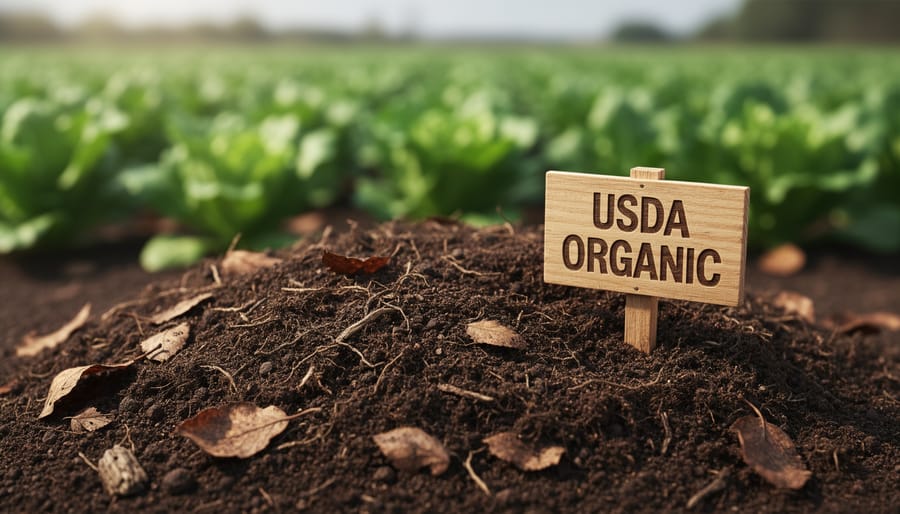
Farmer's hands holding dark organic soil with visible earthworms and organic matter
Healthy soil rich in organic matter forms the foundation of USDA organic certification standards.

The Three Pillars of Organic Certification

At the heart of USDA organic certification lie three essential pillars that guide every aspect of organic farming. Understanding these foundations will help you appreciate what goes into maintaining certified organic status on your local CSA farm.

The first pillar focuses on soil health and fertility management. Organic farmers must build and maintain healthy soil using natural methods like composting, cover cropping, and crop rotation. Instead of synthetic fertilizers, they rely on organic matter, beneficial microorganisms, and natural amendments to nourish the soil. This creates a living ecosystem beneath your feet that produces more nutritious, flavorful vegetables season after season.

The second pillar addresses pest and weed control through natural and mechanical methods. Organic farmers get creative here, using techniques like companion planting, biological pest controls, physical barriers, and good old-fashioned hand-weeding. While conventional farms might reach for chemical solutions, organic growers work with nature’s own pest management system. This approach aligns with broader pesticide regulations but goes even further in protecting environmental health.

The third pillar involves strictly prohibited substances and practices. The USDA maintains a detailed list of what organic farmers cannot use, including synthetic pesticides, herbicides, fertilizers, and genetically modified organisms. Farmers must also avoid sewage sludge and ionizing radiation. These restrictions ensure that when you bite into that organic tomato from your CSA box, you know exactly what didn’t go into growing it.

Timeline: From Application to Certification

The journey to USDA organic certification requires patience and planning. Before you can even apply, your farm must complete a three-year transition period where you follow all organic practices without using prohibited substances. This waiting period ensures your soil is genuinely free from synthetic chemicals.

Once your transition period nears completion, you’ll submit your application through a USDA-accredited certifying agent. The application includes detailed information about your growing practices, inputs used, and your farm’s history. Expect to provide field maps, seed sources, and records of everything applied to your land.

After submitting your application, an inspector will visit your farm to verify everything matches your documentation. They’ll walk your fields, review your recordkeeping system, and ask questions about your practices. This might feel similar to food safety compliance inspections if you’re already familiar with those.

The entire certification process typically takes three to six months from application to approval. Annual inspections become part of your routine, ensuring ongoing compliance. Many CSA farmers find that keeping meticulous records year-round makes these inspections straightforward. Remember, your certifier becomes a partner in your organic journey, offering guidance when questions arise about acceptable practices or new products.

SOE Compliance: Your Organic System Plan in Action

Creating Your Farm’s Organic System Plan

Your Organic System Plan (OSP) is the heart of your USDA certification—think of it as your farm’s organic blueprint. This living document tells your certifier exactly how you’ll meet organic standards across every aspect of your operation.

Start with a detailed field history for each growing area. Map out your crop rotation strategy, showing how you’ll build soil health while preventing pest and disease cycles. For CSA farms, this means planning diverse rotations that support your weekly harvest needs while maintaining organic integrity. Include specific planting schedules and succession plans that align with your member deliveries.

Your soil fertility section should outline every amendment you’ll use, from compost recipes to approved fertilizers. Document your composting process thoroughly—what goes in, how you turn it, temperature monitoring, and when it’s ready for application. This level of detail helps certifiers understand your soil-building approach.

The pest management portion requires listing potential challenges and your organic solutions. Include beneficial insect habitat plans, physical barriers like row covers, and any approved botanical sprays you might use as a last resort. CSA farmer Maria Rodriguez from Vermont shares: “My OSP became my teaching tool. When members ask about pest control, I show them exactly what’s in my plan—it builds incredible trust.”

Record-keeping requirements deserve special attention. You’ll need systems for tracking seed purchases, input applications, harvest logs, and sales records. Many CSA farmers use simple spreadsheets or farm management software to stay organized.

Remember, your OSP evolves with your farm. Plan for annual updates reflecting new fields, changed practices, or lessons learned. This flexibility allows your organic system to grow alongside your CSA operation while maintaining compliance.
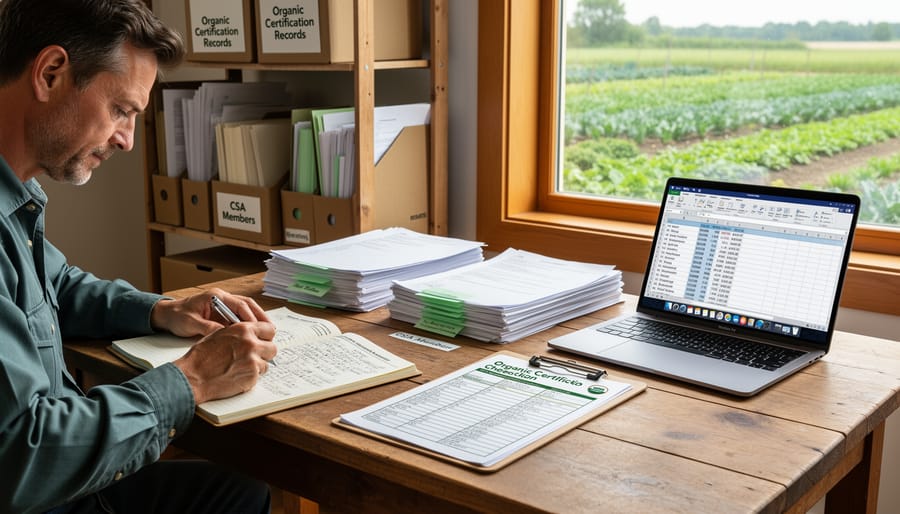
Overhead view of farmer documenting harvest records with fresh vegetables in crates
Detailed record-keeping is essential for maintaining organic certification compliance on CSA farms.

Record-Keeping That Won’t Drive You Crazy

Keeping organic records doesn’t have to feel like drowning in paperwork. The key is building simple habits that capture what you need without consuming your entire day.

Start with a basic field notebook that lives in your pocket or truck. Jot down what you planted, when, and where immediately after doing the work. These quick notes become your official records later. Many farmers find that snapping photos with their phones creates instant documentation for field conditions, planting dates, and input applications.

Create a dedicated filing system, whether digital or physical, with clear categories: seeds and plants purchased, soil amendments, pest management, harvest records, and sales logs. A simple spreadsheet or even a three-ring binder with dividers works perfectly. The goal is knowing exactly where to find documentation when your certifier asks.

For traceability and record-keeping, batch your administrative tasks. Set aside 30 minutes each Friday to transfer field notes into your official log, file receipts, and update your field map. This weekly rhythm prevents the dreaded year-end scramble.

Successful farmer Maria Santos shares her tip: “I keep a camera roll album just for farm records. Every input bag, every planting, every harvest gets a photo with the date stamp. It’s saved me countless times during inspections.”

Remember to save all input receipts and labels, even for approved materials. Store product labels in page protectors for easy reference. Your future self will thank you when certification renewal arrives and everything is already organized and accessible.

Special Considerations for CSA Operations

Managing Multiple Crops and Rotation Requirements

Here’s the good news: the incredible diversity that makes your CSA so appealing to members also helps you meet USDA organic crop rotation requirements. Instead of viewing rotation planning as a burden, CSA farmers can leverage their multi-crop model as a certification advantage.

Organic standards require crop rotation to maintain soil health and disrupt pest cycles, typically avoiding planting the same crop family in the same location for at least two years. With CSAs commonly growing 30 to 50 different varieties across multiple plant families, you’re naturally positioned to meet these requirements while keeping your harvest boxes exciting and varied.

Consider the story of Green Valley Farm, a certified organic CSA in Vermont. Owner Maria Rodriguez tracks her 40-crop rotation using a simple spreadsheet color-coded by plant family. “We rotate brassicas, nightshades, legumes, and root vegetables through different beds each season,” she explains. “Our members love the variety, and it makes our certification audit straightforward.”

The key is maintaining clear records showing which crops grew where each season. Many farmers use field maps, planting logs, or farm management software to document rotations. This documentation serves double duty: satisfying certification requirements while helping you plan future plantings for optimal soil health and member satisfaction.
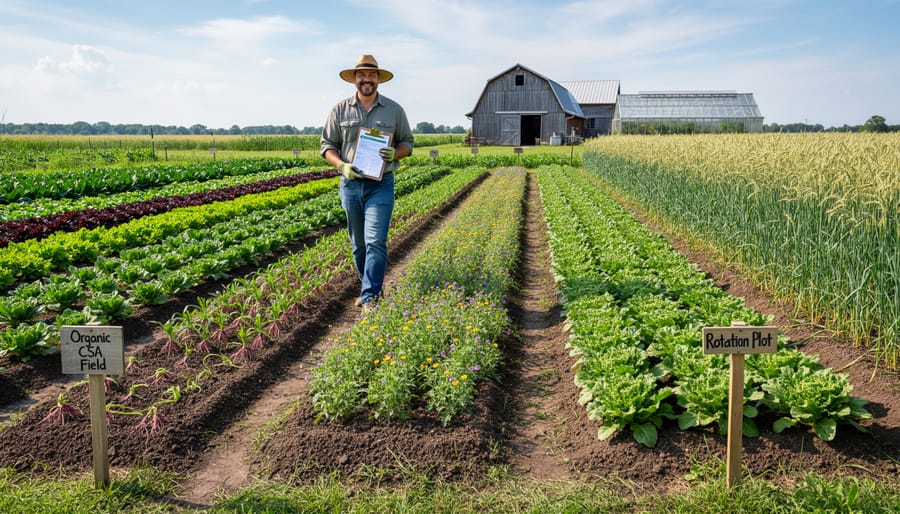
Diverse organic vegetable field showing multiple crop varieties with farmer tending plants
CSA farms benefit from crop diversity when meeting organic certification rotation requirements.

Handling Non-Organic Inputs in a Pinch

Sometimes life throws curveballs, and you might need to source transplants or soil amendments from non-certified suppliers. The good news? USDA organic standards account for this reality. You can use non-organic seedlings if the organic version isn’t commercially available in your area, but you’ll need to document your search efforts. Keep records of calls made, websites checked, and supplier responses. This paper trail proves you made a genuine attempt to source organically first.

For soil amendments during emergencies, like an unexpected pest outbreak, work closely with your certifier before applying anything questionable. They can guide you toward compliant solutions or help document why a specific intervention was necessary. Many experienced CSA farmers maintain relationships with multiple certified suppliers to avoid last-minute scrambles. One Vermont farmer shared how keeping a simple spreadsheet of backup suppliers saved her season when her primary seedling source had crop failure. Remember, transparency with your certifier is key. They’re partners in your success, not obstacles, and early communication prevents compliance headaches down the road while keeping your members’ boxes beautifully full.

Real CSA Farmer Success Stories

Meet Sarah Chen, who runs Willow Creek Farm in Vermont. When Sarah decided to pursue USDA organic certification in 2019, she worried about the paperwork and cost. “I thought certification was only for large operations,” she admits. Her biggest challenge was creating the required Organic System Plan while managing daily farm tasks. Her solution? She dedicated one hour each morning to documentation before field work began, and she connected with other certified farmers through her state’s organic farming association for guidance. After eighteen months, Willow Creek earned certification. Sarah’s advice for aspiring organic CSA farmers: “Start record-keeping early, even before you apply. Track everything from seed sources to compost inputs. It makes the application process so much smoother.”

Meanwhile, in North Carolina, Marcus Thompson of Abundant Harvest Farm faced different hurdles. His farm had been using sustainable practices for years, but transitioning fields that had previously received conventional treatments required patience. “The three-year transition period felt long, but we used that time to build soil health and educate our CSA members about why organic certification mattered,” Marcus explains. He found creative solutions by designating certain fields for immediate organic production while transitioning others gradually. His farm also struggled with organic pest management initially, particularly with cucumber beetles. Through trial and error, Marcus discovered that companion planting and beneficial insect habitat made a significant difference.

Today, both farms credit certification with strengthening customer loyalty and commanding premium prices that offset certification costs. Marcus offers this encouragement: “Don’t let fear of the unknown stop you. Reach out to your state’s organic certifying agency early. They want you to succeed and offer tremendous support throughout the process.”

Common Pitfalls and How to Avoid Them

Buffer Zone Requirements That Catch Farmers Off Guard

One of the most overlooked aspects of USDA organic certification is the buffer zone requirement, which can be a real surprise during your first inspection. Organic operations must maintain adequate separation from conventional fields to prevent prohibited substance contamination through drift or runoff. While the USDA doesn’t specify exact distances, inspectors generally look for 25 to 30 feet as a minimum, though this varies based on your specific situation and risk factors.

For small CSA farms working with limited acreage, this can feel like a significant chunk of productive land. The good news is that creative solutions exist. Many farmers plant hedgerows or windbreaks in their buffer zones, which serve double duty by providing habitat for beneficial insects and pollinators. Others use these areas for tool storage, composting stations, or educational walking paths for CSA member tours.

Take inspiration from Green Valley Farm in Oregon, where owner Maria Chen transformed her buffer zones into berry bushes and perennial flowers. These additions not only satisfied certification requirements but also became popular pick-your-own additions to member shares. The key is documenting your buffer strategy clearly in your organic system plan and demonstrating how it effectively prevents contamination from neighboring properties.

Is Organic Certification Worth It for Your CSA?

Deciding whether to pursue USDA organic certification is one of the biggest choices CSA farmers face. Let’s break down the real costs and benefits to help you make an informed decision.

The financial investment starts with certification fees, which typically range from $500 to $2,000 annually depending on your farm’s size and gross sales. Add inspection costs, recordkeeping systems, and the time required for documentation, and you’re looking at a significant commitment. Some farmers also face transition costs if converting conventional land, which requires a three-year period before certification.

On the flip side, organic certification can substantially boost your market value. Many CSA members willingly pay premium prices for certified organic produce, often 20-40% more than conventional options. This certified status can attract health-conscious consumers who specifically seek out organic food and trust the USDA label’s rigorous standards. The certification also opens doors to additional revenue streams, including accepting government benefits and selling to retailers or restaurants requiring certification.

However, certification isn’t the only path forward. Many smaller CSA operations find success with alternatives like Certified Naturally Grown, a grassroots certification designed specifically for direct-market farmers. CNG follows similar standards but costs significantly less, usually under $200 annually, with peer-review inspections instead of third-party auditors.

Consider Sarah Martinez, who runs a 2-acre CSA in Vermont. She chose CNG initially, building trust with her 40 member families through farm tours and transparency. After five years, her waiting list grew so long that she pursued USDA certification to expand and access wholesale markets. Her advice? Start where your budget allows and grow strategically.

The right choice depends on your farm’s size, target market, and growth goals. If your members value personal relationships and farm visits, they may trust your growing practices without needing official certification. For those planning to scale up or reach broader markets, USDA certification might justify the investment.

Pursuing USDA organic certification for your CSA farm is absolutely achievable with the right approach and resources. While the process requires dedication and attention to detail, thousands of farmers have successfully navigated certification and continue to maintain their organic status year after year. The key is breaking down the requirements into manageable steps and building systems that work for your unique operation.

If you’re considering certification, start by requesting the organic standards documentation and connecting with your local certifying agent for a preliminary consultation. Many offer free initial assessments to help you understand what changes you’ll need to make. Farmers already in transition should focus on meticulous record-keeping and lean on your certifier’s expertise when questions arise. For those maintaining compliance, remember that annual reviews are opportunities to refine your practices and strengthen your organic systems.

The commitment to organic farming extends beyond certification paperwork. It’s an investment in soil health, environmental stewardship, and the trust your CSA members place in you. Every certified organic farm strengthens the movement toward sustainable agriculture and demonstrates that growing food in harmony with nature isn’t just possible, it’s profitable and deeply rewarding. Your journey toward or within organic certification contributes to a healthier food system for everyone.

Why Sustainable Refilleries Are Changing How We Shop for Food

Posted by darrell on
0
Sustainable Consumer Practices
Why Sustainable Refilleries Are Changing How We Shop for Food

Refilleries are revolutionizing how we shop for everyday essentials by eliminating single-use packaging from the equation. Picture walking into a store with your own containers, filling them with grains, oils, household cleaners, and even locally sourced honey, then paying only for what you need. This zero-waste approach mirrors the community-focused values of farm-to-table movements, where knowing your food’s origin matters as much as the packaging it comes in.

The concept is refreshingly simple: bring reusable jars, bottles, or bags to a refillery, weigh them empty, fill them with bulk products, and pay by weight. Many refilleries partner with local farms and producers to stock organic grains, dried beans, nut butters, and seasonal produce, creating a direct connection between sustainable agriculture and conscious consumption. You’re not just reducing plastic waste; you’re supporting small-scale farmers who prioritize soil health and biodiversity.

What makes refilleries particularly powerful is their ability to transform routine shopping into an act of environmental stewardship. Every refill prevents another container from entering landfills or oceans, while building resilient local food systems that benefit farmers, communities, and the planet simultaneously.

What Is a Sustainable Refillery?

The Refill Model Explained

The refill model is beautifully simple and puts you in control of reducing waste. Here’s how it works: bring your own clean containers from home—mason jars, cloth bags, or any reusable container works perfectly. When you arrive at the refillery, you’ll first weigh your empty container at the designated station. This “tare weight” gets noted so you only pay for the product itself, not the container.

Next comes the fun part: filling up! Browse the selection of bulk items, from organic grains and dried beans to cleaning supplies and personal care products. Use the dispensers or scoops to fill your container with exactly the amount you need—no more, no less. This means zero food waste and complete portion control.

Finally, weigh your filled container again. The staff subtracts the tare weight and charges you only for the product. Many refilleries price items per pound or ounce, making it easy to budget and buy precisely what you need. The entire process eliminates single-use packaging while supporting local sustainable businesses and reducing your environmental footprint with every visit.

Hands filling reusable glass jar with dried lentils from bulk dispenser at sustainable refillery
Customers bring their own containers to fill with bulk items, eliminating single-use packaging waste.

Beyond the Bulk Bins

Today’s refilleries have evolved far beyond bulk bins of grains and beans. Many now showcase an impressive array of locally sourced treasures that connect you directly to regional farmers and producers. Imagine filling your containers with cold-pressed olive oil from a nearby grove, raw honey harvested just miles away, or fresh-ground nut butters made from local almonds and peanuts. Some refilleries partner with community farms to offer seasonal produce, farm-fresh eggs, and even artisanal dairy products. This expanded selection transforms your shopping trip into a journey through your local food landscape. By choosing these options, you’re not only eliminating packaging waste but also supporting small-scale farmers who prioritize sustainable growing practices. Each refill becomes an opportunity to taste the difference that local, seasonal eating makes while building resilience in your community’s food system.

How Refilleries Support Local Farms and Food Systems

Creating Direct Farm-to-Consumer Connections

Refilleries are revolutionizing local food sourcing by creating direct partnerships with nearby farms. Instead of sourcing products through traditional distributors, these zero-waste stores work hand-in-hand with local producers to stock bulk items like grains, legumes, honey, dried fruits, and seasonal produce. This farm-to-shelf approach eliminates multiple middlemen, ensuring farmers receive fair prices while customers enjoy fresher products at competitive rates.

Take Sarah’s organic grain farm in Ontario, for example. By partnering with three local refilleries, she increased her income by 40% compared to selling through conventional channels. Customers can now scoop her heritage wheat, oats, and barley directly into reusable containers, knowing exactly where their food comes from.

These partnerships strengthen community food systems while reducing transportation emissions and packaging waste. Many refilleries display information about their farming partners, including growing practices and harvest dates, fostering transparency and trust. For consumers, this means access to traceable, often organic products while directly supporting the hardworking farmers who grow their food. It’s a win-win arrangement that keeps dollars circulating within local communities.

Farmer and refillery owner meeting in store with local farm products displayed on shelves
Direct partnerships between refilleries and local farms create stronger community food networks and support small-scale producers.

Supporting Small-Scale Organic Producers

Refilleries create meaningful partnerships with small-scale organic producers who might otherwise struggle to reach retail customers. Take Meadowbrook Farm in Vermont, where farmer Sarah Chen started supplying her herb-infused vinegars and raw honey to a local refillery. Within six months, her products reached 200 households without the need for expensive individual packaging or complicated distribution networks.

These partnerships work beautifully because refilleries handle the logistics of storage, dispensing, and customer education while farmers focus on what they do best: growing quality organic products. Small producers can test new items like flavored oils, fermented foods, or specialty grains with minimal upfront investment. If a product doesn’t sell well, there’s no waste from unused packaging materials.

The model also helps beginning farmers establish steady income streams. Many refilleries commit to purchasing set quantities throughout the season, providing financial predictability that’s often missing in farmers market sales alone. This stability allows producers to reinvest in soil health, expand certified organic acreage, and experiment with regenerative growing practices. For customers, it means accessing truly local products while supporting the people growing their food sustainably.

Environmental Benefits That Go Beyond Reducing Plastic

The True Cost of Single-Use Packaging

Every year, North Americans generate over 35 million tons of plastic packaging waste, with single-use containers making up a staggering portion of what ends up in our landfills and oceans. To put this in perspective, that’s like filling an entire garbage truck every minute. The average household throws away approximately 70 pounds of plastic packaging annually, much of it from food and personal care products.

These containers don’t just disappear. Most take 400-1,000 years to decompose, releasing harmful chemicals into our soil and waterways along the way. When we consider that only 9% of plastic ever produced has been recycled, the picture becomes clearer: our convenience comes at a steep environmental price.

Here’s where reducing packaging waste through refilleries makes real impact. By choosing reusable containers over single-use packaging, one person can eliminate hundreds of plastic bottles, jars, and bags each year. This shift doesn’t just reduce waste, it cuts down the energy and resources needed to produce new packaging. Small changes in how we shop create ripples that benefit our communities and planet for generations to come.

Shorter Supply Chains Mean Lower Carbon Footprints

One of the most compelling environmental benefits of shopping at a refillery is the dramatic reduction in transportation emissions. When refilleries partner with local farmers and producers, your food travels dozens of miles instead of thousands. Think about it: conventional grocery items often journey across continents, burning fossil fuels every step of the way. A tomato from California to New York logs about 3,000 miles, while your local refillery’s tomatoes might travel just 30 miles from a nearby farm.

These shorter supply chains mean dramatically lower carbon footprints. Food miles matter because transportation accounts for a significant portion of our food system’s greenhouse gas emissions. By sourcing seasonally from regional growers, refilleries eliminate the need for long-haul trucking, air freight, and refrigerated storage.

Here’s a practical tip: ask your refillery which local farms they work with. Many proudly display maps showing their supplier radius, often within 100 miles. Supporting these businesses creates a ripple effect—encouraging more farmers to sell locally and further reducing our collective environmental impact. It’s a simple choice that makes a measurable difference in fighting climate change while enjoying fresher, more nutritious food.

Starting Your Refillery Journey: A Practical Guide

What to Bring and How to Prepare

Your first refillery visit is easier than you might think! Start by gathering clean, dry containers from home—mason jars, glass bottles, cloth bags, and food-safe plastic containers all work perfectly. Don’t worry if your collection is mismatched; refilleries welcome any reusable container.

Before heading out, give your containers a quick wash and let them dry completely. Most refilleries will weigh your empty containers first, then you fill them with products, and pay based on the weight of just the contents. It’s that simple!

First-timers should know that staff members are genuinely excited to help you navigate the space. Don’t hesitate to ask questions about products, container sizes, or the weighing process. Many refilleries offer a starter selection of containers for purchase if you need them.

Consider bringing a shopping list and start small with a few staple items like grains, beans, or cleaning supplies. This helps you get comfortable with the process without feeling overwhelmed. Remember, every refill—no matter how small—makes a positive environmental impact. Local farmer Maria from Green Valley Farm shares, “Switching to refillery shopping reduced our farm store’s packaging waste by 60 percent while strengthening our community connections.”

Best Products to Start With

Starting your refillery journey doesn’t have to be overwhelming. Begin with pantry staples you already use regularly in your kitchen. Dry goods like rice, quinoa, oats, and lentils are perfect first choices since they’re easy to measure, transport in reusable containers, and store at home. Flour, sugar, and various beans are also excellent beginner options that keep well and integrate seamlessly into everyday cooking.

Once you’re comfortable with dry goods, expand to cooking oils, honey, maple syrup, and nut butters. These items significantly reduce single-use plastic waste while supporting local producers. Many refilleries also stock cleaning products and personal care items, making them ideal for extending your zero-waste cooking practices beyond food preparation.

Choose products you use frequently to maximize your environmental impact and create lasting sustainable habits in your home.

Finding Refilleries Near Your CSA or Farmers Market

Finding a refillery near your CSA pickup location or farmers market is easier than you might think. These eco-conscious businesses often pop up in the same neighborhoods that support local food systems, creating convenient hubs for sustainable shopping. Start by searching online directories like Litterless or Zero Waste Near Me, or simply ask your CSA coordinator and fellow members for recommendations. Many farmers markets now host refillery vendors alongside produce stands, letting you stock up on pantry staples, cleaning products, and personal care items in one trip.

Don’t overlook natural food co-ops and independent grocery stores, which increasingly offer bulk refill stations. Sarah Chen, who runs an organic vegetable farm in Vermont, discovered that partnering with a nearby refillery helped her customers adopt a more holistic zero-waste lifestyle. She now keeps reusable containers at her farm stand for members who want to refill cleaning supplies after picking up their weekly harvest, proving that local food communities naturally embrace these sustainable solutions.

Return Programs: Closing the Loop on Food Packaging

How Return Programs Work in Practice

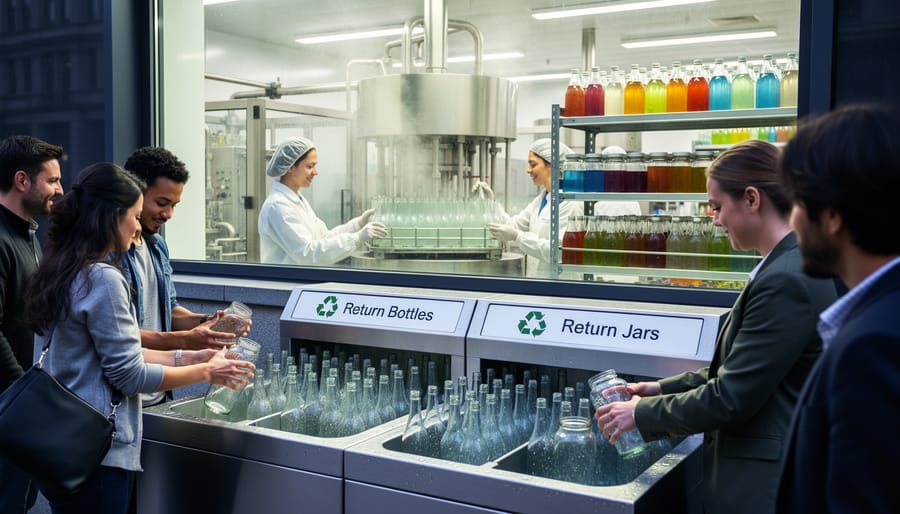
The deposit-return system is beautifully simple and helps close the loop on packaging waste. Here’s how it typically works: When you purchase items like milk, yogurt, or specialty sauces from participating farms and producers, you pay a small deposit on each glass container, usually between $1 to $3. Keep those jars and bottles safe at home, then bring them back on your next shopping trip or delivery day.

The producer collects the empties, sanitizes them according to food safety standards, and refills them with fresh products. Once you return your containers, you receive your deposit back, often as credit toward your next purchase. Many local dairies have perfected this system over generations. Take Green Valley Dairy, whose founder shares that their bottle return rate hits 95 percent because customers love the nostalgia and environmental impact of reusable glass bottles.

Some farms make returns even easier by collecting containers during regular delivery routes or at farmers market booths. The key is keeping containers clean and returning them promptly so they can get back into circulation. This simple practice significantly reduces single-use packaging while strengthening the connection between you and your local food producers.

Collection of clean reusable glass containers and jars arranged for return program
Container return programs allow bottles and jars to be sterilized and reused multiple times, closing the loop on packaging waste.

Success Stories from Local Farms

Green Valley Cooperative in Vermont has transformed their dairy operation by partnering with local refilleries to distribute milk, yogurt, and cream in returnable glass containers. Since launching their return program two years ago, they’ve eliminated over 50,000 single-use plastic containers from their distribution chain. Farmer Sarah Mitchell explains their success: “Customers love the nostalgic feel of glass bottles, and we’ve seen a 30% increase in repeat purchases. The deposit system ensures a 95% return rate, and we simply sanitize and refill.” The cooperative now saves $8,000 annually on packaging costs while building stronger relationships with customers who appreciate knowing exactly where their food comes from and how it’s packaged sustainably.

Making Refilleries Work in Your Community

Talk to Your Local CSA or Farm Stand

Your local CSA or farm stand might be closer to offering refill options than you think! Many farmers are already passionate about reducing waste and would welcome the conversation. Start by asking if they’d consider accepting clean containers for items like honey, maple syrup, grains, or dried beans. You could say something like, “I’m trying to reduce my packaging waste. Would you be open to filling my own containers?” Most farmers appreciate customer feedback and are part of broader community food networks where sustainable ideas spread quickly. If enough customers express interest, you might inspire a whole new service. Bring clean glass jars or cloth bags on your next visit and gauge their response. Remember, farmers are innovators at heart, and your request could spark the next step in their sustainability journey.

Starting Small: DIY Community Refill Initiatives

You don’t need a storefront to start making a difference! Community-based refill initiatives are sprouting up everywhere, bringing zero-waste shopping closer to home. Consider organizing a neighborhood buying club where members pool orders for bulk staples like grains, beans, and oils, then divide them into personal containers during monthly meetups.

Co-op refill programs work beautifully in community gardens or farmer’s markets. Local growers we’ve spoken with have successfully partnered with neighbors to offer weekly refills of honey, maple syrup, or pantry essentials alongside their fresh produce. One farmer in Vermont started small, offering just olive oil and vinegar refills at market, and now serves 50 regular customers.

Start by connecting with like-minded friends, reach out to local farms about sourcing products in bulk, and designate a regular pickup spot. Even a garage or community center works! These grassroots efforts build strong local food networks while dramatically cutting packaging waste. The key is starting simple and growing organically as your community embraces the refill mindset.

Every time you choose a refillery or participate in a return program, you’re casting a vote for the kind of food system you want to see flourish. These simple acts ripple outward, supporting the organic farmers who nurture your soil, reducing waste that burdens our environment, and strengthening the local economy right in your community. The beauty of this movement is that it doesn’t require perfection. Start small: bring one jar to your next refillery visit, return those glass bottles, or ask your local CSA about their container programs.

Across the country, farmers and entrepreneurs are reimagining how we access wholesome food without the packaging waste. From the small-town refillery partnering with nearby organic growers to the urban farm offering bottle deposits, these pioneers are proving that convenient and sustainable can go hand in hand. Their success stories remind us that change happens one reusable container at a time. By embracing refilleries and return programs, you’re not just reducing your environmental footprint—you’re becoming part of a growing community committed to waste-free living and thriving local farms. Your choices matter, and together, we’re building a more sustainable future, one refill at a time.