Monthly Archives

33 Articles

Cover Cropping Secrets That Transform Tired CSA Soil Into Rich, Living Earth

Posted by darrell on
0
Organic Farming and Cultivation
Cover Cropping Secrets That Transform Tired CSA Soil Into Rich, Living Earth

Plant cover crops in rotation windows between cash crops—even a 30-day window of buckwheat or mustard adds organic matter and prevents erosion. CSA farmers often squeeze in quick-growing varieties like oats or field peas after spring harvests or before fall plantings, building soil structure without sacrificing production time.

Select species based on your specific soil needs. Legumes like clover and vetch fix atmospheric nitrogen, reducing fertilizer costs by up to 50 pounds per acre. Deep-rooted daikon radishes break through compacted layers that restrict water infiltration, while cereal rye suppresses weeds and scavenges leftover nutrients before they leach away. Mix three to five species together for maximum benefit—diversity feeds different soil microbes and provides insurance against crop failure.

Time termination strategically to maximize soil benefits. Mow or crimp cover crops at flowering stage when biomass peaks but before seed set. This timing releases nutrients gradually as residue decomposes, feeding your next crop exactly when it needs nutrition. Wait 10-14 days after termination before planting to avoid allelopathic effects that can slow germination.

The transformation happens faster than you’d expect. Hannah, a second-year CSA farmer in Vermont, noticed earthworm populations triple within one season of adding hairy vetch to her rotation. Her tomato yields increased 20% the following year—proof that cover cropping delivers measurable returns even on small-scale operations. The investment is minimal: seed costs range from 15 to 40 dollars per acre, and the equipment needed is often already in your tool shed.

Why Your CSA Farm’s Soil Health Depends on Cover Crops

If you’ve ever walked through your CSA farm after harvest and seen bare soil stretching between plots, you’re witnessing a silent crisis unfolding beneath your feet. That exposed earth isn’t resting—it’s losing the very life force that makes productive farming possible.

When soil sits naked between growing seasons, rain literally washes away your farm’s fertility. Each downpour carries off precious topsoil, nitrogen, and organic matter that took years to build. Wind erosion compounds the problem, especially in drier months. But the damage goes deeper than what you can see.

Bare soil quickly loses its structure as earthworms retreat to lower depths and beneficial fungi networks collapse without living roots to feed them. The microscopic universe of bacteria, fungi, and other organisms that transform organic matter into plant-available nutrients essentially goes dormant—or worse, dies off entirely. Meanwhile, soil temperatures swing wildly without plant cover, further stressing these beneficial microbes.

For CSA farmers, this creates a vicious cycle. You’re running intensive production schedules, pushing beds hard to meet member demand week after week. Your soil needs to perform at peak capacity for multiple successions throughout the season. Without the regenerative power of cover crops, each planting cycle depletes your soil’s reserves a bit more, leading to decreased yields, increased pest pressure, and higher fertilizer costs.

Cover crops break this cycle by keeping living roots in the soil year-round. They capture and hold nutrients that would otherwise leach away, feed soil biology through root exudates, and physically protect your topsoil from erosion. When combined with thoughtful crop rotation strategies, cover cropping becomes the foundation of soil health management.

Think of cover crops as a biological insurance policy for your farm’s future productivity. The investment you make in seeds and management time today multiplies into healthier, more resilient soil that can sustain the intensive demands of CSA production season after season.

Dense cover crop field with mixed species of green vegetation
A thriving multi-species cover crop demonstrates the protective living cover that prevents soil depletion between cash crop seasons.

The Big Three: Cover Crop Categories Every CSA Farmer Should Know

Legumes: Nature’s Nitrogen Factories

Legumes are truly remarkable cover crops, acting as natural fertilizer factories right in your soil. Plants like crimson clover, hairy vetch, and field peas form special partnerships with bacteria in their root nodules, capturing atmospheric nitrogen and converting it into a form plants can use. This process, called nitrogen fixation, can add 40-150 pounds of nitrogen per acre to your soil, significantly reducing your fertilizer costs.

When you terminate legume cover crops and incorporate them into the soil, they release this stored nitrogen gradually, feeding your cash crops throughout the growing season. This is essential for building healthy organic soil while maintaining the nutrient density your CSA members expect.

Red clover works wonderfully in rotation systems, while Austrian winter peas tolerate cold temperatures and establish quickly. Many CSA farmers interseed legumes between crop rows or plant them immediately after early harvests to maximize their nitrogen-fixing window. The beauty of legumes is their dual purpose: they feed your soil while suppressing weeds and improving soil structure. Start small with a legume mix suited to your climate, and watch your soil fertility improve naturally season after season.

Close-up of legume plant roots showing nitrogen-fixing nodules in dark soil
Nitrogen-fixing nodules on legume roots capture atmospheric nitrogen and convert it into plant-available nutrients.

Grasses: Building Soil Structure from the Ground Up

Grasses are the workhorses of cover cropping, building soil structure with their dense, fibrous root systems. Winter rye, cereal rye, oats, and annual ryegrass are particularly valuable for CSA operations because they establish quickly and work tirelessly beneath the surface.

These grass cover crops develop extensive networks of fine roots that penetrate deep into the soil, creating channels that improve water infiltration and aeration. When these roots decompose, they leave behind organic matter that feeds beneficial microorganisms and creates stable soil aggregates. This natural process is like installing tiny plumbing systems throughout your beds, preventing compaction and enhancing drainage.

Winter rye stands out as a champion erosion fighter, growing vigorously even in cold weather while holding precious topsoil in place during heavy rains. Oats provide quick biomass in shorter windows between crops, and annual ryegrass excels at scavenging excess nutrients that might otherwise leach away.

Sarah Martinez, a CSA farmer in Oregon, saw dramatic improvements after incorporating cereal rye into her rotation. “Our clay soil went from rock-hard to workable in just two seasons,” she shares. “The difference in our spring lettuce beds was incredible.”

For best results, broadcast grass seeds six to eight weeks before your first frost, giving them time to establish strong root systems before winter.

Brassicas: The Soil Renovators

Brassicas are the heavy lifters of the cover crop world, offering multiple benefits that make them favorites among CSA farmers. Daikon radish, with its impressive taproot that can penetrate up to three feet deep, acts like a natural plow, breaking through hardpan and creating channels for water infiltration and future crop roots to follow. Mustard varieties, including yellow and brown mustard, grow quickly and produce dense canopies that outcompete weeds before they can establish.

What sets brassicas apart is their unique biofumigation capability. When you till or crimp these plants, they release compounds called glucosinolates, which break down into natural fumigants that suppress soil-borne diseases, nematodes, and weed seeds. Think of it as nature’s pest control system working underground while improving soil structure above.

Sarah Chen, who runs a quarter-acre CSA in Oregon, swears by her fall-planted daikon radish. “After just one season, I noticed my clay soil was noticeably easier to work,” she shares. “Plus, the radishes winter-killed naturally, leaving perfect planting holes for my spring crops with zero tillage needed.”

For best results, plant brassica cover crops in late summer or early fall between production cycles. They grow rapidly in cool weather, making them ideal for short windows in busy CSA schedules. Tillage radishes work particularly well in compacted areas, while mustards excel at weed suppression in fields you’re preparing for the following season. These crops typically need 60-90 days of growth before termination to maximize their soil-improving benefits.

Strategic Timing: When to Plant Cover Crops on Your CSA Schedule

Between-Season Planting for Maximum Impact

Timing is everything when it comes to cover cropping around your main harvest schedules. The sweet spots? Those transition periods between your spring and fall vegetable plantings.

Your spring window typically opens after fall crops are cleared, usually from late August through October. This is prime time for planting winter-hardy covers like crimson clover, hairy vetch, or cereal rye. These workhorses will establish roots before cold weather hits, then jump back into growth come spring, building organic matter while your beds rest.

The fall opportunity arrives after spring crops wrap up, roughly May through early July. Quick-growing options like buckwheat, oats, or sorghum-sudangrass thrive here, providing weed suppression and soil coverage before your fall plantings begin.

Sarah Martinez, who runs a thriving CSA in Vermont, strategically plants oats and field peas immediately after harvesting spring greens. “Within six weeks, I’ve got lush growth to turn under before planting fall brassicas. My soil stays protected, and I’m actually building fertility instead of just mining it,” she shares.

The key is planning your crop rotations with these windows in mind, treating cover crops as essential teammates rather than afterthoughts in your growing system.

Interseeding and Undersowing Techniques

Want to keep your soil covered year-round without taking a break from production? Interseeding and undersowing are game-changing techniques that let you establish cover crops right alongside your cash crops.

Interseeding involves planting cover crops between rows of standing cash crops, typically when the main crop is about halfway to maturity. For example, you might broadcast red clover or annual ryegrass between corn rows in mid-summer. This gives the cover crop a head start while your cash crop finishes up. The key is choosing low-growing species that won’t compete aggressively for light and nutrients.

Undersowing takes a similar approach but involves seeding cover crops earlier in the cash crop’s life cycle. Many CSA farmers have found success undersowing white clover beneath brassicas or planting hairy vetch under tomatoes. The cover crop grows slowly in the shade until harvest, then takes off once the canopy opens up.

Sarah from Green Valley Farm shares her experience: “I started undersowing crimson clover in my squash patches three years ago. The clover barely grows while the squash dominates, but after harvest, it explodes with growth and fixes nitrogen all fall. It’s like getting two crops from one planting window.”

These techniques maximize your growing season while building soil health continuously.

Short-Season Options for Tight Schedules

When you’ve got just a few weeks between harvests, fast-growing cover crops can still deliver impressive soil benefits. Oats are a CSA favorite, establishing quickly in fall and winter-killing in cold climates, leaving a soft mulch that’s easy to work into spring beds. Buckwheat shines in summer gaps, maturing in just 30-45 days while suppressing weeds and attracting beneficial pollinators.

Field peas and oilseed radish make excellent 60-day options, with radishes breaking up compacted soil layers while peas add nitrogen. Minnesota farmer Sara Chen discovered that planting oilseed radish between her tomato and garlic crops transformed her heaviest clay sections into workable soil within two seasons.

For ultra-tight windows of 3-4 weeks, try annual ryegrass or mustards. These quick performers protect bare soil from erosion and add organic matter even in brief intervals. The key is matching your cover crop to your available days and letting it work its magic, however short the window.

Cover Crop Cocktails: Mixing Species for Multiplied Benefits

Simple Three-Way Mixes That Work

You don’t need a dozen species to build healthy soil. These simple three-way mixes have proven themselves on working CSA farms across different growing seasons.

For fall nitrogen building after summer crops, try oats, field peas, and tillage radish. The oats provide quick biomass and prevent erosion, field peas fix nitrogen for next season’s heavy feeders, and tillage radish breaks up compaction while scavenging nutrients. This combination winterkills in most climates, making spring prep easier. At Green Meadow Farm in Vermont, owner Maria Chen saw a 40% reduction in spring fertilizer needs after using this mix for just two seasons.

Need serious weed suppression between crop rotations? Combine buckwheat, sudangrass, and cowpeas during warm months. Buckwheat establishes rapidly and shades out early weeds, sudangrass creates dense top growth, and cowpeas add nitrogen while their roots improve soil structure. This mix thrives in heat and outcompetes most summer weeds without herbicides.

For early spring planting before warm-season crops, mix winter rye, crimson clover, and hairy vetch. The rye provides immediate ground cover and weed control, while both legumes fix substantial nitrogen. Cut this mix at flowering for maximum nutrient release.

Start with one mix that matches your biggest soil challenge. Keep notes on establishment speed and termination ease. Success with cover cropping often comes from doing one thing consistently rather than experimenting with complex combinations. These proven trios give you results without overwhelming your already busy CSA schedule.

Adjusting Your Mix for Your Soil’s Specific Needs

Your soil is unique, so your cover crop mix should be too! Start with a soil test to identify what your ground needs most. Low nitrogen? Prioritize legumes like clover or vetch. Compaction issues? Deep-rooted species like daikon radish can break up hard layers naturally.

Consider your specific challenges when building your blend. If you’re battling weeds, fast-growing buckwheat or rye can outcompete them. For erosion-prone areas, fibrous-rooted grasses provide excellent soil holding power. Dealing with pests? Certain brassicas release compounds that suppress soil-borne diseases.

Take inspiration from Maria, a third-year CSA farmer in Vermont, who customized her mix after her soil test revealed low organic matter and poor drainage. She combined oats for quick biomass, red clover for nitrogen, and radishes to improve drainage. Within two seasons, she saw a 15 percent increase in organic matter and noticeably better water infiltration.

Don’t feel overwhelmed by creating the perfect mix immediately. Start simple with two or three species addressing your top concerns, then adjust based on results. Keep notes on what works, and remember that soil improvement is a gradual journey worth celebrating with each small victory.

Termination Methods That Protect Your Organic Status

Mowing and Crimping: Low-Tech Solutions

When you’re ready to terminate your cover crops without herbicides, mechanical methods offer effective, organic-approved solutions. Mowing is the simplest approach—just cut the plants down with a mower or scythe before they set seed. This works well for young, tender crops but may require multiple passes as plants try to regrow.

For a more permanent solution, roller-crimpers are game-changers. These heavy rollers flatten and crimp plant stems, creating a thick mat of residue that suppresses weeds while decomposing to feed your soil. The key is timing: you’ll want to crimp when cover crops reach the flowering stage, particularly during early bloom. At this point, plants are mature enough that they won’t regrow, yet they haven’t put all their energy into seed production.

Many CSA farmers love roller-crimpers for crops like cereal rye and vetch. Maria from Green Valley Farm found that crimping her rye-vetch mix in late spring created the perfect mulch for transplanting tomatoes directly into the residue—no tilling required! She saved hours of labor while building organic matter.

If you don’t have a tractor-mounted crimper, you can achieve similar results with a smaller walk-behind model or even a barrel filled with water, though larger operations benefit most from investing in proper equipment.

Farmer using roller-crimper to terminate cover crop in agricultural field
Roller-crimping terminates cover crops mechanically while creating a protective mulch layer for the next planting.

Tillage Incorporation: When and How

When you’re ready to incorporate your cover crops, timing and technique matter significantly for protecting soil structure. The ideal moment is typically when cover crops reach peak biomass but before they set seed—usually in early spring for winter-sown crops or fall for summer varieties.

Shallow tillage works best for incorporation, disturbing only the top 4-6 inches of soil. Use tools like a flail mower followed by a shallow disk, or consider a roller-crimper that lays crops flat without turning soil. This approach preserves beneficial fungi networks and soil aggregates that deeper tillage destroys. For CSA farmers managing tight planting schedules, mow the cover crop close to the ground, let it wilt for a few days, then incorporate lightly about two weeks before planting. This allows partial decomposition while providing a nitrogen boost to your cash crops.

Alternatively, explore no-till methods where you simply mow and leave residue as mulch—perfect for pathways and less intensively managed beds. Local CSA farmer Maria Chen shares: “Switching to shallow incorporation cut my soil compaction issues dramatically while still giving me clean planting beds when needed.”

Winter-Kill Species: Let Nature Do the Work

Looking for a low-effort way to prep your beds for spring planting? Winter-kill cover crops are your secret weapon. These smart plants, like oats, field peas, and forage radishes, grow vigorously through fall, protecting and nourishing your soil, then naturally die back when winter temperatures arrive.

The beauty of this approach is simple: by spring, you’ll find a ready-made mulch layer blanketing your beds. No need for tilling or mowing. This organic material suppresses early weeds, retains moisture, and slowly feeds nutrients back into the soil as it decomposes. Oats work wonderfully in most climates, typically dying around 20°F, while daikon radishes break up compaction with their deep taproots before winter takes them out.

One CSA farmer in Pennsylvania shares that switching to winter-kill species saved her countless spring hours while improving her soil structure. “It’s like nature does my bed prep while I focus on planning,” she says. For beginners, start with a simple oat planting in late summer for effortless spring results.

Real Results: A CSA Farmer’s Cover Crop Transformation

When Maria Rodriguez took over her family’s 5-acre CSA farm in Vermont, she inherited depleted soil that struggled to support healthy crops. After three years of implementing a strategic cover cropping program, her operation has completely transformed.

Maria started small, experimenting with winter rye on a quarter-acre plot after her fall harvest. “I was skeptical at first,” she admits, “but the difference was impossible to ignore.” That test plot showed a 35% increase in organic matter within just two growing seasons. Encouraged by these results, she expanded her cover cropping to include a diverse mix of crimson clover, hairy vetch, and oats throughout her entire operation.

The measurable improvements speak for themselves. Soil tests now show a 2.8% organic matter content, up from 1.6% when she began. Her tomato yields increased by 40%, and she’s reduced her fertilizer costs by nearly $1,200 annually. Even better, her soil now drains properly after heavy rains, eliminating the flooding issues that once plagued her low-lying fields.

Maria integrated these regenerative agriculture practices into her CSA schedule by planting cover crops immediately after harvesting each bed. She terminates them by tarping or light cultivation three weeks before planting, allowing the organic matter to break down. “The key is treating cover crops as an essential crop, not an afterthought,” she explains.

Her biggest lesson? Start simple and scale gradually. “Don’t try to cover crop your entire farm in year one,” Maria advises. “Pick your most problematic area, experiment with different species, and learn what works for your specific conditions.” She also emphasizes the importance of keeping detailed records to track improvements and justify the initial investment of time and seed costs.

Today, Maria’s CSA members rave about the quality of her produce, and her waiting list continues to grow.

Comparison of healthy dark soil and depleted pale soil held in farmer's hands
Soil transformation after implementing a cover cropping program shows dramatic improvements in structure, color, and organic matter content.

Getting Started: Your First Season Cover Crop Action Plan

Ready to dig into cover cropping? Let’s keep it simple and successful for your first season. The key is starting small and choosing forgiving species that work with your schedule.

Begin with a starter species that’s easy to manage and reliable. Annual ryegrass and oats make excellent first-timers for fall planting. They establish quickly, tolerate varying conditions, and are straightforward to terminate. For spring sowings after early harvests, consider buckwheat. It grows fast, suppresses weeds beautifully, and adds organic matter in just six to eight weeks.

Sourcing quality seeds is your next step. Connect with regional seed suppliers who specialize in organic cover crops. Many offer smaller quantities perfect for CSA-scale operations, and they understand your local growing conditions. Order early, especially for fall species, as popular varieties sell out. Budget roughly $30 to $60 per acre for seed, depending on your chosen species and seeding rates.

Set realistic expectations for your inaugural season. You won’t see dramatic soil transformation overnight, but you will notice improvements. Expect better water infiltration, reduced erosion, and easier cultivation in treated areas. Think of cover cropping as a long-term investment rather than a quick fix.

Here’s your action timeline: Two months before planting, identify which beds will finish production early. Six weeks out, order your seeds and confirm your termination method. Three weeks before the target planting date, prepare your seedbed. Then sow at recommended rates and keep the soil moist until germination.

Sarah Chen, who runs Green Valley CSA in Vermont, started with just three beds of winter rye her first year. “I wanted to learn without overwhelming myself,” she shares. “Those three beds showed such improvement that I expanded to covering half my farm the following season. Start where you’re comfortable, observe carefully, and grow from there.”

Remember, every experienced cover cropper started exactly where you are now.

Cover cropping represents one of the smartest investments you can make in your farm’s future. While the upfront costs of seed and your time might seem daunting, the returns through reduced fertilizer needs, improved water retention, and healthier crops make it worthwhile. You’ll notice fewer pest pressures, better soil structure, and more productive growing seasons as your soil ecosystem development gains momentum.

The beauty of cover cropping is that you don’t need to transform your entire operation overnight. Start with a single bed or field section between your main crops. Plant a simple mix like oats and field peas, observe what happens, and learn from the experience. Many successful CSA farmers began exactly this way, gradually expanding their cover cropping program as they gained confidence and saw results.

Even modest efforts create meaningful change. A winter cover crop on just one-quarter of your production area begins building organic matter, protecting against erosion, and supporting beneficial organisms. Each season becomes easier as you develop your own rhythm and preferred species. Your soil will thank you, and your farm’s resilience will grow stronger year after year.

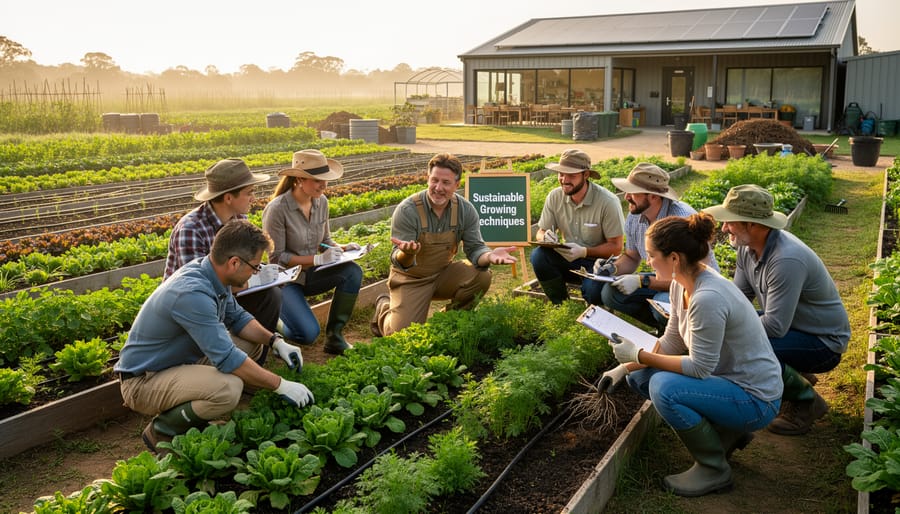
How One Farm’s Career Training Program Is Reshaping the Local Food Economy

Posted by darrell on
0
Business and Economic Impact
How One Farm’s Career Training Program Is Reshaping the Local Food Economy

Growing your own food starts with knowledge, and one local agricultural business is turning that principle into economic opportunity by offering comprehensive career training programs that transform aspiring farmers into skilled professionals. Through hands-on apprenticeships, classroom instruction, and mentorship from experienced growers, trainees learn everything from soil preparation and crop rotation to pest management and direct-to-consumer marketing strategies that make small farms financially viable.

The ripple effects extend far beyond individual careers. When local businesses invest in training the next generation of farmers, they strengthen regional food systems, create living-wage jobs that keep young people in rural communities, and build a more resilient agricultural economy. Each trained farmer who launches their own operation multiplies the impact, supplying fresh produce to neighborhood markets, restaurants, and families who value knowing exactly where their food comes from.

These training programs address a critical gap in modern agriculture. With the average farmer age climbing above 58, the industry desperately needs skilled newcomers who understand both traditional growing methods and innovative sustainable practices. Local businesses providing this education aren’t just filling job openings; they’re preserving agricultural knowledge, revitalizing communities, and empowering people to build meaningful careers that nourish their neighbors while protecting the environment. The investment pays dividends in stronger local economies, healthier communities, and a more secure food future for everyone.

The Growing Demand for Trained Farm Workers

The sustainable agriculture movement has sparked tremendous consumer interest in locally grown, organic produce. Yet behind every thriving farmers market and bustling CSA box pickup, there’s a growing challenge: farms desperately need skilled workers, and they’re struggling to find them.

This labor shortage isn’t just about having extra hands during harvest season. Modern sustainable farms require workers who understand soil health, pest management, crop rotation, and the careful timing that organic growing demands. As more conventional farms transition to regenerative practices and new CSA operations launch to meet consumer demand, the gap between available jobs and qualified candidates continues to widen. These changes are reshaping local labor markets across the country.

Here’s the disconnect: while thousands of people express interest in sustainable food systems and dream of working the land, very few possess the practical skills needed to succeed. Gardening in your backyard differs vastly from managing acres of diverse crops, operating farm equipment safely, or implementing season extension techniques. Without proper training, well-intentioned newcomers often feel overwhelmed and farms lose valuable time and resources.

Career training programs have emerged as the essential bridge between enthusiasm and expertise. These programs offer hands-on experience in real farm settings, teaching everything from seed starting to post-harvest handling. Participants learn alongside experienced farmers, gaining confidence through practical application rather than theory alone.

Consider Sarah, who completed a six-month training program before launching her own market garden. “I thought I knew farming from reading books,” she shares. “But learning proper transplanting techniques and irrigation management changed everything. Now I’m actually profitable in my second season.”

This transformation from curious learner to confident farmer demonstrates why structured training has become indispensable for agriculture’s future.

What Farm-Based Career Training Actually Looks Like

Agricultural trainees working together in vegetable field learning farming techniques
Farm trainees gain hands-on experience in sustainable growing techniques through structured career development programs.

Hands-On Skills Development

The career training program offers comprehensive hands-on experience that transforms beginners into confident farmers. Trainees spend their days in the fields learning essential skills like proper seed selection, soil preparation, and planting techniques for various seasonal crops. Under the guidance of experienced farmers, participants master the art of transplanting seedlings, understanding proper spacing, and creating optimal growing conditions for each plant variety.

Harvesting skills form a crucial part of the curriculum, teaching trainees to identify peak ripeness, use proper cutting techniques, and handle produce gently to maintain quality. The program also covers integrated pest management, where participants learn to identify common pests and diseases while implementing organic solutions like companion planting, beneficial insects, and natural pest deterrents.

Sustainable farming practices weave through every aspect of the training. Participants discover composting methods, crop rotation strategies, water conservation techniques, and soil health management. One graduate, Maria, shares her success story: “I started knowing nothing about farming. Now I manage my own quarter-acre plot, providing fresh vegetables to twenty local families.” This practical, mentorship-based approach ensures trainees gain real-world skills they can immediately apply to their own farming ventures or careers in sustainable agriculture.

Business and Marketing Education

Beyond growing techniques, successful farming requires solid business acumen. Many local agricultural training programs recognize that understanding the entrepreneurial side is crucial for long-term viability. These programs teach aspiring farmers how to develop comprehensive business plans that cover startup costs, seasonal cash flow management, and pricing strategies for different market channels.

Participants learn the essential ingredients for farm success, including how to build lasting customer relationships through effective communication and transparency about growing practices. Training often includes practical modules on operating a Community Supported Agriculture (CSA) program, selling at farmers markets, and navigating wholesale partnerships with restaurants and local retailers.

Understanding local food distribution channels is essential in today’s market. Trainees explore various sales models, from direct-to-consumer approaches to cooperative distribution networks. They also learn basic marketing strategies, including social media promotion, creating compelling farm stories, and engaging with their community. This business education empowers graduates to transform their agricultural passion into sustainable livelihoods while strengthening local food systems and creating economic opportunities within their communities.

Measuring Economic Impact: Beyond the Farm Gate

Direct Economic Benefits

When local farms invest in career training programs, the economic ripple effects are substantial and measurable. Recent economic impact studies show that each trained agricultural worker contributes an average of $35,000 to $50,000 annually in wages to the local economy, money that typically stays within the community through local spending.

Training programs create immediate employment opportunities, with many farms reporting the ability to expand operations by 20-30% after bringing on skilled workers. Take Sarah Chen, who completed a season-long apprenticeship at Green Valley Farm. Within two years, she launched her own organic vegetable operation, now employing three additional workers and serving 85 member families.

The productivity gains are equally impressive. Farms with trained staff report 25-40% increases in crop yields through improved soil management, efficient planting schedules, and reduced crop loss. This translates to more fresh, organic produce available for community members while strengthening food security.

Beyond the farm gate, these trained workers often become educators themselves, sharing sustainable growing techniques with home gardeners and inspiring the next generation of environmental stewards. This knowledge transfer multiplies the economic and environmental benefits throughout the region.

Indirect Community Benefits

The ripple effects of career training in sustainable agriculture extend far beyond the classroom, creating a flourishing ecosystem of local food initiatives. As newly trained farmers launch their own operations, they naturally gravitate toward community gathering spaces like farmers markets, breathing fresh life into these beloved weekend destinations. These markets become more vibrant and diverse, offering shoppers greater variety while strengthening connections between growers and consumers.

The training also sparks an entrepreneurial wave of farm startups throughout the region. Graduates armed with practical knowledge and confidence often begin with small-scale operations, perhaps starting a backyard microgreens business or launching a specialty herb garden. These micro-enterprises might seem modest at first, but they collectively contribute to a more resilient local food system. One inspiring example comes from Maria, who transformed her half-acre plot into a thriving cut-flower farm after completing her training, now supplying three local florists and two farmers markets.

Beyond individual success stories, this training strengthens the entire local food supply chain. Restaurants gain access to reliable sources of fresh, seasonal produce. Food cooperatives expand their local vendor networks. Even school lunch programs benefit from increased availability of farm-fresh ingredients. This interconnected web of producers, distributors, and consumers creates economic stability while reducing our community’s dependence on distant food sources shipped from thousands of miles away.

Success Story: From Trainee to Farm Entrepreneur

When Maria Rodriguez enrolled in the apprenticeship program three years ago, she was working retail and dreaming of a different future. Today, she runs Verde Valley Farm, a thriving 5-acre organic operation that supplies fresh produce to over 80 local families and three restaurants in the community.

Maria’s journey began with an intensive six-month training program that covered everything from soil health and crop rotation to business planning and customer relations. She spent her mornings learning greenhouse management and her afternoons getting hands-on experience in the fields. The program didn’t just teach her how to grow vegetables—it equipped her with real-world skills to launch a sustainable business.

“I learned about companion planting, season extension techniques, and how to build healthy soil without synthetic inputs,” Maria shares. “But what really made the difference was understanding the business side. They taught us pricing strategies, how to connect with customers, and the importance of building relationships within the local food community.”

After completing her training, Maria leased land through a farmland access program and started small with just half an acre of mixed vegetables. Her first season, she served 15 CSA members and generated $12,000 in revenue. By her third year, she’d expanded to 5 acres and increased her annual revenue to $85,000 while creating two full-time positions and seasonal work for local high school students.

Beyond the numbers, Maria’s farm has become a community hub. She hosts monthly farm tours for families, donates surplus produce to the local food pantry, and mentors new trainees from the same program that launched her career. Her success demonstrates how accessible agricultural training can transform individual lives while strengthening local food systems.

“The training gave me confidence and practical knowledge,” Maria reflects. “Now I get to share fresh, organic food with my neighbors while making a living doing something I genuinely love.”

Young farmer selling fresh produce at local farmers market stand
Program graduates apply their business training by launching farm ventures and participating in local food markets.

The Multiplier Effect on Local Food Systems

When a local farm invests in training new farmers, the benefits ripple far beyond individual career development. These trained growers become vital threads in the fabric of local food systems, creating opportunities that strengthen the entire community’s access to fresh, sustainable produce.

Consider the journey of trained farmers like Sarah Martinez, who completed a two-year apprenticeship at Green Valley Farm. Within three years, she was supplying organic vegetables to eight local restaurants, two elementary schools, and running her own thriving CSA program with 75 member families. Her success story isn’t unique. Trained farmers consistently expand market channels that didn’t previously exist, creating new purchasing options for institutions and families alike.

The knowledge transfer continues as these graduates become mentors themselves. They host farm tours, lead workshops on composting and season extension techniques, and provide crucial guidance to the next generation of growers. This creates a self-sustaining cycle of agricultural expertise within the community.

Schools particularly benefit from this multiplier effect. When trained farmers understand food safety protocols and can maintain consistent supply schedules, they become reliable partners for farm-to-school programs. Children gain access to nutrient-dense produce while learning where their food originates.

The economic impact extends to related businesses too. Local seed companies, tool suppliers, farmers’ market organizations, and food hubs all experience increased activity as more trained farmers enter the field. Each new CSA operation creates demand for delivery services, packaging materials, and storage facilities.

This interconnected growth demonstrates how career training in sustainable agriculture doesn’t just create jobs but builds resilient food networks that serve entire regions for generations.

Overflowing harvest box filled with fresh colorful vegetables from local farm
Trained farmers strengthen local food systems by increasing the availability and quality of fresh produce for community members.

Finding Career Training Opportunities in Your Area

If you’re excited about pursuing agricultural career training or want to support farms investing in their workforce, here’s how to get started. Begin by reaching out directly to local farms and CSAs in your area—many offer apprenticeships or internship programs but don’t advertise them widely. Visit farmers markets and farm stands to ask growers about training opportunities they might offer or know about.

When evaluating a program’s quality, look for hands-on learning opportunities that cover diverse farm operations throughout growing seasons. Reputable programs provide clear expectations about work hours, learning outcomes, and any compensation or food shares offered. Ask about mentor availability and whether you’ll gain experience in areas like soil health, crop planning, and sustainable pest management. Programs connected to organic certification bodies or sustainable agriculture organizations often maintain high educational standards.

Don’t overlook resources like your local Cooperative Extension office, agricultural colleges, and community colleges offering beginning farmer courses. Many non-profit farming organizations also maintain directories of training opportunities and can connect you with established farmers willing to mentor newcomers.

As a consumer, you play a vital role in supporting workforce development. Join CSAs that actively train new farmers, spreading awareness about their commitment to education. Purchase produce from farms employing apprentices, knowing your dollars help fund the next generation of sustainable growers. Share success stories of farmers who started as apprentices, inspiring others to explore agricultural careers. Consider volunteering at teaching farms or donating to scholarship funds that make training accessible to diverse communities, strengthening local food systems for everyone.

When local farms invest in career training programs, they’re doing much more than filling immediate job openings. They’re building a foundation for resilient food systems that strengthen our entire community. These programs create ripple effects throughout the local economy, from reduced unemployment to increased spending at neighboring businesses, while nurturing the next generation of agricultural stewards.

The farmers who complete these training programs become ambassadors for sustainable agriculture, carrying forward time-tested practices while bringing fresh innovation to their work. Their success stories demonstrate that investing in people creates lasting value that extends far beyond any single growing season.

As consumers and community members, we have the power to support this vital cycle. Seek out farms that prioritize workforce development and career training. When you purchase from these businesses, you’re not just buying fresh, organic produce. You’re investing in jobs, strengthening local food security, and helping build a more sustainable agricultural future. Consider visiting local farmers markets, joining a CSA program, or simply asking your favorite farm about their training initiatives. Every purchase becomes a vote for the kind of community you want to see thrive.

Why Your Balcony Garden Keeps Failing (And Which Seeds Actually Work)

Posted by darrell on
0
Home and Urban Gardening
Why Your Balcony Garden Keeps Failing (And Which Seeds Actually Work)

Choose compact varieties labeled as “patio,” “dwarf,” or “bush” types when shopping for urban gardening seeds—these are specifically bred to thrive in containers and tight spaces while delivering full-sized harvests. Start with quick-growing, forgiving options like lettuce, radishes, and cherry tomatoes that produce results within 30-60 days, building your confidence before tackling more challenging crops.

Source seeds from local urban farming cooperatives and community seed libraries where varieties have already proven successful in your specific microclimate and growing conditions. Many city-based CSAs offer seed-swap events each spring, connecting you with experienced growers who understand the unique challenges of balancing sunlight, wind exposure, and limited square footage. These connections provide invaluable gardening tips for beginners that generic seed packets simply cannot offer.

Select seeds marketed for vertical growing, succession planting, or cut-and-come-again harvesting to maximize your limited space throughout the season. Look for disease-resistant varieties that can handle the stress of container life, fluctuating moisture levels, and the heat islands common in urban environments. The right seeds transform even the smallest balcony or fire escape into a productive food source, proving that sustainable agriculture starts wherever you have soil, sun, and determination.

The Urban Garden Challenge: Why Location Changes Everything

Urban gardening presents a fascinating puzzle that sets it apart from traditional gardening. When you’re growing in the city, you’re not just dealing with limited square footage—you’re navigating an entirely different ecosystem that dramatically impacts which seeds will thrive and which will struggle.

City environments create what scientists call microclimates, small pockets where temperature, humidity, and light conditions vary wildly from one spot to another. Your balcony might sit in a heat island, where concrete and asphalt absorb and radiate warmth, raising temperatures by 5-10 degrees compared to rural areas. This extra heat can be a blessing for heat-loving plants, but it also means faster soil drying and potential stress on delicate seedlings.

Buildings create their own challenges too. That gorgeous apartment with the east-facing window might seem perfect, but if a neighboring structure casts shadows for most of the day, you’ll need shade-tolerant varieties rather than sun-worshippers. Wind tunnels between tall buildings can batter young plants and dry out containers in hours, making sturdy, compact varieties essential choices.

Container growing, which most urban gardeners rely on, changes the game completely. Roots can’t spread freely to seek nutrients and water, so you’ll want seeds bred for confined spaces with smaller root systems. Mastering urban gardening techniques means understanding these unique limitations.

Air quality matters more than many realize. Pollution particles can settle on leaves and affect photosynthesis, while car exhaust creates acidic conditions. Choosing resilient, fast-growing varieties helps ensure you’ll harvest before these stressors take their toll.

Understanding these urban-specific challenges is the first step toward selecting seeds that won’t just survive, but actually flourish in your city space.

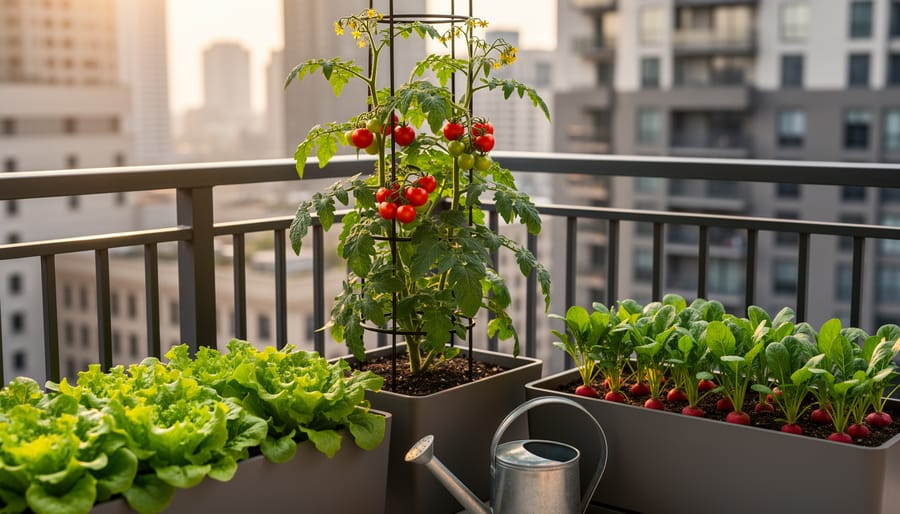
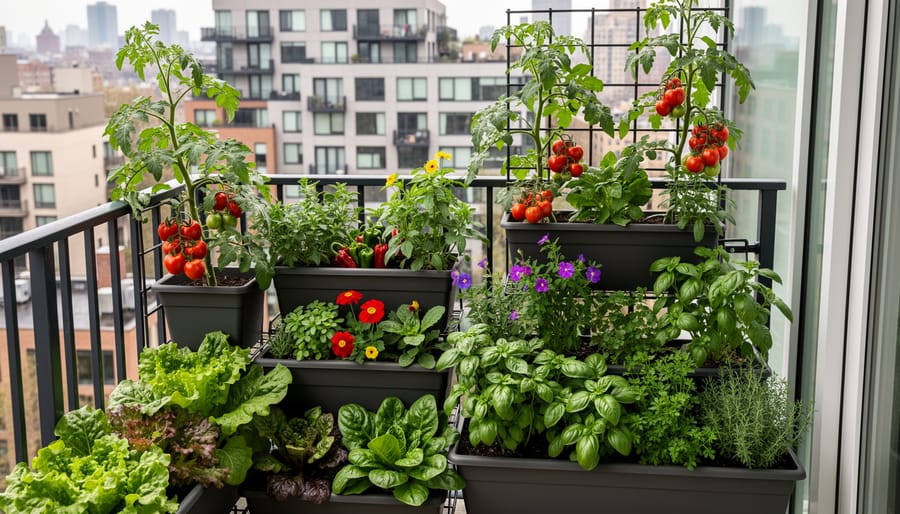
Thriving balcony container garden with vegetables and herbs in urban apartment setting
A successful balcony garden demonstrates how the right seed choices can transform limited urban spaces into productive growing areas.

What Makes a Seed ‘Urban-Friendly’?

Fast-Maturing Varieties

Urban gardeners face unique challenges with shorter growing seasons and limited square footage, making fast-maturing varieties absolutely essential for success. When you’re working with a balcony container garden or small raised bed, every day counts. Fast-growing plants allow you to maximize your harvest window, especially important in regions with unpredictable weather or late spring frosts.

Quick-maturing seeds typically produce harvests within 30-60 days, giving you the flexibility to practice succession planting throughout the season. This means you can sow new crops every two weeks in the same space, ensuring a continuous supply of fresh produce rather than one overwhelming harvest. Lettuce, radishes, and baby greens are perfect examples that can go from seed to salad in under a month.

For urban gardeners juggling busy schedules, faster crops also mean quicker gratification and more opportunities to learn. If something doesn’t work out, you haven’t lost months of effort. You can adjust and try again, building your skills and confidence with each quick cycle. This approach transforms even the smallest urban space into a productive, efficient growing zone.

Compact and Dwarf Cultivars

When space is at a premium, compact and dwarf cultivars become your best friends in the urban garden. These specially bred varieties deliver full-sized flavor in miniaturized packages perfect for balconies, patios, and windowsills.

Bush tomatoes like ‘Patio Princess’ and ‘Tiny Tim’ grow just 12-18 inches tall while still producing abundant cherry tomatoes throughout the season. For peppers, ‘Fairy Tale’ eggplant and ‘Lunchbox’ snack peppers thrive in containers as small as one gallon. These aren’t just smaller plants producing less food—breeders have specifically developed them to maximize yields in confined spaces.

Dwarf varieties excel because they’ve been selected for compact root systems and shorter internodal spacing, meaning more productive growing in less soil volume. Take ‘Spacemaster’ cucumbers, which produce full-sized fruits on vines barely three feet long, or ‘Tom Thumb’ lettuce, forming perfect tennis-ball-sized heads ideal for individual servings.

Urban farmer Maria Chen grows a complete salad garden on her Chicago fire escape using exclusively dwarf varieties. “I harvest enough greens, cherry tomatoes, and mini cucumbers weekly to feed my family of four,” she shares. “The key is choosing varieties bred for containers rather than trying to squeeze standard plants into small pots.”

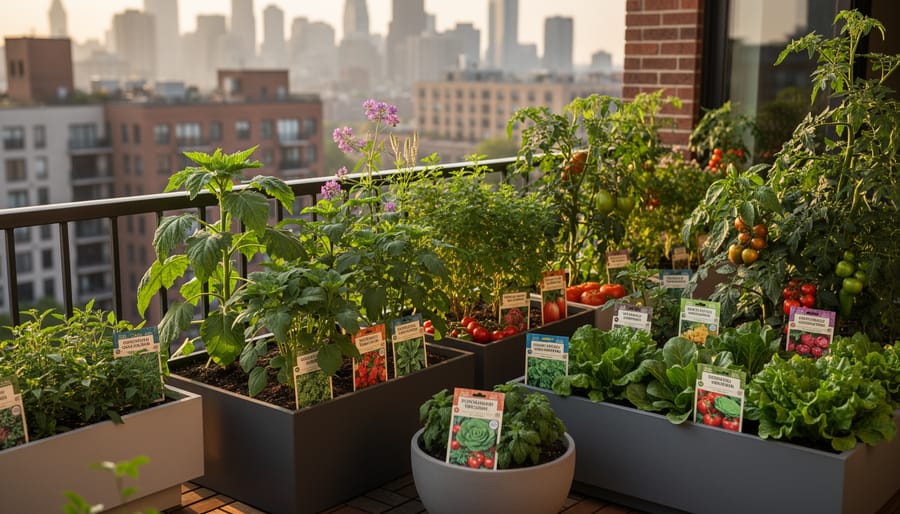
Assortment of vegetable and herb seeds with fresh produce showing successful harvest results
Selecting urban-friendly seed varieties specifically bred for compact growth and container adaptability ensures better harvests in limited spaces.

Top Seed Categories for Urban Garden Success

Leafy Greens and Salad Crops

Leafy greens are perfect starters for urban gardeners because they grow quickly, tolerate partial shade, and thrive in containers as shallow as six inches. These forgiving crops deliver fresh salads right to your windowsill or balcony.

For lettuce, try ‘Tom Thumb’ butterhead, a compact variety that matures in just 50 days and fits beautifully in 6-inch pots. ‘Little Gem’ romaine offers that satisfying crunch in a petite package, while ‘Red Sails’ adds gorgeous burgundy color and resists bolting in warmer conditions. Succession planting every two weeks keeps your salad bowl full all season.

Spinach varieties like ‘Space’ and ‘Baby’s Leaf Hybrid’ were practically designed for containers, producing tender leaves you can start harvesting in three weeks. They appreciate cooler temperatures and actually prefer the partial shade common on urban balconies.

Arugula grows so enthusiastically in tight spaces that one community gardener in Brooklyn reported harvesting from the same 12-inch container for four months straight. The peppery ‘Astro’ variety matures in 38 days and self-seeds readily.

Microgreens deserve special mention for apartment dwellers. Varieties like ‘Red Acre’ cabbage, ‘China Rose’ radish, and mixed salad blends grow from seed to harvest in just 7-14 days on a sunny countertop. They’re nutrient-dense, require minimal space, and provide that instant gratification new gardeners crave while building confidence for bigger growing adventures.

Herbs That Love Small Spaces

Small spaces shouldn’t limit your herb garden ambitions. The beauty of growing herbs in containers is that they’re perfectly happy with cozy quarters, making them ideal companions for your balcony or windowsill.

Basil thrives in sunny spots and rewards you with abundant harvests throughout the growing season. Try Genovese for classic pesto or Thai basil for Asian-inspired dishes. Cilantro grows quickly in cooler weather, though it tends to bolt in heat, so plan accordingly. For a steady supply, practice succession planting by sowing new seeds every two to three weeks from spring through fall.

Parsley, both flat-leaf and curly varieties, tolerates partial shade beautifully and produces for months once established. Thyme is remarkably low-maintenance and drought-tolerant, perfect for those occasional forgotten waterings we all experience in busy urban lives.

The secret to continuous herb harvests is succession planting. Rather than sowing all your seeds at once, stagger your plantings. This ensures you’ll always have fresh herbs ready when older plants decline or get harvested completely. Start new cilantro every two weeks, add a fresh basil container monthly during warm months, and you’ll never run short.

Most herbs need just six hours of sunlight daily and well-draining soil. A south-facing window or sunny balcony corner provides everything these productive little plants need to flourish in your urban garden.

Compact Vegetables

When space is at a premium, compact vegetable varieties become your best friends in urban gardening. These specially bred plants deliver full-sized harvests without overwhelming your balcony or patio.

Bush beans are perfect starters for container gardening. Unlike their pole bean cousins, varieties like ‘Mascotte’ and ‘Provider’ grow just 18-24 inches tall and don’t require trellising. They’re incredibly productive in 12-inch pots and ready to harvest in about 50 days.

Cherry tomatoes thrive in urban settings, especially determinate varieties bred for containers. ‘Tiny Tim’ reaches only 12 inches tall but produces abundantly, while ‘Patio Princess’ and ‘Window Box Roma’ were specifically designed for small-space gardeners. These varieties need at least 5-gallon containers and 6-8 hours of sunlight.

Peppers naturally have compact growth habits, making them container superstars. ‘Lunchbox’ peppers stay under 18 inches and produce colorful sweet peppers, while ‘Jalapeno M’ offers spicy harvests in tight quarters.

For squash lovers, bush varieties like ‘Bush Baby’ zucchini and ‘Eight Ball’ summer squash eliminate sprawling vines. These plants stay contained within 2-3 feet and produce generously in large containers or raised beds. Pair one plant per 5-gallon pot with rich compost for best results.

Edible Flowers and Ornamentals

Urban gardens become magical spaces when you include flowers that do double duty as both ornamental beauties and kitchen ingredients. Nasturtiums top the list for urban gardeners, thriving in containers with their peppery, colorful blooms that brighten salads and garnish plates. These vigorous growers cascade beautifully from window boxes and need minimal care, making them perfect for busy city dwellers.

Marigolds serve multiple purposes in compact gardens. French marigold varieties like ‘Lemon Gem’ offer citrusy petals for culinary use while naturally deterring pests from neighboring vegetables. Their compact growth habit fits perfectly in small raised beds or patio containers, and they bloom prolifically from summer through frost.

Calendula, also known as pot marigold, produces cheerful orange and yellow flowers with mild, slightly tangy petals ideal for teas, soups, and baked goods. This resilient annual tolerates partial shade, which is common in urban settings with nearby buildings.

Violas and pansies add delicate beauty to spring and fall gardens, with edible flowers perfect for decorating desserts. Their compact size works wonderfully in shallow containers or as border plants in small plots. Beyond their culinary appeal, these flowers attract crucial pollinators like bees and butterflies to your urban garden, supporting local ecosystems while enhancing your growing space with color and function.

Sourcing Quality Seeds for Urban Growing

Finding quality seeds suited for your urban garden doesn’t have to be overwhelming. Start by exploring local seed companies that specialize in varieties bred for compact growing and challenging conditions. These regional suppliers understand your climate and can recommend cultivars that thrive in containers and small spaces.

Seed libraries are hidden gems in many urban communities, offering free seeds in exchange for saving and returning seeds at season’s end. Check your local library system or community center to see if they host a seed library program. This approach not only saves money but connects you with varieties that have proven successful in your specific neighborhood.

Community seed swaps provide fantastic opportunities to discover heirloom and unique varieties while meeting fellow urban gardeners. These informal gatherings, often hosted by gardening clubs or community gardens, let you exchange seeds and growing tips with experienced local growers who understand the challenges of urban cultivation. You’ll gain insider knowledge about which varieties produce abundantly in tight quarters.

Connect with nearby CSA farms, as many sell seeds or can point you toward trusted suppliers. Farmers who run CSA programs often have deep knowledge of productive varieties and may even offer workshops on seed starting. Building these relationships creates invaluable support networks for your gardening journey.

When shopping online, seek out certified organic seed suppliers committed to non-GMO, untreated seeds. Companies like High Mowing Seeds, Johnny’s Selected Seeds, and Baker Creek offer extensive catalogs with detailed growing information. Look for filters indicating compact growth habits, container suitability, and shorter days to maturity.

Remember, investing in quality seeds from reputable sources sets the foundation for a thriving urban garden that produces nutritious, homegrown food throughout the growing season.

Starting Seeds Indoors Without a Yard

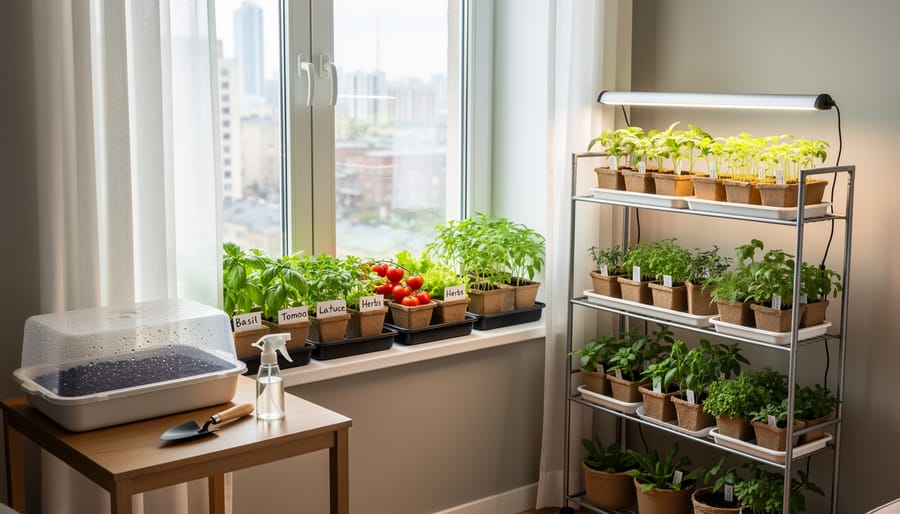
Hands planting seeds in containers on apartment windowsill with grow lights
Indoor seed starting in small apartments requires creative space-saving solutions like windowsill propagation and compact grow light setups.

Timing Your Indoor Seed Starting

Getting your timing right makes all the difference when starting seeds indoors. The key is working backward from your area’s last expected frost date, which you can find through your local extension office or online gardening resources. Most seed packets provide guidance on when to start seeds indoors, typically ranging from 4 to 12 weeks before transplanting outdoors.

Here’s where urban microclimates get interesting. Your rooftop garden or south-facing balcony might warm up two weeks earlier than nearby parks, while a shaded courtyard could lag behind. Spend a season observing your specific space, noting when frost disappears and temperatures stabilize above 50°F at night.

For beginners, tomatoes and peppers started 6-8 weeks before your last frost date offer a sweet spot for success. Cool-season crops like lettuce and herbs need just 4-6 weeks indoors. Create a simple calendar marking your transplant dates, then count backward to determine your seed-starting schedule. This planning ensures your seedlings are robust and ready without becoming rootbound in their containers while waiting for suitable outdoor conditions.

Space-Saving Propagation Methods

When you’re working with limited indoor space, getting creative with your seed-starting setup makes all the difference. Soil blocking is a game-changer for urban gardeners—this method creates compact, self-contained blocks of soil that eliminate the need for plastic containers. You simply press a soil blocker tool into a mixture of potting soil and compost, creating perfectly formed cubes that stack efficiently on trays. The roots naturally air-prune at the edges, leading to healthier transplants.

Paper pot making offers another sustainable, space-smart solution. Using newspaper or biodegradable paper, you can craft small pots that decompose directly in the soil when transplanting time arrives. This eliminates transplant shock and reduces waste—a win for both your seedlings and the environment.

Vertical seed starting setups maximize your square footage by going upward. Install shelving units with grow lights, creating multiple tiers for seed trays. One Chicago apartment gardener shared how her three-tier setup allowed her to start over 200 seedlings in just six square feet of floor space, eventually supplying her entire rooftop garden and sharing extras with neighbors.

Farmer Success Story: From Balcony to CSA Partnership

Meet Sarah Chen, who transformed her Chicago apartment balcony into a thriving garden that eventually caught the attention of Green Valley CSA, a local community-supported agriculture farm. What started in 2019 with just three tomato plants and a packet of lettuce seeds has blossomed into a productive partnership where Sarah now supplies specialty microgreens and herbs to the CSA’s weekly boxes.

Sarah’s journey began modestly. Living in a north-facing apartment with limited direct sunlight, she initially struggled to find seeds that would actually thrive. Her breakthrough came when she discovered compact varieties specifically bred for containers. Cherry tomatoes like ‘Tiny Tim’ and ‘Tumbling Tom’ became her gateway crops, producing abundantly in 5-gallon containers. She also found success with lettuce varieties including ‘Tom Thumb’ butterhead and ‘Little Gem’ romaine, which she could succession plant every two weeks in window boxes.

The game-changer was herbs. Sarah started growing cilantro, Thai basil, and cutting celery from seed, harvesting continuously by cutting only what she needed. When she began sharing her surplus at a neighborhood swap, the CSA farm manager noticed her pristine produce and proposed a collaboration.

Now Sarah dedicates her balcony to growing high-value specialty items that complement the CSA’s field crops. Her advice? Start small, choose seeds wisely for your specific conditions, and don’t underestimate the power of community connections. Every successful urban farm begins with a single seed and the willingness to learn as you grow.

Common Seed Starting Mistakes Urban Gardeners Make

Even experienced gardeners sometimes stumble when starting seeds in urban environments. Let’s explore the most common mistakes and how to avoid them so your indoor seed-starting adventure sets you up for success.

Choosing incompatible varieties ranks among the top mistakes urban gardeners make. Those giant heirloom tomatoes might sound amazing, but if you’re growing on a fourth-floor balcony, compact determinate varieties will serve you much better. Always read seed packets carefully and select varieties specifically bred for containers or small spaces.

Timing issues plague many beginners. Starting seeds too early leads to leggy, stressed seedlings that outgrow their containers before outdoor conditions are safe. Too late, and you’ll miss your optimal growing window. Check your last frost date and count backward according to each plant’s specific timeline. Most seed packets provide this crucial information.

Overwatering kills more seedlings than any other factor. New gardeners often shower their baby plants with excessive love in liquid form, leading to damping-off disease and root rot. Seeds need consistent moisture, not soggy conditions. Learning proper watering practices makes all the difference—let the soil surface dry slightly between waterings and always ensure drainage holes in your containers.

Insufficient light creates weak, stretching seedlings desperately reaching toward windows. Urban apartments rarely provide enough natural light for healthy seedlings. Invest in affordable LED grow lights positioned just inches above your plants, adjusting height as they grow.

Finally, skipping the hardening-off process shocks transplants. Gradually expose indoor-grown seedlings to outdoor conditions over 7-10 days, starting with just an hour of filtered sunlight and slowly increasing exposure. This patience pays off with thriving plants that transition smoothly to their permanent homes.

Building Your Urban Seed Collection Sustainably

Building a sustainable seed collection transforms your urban garden into a resilient, ever-evolving space while reducing costs and environmental impact. Start by learning the basics of seed saving from your most successful plants. Allow a few of your healthiest tomatoes, peppers, or lettuce plants to fully mature and produce seeds. For beginners, tomatoes and beans are forgiving choices since they’re self-pollinating and easy to harvest.

Connect with your local gardening community through seed swaps, which are often hosted by community gardens, libraries, or environmental organizations. These events let you trade surplus seeds while discovering varieties that thrive in your specific neighborhood’s conditions. You’ll also gain invaluable knowledge from experienced urban gardeners who understand your unique challenges.

Support regional organic farms and seed companies that prioritize heirloom and open-pollinated varieties suited to your climate zone. Many local CSA programs offer seed packets alongside their produce shares, providing varieties proven to perform in your area. This approach strengthens your local food system while ensuring you’re working with genetics adapted to your environment.

Create your personalized seed library by organizing saved and acquired seeds in a cool, dry location. Label everything with variety names and harvest dates. Track which varieties excel in your space, noting details about sunlight requirements, container size, and productivity. This living record becomes more valuable each season, especially when paired with practices like apartment composting that improve your soil quality naturally.

Starting your urban gardening journey doesn’t have to be overwhelming. Begin with just a few proven varieties like cherry tomatoes, lettuce, or herbs that forgive beginner mistakes and thrive in containers. These small successes will build your confidence and teach you valuable lessons about your specific growing conditions, whether that’s a sunny balcony or a shaded fire escape.

Your local CSA community is an incredible resource waiting to help. Connect with nearby organic growers who understand your region’s climate and can recommend varieties that perform well in your area. Many farmers are generous with their knowledge and happy to share tips about seed starting, soil preparation, and pest management strategies that work in urban settings.

Remember, every experienced gardener started as a beginner. Embrace the learning curve, celebrate your harvests no matter how small, and don’t be discouraged by setbacks. Each growing season teaches something new about working with nature rather than against it.

Ready to get started? Explore our farm directory to discover local seed sources and connect with organic growers in your community. These relationships will enrich your gardening experience and support the sustainable agriculture movement right in your neighborhood.