How a Local Farm Directory Transforms the Way Fresh Food Reaches Your Table
 darrell on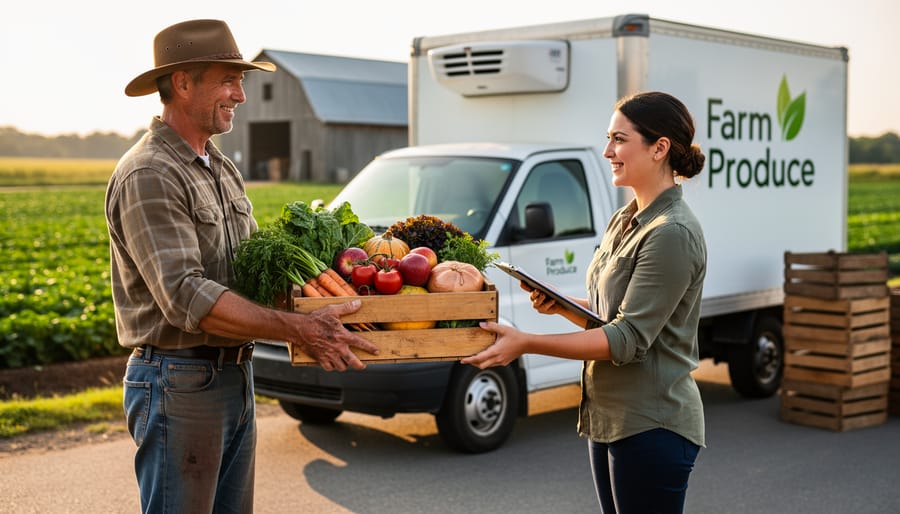
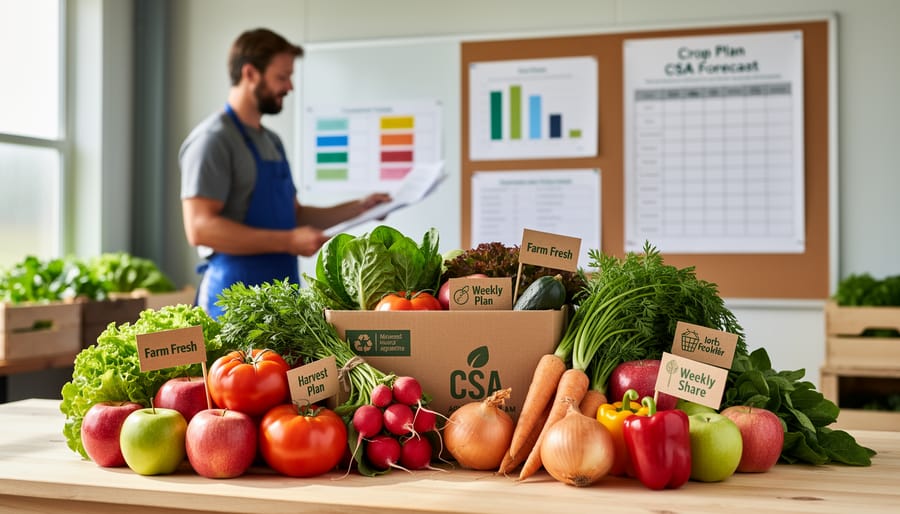
Finding the right local farms to partner with can transform your food business or household purchasing habits overnight. A comprehensive local farm directory serves as your direct connection to fresh, seasonal produce while solving the persistent challenges of sourcing reliability, quality consistency, and sustainable supply chains.
Local farm directories bridge the gap between growers and buyers by consolidating verified farm information, seasonal availability schedules, and delivery logistics into one accessible platform. Rather than making dozens of phone calls or driving rural routes hoping to find suppliers, you gain instant access to farms that match your specific needs—whether you’re stocking a restaurant, managing a food hub, or simply planning your family’s weekly produce box.
The real power lies in solving distribution headaches that have historically kept local food economically challenging. These directories typically include details about minimum order quantities, delivery radius, accepted payment methods, and even harvest calendars that help you plan purchases around peak freshness. Many feature direct messaging systems that eliminate communication barriers and allow you to build relationships with farmers before committing to large orders.
For retailers and food hub operators, directories reduce the time spent vetting suppliers from weeks to hours. You’ll discover farms offering everything from certified organic vegetables to pasture-raised meats, all with transparent growing practices and clear pricing structures. This efficiency makes local sourcing financially viable even for smaller operations working with tight margins, while connecting environmentally conscious consumers to the sustainable agriculture movement they want to support.
What Makes Farm-to-Retail Distribution Different From Traditional Food Logistics
Local food distribution operates on a completely different rhythm than the industrial food system most of us take for granted. While conventional supply chains move massive volumes from distant farms through centralized warehouses to retail shelves, direct farm-to-retail connections require a more nimble, relationship-based approach.
The biggest difference? Scale and timing. Small-scale farmers might harvest 50 pounds of heirloom tomatoes on Tuesday morning that need to reach customers by Wednesday afternoon, not pallets of produce shipped cross-country with week-long shelf lives. This creates a unique challenge where freshness is paramount, but quantities don’t justify dedicated delivery trucks or complex logistics networks.
Seasonal variability adds another layer of complexity. A farm directory in June might list twenty producers with strawberries, while December offerings shift entirely to root vegetables and greenhouse greens. Retailers working with local farms need to adapt their inventory planning constantly, unlike ordering year-round iceberg lettuce from industrial suppliers.
Then there’s the geography puzzle. Instead of one warehouse servicing multiple stores, retailers often coordinate pickups from several small farms scattered across a region. Each farm operates on its own schedule, with different harvest days and available pickup windows.
Traditional food logistics prioritize efficiency through standardization, but local food systems thrive on diversity and flexibility. A farm might offer three varieties of winter squash one week and surprise everyone with late-season peppers the next. This unpredictability, while challenging, is also what makes local food exciting and truly seasonal.
Successfully navigating these differences requires better communication tools, which is exactly where modern farm directories become invaluable for connecting all the moving pieces.
The Local Farm Directory: Your Digital Bridge Between Field and Store
Connecting Retailers With Nearby Producers
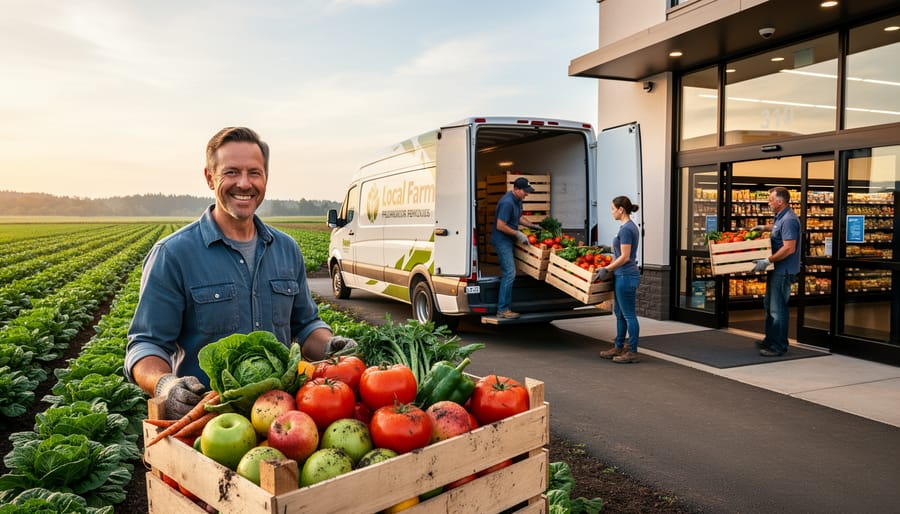
Local farm directories serve as powerful matchmaking tools for retailers seeking fresh, locally sourced products. These digital platforms eliminate the guesswork by allowing grocery stores, restaurants, and food cooperatives to search for farms based on specific geographic parameters. Within minutes, a restaurant owner can identify all certified organic vegetable producers within a 50-mile radius, complete with detailed profiles showing what’s currently in season and ready for harvest.
The real magic happens when retailers can view real-time product availability calendars. Instead of making dozens of phone calls, buyers simply log into the directory to see which farms have heirloom tomatoes available this week or can supply 100 pounds of sweet corn by Friday. This transparency saves countless hours and reduces the frustration of missed connections.
Take Sarah Martinez, who manages procurement for a small grocery chain in Vermont. Before discovering her regional farm directory, she spent entire mornings coordinating with suppliers. Now, she connects directly with twelve local farms through the platform, building relationships that go beyond transactions. “I know the farmers by name, understand their growing practices, and can plan my inventory around their harvest schedules,” she shares. “It’s transformed how we operate.”
These directories often include messaging features, allowing retailers to negotiate prices, arrange delivery schedules, and ask specific questions about growing methods. This direct communication builds trust and creates partnerships that benefit both businesses, strengthening the entire local food economy while ensuring customers receive the freshest possible products.
Real-Time Inventory and Seasonal Planning Tools
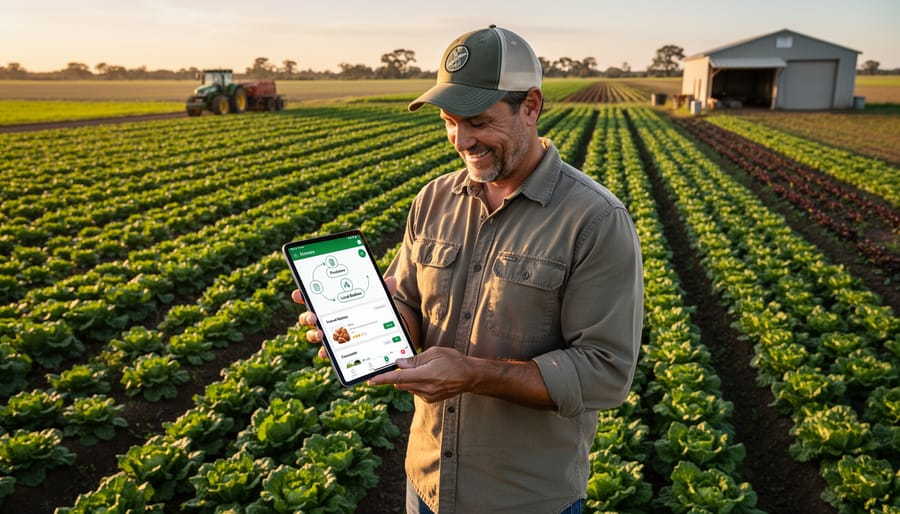
Managing seasonal produce is one of the biggest challenges for retailers working with local farms. Modern farm directories have evolved beyond simple contact lists to include powerful planning features that make seasonal coordination much easier. These platforms now offer real-time harvest schedules and product availability updates, helping you know exactly what’s coming and when.
Many directories integrate modern distribution technology that sends automatic notifications when crops are ready for harvest or when availability changes due to weather conditions. This transparency eliminates guesswork and reduces waste from over-ordering or missed opportunities.
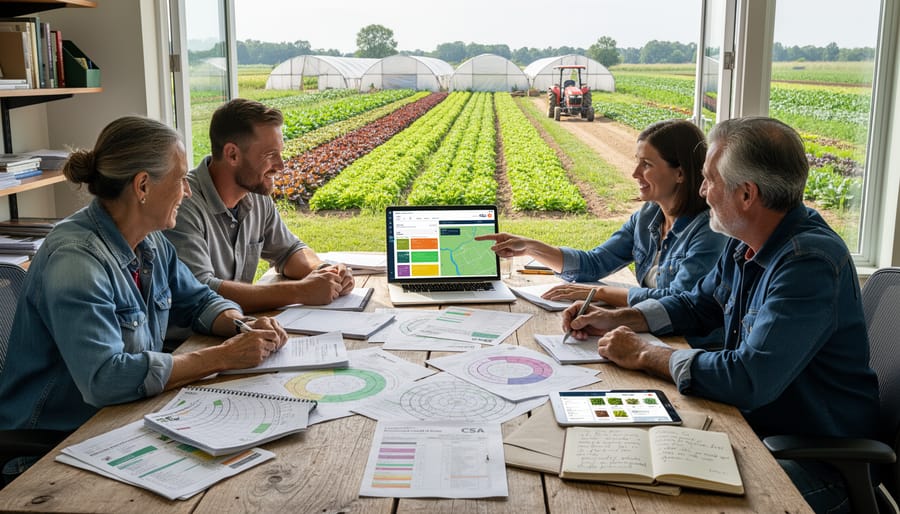
Planning tools within these directories let you visualize seasonal patterns across multiple farms, making it easier to diversify your supply chain. For example, Green Valley Market in Ontario used their directory’s planning dashboard to coordinate with three different berry farms, ensuring continuous strawberry supply from May through September rather than depending on a single source.
The best directories also include historical data, helping you anticipate next year’s availability and plan promotional campaigns around peak harvest times. This forward-thinking approach transforms seasonal fluctuations from a headache into an opportunity for featuring the freshest local produce at the right moment.
Building Trust Through Transparency
Local farm directories create transparency that helps retailers build trust with both farmers and customers. These platforms showcase detailed farming practices, from organic certifications to soil health methods, giving you the information needed to make confident sourcing decisions. When a directory lists whether a farm uses regenerative practices or holds USDA organic certification, you can quickly verify claims and match products with your values.
Many directories feature farm stories that go beyond basic listings. You’ll discover the farmer’s journey, their growing philosophy, and what makes their operation unique. This narrative depth becomes invaluable when communicating value to your customers. Instead of simply selling tomatoes, you can share the story of the third-generation farmer who uses heirloom seeds and natural pest management.
This transparency streamlines your vetting process while providing ready-made marketing content. Retailers report that sharing these authentic farm stories increases customer loyalty and justifies premium pricing, turning local sourcing from a logistical challenge into a competitive advantage.
Solving the Biggest Headaches in Local Distribution Logistics
Coordinating Multiple Pickup and Delivery Points
Managing pickups from multiple farms can quickly become a logistical puzzle, but local farm directories are stepping up to simplify the process. Modern directories incorporate smart scheduling tools that allow food hubs and retailers to coordinate collection times across various farms, reducing duplicate trips and fuel costs.
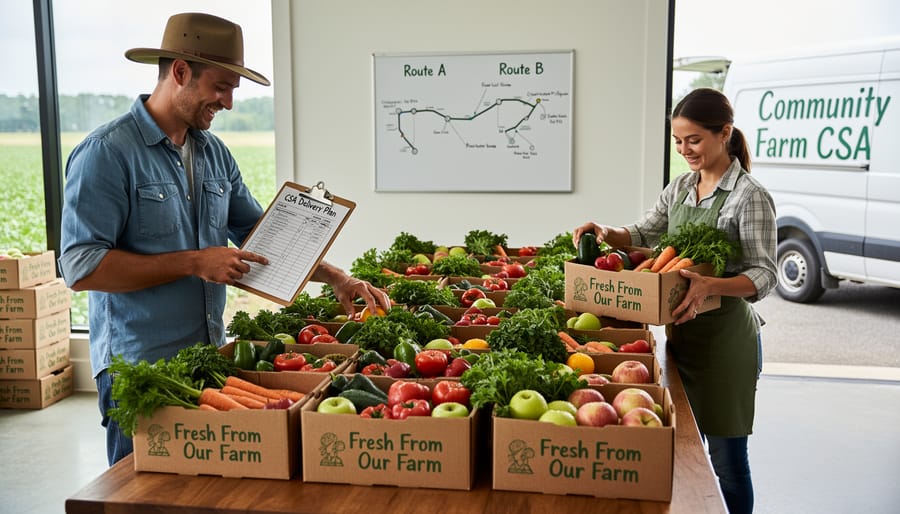
Many platforms now feature interactive maps showing farm locations alongside their harvest schedules, making route planning surprisingly straightforward. Instead of calling each farmer individually, buyers can view consolidated availability and create efficient pickup routes that minimize travel time. Some directories even integrate with mapping software to suggest the most fuel-efficient paths.
Aggregation hubs have become game-changers in this system. Directories help identify central collection points where multiple small-scale farmers can drop off their harvests, which buyers then collect in a single stop. This approach works beautifully for farmers like Maria Gonzalez, who started bringing her organic vegetables to a shared hub coordinated through her regional farm directory. She now saves three hours weekly on delivery runs while reaching more customers than ever before.
These coordination features transform what used to be a time-consuming challenge into a manageable system, making local food distribution economically viable for everyone involved while supporting sustainable farming practices.
Managing Communication Between Multiple Parties
Coordinating deliveries between farms, distributors, and buyers can quickly become overwhelming when everyone relies on scattered phone calls, text messages, and emails. Think about Sarah, a food hub manager who once juggled orders from fifteen farms using sticky notes and voicemail—mistakes were inevitable, and time was constantly wasted clarifying details.
Centralized farm directory platforms transform this chaos into smooth operations. Instead of playing phone tag, all parties access a single messaging hub where order details, delivery schedules, and product availability updates live in one searchable location. When a restaurant changes their order from twenty to thirty pounds of tomatoes, the system instantly notifies the farm and updates inventory counts automatically.
These platforms also maintain order histories and communication trails, eliminating the “he said, she said” confusion that leads to delivery mishaps. Buyers can track their requests from placement to delivery, while farmers receive organized order summaries rather than deciphering handwritten notes or unclear voicemails.
The result? Fewer wrong deliveries, happier customers, and more time for everyone to focus on what they do best—whether that’s growing exceptional produce or serving delicious meals. For small-scale operations especially, this efficiency breakthrough makes local food distribution genuinely sustainable.
Scaling Without Losing the Local Connection
As your retail business grows, maintaining those valuable farm partnerships shouldn’t mean drowning in spreadsheets and phone calls. Farm directories act as your centralized command center, allowing you to connect with dozens of producers while keeping track of seasonal availability, delivery schedules, and order histories all in one place. Think of how Sarah’s Market expanded from three farm suppliers to fifteen within a year, simply because their directory system automated the communication and ordering process that would have otherwise required hiring additional staff. The beauty of these platforms is that they scale with you, whether you’re a small grocery store adding a few farms or a regional chain building relationships across multiple counties. By partnering with local food hubs through directory systems, retailers maintain that personal touch customers love while enjoying the efficiency of modern technology, proving you can grow your business without losing your community roots.
Success Story: How One Regional Grocery Chain Cut Distribution Costs While Supporting 40 Local Farms
When Mountain Fresh Markets faced rising distribution costs and inconsistent produce supplies across their seven stores, manager Sarah Chen knew something had to change. Their traditional wholesale supplier relationships weren’t meeting customer demand for truly local products, yet coordinating directly with individual farms felt overwhelming.
Sarah discovered a regional farm directory designed specifically for distribution logistics. Within three months, the results transformed their entire operation.
The directory’s mapping feature helped Sarah identify 40 farms within a 50-mile radius of their distribution center. Instead of produce traveling hundreds of miles through multiple handlers, Mountain Fresh established direct relationships with nearby growers. The impact was immediate: distribution costs dropped 28 percent in the first year, primarily by eliminating middleman markups and reducing fuel expenses.
But the challenges weren’t insignificant. Coordinating harvest schedules, minimum order quantities, and delivery logistics with dozens of small farms initially seemed daunting. The directory’s communication tools became essential, allowing Sarah to send batch orders, track availability in real-time, and plan efficient pickup routes. Some farmers adjusted their planting schedules based on Mountain Fresh’s projected needs, creating stability for both parties.
The produce quality improvement surprised even Sarah. Tomatoes reached shelves within 24 hours of harvest instead of five days. Customer complaints about wilted greens virtually disappeared. Sales of local produce increased 45 percent as shoppers noticed the difference.
For the farmers, having a reliable retail partner meant financial security. Third-generation farmer Tom Rodriguez shared that his guaranteed orders from Mountain Fresh allowed him to hire two full-time employees and expand his organic acreage by three acres.
Sarah’s advice for other retailers? Start small with five to ten farms, build relationships gradually, and use the directory’s data to identify complementary growing seasons. The investment in direct relationships pays dividends through lower costs, better quality, and customers who become passionate advocates for your local food mission.
Getting Started: Building an Efficient Local Distribution Network
For Retailers Looking to Source Locally
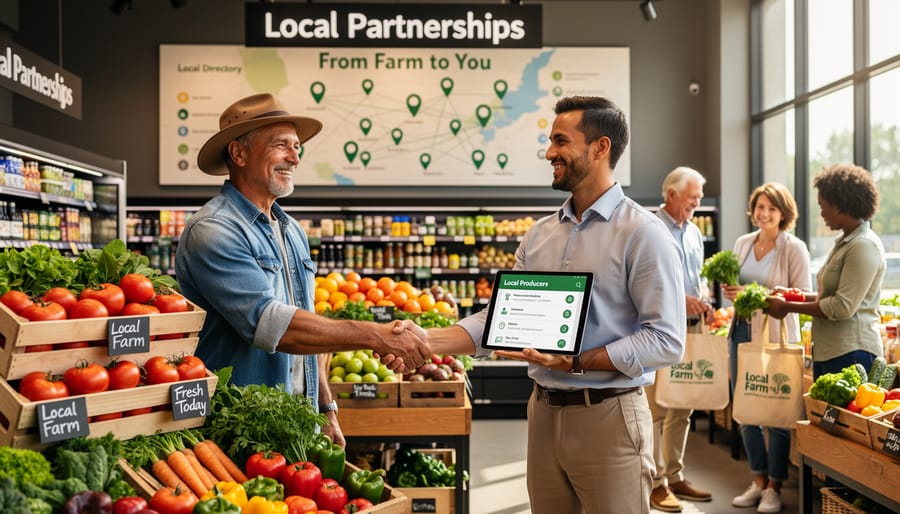
Getting started with local farm directories is simpler than you might think. Begin by searching directories specific to your region, filtering results by product type, growing practices, and delivery capabilities. Look for farms certified organic or those practicing sustainable methods that align with your customers’ values.
When evaluating potential farm partners, schedule farm visits to see operations firsthand and discuss production volumes, harvest schedules, and quality standards. Ask about their experience with wholesale accounts and whether they can meet your consistency requirements. Many successful retailers find that starting with 2-3 reliable farms builds a strong foundation before expanding.
Establish clear ordering systems early on. Some farms prefer weekly order confirmations via email, while others use online portals or phone orders. Set up delivery schedules that work for both parties, whether that’s farm pickup, delivery to your location, or meeting at a food hub.
Planning for seasonal changes is essential in local sourcing. Work with farmers during winter months to understand their crop rotations and plan your product offerings accordingly. Consider preserving peak-season produce through freezing or canning partnerships. Building these relationships creates supply chain resilience while supporting your community’s agricultural economy.
For Farms Ready to Supply Retail Markets
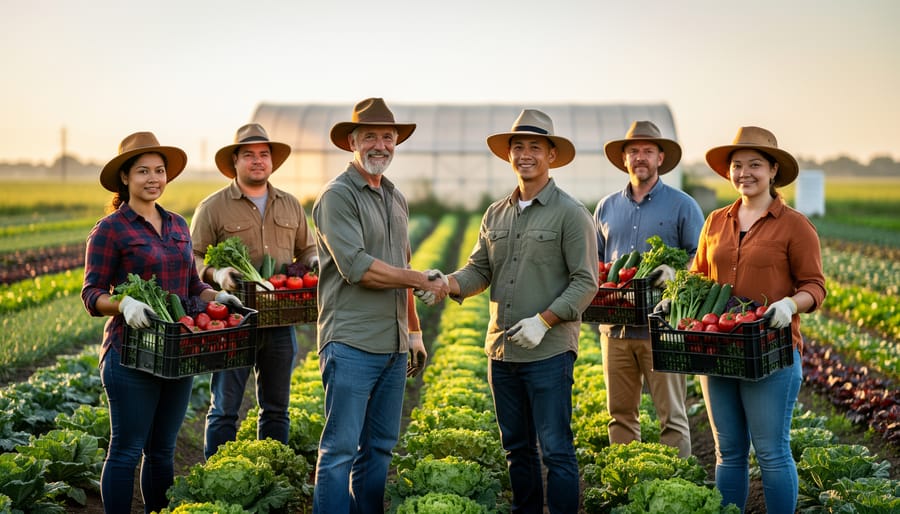
Ready to connect with retail partners? Your directory profile is your digital handshake with potential buyers, so make it count. Start with high-quality photos of your farm and products—retailers want to see what they’re getting. Be specific about what you grow, your farming methods, and any certifications you hold.
Set realistic availability windows in your profile. Nothing damages retail relationships faster than promising produce you can’t deliver. Update your inventory weekly, especially during seasonal transitions. Include minimum order quantities and lead times to help buyers plan accordingly.
Communication is everything in retail partnerships. Respond promptly to inquiries and be upfront about your capacity. Consider Emma’s Farm in Vermont, which built lasting relationships with five local grocers by maintaining transparent communication and consistently delivering quality produce on schedule.
Coordinate deliveries efficiently by grouping orders geographically or partnering with other farms for shared transport. Many successful farms designate specific delivery days for retail accounts, reducing fuel costs and streamlining operations. Remember, reliability builds trust—and trust builds long-term partnerships that sustain your farm business through every season.
Creating Community Food Hubs as Distribution Centers
Food hubs are transforming how small farms reach consumers by serving as central collection and distribution points. By consulting local farm directories, these community hubs can identify participating farms, coordinate harvest schedules, and aggregate products from multiple growers into single deliveries. This collaborative approach makes efficient local distribution possible, reducing transportation costs and enabling smaller farms to access markets previously out of reach. Retailers benefit too, gaining access to diverse local products through one reliable source rather than managing relationships with dozens of individual farms.
Local farm directories aren’t just databases—they’re powerful tools that bring sustainable food systems to life. By connecting farmers with retailers, restaurants, and food hubs, these directories transform the complex challenge of local food distribution into something manageable and efficient. They turn good intentions about supporting local agriculture into real, actionable partnerships that benefit everyone involved.
If you haven’t explored your local farm directory yet, now’s the perfect time to start. Whether you’re a farmer looking to expand your market reach, a retailer seeking reliable local suppliers, or a food hub coordinator building distribution networks, these directories offer the connections you need to succeed. Take that first step—search for farms in your area, reach out to potential partners, and discover how straightforward farm-to-retail relationships can be.
The future of our food system depends on these local connections. When we make it easier for farmers and buyers to find each other, we build resilient communities with thriving local economies and fresh, sustainable food for everyone. Your local farm directory is the bridge that makes this vision possible.