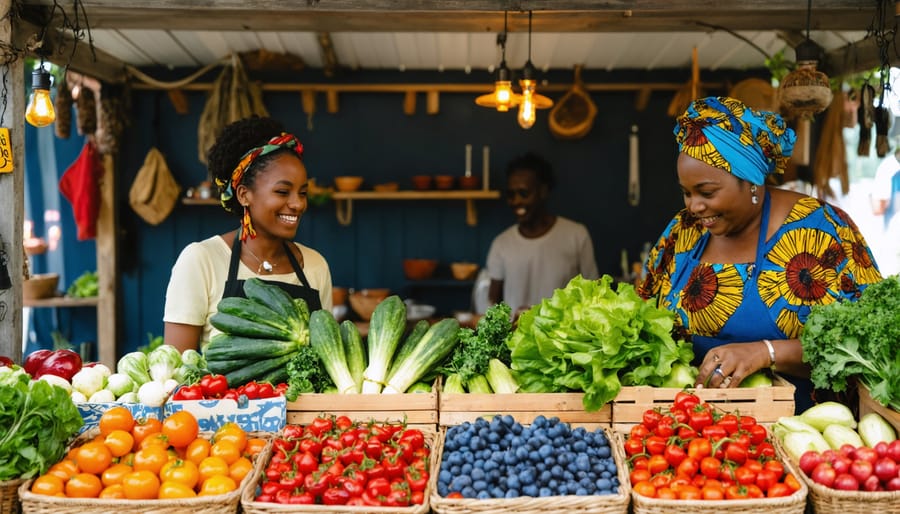
darrell


Artisan Vendors Transform Local Markets: From Farm to Artisanal Excellence

Posted by darrell on
0
Market Events and Community Engagement
Artisan Vendors Transform Local Markets: From Farm to Artisanal Excellence

Artisan vendors transform farmers markets and local food culture into vibrant hubs of creativity and craftsmanship, bringing handcrafted goods directly to conscious consumers. These skilled makers meticulously craft everything from small-batch preserves and artisanal breads to handmade soaps and unique pottery, each item telling a story of traditional techniques and modern innovation. Beyond mere sellers, artisan vendors serve as cultural ambassadors, preserving heritage crafts while adapting to contemporary market demands. Their presence at local markets creates an authentic shopping experience that connects communities with skilled craftspeople, supporting sustainable, small-scale production methods that prioritize quality over quantity. For aspiring makers and market enthusiasts alike, these vendors represent the perfect blend of entrepreneurial spirit and artistic excellence, proving that success in the local marketplace stems from genuine passion, unwavering quality standards, and meaningful customer relationships.

What Makes a Farmers Market Vendor ‘Artisanal’?

Craftsmanship and Traditional Methods

Artisan vendors distinguish themselves through their unwavering commitment to time-honored production methods and meticulous attention to detail. Each item they create tells a story of skilled hands shaping raw materials into unique pieces, often using techniques passed down through generations. Unlike mass-produced goods, artisanal products are crafted in small batches, allowing makers to maintain strict quality control and ensure every item meets their exacting standards.

These craftspeople often blend traditional methods with modern innovations while staying true to their artistic vision. Whether it’s a potter throwing clay on a wheel, a woodworker using hand tools to create beautiful furniture, or a baker kneading bread dough by hand, their work reflects a deep understanding of their materials and processes.

Many artisans spend years perfecting their skills, learning from mentors, and developing their own signature techniques. This dedication to craftsmanship not only produces superior products but also helps preserve cultural heritage and traditional skills for future generations.

Traditional artisan baker hand-kneading bread dough using local ingredients
Artisan baker kneading bread dough by hand on a rustic wooden table with locally sourced flour visible

Local Ingredient Sourcing

Artisan vendors pride themselves on building strong relationships with local farmers and producers, carefully selecting ingredients that meet their exacting standards. These partnerships often begin at farmers’ markets, where vendors connect directly with growers who share their commitment to quality and sustainability. Many artisan vendors visit farms personally to understand growing practices and ensure ingredient quality.

The selection process typically involves rigorous testing of ingredients from multiple sources before choosing preferred suppliers. Seasonal availability plays a crucial role, with many artisan vendors adapting their products based on what’s currently growing in their region. This farm-to-artisan relationship often results in unique collaborations, such as custom-growing specific herb varieties or preserving peak-season produce for year-round use.

These close partnerships benefit both parties: farmers gain reliable buyers for their premium produce, while artisans secure high-quality, traceable ingredients that set their products apart. Many successful artisans work with the same family farms for years, building trust and maintaining consistent quality standards.

Building Successful Farm-Artisan Partnerships

Creating Sustainable Supply Chains

Artisan vendors understand that the key to sustainable success lies in building strong, lasting relationships with local farmers. These partnerships often begin with regular visits to farms, where artisans can personally observe growing practices and discuss crop planning. Many successful artisans work directly with farmers to plan seasonal harvests, ensuring a steady supply of high-quality ingredients for their products.

Communication plays a vital role in these relationships. Successful artisans maintain open dialogue with their farming partners, often scheduling weekly check-ins to discuss upcoming needs and potential challenges. Some establish seasonal contracts that benefit both parties – farmers gain guaranteed sales, while artisans secure priority access to premium ingredients.

Many artisans also participate in crop planning sessions during the winter months, helping farmers determine which varieties to grow based on their specific needs. This collaborative approach often leads to exciting innovations, such as farmers growing specialized herbs or heritage vegetables specifically for artisan products.

To maintain supply chain resilience, experienced artisans typically work with multiple farmers, creating a network that can accommodate seasonal variations and unexpected challenges while supporting the local agricultural community.

Cheesemaker and farmer examining fresh milk quality on a local dairy farm
Artisan cheesemaker and local dairy farmer discussing milk quality beside grazing cows

Seasonal Menu Planning

Successful artisan vendors understand that aligning their product offerings with local harvest schedules creates a dynamic and sustainable business model. By working closely with local farmers and monitoring seasonal availability, vendors can craft menus and products that showcase the best ingredients at their peak freshness.

Spring brings tender greens, asparagus, and early berries, perfect for light pastries and fresh preserves. Summer’s abundance allows for vibrant tomato-based products, fruit preserves, and herb-infused creations. Fall harvests inspire warming spice blends, pumpkin-based goods, and apple-centric treats. Winter calls for root vegetable products, preserved goods, and hearty, shelf-stable items.

This seasonal approach not only ensures the highest quality products but also helps build stronger relationships with local farmers. Many successful artisan vendors plan their production schedules months in advance, working directly with farmers to secure specialty crops and unique varieties. They often develop signature products that customers eagerly anticipate each season, creating a loyal following and sustainable business model.

To maintain year-round offerings, smart vendors complement their seasonal items with preserved goods and shelf-stable products made during peak harvest times.

Success Stories from the Market

From Farm Cheese to Market Favorite

Sarah Miller’s journey from small-batch cheese maker to farmers market sensation exemplifies the artisan vendor success story. Starting in 2018 with just two goats on her family’s Pennsylvania farm, she began experimenting with traditional cheese-making techniques passed down through generations.

Miller’s breakthrough came when she developed her signature lavender-infused chevre, combining locally sourced lavender with fresh goat cheese. This unique product quickly caught the attention of market-goers at the Lancaster Farmers Market, where she started with a modest table display and samples.

Through consistent quality and creative flavor combinations, Miller’s Mountain View Creamery grew from selling 20 pounds of cheese weekly to now producing over 200 pounds to meet demand. She’s expanded her product line to include seasonal varieties like spring ramp cheese and winter truffle brie, all while maintaining her commitment to small-batch production methods.

Her success stems from building strong relationships with customers, offering cheese-making workshops, and collaborating with other local vendors to create specialty products. Today, Mountain View Creamery products are featured in local restaurants and specialty shops, proving that artisan vendors can grow while maintaining their craft’s integrity.

Bread Baker’s Local Grain Revolution

Sarah Miller’s journey into artisanal bread making took an unexpected turn when she discovered the local grain revolution happening in her community. Working directly with three family farms within 50 miles of her bakery, she sources heritage wheat varieties that add distinct flavors to her sourdough loaves. These partnerships have transformed both her business and the local agricultural landscape.

The farmers, led by veteran grain producer Tom Henderson, now grow forgotten varieties like Red Fife and Turkey Red wheat specifically for Sarah’s needs. This collaboration has enabled the farmers to diversify their crops while providing Sarah with high-quality, traceable ingredients that her customers love.

Each weekend at the farmers market, Sarah displays educational cards showing which farm grew the grain for each bread variety. Her most popular creation, the Ancient Grains Sourdough, uses a blend of locally grown spelt and einkorn wheat, connecting her customers directly to the region’s agricultural heritage while supporting sustainable farming practices.

Starting Your Artisan Market Business

Essential Steps and Certifications

To become a certified artisan vendor, start by obtaining necessary business licenses and permits from your local government. Most jurisdictions require a basic business license, sales tax permit, and food handler’s certification if you’re selling edible products. Check with your state’s health department for specific requirements regarding food preparation and safety standards.

Consider joining professional organizations like the American Craft Council or local artisan guilds, which often provide valuable certifications and training programs. Many farmers markets require vendors to complete market-specific orientation programs and sign agreements regarding product authenticity and quality standards.

Insurance is crucial – secure both liability and product insurance to protect your business. If you’re planning to process payments, obtain proper merchant services certification. Some markets may require additional certifications specific to your product category, such as organic certification for food items or specific craftsmanship credentials for handmade goods.

Document your production processes and maintain detailed records of materials and methods used, as many markets conduct regular vendor audits to ensure authenticity and quality standards are maintained.

Building Your Market Presence

Successful artisan vendors know that building your market presence requires more than just great products. Start by creating an engaging booth display that reflects your brand’s personality and values. Use social media to share your story, showcase your crafting process, and announce market appearances. Develop relationships with regular customers by remembering their preferences and offering personalized recommendations.

Consider starting an email newsletter to keep customers informed about new products and market schedules. Collaborate with other vendors for cross-promotion opportunities and participate in seasonal market events. Offering samples and demonstrations can help attract curious shoppers and convert them into loyal customers.

Don’t forget to collect customer feedback and adapt your offerings accordingly. Many successful artisans also create loyalty programs or offer special discounts to repeat customers. Remember, authenticity and consistency in your brand message will help build trust and recognition in your local market community.

Well-organized artisan vendor stall at a farmers market showcasing various handcrafted foods
Vibrant farmers market stall displaying artisanal cheeses, breads, and preserves with clear product labeling

Artisan vendors play a vital role in creating vibrant, sustainable local food systems that benefit both producers and consumers. Their presence at farmers markets adds diversity to the shopping experience while preserving traditional crafts and food-making techniques that might otherwise be lost to mass production. These vendors bridge the gap between agriculture and artistry, transforming raw ingredients into unique, handcrafted products that carry the distinct flavors and character of their local regions.

The economic impact of artisan vendors extends beyond their individual businesses, creating ripple effects throughout the local economy. They support local farmers by purchasing ingredients directly, contribute to job creation, and help maintain the cultural heritage of their communities. Their success stories inspire new entrepreneurs and demonstrate the viability of small-scale, artisanal food production as a sustainable business model.

As consumers increasingly seek authentic, high-quality products with transparent origins, artisan vendors will continue to be essential players in local food systems. Their commitment to craftsmanship, sustainable practices, and community engagement helps build more resilient local economies while satisfying the growing demand for unique, locally-made products that tell a story and connect people to their food in meaningful ways.

How Local Food Systems Transform Your Community (And Your Dinner Table)

Posted by darrell on
0
Community Partnerships and Networks
How Local Food Systems Transform Your Community (And Your Dinner Table)

Imagine your dinner plate as a window into your community’s health, economy, and environmental future. Local food systems – networks of farmers, distributors, and consumers operating within your geographic region – are revolutionizing how we think about, purchase, and consume food. From farm-fresh produce at weekend markets to community-supported agriculture (CSA) programs delivering seasonal bounty to your doorstep, these systems are creating resilient connections between the people who grow our food and those who eat it.

Beyond just shorter supply chains, local food systems represent a fundamental shift in how communities nourish themselves. They generate jobs, preserve agricultural land, reduce transportation emissions, and ensure fresher, more nutritious food reaches our tables. When you participate in a local food system – whether by joining a CSA, shopping at farmers’ markets, or growing your own vegetables – you’re not just making a purchase; you’re investing in your community’s food security, supporting local farmers’ livelihoods, and building a more sustainable future.

This dynamic approach to food production and distribution is rapidly gaining momentum as consumers seek greater connection to their food sources and communities strive for increased self-reliance in uncertain times.

The Building Blocks of a Local Food System

Bird's eye view of a sustainable local farm showing diverse agricultural operations
Aerial view of a diverse local farm with various crops, greenhouses, and a farm stand

From Farm to Fork: Key Players

The journey from farm to fork involves several key players working together to bring fresh, local food to your table. At the heart of this system are small-scale farmers and market gardeners who cultivate diverse crops using sustainable methods. These agricultural stewards often practice organic farming techniques and maintain direct relationships with their community.

Local distributors form the crucial bridge between farmers and consumers. These include food hubs, cooperative warehouses, and transportation services that help move produce from fields to various outlets while maintaining freshness. Many modern distributors now use technology to coordinate deliveries and reduce food waste.

Farmers’ markets serve as vibrant community spaces where producers and consumers connect directly. Here, farmers can share their stories and growing practices while customers learn about seasonal eating and farming challenges. Local food co-ops and independent grocery stores also play vital roles, offering year-round access to local products.

Restaurants and institutional buyers, such as schools and hospitals, represent significant purchasers in local food systems. These establishments often develop lasting partnerships with nearby farms, creating stable markets for local produce while offering fresh, seasonal meals to their customers.

Finally, conscious consumers complete the circle by choosing to support local agriculture. Through their purchasing decisions, they help sustain local farms, strengthen community bonds, and contribute to a more resilient food system. Many participate in CSA programs or regular market shopping, becoming active participants in their local food economy.

Infrastructure and Support Networks

A robust local food system relies heavily on well-planned infrastructure and support networks that connect farmers to consumers. Success in building food networks depends on having adequate storage facilities, efficient processing centers, and reliable distribution channels.

Storage facilities are crucial components that allow farmers to maintain produce quality and extend seasonal availability. These include temperature-controlled warehouses, root cellars, and modern cold storage units that help prevent food waste and ensure year-round supply. Many communities are now investing in shared storage spaces where small-scale farmers can collectively store their harvest.

Processing facilities transform raw agricultural products into value-added goods, helping farmers diversify their offerings and increase income potential. Commercial kitchens, washing and packing stations, and food processing centers enable producers to create preserved foods, ready-to-eat meals, and other shelf-stable products.

Distribution channels form the vital links between farms and consumers. These include farmers’ markets, food hubs, and local delivery services. Food hubs particularly serve as aggregation points where multiple farms can combine their products for more efficient distribution to restaurants, schools, and retail outlets.

Modern technology plays an increasing role, with online ordering systems and mobile apps connecting producers directly with consumers. These digital tools help streamline logistics, reduce transportation costs, and make local food more accessible to urban communities.

CSA Programs: The Heart of Local Food Systems

Vibrant farmers market with local vendors selling fresh produce to community members
Farmers market scene showing vendors and customers interacting, with colorful produce displays

Direct Farm-to-Consumer Relationships

Direct farm-to-consumer relationships form the heart of local food systems, creating meaningful connections that benefit both farmers and their communities. When consumers buy directly from farmers, they gain insight into how their food is grown, while farmers receive fair prices and valuable feedback about their products.

These relationships often begin at farmers’ markets, where conversations over fresh produce lead to lasting partnerships. Many farmers share stories of customers who started as casual market visitors and became dedicated supporters of their farms. Take Sarah Miller, a small-scale organic farmer in Vermont, who built her entire business through personal connections with families eager to access fresh, seasonal produce.

The benefits of these direct relationships extend beyond simple transactions. Consumers learn about seasonal eating, farming challenges, and food preparation directly from the experts. They can ask questions about growing methods, get cooking tips, and even request specific varieties for future growing seasons. Farmers, in turn, can better plan their crops based on customer preferences and receive immediate feedback on their products.

These connections also foster community resilience. When consumers know their farmers personally, they’re more likely to support them during challenging times, such as weather-related crop losses or economic downturns. Many farmers report that these relationships helped them survive difficult seasons through customer loyalty and understanding.

Digital platforms now make it easier than ever to maintain these connections, with many farmers using social media and email newsletters to keep customers informed about available produce, farm events, and seasonal activities. This technological integration helps strengthen traditional farmer-consumer bonds while making local food more accessible to busy families.

Seasonal Eating and Food Education

Community Supported Agriculture (CSA) programs serve as powerful educational tools that reconnect people with the natural rhythms of food production. By receiving weekly or monthly shares of locally grown produce, members experience firsthand how crops change with the seasons, learning to appreciate and adapt their cooking habits to nature’s calendar.

Through CSA participation, members discover new varieties of vegetables and fruits they might not encounter in conventional grocery stores. This exposure broadens their culinary horizons and encourages experimentation with seasonal recipes. Many CSA farmers include newsletters with their deliveries, featuring cooking tips, storage advice, and information about the growing process of different crops.

The educational impact extends beyond the kitchen. CSA members often gain insights into agricultural challenges, weather patterns, and the importance of soil health. Many programs offer farm visits and workshops where members can learn about sustainable farming practices, composting, and seed saving. Children particularly benefit from this hands-on education, developing a deeper understanding of where their food comes from and the effort required to grow it.

Seasonal eating through CSAs also helps members develop food preservation skills. As they learn to handle abundance during peak seasons, many participants master techniques like freezing, canning, and fermenting. This knowledge not only reduces food waste but also enables year-round enjoyment of local produce.

The food literacy gained through CSA participation creates more informed consumers who understand the true value of food and the importance of supporting local agriculture. This awareness often leads to more sustainable food choices and a stronger commitment to local food systems, creating a positive ripple effect throughout the community.

Economic and Community Benefits

Visual representation of local food system economic benefits including job creation and money circulation
Infographic showing the economic impact of local food systems on community development

Supporting Local Farmers

Supporting local farmers through a local food system creates a ripple effect of economic benefits throughout the community. When consumers purchase directly from farmers at markets, farm stands, or through CSA programs, approximately 80-90 cents of every dollar goes directly to the farmer, compared to just 15-20 cents through traditional retail channels.

This direct support helps farmers maintain sustainable business practices and invest in their operations. Many local farmers use these increased profits to expand their crop diversity, improve soil health, and upgrade their farming equipment. For example, the Thompson Family Farm in Vermont doubled their production capacity after three years of consistent community support through their local farmers’ market.

Local agricultural businesses also create jobs within the community. Beyond the farmers themselves, local food systems support related enterprises such as food processors, market managers, delivery services, and agricultural suppliers. These interconnected businesses strengthen the local economy and create opportunities for entrepreneurship.

Additionally, successful local farms often reinvest in their communities by participating in educational programs, offering farm tours, and mentoring new farmers. This knowledge-sharing helps ensure the long-term sustainability of local agriculture while fostering community connections.

By supporting local farmers, consumers help preserve agricultural land, maintain food security, and keep food dollars circulating within their local economy, creating a more resilient and prosperous community for everyone.

Building Stronger Communities

Local food systems do more than just provide fresh produce – they create vibrant social connections that strengthen our communities. Through community-farm partnerships, neighbors come together to support local agriculture while building lasting relationships with the farmers who grow their food.

These connections foster a deeper understanding of food production and create opportunities for shared learning experiences. Local farmers’ markets become weekly gathering spots where families meet, exchange recipes, and discover seasonal ingredients together. Community gardens transform empty lots into flourishing spaces where residents of all ages can grow food side by side, sharing gardening tips and cultural traditions.

The social impact extends beyond casual interactions. Local food systems encourage volunteer opportunities, youth education programs, and community celebrations centered around harvest seasons. Many farms host educational workshops, farm-to-table dinners, and seasonal festivals that bring people together while celebrating local agriculture.

These gatherings strengthen social bonds and create a more resilient community fabric. When neighbors know their farmers and understand where their food comes from, they’re more likely to support local businesses and participate in community initiatives. This creates a positive feedback loop where economic and social benefits reinforce each other, leading to more sustainable and connected communities.

The result is a more engaged, educated, and interconnected population that takes pride in its local food system and works together to ensure its success.

Getting Involved in Your Local Food System

Getting involved in your local food system is easier than you might think, and there are numerous ways to make a meaningful impact. One of the most direct ways to participate is to connect with local farmers through farmers’ markets, CSA programs, or farm visits. These connections not only provide access to fresh, seasonal produce but also help build lasting relationships within your community.

Start by exploring nearby farmers’ markets, which serve as vibrant hubs for local food commerce. Make it a weekly ritual to visit these markets, chat with vendors, and learn about their growing practices. Many farmers are passionate about sharing their knowledge and appreciate customers who show genuine interest in their work.

Consider joining a CSA program, where you’ll receive regular shares of seasonal produce directly from local farms. This commitment provides farmers with stable income while giving you access to the freshest possible ingredients. You might even discover new vegetables and learn creative ways to prepare them through recipe exchanges with other CSA members.

For those with green thumbs, community gardens offer excellent opportunities to grow your own food while collaborating with neighbors. Many communities have garden plots available for rent, and some even offer gardening workshops and seed-sharing programs.

Support local food businesses that prioritize regional ingredients. Look for restaurants, cafes, and grocers that source from area farms. Your purchasing power helps strengthen the local food economy and encourages more businesses to adopt local sourcing practices.

Get involved in food policy by attending community meetings or joining local food councils. These organizations often need volunteers and welcome fresh perspectives on improving food access and sustainability in your area.

For those interested in education, consider volunteering at school gardens or food literacy programs. Teaching others about local food systems helps create lasting change and inspires the next generation of conscious consumers and producers.

Local food systems, particularly when integrated with CSA programs, represent a powerful solution for creating resilient, sustainable communities. Through direct partnerships between farmers and consumers, these systems foster meaningful connections that benefit everyone involved. Farmers receive fair compensation and stable income, while community members gain access to fresh, nutritious produce and the satisfaction of supporting local agriculture.

The success of local food systems extends beyond simple economic transactions. They help preserve regional farming traditions, protect agricultural land, and maintain crop diversity. CSA programs serve as vital bridges, connecting urban consumers with rural producers and creating opportunities for education about food production and seasonal eating.

Looking ahead, local food systems will play an increasingly important role in addressing food security challenges and environmental concerns. By reducing transportation distances, supporting sustainable farming practices, and keeping food dollars within the community, these systems offer a practical approach to building a more sustainable future.

For those interested in participating, whether as consumers or producers, local food systems provide numerous entry points. From joining a CSA program to supporting farmers’ markets or starting a community garden, every contribution strengthens the local food web. As more communities embrace these systems, we create a healthier, more connected, and environmentally conscious world where good food is accessible to all.

Regenerative Agriculture: The Key to Long-Term CSA Farm Success

Posted by darrell on
0
Organic Farming and Cultivation
Regenerative Agriculture: The Key to Long-Term CSA Farm Success

As global food demands surge and climate concerns intensify, regenerative agriculture stands at the crossroads of farming’s future. This holistic approach to food production – focusing on soil health, biodiversity, and ecosystem restoration – promises to revolutionize how we grow food while healing our planet. But amid the growing buzz around regenerative practices, a crucial question emerges: Is this system truly sustainable for farmers and our food supply?

From small family farms to large agricultural operations, producers worldwide are discovering that regenerative methods can actually increase yields while reducing input costs. These practices, including no-till farming, cover cropping, and rotational grazing, work with nature rather than against it. Yet the transition requires significant knowledge, investment, and patience – factors that deserve careful consideration before making the switch.

As we explore the sustainability of regenerative agriculture, we’ll examine both its remarkable potential and practical challenges, backed by real-world evidence from farmers who’ve successfully made the transition.

The Core Principles of Regenerative Agriculture in CSA Farms

Soil Health Management

At the heart of regenerative agriculture lies the essential practice of building healthy soil ecosystems. This approach prioritizes minimal soil disturbance through reduced tillage techniques, which protect beneficial microorganisms and maintain soil structure. Farmers employ cover cropping to prevent erosion and add organic matter, while crop rotation helps break pest cycles naturally and enhances nutrient availability.

Composting and the application of natural amendments like aged manure play crucial roles in boosting soil fertility. These practices increase organic matter content, improve water retention, and enhance the soil’s ability to sequester carbon. Many regenerative farmers also integrate livestock, using carefully managed grazing to stimulate plant growth and naturally fertilize fields.

The beauty of these soil management techniques lies in their self-reinforcing nature – as soil health improves, the need for external inputs decreases, creating a more resilient and truly sustainable farming system. This approach not only nurtures the land but also produces more nutrient-dense crops while reducing operational costs over time.

Side-by-side comparison of regenerative and conventional farm soil quality
Split-screen comparison of healthy, dark soil with visible organic matter next to depleted, lighter colored soil

Biodiversity and Crop Rotation

Biodiversity is a cornerstone of regenerative agriculture, where farmers create resilient ecosystems through thoughtful crop rotation strategies and diverse plantings. By growing different crops in sequence, farmers naturally enrich their soil while reducing pest and disease pressures. Think of it as nature’s version of risk management!

Instead of growing a single crop, regenerative farmers plant a variety of complementary species that work together. For example, deep-rooted plants like carrots help break up compacted soil, while nitrogen-fixing legumes naturally fertilize the earth. Cover crops protect bare soil between growing seasons, while flowering plants attract beneficial insects that help control pests naturally.

This diversity creates a balanced ecosystem where each plant plays a vital role. When one crop might struggle due to weather or pest challenges, others can thrive, providing farmers with multiple income streams while building healthier soil. It’s a win-win approach that mimics natural ecosystems while producing abundant, nutrient-rich food.

Economic Viability of Regenerative CSA Farming

Visual representation of regenerative agriculture financial benefits and ROI
Infographic showing the economic benefits of regenerative agriculture with charts and icons representing cost savings and revenue streams

Cost-Benefit Analysis

While regenerative agriculture requires initial investments, many farmers find the long-term benefits outweigh the upfront costs. The main startup expenses include soil testing equipment ($300-500), cover crop seeds ($50-100 per acre), and potential machinery modifications ($2,000-5,000). Training and education costs typically range from $500-2,000.

However, these investments often pay off within 3-5 years through reduced input costs. Farmers report 30-50% savings on chemical fertilizers and pesticides, while improved water retention can cut irrigation costs by up to 40%. Enhanced soil health leads to better crop yields, with many farms seeing 10-20% increases in production after transitioning to regenerative practices.

Additional financial benefits come from premium pricing for regeneratively grown products and potential carbon credits. Many farmers also save money through reduced fuel consumption and equipment wear, as regenerative practices often require fewer passes over fields. When considering labor costs, while some practices may require more initial effort, the reduced need for chemical applications and irrigation often balances out the workload over time.

The key is viewing these costs as investments in your farm’s future rather than expenses, as the returns typically compound year after year through improved soil health and ecosystem services.

Market Advantages

Regenerative agriculture offers compelling market advantages that extend beyond environmental benefits. Farmers practicing these methods often command premium prices for their products, with consumers willing to pay 20-30% more for regeneratively grown produce. This price premium reflects the higher quality and nutritional value of the food, as well as the environmental stewardship that goes into its production.

Customer loyalty is another significant advantage. When consumers understand the positive impact of regenerative farming on soil health and ecosystem restoration, they tend to become dedicated supporters. Many regenerative farmers build strong community connections through CSA programs and farmers’ markets, creating lasting relationships with customers who value transparency and sustainable practices.

These market advantages create a positive feedback loop: higher prices support continued investment in sustainable practices, while loyal customers provide stable income through direct sales channels. Additionally, regenerative farms often diversify their revenue streams through value-added products, educational programs, and agritourism activities, making their business models more resilient to market fluctuations.

Environmental Impact and Long-Term Sustainability

Carbon Sequestration

One of the most exciting benefits of regenerative agriculture is its potential to capture and store atmospheric carbon dioxide in the soil. Through practices like no-till farming, cover cropping, and diverse crop rotations, regenerative farms can turn their soil into a powerful carbon sink. When plants photosynthesize, they pull carbon from the air and transfer it to the soil through their root systems and beneficial relationships with soil microorganisms.

Research shows that farms using regenerative practices can sequester between 2-5 tons of carbon per acre annually. This adds up quickly – a 100-acre regenerative farm could potentially offset the annual carbon emissions of over 100 cars! Beyond climate benefits, increased soil carbon also improves water retention, enhances nutrient availability, and creates healthier crops.

The carbon storage potential varies based on factors like soil type, climate, and specific farming practices. While more long-term studies are needed, early results from regenerative farms show promising carbon sequestration rates that continue building year after year. This natural carbon capture technology makes regenerative agriculture a vital tool in addressing climate change while producing nutritious food.

Water Conservation

Regenerative agriculture stands out for its remarkable ability to improve water management on farms. Through practices like cover cropping and no-till farming, these methods help soil retain moisture more effectively, reducing the need for irrigation. Farmers implementing water conservation techniques often report using up to 30% less water compared to conventional farming methods.

The enhanced soil structure created by regenerative practices acts like a natural sponge, capturing rainfall and preventing runoff. This improved water retention not only helps crops thrive during dry spells but also reduces erosion and protects local waterways from pollution. Many farmers have found that after just a few years of regenerative practices, their fields require significantly less irrigation, even during challenging weather conditions.

The water-saving benefits extend beyond the farm itself. By reducing water consumption and improving groundwater recharge, regenerative agriculture helps preserve local water resources for the entire community. This makes it particularly valuable in regions facing water scarcity or irregular rainfall patterns.

Bird's eye view of a thriving regenerative CSA farm with diverse crop patterns
Aerial photograph of a diverse CSA farm showing multiple crop rotations, cover crops, and integrated livestock

Real Success Stories from CSA Farms

Let’s explore some inspiring success stories from farms that have embraced regenerative agriculture principles. The Brown Family Farm in Vermont transformed their struggling dairy operation into a thriving CSA by implementing cover cropping and rotational grazing. Within three years, they reduced their external input costs by 60% while increasing their soil organic matter from 2% to 5%.

In California, Sweet Creek Farm’s journey shows how regenerative practices can succeed even in challenging climates. Owner Maria Rodriguez introduced no-till farming and diverse crop rotations, leading to a 40% reduction in water usage. Her CSA membership grew from 50 to 200 families in just two years, with customers repeatedly praising the superior taste of her produce.

Heartland Roots Farm in Iowa presents another compelling case. Farmers Tom and Sarah Wheeler integrated livestock with their vegetable production, using chickens and sheep to naturally fertilize fields and control pests. This system eliminated their need for synthetic inputs while boosting their profit margins by 35%. Their soil tests show significantly improved nutrient density, and they’ve maintained a waiting list for their CSA shares since 2019.

Perhaps most remarkable is the story of New Dawn Farm in North Carolina. After transitioning to regenerative practices, they weathered three major hurricanes with minimal crop loss, while neighboring conventional farms suffered severe damage. Their resilient soil structure, built through years of regenerative management, helped prevent erosion and retained crucial moisture during extreme weather events.

These success stories share common threads: reduced operational costs, improved soil health, greater climate resilience, and strong community support. While the transition period required patience and learning, each farm emerged more economically stable and environmentally sustainable, proving that regenerative agriculture can work at the CSA scale.

Regenerative agriculture has proven to be a sustainable model for CSA farms, offering both environmental benefits and economic viability. Through the implementation of soil-building practices, water conservation methods, and biodiversity enhancement, these farms are creating resilient ecosystems that can withstand climate challenges while producing nutrient-dense food. The success stories of numerous CSA farmers demonstrate that when properly managed, regenerative practices can reduce operational costs, increase crop yields, and build customer loyalty.

What makes regenerative agriculture particularly sustainable for CSA farms is the symbiotic relationship between farmers and their community members. This direct-to-consumer model provides stable income through member subscriptions while allowing farmers to focus on land stewardship rather than mass production. As more consumers seek locally grown, environmentally responsible food options, regenerative CSA farms are well-positioned to meet this demand while continuing to improve soil health and ecosystem function.

While challenges exist, the growing body of evidence suggests that regenerative agriculture in CSA farms offers a promising path forward for sustainable food production that benefits both people and the planet.

CSA Teacher Certification: Empowering Educators to Share Sustainable Agriculture

Posted by darrell on
0
Educational Programs and Partnerships
CSA Teacher Certification: Empowering Educators to Share Sustainable Agriculture

Become a certified Kansas teacher and shape the future of sustainable agriculture education through a streamlined four-step process. Complete a bachelor’s degree in education or your content area from an accredited institution, maintaining a minimum 2.75 GPA. Pass both the Praxis Subject Assessment and the Principles of Learning and Teaching (PLT) exam specific to your grade level. Submit fingerprints for a background check and complete the Kansas Educator Ethics assessment. Apply through the Kansas State Department of Education’s online licensure system, KEEP, with all required documentation and fees. This pathway opens doors to teaching positions across Kansas’s 286 school districts, where educators earn competitive salaries while making meaningful impacts in their communities through hands-on learning experiences.

Understanding CSA Teacher Certification in Kansas

Eligibility Requirements

To qualify for Kansas teacher certification, candidates must hold a bachelor’s degree from an accredited college or university with a minimum GPA of 2.75. The degree should include a state-approved teacher preparation program focusing on the specific subject area or grade level you wish to teach.

First-time applicants need to complete the following prerequisites:
– Pass both the Praxis Content Assessment and Principles of Learning and Teaching (PLT) tests
– Complete a supervised teaching practicum of at least 12 weeks
– Submit fingerprints for a background check
– Complete a pedagogical assessment
– Demonstrate knowledge of teaching methods and classroom management

Alternative pathways exist for career changers through the Restricted License Program, which allows individuals with relevant work experience to teach while completing education requirements. Military veterans may qualify for expedited certification through the Troops to Teachers program.

All candidates must complete approved coursework in teaching methods for students with disabilities and teaching English language learners. Maintaining certification requires ongoing professional development and periodic renewal.

Core Competencies

Kansas teacher certification requires mastery of several core competencies that ensure educators are well-prepared for the classroom. These essential skills include content knowledge in the specific subject area, understanding of educational psychology, and proficiency in classroom management techniques.

Aspiring teachers must demonstrate strong instructional planning abilities, showing they can create engaging lessons that meet state standards while accommodating diverse learning needs. Assessment and evaluation skills are crucial, as teachers need to effectively measure student progress and adjust their teaching methods accordingly.

Technology integration competency has become increasingly important, with teachers expected to utilize digital tools and platforms effectively in their instruction. Communication skills are equally vital, encompassing both student interaction and professional collaboration with colleagues and parents.

Cultural awareness and sensitivity form another key component, preparing teachers to work with students from various backgrounds. Classroom safety and emergency response protocols round out the core requirements, ensuring teachers can maintain a secure learning environment.

These competencies are assessed through a combination of coursework, practical teaching experience, and standardized tests, creating well-rounded educators ready for Kansas classrooms.

Flow chart diagram illustrating the CSA teacher certification process steps and requirements
Infographic showing the certification process steps and timeline

Certification Process and Timeline

Application Process

To begin the Kansas teacher certification process, you’ll need to gather several essential documents. These include official transcripts from all attended colleges, a completed fingerprint card for background checks, and verification of teaching experience if applicable. You’ll also need to complete the Kansas Performance Teaching Portfolio (KPTP) during your student teaching experience.

Submit your application through the Kansas State Department of Education’s online licensing system. The application requires a non-refundable fee, which varies depending on the type of license you’re seeking. Make sure to upload clear, legible scans of all required documents.

For first-time applicants, you’ll need to demonstrate completion of a state-approved teacher preparation program. This includes passing the required Praxis tests – both content area and pedagogy assessments. Score reports should be sent directly to the Kansas State Department of Education.

If you’re seeking alternative certification, additional documentation showing your work experience and subject matter expertise will be required. The department typically processes complete applications within 6-8 weeks during peak seasons.

Remember to maintain copies of all submitted documents for your records. The licensing office will communicate through email regarding any missing information or additional requirements. Once approved, your teaching license will be available electronically through the state’s online portal.

Training Components

To become a certified teacher in Kansas, you’ll need to complete specific educational components and hands-on training. The foundation begins with a bachelor’s degree in education or your content area from an accredited institution. During your undergraduate studies, you’ll take courses in teaching methods, classroom management, educational psychology, and child development.

Core coursework typically includes curriculum planning, assessment strategies, and teaching diverse learners. You’ll also need to complete subject-specific courses aligned with your intended teaching area, whether that’s elementary education, secondary mathematics, science, or other specialties.

A crucial part of the certification process is the student teaching experience, which usually lasts 12-16 weeks. During this time, you’ll work alongside an experienced mentor teacher, gradually taking on more classroom responsibilities. This hands-on experience allows you to apply theoretical knowledge in a real classroom setting.

Additionally, you must complete the Kansas Performance Teaching Portfolio (KPTP), demonstrating your ability to plan, teach, and assess student learning. The portfolio includes lesson plans, student work samples, and reflective analysis of your teaching practice.

Professional development courses in technology integration, special education, and English language learners are also required. These components ensure teachers are well-prepared to meet the diverse needs of Kansas students while maintaining high educational standards.

Certified agriculture teacher showing students how to plant seedlings in a school garden
Teacher working with students in a school garden, demonstrating sustainable farming practices

Benefits and Career Opportunities

Professional Growth

Kansas teacher certification opens doors to numerous career advancement opportunities within the education sector. Certified teachers can progress to roles such as department heads, curriculum specialists, or educational administrators. Many educators find fulfilling paths in mentoring new teachers or developing innovative agricultural education programs.

The certification also provides access to valuable professional networks and communities. Teachers can join organizations like the Kansas Association of Agricultural Educators (KAAE) and the National Association of Agricultural Educators (NAAE), connecting with peers who share their passion for sustainable agriculture education.

Professional development opportunities abound through workshops, conferences, and continuing education programs. These events not only help maintain certification requirements but also introduce teachers to the latest sustainable farming practices and educational methodologies.

Many certified teachers also become involved in state-wide initiatives, agricultural literacy programs, and community outreach efforts. This engagement helps build a robust professional portfolio while contributing to the broader mission of sustainable agriculture education in Kansas.

The certification serves as a foundation for specialized endorsements in areas like environmental education or STEM integration, further expanding teaching capabilities and career possibilities.

Community Impact

Certified teachers play a vital role in transforming local communities through sustainable agriculture education. By bringing their expertise into classrooms and community programs, these educators cultivate a deeper understanding of food systems and environmental stewardship among students of all ages.

Through hands-on learning experiences, certified teachers help students develop practical skills in sustainable farming practices, from composting and soil management to crop rotation and water conservation. They create school gardens that serve as living laboratories, where students can witness the full cycle of food production while learning about nutrition and environmental responsibility.

These educators also forge valuable partnerships with local farmers and agricultural organizations, creating bridges between schools and the farming community. Their work extends beyond traditional classroom walls, inspiring students to become environmental stewards and informed consumers who understand the importance of supporting local food systems.

The ripple effect of their teaching reaches far into the community, as students share their knowledge with family members and friends, fostering a broader awareness of sustainable agriculture practices and food security issues. This educational foundation helps build more resilient and environmentally conscious communities for future generations.

Certified CSA educator presenting to diverse group of community members in a greenhouse setting
Professional CSA teacher leading a community workshop on sustainable agriculture

Success Stories and Resources

Meet Sarah Johnson, a former corporate professional who successfully transitioned to teaching agriculture science in rural Kansas. After completing her KS teacher certification, she now leads an award-winning school garden program that connects students with sustainable farming practices.

“The certification process was challenging but incredibly rewarding,” shares Sarah. “The support from my mentor teacher and the professional development resources provided by KSDE were invaluable.”

Another inspiring story comes from Marcus Rodriguez, who obtained his certification through the alternative pathway. His background in organic farming, combined with his teaching credentials, allowed him to develop an innovative curriculum that’s now being adopted by several districts across the state.

For aspiring teachers, Kansas offers numerous resources to support your certification journey:

– Kansas Teaching & Learning Communities (TLC) provides networking opportunities and mentorship programs
– KSDE Professional Development Portal offers free workshops and continuing education courses
– Kansas Association of Agricultural Educators maintains a job board and certification guidance
– Local agricultural extension offices frequently host educational events and training sessions

The Kansas State Department of Education also maintains an updated database of scholarship opportunities and financial assistance programs for individuals pursuing teacher certification in high-need areas, including agricultural education.

Remember, your journey to becoming a certified teacher in Kansas can be uniquely yours, and these resources are here to help you succeed.

Embarking on your Kansas teaching certification journey is an important step toward making a difference in students’ lives. By following the outlined requirements, completing necessary assessments, and fulfilling educational prerequisites, you’ll be well-prepared to join the rewarding field of education. Remember to maintain your certification through professional development and continuing education opportunities.

For those ready to begin, start by reviewing your current qualifications, selecting an approved educator preparation program, and creating a timeline for completion. The Kansas State Department of Education website offers comprehensive resources and support throughout the process. Whether you’re a career changer or recent graduate, Kansas schools welcome dedicated educators committed to student success. Take that first step today toward your teaching career and join a community of passionate education professionals shaping the future of Kansas students.

Smart Cold Chain Solutions That Keep Local Food Fresh From Farm to Table

Posted by darrell on
0
Local Food Systems and Distribution
Smart Cold Chain Solutions That Keep Local Food Fresh From Farm to Table

Fresh produce requires precise temperature control from field to fork, and getting it wrong costs farmers billions annually in spoiled inventory. Local food systems face unique cold chain challenges, but innovative solutions are transforming how small-scale producers preserve food quality and extend shelf life.

Temperature monitoring systems, mobile cold storage units, and community-shared cooling facilities now make professional-grade cold chain management accessible to small farmers and food cooperatives. These adaptable solutions help maintain the cold chain integrity of everything from delicate greens to temperature-sensitive dairy products, while keeping costs manageable for growing operations.

By implementing the right combination of cold chain solutions – from basic ice blankets to solar-powered refrigeration – local producers can reduce food waste by up to 40% while delivering fresher products to customers. This guide explores practical, scale-appropriate cooling strategies that work for small farms, CSAs, and food hubs committed to building resilient local food systems.

Why Local Food Systems Need Better Cold Chain Solutions

The Cost of Broken Cold Chains

When cold chains break down, the consequences ripple through our local food systems, affecting both farmers and consumers. Studies show that up to 40% of fresh produce can be lost between harvest and market when proper temperature control isn’t maintained. For small-scale farmers, this translates to significant financial losses – often thousands of dollars per season. Beyond the immediate economic impact, there’s also the heartbreaking reality of perfectly good food going to waste. Local farmers have been exploring innovative ways of reducing food waste, but without reliable cold chain infrastructure, these efforts face an uphill battle. Quality degradation also affects consumer trust and satisfaction, potentially damaging long-term relationships between farmers and their community. The ripple effect extends to increased prices at farmers’ markets, as producers must account for potential losses in their pricing structure.

Side-by-side comparison of fresh vegetables: one side preserved with proper cold chain, other side showing spoilage
Split view of fresh produce showing quality differences between properly and improperly maintained cold chain

Unique Challenges for Small-Scale Operations

Small-scale farmers and local food producers face unique cold chain challenges that larger operations can more easily overcome. Limited financial resources often mean less access to professional-grade cooling equipment, making it difficult to maintain consistent temperatures during harvest, storage, and transportation.

Many small farms rely on household refrigerators or retrofitted cooling solutions, which may struggle to handle peak harvest volumes. The cost of specialized transport vehicles with temperature controls can be prohibitive, leading producers to use creative alternatives like coolers with ice packs for deliveries.

Space constraints also present challenges, especially for CSA operations managing multiple crop varieties that require different storage temperatures. Additionally, inconsistent power supply in rural areas can threaten cold storage reliability, making backup power solutions essential but financially challenging.

Despite these hurdles, small producers are finding innovative solutions through community partnerships, shared cooling facilities, and creative low-tech approaches to maintain product freshness.

Practical Cold Chain Solutions for Local Farmers

Mobile Cooling Solutions

For farmers market vendors and small-scale producers, mobile cooling solutions are essential for maintaining product freshness during transport and throughout market day. Portable cold storage options range from simple coolers with ice packs to sophisticated battery-powered refrigeration units designed specifically for agricultural use.

The most budget-friendly option is high-quality insulated coolers combined with frozen gel packs or dry ice. These work well for short-term storage and can keep produce fresh for 4-8 hours, depending on ambient temperature. Many successful market vendors use a rotation system of pre-chilled coolers, swapping them out during long market days.

For those requiring more robust solutions, mobile refrigeration units powered by deep-cycle batteries or solar panels offer professional-grade cooling without requiring constant ice replacement. These units can maintain consistent temperatures between 33-40°F (0.5-4°C) for up to 12 hours on a single charge.

Innovative options like CoolBot devices paired with window air conditioners have become popular among small farmers. These systems can transform an insulated cargo trailer or van into a mobile walk-in cooler at a fraction of the cost of commercial refrigeration units.

Success Story: Local farmer Sarah Chen uses a combination of solar-powered cooling units and traditional coolers for her weekly farmers market stand. “The hybrid approach gives me flexibility and backup options,” she shares. “Even on the hottest summer days, my greens stay crisp and my berries stay fresh until the last customer.”

Farmer accessing a portable cooling unit to maintain fresh produce temperature at an outdoor market
Small farmer using a CoolBot-equipped mobile refrigeration unit at a farmers market

On-Farm Cold Storage Innovations

Innovative cold storage solutions are revolutionizing how small-scale farmers keep their produce fresh without breaking the bank. The CoolBot system has become a game-changer, transforming standard air conditioning units into powerful walk-in coolers at a fraction of the cost of commercial refrigeration. This clever device tricks an AC unit into running longer and colder, creating optimal storage conditions for fruits, vegetables, and flowers.

Solar-powered cooling systems are gaining traction among eco-conscious farmers. These systems combine photovoltaic panels with efficient insulation and cooling technology, offering a sustainable way to maintain the cold chain even in remote locations. Some farmers are using solar-powered CoolBot systems, creating a perfect marriage of accessibility and sustainability.

Creative farmers are also implementing low-tech solutions alongside modern innovations. Root cellars are making a comeback, often enhanced with modern monitoring systems to maintain ideal temperature and humidity levels. Others are experimenting with evaporative cooling systems, using the natural cooling effect of water evaporation to keep produce fresh.

Local farmer Sarah Martinez shares her success story: “Installing a CoolBot system with solar backup transformed our operation. We reduced produce loss by 60% and extended our CSA season by two months.” She uses a combination of methods, including a traditional root cellar for root vegetables and a solar-powered cooling room for delicate greens and berries.

These adaptable solutions are helping small farms build resilient food systems while keeping energy costs and environmental impact low.

Community-Based Cold Chain Solutions

Shared Cold Storage Facilities

Rural communities across America are discovering the power of shared cold storage facilities to strengthen their local food systems. In Vermont, the Mad River Food Hub has become a shining example of cooperative cold storage success. This facility serves over 35 small farmers and food producers, providing professional-grade coolers and freezers that would be cost-prohibitive for individual operations.

In North Carolina, the Eastern Carolina Food Ventures initiative transformed an unused warehouse into a community cold storage facility, helping small-scale farmers extend their selling season and reduce post-harvest losses by up to 40%. The facility has become a vital hub for local CSA programs and farmers’ markets.

Another inspiring example comes from Wisconsin’s Vernon County, where a group of Amish farmers pooled resources to create a shared cooling facility powered by solar panels and innovative ice-bank technology. This sustainable solution has helped preserve thousands of pounds of fresh produce while keeping operating costs low.

These success stories demonstrate how shared cold storage facilities can create resilient local food networks while making cold chain solutions accessible to small-scale producers.

Interior of shared cold storage facility showing organized shelving with multiple farmers' produce
Community food hub cold storage facility with farmers collaboratively storing produce

Food Hub Cold Chain Management

Local food hubs are revolutionizing how small farmers maintain their cold chain operations by providing shared infrastructure and resources. These community-centered facilities offer professional-grade cooling equipment, storage spaces, and distribution services that would otherwise be cost-prohibitive for individual farmers.

For example, farmers can deliver their freshly harvested produce to these hubs, where it’s immediately placed in temperature-controlled environments. The hub’s cooling facilities maintain optimal temperatures for different types of produce, from leafy greens requiring near-freezing conditions to tomatoes needing slightly warmer storage.

Many food hubs also provide refrigerated transport services, helping farmers deliver their produce to markets, restaurants, and CSA pickup points while maintaining the cold chain. This shared approach not only reduces costs but also minimizes food waste and extends produce shelf life.

Some hubs even offer value-added processing facilities with proper cooling systems, allowing farmers to transform their excess harvest into preserved products without breaking the cold chain. This collaborative model has become particularly valuable for organic farmers who need to maintain product integrity from field to consumer.

Technology and Monitoring Solutions

Today’s smart technology solutions have made cold chain monitoring more accessible and reliable than ever before. Small-scale farmers and local food distributors now have affordable options to maintain product quality from field to table.

Wireless temperature sensors and data loggers are game-changers for local food systems. These compact devices continuously monitor storage conditions and send real-time alerts to your smartphone when temperatures drift outside safe ranges. Many farmers find these automated systems particularly helpful during busy harvest seasons when manual monitoring isn’t practical.

IoT-enabled monitoring systems can track not just temperature but also humidity levels and door openings, providing a complete picture of storage conditions. Cloud-based platforms make it easy to access this data anywhere, helping farmers make informed decisions about their cold storage operations.

For transport monitoring, USB temperature loggers offer an affordable solution. These simple devices travel with produce shipments, recording temperature data throughout the journey. Some even generate QR codes that customers can scan to verify proper handling.

Solar-powered cooling systems are gaining popularity among eco-conscious farmers. These systems pair well with monitoring technology, providing sustainable cooling while maintaining precise temperature control. Many include backup power systems to ensure consistent cooling even during power outages.

Simple innovations like temperature-sensitive labels and time-temperature indicators offer low-tech but effective monitoring solutions. These visual indicators change color when products have been exposed to unsafe temperatures, providing an extra layer of quality assurance for both farmers and customers.

Implementing effective cold chain solutions is crucial for maintaining the quality and safety of locally grown produce while reducing food waste in our communities. By choosing the right combination of cooling methods, storage solutions, and monitoring systems, small-scale farmers and local food producers can significantly extend the shelf life of their products and better serve their customers.

Remember that you don’t need elaborate or expensive systems to start – even simple solutions like proper insulation, ice packs, and coolers can make a meaningful difference. The key is to understand your specific needs and start with basic implementations that you can build upon as your operation grows.

Success stories from local farmers show that investing in appropriate cold chain solutions leads to increased customer satisfaction, reduced waste, and improved profitability. Whether you’re running a CSA, selling at farmers’ markets, or supplying to local restaurants, maintaining the cold chain is an investment in your business’s future and your community’s food security.

Take the first step today by assessing your current practices and identifying areas where cold chain improvements could benefit your operation. Your customers – and your bottom line – will thank you.

Urban Agriculture Success Stories That Will Inspire Your City Farm

Posted by darrell on
0
Agroecology and Ecosystem Practices
Urban Agriculture Success Stories That Will Inspire Your City Farm

Transform empty rooftops into thriving vegetable gardens, where innovative urban farmers across New York, Singapore, and London now produce thousands of pounds of fresh produce annually. From vertical hydroponic systems scaling office buildings to community gardens flourishing in abandoned lots, urban agriculture revolutionizes how cities feed themselves while building stronger, more sustainable communities.

Modern urban farming transcends traditional growing methods, embracing cutting-edge technologies like aquaponics in basement facilities, aeroponic towers in restaurant kitchens, and smart greenhouse systems atop supermarkets. These solutions maximize limited space while minimizing water usage and environmental impact, proving that agriculture can thrive in even the densest urban environments.

Picture a city where every neighborhood grows its own food: rooftop beehives pollinate container gardens, school courtyards house educational farming programs, and parking lots transform into productive greenhouse spaces. This isn’t just an environmentalist’s dream – it’s already happening in metropolitan areas worldwide, creating jobs, improving food security, and reducing carbon footprints through hyper-local food production.

Let’s explore how these innovative urban agriculture examples are reshaping our cities and providing blueprints for a more sustainable future.

Rooftop Gardens: Transforming Wasted Space into Food Havens

Brooklyn Grange: The World’s Largest Rooftop Soil Farm

Perched atop three buildings in New York City, Brooklyn Grange has revolutionized urban farming by creating the world’s largest rooftop soil-based farming operation. Since its inception in 2010, this innovative enterprise has transformed over 5.6 acres of unused roof space into thriving organic farms that produce more than 100,000 pounds of vegetables annually.

The farm’s success stems from its comprehensive approach to sustainable agriculture. Using a specialized blend of lightweight soil and careful structural engineering, Brooklyn Grange grows everything from leafy greens and tomatoes to herbs and flowers. Their innovative green roof system not only produces food but also helps manage stormwater runoff, reduce urban heat island effect, and create habitat for beneficial insects and birds.

Beyond food production, Brooklyn Grange has become a vital hub for strengthening local food networks through their CSA program, farmers markets, and partnerships with local restaurants. They’ve also developed educational programs and workshops that teach urban farming techniques to community members.

The farm’s business model combines agricultural revenue with hosting events, consulting services, and educational programming, proving that urban agriculture can be both environmentally and economically sustainable. Their success has inspired similar projects worldwide and demonstrates how unused urban spaces can be transformed into productive green areas that benefit both city residents and the environment.

Bird's eye view of Brooklyn Grange rooftop farm with planted rows and urban skyline in background
Aerial view of Brooklyn Grange’s rooftop farm showing rows of vegetables and workers tending crops

Starting Your Own Rooftop Garden

Starting a rooftop garden can transform unused space into a thriving urban oasis. Begin by checking your building’s structural capacity – most roofs can support 30 pounds per square foot, but it’s essential to consult a structural engineer before proceeding. Next, assess your roof’s sun exposure and wind conditions to determine suitable plant varieties.

Container gardening works best for rooftop spaces. Choose lightweight materials like plastic or fabric grow bags rather than heavy ceramic pots. Create a solid foundation using deck tiles or outdoor carpeting to protect your roof’s surface. Install a simple irrigation system to ensure consistent watering, as rooftop gardens typically experience more evaporation than ground-level plots.

Start with hardy plants that can withstand wind and temperature fluctuations. Herbs like rosemary, thyme, and sage are excellent choices for beginners. Cherry tomatoes, peppers, and leafy greens also thrive in rooftop conditions. Consider vertical growing systems to maximize your space – trellises and wall-mounted planters can double your growing area.

Safety is paramount: install proper railings, create clear walkways between planting areas, and ensure easy access to water sources. Remember to check local regulations and obtain necessary permits. Many cities offer incentives for green roof projects, so research available programs in your area. Start small, learn from experience, and gradually expand your garden as you become more confident in your rooftop farming skills.

Community Gardens: Building Food Security Block by Block

P-Patch Program in Seattle

Seattle’s P-Patch Program stands as one of North America’s most successful community garden initiatives, serving over 3,000 urban gardeners across 90+ locations throughout the city. Established in 1973, the program has evolved from a single garden in Picardo Farm to a thriving network that combines traditional gardening practices with modern smart farming technologies.

Each P-Patch garden operates as a micro-community, where residents can rent plots ranging from 100 to 400 square feet. Gardeners grow organic vegetables, fruits, and flowers while participating in community building activities. The program particularly emphasizes inclusion, with 30% of plots reserved for low-income residents and several gardens featuring raised beds for accessibility.

What makes the P-Patch Program unique is its commitment to food security and community engagement. Gardeners collectively donate over 40,000 pounds of fresh produce annually to local food banks through the Giving Garden Program. The gardens also serve as outdoor classrooms, hosting workshops on organic gardening, composting, and sustainable urban farming practices.

The program’s success has inspired similar initiatives across other cities, demonstrating how urban agriculture can strengthen community bonds while providing fresh, local produce. Through careful planning and community involvement, these gardens have transformed unused urban spaces into vibrant green oases that support biodiversity and sustainable living practices.

Urban Food Forests

Urban food forests represent one of the most innovative approaches to community-based agriculture, transforming unused city spaces into edible landscapes that mimic natural forest ecosystems. Seattle’s Beacon Food Forest stands as a pioneering example, spanning seven acres and featuring hundreds of fruit trees, berry bushes, and edible plants freely available to local residents.

The Dr. George Washington Carver Edible Park in Asheville, North Carolina, showcases how food forests can thrive in smaller urban spaces. Established in 1997, it’s one of the oldest public food forests in North America, featuring over 40 different fruit and nut trees that provide fresh produce to the community year-round.

London’s Morden Hall Park Food Forest demonstrates how historical spaces can be transformed into productive urban agriculture sites. The project incorporates traditional British fruit varieties alongside modern permaculture design principles, creating an educational space that connects urban residents with their food heritage.

In Melbourne, Australia, the Food Forest Project has established several pocket forests throughout the city, each designed to provide fresh fruit, nuts, and herbs while serving as living classrooms for local schools. These mini-forests show how even small spaces can contribute significantly to urban food security.

These successful projects highlight how food forests can create sustainable food systems while building stronger communities and enhancing urban biodiversity.

Vertical Farming: Growing Up in the City

Modern vertical farming facility with stacked growing levels and purple LED grow lights
Interior of Aerofarms vertical farming facility showing multiple levels of leafy greens under LED lighting

Aerofarms: Industrial Scale Indoor Farming

AeroFarms has revolutionized urban agriculture by creating one of the world’s largest indoor vertical farming operations in Newark, New Jersey. Operating from a converted steel mill, this pioneering facility demonstrates how cutting-edge technology can transform urban food production.

Using their patented aeroponic growing system, AeroFarms grows leafy greens and herbs without soil, instead nurturing plants with a fine mist of nutrients. Their innovative approach includes LED lighting systems that optimize plant growth and efficient water management systems that use 95% less water than traditional farming methods.

The facility produces up to 2 million pounds of fresh produce annually, proving that vertical farming can operate at an industrial scale while maintaining sustainable practices. What makes AeroFarms particularly impressive is their ability to grow crops year-round, regardless of weather conditions, with harvests occurring every 10-14 days.

Their success has attracted attention from investors and sustainability advocates alike, leading to expansion projects in multiple cities. The company employs local workers and provides fresh, pesticide-free produce to nearby communities, demonstrating how urban agriculture can create jobs while improving food security.

AeroFarms’ model showcases the potential for technology-driven urban farming to address both environmental and social challenges, making it a blueprint for future urban agriculture projects worldwide.

Small-Scale Vertical Solutions

Small-scale vertical farming solutions make urban agriculture accessible to anyone, regardless of space limitations. Window farms are an excellent entry point, using recycled bottles arranged vertically to grow leafy greens, herbs, and small vegetables using hydroponic techniques. These systems can be easily installed in any sunny window, making them perfect for apartment dwellers.

Living walls, or green walls, offer another creative solution for small spaces. These can be as simple as pocket planters mounted on a wall or as sophisticated as modular systems with built-in irrigation. Many urban gardeners successfully grow everything from strawberries to trailing herbs on their vertical gardens, maximizing their growing space while creating stunning living art.

Balcony vertical gardens using stackable planters or tower gardens have become increasingly popular among city residents. These systems can accommodate a variety of plants, from salad greens to cherry tomatoes, in a footprint as small as four square feet. Success story: Sarah Chen in Seattle grows over 30 different herbs and vegetables on her 50-square-foot balcony using a combination of vertical planters and hanging systems.

DIY vertical solutions like pallet gardens and repurposed gutters mounted on walls or fences offer budget-friendly options for growing food vertically. These projects typically cost under $100 to set up and can produce fresh vegetables throughout the growing season. Remember to ensure adequate sunlight and proper drainage for any vertical growing system you choose.

Urban Aquaponics: Sustainable City Seafood

The Plant Chicago

Located in Chicago’s Back of the Yards neighborhood, The Plant Chicago stands as a shining example of innovative urban agriculture. This former meat-packing facility has been transformed into a 93,500-square-foot sustainable food production space, demonstrating how circular agriculture principles can thrive in an urban setting.

The facility’s crown jewel is its integrated aquaponic system, where tilapia fish provide nutrients for various leafy greens and herbs growing in water-based beds above. This efficient system produces both fresh fish and vegetables while using 90% less water than traditional farming methods.

What makes The Plant truly unique is its closed-loop ecosystem. Food scraps from the facility’s brewery and kombucha operation feed an anaerobic digester, which produces biogas to power the building. Meanwhile, spent grains from the brewery nourish mushrooms growing in climate-controlled rooms.

The Plant also serves as an educational hub, offering workshops and tours to inspire the next generation of urban farmers. Their success has sparked similar initiatives across Chicago, proving that sustainable urban agriculture can revitalize abandoned industrial spaces while providing fresh, local food to urban communities.

Small businesses within the facility, including a bakery and several food startups, benefit from shared resources and create a collaborative environment that strengthens the local food economy.

Industrial aquaponics system with fish tanks and hydroponic growing beds in urban warehouse setting
Working aquaponics system at The Plant Chicago showing fish tanks and connected growing beds

DIY Aquaponics Systems

DIY aquaponics systems are revolutionizing urban agriculture by combining fish farming with soilless plant cultivation in a sustainable, closed-loop system. Take Sarah Chen’s balcony setup in Seattle, where she grows lettuce, herbs, and raises tilapia in just 50 square feet. Her system produces fresh greens year-round while using 90% less water than traditional gardening methods.

Getting started with aquaponics is simpler than you might think. Many urban farmers begin with a basic setup: a fish tank connected to growing beds filled with clay pebbles or gravel. The fish waste provides nutrients for the plants, while the plants filter the water for the fish. Popular fish choices include tilapia, catfish, and goldfish, paired with leafy greens, herbs, and compact vegetables.

Marcus Rodriguez in Chicago transformed his garage into an aquaponics paradise using recycled IBC totes and PVC pipes. His system produces enough vegetables to feed his family of four and generates additional income through local restaurant sales. Key tips for success include maintaining proper water temperature (65-75°F), monitoring pH levels (6.8-7.0), and ensuring adequate aeration.

For beginners, start small with a single tank-and-grow-bed combination. Focus on hardy plants like lettuce, basil, and mint while you learn the system dynamics. Many urban aquaponics enthusiasts find success by joining local communities and sharing knowledge through workshops and social media groups.

Urban agriculture has proven to be more than just a trend – it’s becoming a vital solution for sustainable food production in our growing cities. From rooftop gardens in New York to vertical farms in Singapore, these innovative approaches are transforming unused urban spaces into productive food-growing environments while building stronger communities.

The impact of urban farming extends far beyond fresh produce. These initiatives create local jobs, reduce carbon emissions from food transportation, and provide educational opportunities for city residents. They’re also helping to address food security concerns in urban food deserts and creating new opportunities for entrepreneurship in the agricultural sector.

Looking ahead, urban agriculture is poised to play an even more significant role in our food systems. Advancing technologies like hydroponics and automated growing systems are making urban farming more efficient and accessible. Cities worldwide are updating zoning laws and creating policies to support urban agriculture initiatives, recognizing their value in creating more resilient and sustainable communities.

As more people embrace locally grown food and sustainable living, urban agriculture will continue to evolve and adapt. Whether it’s a community garden, a high-tech vertical farm, or a simple balcony garden, these urban growing spaces are helping to create a greener, more food-secure future for our cities. The success stories we’ve seen so far are just the beginning of what promises to be a transformative movement in how we grow and consume food in urban environments.

Indigenous Harvest Festivals Reveal Ancient Farming Wisdom That Still Works Today

Posted by darrell on
0
Cultural Agriculture Practices
Indigenous Harvest Festivals Reveal Ancient Farming Wisdom That Still Works Today

Ancient agricultural wisdom holds solutions to our most pressing modern farming challenges. Sustainable indigenous farming practices have sustained communities for millennia, working in harmony with natural ecosystems rather than against them. These time-tested methods – from companion planting and natural pest management to water conservation techniques – demonstrate remarkable resilience in the face of climate change.

Indigenous farmers traditionally plant diverse crops together, creating robust food systems that protect soil health while maximizing yields. The Three Sisters method of growing corn, beans, and squash together exemplifies this brilliance: corn provides structure for beans to climb, beans fix nitrogen in the soil, and squash leaves shade the ground to retain moisture and prevent weed growth. This agricultural approach reflects a deeper understanding of nature’s interconnectedness, treating the land not as a resource to be exploited, but as a living system to be nurtured.

Today, as we grapple with environmental challenges and food security concerns, these ancestral farming techniques offer proven solutions for sustainable agriculture. By studying and adopting indigenous agricultural practices, modern farmers can build more resilient food systems while honoring the cultural heritage that developed these sophisticated growing methods.

Traditional Farming Methods That Honor the Earth

Three Sisters Companion Planting

The Three Sisters planting method stands as one of the most ingenious agricultural innovations developed by indigenous peoples, particularly among the Haudenosaunee (Iroquois) nations. This companion planting technique combines corn, beans, and squash in a mutually beneficial growing relationship that maximizes space and nutrients.

Tall corn stalks serve as natural poles for climbing beans to grow upward, while the beans fix nitrogen in the soil, feeding both the corn and squash. The large squash leaves spread across the ground, creating living mulch that helps retain soil moisture and suppress weeds. Their prickly vines also deter pests and other unwanted visitors from the garden.

To create a Three Sisters garden, start by planting corn in mounds about 4 feet apart when the soil warms in spring. Once the corn reaches about 6 inches tall, plant pole beans around each stalk. A week later, add squash seeds between the mounds. This timing allows each sister to establish itself without overwhelming the others.

Beyond their agricultural synergy, these three crops provide complete nutritional benefits when eaten together. Corn offers carbohydrates, beans provide protein, and squash delivers essential vitamins and minerals. This sustainable growing method continues to inspire modern gardeners while honoring indigenous agricultural wisdom.

Traditional Three Sisters garden demonstrating companion planting of corn, beans, and squash growing together
Three Sisters garden plot showing corn stalks with climbing beans and squash spreading below

Natural Pest Management Systems

Indigenous communities have long practiced sophisticated traditional pest control methods that work in harmony with nature. These time-tested approaches focus on prevention and natural balance rather than elimination, creating resilient farming systems that protect crops while preserving beneficial insects and soil health.

Companion planting stands at the forefront of these practices, with strong-smelling herbs like marigolds, sage, and tobacco planted alongside crops to naturally repel unwanted insects. Many communities also utilize strategic crop rotation patterns, preventing pest populations from establishing themselves in specific areas while maintaining soil fertility.

Physical barriers made from local materials, such as ash circles around plants or woven grass screens, effectively deter crawling insects and other pests. Some groups also employ natural pest deterrents like neem oil, hot pepper solutions, and garlic sprays – recipes passed down through generations.

Indigenous farmers often encourage natural predators by creating habitat spaces for beneficial insects, birds, and small animals that feed on crop-destroying pests. This approach maintains a healthy ecosystem where nature does most of the pest management work.

These methods not only protect crops but also preserve the delicate balance of local ecosystems, demonstrating how traditional wisdom continues to offer sustainable solutions for modern farming challenges.

Modern Indigenous Harvest Festivals

Community members participating in traditional harvest festival dance with agricultural products displayed in background
Indigenous harvest festival celebration showing traditional dancing and agricultural displays

Seasonal Celebration Calendar

Throughout the year, Indigenous communities honor their deep connection to the land through vibrant agricultural celebrations that reflect their sacred agricultural traditions. Here’s a seasonal guide to some of the most significant celebrations:

Spring (March-May):
– First Seeds Ceremony (March): Communities gather to bless seeds before planting
– Thunder Moon Festival (April): Celebrating the return of spring rains
– Green Corn Moon (May): Honoring the first sprouts emerging from the soil

Summer (June-August):
– Strawberry Festival (June): Giving thanks for the first fruits of the season
– Green Corn Ceremony (July): Marking the ripening of young corn
– Harvest Moon Celebration (August): Beginning of the main harvest season

Fall (September-November):
– Three Sisters Harvest (September): Celebrating corn, beans, and squash
– Wild Rice Moon (October): Traditional wild rice gathering ceremonies
– Giving Thanks Feast (November): Expressing gratitude for the year’s abundance

Winter (December-February):
– Winter Stories Festival (December): Sharing agricultural wisdom through storytelling
– Sacred Fire Ceremony (January): Keeping ancient farming knowledge alive
– Seed Exchange Gathering (February): Communities swap heritage seeds

Each celebration features traditional songs, dances, and feasts that strengthen community bonds while passing down essential agricultural knowledge to younger generations. These gatherings aren’t just ceremonies – they’re living calendars that guide planting times, harvest periods, and sustainable land management practices that have sustained Indigenous communities for millennia.

Community Learning Through Festivals

Agricultural festivals in indigenous communities serve as vibrant, living classrooms where traditional farming wisdom is passed down through generations. These celebrations go far beyond mere entertainment, acting as crucial platforms for preserving and sharing agricultural knowledge that has been refined over centuries.

During these gatherings, elders and experienced farmers demonstrate time-tested planting techniques, seed saving methods, and natural pest control strategies. Young community members learn through hands-on participation in traditional harvest celebrations, where they engage in activities like crop selection, proper harvesting techniques, and post-harvest storage practices.

These festivals often feature workshops where participants learn to identify beneficial plants, understand weather patterns through traditional indicators, and master companion planting arrangements. The knowledge sharing happens organically through storytelling, songs, and practical demonstrations, making complex agricultural concepts accessible and memorable.

Food plays a central role in these gatherings, with community feasts showcasing traditional crops and cooking methods. These meals become teaching moments about nutrition, food preservation, and the cultural significance of various indigenous crops. Elders share stories about specific varieties of plants, their medicinal properties, and their role in maintaining ecosystem balance.

Many festivals also include seed exchange ceremonies, where farmers trade heritage seeds and share growing tips specific to different varieties. This practice not only preserves genetic diversity but also strengthens community bonds and ensures the continuation of indigenous agricultural knowledge.

The timing of these festivals often aligns with natural growing cycles, teaching participants about seasonal changes and their impact on farming practices. Through games, ceremonies, and collaborative activities, attendees learn to read environmental cues and understand the delicate relationship between weather patterns, soil health, and successful crop production.

Indigenous elder demonstrating traditional farming methods to young community members in a garden setting
Multi-generational knowledge sharing showing elder teaching young people about traditional farming techniques

Getting Involved: From Observer to Participant

Finding Local Indigenous Agriculture Events

Discovering local indigenous agriculture events is easier than ever, thanks to various online and community resources. Start by checking your local tribal community websites and social media pages, which often maintain calendars of upcoming agricultural celebrations, harvest festivals, and educational workshops.

Many public libraries and community centers partner with indigenous organizations to host seasonal events that showcase traditional farming practices. Sign up for their newsletters or visit their bulletin boards regularly to stay informed about upcoming gatherings.

Farmers’ markets are excellent networking hubs for connecting with indigenous farmers and learning about upcoming events. Many vendors are happy to share information about traditional growing methods and community celebrations. Look for market stands featuring native crops and traditional foods – these vendors often know about or participate in indigenous agricultural events.

University agricultural extension offices frequently organize educational programs focused on indigenous farming practices. Their websites typically list workshops, seminars, and field days where you can learn directly from indigenous farmers and knowledge keepers.

Social media platforms like Facebook and Instagram are valuable tools for finding events. Follow hashtags like #IndigenousAgriculture, #NativeFarming, and #TraditionalFoods to discover gatherings in your area. Local food sovereignty groups and native seed preservation organizations also regularly post about upcoming events and learning opportunities.

Don’t forget to check with local museums and cultural centers, which often host seasonal celebrations and educational programs centered around indigenous agricultural traditions.

Respectful Participation Guidelines

When attending indigenous agricultural festivals and events, it’s essential to approach these gatherings with respect and cultural awareness. Always ask permission before taking photographs, especially during ceremonial activities or when capturing images of sacred plants and farming implements. Remember that many traditional farming practices are deeply intertwined with spiritual beliefs and customs.

Dress modestly and appropriately for the occasion, and be mindful of any specific dress codes communicated by event organizers. When participating in demonstrations or workshops, listen attentively to elders and knowledge keepers, and avoid interrupting or challenging traditional methods being shared.

If you’re invited to taste traditional foods or participate in ceremonies, accept graciously but wait for instructions on proper protocol. Some plants and spaces may be considered sacred, so follow designated pathways and only handle or harvest plants when explicitly invited to do so.

Support indigenous communities by purchasing authentic, locally made products and foods when available. Avoid appropriating or commercializing traditional agricultural practices without proper attribution and permission. Take time to learn about the specific tribe or community hosting the event, as agricultural practices can vary significantly between different indigenous groups.
Ask questions respectfully and be open to learning, but understand that some knowledge may be protected and not meant for sharing outside the community. Your genuine interest and respectful participation help preserve and celebrate these vital agricultural traditions for future generations.

As we look to build a more sustainable and resilient food system, the wisdom of indigenous agricultural practices becomes increasingly valuable. These time-tested methods, developed over generations of careful observation and adaptation, offer profound lessons in working harmoniously with nature while maintaining productive food systems.

Communities play a vital role in preserving this agricultural heritage. By participating in seed-saving programs, attending traditional farming workshops, and supporting indigenous-led agricultural initiatives, we can ensure these valuable practices continue to thrive and evolve. Many communities are now creating partnerships between indigenous elders and young farmers, facilitating the transfer of knowledge that might otherwise be lost.

The benefits of embracing indigenous agricultural wisdom extend beyond farming techniques. These practices often strengthen community bonds, promote environmental stewardship, and help maintain cultural identity. Local food sovereignty movements, inspired by indigenous approaches, are helping communities reconnect with their food systems and traditional ecological knowledge.

Looking ahead, it’s crucial that we not only preserve these practices but also adapt them thoughtfully for contemporary challenges. By combining traditional wisdom with modern sustainable innovations, we can create resilient agricultural systems that honor the past while preparing for the future. Through active community engagement and respectful learning, we can ensure that indigenous agricultural knowledge continues to inform and inspire generations to come.

How CSA Farms Are Reshaping Local Labor Markets (And Why It Matters)

Posted by darrell on
0
Business and Economic Impact
How CSA Farms Are Reshaping Local Labor Markets (And Why It Matters)

Labor markets in sustainable agriculture are reshaping how we think about local employment and economic growth. At the heart of community-supported agriculture (CSA) lies a unique microeconomic ecosystem where farmers, workers, and consumers interact in ways that challenge traditional labor market dynamics.

Small-scale organic farms create specialized employment opportunities that ripple through local economies. From skilled farm managers and field crews to market coordinators and delivery drivers, CSA operations generate diverse job roles that require both agricultural expertise and business acumen. These positions often command higher wages than conventional farming jobs, reflecting the specialized knowledge required for organic growing practices and direct-to-consumer relationships.

What sets CSA labor markets apart is their seasonal flexibility and emphasis on skill development. Workers frequently gain expertise across multiple areas – from crop planning and soil management to customer service and marketing – creating a workforce that’s both versatile and deeply connected to sustainable food systems. This dynamic labor environment not only supports local economic resilience but also cultivates the next generation of agricultural entrepreneurs.

The CSA Farm Labor Ecosystem

Farm workers of various backgrounds working together to harvest seasonal produce at a community supported agriculture farm
Diverse group of farm workers harvesting vegetables at a CSA farm

Seasonal vs. Year-Round Employment

Farming labor markets experience distinct fluctuations between peak growing seasons and quieter periods, creating unique economic patterns in agricultural communities. During harvest times, farms typically require significantly more workers, leading to temporary employment spikes that can boost local economies. These seasonal positions often attract students, travelers, and workers seeking flexible schedules.

Year-round positions, while fewer in number, provide stable employment and help maintain consistent farm operations. These roles typically include farm managers, greenhouse specialists, and maintenance staff who ensure continuous productivity. Many successful farms balance their workforce by combining both employment types, creating a core team of permanent staff supplemented by seasonal workers during busy periods.

This employment pattern affects wage rates and local economic stability. Peak season labor demand often leads to higher temporary wages, while year-round positions typically offer more benefits and job security. Some innovative farms have started implementing creative solutions, such as sharing workers with complementary businesses during off-seasons or developing value-added products to maintain steady employment throughout the year.

Skill Requirements and Training

Working in a CSA farm environment requires a unique blend of agricultural knowledge and practical skills. Successful farm workers need a solid understanding of organic growing methods, crop rotation, pest management, and seasonal planning. Physical stamina is essential, as the work involves regular lifting, bending, and operating farm equipment.

Beyond traditional farming skills, modern CSA operations increasingly value technological literacy for managing digital systems, from irrigation controls to customer databases. Communication skills are vital for interacting with CSA members and coordinating with team members during harvest and distribution.

Many farms offer on-the-job training programs, allowing workers to develop their skills while earning. Some provide apprenticeship opportunities that combine hands-on experience with structured learning about sustainable farming practices. Local agricultural extension offices and community colleges often partner with farms to provide additional educational resources and certifications.

Professional development opportunities may include workshops on specialty crops, food safety certification, and business management. As the sustainable agriculture sector grows, skilled workers can advance into leadership roles or eventually start their own farming operations.

Economic Impact on Local Communities

Direct Employment Benefits

Direct employment in microeconomic labor markets creates valuable opportunities through wages, benefits, and job creation. Workers receive monetary compensation that reflects their productivity and market demand for their skills. Entry-level positions typically offer base wages, while experienced workers and those with specialized skills command higher pay rates.

Beyond basic wages, many employers provide comprehensive benefits packages that significantly enhance total compensation. These often include health insurance, retirement plans, paid time off, and professional development opportunities. Such benefits help attract and retain qualified workers while contributing to their financial security and career growth.

Job creation occurs when businesses expand operations or new companies enter the market. This generates both primary employment (direct hires) and secondary employment through support roles and related services. For example, when a new manufacturing facility opens, it creates positions not only for production workers but also for administrative staff, maintenance crews, and logistics personnel.

The quality of jobs created varies by industry and skill requirements. Some positions offer clear career advancement paths, while others provide stable long-term employment with gradual wage increases. Modern labor markets increasingly emphasize flexibility, with options for remote work, flexible schedules, and performance-based incentives becoming more common.

Understanding these direct employment benefits helps both employers and workers make informed decisions about participation in specific labor markets and negotiate fair compensation packages.

Flow chart illustration depicting how CSA farm spending impacts local businesses and employment
Infographic showing economic ripple effects of CSA farms in local community

Ripple Effects in Local Business

When CSA farms establish themselves in a community, they create ripple effects that transform local economies far beyond direct employment. Local restaurants partner with farms to source fresh ingredients, creating new menu items and attracting food-conscious customers. Farm supply stores see increased demand for organic seeds, tools, and equipment, often leading to expanded inventory and additional staff hiring.

These farms also stimulate growth in complementary businesses. Local food processors emerge to create value-added products, while delivery services adapt to meet the unique needs of farm-to-table distribution. Educational workshops and cooking classes spring up, helping community members make the most of their seasonal produce.

The presence of CSA farms often attracts other sustainable businesses to the area, creating clusters of eco-friendly enterprises. Farmers markets become more vibrant, drawing tourists and day-visitors who then support other local businesses. Even real estate values can benefit, as properties near thriving agricultural areas become more desirable for both residential and commercial purposes.

Most notably, money spent at CSA farms tends to stay within the community, creating a multiplier effect that strengthens the local economic fabric. For every dollar spent at a CSA farm, studies suggest that up to 70 cents remains in the local economy, compared to just 40 cents from conventional retail purchases.

Labor Market Innovations in CSA Farming

Work-Share Programs

Work-share programs represent an innovative approach to labor management in local agriculture, offering a win-win solution that helps support local farmers while providing community members with fresh produce and valuable farming experience. These programs typically allow individuals to work a set number of hours per week in exchange for a share of the harvest, reducing labor costs for farmers while creating meaningful employment opportunities.

Participants benefit from hands-on agricultural experience, outdoor physical activity, and direct access to fresh, organic produce. Farmers gain reliable, motivated workers who have a vested interest in the farm’s success. This model often creates a stronger sense of community connection and agricultural understanding among participants.

From an economic perspective, work-share programs help farms manage labor costs during peak seasons while providing flexible employment options for various community members, including students, retirees, and part-time workers. The arrangement often includes skill-building opportunities in sustainable farming practices, crop management, and harvest techniques.

Many successful work-share programs incorporate educational components, turning the farm into a learning environment while maintaining productivity. This approach has proven particularly effective for small-scale organic farms looking to build a dedicated local workforce while fostering agricultural knowledge in their communities.

Person receiving their weekly CSA produce share in exchange for farm labor participation
Work-share member receiving CSA box as compensation

Educational Partnerships

Workforce development plays a crucial role in shaping local agricultural labor markets through innovative training programs and partnerships. Many CSA farms have established educational partnerships with universities to create hands-on learning opportunities for students while developing skilled agricultural workers.

These collaborations often include internship programs, apprenticeships, and certificate courses that combine classroom learning with practical field experience. Participants gain valuable skills in sustainable farming practices, business management, and local food distribution while farms benefit from a steady pipeline of knowledgeable workers.

Community colleges and vocational schools also contribute by offering specialized agricultural programs tailored to regional farming needs. These programs often focus on organic farming methods, season extension techniques, and modern farm technology applications, helping create a more skilled and adaptable workforce.

Many successful CSA farms have implemented mentor-mentee programs, where experienced farmers share their knowledge with newcomers. This approach not only strengthens the local agricultural workforce but also helps preserve traditional farming wisdom while incorporating innovative sustainable practices.

The result is a more resilient local food system with well-trained workers who understand both the practical and business aspects of sustainable agriculture.

Future Trends and Opportunities

The future of microeconomic labor markets in sustainable agriculture shows promising trends and exciting opportunities. Remote work technologies are reshaping how farms manage their administrative tasks, allowing for hybrid work models that combine hands-on farming with digital management roles. This evolution is creating new job categories and skill requirements in agricultural businesses.

Automation and artificial intelligence are becoming increasingly relevant, though their implementation in small-scale farming remains selective and purposeful. Rather than replacing human workers, these technologies are enhancing productivity and creating specialized positions for tech-savvy farmers who can manage smart farming systems while maintaining sustainable practices.

The growing emphasis on local food security and environmental consciousness is driving demand for skilled agricultural workers with knowledge in organic farming methods and sustainable practices. This trend is expected to continue, creating opportunities for specialized roles in areas like soil management, natural pest control, and water conservation.

We’re also seeing the emergence of collaborative farming models, where multiple small producers share resources, labor, and expertise. This approach is creating more flexible employment opportunities and allowing farms to offer more competitive compensation packages while maintaining economic viability.

Educational partnerships between farms and local institutions are on the rise, developing targeted training programs that prepare workers for the unique demands of sustainable agriculture. This evolution in agricultural education is helping bridge the skills gap and ensuring a well-prepared workforce for the future.

Understanding microeconomic labor markets in sustainable agriculture reveals fascinating dynamics between farmers, workers, and local economies. By recognizing the importance of fair wages, skill development, and seasonal employment patterns, farmers can create more resilient and profitable operations. Success stories from organic farms show that investing in worker training and offering competitive compensation leads to increased productivity and farm stability.

For consumers and farmers alike, supporting these local agricultural labor markets means stronger food systems and more vibrant communities. Consider engaging with your local farms, participating in work-share programs, or advocating for policies that support fair farm labor practices. By working together, we can build more sustainable and equitable agricultural systems that benefit everyone involved in bringing fresh, organic food to our tables.

How Farm-to-Fashion Artisans Are Revolutionizing Local Markets

Posted by darrell on
0
Market Events and Community Engagement
How Farm-to-Fashion Artisans Are Revolutionizing Local Markets

Discover a new dimension of sustainable style among the farmers market treasures, where skilled artisans transform locally sourced materials into wearable art. Beyond organic produce and handcrafted goods, local markets have evolved into vibrant hubs where fashion meets farming, creating a revolutionary approach to ethical clothing production.

Local fiber farmers work directly with designers to produce small-batch collections using wool, cotton, and natural dyes harvested from neighboring fields. These collaborations yield uniquely sustainable pieces that tell the story of their agricultural origins – from sheep-to-shawl scarves to plant-dyed dresses that capture the essence of each season’s harvest.

This growing movement represents more than just fashion; it’s a return to time-honored craftsmanship that supports local agriculture while reducing the environmental impact of our wardrobes. By choosing artisanal fashion, consumers directly invest in their local farming communities while wearing pieces that celebrate the rich connection between field and fabric.

When Fashion Meets Farm-Fresh

Natural Dyes from Local Produce

Local artisans are reviving the age-old tradition of natural dyeing using plants and produce sourced directly from nearby farms. This sustainable approach creates unique, earth-toned textiles while supporting local agriculture. Common dye sources include onion skins, which produce rich golden hues; avocado pits and skins for delicate pinks; and black walnut hulls for deep browns.

Many artisans partner with farmers to collect produce that would otherwise go to waste. Beet tops, carrot greens, and purple cabbage leaves are transformed into vibrant dyes, while marigolds and cosmos flowers grown specifically for dyeing yield brilliant yellows and oranges. The process often involves collecting seasonal ingredients throughout the year and experimenting with different mordants to achieve varied colors and ensure colorfastness.

This farm-to-fabric movement has created new opportunities for farmers to diversify their income by growing dye plants alongside food crops. Some artisans even maintain their own dye gardens, cultivating plants like indigo, weld, and madder specifically for their rich pigments. The resulting naturally dyed pieces tell a story of local agriculture and traditional craftsmanship, offering consumers a truly sustainable fashion choice.

Artisan dipping white fabric into a vat of purple natural dye made from local flowers
Artisan demonstrating natural dyeing process using locally harvested plants and flowers

Farm Fiber to Fashion

The heart of artisanal fashion beats in the fields and pastures where fiber farmers cultivate the raw materials that become stunning garments. Local shepherds, cotton growers, and hemp farmers are increasingly partnering with fashion artisans to create truly sustainable clothing collections. These partnerships ensure complete transparency in the supply chain, from soil to silk.

In many communities, fiber farmers host workshops where fashion designers and artisans learn about different wool grades, cotton varieties, and hemp processing. This direct connection allows artisans to select materials that perfectly match their design vision while supporting local agriculture. Farmers benefit from premium prices for their fibers and often collaborate in the creative process, offering insights about their materials’ unique characteristics.

Success stories abound, like Sarah’s Meadow Farm, where heritage sheep breeds produce specialty wool for local knitwear designers, or Blue Valley Cotton, where organic cotton farmers work directly with indie designers to create limited-edition collections. These partnerships not only preserve traditional farming practices but also inspire innovative approaches to sustainable fashion, creating garments that tell the story of their agricultural origins.

Success Stories from the Market

The Sheep-to-Shawl Movement

A growing movement in artisanal fashion connects sheep farmers directly with textile artists, creating a farm-to-closet pipeline that’s revolutionizing sustainable clothing. Like many local farm success stories, these partnerships are transforming both farming and fashion communities.

In Ontario’s Bruce Peninsula, shepherd Sarah McKenzie works with a collective of five fiber artists who transform her Merino wool into luxurious shawls, sweaters, and accessories. The artists visit the farm regularly, selecting fleeces and learning about the sheep’s diet and care – factors that directly influence wool quality.

Similar initiatives are sprouting across Canada, with farmers offering workshops where consumers can meet the sheep, learn about sustainable wool processing, and even try their hand at spinning. This transparency allows buyers to understand the true value of ethically produced clothing.

The movement also helps preserve heritage sheep breeds. Vancouver Island’s Coast Salish wool producers, for instance, maintain flocks of rare sheep varieties specifically suited to local conditions, ensuring these ancient breeds continue to thrive while producing distinctive textiles.

For consumers interested in supporting this movement, many shepherd-artist partnerships welcome visitors during shearing season and offer fiber festivals where people can purchase directly from both farmers and artisans.

Farmer and artisan inspecting quality of raw wool at a small sheep farm
Local sheep farmer and textile artisan examining freshly sheared wool together

Botanical Print Pioneers

In the heart of rural communities, innovative artisans are revolutionizing fashion by creating stunning botanical prints using plants sourced directly from local farms. Sarah Chen, a textile artist in Vermont, collaborates with organic farmers to harvest marigolds, goldenrod, and indigo, transforming these natural dyes into vibrant patterns on sustainably sourced fabrics.

In California’s wine country, Maria Rodriguez partners with vineyard owners to collect grape leaves and stems that would otherwise go to waste. These materials create intricate impressions on silk scarves and cotton wraps, each piece telling a unique story of the region’s agricultural heritage.

The Pacific Northwest has become a hub for mushroom-based textile art, where artisans like James Foster work with forest farmers to gather non-edible fungi. These organisms create unexpected patterns and earthy hues that can’t be replicated by synthetic processes.

These partnerships benefit both farmers and artists. Farmers gain additional revenue streams from plants typically considered byproducts, while artisans access fresh, local materials for their creations. The resulting pieces often come with tags identifying the farm source and harvest date, creating a transparent chain from soil to wardrobe.

Many of these artisans also offer workshops, teaching sustainable printing techniques and helping participants understand the connection between local agriculture and fashion innovation.

Market display featuring naturally dyed scarves and clothing next to organic vegetables
Vibrant farmers market stall displaying handmade textile products alongside fresh produce

Building Sustainable Fashion Communities

Economic Impact

The economic impact of artisanal fashion extends far beyond beautiful handcrafted garments. By fostering connections between farmers and artisans, this sustainable approach to fashion creates multiple income streams within local communities. Farmers benefit by selling both food crops and fiber crops like cotton, hemp, and flax, while artisans transform these raw materials into unique fashion pieces.

This collaborative model is proving essential in building thriving community markets where both groups can showcase their products. Farmers typically see a 25-30% increase in revenue when diversifying into fiber crops for artisanal fashion, while local artisans report average earnings of $45,000-60,000 annually from their crafted pieces.

The ripple effect touches other local businesses too. Yarn shops, natural dye producers, and textile processors all benefit from this growing sector. Additionally, tourism increases as fashion-conscious consumers seek authentic, locally-made pieces, bringing additional revenue to rural communities. This economic model has proven particularly valuable for small-scale farmers looking to maximize their land use while supporting sustainable fashion initiatives.

Environmental Benefits

Artisanal fashion production offers significant environmental advantages compared to mass-manufactured clothing. When artisans create garments locally, they dramatically reduce the carbon footprint associated with long-distance shipping and transportation. A single locally-made dress can save up to 65% in carbon emissions compared to its factory-produced counterpart.

Local fashion producers typically work in smaller batches, allowing them to minimize waste and utilize resources more efficiently. Many artisans source their materials from nearby farms and producers, creating a closed-loop system that supports both agricultural and fashion sustainability. For example, some artisans work directly with local sheep farmers to source wool, while others collaborate with organic cotton growers in their region.

The smaller scale of production also enables artisans to implement eco-friendly practices more easily. Many use natural dyes from local plants, practice water conservation, and employ zero-waste cutting techniques. These makers often repair and upcycle existing garments too, extending their lifecycle and keeping textiles out of landfills.

By choosing artisanal fashion, consumers support environmentally conscious production methods while reducing their personal carbon footprint. The direct connection between maker and wearer also encourages more mindful consumption, as people tend to value and care for handcrafted pieces longer than mass-produced alternatives.

Getting Involved

Getting involved in artisanal fashion at farmers markets is easier than you might think. Start by visiting your local farmers market regularly and building relationships with vendors who create handmade clothing, accessories, and textile products. Many artisans are happy to share their stories and explain their creative process, giving you insight into the sustainable practices behind their work.

Look for vendors who use locally sourced materials, such as wool from nearby sheep farms or natural dyes made from regional plants. These artisans often collaborate directly with farmers, creating a beautiful connection between agriculture and fashion. Ask about their sourcing methods and the stories behind their materials – you’ll often discover fascinating partnerships that support both local agriculture and sustainable fashion.

Consider joining a textile CSA (Community Supported Agriculture) program if available in your area. Similar to traditional produce CSAs, these programs allow you to support local fiber farmers and artisans while receiving seasonal handmade items or raw materials for your own projects.

To deepen your involvement, watch for workshops and demonstrations at the market. Many artisans offer classes in natural dyeing, basic weaving, or clothing repair. These hands-on experiences help you appreciate the craft while developing sustainable fashion skills.

Remember to spread the word about your favorite artisans on social media and within your community. Your support helps these small businesses thrive and encourages more local makers to join the movement.

The farm-to-fashion movement represents a promising shift towards more sustainable and community-centered clothing production. By connecting local farmers, artisans, and conscious consumers, this approach is revolutionizing how we think about our wardrobe choices. Success stories from small-scale fiber farmers and local designers show that sustainable fashion can thrive while supporting regional agriculture. Looking ahead, we can expect to see more collaborations between farmers markets and fashion artisans, increased transparency in textile sourcing, and growing consumer interest in clothing that tells a story of local craftsmanship. As this movement continues to gain momentum, it creates opportunities for farmers to diversify their crops, artisans to access quality materials, and communities to strengthen their local economies through sustainable fashion initiatives.

Smart Sensors Transform CSA Farming: Real-Time Monitoring That Actually Works

Posted by darrell on
0
Technology and Innovation
Smart Sensors Transform CSA Farming: Real-Time Monitoring That Actually Works

Revolutionize your farming operations with precision sensor networks that monitor soil moisture, nutrient levels, and environmental conditions in real-time. Modern IoT devices in farming now enable growers to detect plant stress 48 hours before visible symptoms appear, reducing crop losses by up to 30%. Deploy microclimate sensors strategically throughout your fields to create detailed temperature and humidity maps, allowing for targeted interventions and resource optimization. These advanced monitoring systems, combining AI-driven analytics with rugged field sensors, help small-scale farmers make data-driven decisions while maintaining the personal touch that CSA members value. From automated irrigation triggers to frost warnings, today’s sensor technology transforms traditional growing practices into precise, sustainable operations without sacrificing the authentic farming experience.

The New Wave of Agricultural Sensor Technology

Soil Health Sensors

Modern soil health sensors are revolutionizing the way we understand and care for our garden soil. These smart devices can measure multiple factors simultaneously, giving farmers and gardeners real-time insights into their soil’s wellbeing. Moisture sensors help prevent over or under-watering by providing precise readings at different soil depths, while nutrient sensors track essential elements like nitrogen, phosphorus, and potassium.

Perhaps most exciting are the new microbial activity sensors that measure the biological health of soil. These innovative tools detect enzyme activity and soil respiration rates, indicating how alive and active your soil ecosystem is. Some sensors even use electrical conductivity to estimate organic matter content and soil structure.

Many of these sensors now connect to smartphone apps, making it easy to monitor soil conditions from anywhere. This technology helps growers make data-driven decisions about irrigation, fertilization, and soil amendments, leading to healthier plants and more sustainable growing practices. For small-scale farmers, these tools are becoming more affordable and user-friendly each year.

Multiple soil monitoring sensors installed in rows of organic vegetables
Array of modern soil sensors deployed in a vegetable field, showing different types of probes monitoring various soil parameters

Climate Monitoring Systems

Modern climate monitoring systems are revolutionizing how we track and respond to environmental conditions in our growing spaces. These smart sensors work around the clock to measure crucial factors like temperature, humidity, and weather patterns, helping farmers make data-driven decisions for their crops.

Temperature sensors can detect subtle changes throughout the day and night, allowing growers to maintain optimal conditions for different plant varieties. Humidity monitors help prevent issues like mold and mildew by alerting farmers when moisture levels climb too high. Advanced weather stations track rainfall, wind patterns, and incoming weather systems, enabling better preparation for environmental challenges.

Many of these systems now connect to smartphone apps, making it easy to check conditions remotely and receive instant alerts when readings fall outside ideal ranges. This technology is particularly valuable for greenhouse operations and sensitive crops that require precise environmental control. Some systems even use historical data to predict potential weather-related challenges, helping farmers stay one step ahead of nature’s variables.

Farm management dashboard displaying climate sensor data and weather metrics
Digital dashboard showing real-time sensor data with graphs of temperature, humidity, and weather patterns

Practical Applications in CSA Operations

Irrigation Management

Modern sensor technology has revolutionized the way we manage irrigation in sustainable farming. By placing moisture sensors at different soil depths, farmers can now precisely monitor water needs and deliver just the right amount to their crops. These smart systems detect when plants actually need water, rather than relying on fixed schedules or guesswork.

Sarah Jensen, a small-scale organic farmer in Vermont, reduced her water usage by 40% after implementing soil moisture sensors across her two-acre vegetable farm. “The sensors showed me that I was actually overwatering my tomatoes,” she shares. “Now I save water and my yields have improved.”

Beyond simple moisture detection, advanced sensors can also measure soil temperature, nutrient levels, and even analyze weather patterns to predict irrigation needs. This data helps farmers create customized watering schedules for different crop zones, ensuring optimal growth while conserving precious water resources.

The latest sensor systems can be monitored through smartphone apps, sending real-time alerts when water levels drop below ideal thresholds. This technology has made efficient irrigation management accessible to farms of all sizes, promoting sustainable water use while maximizing crop health.

Pest and Disease Detection

Modern sensor technology has revolutionized how we detect and prevent pest infestations and plant diseases in community-supported agriculture. These smart systems act as vigilant guardians, continuously monitoring your crops for early warning signs that might escape the naked eye. Using a combination of visual sensors, moisture detectors, and temperature monitors, farmers can spot potential threats before they become major problems.

AI-powered disease detection systems can identify subtle leaf color changes, unusual growth patterns, or pest activity long before visible damage occurs. This early detection capability allows farmers to take targeted action, reducing the need for broad-spectrum treatments and supporting organic farming practices.

The sensors work together to create a comprehensive health profile of your crops, sending real-time alerts to your smartphone or computer when something seems off. For example, if moisture levels spike while temperatures remain high, the system might warn about potential fungal growth conditions. This preventive approach helps maintain crop health naturally, leading to better yields and happier CSA members who receive consistently high-quality produce.

Setting Up Your Farm’s Sensor Network

Choosing the Right Sensors

Selecting the right sensors for your farm doesn’t have to be overwhelming. The key is matching the technology to your specific needs and scale of operation. For small farms under 5 acres, a basic setup of soil moisture and temperature sensors can provide valuable insights without breaking the bank. Consider starting with 2-3 strategically placed sensors per acre to monitor your most critical growing areas.

Medium-sized farms (5-20 acres) benefit from a more comprehensive sensor network. Include light sensors, humidity monitors, and weather stations to make more informed data-driven farming decisions. We recommend one weather station per 10 acres and soil sensors every quarter acre in actively cultivated areas.

Larger operations should invest in advanced sensor systems that include crop health monitors, irrigation flow meters, and automated data collection. These systems, while initially more expensive, quickly pay for themselves through improved resource management and reduced waste.

Remember to consider:
– Water resistance ratings (IP67 or higher recommended)
– Battery life (solar-powered options are ideal)
– Wireless range capabilities
– Data storage and transmission methods
– Integration with existing farm management software
– Warranty and support options

Start small and scale up as you become comfortable with the technology. Many farmers find success by testing sensors in a small area before expanding across their entire operation.

Agricultural professional setting up a wireless sensor system with smartphone integration
Farmer installing a wireless sensor node in their field while consulting a mobile app

Integration and Maintenance

Successfully integrating advanced sensors into your farm or garden starts with careful planning and a solid understanding of your specific needs. Begin by mapping out your growing areas and identifying the key points where you’ll need to monitor conditions like soil moisture, temperature, and nutrient levels.

Once you’ve chosen your sensor locations, create a simple installation schedule that doesn’t interfere with your growing seasons. Many farmers find success by installing sensors during crop rotation periods or before new plantings. Consider starting with a small pilot area to test and familiarize yourself with the technology before expanding.

Regular maintenance is crucial for accurate readings. Develop a monthly checklist that includes cleaning sensor probes, checking battery levels, and verifying wireless connections. During the growing season, protect sensors from physical damage during activities like tilling or harvesting by marking their locations clearly.

Data management is equally important. Set up a straightforward system to track and analyze your sensor readings. Many farmers keep a digital log alongside their traditional growing records, which helps identify patterns and make informed decisions about irrigation and fertilization.

Remember to calibrate your sensors seasonally and replace any damaged components promptly. Building relationships with local tech-savvy farmers can create a valuable support network for troubleshooting and sharing best practices. Many successful CSA farmers report that proper maintenance has helped their sensor systems last for multiple growing seasons while providing reliable data.

As we’ve explored throughout this article, sensor networks are revolutionizing the way CSA farms operate, offering unprecedented insights into crop health, soil conditions, and environmental factors. These smart farming solutions not only help farmers make data-driven decisions but also strengthen the connection between producers and their community members through transparent, efficient operations.

The future of sensor technology in CSA farming looks incredibly promising. With costs decreasing and technology becoming more user-friendly, even small-scale farmers can now access tools that were once reserved for large agricultural operations. This democratization of technology means more sustainable farming practices, better crop yields, and fresher produce for CSA members.

Many farmers report that implementing sensor networks has helped them reduce water usage by up to 30% while improving crop quality. These successes demonstrate how technology can support, rather than replace, traditional farming wisdom. As we look ahead, emerging innovations like AI-powered predictions and automated response systems will further enhance the benefits of sensor networks, making sustainable farming more achievable than ever.

By embracing these technological advances, CSA farms can continue to grow, thrive, and fulfill their mission of providing fresh, local produce while building stronger, more resilient communities.