What Is Regenerative Soil Microscopy (and How Does It Work)?
 darrell on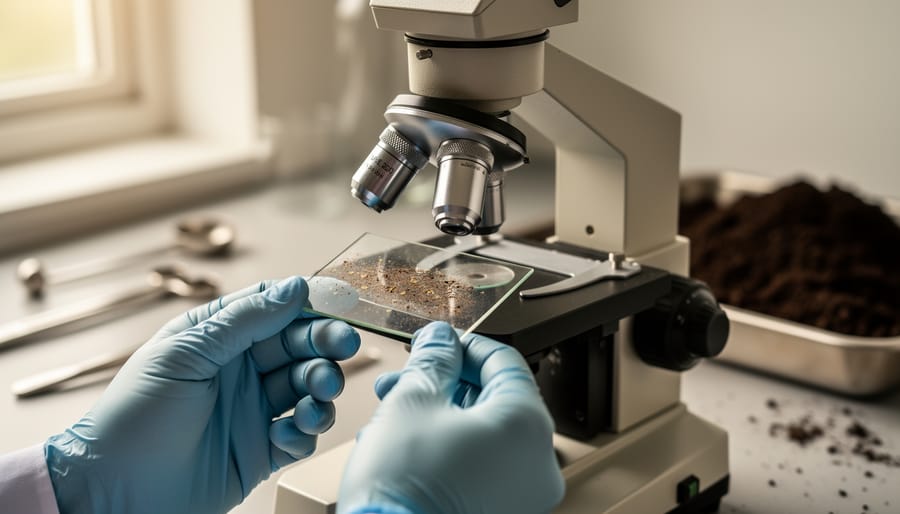
Regenerative soil microscopy is the practice of examining living soil samples under a microscope to identify and count beneficial organisms like bacteria, fungi, protozoa, and nematodes that drive nutrient cycling and soil health. By revealing what’s actually alive in your soil, this diagnostic tool helps farmers and gardeners understand whether their regenerative practices are working and where adjustments might be needed.
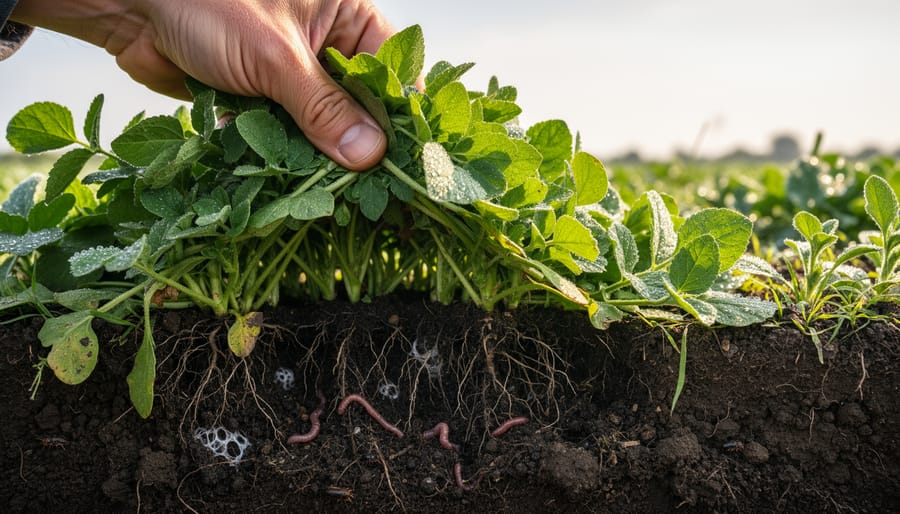
The invisible world beneath our feet determines whether crops thrive or struggle. Healthy soil teems with billions of organisms per teaspoon, each playing a role in breaking down organic matter, cycling nutrients, suppressing disease, and helping plants store carbon. But you can’t manage what you can’t measure. Traditional soil tests tell you about chemical composition and pH levels. Microscopy shows you the biological engine that makes those nutrients available to plants.
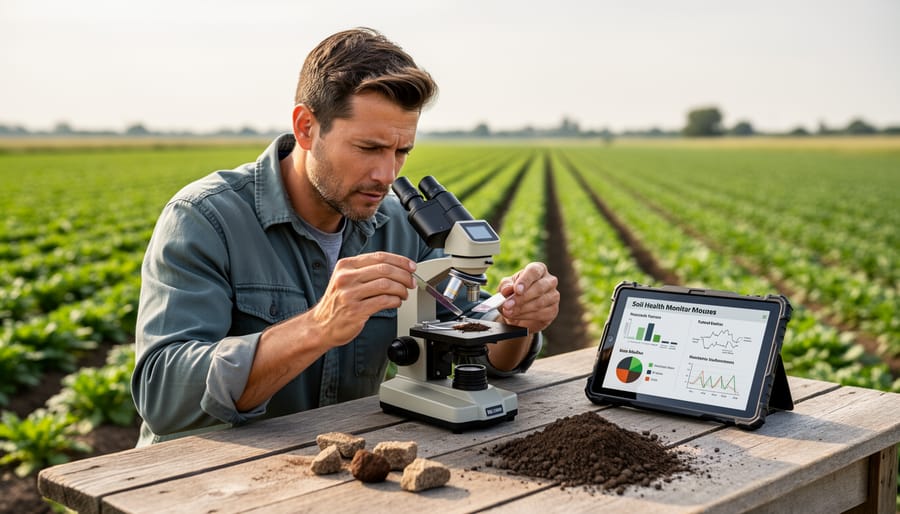
Sarah Chen, who runs a 40-acre vegetable CSA in Ontario, started using soil microscopy in 2024 after three years of cover cropping and compost applications. “I thought I was building soil health, but the microscope showed me my fungal-to-bacterial ratio was way off for the crops I wanted to grow,” she says. “That one insight changed how I manage compost and helped me double my tomato yields.”
This guide walks you through what regenerative soil microscopy reveals, how the process works, which organisms to look for, and practical ways to use this information on your farm or garden. Whether you’re new to regenerative agriculture or looking to fine-tune established practices, understanding your soil biology gives you a roadmap for building truly fertile ground.
What Regenerative Soil Microscopy Means for Your Farm or Garden
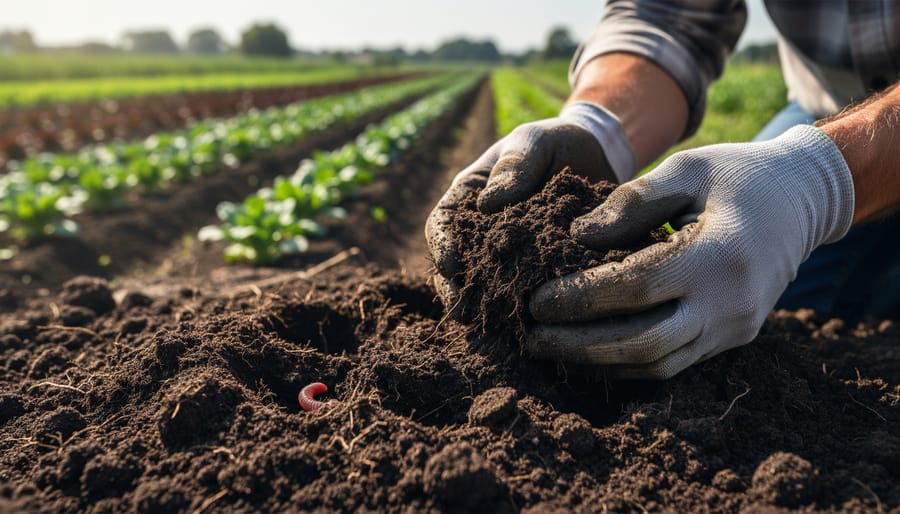
Regenerative soil microscopy is the practice of examining fresh soil samples under a microscope to see, identify, and count the living organisms that drive soil fertility. Instead of sending samples to a lab and waiting weeks for a chemical analysis of NPK levels, you prepare a slide right in your barn or kitchen, peer through the lens, and directly observe bacteria clustering around organic matter, fungal strands weaving through soil particles, protozoa hunting their prey, and nematodes gliding past. What you see tells you whether your soil is biologically alive and balanced, or struggling.
Traditional soil tests measure nutrients already present in the soil, but they can’t tell you whether you have the microbial workforce needed to keep building and cycling those nutrients. A field might test adequate for nitrogen on paper, yet lack the bacterial populations that convert atmospheric nitrogen or the fungal networks that transport phosphorus to plant roots. Microscopy reveals that living engine. You learn whether your compost additions are feeding the right organisms, whether your cover crops are building fungal dominance, and whether your soil is on a regenerative trajectory or just holding steady.
- Regenerative soil microscopy
- The direct observation and counting of living soil organisms under a microscope to assess soil health and guide farming practices that rebuild soil biology.
- Soil food web
- The complex network of organisms, from bacteria to earthworms, that decompose organic matter, cycle nutrients, and support plant growth in healthy soil.
- Beneficial organisms
- Microbes and invertebrates such as mycorrhizal fungi, nitrogen-fixing bacteria, and bacterial-feeding nematodes that enhance soil fertility and plant health.
- Fungal-to-bacterial ratio
- The balance between fungal and bacterial biomass in soil, which indicates whether your soil ecology supports annual vegetables (bacterial-dominated) or perennial systems (fungal-dominated).
For organic growers and CSA farmers, this matters because you’re investing time and money in practices meant to build soil, composting, reduced tillage, diverse crop rotations. Microscopy shows you whether those investments are working. It turns soil health from an abstract goal into something you can see, count, and improve season after season.
How Regenerative Soil Microscopy Works
The Equipment You’ll Need
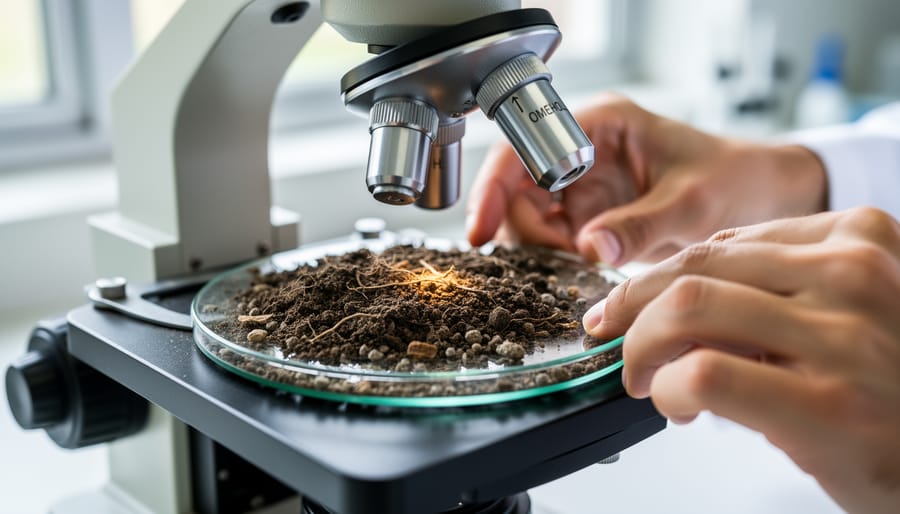
A quality compound microscope with 400x magnification will show you bacteria, fungi, and protozoa in your soil samples. You don’t need a research-grade instrument, student models in the $300-$600 range work fine for most farm applications.
Look for a microscope with brightfield illumination and at least two objective lenses: a 10x and a 40x. Combined with a 10x eyepiece, this gives you 100x and 400x total magnification. Some farmers add a 100x oil-immersion objective later for detailed bacterial counts, but it’s not essential when you’re starting out.
You’ll also need basic supplies: microscope slides and coverslips, a pipette or eyedropper for sample prep, and distilled water. A simple counting chamber (around $40) helps you estimate organism populations per gram of soil.
Phase-contrast microscopes offer better clarity for transparent organisms, but they cost more. Many small-scale growers begin with standard brightfield models and upgrade once they’re comfortable with the process.
Skip the fancy digital cameras initially. Your eyes and a basic observation log work perfectly well for tracking changes in your soil’s microbial community over time.
Reading What You See: Identifying Key Organisms
When you peer through the microscope at 400x magnification, you’ll see a world that’s easier to read than you might expect. Bacteria appear as tiny dots, rods, or spirals, often barely visible at first, swimming or twitching across the slide. They’re the smallest organisms you’ll spot, and a healthy sample shows them clustered around organic matter or scattered throughout the water film.
Fungi stand out as long, thread-like strands called hyphae. They look like translucent tubes or branching highways stretching across your field of view. Mycorrhizal fungi have thinner, more delicate hyphae than saprophytic types, though distinguishing them takes practice. You’ll often see them attached to root fragments or weaving through soil particles.
Protozoa are larger, more animated creatures. Ciliates zip around with visible hair-like structures, amoebas creep slowly across the slide changing shape, and flagellates whip their tails as they hunt bacteria. They’re the movement that catches your eye.
Nematodes are unmistakable, transparent, worm-like organisms that thrash in characteristic S-curves. Bacterial-feeding nematodes have narrow mouths, while fungal-feeders sport wider, tubular feeding structures.
Healthy diversity means seeing all these groups together. If you spot only bacteria with few protozoa or fungi, your soil ecosystem is out of balance, a signal to adjust your management practices.
Types of Soil Organisms You’ll Observe
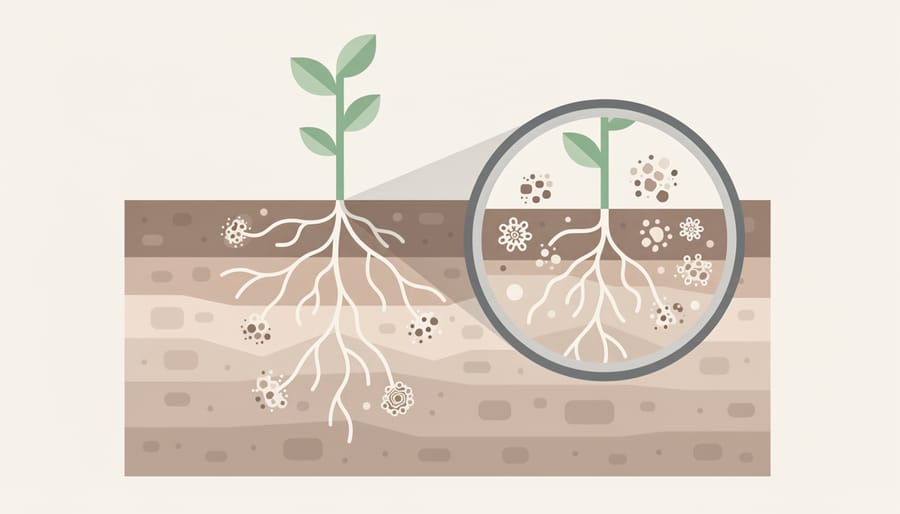
Looking through your microscope, you’ll encounter four major groups of soil organisms, each playing a distinct role in building fertility and feeding your plants. Recognizing these tiny workers helps you understand whether your soil is heading in the right direction.
Bacteria are the smallest and most abundant organisms you’ll see, tiny rods, spheres, or spirals that may appear in clusters or chains. Decomposer bacteria break down organic matter into nutrients plants can absorb, while nitrogen-fixing species convert atmospheric nitrogen into forms plants use for growth. A healthy soil sample typically shows bacteria actively moving or clustered around organic particles, signaling robust nutrient cycling.
Fungi appear as long, thread-like structures called hyphae. Saprophytic fungi decompose tough materials like wood and crop residues, releasing nutrients slowly over time. Mycorrhizal fungi form partnerships with plant roots, extending far into the soil to gather water and nutrients, especially phosphorus, in exchange for sugars from the plant. When you spot abundant fungal networks, you’re seeing the infrastructure that helps plants thrive in challenging conditions and resist drought.
Protozoa look like tiny jellyfish or amoebas gliding across your slide. These single-celled organisms graze on bacteria, and here’s where things get interesting: as they consume bacteria, they release excess nitrogen in a plant-available form. This “microbial loop” is a key feature of regenerative systems, turning bacterial populations into a steady nitrogen source without synthetic fertilizers.
Beneficial nematodes are the largest organisms you’ll observe, transparent, worm-like creatures that wiggle energetically. Bacterial-feeding nematodes further accelerate nitrogen release by grazing on bacteria, while fungal-feeding nematodes consume fungal hyphae and release nutrients. Their presence indicates a mature, functioning soil food web where nutrients flow freely from microbes to plants.
How Farmers Use Microscopy to Build Healthier Soil
Soil microscopy shifts from abstract science to practical farm tool when you use it to guide specific decisions. Many CSA farmers start by monitoring compost maturity, a quick microscopic check reveals whether bacterial and fungal populations have developed enough for the compost to nourish rather than compete with plants. You’ll see dense, diverse microbial life in finished compost, while immature material shows fewer organisms and undigested organic matter.
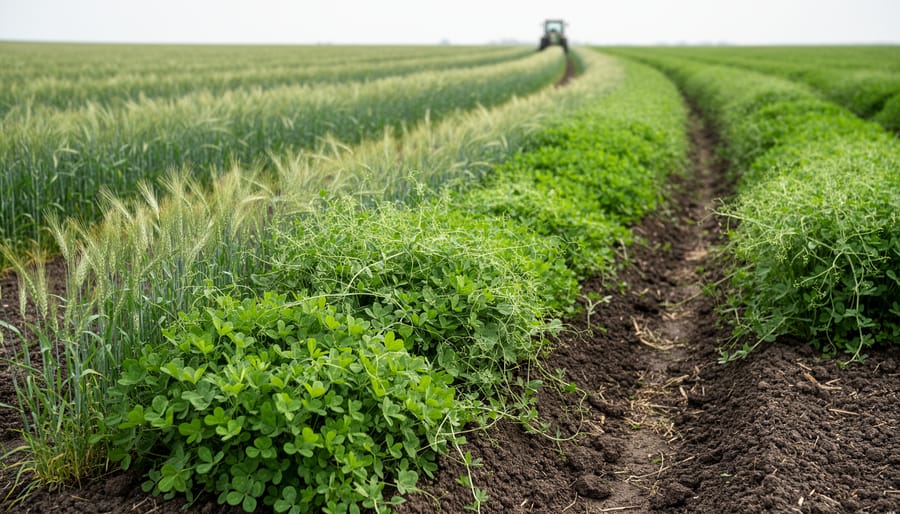
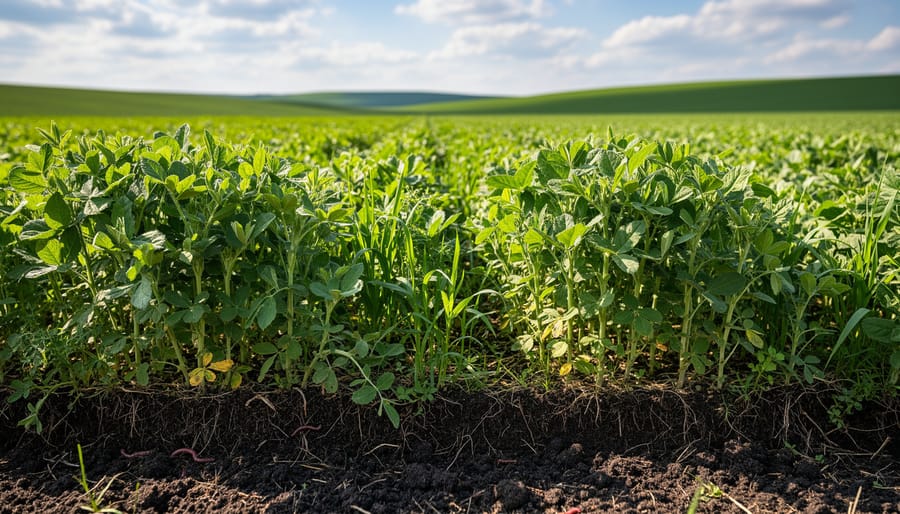
Testing before and after planting cover crops shows you exactly how these plants change your soil biology. A field that grew buckwheat or clover typically shows increased bacterial activity and protozoa populations compared to bare soil. This visible proof helps you refine which species work best in your system and demonstrates their value to skeptical neighbors or farm partners.
Microscopy also tells you when to apply compost tea or other biological amendments. If your spring sample shows low fungal populations before planting tomatoes, you know to brew and apply a fungal-dominated tea. Conversely, thriving microbial counts mean you can skip unnecessary applications and save time and materials.
Tracking soil recovery over seasons provides powerful feedback. A farm transitioning from conventional methods might see sparse, bacteria-dominated soil initially, then watch fungal networks and predator populations expand as legume rotation and reduced tillage take hold. This biological evidence often appears months before chemical tests show changes in nitrogen or organic matter.
Perhaps most valuably, microscopy informs tillage and crop rotation choices. Observing disrupted fungal hyphae after tillage makes the cost visible, helping you decide whether cultivation is worth it. Similarly, seeing how specific crop sequences affect organism diversity guides smarter rotation planning tailored to your soil’s actual biology, not generic recommendations.
Real Success: CSA Farmers Using Soil Microscopy
When Sarah Thompson took over her family’s 15-acre CSA operation in Vermont, she inherited depleted soil that produced lackluster yields despite heavy compost applications. Traditional soil tests showed adequate nutrient levels, leaving her puzzled about why her tomatoes struggled and greens lacked vigor.
After attending a soil microscopy workshop in 2024, Sarah collected her first samples and peered through the lens. What she found shocked her: almost no fungal hyphae and a bacterial population dominated by a single type. Her soil was alive, but barely diverse enough to support healthy plants.
She adjusted her approach immediately. Instead of broadcasting finished compost, she began applying fungal-dominant compost tea and reduced tillage to protect fungal networks. Within one growing season, her microscope revealed dramatic changes, fungal strands weaving through soil particles and a thriving community of protozoa cycling nutrients.
The results showed up in her harvest baskets. Tomato yields increased by 40 percent, and CSA members commented on the difference in flavor. Sarah now checks her soil under the microscope every six weeks, treating it like a regular farm checkup.
“Seeing the life in my soil changed everything,” she says. “I’m not guessing anymore. I know what’s working.”
Getting Started with Soil Microscopy on Your Farm
Starting soil microscopy doesn’t require a huge investment or months of training. Most farmers begin by attending a workshop or taking an online course to learn the basics of sample collection, slide preparation, and organism identification. The Soil Food Web School offers comprehensive courses that range from introductory webinars to intensive certification programs. Many state extension services and regenerative agriculture groups also host hands-on workshops where you can practice with equipment before committing to purchase.
You’ll face a choice early on: buy your own microscope or send samples to a lab. A quality compound microscope costs between $800 and $2,000, plus accessories. If you’re testing monthly and plan to use microscopy as an ongoing management tool, owning equipment pays off within the first year. If you’re just starting or only want seasonal snapshots, commercial labs will analyze samples for $50 to $150 each and provide detailed organism counts and recommendations.
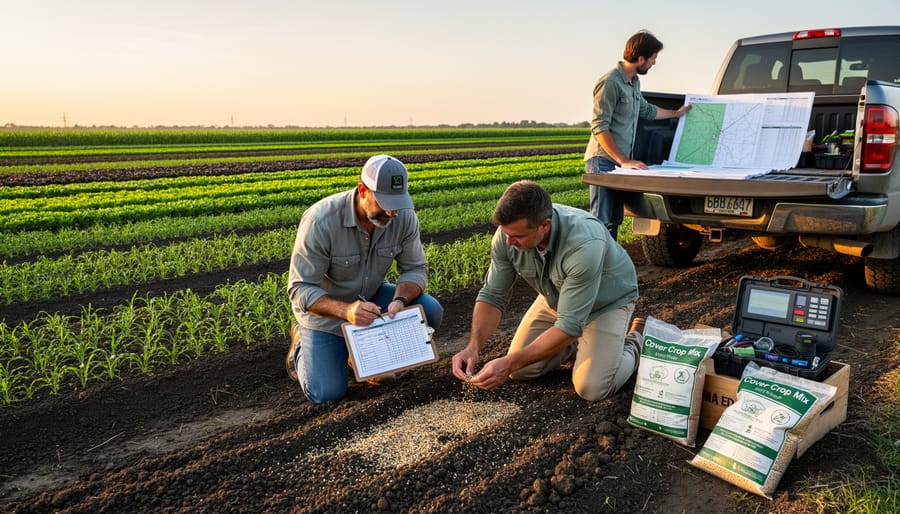
For timing, test your soil at key decision points rather than on a rigid calendar. Most farmers check in early spring before planting, mid-season after applying compost or amendments, and in fall after harvest to track year-over-year progress. This seasonal rhythm gives you actionable data without turning microscopy into a burden.
Integration is simpler than it sounds. Pair soil sampling with routine farm tasks you already do, collect samples when you’re scouting fields or turning compost piles. Keep your microscope in an accessible spot, not buried in storage. Many growers dedicate one morning per month to microscopy, reviewing slides while processing the week’s harvest or during slower winter months to plan amendments for spring.
Common Questions About Regenerative Soil Microscopy
Is microscopy better than chemical soil tests?
They serve different purposes. Chemical tests measure nutrients like nitrogen and phosphorus, while microscopy reveals the living organisms that cycle those nutrients and make them available to plants. The best approach combines both: use chemical tests to track nutrient levels and microscopy to understand the biological engine driving soil fertility.
How long does it take to learn soil microscopy?
Most farmers can identify basic organism groups, bacteria, fungi, protozoa, nematodes, after a two-day workshop or 10-15 hours of guided practice. Becoming proficient at recognizing specific species and interpreting ecosystem balance takes several months of regular observation, but you don’t need expert-level skills to make useful farm decisions.
Can I do this without expensive equipment?
Yes. You can send samples to a soil biology lab for analysis starting around $50-100 per sample, which is a good way to learn what healthy soil looks like before investing in equipment. If you decide to buy, a decent compound microscope starts around $300-500, though serious soil work benefits from models in the $800-1,500 range.
How does soil microscopy fit with organic certification?
It fits perfectly. Microscopy helps you verify that your compost meets biological activity standards, confirms beneficial organism populations, and supports documentation for organic inspectors showing soil health improvements over time. Many organic certifiers view biological soil monitoring as a strength in your management plan.
What if I find my soil is unhealthy?
That’s valuable information, not bad news. Knowing your starting point lets you track improvement as you add compost, reduce tillage, plant cover crops, or adjust other practices. Most degraded soils show measurable biological recovery within one growing season of regenerative management, and microscopy lets you see that progress happening in real time.
Do I need to test every field separately?
Start with your most important production areas and any problem spots where crops struggle. Once you understand your baseline, you can test less frequently, many farmers check key fields twice a year (spring and fall) and rotate through other areas annually. Focus your effort where the information will most change your decisions.
These questions come up regularly at farm workshops and online forums where growers discuss adopting microscopy. The learning curve feels steep at first, but remember that you’re building a skill that compounds over years. Each observation sharpens your eye, and within a season or two, looking at a soil sample becomes as routine as checking moisture levels or scouting for pests.
Regenerative soil microscopy gives you a direct window into the living system that powers your farm or garden. By observing bacteria, fungi, protozoa, and nematodes under a microscope, you’re not just testing soil, you’re building a relationship with the microbiome that feeds your plants and produces nutrient-dense food for your CSA members or family table.
This practice bridges the gap between abstract soil health concepts and tangible, visible results. When you see thriving fungal networks or abundant beneficial nematodes in your compost, you gain confidence that your regenerative practices are working. That knowledge helps you make smarter decisions about amendments, cover crops, and tillage, creating a virtuous cycle of soil improvement.
Whether you start with a basic compound microscope in your barn or send samples to a lab, the insights you gain will deepen your understanding of what healthy soil truly means. As more farmers adopt microscopy, we’re collectively learning to farm with the soil food web rather than against it, a shift that’s essential for building resilient, productive land that nourishes both people and the planet for generations to come.