Transform your farmland into a powerful carbon sink through regenerative farming practices that boost soil health while fighting climate change. Plant cover crops between growing seasons to capture atmospheric carbon and enhance soil structure. Minimize tillage operations to prevent stored carbon from escaping while protecting valuable soil microorganisms. Integrate livestock through rotational grazing to naturally fertilize fields and accelerate carbon sequestration.
Modern agriculture holds immense potential for mitigating climate change – studies show that improved farming practices could sequester up to 10% of current global carbon emissions. By adopting these methods, farmers don’t just reduce their carbon footprint – they create resilient, productive landscapes that generate higher yields and healthier crops. The solution to climate change might just lie beneath our feet, in the rich, living soil that sustains us all.
The Soil-Carbon Connection
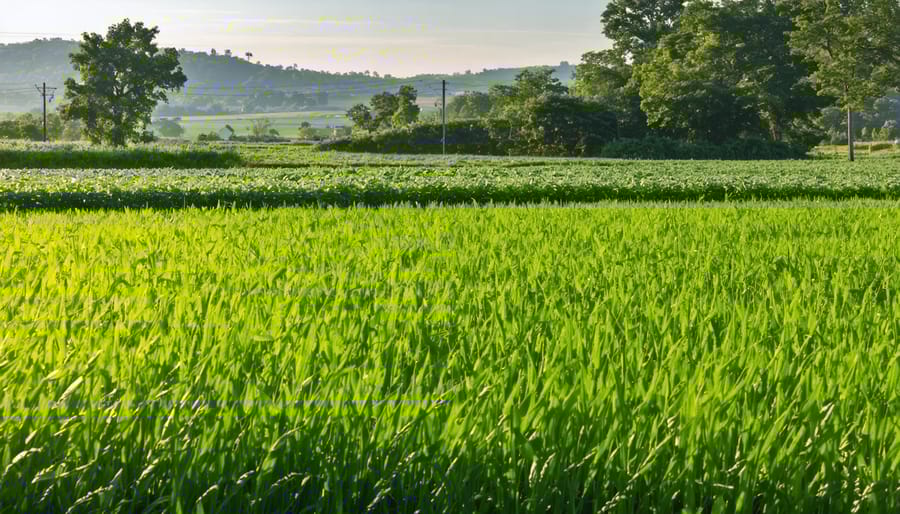
Healthy soil rich in organic matter demonstrates the natural capacity for carbon storage in agricultural systems.
Understanding Your Soil’s Carbon Storage Potential
Different soil types have varying abilities to store carbon, making it essential to understand your land’s potential. Sandy soils typically have lower carbon storage capacity, while clay-rich soils can hold significantly more. The key to maximizing your soil’s carbon sequestration lies in its organic matter content and biological activity.
Healthy soils rich in organic matter can transform your farmland into thriving ecosystems capable of storing impressive amounts of carbon. Dark-colored soils usually indicate higher organic matter content and better carbon storage potential. You can assess your soil’s current state through simple tests like the jar test for texture and checking its color and smell.
The good news is that regardless of your soil type, you can enhance its carbon storage capacity. Adding compost, practicing minimal tillage, and maintaining year-round plant cover helps build organic matter. Local farmer Sarah Thompson improved her sandy loam soil’s carbon content by 2% over five years through consistent application of these practices, proving that with proper management, any soil can become a better carbon sink.
Simple Carbon-Storing Farming Practices
No-Till Farming Benefits
No-till farming is revolutionizing how we think about soil care and carbon storage in agriculture. Instead of traditional plowing, this approach leaves the soil undisturbed, creating a natural environment where organic matter can accumulate and thrive. When farmers skip tilling, they help enhance soil health while keeping carbon locked safely in the ground.
The benefits are impressive: reduced erosion, better water retention, and improved soil structure. Plant roots and beneficial organisms create natural pathways in the soil, leading to better drainage and aeration. This intact soil ecosystem becomes a powerful carbon sink, storing more atmospheric carbon dioxide than regularly tilled fields.
Local farmer Sarah Martinez switched to no-till five years ago and noticed dramatic improvements: “My soil holds moisture better during dry spells, and I’ve seen more earthworms than ever before. Plus, I’m spending less time and fuel on field preparation.”
No-till farming also supports beneficial microorganisms and fungi networks that help plants access nutrients more effectively. These underground communities play a crucial role in carbon sequestration while building long-term soil fertility.
No-till farming practices maintain crop residue and allow cover crops to protect and enrich the soil.
Cover Cropping Strategies
Cover crops are nature’s carbon-capturing champions, working tirelessly to lock atmospheric carbon into the soil while protecting and enriching farmland. These helpful plants are grown during off-seasons when fields would typically lie bare, creating a win-win situation for both farmers and the environment.
Popular cover crop choices include legumes like clover and vetch, which not only sequester carbon but also fix nitrogen in the soil. Cereal rye and winter wheat excel at developing extensive root systems that help build soil organic matter, while buckwheat and mustard rapidly produce biomass above ground.
Local farmer Sarah Martinez shares her success story: “Since implementing cover crops three years ago, we’ve noticed darker, richer soil and improved water retention. Our soil tests show significantly higher carbon content, and our vegetable yields have increased by 15%.”
To maximize carbon sequestration benefits, consider these practical tips:
– Plant cover crops immediately after harvest
– Use diverse species mixtures
– Allow crops to grow as long as possible before termination
– Minimize soil disturbance when terminating crops
– Incorporate residue into the soil rather than removing it
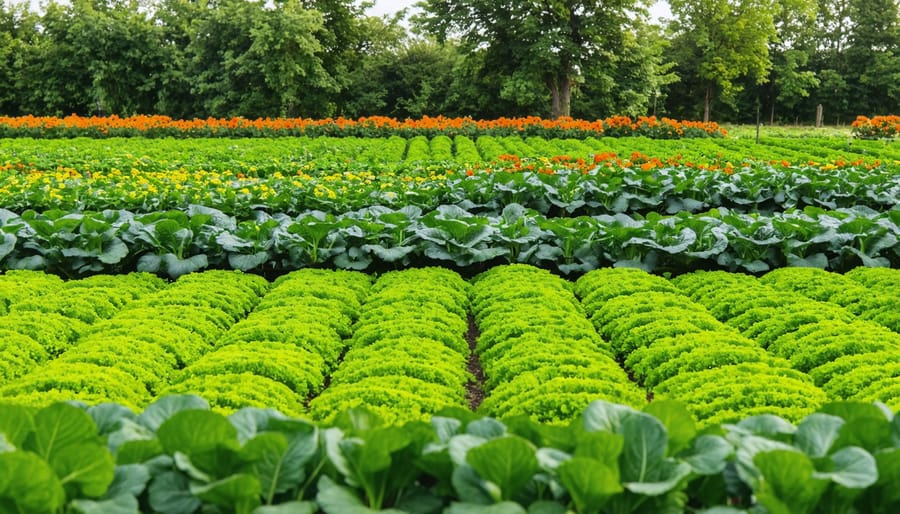
Diverse cover crop mixtures provide multiple benefits for soil health and carbon sequestration.
Real Success Stories from Local Farms
Meet Sarah and Tom from Sunrise Valley Farm, who transformed their 20-acre plot into a carbon-capturing powerhouse. By implementing no-till farming and maintaining year-round cover crops, they’ve increased their soil organic matter by 2% in just three years while boosting their vegetable yields by 30%.
In the Pacific Northwest, Green Meadows CSA has become a model for successful carbon sequestration. Owner Maria Rodriguez combines rotational grazing with diverse perennial plantings. Her soil tests show a remarkable increase in carbon content, and her farm now sequesters an estimated 5 tons of carbon per acre annually.
The Johnson Family Farm in Vermont proves that small changes add up to big impacts. Their transition to regenerative practices, including composting and agroforestry, has not only improved soil health but also reduced their irrigation needs by 40%. They’ve created a thriving ecosystem where beneficial insects flourish, naturally controlling pests while building soil organic matter.
These success stories demonstrate that carbon sequestration practices not only benefit the environment but also lead to more resilient and profitable farming operations.
Carbon sequestration in agriculture offers a powerful solution for combating climate change while improving soil health and farm productivity. By implementing practices like cover cropping, no-till farming, and agroforestry, farmers and gardeners can actively contribute to reducing atmospheric carbon dioxide while building more resilient agricultural systems.
The benefits extend beyond environmental impact – improved soil structure, increased water retention, and enhanced biodiversity create more productive and sustainable farming operations. Even small-scale gardeners can make a difference by adopting these practices in their backyard plots.
As we face growing environmental challenges, every effort to sequester carbon counts. Whether you’re managing acres of farmland or tending a small garden, consider implementing these carbon-smart practices. Together, we can cultivate a healthier planet while growing abundant, nutritious food for our communities.
The farm-to-table revolution represents a transformative shift in how we connect with our food, bringing fresh ingredients directly from local farms to our plates. This movement goes far beyond a simple food trend – it’s a complete reimagining of our food system that prioritizes freshness, sustainability, and community connections. By shortening the distance between farmers and consumers, farm-to-table creates a transparent food chain where you can trace every ingredient back to its source, often within 100 miles of your table. This direct partnership between local farmers and consumers not only ensures peak-fresh produce but also strengthens local economies, reduces environmental impact, and fosters meaningful relationships between growers and eaters. Whether you’re a home cook passionate about quality ingredients or a conscientious consumer concerned about food sustainability, understanding farm-to-table principles opens the door to more mindful, delicious, and community-centered eating.
The Real Meaning of Farm-to-Table
Beyond the Buzzword
Traditional food systems often involve multiple intermediaries, with produce traveling hundreds or even thousands of miles before reaching your plate. Farm-to-table dramatically shortens this journey, creating a direct line between farmers and consumers. Instead of produce sitting in warehouses or spending days in transit, farm-to-table vegetables often go from harvest to table within 24 hours.
This direct connection benefits everyone involved. Farmers receive fair compensation for their work and maintain control over their growing practices. Restaurants and consumers get fresher, more nutritious produce at peak ripeness. The environmental impact is also significantly reduced, with fewer transportation emissions and less packaging waste.
Consider this: A conventional tomato might change hands 5-6 times and travel over 1,500 miles before reaching your salad. In contrast, a farm-to-table tomato might travel just 30 miles from a local farm to your favorite restaurant or farmers’ market, preserving both flavor and nutritional value.
Key Components of True Farm-to-Table
True farm-to-table practices are built on several essential pillars that work together to create a sustainable and transparent food system. Direct relationships between farmers and consumers form the foundation, with farmers selling their produce directly through farmers’ markets, CSA programs, or partnerships with local restaurants. Seasonal eating is another crucial component, as authentic farm-to-table operations follow natural growing cycles rather than forcing year-round availability.
Traceability plays a vital role, with clear documentation of where food comes from and how it’s grown. This includes transparent farming practices, harvest dates, and delivery methods. Local sourcing is paramount, typically keeping food distribution within a 100-mile radius to maintain freshness and reduce transportation impacts.
Quality and freshness standards are non-negotiable, with produce often harvested within 24-48 hours of reaching the consumer. Sustainable farming practices, including organic methods, soil health management, and responsible water usage, round out the key elements that define genuine farm-to-table operations.
Building Strong Community Partnerships
Farmer-Restaurant Relationships
The heart of farm-to-table dining lies in successful farm-restaurant partnerships that bring fresh, local ingredients directly from fields to plates. These relationships often begin with chefs visiting local farms, getting to know the farmers, and understanding their growing practices. Farmers work closely with restaurants to plan seasonal menus, adjusting their crop schedules to meet culinary needs while maintaining sustainable farming practices.
Many farmers customize their growing plans based on specific restaurant requests, cultivating unique or heritage varieties that add distinctive flavors to dishes. Regular communication helps both parties coordinate harvest times with menu changes, ensuring optimal freshness and reducing food waste. Some partnerships even include restaurant staff participating in harvest days or farmers hosting educational sessions for kitchen teams.
These collaborations often extend beyond simple buying and selling. Many restaurants prominently feature their farm partners on menus and websites, while farmers gain stable income streams and valuable feedback about crop varieties. This mutual support creates a sustainable local food system that benefits both businesses while delighting diners with exceptional fresh flavors.
Community Support Networks
Community support networks form the backbone of the farm-to-table movement, creating vital connections between farmers and consumers. Farmers markets serve as vibrant weekly meeting points where locals can purchase fresh produce directly from growers while learning about seasonal offerings and farming practices. These markets not only provide access to fresh, local food but also foster meaningful relationships between producers and consumers.
Community Supported Agriculture (CSA) programs offer another powerful way to support local farmers. Members pay upfront for a season’s worth of produce, providing farmers with essential early-season capital while sharing in both the bounty and risks of farming. CSA subscribers typically receive weekly boxes of fresh, seasonal produce, often accompanied by newsletters featuring recipes and farm updates.
Food co-ops represent yet another pillar of community support, operating as member-owned grocery stores that prioritize local sourcing. These democratically run organizations often work directly with multiple local farmers, providing year-round market access while keeping prices fair for both producers and consumers. Many co-ops also offer educational programs and cooking classes, helping members make the most of seasonal produce and supporting the broader farm-to-table ecosystem.
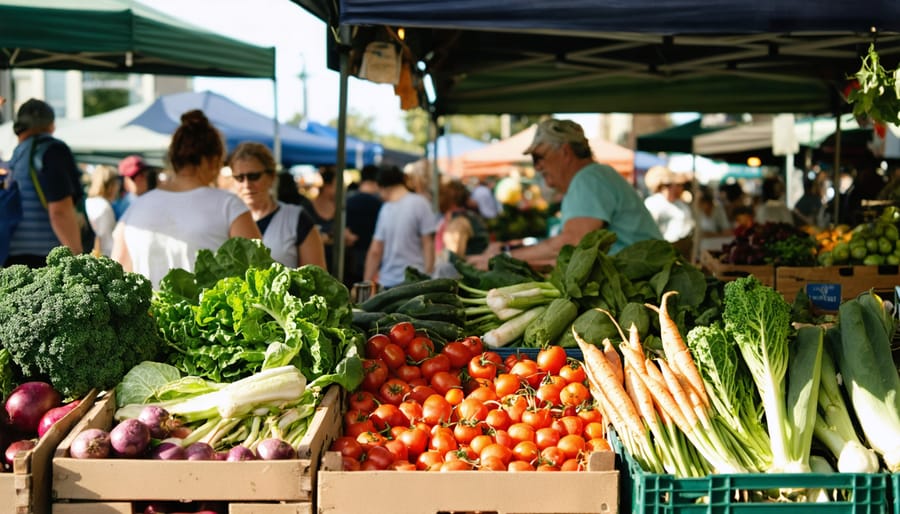
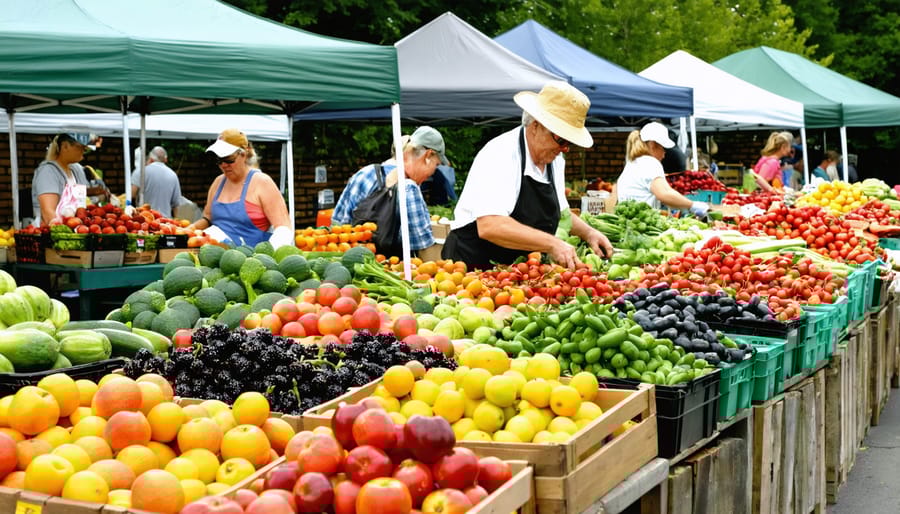
Local farmers market vendors display fresh seasonal produce, demonstrating the direct connection between producers and consumers in farm-to-table systems.
Success Stories from the Field
Local Farm Spotlight
Green Valley Organics, nestled in the rolling hills of Vermont, exemplifies the farm-to-table movement’s success. Sarah and Mike Thompson, former tech professionals turned farmers, transformed their 15-acre plot into a thriving hub of sustainable agriculture that’s become one of our most inspiring local farm success stories.
Their operation specializes in heritage vegetables and rare fruit varieties, supplying fresh produce to five local restaurants and maintaining a 100-member CSA program. What sets Green Valley apart is their innovative approach to community engagement. They host monthly farm-to-table dinners where guests harvest ingredients for their meals, creating an immersive educational experience.
The farm’s success stems from their commitment to regenerative practices, including companion planting and natural pest management. They’ve reduced water usage by 40% through drip irrigation and collect rainwater for their greenhouse operations. Their weekly newsletter connects customers directly with their food source, sharing recipes, farming updates, and upcoming harvest schedules.
The Thompsons prove that sustainable farming isn’t just environmentally conscious – it’s economically viable. Their model demonstrates how small-scale agriculture can thrive while nurturing both community relationships and the land.
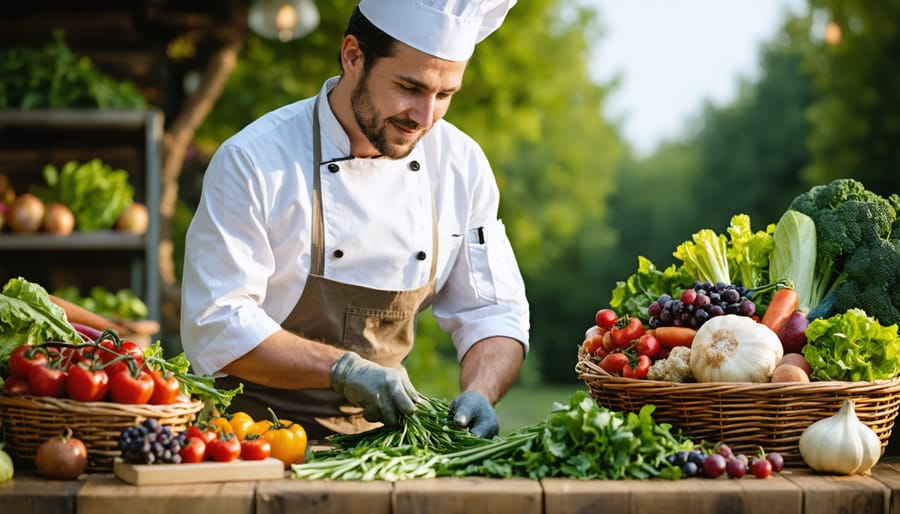
A thriving small-scale organic farm demonstrates diverse crop cultivation and sustainable farming practices essential to farm-to-table agriculture.A chef and local farmer collaborate to select the day’s harvest, exemplifying the direct relationships at the heart of farm-to-table partnerships.
Restaurant Partnership Case Study
The Blue Hill Restaurant in New York’s Hudson Valley exemplifies a successful farm-to-table partnership that has thrived for over two decades. Working directly with Stone Barns Center for Food and Agriculture, the restaurant sources nearly 80% of its ingredients from within a 30-mile radius.
Chef Dan Barber collaborates closely with local farmers to plan seasonal menus months in advance. This partnership allows farmers to grow specific heritage varieties of vegetables and raise heritage breed livestock that perfectly match the restaurant’s culinary vision. The restaurant’s menu changes daily based on harvest schedules and seasonal availability.
The partnership extends beyond simple purchasing agreements. Blue Hill’s kitchen staff regularly visits the farm to understand growing practices and harvest timing, while farmers participate in menu planning sessions. This close collaboration has created a sustainable economic model that benefits both parties – the restaurant receives ultra-fresh, high-quality ingredients, while farmers enjoy guaranteed purchase agreements and premium prices for their produce.
This partnership has become a model for other restaurants and farms looking to establish meaningful farm-to-table relationships, demonstrating how direct collaboration can create both culinary excellence and agricultural sustainability.
Starting Your Own Farm-to-Table Initiative
Finding Local Partners
Building relationships with local farmers and food producers is easier than you might think. Start by visiting your local farmers’ markets, where you can meet producers face-to-face and learn about their growing practices. Many farmers are eager to establish direct relationships with regular customers and restaurants.
Community Supported Agriculture (CSA) programs offer another excellent way to connect with local farms. These programs typically provide regular deliveries of seasonal produce while supporting local agriculture. Food co-ops and natural food stores often maintain relationships with nearby farmers and can help facilitate connections.
Social media and online directories have made finding local producers simpler than ever. Websites like LocalHarvest and USDA’s Farmers Market Directory can help you locate nearby farms and markets. Don’t forget to check Facebook groups and Instagram accounts focused on local food in your area.
Consider attending agricultural events, farm tours, and food festivals in your region. These gatherings provide opportunities to network with farmers, learn about their operations, and discover new local food sources.
Building Sustainable Relationships
Building successful farm-to-table relationships requires dedication, clear communication, and mutual understanding between farmers and buyers. Start by visiting local farmers’ markets to meet producers and learn about their growing practices. When approaching farmers, be transparent about your needs and expectations while showing genuine interest in their work.
Regular communication is key – establish consistent ordering schedules and discuss seasonal availability well in advance. Consider signing up for CSA programs or joining local food co-ops to support farmers while gaining firsthand experience with the farm-to-table model.
Remember that successful partnerships are built on trust and flexibility. Be understanding of weather-related challenges and seasonal variations that may affect produce availability. Supporting farmers during slower seasons helps maintain strong relationships year-round. Many successful farm-to-table partnerships also include farm visits, harvest celebrations, and community events that strengthen these vital connections.
Celebrate and share your farm-to-table success stories with your community to inspire others and help grow the local food movement.
The farm-to-table movement continues to strengthen communities by fostering direct relationships between farmers and consumers. As more people recognize the value of locally sourced food, these partnerships create lasting benefits for everyone involved. Farmers receive fair compensation for their work, while consumers enjoy fresher, more nutritious produce and a deeper connection to their food sources.
Looking ahead, farm-to-table collaborations are poised to grow even stronger. Local food systems are becoming more resilient through innovative approaches like community-supported agriculture programs, farmers’ markets, and farm-to-school initiatives. These partnerships not only support sustainable agriculture but also boost local economies and promote environmental stewardship.
By participating in farm-to-table initiatives, we can all contribute to a healthier, more sustainable food system. Whether you’re a consumer making conscious food choices, a restaurant owner sourcing local ingredients, or a farmer connecting directly with your community, you’re part of a movement that’s reshaping how we think about and value our food.
Farming has undergone massive changes over the last few decades. Earlier, farming activity was mainly based on experience and intuition without any chance to prognose or plan yields and incomes. But what has changed? Modern growers utilize satellite imagery, IoT sensors, and AI analytics to monitor their fields in real-time, even without on-site inspections.
All this data is presented in a clear and understandable format in a crop tracking platform, allowing farmers to view everything in one place: soil conditions, crop health, weather patterns, and growth progress. The result? Smarter farming, better yields, and more sustainable use of every resource.
What Is a Crop Tracking Platform?
A crop tracking platform is a central command center, where a farmer can access data from multiple resources about crop conditions, soil moisture, weather predictions, and more. As a result, growers receive a comprehensive, real-time view of the crop lifecycle through satellite imagery, on-the-ground sensors, and analytical tools. Here, how it works:
Satellites like Sentinel and Landsat capture images of fields in various spectral bands (visible, NIR, and others, depending on the purpose).
Together with satellites, IoT sensors in soil measure moisture, temperature, and other vital indicators. Then this data is sent wirelessly to the farmer’s device.
Real-time information on weather patterns, humidity, and wind is also sent to the platform via an API.
According to gathered data, tractors and harvesters, equipped with GPS on their boards, can synchronise together to adjust irrigation and fertilisation, and report on their general performance.
All data collected and generated are stored in the platform’s cloud and are available from anywhere in the world, ensuring clarity and standardization for every authorized person.
Turning Satellite Light into Insight: How Vegetation Indices Help Farmers Act Early
Sentinel and Landsat satellites are the main sources of imagery in various spectral bands – visible, near-infrared (NIR), and shortwave-infrared (SWIR) wavelengths. Based on this information and vegetation indices, an application builds a map for growers who can improve the planting process before the consequences affect yields and profits. A wide variety of indices serve farmers:
NDVI (Normalized Difference Vegetation Index): Measures plant “health” and photosynthetic activity. If NDVI values are low, it means that the plant is experiencing drought stress, pest damage, or nutrient deficiency.
EVI (Enhanced Vegetation Index): This index is similar to NDVI, but it is less sensitive to atmospheric conditions and canopy density, making it suitable for areas with dense vegetation.
NDWI (Normalized Difference Water Index): This index helps farmers to assess water content on the fields and figure out over- or under-irrigated zones.
The Role of IoT in Smart Farming
The Internet of Things brings a little magic to what is happening on the ground. It combines all the small sensors on the fields and in machinery, creating a comprehensive nervous system for a farm. As a result, all possible data, such as moisture levels, irrigation schedules, temperature, and many other factors, are synchronized in real-time and submitted to a single platform in a clear and understandable format. Therefore, there will be no guesswork for a farmer on what to do next. Generally, the processes can be automated without the need to participate in the core farming activities:
Smart Irrigation: Sensors detect the moisture level and give this data to irrigation systems. Then they are adjusted automatically, providing the perfect amount of water for plants and precisely at the times when they need it.
Precision Farming: Field borders are synchronised with data from satellites, and tractors are guided with centimeter-level accuracy to avoid waste.
Targeted Pest Control: Using data from space and onsite sensors, AI-powered traps enable farmers to spray only where necessary, rather than the entire field.
Healthy Equipment: Sensors act like a fitness tracker for tractors and predict if they need maintenance before a breakdown happens. They say it is cheaper and easier to prevent than to cure.
The result is bigger harvests and less wasted water. In fact, the UN’s Food and Agriculture Organization found this tech can boost farm efficiency by up to 25%.
The Future of Smart Farming
Traditional methods for managing crops are no longer effective in modern realities. Supply chains must be stable due to the growing population and climate change. Today, we must precisely predict what plants will need next and identify the factors that can negatively impact them. Here come all the technologies that may not have been developed for farming, but are nevertheless used in it.
Drones will act as tireless scouts, scanning vast kilometers of fields without needing to be charged. AI will continue to advance, automating processes and learning from new circumstances in real-time. Meanwhile, blockchain will create a “digital passport” for all the yields and products from fields. As a result, the logistics will be clear and transparent, and you will have a precise understanding of what is on your shelf and where each food item was produced. This will build a more trusted and safe supply chain. This is how we’ll build a brighter, greener future for farming that boosts profits and strengthens our global food security.
Imagine stepping into a restaurant where every ingredient tells a story – from the heirloom tomatoes picked that morning to herbs still carrying garden dew. This culinary movement, known as the farm-to-table revolution, has transformed how we think about dining, connecting our plates directly to local farmers and seasonal harvests.
Beyond just a dining trend, farm-to-table represents a return to our culinary roots while embracing modern innovation. Chefs partner with nearby farms to craft menus that change with the seasons, ensuring peak freshness and flavor while supporting local agricultural communities. This direct partnership between farmers and restaurants has created a new ecosystem of sustainable dining that benefits everyone – from the soil to the table.
The impact extends far beyond taste. When restaurants source locally, they reduce their carbon footprint, support regional economies, and preserve traditional farming practices. Each plate becomes a celebration of place and time, offering diners not just a meal, but a connection to their local landscape and the people who tend it.
This movement has sparked a renaissance in American dining, where the story behind each ingredient matters as much as its flavor. As we continue to face global food challenges, farm-to-table cuisine offers a delicious solution that nourishes both people and planet.
Redefining Restaurant-Farm Partnerships
Beyond Traditional Sourcing
Modern chefs are revolutionizing the farm-to-table movement by forming deep partnerships with local farmers, going far beyond simple purchasing relationships. These collaborations often begin months before the growing season, with chefs and farmers sitting down together to plan entire crop schedules and discuss unique varietals that will eventually become signature menu items.
Many restaurants now employ dedicated farm liaisons who work directly with multiple growers, coordinating planting schedules to ensure consistent supply throughout the year. Some chefs are even experimenting with heritage seeds and forgotten varieties, working with farmers to revive ancient grains and heirloom vegetables that offer distinct flavors and textures.
This collaborative approach has led to exciting innovations, such as farmers growing specific micro-greens to a chef’s exact specifications or cultivating unique herb varieties that complement particular dishes. For example, Chef Sarah Martinez of Portland’s Terra works with local farmer John Miller to grow purple snow peas and striped cherry tomatoes exclusively for her seasonal tasting menu.
These partnerships also help reduce food waste, as chefs can plan menus around entire crop yields and work with farmers to utilize everything from root to stem. Some restaurants even arrange for farmers to harvest produce at specific times to maximize flavor and freshness, sometimes just hours before service. This evolving relationship between chef and farmer represents the future of sustainable restaurant cuisine, where the line between kitchen and field becomes increasingly blurred.
A chef and local farmer collaborate in the field, exemplifying the direct partnership that defines modern farm-to-table relationships.
Seasonal Menu Innovation
The heart of farm-to-table cuisine lies in its ability to dance with the seasons, creating menus that reflect nature’s ever-changing bounty. Successful restaurants embracing this philosophy understand that adapting their offerings to local harvest schedules isn’t just about sustainability – it’s about capturing the peak flavor and nutritional value of each ingredient.
Chefs who excel in seasonal cooking techniques work closely with local farmers to plan their menus months in advance. They study crop calendars, consider preservation methods, and develop creative ways to showcase each season’s highlights. During spring, tender shoots and early greens take center stage. Summer brings an explosion of colorful vegetables and fruits, while autumn celebrates root vegetables and hardy greens. Even winter offers opportunities with stored crops, preserved ingredients, and greenhouse-grown produce.
Innovation comes through preservation methods like fermentation, pickling, and dehydrating, allowing chefs to extend the use of seasonal ingredients. Many restaurants maintain their own kitchen gardens, giving them access to fresh herbs and specialty items year-round. Some even experiment with indoor growing systems for microgreens and edible flowers.
The key to successful seasonal menu planning lies in flexibility and creativity. Rather than viewing seasonal limitations as restrictions, innovative chefs see them as opportunities to create unique dishes that tell the story of their local foodshed, one plate at a time.
Technology Meets Tradition
A professional chef transforms fresh local produce into elegant dishes, showcasing farm-to-table cuisine in action.
Smart Farming Integration
Modern technology has revolutionized the way farms and restaurants work together in the farm-to-table movement. Smart farming apps and digital platforms now enable farmers to precisely coordinate their harvests with restaurant demands, ensuring the freshest possible ingredients make it from soil to plate.
Many farmers use crop management software that tracks growing cycles and predicts harvest dates. These tools integrate with restaurant ordering systems, allowing chefs to see real-time updates about when specific produce will be available. This digital coordination helps reduce food waste and ensures restaurants can plan their menus around seasonal availability.
Weather monitoring systems and soil sensors provide valuable data that helps farmers optimize growing conditions and predict potential challenges. When connected to restaurant management systems, this information allows chefs to adjust their menu planning based on how weather might affect crop yields.
Success stories like Green Valley Farm show how this integration works in practice. Their smart irrigation system and harvest tracking app helped them reduce water usage by 30% while better meeting the needs of their restaurant partners. Local chef Sarah Martinez shares, “Having real-time updates about our partner farms’ harvests helps us create more precise seasonal menus and reduce our food waste significantly.”
Some farms even use QR codes on their produce deliveries, allowing restaurants to trace exactly when and where items were harvested. This transparency builds trust and helps restaurants share authentic farm-to-table stories with their customers.
Digital Farm-to-Chef Platforms
The digital revolution has transformed the traditional farm-to-table movement, making it easier than ever for chefs and farmers to connect directly. Modern platforms and mobile apps are streamlining the sourcing process, allowing restaurants to browse local harvests and place orders with just a few taps.
Popular platforms like FarmersWeb and Local Food Marketplace have created virtual marketplaces where farmers can showcase their seasonal produce, while chefs can easily track availability and place orders in real-time. These digital solutions eliminate the need for multiple phone calls and text messages, saving valuable time for both parties.
Success stories abound, like Sarah’s Green Acres in Vermont, which increased its restaurant partnerships by 300% after joining a digital platform. The farm now supplies fresh produce to over 20 local restaurants, with order management fully automated through their chosen app.
These platforms often include features like harvest calendars, delivery scheduling, and automated invoicing. Some even offer predictive analytics to help farmers plan their crops based on restaurant demand patterns. For chefs, many platforms provide detailed information about growing practices, harvest dates, and farm certifications, ensuring complete transparency in sourcing.
The technology also enables better inventory management and reduces food waste, as restaurants can order exactly what they need and farmers can better plan their harvests. Some platforms have even introduced features for consumers, allowing them to see which restaurants source from their favorite local farms.
Creative Preservation Methods
Ancient Meets Modern
In today’s farm-to-table movement, chefs and farmers are creating an exciting fusion of time-tested preservation methods with cutting-edge technology. Traditional techniques like fermentation, pickling, and smoking are being enhanced by precise temperature controls and modern monitoring systems, allowing for consistent, safe results while maintaining authentic flavors.
Take Sarah Miller’s Blue Hill Farm, for example, where centuries-old root cellaring meets smart humidity sensors to create the perfect environment for storing winter vegetables. Her team uses mobile apps to track fermentation progress in their kimchi and sauerkraut, ensuring each batch reaches peak flavor while maintaining food safety standards.
Modern vacuum sealers and sous vide equipment are helping chefs extend the shelf life of seasonal ingredients without compromising their nutritional value. Meanwhile, ancient practices like dry-aging meats and curing fish are being perfected through digital monitoring systems that maintain ideal temperature and humidity levels.
Some innovative restaurants are even combining hydroponics with traditional companion planting methods, growing microgreens and herbs year-round using automated watering systems while following age-old wisdom about which plants grow best together. This marriage of old and new ensures that farm-to-table restaurants can serve fresh, local ingredients throughout the year while honoring traditional preservation techniques that have shaped our culinary heritage.
Zero-Waste Innovation
In today’s farm-to-table movement, innovative chefs and farmers are revolutionizing how we use every part of their harvested ingredients. Root-to-stem cooking has become a cornerstone of sustainable cuisine, transforming what was once considered kitchen waste into culinary gold.
Carrot tops transform into vibrant pestos, while their peels become crispy garnishes. Beet greens, often discarded, are now starring in sautéed side dishes, while their stems pickle beautifully for future use. Creative chefs are even turning corn silk into tea and using tough broccoli stems in slaws and gratins.
Fruit preservation takes on new life with creative applications: citrus peels become candied treats or zesty seasonings, apple cores transform into drinking vinegars, and overripe fruits find purpose in fermented beverages and natural dyes for plant-based food coloring.
Animal proteins receive similar treatment in zero-waste kitchens. Bones become the foundation for rich broths, while organ meats feature in innovative charcuterie. Even fish scales are being transformed into crispy garnishes, while shells from shellfish get pulverized into unique seasonings.
Local farmer Maria Rodriguez shares her success story: “We’ve partnered with three restaurants that use everything we grow. Even our sunflower stalks become natural trellises for next season’s climbing plants. It’s amazing to see zero waste in action from field to plate.”
This whole-ingredient approach not only reduces food waste but also introduces diners to new flavors and textures while honoring the full potential of farm-fresh ingredients.
Success Stories
An expertly crafted seasonal dish demonstrates the creative possibilities of farm-to-table cuisine.
From Field to Fame
The farm-to-table movement has given rise to numerous success stories across North America, with pioneering restaurants transforming how we experience food. One standout example is Blue Hill at Stone Barns in New York, where Chef Dan Barber has created an innovative ecosystem that seamlessly connects farming and dining. The restaurant’s menu changes daily based on what’s harvested from their 80-acre farm, creating some of the most compelling local produce stories in modern cuisine.
In California, Chez Panisse continues to influence the farm-to-table movement decades after Alice Waters first opened its doors. The restaurant maintains partnerships with over sixty local farmers, ensuring a steady supply of seasonal ingredients that shape their daily-changing menu. Their success has inspired countless restaurants to adopt similar practices.
The Herb Farm in Washington State takes the concept even further by growing most of their ingredients on-site. Their nine-course themed dinners celebrate the Pacific Northwest’s seasonal bounty, with each dish telling a story about the land and its farmers. They’ve mastered the art of turning limitations into opportunities, proving that seasonal constraints can spark culinary creativity.
Outstanding in the Field has reimagined the entire restaurant concept by bringing diners directly to farms. Their traveling restaurant sets up long tables in fields, orchards, and beaches across America, creating unforgettable dining experiences where guests connect directly with farmers and their land. This innovative approach has hosted over 100,000 guests at more than 1,000 locations.
In urban settings, Acre in Memphis demonstrates how rooftop gardens and strategic local partnerships can create a successful farm-to-table restaurant even in city centers. Their 1.5-acre rooftop garden provides fresh herbs and vegetables year-round, while relationships with nearby farmers supply additional ingredients. This hybrid model has become a blueprint for urban restaurants looking to embrace local sourcing.
These success stories show that farm-to-table isn’t just a trend but a sustainable business model that benefits farmers, chefs, and diners alike. Each restaurant has found unique ways to overcome challenges and create memorable dining experiences while supporting local agriculture.
As we look to the future, farm-to-table cuisine continues to evolve and reshape our culinary landscape in exciting ways. Modern chefs and restaurateurs are pushing boundaries by combining traditional local sourcing with cutting-edge technology and innovative growing methods. From rooftop hydroponic gardens to AI-powered crop management, these advancements are making farm-to-table experiences more accessible and sustainable than ever before.
The movement has sparked a lasting transformation in how we think about food, fostering stronger connections between farmers, chefs, and diners. Restaurant kitchens are becoming living laboratories where seasonal ingredients inspire creative dishes, while smart farming techniques help extend growing seasons and reduce environmental impact.
Looking ahead, we can expect to see more integration of urban farming solutions, enhanced traceability systems, and innovative preservation methods that maintain the integrity of local ingredients year-round. The rise of community-supported agriculture programs and educational initiatives will continue to strengthen the bond between producers and consumers, ensuring that farm-to-table remains not just a dining trend, but a fundamental approach to sustainable food systems.
As this movement matures, it’s clear that farm-to-table cuisine has forever changed our relationship with food, creating a more conscious, connected, and sustainable culinary future for generations to come.
Imagine biting into a sun-ripened tomato that was harvested just hours ago, its flavor bursting with the essence of local soil and careful stewardship. The farm-to-table movement transcends typical dining experiences, creating a direct connection between farmers and food lovers while experiencing fresh local food in its purest form.
This revolutionary approach to eating transforms our relationship with food by eliminating lengthy supply chains and ensuring maximum nutrition and flavor. From small family farms to innovative urban gardens, the farm-to-table concept celebrates seasonal eating, supports local economies, and dramatically reduces the environmental impact of our food choices.
At its heart, farm-to-table represents a return to our agricultural roots while embracing modern sustainable practices. It’s not just about where our food comes from – it’s about fostering community connections, understanding the rhythm of seasons, and participating in a food system that benefits both people and planet. Whether you’re a home cook, restaurant owner, or conscious consumer, the farm-to-table movement offers a tangible way to make a difference with every meal.
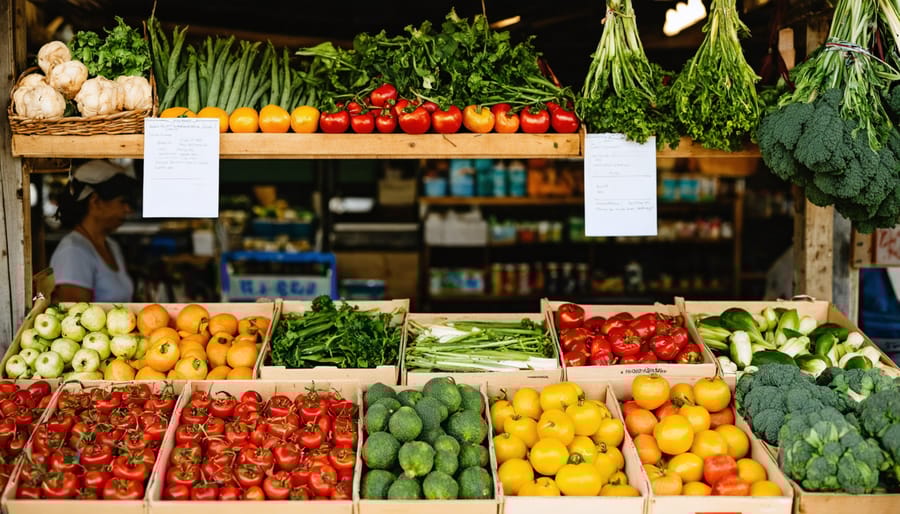
Fresh, seasonal produce displayed at a local farmer’s market showcases the variety available through farm-to-table sourcing.
The Real Impact of Farm-to-Table Movement
Environmental Benefits
The farm-to-table movement significantly reduces food’s environmental impact through shorter transportation distances, dramatically cutting carbon emissions from long-haul shipping. When produce travels directly from local farms to nearby tables, the reduced “food miles” mean fewer trucks on the road and less fuel consumption.
This sustainable approach also tackles packaging waste head-on. Local farmers often use minimal, reusable packaging solutions like returnable boxes and bags, eliminating the need for excessive plastic wrapping and disposable containers common in conventional food distribution.
The environmental benefits extend beyond transportation and packaging. Local farmers practicing sustainable agriculture typically employ methods that protect soil health, conserve water, and promote biodiversity. Many use organic farming techniques, avoiding harmful pesticides and synthetic fertilizers that can damage ecosystems. Cover cropping, crop rotation, and natural pest management help create resilient farming systems that work in harmony with nature.
Additionally, seasonal eating encouraged by farm-to-table practices supports natural growing cycles, reducing the energy needed for artificial growing conditions like heated greenhouses or cold storage facilities.
Supporting Local Economy
The farm-to-table movement creates a powerful ripple effect throughout local economies, starting with the farmers themselves. When consumers purchase directly from local farms, roughly 95 cents of every dollar stays within the community, compared to just 15 cents when buying from large chain stores.
Local farmers who participate in farm-to-table programs often report increased financial stability, allowing them to expand their operations and hire additional staff. This growth creates job opportunities not just on farms, but also in transportation, farmers’ markets, and local restaurants that source ingredients directly from nearby producers.
Take Sarah Miller’s Stone Creek Farm in Vermont, for example. After partnering with local restaurants and launching a CSA program, her farm grew from a two-person operation to employing twelve full-time workers within three years. The farm now supplies produce to six restaurants and supports over 200 CSA members.
Beyond direct employment, farm-to-table initiatives spark entrepreneurial opportunities in related businesses like food processing, artisanal products, and agritourism. This interconnected network of local businesses strengthens community bonds while building a more resilient local food system.
From Field to Fork: The Journey
Direct Farm Relationships
Direct farm relationships form the heart of the farm-to-table movement, creating meaningful connections between food producers and consumers. Restaurants and individuals can connect with local farmers through various channels, including farmers’ markets, community-supported agriculture (CSA) programs, and direct farm visits.
Many successful restaurants build lasting partnerships with nearby farms, working closely with farmers to plan seasonal menus and ensure a steady supply of fresh ingredients. These relationships often involve regular farm visits, where chefs can personally select produce and discuss growing practices with farmers. Some restaurants even collaborate with farmers to grow specific varieties of vegetables or herbs tailored to their culinary needs.
For individual consumers, building direct relationships with farmers offers numerous benefits. Regular communication helps them understand seasonal availability, learn about growing practices, and gain insight into the challenges and triumphs of local agriculture. Many farmers welcome visitors to their properties, offering tours and educational experiences that strengthen these connections.
Digital platforms and social media have made it easier than ever to maintain these relationships, with many farms using online tools to share updates, coordinate deliveries, and build community around their agricultural practices. Some farms even offer subscription services or virtual farm tours, making local food more accessible to urban communities.
A chef and local farmer collaborate directly in the field, representing the personal relationships at the heart of farm-to-table sourcing.
Seasonal Menu Planning
Seasonal menu planning lies at the heart of the farm-to-table concept, requiring chefs and home cooks to work in harmony with nature’s rhythms. Instead of relying on imported produce available year-round, this approach celebrates the unique flavors and nutrients of each season’s harvest.
In spring, menus feature tender greens, asparagus, and early peas, while summer brings an abundance of tomatoes, peppers, and fresh herbs. Fall welcomes hearty root vegetables, squashes, and late-season fruits, and winter showcases storage crops, preserved items, and greenhouse-grown specialties.
Working with seasonal ingredients not only ensures peak flavor and nutritional value but also supports local farmers and reduces environmental impact. Successful seasonal menu planning involves:
– Building relationships with local farmers to understand their growing schedules
– Creating flexible menu templates that can adapt to available produce
– Developing preservation techniques for extending seasonal bounty
– Learning to substitute ingredients based on availability
– Educating customers about seasonal eating benefits
Many restaurants maintain rotating menus that change quarterly or even monthly to reflect local harvests. Some establishments take it further by offering daily specials based on what farmers deliver that morning. This dynamic approach keeps menus exciting while ensuring maximum freshness and supporting sustainable agricultural practices.
For home cooks, seasonal planning might mean joining a CSA program, frequenting farmers’ markets, or maintaining a kitchen garden to better connect with local growing seasons.
Getting Started with Farm-to-Table
Finding Local Producers
Connecting with local producers is easier than ever, thanks to numerous resources and platforms designed to bridge the gap between farmers and consumers. Start by exploring your local farmers’ markets, where you can meet producers face-to-face and learn about their farming practices. These markets often serve as community hubs where relationships between growers and buyers flourish.
Community Supported Agriculture (CSA) programs offer another excellent way to source local produce. Through CSA memberships, you receive regular shares of seasonal produce directly from farms, creating a mutually beneficial relationship that supports local agriculture while providing you with fresh, high-quality food.
Online directories and mobile apps have made finding local producers more convenient. Websites like LocalHarvest and USDA’s Farmers Market Directory can help you locate nearby farms, markets, and CSA programs. Social media platforms also serve as valuable tools, with many farmers maintaining active profiles where they share updates about available produce and farm events.
Don’t overlook agricultural extension offices and local food co-ops, which often maintain lists of area producers and can provide valuable connections. Many regions also have food policy councils or sustainable agriculture organizations that can point you toward local farmers who align with your values.
Remember to visit farms during open house events or scheduled tours to better understand their practices and build lasting relationships with the people growing your food.
A family explores their weekly CSA box contents while preparing a fresh, seasonal meal together.
Seasonal Cooking Tips
Making the most of seasonal produce requires adapting your cooking techniques throughout the year. Cooking with seasonal ingredients not only ensures the best flavors but also helps support local farmers and reduce food miles.
In spring, focus on quick-cooking methods to preserve the delicate flavors of tender greens, asparagus, and early peas. Light steaming or quick sautéing helps maintain their crisp texture and vibrant colors. As summer arrives, embrace raw preparations like fresh salads and cold soups to showcase tomatoes, cucumbers, and fresh herbs at their peak.
Fall brings heartier vegetables that benefit from roasting and braising. Root vegetables, winter squash, and Brussels sprouts develop wonderful caramelization and depth of flavor when roasted with olive oil and herbs. Consider batch cooking and preserving autumn’s abundance through canning, pickling, or freezing.
Winter calls for slow-cooking methods that transform storage vegetables into comforting dishes. Create hearty soups and stews with stored root vegetables, winter squash, and preserved items from previous seasons. Don’t forget to incorporate preserved herbs and frozen produce to maintain variety in your winter meals.
Keep a seasonal cooking calendar in your kitchen to track local harvest times and plan your menus accordingly. Building relationships with local farmers can help you learn about upcoming harvests and get tips for preparing unfamiliar vegetables.
Success Stories
The farm-to-table movement has sprouted numerous success stories across North America, showcasing how this sustainable approach can transform communities and revolutionize our food system. Let’s explore some inspiring stories of local farmers who have made remarkable strides in this field.
Blue Hill at Stone Barns in New York’s Hudson Valley stands as a shining example of farm-to-table excellence. This restaurant-farm partnership has created a closed-loop system where 80% of their ingredients come from their own fields and nearby producers. Their success has inspired countless other establishments to adopt similar practices.
In Vermont, Intervale Community Farm has transformed 350 acres of once-abandoned land into a thriving agricultural hub. Starting with just a handful of CSA members in 1990, they now feed over 600 families annually while maintaining strict organic standards and providing educational programs for the community.
The Urban Farming Collective in Portland, Oregon, demonstrates how farm-to-table can succeed even in city environments. They’ve converted vacant lots into productive gardens, supplying fresh produce to local restaurants and food-insecure neighborhoods. Their model has been replicated in cities nationwide.
Elderberry’s Farm in California showcases the power of direct-to-consumer relationships. What began as a small family farm selling at local markets has evolved into a successful operation supplying 12 restaurants and running a popular farm store. Their transparent practices and community engagement have built unwavering customer loyalty.
Rising Roots Farm in Minnesota proves that young farmers can thrive in the farm-to-table movement. Started by two millennials with minimal farming experience, they now operate a profitable 15-acre diverse vegetable farm, supplying restaurants and running a successful CSA program.
These success stories share common elements: strong community connections, sustainable farming practices, and innovative marketing approaches. They demonstrate that farm-to-table isn’t just an idealistic concept but a viable business model that benefits farmers, consumers, and the environment alike.
The farm-to-table movement represents more than just a dining trend – it’s a powerful way to transform our food system and strengthen local communities. By choosing to support local farmers, participate in CSA programs, or grow your own food, you become part of a sustainable solution that benefits both people and the planet. Whether you start by visiting your local farmers’ market, joining a community garden, or simply making more mindful food choices, every step counts. Together, we can create a healthier, more sustainable food future that connects us directly with the source of our nourishment. Take the first step today by exploring local food options in your area and experiencing the incredible difference that fresh, sustainably grown food can make in your life and community.
Step into a world where reality bends to imagination as immersive virtual reality transforms how we experience digital environments. Unlike traditional screens, VR technology now enables us to physically walk through digital landscapes, interact with three-dimensional objects using natural hand movements, and engage with virtual spaces as if they were tangibly real. From training surgeons in risk-free environments to enabling architects to walk clients through unbuilt structures, VR has evolved from a gaming novelty into a powerful tool reshaping education, business, and creative expression.
Modern VR systems combine high-resolution displays, precise motion tracking, and haptic feedback to create experiences so convincing that your brain accepts the virtual world as real. This technological convergence opens unprecedented opportunities for remote collaboration, experiential learning, and therapeutic applications that were previously impossible. Whether you’re an educator, business professional, or creative explorer, immersive VR offers a new frontier where the boundaries between physical and digital dissolve, creating possibilities limited only by human imagination.
Person wearing VR headset while virtual farm elements appear around them
Virtual Farm Tours: Bringing the Fields to Your Living Room
Seasonal Virtual Visits
Through virtual reality, CSA members can now experience the fascinating transformation of their farm throughout the growing season, all from the comfort of their homes. These seasonal virtual visits capture key moments in the farming calendar, from spring soil preparation and seedling emergence to summer harvest peaks and fall cleanup activities.
Members can virtually walk through fields of sprouting vegetables in early spring, witness the vibrant colors of summer flowers in bloom, and explore autumn’s abundance during harvest time. These immersive experiences help members understand how weather patterns, soil conditions, and farming practices influence crop development throughout the year.
The virtual tours are captured using 360-degree cameras and include interactive hotspots where members can learn more about specific crops, seasonal challenges, and farming techniques. Farmers provide narrated explanations of their activities during each season, sharing insights about crop rotation, pest management, and soil health maintenance.
This seasonal documentation creates a deeper appreciation for the farming process and helps members better understand why certain vegetables are available at different times of the year. It’s like having a window into the farm’s yearly rhythm, making the connection between field and table more meaningful and tangible.
Interactive Crop Exploration
Step into a virtual field where you can explore and interact with various crops throughout their growing cycles. Through intuitive hand controls, you’ll experience everything from seed selection to harvest techniques. Watch as virtual tomato plants climb their trellises, observe how companion planting works with basil and marigolds, and learn the intricate details of crop spacing and rotation.
The experience allows you to practice different farming methods, from traditional row planting to advanced permaculture designs. You can experiment with various irrigation systems, test different mulching techniques, and even simulate seasonal challenges. Want to see how your choices affect plant growth? Fast-forward through the growing season to witness the results of your farming decisions.
What makes this feature particularly valuable is the ability to make mistakes and learn from them without real-world consequences. Try different organic pest management strategies, experiment with various composting methods, and perfect your timing for succession planting – all in a risk-free environment. This hands-on virtual practice helps build confidence before applying these techniques in actual gardens or farms.
Educational Benefits of Virtual CSA Experiences
From Seed to Harvest
Step into a virtual greenhouse where you can witness the entire journey of a plant’s life cycle, from the moment a tiny seed nestles into rich soil to the triumphant harvest of fresh produce. This immersive experience lets you fast-forward through weeks of growth in minutes, watching as seedlings emerge, develop their first true leaves, and gradually transform into mature plants laden with fruits or vegetables.
Through interactive touch points, you can learn about crucial growing stages, optimal watering schedules, and the importance of proper soil nutrition. Watch in amazement as root systems develop beneath the soil through X-ray-like visualization, while above-ground growth showcases the daily dance of plants following the sun.
The experience includes virtual demonstrations of different growing techniques, from traditional row planting to vertical gardens and hydroponics. You’ll discover how weather patterns affect plant growth and learn to identify common plant diseases and pest issues. This hands-on virtual learning tool makes complex agricultural concepts accessible and engaging, helping you better understand the dedication and expertise that goes into growing your local produce.
Split screen showing real farm on one side and its VR representation on the other
Sustainable Farming Practices
Step into a virtual classroom where sustainable farming comes to life through immersive VR technology. Experience hands-on organic farming methods without getting your hands dirty – yet. Through interactive 3D simulations, you’ll learn essential techniques like crop rotation, composting, and natural pest management that form the backbone of sustainable agriculture.
Watch as virtual soil ecosystems demonstrate the importance of maintaining healthy microbiomes, and see how companion planting helps crops thrive naturally. The VR experience takes you through the seasons, showing how different organic farming practices adapt to nature’s rhythm.
Get up close with beneficial insects and learn how they contribute to a balanced farm ecosystem. Interactive modules let you practice building compost piles, planning crop layouts, and managing water conservation systems. You’ll even discover how to implement regenerative techniques that improve soil health over time.
These virtual lessons make complex sustainable farming concepts accessible and memorable, preparing you for real-world application while fostering a deeper appreciation for organic growing methods.
Real-World Connection: Enhancing CSA Membership
Farmer using VR technology to demonstrate farming techniques to virtual visitors
Building Farmer-Member Relationships
Through virtual meet-and-greets, farmers can now connect with CSA members in ways never before possible. Members can step into the farm environment from their homes, joining live Q&A sessions where they can interact with farmers in real-time. This technology creates an intimate space for dialogue, allowing farmers to share their growing practices, challenges, and successes while building a stronger digital CSA community.
Members can virtually walk alongside farmers during harvest tours, ask questions about specific crops, and learn about sustainable farming methods firsthand. These immersive sessions often include behind-the-scenes looks at daily farm operations, from seed starting to crop rotation planning. Farmers can demonstrate their organic practices, explain their decision-making processes, and share seasonal updates that help members feel more connected to their food source.
These virtual interactions create lasting bonds between producers and consumers, fostering trust and loyalty that strengthens the local food system.
Making Informed Food Choices
Through immersive VR experiences, members can virtually walk through the fields where their food grows, watching crops develop from seed to harvest. These interactive tours help people understand seasonal growing cycles and the careful attention required for organic farming. Users can explore different farming areas, learn about specific cultivation methods, and see firsthand how their food is grown without synthetic pesticides or fertilizers.
The technology allows members to virtually participate in farming activities, from planting seedlings to checking soil health. They can observe sustainable farming practices like crop rotation, companion planting, and natural pest management in action. This hands-on virtual experience helps members make more informed decisions about their food choices by understanding the work that goes into growing their produce.
These virtual visits create a stronger connection between members and their food sources, often inspiring them to make more environmentally conscious food choices and reduce food waste.
Future of Virtual CSA Experiences
The future of virtual CSA experiences is shaping up to be an exciting frontier where technology and sustainable agriculture intersect. As smart farming technology solutions continue to evolve, we’re seeing promising developments in VR hardware and software that could revolutionize how we connect with our local farms.
Upcoming VR technologies are expected to introduce haptic feedback systems that will let CSA members virtually feel the texture of soil and produce, creating an even more immersive farm experience. Imagine being able to participate in virtual harvest sessions where you can learn proper picking techniques for different vegetables, or attend real-time virtual workshops with your farmer from the comfort of your home.
Advanced weather simulation features will soon allow members to understand how environmental conditions affect crop growth throughout the seasons. These innovations will help bridge the knowledge gap between farmers and consumers, making sustainable agriculture more accessible and understandable to everyone.
Future applications may include virtual crop planning sessions where members can provide input on next season’s plantings, interactive troubleshooting guides for home gardeners, and collaborative virtual spaces where CSA communities can gather to share tips and experiences. These developments promise to strengthen the connection between farmers and members while maintaining the personal touch that makes CSA farming special.
Virtual reality is revolutionizing the way we connect with our local farms and food systems. By bridging the gap between urban consumers and rural farmers, VR technology creates meaningful experiences that educate and inspire. CSA members can now virtually walk through their favorite farms, watch crops grow through the seasons, and gain deeper appreciation for sustainable farming practices – all from the comfort of their homes. This technological advancement isn’t just about entertainment; it’s creating more informed and engaged consumers who better understand the value of supporting local agriculture. As VR continues to evolve, it promises to strengthen the bonds between farmers and their communities, making sustainable farming more accessible and appealing to future generations. Whether you’re a curious consumer or an aspiring farmer, exploring these immersive experiences can transform your relationship with local food systems and sustainable agriculture.
Ancient farming rituals hold remarkable power to transform modern organic gardening practices. From the Native American Three Sisters companion planting to the biodynamic calendar’s lunar cycles, these time-tested ceremonies connect us deeply to the land while improving crop yields and soil health.
Traditional harvesting rituals do more than honor cultural heritage – they provide practical solutions for today’s agricultural challenges. Farmers who incorporate mindful planting ceremonies report stronger plant resilience, better pest management, and more vibrant soil ecosystems. These practices, refined over generations, offer wisdom that bridges sustainable agriculture’s past and future.
Whether you’re tending a small garden or managing acres of farmland, integrating ritualistic elements like harvest celebrations, seed blessing ceremonies, and seasonal observances creates a meaningful framework for ecological stewardship. By blending ancient knowledge with modern organic methods, we can cultivate not just healthier crops, but a deeper relationship with the natural cycles that sustain us.
The Wisdom of Moon Phase Harvesting
Moon Phase Timing Guide
Traditional farmers have long recognized the moon’s influence on plant growth and harvest timing. The lunar cycle offers natural guidance for optimal harvesting, with different phases benefiting various crops and farming activities.
During the waxing moon (from new moon to full), rising sap levels make this period ideal for harvesting leafy greens and fruits that benefit from higher moisture content. The two days before a full moon are particularly favorable for gathering herbs and vegetables that will be eaten fresh.
The full moon phase presents a 2-3 day window perfect for harvesting root vegetables and fruits, as their nutrient and moisture content peaks. Many experienced gardeners swear by this timing for obtaining the most flavorful produce.
The waning moon phase (from full to new) is best for harvesting crops meant for storage or drying. Lower moisture levels during this time help prevent rot and improve preservation quality. Root vegetables harvested during the last quarter moon often show better storage longevity.
For medicinal herbs and aromatic plants, early morning gathering during the waxing moon can maximize their essential oil content and therapeutic properties.
Composite photograph showing different phases of the moon with corresponding harvest activities beneath each phase
Modern Scientific Support
Recent scientific studies have begun to validate what traditional farmers have known for generations about moon-phase harvesting. Research conducted at agricultural universities has shown that moisture content in plants fluctuates with lunar cycles, affecting both crop quality and shelf life. During the waxing moon, for example, sap flow increases, resulting in higher nutrient content and better seed germination rates.
A groundbreaking study published in the Journal of Agricultural Science demonstrated that root crops harvested during the waning moon showed 15% longer storage life compared to those harvested at other times. Similarly, fruits picked during specific moon phases contained measurably higher sugar content and maintained freshness longer.
Biodynamic farming practices, which incorporate lunar cycles, have also gained scientific support. Researchers have documented improved soil microbial activity and enhanced plant resistance to pests when farming activities align with traditional moon-phase timing. These findings suggest that our ancestors’ ritualistic approach to agriculture wasn’t merely superstition but was based on observable natural phenomena that modern science is only now beginning to understand and quantify.
Farmer performing traditional tool blessing ceremony with antique and modern farming tools arranged in a circle
Traditional Tool Blessing Ceremonies
Modern Adaptations
Today’s farmers are finding innovative ways to honor and incorporate traditional farming tools into their daily practices. Many organic farmers begin their day by inspecting and cleaning their equipment, expressing gratitude for these essential implements. Some communities have established tool-sharing programs where farmers gather monthly to maintain equipment collectively, sharing knowledge and stories while they work.
Modern adaptations include seasonal blessing ceremonies for new equipment, mindful maintenance routines, and educational workshops teaching proper tool care to apprentice farmers. Some CSA farms have even integrated tool appreciation into their member events, helping customers understand the vital connection between well-maintained equipment and the quality of their produce.
These contemporary practices not only preserve cultural wisdom but also promote sustainable tool use, reducing waste and fostering a deeper connection to the farming process. By combining ancient respect for tools with modern farming needs, these rituals strengthen community bonds and enhance agricultural sustainability.
First Harvest Celebrations
Community Building Through Ritual
Traditional harvest celebrations serve as powerful tools for strengthening bonds between farmers and their local communities. When neighbors gather to celebrate the season’s bounty, they create lasting connections that extend far beyond the festivities themselves. These shared experiences transform casual farm supporters into dedicated CSA members and foster a deeper appreciation for local agriculture.
Many organic farms have revived harvest rituals by hosting annual festivals, community dinners, and crop blessing ceremonies. These events give community members the chance to participate in traditional activities like corn husking, apple pressing, and garland making. Children learn about food origins through hands-on activities, while adults forge meaningful relationships with the farmers who grow their food.
These gatherings also provide natural opportunities for farmers to share knowledge about sustainable growing practices and seasonal eating, creating an informed and engaged customer base that supports local agriculture year-round.
Community harvest festival scene showing diverse group of people celebrating with freshly harvested produce
Preservation Rituals
Throughout history, farming communities have developed intricate preservation rituals that blend practical wisdom with cultural significance. These traditional storage methods weren’t just about keeping food fresh – they were ceremonies that brought communities together and honored the earth’s abundance.
Many cultures practiced smoke blessing ceremonies before storing grains, which actually served as natural pest control while holding deep spiritual meaning. The smoke would effectively deter insects, while the ritual itself marked the transition from harvest to storage season. Similarly, the common practice of hanging dried herbs in bundles near storage areas combined practical preservation with protective symbolism.
Root cellars, still popular among organic farmers today, were often prepared with salt-lined walls and specific arrangements of crops based on both practical storage needs and traditional beliefs. Many communities would perform blessing ceremonies before sealing their root cellars, creating layers of positive energy while ensuring proper ventilation and temperature control.
The timing of preservation activities often aligned with lunar cycles, which modern research suggests may influence moisture content in plants. Communities would gather during specific moon phases to process and store their harvest, combining social bonding with efficient preservation timing.
These ancient practices remind us that successful crop storage isn’t just about technique – it’s about creating mindful connections with our food and community. Many organic farmers today incorporate elements of these traditional rituals, finding that they enhance both crop preservation and the farming experience while fostering a deeper appreciation for sustainable agriculture.
In our journey through sustainable agriculture, we’ve discovered that traditional harvesting rituals offer more than just cultural significance – they provide practical wisdom that enhances modern farming practices. These time-honored ceremonies remind us to farm in harmony with natural cycles, respect the land that feeds us, and maintain a deeper connection to our food sources.
By incorporating these ancestral practices into contemporary organic farming, we create a more mindful and sustainable approach to agriculture. Farmers who maintain traditional rituals often report stronger community bonds, better crop yields, and a more satisfying relationship with their land. These practices help preserve valuable agricultural knowledge while promoting environmental stewardship for future generations.
As we face increasing environmental challenges, these rituals serve as powerful reminders of our responsibility to protect and nurture the earth. Whether you’re managing a large organic farm or tending a small garden plot, embracing these traditional practices can enrich your agricultural journey and contribute to a more sustainable food system. Let’s continue honoring these ancient ways while building a greener, more connected future in farming.
Food security agriculture stands at the intersection of sustainable farming practices and global food accessibility, representing our most powerful tool in the fight against hunger. By combining traditional agricultural wisdom with modern innovation, farmers and communities worldwide are revolutionizing how we grow, distribute, and ensure access to nutritious food for all populations.
Local food systems form the backbone of food security, with small-scale farmers producing over 70% of the world’s food supply through sustainable, climate-resilient methods. These agricultural practices not only enhance food availability but also protect biodiversity, improve soil health, and strengthen community resilience against environmental and economic challenges.
The movement toward secure food systems encompasses diverse strategies: from vertical farming in urban centers to regenerative agriculture in rural communities, from community-supported agriculture (CSA) programs to innovative storage solutions that reduce post-harvest losses. This comprehensive approach ensures that communities can produce, access, and maintain stable food supplies year-round.
As climate change threatens traditional farming methods, food security agriculture adapts through water-efficient irrigation systems, drought-resistant crop varieties, and integrated pest management techniques. These solutions demonstrate how sustainable agriculture can simultaneously address food security, environmental protection, and economic development goals.
Through collaborative efforts between farmers, researchers, and communities, food security agriculture continues to evolve, offering hope for a future where nutritious food is accessible to all while preserving our planet’s resources for generations to come.
Building Resilient Local Food Systems
Direct-to-Consumer Networks
Direct-to-consumer networks have emerged as powerful tools for enhancing food security while supporting local agriculture. Local farmers markets provide vibrant community hubs where consumers can purchase fresh produce directly from growers, creating meaningful connections between farmers and their neighbors. These markets not only ensure access to nutritious, seasonal food but also help farmers receive fair compensation for their work.
Community Supported Agriculture (CSA) programs offer another innovative approach to direct food distribution. Members purchase shares of a farm’s harvest in advance, receiving weekly boxes of fresh, locally grown produce throughout the growing season. This model provides farmers with stable income and helps them plan their crops more effectively, while giving consumers access to ultra-fresh produce and a deeper understanding of seasonal eating patterns.
Both these distribution channels strengthen local food systems by cutting out middlemen, reducing transportation costs, and ensuring that more food dollars stay within the community. They also serve as educational platforms, helping consumers understand farming practices and seasonal availability while building lasting relationships between producers and consumers.
Vibrant farmers market scene showing diverse local produce and community interaction
Year-Round Production Methods
Modern farming techniques have revolutionized how we think about year-round food availability, making local produce accessible beyond traditional growing seasons. Greenhouses and high tunnels create protected environments where crops flourish even during colder months, while hydroponic systems allow for indoor cultivation regardless of weather conditions.
Smart farmers are combining these methods with season-appropriate crop selection. Cold-hardy vegetables like kale, spinach, and root crops thrive in winter greenhouses, while heat-loving plants flourish in summer. Deep winter growing techniques, pioneered by innovative farmers in cold climates, use passive solar heating and thermal mass to maintain growing temperatures naturally.
Vertical farming is gaining traction in urban areas, maximizing space efficiency while providing fresh produce year-round. These systems often incorporate LED grow lights and automated climate control, ensuring optimal growing conditions throughout the seasons. Storage crops and preservation methods complement these production techniques, creating a robust local food system that supports community food security throughout the year.
Sustainable Farming Practices for Food Security
Split image showing multiple crop varieties in different growth stages
Crop Diversity and Planning
Growing a diverse range of crops is like creating a living insurance policy for your food security. When you plant different varieties of vegetables, fruits, and grains, you’re not just ensuring a more interesting harvest – you’re protecting against crop failure and building a more resilient food system.
Smart farmers know that if one crop faces challenges from pests or weather conditions, others may still thrive. For example, while your tomatoes might struggle during an unusually wet season, your root vegetables could flourish in those same conditions. This diversity helps maintain a steady food supply throughout the growing season.
Succession planting takes this strategy even further by staggering crop plantings throughout the season. Instead of planting all your lettuce at once, you might plant small amounts every two weeks. This approach ensures a continuous harvest and prevents the feast-or-famine cycle that often happens with single-planting methods.
Consider Sarah, a small-scale farmer in Vermont, who transformed her farm’s productivity by implementing a diverse crop rotation system. She now grows over 30 different varieties of vegetables year-round, supplying her local community with fresh produce even during the winter months through careful planning and greenhouse cultivation.
To get started with crop diversity:
– Choose plants that mature at different times
– Mix quick-growing crops with longer-season varieties
– Include both common and unusual varieties
– Plan for seasonal transitions
– Consider companion planting to maximize space and yield
Soil Health Management
Healthy soil is the foundation of successful food production and long-term agricultural sustainability. By implementing proper soil management techniques, farmers and gardeners can maintain fertile growing conditions that support consistent crop yields year after year.
One key practice is crop rotation, which involves changing the types of crops grown in a particular area each season. This natural approach helps prevent soil depletion while reducing pest and disease problems. For example, following nitrogen-hungry corn with nitrogen-fixing legumes helps restore soil nutrients naturally.
Regular soil testing is essential for understanding your soil’s needs. Testing reveals nutrient levels, pH balance, and organic matter content, allowing farmers to make informed decisions about amendments and fertilizers. Many local extension offices offer affordable soil testing services and guidance on interpreting results.
Adding organic matter through composting and cover cropping helps build soil structure and fertility. Compost provides slow-release nutrients while improving water retention and beneficial microbial activity. Winter cover crops like clover or rye protect soil from erosion while adding organic material when tilled under in spring.
Minimal tillage practices help preserve soil structure and beneficial organisms. Many successful farmers use no-till or reduced tillage methods, only disturbing the soil when necessary for planting. This approach maintains natural soil layers while reducing erosion and compaction.
Proper irrigation management prevents soil degradation from excess water or drought stress. Drip systems and moisture monitors help farmers provide consistent water while avoiding oversaturation that can wash away nutrients.
Community Impact and Engagement
Education and Skills Development
Education plays a vital role in building sustainable food security through agriculture. Farmers markets and community gardens often serve as living classrooms, offering hands-on learning experiences for both aspiring farmers and curious community members.
Many successful programs combine traditional classroom learning with practical field experience. Participants learn essential skills like soil preparation, crop rotation, pest management, and sustainable irrigation techniques. These programs also emphasize the importance of seasonal growing, seed saving, and organic farming methods that support long-term food security.
Nutritional education is equally important, teaching communities about the value of fresh, locally grown produce and how to incorporate it into healthy meals. Cooking demonstrations at farmers markets show visitors how to prepare seasonal vegetables, while workshop series help families learn about food preservation and storage techniques.
Youth education programs are particularly effective, introducing children to farming through school gardens and agricultural clubs. These initiatives help create the next generation of informed consumers and potential farmers while fostering an appreciation for sustainable food systems.
Skills development extends beyond farming to include business management, marketing, and food safety certification. This comprehensive approach ensures that participants can not only grow food but also create viable agricultural enterprises that contribute to community food security.
Success stories from program graduates who now run their own farms or lead community initiatives serve as inspiring examples of how education can transform food systems from the ground up.
Community garden workshop with people learning farming techniques
Economic Benefits
Food security agriculture brings substantial economic benefits to local communities, creating a ripple effect that strengthens the entire regional economy. When farmers sell directly to consumers through farmers markets and community-supported agriculture programs, they retain a larger share of food dollars compared to conventional distribution channels. This increased profit margin allows farmers to reinvest in their operations and hire local workers, contributing to job creation and economic growth.
Local food systems also help keep money circulating within the community. Studies show that every dollar spent at local farms generates approximately twice as much income for the local economy compared to shopping at large chain stores. This multiplier effect supports other local businesses, from farm supply stores to restaurants featuring locally-sourced ingredients.
Farmers markets and food security initiatives often attract tourism and enhance community vitality, bringing additional revenue streams to rural areas. These markets become social hubs where people gather, shop, and connect with local producers, fostering a sense of community while driving economic activity.
The economic resilience of diversified small farms also helps protect communities from large-scale agricultural market fluctuations. By growing various crops and serving local markets, farmers can better weather economic downturns and maintain stable income streams throughout the year. This stability translates into more reliable employment opportunities and consistent support for auxiliary businesses in the agricultural sector.
Success Stories from Local Farms
The heartening stories of successful local farm initiatives across the country demonstrate how food security agriculture can transform communities. Take the story of Green Meadows Farm in Vermont, which started as a small family operation and now feeds over 200 families through their CSA program. By implementing innovative crop rotation techniques and greenhouse farming, they’ve extended their growing season to 10 months of the year.
In California’s Central Valley, the Rodriguez Family Farm has become a model of water conservation and drought-resistant farming. Their transition to drip irrigation and drought-tolerant crop varieties has reduced water usage by 40% while maintaining robust yields. They now share their knowledge with neighboring farms, creating a ripple effect of sustainable practices throughout the region.
Urban farming success stories are equally inspiring. The Detroit Urban Farming Initiative transformed vacant city lots into productive gardens, providing fresh produce to food desert neighborhoods. Their network of 12 urban farms now supplies local food banks and runs educational programs for school children, teaching the next generation about sustainable food production.
In rural Montana, the Prairie Partners Cooperative shows how small farms can thrive through collaboration. Ten family farms joined forces to share equipment, coordinate crop planning, and establish a stronger market presence. Their combined efforts have reduced operational costs by 30% and increased each farm’s income by establishing direct-to-consumer marketing channels.
The Rising Sun Farm in Minnesota demonstrates how technology integration can enhance food security. Using smart sensors and automated irrigation systems, they’ve optimized resource use while increasing crop yields by 25%. Their success has inspired other local farms to embrace similar technologies, creating a more resilient local food system.
These success stories share common elements: community engagement, sustainable practices, and innovative problem-solving. Each farm has found unique ways to address local food security challenges while building economically viable operations. Their experiences prove that small-scale farming can significantly impact food security when supported by community involvement and modern agricultural practices.
Food security agriculture is not just about large-scale farming operations – it starts in our own communities. By supporting local farmers markets, participating in community gardens, and choosing locally grown produce, we each play a vital role in building a more resilient food system. Whether you’re growing herbs on your windowsill or shopping at your neighborhood farm stand, every action contributes to stronger food security.
Consider joining a CSA program, volunteering at a community garden, or starting your own backyard vegetable patch. Share growing tips with neighbors, support policies that protect local farmland, and educate others about the importance of sustainable agriculture. Together, we can create a future where fresh, nutritious food is accessible to all while supporting the farmers who make it possible.
Remember, food security begins at the local level, and your participation makes a difference. Let’s work together to cultivate a more sustainable and secure food future for our communities.
Transform your kitchen into an eco-conscious powerhouse through smart food storage practices that slash both environmental impact and grocery bills. Store produce in breathable cotton bags rather than plastic to extend shelf life naturally while eliminating single-use materials. Repurpose glass jars for bulk storage, creating an airtight seal that preserves dried goods for months without energy-intensive refrigeration. Master the art of natural food preservation through fermentation, dehydration, and cold storage – ancient techniques that require minimal resources while maximizing nutritional value.
These time-tested methods not only reduce food waste and packaging but also connect us to traditional wisdom that sustained communities for generations. By combining modern efficiency with heritage preservation techniques, eco-conservatism in food storage offers a practical path toward environmental stewardship that benefits both household budgets and planetary health. The simple act of mindful food storage becomes a powerful statement of environmental responsibility, proving that conservation and convenience can work hand in hand.
Traditional Meets Modern: Time-Tested Food Storage Methods
Root Cellaring: Nature’s Free Refrigerator
Root cellaring is a time-tested method of preserving fresh produce without electricity, using the earth’s natural cooling and humidity control. This traditional practice involves storing fruits, vegetables, and other food items in an underground space where temperatures remain consistently cool and moisture levels stay optimal for long-term storage.
The ideal root cellar maintains temperatures between 32-40°F (0-4°C) and humidity levels around 85-95%. Common locations include basements, hillsides, or purpose-built underground structures. The earth’s insulating properties help maintain these conditions year-round, making it an incredibly energy-efficient storage solution.
Different produce items require specific storage conditions to last longer. Root vegetables like carrots, potatoes, and beets thrive in cooler, more humid environments, while winter squash and onions prefer slightly warmer, drier conditions. Proper organization is key – keep fruits and vegetables that emit ethylene gas (like apples) separate from ethylene-sensitive produce to prevent premature ripening.
Success story: Sarah Miller from Vermont saved over $800 annually on her electricity bill after converting an unused corner of her basement into a root cellar. She now stores her garden harvest through winter, feeding her family fresh, local produce year-round while reducing her carbon footprint.
Remember to check stored items regularly and remove any showing signs of spoilage to prevent spread. With proper planning and maintenance, a root cellar can significantly reduce your environmental impact while preserving the flavors of your harvest.
Cross-section view of a traditional root cellar showing proper storage of vegetables on shelves
Fermentation: Zero-Energy Food Preservation
Fermentation is nature’s gift to sustainable food preservation, offering a zero-energy solution that transforms raw ingredients into nutrient-rich, long-lasting foods. This ancient practice harnesses beneficial microorganisms to preserve food through natural processes, requiring no electricity or modern technology.
The beauty of fermentation lies in its simplicity: all you need is the right ingredients, clean containers, and time. Whether you’re making sauerkraut from cabbage, kimchi from vegetables, or kombucha from tea, the process relies on beneficial bacteria that naturally preserve food while creating delicious flavors and enhancing nutritional value.
Local farmer Sarah Miller shares her success story: “I started fermenting my surplus vegetables five years ago. Now, I can preserve my entire harvest without using any energy, and my customers love the probiotic-rich products.”
Environmental benefits of fermentation include:
– Zero energy consumption
– Reduced food waste
– Minimal packaging needs
– No artificial preservatives
– Enhanced shelf life without refrigeration
Getting started with fermentation is simple. Basic supplies like mason jars, sea salt, and fresh produce are all you need. Many gardeners find that fermentation helps them manage seasonal abundance while creating value-added products. Plus, the process actually increases the nutritional content of foods, making it a win-win for both the environment and your health.
Energy-Smart Preservation Solutions
Solar Dehydration Techniques
Solar dehydration offers an environmentally friendly and cost-effective way to preserve your harvest using nothing but the sun’s natural energy. This time-tested method not only helps reduce your carbon footprint but also maintains the nutritional value of your foods while creating delicious, shelf-stable products.
To get started, you’ll need a basic solar dehydrator, which can be either purchased or DIY-constructed using simple materials like wood, clear plastic or glass, and mesh screens. The key components include a collector area to trap solar heat, adequate ventilation for moisture removal, and drying racks for your produce.
For optimal results, slice your fruits and vegetables uniformly, about ¼ inch thick. This ensures even drying and prevents spoilage. Place the prepared items on drying racks with enough space between pieces to allow proper air circulation. Position your dehydrator in a sunny spot where it will receive 6-8 hours of direct sunlight daily.
Temperature control is crucial for successful solar dehydration. The ideal range is between 95°F and 145°F, depending on what you’re drying. Herbs and leafy greens need lower temperatures, while fruits and vegetables can handle higher heat levels. Using a simple thermometer helps monitor conditions inside your dehydrator.
One of our local farmers, Sarah Matthews, shares her success story: “I save hundreds of dollars annually by solar-drying my tomatoes and herbs. Plus, my customers love that I’m using completely renewable energy for preservation.”
Remember to store your dried goods in airtight containers in a cool, dark place. When done correctly, solar-dried foods can last for months while maintaining their natural flavors and nutrients.
Solar food dehydrator in action with various fruits and vegetables laid out on drying racks
Cold Storage Optimization
Optimizing your cold storage isn’t just about keeping food fresh – it’s about maximizing energy efficiency while minimizing your environmental impact. Start by organizing your refrigerator strategically: place frequently used items at the front to reduce door-opening time, and maintain a full (but not overcrowded) fridge, as the thermal mass helps maintain consistent temperatures.
Set your refrigerator temperature between 37-40°F (3-4°C) and your freezer at 0°F (-18°C) for optimal efficiency. Check the door seals regularly by placing a dollar bill in the door – if it slides out easily, it’s time to replace the gaskets. Keep your fridge’s condenser coils clean and dust-free, as dirty coils can reduce efficiency by up to 25%.
Consider using natural cooling techniques to pre-cool items before refrigeration. During winter months, take advantage of cold outdoor temperatures by creating a temporary storage space in an enclosed porch or garage for items like beverages and hardy vegetables.
Use clear storage containers to easily identify contents, reducing search time with the door open. Label everything with dates to practice proper food rotation and prevent waste. Group similar items together and designate specific zones for different food types – this not only improves organization but also helps maintain optimal temperature zones within your fridge.
For long-term storage, consider investing in an Energy Star certified chest freezer, which typically uses less energy than upright models. Place it in a cool, dry location away from direct sunlight and heat sources to maximize its efficiency.
Zero-Waste Preservation Practices
Reusable Storage Solutions
Making the switch to reusable storage solutions is a cornerstone of zero-waste kitchen techniques and plays a crucial role in eco-conscious food preservation. Glass jars, from mason jars to repurposed pasta sauce containers, offer an excellent plastic-free option for storing dry goods, preserves, and leftovers. These containers are durable, dishwasher-safe, and won’t absorb food odors or stains.
Stainless steel containers provide another lasting solution, especially for lunch boxes and portable food storage. They’re lightweight, unbreakable, and perfect for both refrigerated and dry storage. Many come with separate compartments and leak-proof lids, making them ideal for meal prep and food transportation.
Beeswax wraps serve as an eco-friendly alternative to plastic wrap. These reusable covers are made from organic cotton coated with beeswax, jojoba oil, and tree resin. They’re perfect for covering bowls, wrapping cheese, and keeping produce fresh. With proper care, they can last up to a year and are fully compostable when they reach the end of their life.
Silicone storage bags offer a washable, reusable alternative to disposable plastic bags. They’re freezer-safe, microwave-friendly, and perfect for storing everything from sandwiches to soup. Look for food-grade silicone options that are free from BPA and other harmful chemicals.
Collection of glass jars and reusable storage containers filled with preserved foods
Whole-Food Preservation
Preserving whole fruits and vegetables is an art that connects us to traditional food preservation methods while minimizing waste. The key lies in selecting produce at its peak ripeness and using time-tested techniques that maintain the food’s natural integrity. Root cellaring remains one of the most effective methods, requiring only a cool, dark space with proper humidity control to store potatoes, carrots, and apples for months.
For those without a root cellar, modern refrigeration techniques can be adapted using green practices. Wrapping whole vegetables in slightly damp cloth bags or storing them in reusable containers with proper ventilation helps maintain freshness without plastic waste. Fruits like apples and pears can be stored separately to prevent ethylene gas from ripening nearby produce too quickly.
Dehydrating whole fruits and small vegetables preserves them entirely, including nutrient-rich skins and stems that might otherwise end up composting food scraps. Using solar dehydrators or energy-efficient electric models helps maintain environmental consciousness while creating long-lasting preserved foods.
Traditional fermentation of whole vegetables, like kimchi and sauerkraut, not only preserves food but enhances its nutritional value. This method requires minimal energy input and creates probiotic-rich foods that can last months when properly stored. Remember to use clean, sterilized equipment and maintain appropriate temperature conditions for safe preservation.
Seasonal Preservation Planning
CSA-Friendly Preservation Calendar
Making the most of your local food sourcing means knowing exactly when and how to preserve your seasonal bounty. This month-by-month guide helps you plan your preservation activities around typical CSA deliveries:
Spring (March-May):
– March: Prepare preservation equipment, clean jars, stock supplies
– April: Preserve early greens through dehydration
– May: Pickle spring onions and preserve fresh herbs in oil or by drying
Summer (June-August):
– June: Can strawberries, make jam, freeze peas
– July: Pickle cucumbers, can tomatoes, freeze berries
– August: Preserve peaches, make pickled beans, freeze corn
Fall (September-November):
– September: Can apple sauce, make fruit butters, pickle peppers
– October: Preserve root vegetables in cool storage, make pumpkin puree
– November: Ferment cabbage for sauerkraut, store winter squash
Winter (December-February):
– December: Dehydrate citrus fruits, make preserves from winter fruits
– January: Preserve winter root vegetables, make fruit leather
– February: Plan next year’s preservation schedule, maintain stored items
Quick Storage Tips:
– Root cellar vegetables: 32-40°F, 85-95% humidity
– Frozen produce: 0°F or below
– Canned goods: 50-70°F, dark location
– Dried foods: Cool, dry, dark place
Remember to label everything with dates and rotate your preserved foods regularly. This calendar focuses on common CSA offerings, but adjust based on your local growing season and available produce.
Embracing eco-conservative food preservation methods offers a powerful way to reduce our environmental impact while saving money and enjoying nutritious, seasonal foods year-round. By adopting these time-tested techniques, you’re not just preserving food – you’re preserving traditions, reducing food waste, and taking meaningful steps toward a more sustainable future.
Start small by experimenting with simple methods like water bath canning or dehydrating surplus garden produce. As your confidence grows, explore fermentation or try building a root cellar. Remember that every jar of home-preserved food represents reduced packaging waste, fewer transportation emissions, and support for local food systems.
The benefits extend beyond environmental impact. Many preservers report significant savings on their grocery bills, especially when preserving seasonal produce at peak harvest. Plus, there’s an undeniable satisfaction in opening a jar of summer tomatoes during the depths of winter or sharing homemade preserves with friends and family.
Ready to start your eco-conservation journey? Begin by preserving just one type of produce this season. Connect with local gardeners or farmers for bulk purchases, invest in basic equipment, and join community groups to learn from experienced preservers. Every small step counts toward a more sustainable food future, and the rewards – both personal and environmental – are well worth the effort.
Together, we can revive these valuable traditional practices while creating a healthier planet for future generations.
Transforming agricultural careers through specialized vocational rehabilitation creates powerful pathways for sustainability-minded professionals seeking meaningful work in organic farming and local food systems. Masters-level vocational rehabilitation programs uniquely blend hands-on sustainable agriculture training with therapeutic career development, enabling participants to cultivate both land and life-changing opportunities. These innovative programs address the growing demand for qualified agricultural professionals while providing essential support for individuals rebuilding their careers through nature-based work.
By combining clinical rehabilitation expertise with sustainable farming practices, these programs offer distinct advantages over traditional vocational training. Participants gain practical skills in organic crop production, farm business management, and therapeutic horticulture while receiving personalized career counseling and placement support. This holistic approach has proven particularly effective for veterans, individuals recovering from injuries, and career-changers seeking purpose-driven work in regenerative agriculture.
Success stories from program graduates demonstrate the transformative impact – from launching thriving CSA operations to developing therapeutic farming programs that serve their communities. With employment in sustainable agriculture projected to grow significantly over the next decade, masters vocational rehabilitation programs provide a vital bridge between qualified candidates and meaningful careers that nurture both people and planet.
Why CSA Farms Are Ideal Training Grounds
Hands-on Learning Opportunities
Students in masters vocational rehabilitation programs focused on sustainable agriculture benefit from extensive hands-on agricultural training throughout their studies. Practical learning experiences include managing seasonal crop rotations, implementing organic pest management strategies, and operating sustainable irrigation systems.
Working alongside experienced farmers, students gain valuable skills in soil health management, composting techniques, and greenhouse operations. They participate in weekly harvests, farmers’ market sales, and CSA distribution, developing both technical farming abilities and essential business management skills.
Program participants engage in real-world projects such as designing sustainable farm layouts, conducting soil analysis, and planning crop schedules. These hands-on opportunities often include working with adaptive equipment and specialized tools designed for farmers with diverse abilities.
Field trips to successful organic farms and sustainable agriculture operations provide additional learning experiences, allowing students to observe various farming methods and network with industry professionals. Many programs also incorporate internship opportunities with local farms, giving students practical experience in their chosen specialization while building valuable professional connections.
Masters student working alongside experienced farmer in organic vegetable fields
Therapeutic Benefits of Farm Work
Farm work offers unique therapeutic benefits that contribute significantly to both mental and physical well-being during vocational rehabilitation. Working with soil and plants has been shown to reduce stress levels and anxiety while promoting mindfulness and emotional regulation. The rhythmic nature of farming tasks, such as planting and harvesting, creates a meditative environment that helps individuals process thoughts and emotions more effectively.
Physical benefits include improved strength, flexibility, and cardiovascular health through varied movements like lifting, bending, and walking. The outdoor environment provides natural vitamin D exposure and fresh air, supporting immune system function and overall health. Additionally, the sense of purpose and accomplishment that comes from nurturing crops and seeing tangible results of one’s labor builds self-esteem and confidence.
The social aspects of farm work, including team collaboration and community engagement, help develop crucial interpersonal skills while combating isolation. Many participants report improved sleep patterns, better appetite regulation, and enhanced mood stability after engaging in regular farm activities. This combination of physical activity, purposeful work, and connection to nature creates an ideal environment for holistic healing and skill development.
Structured Training Programs in CSA Settings
Group therapy session taking place in a community garden setting
Core Curriculum Components
The core curriculum of a Master’s in Vocational Rehabilitation with a focus on sustainable agriculture combines traditional rehabilitation counseling principles with specialized knowledge in agricultural practices. Students develop expertise in assessment techniques, career development theory, and sustainable living practices that can benefit clients interested in agricultural careers.
Key components include rehabilitation counseling fundamentals, case management strategies, and agricultural vocational assessment methods. Students learn to evaluate clients’ abilities and interests while considering the unique demands of farming and agricultural work. The program emphasizes adaptive techniques and modifications that enable individuals with disabilities to participate successfully in agricultural activities.
Coursework typically covers occupational analysis specific to farming tasks, ergonomic considerations for agricultural work, and assistive technology applications in agricultural settings. Students also gain knowledge about environmental sustainability, organic farming methods, and the therapeutic benefits of working with the land.
Professional development courses focus on advocacy skills, ethical considerations in agricultural rehabilitation, and building connections with local farming communities. Practical training includes fieldwork experiences at working farms, allowing students to apply theoretical knowledge in real-world settings while developing hands-on skills in both rehabilitation counseling and sustainable agriculture practices.
Integration with Academic Requirements
Masters programs in vocational rehabilitation increasingly recognize the value of hands-on agricultural experience through CSA training. This integration offers students practical skills while fulfilling academic requirements for fieldwork and experiential learning. Students can apply theoretical concepts from their coursework directly to sustainable farming practices, creating a rich learning environment that bridges academic theory with real-world application.
Many programs now offer credit hours for CSA-related activities, including farm management, crop planning, and community outreach initiatives. These experiences align perfectly with core competencies in vocational rehabilitation, such as program development, client assessment, and service delivery. Students learn to adapt farming techniques for individuals with diverse abilities, making agriculture more accessible and inclusive.
The hands-on nature of CSA training complements classroom learning by providing opportunities to develop essential skills in project management, problem-solving, and client interaction. Students often work directly with community members, learning to create meaningful vocational opportunities while promoting sustainable agriculture practices.
This integration also supports research requirements, as students can conduct studies on the therapeutic benefits of agricultural work, sustainable farming methods, or the economic impact of local food systems. The combination of academic rigor and practical experience prepares graduates to become well-rounded professionals capable of implementing innovative vocational rehabilitation programs in agricultural settings.
Career Pathways and Opportunities
Emerging Roles in Sustainable Agriculture
The sustainable agriculture sector is experiencing rapid evolution, creating exciting new CSA farm career opportunities for vocational rehabilitation graduates. Beyond traditional farming roles, emerging positions include urban agriculture coordinators, vertical farming specialists, and hydroponics system managers. These innovative careers combine traditional agricultural knowledge with modern sustainable practices.
Many graduates are finding fulfilling roles as food safety compliance officers, focusing specifically on organic certification and sustainable farming methods. Others are pioneering positions in agricultural technology, managing smart irrigation systems and drone-based crop monitoring programs. Community education coordinators are increasingly in demand, helping bridge the gap between farms and local communities through workshops and outreach programs.
Sustainable seed production specialists and heritage crop preservation experts represent another growing niche, working to maintain biodiversity and protect traditional farming practices. Farm-to-table program coordinators collaborate with local restaurants and schools, creating sustainable food distribution networks. These positions often offer flexible work arrangements and opportunities for professional growth, making them ideal for individuals seeking meaningful careers in environmental stewardship while supporting their communities through sustainable food production.
Professional Development Trajectories
Professionals with a master’s in vocational rehabilitation can explore diverse career paths while making meaningful impacts in sustainable agriculture and community development. Many graduates advance into leadership roles within career development programs, where they design and implement training initiatives for individuals with diverse abilities.
Specialization opportunities include agricultural therapy coordination, where practitioners combine horticultural knowledge with rehabilitation techniques to support client recovery. Program graduates can also pursue roles as vocational counselors specifically focused on sustainable farming practices, helping clients discover fulfilling careers in organic agriculture and CSA operations.
Advanced positions often involve program development and management, where professionals create innovative training modules that integrate sustainable farming principles with vocational rehabilitation. Some practitioners choose to focus on policy development and advocacy, working to improve access to agricultural-based rehabilitation programs.
The field offers opportunities to combine clinical expertise with sustainable farming practices, creating unique therapeutic environments. Many professionals establish their own consulting practices, working with multiple CSA farms to develop inclusive employment programs. Career advancement often involves obtaining additional certifications in specialized areas such as adaptive technology or sustainable agriculture practices.
Infographic showing career progression paths from CSA training to various agricultural leadership roles
Success Stories and Case Studies
Meet Sarah Thompson, a former corporate professional who successfully transitioned to sustainable agriculture through our masters vocational rehabilitation program. After experiencing workplace burnout, Sarah discovered her passion for farming and enrolled in our comprehensive training program. Today, she operates a thriving 5-acre CSA farm serving over 100 local families while providing educational workshops for aspiring farmers.
James Rodriguez’s story exemplifies the power of vocational rehabilitation in sustainable agriculture. Following a workplace injury that left him unable to continue his construction career, James found new purpose through our program. Within two years of completing his training, he established a successful urban farming initiative that now partners with local schools to promote food education and sustainability.
Emily Chen, a former teacher, credits our program for helping her achieve her dream of running an organic market garden. Through specialized training in sustainable farming practices and business management, Emily developed the skills needed to launch her own farm-to-table operation. Her business now supplies produce to several high-end restaurants and operates a popular farm stand at the local farmers’ market.
The program also helped Mark Williams, a veteran seeking a new career path, establish a therapeutic farming program for fellow veterans. His farm now serves as both a productive agricultural enterprise and a healing space for veterans transitioning to civilian life.
These success stories demonstrate how our masters vocational rehabilitation program provides not just technical farming skills, but also the business acumen and support network necessary for sustainable agriculture careers. Each graduate has contributed to their local food system while creating fulfilling new career paths that align with their values and abilities. Their achievements showcase the program’s effectiveness in facilitating successful career transitions while promoting sustainable farming practices.
Community Supported Agriculture-based vocational rehabilitation programs have proven to be transformative for both participants and local food systems. These programs not only provide valuable skills training and meaningful employment opportunities but also contribute to the growing sustainable agriculture movement. The hands-on experience gained through working on organic farms, combined with structured educational components, creates a holistic approach to rehabilitation that addresses both personal development and professional growth.
The future outlook for these programs is particularly promising, with increasing demand for locally grown organic produce and a growing awareness of sustainable farming practices. Success stories from program graduates demonstrate the lasting impact of these initiatives, with many participants going on to establish their own small farms or securing positions in agricultural enterprises.
As we look ahead, expansion opportunities include partnerships with more local farms, integration of new technologies in sustainable agriculture, and development of specialized tracks for different areas of focus within organic farming. The potential for these programs to address both vocational rehabilitation needs and sustainable food production challenges makes them particularly valuable in today’s evolving job market.
For communities considering implementing similar programs, the documented success rates and positive outcomes provide compelling evidence for their effectiveness. By combining therapeutic benefits with practical skill development in sustainable agriculture, these programs offer a unique and powerful approach to vocational rehabilitation that benefits both individuals and their communities.

 darrell on