Monthly Archives

6 Articles

These 7 HACCP Principles Keep Your Harvest Safe from Farm to Table

Posted by darrell on
0
CSA Finder & Directory
These 7 HACCP Principles Keep Your Harvest Safe from Farm to Table

Food safety isn’t just for big processing plants—it belongs on your farm too. Whether you’re washing lettuce for your CSA boxes, storing tomatoes for market day, or preparing value-added products in your farm kitchen, the same principles that protect consumers at industrial facilities can safeguard your customers and your reputation. The Hazard Analysis and Critical Control Points (HACCP) system might sound intimidating, but it’s simply a logical, step-by-step approach to identifying where food safety risks exist in your operation and controlling them before they become problems.

For small-scale farmers and market gardeners, implementing HACCP doesn’t require fancy equipment or extensive documentation. It means understanding your workflow—from soil to sale—and recognizing critical moments where contamination could occur. Think of it as creating a safety net woven throughout your entire farm operation, complementing your existing post-harvest handling standards with systematic hazard prevention.

The seven HACCP principles follow a natural sequence that builds a complete food safety system. Master these in order, and you’ll transform how you think about producing safe food. You’ll identify potential hazards before they affect your harvest, establish control points that actually matter, and create simple records that demonstrate your commitment to quality. This practical framework adapts beautifully to farm-scale operations, protecting both the customers who trust your produce and the farming business you’ve worked hard to build.

Why HACCP Matters for Small Farms and CSA Operations

When you’re running a small farm or CSA operation, food safety might seem like something only big food companies need to worry about. But the reality is that farm reputation and customer wellbeing depend heavily on the care you take from harvest to delivery. HACCP (Hazard Analysis and Critical Control Points) provides a straightforward framework that helps protect both your customers and your business.

Fresh produce carries real risks when handling practices fall short. Contamination from soil, water, equipment, or human contact can introduce harmful bacteria like E. coli, Salmonella, and Listeria into leafy greens, tomatoes, melons, and other crops. According to the CDC, produce is responsible for nearly half of all foodborne illnesses in the United States. For small farms engaged in direct-to-consumer agriculture, one food safety incident can devastate years of relationship-building and trust.

Note: Even if you’re farming just a few acres, implementing HACCP principles demonstrates your commitment to food safety and helps build lasting consumer confidence in your products.

The good news is that HACCP doesn’t require expensive equipment or complicated processes. The FDA’s HACCP Principles & Application Guidelines outline a methodical way of identifying where problems could occur in your post-harvest handling and putting safeguards in place. Whether you’re washing lettuce, packing tomatoes, or storing root vegetables, HACCP helps you think through potential hazards and create simple, effective controls. For example, a Vermont CSA farmer discovered that implementing basic HACCP steps, like monitoring wash water temperature and tracking cooling times, actually streamlined her packing process while giving members peace of mind about the safety of their weekly shares. This practical approach to food safety strengthens your operation without compromising the personal touch that makes small farms special.

Principle 1: Conduct a Hazard Analysis

The first HACCP principle lays the foundation for your entire food safety plan by systematically identifying potential dangers that could affect your fresh produce. Think of it as putting on detective glasses to spot anything that might compromise the safety of your harvest before it reaches your CSA members’ tables.

Hazards fall into three main categories. Biological hazards include harmful bacteria like E. coli or Salmonella that can contaminate produce through manure-amended soil, wildlife intrusion, or unsanitary handling practices. Chemical hazards might involve pesticide residue from neighboring conventional farms, cleaning solutions used improperly, or fuel contamination from farm equipment. Physical hazards are tangible objects like stones, glass fragments, jewelry pieces, or bits of packaging material that could accidentally end up in your harvest bins.

To conduct your hazard analysis effectively, walk through your entire operation step by step. Start at the field where irrigation water quality matters tremendously. Is your water source tested regularly? Move to harvest activities where unwashed hands or dirty tools could introduce contamination. Consider your washing and packing stations where contaminated wash water can actually spread pathogens from one batch to another if not properly managed.

One inspiring example comes from Green Valley Farm in Ontario, where farmer Sarah discovered through her hazard analysis that birds roosting above her packing area posed a contamination risk. She installed simple netting and repositioned her work stations, dramatically reducing potential hazards without expensive renovations.

Document everything you identify, rating each hazard’s likelihood and severity. This creates your roadmap for the remaining HACCP principles and shows your commitment to delivering safe, wholesome food to your community.

Principle 2: Identify Critical Control Points (CCPs)

Once you’ve mapped out your entire harvest-to-storage process, the next step is identifying your Critical Control Points, or CCPs. Think of these as the make-or-break moments in your operation where a food safety hazard could develop if something goes wrong. A critical control point is defined as a step at which control can be applied and is essential to prevent or eliminate a food safety hazard or reduce it to acceptable levels.

Critical Control Points differ from regular control points because they’re essential for food safety. For example, while trimming damaged leaves from lettuce is a good practice, it’s not a CCP. However, your final wash station where you remove dirt and potential pathogens is definitely a CCP that requires careful monitoring.

So how do you identify these critical points on your farm? Ask yourself: If this step fails, could it directly lead to a food safety problem? Is this my last chance to prevent or eliminate a hazard before the product reaches customers? If you answer yes, you’ve likely found a CCP.

Common CCPs in farm operations include washing stations where produce gets its final cleaning, cooling processes that reduce temperatures quickly to prevent bacterial growth, and cold storage areas that maintain safe temperatures. For Ready Farms, a small lettuce operation outside Portland, identifying their refrigerated cooler as a CCP transformed their food safety approach. Owner Maria Chen shared that simply recognizing this critical point led them to install an alarm system that alerts them if temperatures rise above safe levels.

Remember, different farms will have different CCPs based on what they grow and how they handle it. A berry farm’s CCPs might look completely different from a root vegetable operation.

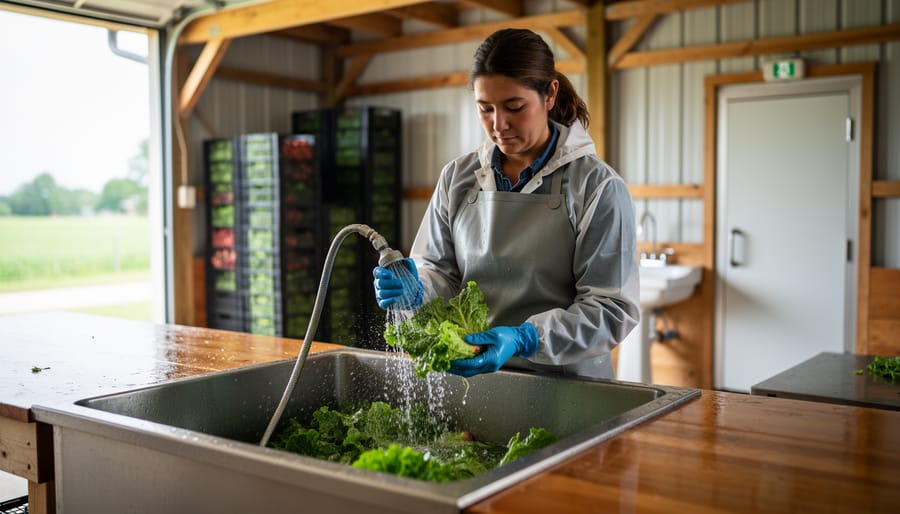
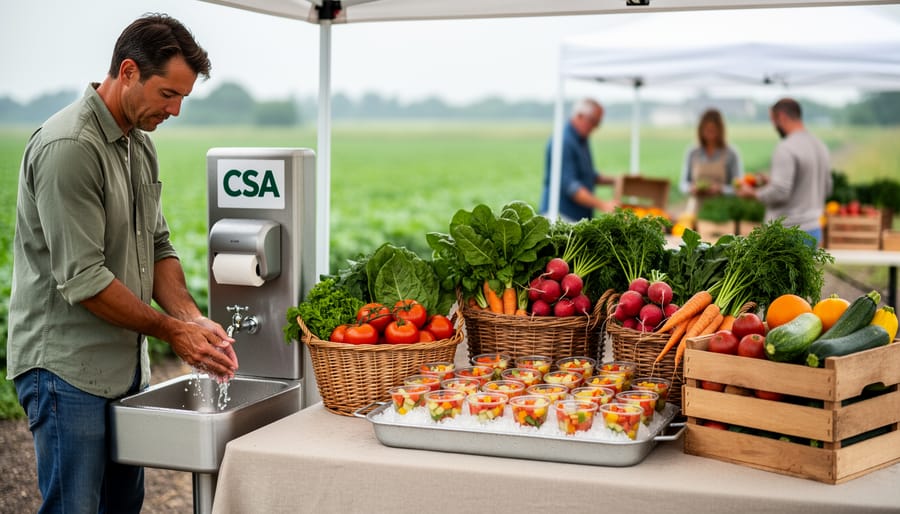
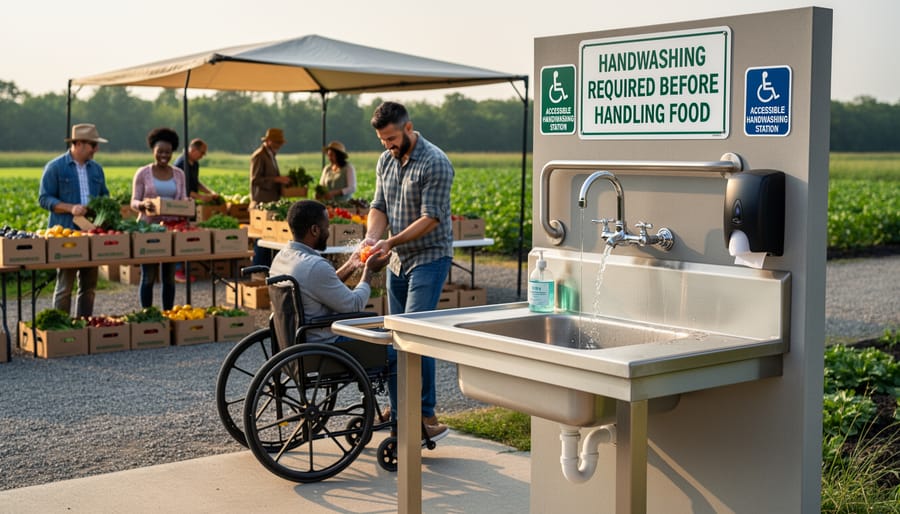
Proper washing stations are critical control points where farmers can prevent contamination and ensure food safety.

Principle 3: Establish Critical Limits

Once you’ve identified your Critical Control Points, the next step is setting measurable standards that tell you when things are safe and when they’re not. Think of critical limits as your safety boundaries—concrete numbers or conditions that separate acceptable from unacceptable.

For small-scale vegetable operations, these limits need to be specific and easy to monitor. Instead of saying “keep produce cold,” you’d specify “maintain cooler temperature between 34-38°F.” This precision removes guesswork and makes it clear when corrective action is needed.

According to food safety experts, critical limits must specify measurable parameters that can be consistently monitored and verified.

Here are common critical limits that work well for farm-scale operations:

Critical Control Point Critical Limit Why It Matters
Wash water temperature 50°F or below Prevents bacteria from entering produce
Cooling time after harvest Within 2 hours Slows bacterial growth
Cold storage temperature 34-38°F Maintains freshness and safety
Sanitizer concentration Per manufacturer specs Ensures effective cleaning

These standards should be based on scientific evidence or regulatory guidance. For wash water, the temperature matters because water warmer than your vegetables can actually pull bacteria inside through the pores. For leafy greens, that two-hour cooling window is critical for quality retention.

One Michigan farmer shared how implementing specific temperature limits transformed her CSA operation. By installing simple thermometers in her wash station and cooler, she could demonstrate to customers that safety wasn’t just a priority—it was measured and verified. The investment was minimal, but the confidence it built was invaluable. Your critical limits should be realistic for your operation while never compromising safety.

Principle 4: Establish Monitoring Procedures

Once you’ve identified your critical control points, the next step is keeping a watchful eye on them through consistent monitoring. Think of this as taking your farm’s vital signs—simple checks that help you catch potential issues before they become problems.

For small farm operations, monitoring doesn’t require expensive equipment or complicated systems. Start with temperature logs for your refrigeration units and wash water. A basic notebook with date, time, and temperature readings works perfectly. Check these at least twice daily, and you’ll quickly notice patterns or equipment issues that need attention.

Visual inspections are equally valuable and completely free. Train yourself and your team to spot signs of pest activity, equipment wear, or contamination risks during daily routines. Create a simple checklist that covers your packing area cleanliness, water clarity, and produce quality before distribution.

Water testing deserves special attention since it touches so much of your operation. Schedule regular testing based on your water source—well water might need monthly bacterial testing, while municipal supplies require less frequent monitoring. Keep a dedicated binder with all test results and inspection records.

Here’s a tip from successful farmer Maria Rodriguez, who runs a thriving CSA in Vermont: “I use my smartphone to take quick photos of temperature gauges and my packing area setup. It creates a visual record without extra paperwork, and I can easily share updates with my food safety team.”

The key is consistency over complexity. Choose monitoring methods you’ll actually maintain throughout the growing season. Document everything in a way that makes sense for your operation—whether that’s traditional paper logs, spreadsheets, or mobile apps designed for farm management.
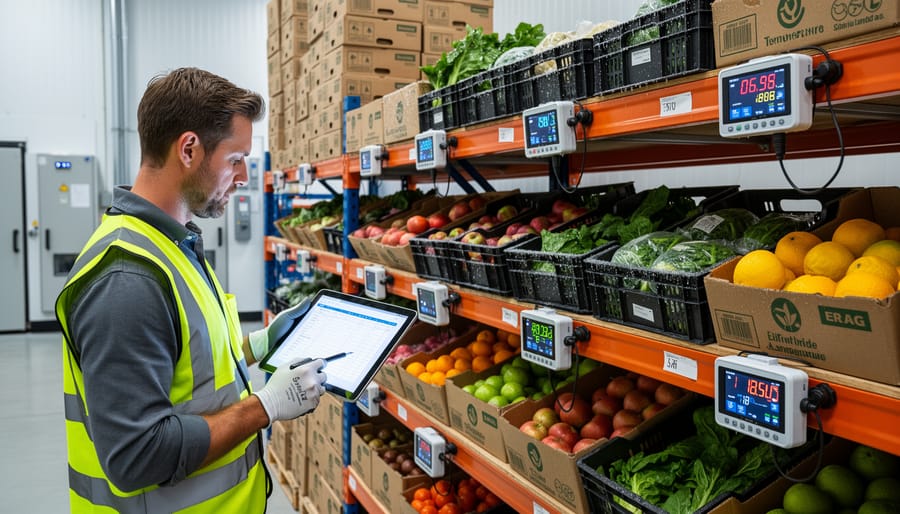
Digital thermometer monitoring temperature of stored vegetables in farm cooler
Regular temperature monitoring ensures produce stays within safe ranges throughout storage and distribution.

Principle 5: Establish Corrective Actions

Even with the best monitoring systems in place, things can go wrong on a farm. Principle 5 is all about having a clear game plan for when critical limits aren’t met. Think of corrective actions as your emergency response protocol—a set of predetermined steps that protect food safety and get operations back on track quickly.

Warning: Corrective action plans must be established before problems occur, not scrambled together during a crisis when food safety is already at risk.

When monitoring reveals a deviation, your corrective action plan should address three key areas: what to do with the affected product, how to fix the immediate problem, and how to prevent it from happening again.

Let’s look at practical farm scenarios. If your walk-in cooler temperature rises above 40°F, your corrective actions might include: moving produce to a backup cooler immediately, checking the cooling unit for malfunctions, and evaluating whether the affected produce is still safe to distribute or needs to be discarded. If wash water testing shows contamination, you’d stop washing operations, drain and sanitize the system, verify water quality before resuming, and investigate the contamination source.

When freshly harvested greens sit too long before reaching cold storage, corrective actions could include implementing a harvest scheduling adjustment, adding interim cooling stations in the field, or reassigning staff to speed up the post-harvest workflow.

Documentation is critical here. Record what went wrong, when it happened, what actions you took, and how you verified the problem was resolved. Sarah Martinez, who runs a certified organic vegetable CSA in Vermont, keeps a simple corrective action log in her pack shed. “It’s saved us multiple times,” she shares. “We can spot patterns and fix recurring issues before they become serious problems.”

Principle 6: Establish Verification Procedures

Think of verification as stepping back to check the big picture of your food safety system. While monitoring is your day-to-day watch (like checking temperatures during harvesting), verification confirms that your entire HACCP plan actually works as intended.

Verification involves several activities that happen less frequently but are equally important. First, review your HACCP plan regularly—at least annually or whenever you introduce new crops, change processes, or experience a food safety issue. Sarah Chen, who runs a small vegetable CSA in Oregon, schedules her reviews every six months during her slower seasons, ensuring her procedures still make sense for her operation.

Equipment calibration is another key verification step. Your thermometers, pH meters, and scales need regular testing to ensure accuracy. A thermometer that reads incorrectly could mean you’re storing produce at unsafe temperatures without knowing it. Most small farms calibrate equipment monthly using simple ice-water tests or calibration solutions.

Testing procedures provide scientific confirmation that your system works. This might include periodic water testing from your irrigation source or swab tests on your washing station surfaces. While this sounds technical, many county extension offices offer affordable testing services specifically for small farms.

Finally, conduct periodic audits—even informal ones. Walk through your entire process with fresh eyes, or better yet, invite a fellow farmer or food safety expert to review your practices. These audits often reveal small improvements that make big differences in food safety.

Documentation of all verification activities keeps your system accountable and helps you spot patterns or problems over time.

Principle 7: Establish Record-Keeping and Documentation

The final principle brings everything together by creating a paper trail that demonstrates your farm’s commitment to food safety. Think of documentation as your farm’s food safety story—it shows what you’re doing, when you’re doing it, and how you’re keeping your produce safe for the families you serve.

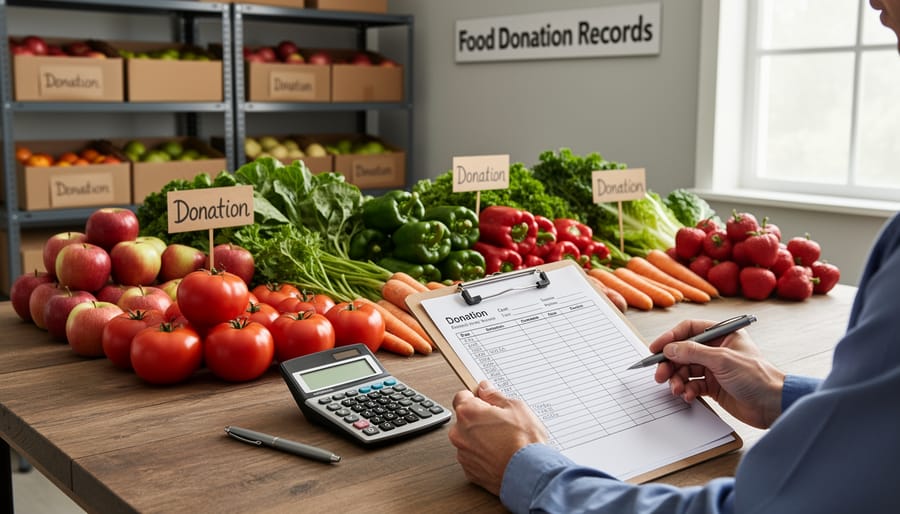
Start with the essentials. You’ll want to maintain temperature logs if you’re storing produce in coolers, cleaning and sanitizing schedules for your wash stations and equipment, records of any corrective actions when something goes wrong, and notes from staff training sessions. Keep supplier information for inputs like organic fertilizers or seeds, along with any certifications you receive. These records prove you’re following your food safety plan consistently.

Key Takeaway: Essential farm records include temperature monitoring logs, cleaning schedules, corrective action documentation, employee training records, and supplier verification information. Maintain these records for at least two years to demonstrate your ongoing commitment to food safety.

For small farms, simplicity works best. A dedicated three-ring binder kept in a clean, dry location can serve as your documentation hub. Use plastic sheet protectors to shield records from dirt and moisture—farm environments can be tough on paperwork. Create simple checklists and forms that take just minutes to complete daily.

Digital options work wonderfully too. Free apps or basic spreadsheet templates on a tablet let you record information quickly while working. Many farmers photograph their paper logs weekly and store them in cloud folders as backup.

The magic number for retention is two years minimum, though keeping records longer provides valuable patterns about your growing seasons and operations. One organic farmer in Vermont shares that reviewing her three years of harvest logs helped identify the perfect timing for her tomato plantings, improving both yield and quality.

Remember, good documentation isn’t about creating mountains of paperwork—it’s about having simple, practical records that protect your customers and your farm’s reputation.
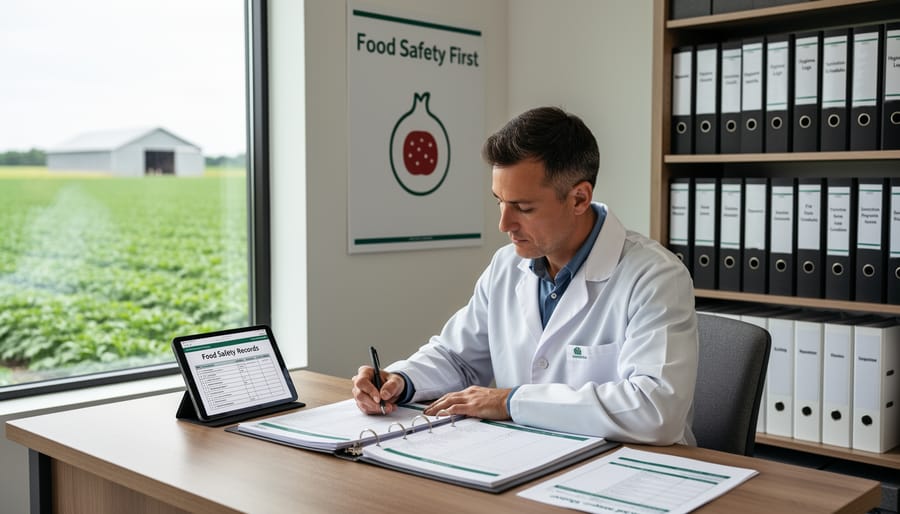
Farmer documenting food safety procedures in logbook at farm packing station
Maintaining detailed records of food safety practices protects both consumers and farm operations.

Putting It All Together: A Day in the Life of HACCP on Your Farm

Let’s follow Sarah, a small-scale organic farmer, through her Wednesday harvest. Before dawn, she reviews her Hazard Analysis (Principle 1) notes—wildlife near the lettuce patch means extra vigilance today. At her Critical Control Points (Principle 2), she checks the wash water temperature: 34°F, perfectly within her Critical Limits (Principle 3) of 32-38°F to prevent bacterial growth.

As workers arrive, Sarah implements her Monitoring Procedures (Principle 4). She records the water temperature every 30 minutes and watches her team follow proper handwashing protocols. When the thermometer reads 40°F mid-morning, her Corrective Actions (Principle 5) kick in immediately—she adds ice to bring temperatures back down and sets aside those greens for rewashing.

Throughout the day, her Verification Procedures (Principle 6) ensure everything runs smoothly. She spot-checks sanitizer concentration and reviews yesterday’s temperature logs. Every observation goes into her Record-Keeping system (Principle 7)—a simple binder with daily checklists and temperature sheets.

By afternoon, Sarah’s produce is properly cooled and packed for the farmers market or CSA pickup. Her HACCP system works quietly in the background, protecting her customers while giving her peace of mind. What once seemed overwhelming now feels like second nature—just part of growing food safely and responsibly.

Implementing the seven HACCP principles might seem overwhelming at first, but here’s the truth: these food safety practices are absolutely achievable for farms of all sizes. Whether you’re running a small backyard CSA or managing several acres, protecting your customers through proper food safety isn’t just good practice—it’s essential for building trust and safeguarding your farm’s reputation.

The beauty of HACCP is that you don’t need to tackle everything at once. Start small. Maybe begin by identifying your critical control points during harvest, then gradually build your monitoring and record-keeping systems as you grow more comfortable. Sarah Jenkins, a small-scale organic farmer in Vermont, started with simple handwritten logs and now has a streamlined system that takes just minutes each day to maintain.

Numerous resources are available to help you on this journey, from cooperative extension offices to online food safety courses designed specifically for small farms. The peace of mind that comes with knowing you’re doing everything possible to keep your customers safe is invaluable.

Your farm’s commitment to food safety reflects your dedication to quality and customer care. Take that first step today—review your current practices, identify one area to improve, and begin building your HACCP plan. Your customers, your community, and your farm’s future will thank you.
Why Whole Animal Butchery Connects You to Real Food (And Where to Experience It)

Posted by darrell on
0
Farm-to-Table Experiences
Why Whole Animal Butchery Connects You to Real Food (And Where to Experience It)

Whole animal butchery transforms your relationship with meat by connecting you directly to where your food comes from and honoring every part of the animal. When you participate in a farm-to-table butchery experience, you’re learning an ancient craft that reduces waste, supports local farmers, and ensures no protein goes unused—from premium cuts to organ meats and bone broth ingredients.

These hands-on workshops teach you to break down a whole pig, lamb, or beef into recognizable cuts while understanding muscle groups, proper knife techniques, and storage methods. You’ll leave with knowledge about which cuts work best for different cooking methods, how to save money by buying directly from farms, and the confidence to request custom cuts from your local butcher.

The sustainability impact is significant. Industrial meat processing often discards 30-40% of each animal, while whole animal butchery utilizes nearly everything. This approach supports farmers who raise livestock humanely on pasture, creating a transparent supply chain where you know exactly how your meat was raised, what the animals ate, and how they were processed.

Beyond the practical skills, these experiences build community connections. You’ll meet farmers who prioritize animal welfare, fellow food enthusiasts committed to ethical eating, and educators passionate about reviving traditional food crafts. Many participants discover that understanding the full process—though sometimes challenging emotionally—deepens their gratitude and mindfulness around meat consumption, leading to more intentional choices about quality over quantity.

What Whole Animal Butchery Really Means

Whole animal butchery represents a return to traditional meat processing methods where skilled craftspeople break down entire animals into various cuts, using virtually every part from nose to tail. Unlike conventional meat processing, which typically involves centralized facilities that reduce animals to standardized, plastic-wrapped portions, whole animal butchery happens on a smaller scale with deep attention to the unique qualities of each animal. This approach requires extensive knowledge of anatomy, blade skills, and an understanding of how different muscles and parts can be transformed into everything from premium steaks to flavorful sausages, bone broths, and rendered fats.

The philosophy behind this practice centers on honoring the animal’s life by ensuring nothing goes to waste. When a farmer raises livestock humanely on pasture and a butcher commits to utilizing the entire animal, it creates a circle of respect and responsibility. Organs become pâtés, bones turn into nutrient-rich stock, trim becomes ground meat or charcuterie, and even fat serves valuable culinary purposes.

Note: Whole animal butchery embodies a zero-waste philosophy that honors the animal’s sacrifice by using every possible part, transforming what conventional systems might discard into nourishing food.

This practice connects directly to sustainable agriculture principles by supporting small-scale farmers who prioritize animal welfare and environmental stewardship. When you purchase a quarter or half animal from a local farm, you’re participating in a food system that values quality over quantity and relationship over anonymity. The butcher becomes an educator, helping consumers understand different cuts and cooking methods, while farmers can receive fair compensation for their careful work.

Learning whole animal butchery takes time and dedication. Many passionate individuals now seek apprenticeships at local butcher shops or attend hands-on workshops at farms, discovering skills that were once passed down through generations. This revival strengthens local food systems and helps communities reconnect with where their meat truly comes from.

Butcher's hands skillfully breaking down beef on wooden butcher block in farm setting
Whole animal butchery requires skilled hands and deep knowledge of anatomy to properly break down and utilize every part of the animal.

The Farm-to-Table Connection: Why It Matters

Supporting Local Farmers and Economies

When you purchase a whole animal directly from a local farm, you’re making a meaningful investment in your community’s agricultural economy. Unlike conventional meat purchasing where farmers receive only a fraction of retail prices, whole-animal buying ensures producers receive fair compensation for their work. This direct relationship means farmers can sustain their operations, invest in sustainable livestock practices, and continue providing quality meat to their communities.

Consider Sarah Chen, a small-scale rancher in Ontario who nearly closed her operation five years ago. By partnering with local butchers to offer whole-animal purchases, she now serves 40 families annually, earning enough to expand her pasture-raised herd while implementing rotational grazing techniques that improve soil health.

This purchasing model also reduces financial pressure on farmers to maximize production at the expense of animal welfare. With guaranteed sales and fair prices, producers can focus on quality over quantity, raising animals humanely on pasture and avoiding factory farming shortcuts. Your decision to buy whole animals creates a ripple effect, strengthening local food systems and encouraging more farmers to adopt ethical, environmentally responsible practices.

Environmental Impact You Can Feel Good About

When you choose whole animal butchery from local farms, you’re making a choice that ripples positively through the environment. Unlike conventional meat that travels thousands of miles through multiple facilities, locally raised and processed animals dramatically reduce transportation emissions. Research confirms that local production offers environmental benefits across multiple measures.

Pastured animals play a surprisingly beneficial role in ecosystem health. As they graze, their hooves naturally aerate soil, while their manure returns vital nutrients to the earth. This creates a regenerative cycle that builds topsoil rather than depleting it. Well-managed grazing operations also support biodiversity by maintaining diverse plant communities and providing habitat for native species.

Small-scale farms practicing whole animal butchery typically embrace rotational grazing and responsible land stewardship. These farmers view their animals as partners in soil health rather than commodities to maximize. The result is healthier pastures, reduced erosion, and farmland that actually captures carbon rather than releasing it. By supporting these farms, you’re investing in agricultural practices that leave the land better than they found it.

What to Expect at a Whole-Animal Butchery Experience

Stepping into a whole-animal butchery workshop offers a transformative journey that connects you directly with the source of your food. These intimate, hands-on sessions typically take place in working farm settings or dedicated teaching facilities, where small groups gather around a carefully prepared workspace. The atmosphere strikes a balance between educational and reverent, acknowledging both the skill involved and the animal that made the learning possible.

Most workshops begin with introductions and a discussion about the animal’s life, the farm’s practices, and the philosophy behind nose-to-tail butchery. Instructors—often experienced farmers, butchers, or chefs—create a welcoming environment where questions are encouraged and no prior experience is assumed. The space itself usually features proper equipment, refrigeration, and safety gear, ensuring participants can focus on learning rather than logistics.

A typical session unfolds through these stages:

  1. Welcome and safety briefing covering proper knife handling, workspace organization, and hygiene protocols
  2. Educational overview explaining anatomy, muscle groups, and how different cuts suit various cooking methods
  3. Demonstration by the instructor breaking down primary sections and revealing the animal’s structure
  4. Hands-on practice where participants work individually or in pairs to separate specific cuts under guidance
  5. Discussion about utilizing every part, from organ meats to bones for stock
  6. Packaging session where participants prepare their portions to take home, often receiving recipe suggestions

Throughout the experience, instructors share stories about their farming journey, seasonal challenges, and why they’ve committed to sustainable practices. These personal narratives add depth to the technical skills being taught, helping participants understand the broader context of ethical meat production.

The learning process moves at a comfortable pace, with plenty of time for observation before attempting techniques yourself. Expect moments of uncertainty mixed with genuine accomplishment as you master new skills. Many participants describe feeling more connected to their food choices afterward, understanding the work and respect involved in bringing meat to their tables.

These workshops complement other farm tours and experiences, offering deeper engagement with sustainable agriculture. You’ll leave with practical knowledge, properly butchered cuts, and often newfound appreciation for the farmers and butchers who do this work daily.

Workshop participants learning butchery techniques from instructor at farm classroom table
Hands-on butchery workshops bring participants together to learn traditional skills while connecting with sustainable food practices.

Skills You’ll Learn and Cuts You’ll Discover

A whole-animal butchery workshop transforms your relationship with meat, teaching you skills that go far beyond what you’d find in a supermarket aisle. These immersive sessions guide participants through the complete breakdown of an animal, revealing the craftsmanship behind every cut and helping you understand exactly where your food comes from.

You’ll learn fundamental knife skills, including proper sharpening techniques and the essential cuts needed to navigate bone, muscle, and connective tissue safely and efficiently. Instructors demonstrate how to identify different muscle groups and explain why certain cuts suit specific cooking methods. Through these hands-on cooking skills, you’ll gain confidence working with whole cuts and develop an intuitive understanding of meat quality.

The real treasure lies in discovering cuts you’ve probably never seen packaged at the grocery store. Many workshops introduce participants to bavette steak, a flavorful cut from the flank that rivals expensive options when prepared correctly. You’ll encounter the teres major, often called the shoulder tender, which delivers exceptional taste at a fraction of premium prices. Collar cuts, cheeks, and various organ meats each offer unique flavors and textures that add diversity to your cooking repertoire.

Learning to utilize lesser-known cuts means less waste and better value. Workshop participants often share success stories about transforming tough cuts like shanks into rich, tender braises or making their own ground meat blends tailored to specific recipes. You’ll discover how to prepare stocks from bones, render fat for cooking, and cure simple charcuterie at home.

This knowledge empowers you to communicate confidently with local farmers and butchers, requesting specific cuts and understanding fair pricing. Rather than feeling limited by pre-packaged options, you’ll approach meat purchasing with creativity and purpose, making choices that honor both the animal and your commitment to sustainable, transparent food systems.

Assortment of various meat cuts arranged on wooden cutting board with fresh herbs
Understanding diverse cuts from whole animal butchery empowers consumers to use every part and discover flavorful options beyond standard supermarket selections.

Finding Farm-to-Table Butchery Experiences Near You

Finding local whole animal butchery experiences has become easier as more farms and food artisans recognize the growing interest in hands-on meat education. Your journey to discovering these unique opportunities starts closer to home than you might expect.

Community Supported Agriculture (CSA) farms often lead the way in offering educational programs beyond weekly vegetable boxes. Many CSAs that raise livestock host seasonal butchery workshops where members can learn traditional cutting techniques while gaining appreciation for every part of the animal. These intimate farm experiences create meaningful connections between eaters and their food sources, transforming abstract concepts of sustainability into tangible skills.

Specialty butcher shops in your area may offer weekend classes covering everything from basic knife skills to advanced charcuterie. These urban and suburban learning spaces make whole animal butchery accessible even if you don’t have direct farm access. Call ahead to ask about their educational calendar, as many shops schedule workshops around seasonal meat availability.

To locate these valuable experiences in your region, try exploring:

  • Local farmers markets where you can speak directly with livestock farmers about upcoming demonstrations
  • County agricultural extension offices that maintain directories of farm education programs
  • Online platforms dedicated to farm experiences and sustainable food workshops
  • Social media groups focused on homesteading and local food systems in your area

Don’t overlook the power of direct conversation. Many small-scale farmers who practice whole animal butchery host private workshops but don’t advertise widely. Strike up conversations at markets, join farm tours, and let farmers know you’re interested. These personal connections often lead to the most rewarding educational experiences, where you’ll learn not just techniques but the stories and philosophy behind ethical meat production.

Success Stories: Farmers and Butchers Making It Happen

Across North America, passionate farmers and butchers are revolutionizing how we think about meat by bringing whole-animal butchery back to local communities. These farmers’ stories showcase diverse approaches united by a common commitment to sustainability and education.

In Vermont’s Green Mountains, Sarah Chen transformed her family’s sheep farm into a hands-on learning destination. After struggling to find processors who valued every cut, she became a certified butcher herself. Now she hosts quarterly workshops where participants learn to break down whole lambs while discovering how nose-to-tail eating reduces waste. “People leave understanding that a lamb is more than just chops,” Sarah explains. “They take home cuts they’ve never tried and recipes that honor the whole animal.” Her waiting list extends six months, and her community has seen three new farm-to-table restaurants emerge from workshop alumni.

Meanwhile, in rural Oregon, fourth-generation rancher Miguel Rodriguez partners with a traveling butcher collective that serves multiple small farms. Together, they offer mobile butchery demonstrations at farmers markets, turning education into entertainment. Miguel raises heritage-breed cattle on rotational pastures and believes transparency builds trust. “When customers see the skill and respect involved in butchery, they understand why whole-animal purchases support better farming,” he notes. His model has inspired neighboring farms to coordinate community meat shares, making whole-animal buying more accessible.

In Ontario, Emma and James Foster run educational farm stays where guests participate in ethical livestock management and butchery basics. Their approach emphasizes the connection between pasture health, animal welfare, and meat quality. Visitors return home as ambassadors for sustainable agriculture, often starting their own buying clubs.

These innovators prove that whole-animal butchery creates ripple effects beyond individual farms, building food-literate communities invested in sustainable agriculture.

Making the Most of Your Whole Animal Purchase

Attending a whole animal butchery workshop often inspires people to take the leap and purchase directly from local farms. But before you commit to a whole or half animal, there’s some practical groundwork to cover. Let’s walk through what you need to know to make this sustainable choice work beautifully for your household.

First, assess your freezer situation. A quarter beef requires approximately 4 cubic feet of freezer space, while a half needs around 8 cubic feet, and a whole animal demands 16 cubic feet or more. If you don’t have a chest freezer, consider it a worthwhile investment—many farmers say it’s the single best purchase they made for their sustainable eating journey. Alternatively, split your order with friends, family, or neighbors who share your values about ethical meat sourcing. This creates community connections while making the financial commitment more manageable.

Note: Buying in bulk typically saves $2-4 per pound compared to retail prices, and splitting a half animal between two families often provides the perfect variety without overwhelming your freezer.

Speaking of variety, you’ll receive cuts you might not normally purchase—from premium steaks to ground meat, roasts, organ meats, and soup bones. This diversity is actually a gift that encourages culinary creativity and nose-to-tail eating. Start meal planning around your cuts rather than shopping for specific recipes. Dedicate time to learning new cooking methods for unfamiliar cuts—slow-braising tougher cuts yields incredibly flavorful meals, while organ meats pack exceptional nutrition. Many farmers provide cut sheets explaining each piece and cooking recommendations, turning your freezer into an adventure in sustainable gastronomy.

Embracing whole animal butchery experiences offers far more than just learning to cut meat—it creates a profound shift in how we relate to our food. These hands-on opportunities transform us into conscious consumers who understand the true value of every cut, the effort behind sustainable farming, and the responsibility that comes with eating meat. By participating in these workshops, you’re directly supporting farmers who prioritize animal welfare and environmental stewardship, helping build a more resilient local food system.

The journey from whole animal to table reconnects us with traditions nearly lost in our modern convenience culture. You’ll gain practical skills, deepen your appreciation for quality ingredients, and join a growing community committed to transparency in food production. Whether you’re already shopping at farmers markets or just beginning to explore sustainable options, seeking out butchery classes near you is a powerful next step.

Start by reaching out to local farms, culinary schools, or meat CSAs in your area. Ask questions, get your hands dirty, and don’t be intimidated by the learning curve. Every expert butcher started exactly where you are now. This investment in knowledge pays dividends through better meals, reduced waste, and meaningful connections with the people growing your food.

The Three Pesticide Types Every Organic Gardener Should Understand

Posted by darrell on
0
Agroecology and Ecosystem Practices
The Three Pesticide Types Every Organic Gardener Should Understand

Identify your pest problem before reaching for any solution—even organic pesticides work best when you know exactly what you’re fighting and can time applications to target vulnerable life stages. Natural pesticides fall into three distinct categories that every sustainable grower should understand: biological controls using living organisms like beneficial nematodes or Bacillus thuringiensis bacteria, botanical pesticides derived from plants such as neem oil or pyrethrin, and mineral-based options like diatomaceous earth or copper sprays.

Start with the least disruptive option first. Biological pesticides target specific pests without harming beneficial insects, making them ideal for maintaining garden ecosystem balance. When Sarah Chen introduced parasitic wasps to her quarter-acre market garden in Vermont, she eliminated cabbage worm damage by 90% without spraying anything at all. Botanical pesticides offer broader action when problems escalate, though they require careful timing since many break down quickly in sunlight. Apply neem oil in early morning or evening to maximize effectiveness and protect pollinators during their active hours.

Reserve mineral pesticides for persistent problems or preventative protection against fungal diseases. These options often have longer residual effects but can impact soil chemistry with repeated use, so rotate your approaches seasonally. Understanding these three categories empowers you to create an integrated pest management strategy that protects your crops while nurturing the complex web of life that makes organic growing successful. The goal isn’t eliminating every pest—it’s maintaining balance where your plants thrive alongside the beneficial organisms that support them naturally.

What Makes a Pesticide ‘Agroecological’?

When most people hear “pesticide,” they picture chemical sprays that eliminate every bug in sight. But in agroecological farming, pesticides serve a fundamentally different purpose. Rather than waging war against nature, agroecological pest management works in harmony with it, treating challenges as opportunities to strengthen your farm’s natural defenses.

The key difference lies in philosophy and approach. Conventional pest control typically relies on synthetic chemicals designed to quickly kill target pests, often disrupting entire ecosystems in the process. Agroecological methods, on the other hand, focus on ecosystem management, building biodiversity and resilience so your farm can naturally regulate pest populations. Think of it as supporting your immune system rather than constantly taking antibiotics.

Note: In agroecological systems, the goal isn’t to eliminate all pests, but to manage them at levels where beneficial insects, birds, and other natural predators keep populations in balance.

This approach requires rethinking what we mean by “pesticide.” In organic and agroecological contexts, these products come from natural sources like plants, minerals, or beneficial microorganisms. They work more gently, targeting specific problems while preserving the helpful insects and soil organisms that keep your garden thriving.

Sarah Martinez, who runs a successful CSA operation in Ontario, describes her shift in thinking: “I stopped asking ‘How do I kill this pest?’ and started asking ‘Why is this pest here, and what’s out of balance?’ Once I focused on building healthy soil and attracting beneficial insects, my pest problems practically solved themselves.”

This holistic perspective means that agroecological pesticides are always used as part of a broader strategy, never as standalone solutions. They’re the safety net, not the foundation.

Close-up of biological pesticide application on cabbage leaf with caterpillar pest
Biological pesticides like Bacillus thuringiensis target specific pests while preserving beneficial insects in the garden ecosystem.

Type 1: Biological Pesticides (Biopesticides)

Microbial Pesticides

Nature has its own pest control army, and microbial pesticides harness these tiny warriors to protect your crops. These living organisms—bacteria, fungi, and viruses—work like precision tools, targeting specific pests while leaving beneficial insects, pollinators, and other garden helpers completely unharmed.

The star player in this category is Bacillus thuringiensis, commonly called Bt. This naturally occurring soil bacterium produces proteins that are toxic to caterpillars but harmless to humans, pets, and beneficial insects. When caterpillars ingest Bt-treated plants, the proteins disrupt their digestive system, stopping them from feeding within hours. It’s particularly effective against cabbage worms, tomato hornworms, and other leaf-munching larvae. Apply Bt in the early morning or evening when caterpillars are actively feeding, and reapply after rain.

Another effective option is Beauveria bassiana, a fungus that naturally infects soft-bodied insects like aphids, whiteflies, and thrips. The fungal spores attach to the pest’s body, penetrate its outer shell, and grow inside, eventually killing it. This works best in humid conditions and may take several days to show results.

Ontario farmer Maria Chen shares her success: “After switching to Bt for my organic brassicas, I finally conquered cabbage worms without harming the ladybugs and lacewings that patrol my garden. It’s been a game-changer for maintaining my organic certification while keeping plants healthy.”

These microbial pesticides work best as preventive measures or when pest populations are young and small.

Plant-Derived Pesticides

Nature provides some of the most effective pest control solutions right in our gardens and forests. Plant-derived pesticides, also called botanical insecticides, harness the protective compounds that plants have evolved over millions of years to defend themselves against pests.

Neem oil, extracted from the neem tree native to India, stands out as a versatile organic pest fighter. It works by disrupting insect hormones, preventing larvae from maturing while also acting as a feeding deterrent. Many organic farmers swear by weekly neem applications during growing season to manage aphids, whiteflies, and spider mites. The beauty of neem is its gentle impact on beneficial insects like bees and ladybugs when applied correctly.

Pyrethrum, derived from chrysanthemum flowers, delivers quick knockdown action against a broad spectrum of insects. It attacks the nervous systems of pests rapidly, making it ideal for immediate infestations. However, its fast breakdown in sunlight means you’ll need to time applications for early morning or evening.

Essential oils from rosemary, peppermint, and clove offer another botanical approach. These work primarily as repellents and contact killers, perfect for smaller garden areas or greenhouse settings.

Within integrated pest management strategies, these plant-derived options shine brightest when combined with other practices. Sarah Chen, an Oregon vegetable grower, rotates neem treatments with beneficial insect releases and has reduced pest damage by 80 percent. She emphasizes patience: “Botanical pesticides work with nature’s timeline, not against it.” The key is consistency, proper timing, and remembering that these tools work best as part of a holistic approach rather than standalone solutions.

Real Farm Success: Maria’s Vineyard Story

Maria Rodriguez transformed her five-acre California vineyard after persistent pest issues pushed her to rethink her approach. “I was spending over $3,000 annually on synthetic pesticides, and the grape leafhoppers kept coming back stronger,” she shares.

Three years ago, Maria made the switch to biological pesticides, starting with Bacillus thuringiensis for caterpillar control and introducing beneficial nematodes for soil-dwelling pests. The transition wasn’t without hurdles. “The first season was rough,” Maria admits. “I had to learn patience and accept that biological control works differently—it’s about balance, not elimination.”

She now uses pheromone traps for monitoring and releases lacewings to manage aphid populations naturally. Her biggest challenge was adjusting her expectations around pest damage thresholds. “I learned that a few chewed leaves don’t mean crop failure.”

The results speak for themselves: Maria’s input costs dropped by 40%, her soil health improved dramatically, and she achieved organic certification. “My wines actually taste better now,” she says with pride. “Customers tell me they can taste the difference when grapes grow in truly healthy soil.”

Best Practices for Using Biopesticides

Getting the most from biopesticides requires thoughtful timing and application. Apply them early in the morning or late evening when beneficial insects are less active and conditions are cooler. Since many biopesticides contain living organisms, they work best when temperatures are moderate and humidity is present.

Store biopesticides properly in cool, dry locations away from direct sunlight, and always check expiration dates since their active ingredients can lose potency over time. Mix only what you’ll use immediately, as prepared solutions often don’t keep well.

Combine biopesticides with other sustainable practices for better results. Rotate different biopesticide types to prevent pest resistance, and integrate them with companion planting, crop rotation, and habitat creation for beneficial insects. One Michigan CSA farmer shared how pairing Bt applications with strategic marigold borders reduced her pest problems by 70% while creating a haven for pollinators.

Remember that biopesticides work preventatively and may take longer than synthetic options. Monitor your crops regularly, apply at the first sign of pests, and be patient. You’re building a balanced ecosystem, not just eliminating problems.

Type 2: Botanical and Mineral-Based Pesticides

Mineral Pesticides in Action

Mineral-based pesticides have been protecting crops for centuries, and they remain valuable tools in organic farming today. Unlike synthetic chemicals, these naturally occurring substances offer effective pest management while fitting perfectly into sustainable growing systems.

Sulfur stands as one of the oldest fungicides still in use. When applied as a fine dust or wettable powder, sulfur particles disrupt fungal spores, preventing diseases like powdery mildew, rust, and black spot from taking hold. Many organic orchardists swear by sulfur sprays during humid spring weather when fungal pressure peaks. The key limitation? Sulfur can harm beneficial insects if overused, and it becomes less effective in temperatures above 90 degrees Fahrenheit, sometimes even causing leaf burn in extreme heat.

Copper compounds work wonders against bacterial diseases such as fire blight and bacterial spot. These minerals create an inhospitable surface environment where bacteria simply cannot thrive. Small-scale vegetable growers often apply copper sprays preventatively during wet periods when bacterial infections spread most rapidly.

Mineral Type Target Issues Best Application Timing Organic Certified
Sulfur Fungal diseases Early morning, cool weather Yes
Copper Bacterial problems Before rain events Yes
Diatomaceous Earth Soft-bodied insects Dry conditions Yes

Diatomaceous earth takes a completely different approach. These microscopic fossilized algae create sharp edges that pierce insect exoskeletons, causing dehydration. It works brilliantly against slugs, beetles, and aphids when applied as a barrier around plant bases.

The main consideration with mineral pesticides is persistence. Copper can accumulate in soil over time, potentially affecting soil health. The sustainable approach means using these tools strategically and sparingly, rotating with biological controls, and always monitoring for actual pest pressure rather than spraying preventatively out of habit.

Macro view of diatomaceous earth mineral pesticide on soil with insect pests
Mineral-based pesticides like diatomaceous earth work through physical action rather than chemical toxicity.

Soap and Oil Sprays

Soap and oil sprays represent some of the gentlest yet effective pest control methods available to organic gardeners. These low-impact solutions work by suffocating soft-bodied insects like aphids, whiteflies, spider mites, and mealybugs, making them perfect for anyone committed to sustainable growing practices.

Insecticidal soaps use potassium salts of fatty acids to break down insect cell membranes on contact. You can purchase ready-made products like Safer Brand Insect Killing Soap, or create your own by mixing 1-2 tablespoons of pure liquid castile soap with one quart of water. Just avoid dish detergents, as they often contain degreasers and additives that can harm plants.

Horticultural oils, including neem oil and dormant oils, coat insects and their eggs, disrupting their life cycles. These work especially well during dormant seasons when you can apply heavier concentrations without damaging foliage. During the growing season, lightweight summer oils protect delicate leaves while still controlling pests.

Sarah Chen, an organic farmer in Vermont, swears by her weekly neem oil routine. “I spray early morning or evening when beneficial insects are less active,” she shares. “It’s kept my tomatoes pest-free for three seasons without harsh chemicals.”

Application timing matters tremendously. Always test on a small plant area first, spray during cooler parts of the day to prevent leaf burn, and reapply after rain. Remember, direct contact is essential since these sprays don’t have residual effects. With consistent application and proper timing, soap and oil sprays become powerful allies in your organic pest management toolkit.

Environmental Considerations

Here’s the truth many gardeners don’t realize: just because a pesticide is natural or organic doesn’t mean it’s completely harmless. Even botanical pesticides like neem oil can harm beneficial insects if applied carelessly, and products containing copper can accumulate in soil over time, affecting microbial communities essential for soil health.

Note: Always apply pesticides during early morning or evening hours to minimize contact with bees and other protecting pollinators during their active foraging times.

Responsible use means following label instructions precisely, targeting applications only where needed, and timing treatments to protect beneficial species. Consider your farm’s watershed too—runoff from any pesticide can impact nearby water systems. The goal isn’t perfection but mindful stewardship, using the least toxic option at the right time and always prioritizing prevention through healthy soil and biodiversity first.

Type 3: Behavioral and Physical Control Pesticides

Pheromone Traps and Mating Disruptors

These clever pest management tools work like nature’s version of mixed signals. Pheromone traps use synthetic versions of insects’ natural chemical messengers to lure male pests into traps, while mating disruptors saturate your garden with these same scents, making it impossible for males to locate females. The beauty? Beneficial insects like ladybugs and bees aren’t affected since each pheromone is species-specific.

Codling moth pheromone traps are garden heroes for apple and pear growers, capturing males before they can mate and reducing the next generation’s numbers. For vegetable gardens, tomato pinworm disruptors work wonders by preventing reproduction without harming pollinators or predatory insects. Oriental fruit moth dispensers help stone fruit enthusiasts protect their peaches and plums organically.

Sarah, an organic orchardist in Washington, shares her success: “After switching to pheromone disruption three years ago, my codling moth damage dropped from 30% to just 5%, and my beneficial insect populations have thrived.”

These methods require patience since they prevent future generations rather than eliminating current pests immediately. However, they’re incredibly effective as part of an integrated approach, especially when combined with physical barriers and careful monitoring of your crops throughout the growing season.

Row covers protecting vegetable garden beds as physical pest barrier
Physical barriers like row covers prevent pest access without any chemical intervention, representing the most ecologically gentle approach.

Physical Barriers and Deterrents

Sometimes the best pest control doesn’t involve sprays at all. Physical barriers create a protective shield between your crops and hungry pests, offering immediate protection without any environmental concerns.

Row covers are garden workhorses, lightweight fabric sheets that float over plants to exclude insects while allowing sunlight and water through. They’re particularly effective against flea beetles, cabbage moths, and cucumber beetles. Just remember to remove them when plants need pollination.

For slug and snail problems, copper tape works like magic. These pests won’t cross copper barriers due to a natural chemical reaction with their slime. Apply tape around raised beds or individual pots for season-long protection.

Reflective mulches confuse aphids and whiteflies by disrupting their ability to locate host plants. Silver or aluminum-coated plastic mulches work especially well for squash and tomatoes during early growth stages.

Sticky traps capture flying insects before they can cause damage. Yellow attracts whiteflies and aphids, while blue draws thrips. Position them at plant canopy height for best results.

Maria, an organic farmer in Vermont, combines row covers with beneficial insect releases. “The covers protect young plants during their vulnerable stage, then I remove them and let my ladybugs take over,” she explains. This integrated approach maximizes protection while minimizing labor and supporting natural ecosystem balance.

Creating Your Integrated Approach

The real magic happens when you weave these three pesticide types together into a customized pest management plan. Think of it as creating layers of defense that work in harmony with nature rather than against it.

Start by observing your garden or farm regularly. Walk your rows each morning with coffee in hand, checking for pest activity and beneficial insect populations. This behavioral control forms your foundation. Remove affected plant parts, adjust watering schedules, and practice crop rotation to discourage pests before they become problematic.

Next, invite biological allies into your space. Plant flowering borders to attract parasitic wasps and ladybugs. Consider purchasing beneficial nematodes for soil-dwelling pests. When problems arise despite these efforts, reach for your botanical options as targeted interventions rather than blanket solutions.

One small-scale farmer in Oregon shared how this approach reduced her pest losses by 60% while actually increasing biodiversity on her three-acre plot. She scouts daily, releases lacewings bi-weekly during peak season, and keeps neem oil as her backup plan.

Remember, successful integrated pest management means accepting some crop damage as part of a healthy ecosystem. Your goal isn’t perfection but balance, creating a resilient growing system that sustains itself season after season while producing abundant, chemical-free harvests.

Choosing the Right Pesticide Type for Your Garden

Making smart pesticide choices starts with understanding that the goal isn’t perfection—it’s balance. The most successful gardeners and farmers approach pest management like a ladder, always starting at the bottom with the gentlest options and climbing only when necessary.

Your decision-making process should follow a strategic assessment:

  1. Identify the pest accurately and research its life cycle to determine vulnerable stages
  2. Evaluate the actual damage level—minor cosmetic issues rarely justify intervention
  3. Consider your crop type and harvest timeline, as edible crops require extra caution
  4. Check weather conditions and pest pressure intensity in your specific microclimate
  5. Start with biological controls or physical barriers before moving to other options
  6. Reserve botanical pesticides for moderate pressure when monitoring shows escalating issues
  7. Use mineral-based solutions only when facing severe infestations that threaten crop viability

Remember that timing matters tremendously. Sarah Martinez, an organic berry farmer in Oregon, shares her philosophy: “I watch my plants daily during peak season. Catching aphids early means a strong spray of water works wonders. Wait too long, and I’m reaching for neem oil.”

Your ecological goals should guide every choice. If you’re cultivating habitat for pollinators and beneficial insects, prioritize targeted biological controls over broad-spectrum botanicals. Container gardeners often find that combining preventive practices—crop rotation, companion planting, healthy soil—reduces their need for any pesticides dramatically. The least disruptive option that effectively manages your specific problem is always the right choice.

Effective pest management in agroecological systems isn’t about finding the one perfect pesticide solution. Instead, it’s about understanding all three types—biological, botanical, and mineral-based—and knowing when and how to use each one thoughtfully. The real magic happens when these tools become part of a broader ecosystem management strategy that includes crop rotation, companion planting, habitat diversity, and soil health.

Think of pesticides as just one instrument in your sustainable farming orchestra. Sarah, a third-generation farmer who transitioned to organic methods five years ago, puts it perfectly: “I used to think going organic meant choosing between pests or chemicals. Now I realize it’s about creating a system where healthy soil and beneficial insects do most of the work, and these gentler pesticides are my backup plan, not my first line of defense.”

Whether you’re tending a backyard vegetable garden or planning your own small-scale farming venture, start by observing your ecosystem. Notice which beneficial insects are already present. Test your soil. Build relationships with plants that attract natural predators. When pest pressure does require intervention, you’ll be equipped to choose the right biological, botanical, or mineral option for that specific situation.

Ready to see these principles in action? Connect with local CSA farms in your area. Many offer farm tours, workshops, and volunteer opportunities where you can witness integrated pest management firsthand and learn from experienced growers who’ve perfected the balance.

Your CSA Food Donations Could Save You Thousands (Here’s How)

Posted by darrell on
0
Policy, Law & Certification
Your CSA Food Donations Could Save You Thousands (Here’s How)

Yes, food donations are tax deductible, and as a farmer or CSA operator, you may qualify for enhanced deductions that go beyond the standard write-offs most donors receive. The IRS allows you to deduct up to 15% of your taxable income when donating food to qualified charitable organizations, and in many cases, you can claim deductions based on the fair market value of your produce rather than just your production costs.

The process starts with understanding your protection under the Bill Emerson Good Samaritan Food Donation Act, which shields you from liability when donating food in good faith to nonprofit organizations. This federal protection means you can confidently donate surplus crops, slightly imperfect produce, or end-of-season harvests without fear of legal repercussions if someone claims the food caused harm.

For CSA farmers, this creates a meaningful opportunity to reduce food waste while lowering your tax burden. Calculate your potential deduction by documenting the fair market value of donated items—essentially what you would charge customers at your farm stand or through your CSA shares. Keep detailed records including dates, quantities, descriptions of produce donated, and acknowledgment letters from receiving organizations.

The enhanced deduction provision particularly benefits farmers operating as C corporations, allowing deductions of up to 25% of taxable income. Many small-scale and CSA farmers successfully partner with local food banks, homeless shelters, and community kitchens, creating relationships that serve their communities while providing substantial tax benefits. Documentation requirements are straightforward, making this an accessible strategy for farms of any size.

Understanding Food Donation Tax Deductions for CSA Farms

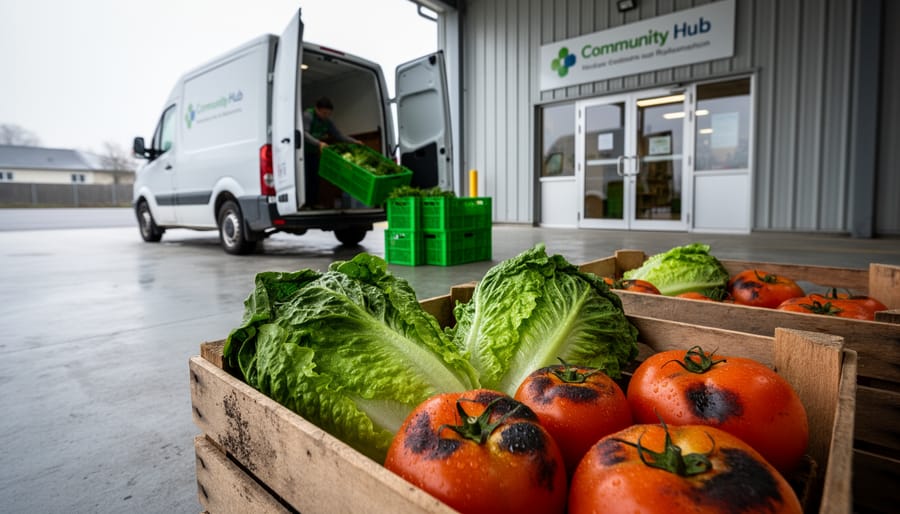
Fresh organic vegetables in wooden crates at food bank distribution center
CSA farms can donate surplus produce to food banks and qualified nonprofits while receiving valuable tax deductions.

What Makes a Food Donation Tax Deductible?

Good news for generous farmers and food donors: yes, food donations are generally tax deductible when you follow IRS guidelines! Understanding what qualifies can help your farm maximize tax benefits while supporting your community.

For donations to count, you must give to qualified tax-exempt organizations. These include food banks, soup kitchens, homeless shelters, and 501(c)(3) nonprofit organizations that serve people in need. Religious organizations with feeding programs and community meal services also qualify. The key is ensuring your recipient has proper tax-exempt status, which you can verify through the IRS Tax Exempt Organization Search tool.

The food itself must meet certain standards. Fresh produce from organic CSA operations, excess harvest, or slightly imperfect items that don’t meet retail standards but remain wholesome all qualify. The IRS requires donated food to be suitable for human consumption at the time of donation. You can’t claim rotten or unsafe produce, but cosmetically imperfect vegetables and surplus yields work perfectly.

For CSA farms, the basic requirement is maintaining proper documentation. You’ll need written acknowledgment from recipient organizations for donations over 250 dollars, describing what you gave and when. Keep detailed records of quantities, fair market values, and dates. Many successful farmers share that simple spreadsheets tracking weekly donations make tax time straightforward.

Remember, the organization receiving your donation cannot provide goods or services in return for your deduction to remain valid. Pure generosity gets rewarded!

The Enhanced Deduction for CSA Farmers

Here’s some great news if you’re a CSA farmer looking to donate your harvest: you may qualify for an enhanced tax deduction that goes beyond what typical donors receive. While most individuals can only deduct the cost basis of donated food (essentially what they paid for it), qualifying farmers can deduct up to 50% of the fair market value of their donated products.

This enhanced deduction recognizes the unique position of agricultural producers who grow food for income. For a CSA farmer who donates fresh tomatoes worth $500 at market price, with a growing cost of $150, the regular deduction would be limited to that $150. However, under the enhanced deduction, you could potentially deduct $250, calculated as the cost basis plus half the appreciation in value.

To qualify, you must donate to eligible organizations like food banks or soup kitchens that serve those in need. The donated items must be wholesome food inventory that would otherwise be sold in your regular CSA operation. This provision helps bridge the gap between farm surplus and community hunger while rewarding farmers for their generosity. Keep detailed records of your costs, market values, and recipient organization information to support your enhanced deduction claim at tax time.

Navigating Food Donation Liability Protection

The Good Samaritan Act: Your Safety Net

One of the biggest concerns for CSA farmers considering food donations is liability. What if someone gets sick from donated produce? The good news is that federal law has your back. The Bill Emerson Good Samaritan Food Donation Act, passed in 1996, protects food donors from civil and criminal liability when donating to nonprofit organizations in good faith.

This protection applies to both direct donations and gleaning programs, covering you whether you’re donating surplus kale to a food bank or inviting volunteers to harvest excess tomatoes from your fields. The law shields you from lawsuits as long as the food donated appears wholesome and safe at the time of donation, even if it’s past its peak freshness.

There’s an important exception: the protection doesn’t apply in cases of gross negligence or intentional misconduct. Simply put, don’t donate food you know is contaminated or unsafe. But that slightly bruised apple or the perfectly edible carrots that don’t meet your CSA box aesthetic standards? Those are completely protected.

Many farmers who’ve embraced donation programs share that this legal protection removed their primary hesitation. It transforms what once felt risky into a safe, rewarding practice that reduces waste while serving your community.

What About Food Safety Standards?

Good news: the Bill Emerson Good Samaritan Food Donation Act protects you from liability when donating food in good faith. This federal law shields farmers and food donors from civil and criminal prosecution, provided the food meets basic safety standards at donation time.

For CSA farmers, this means following the same food safety standards you already practice. Keep donated produce properly stored, handle it with clean hands and equipment, and avoid donating anything you wouldn’t feel comfortable serving your own family. Simple practices like washing produce, maintaining proper temperatures, and documenting donation dates go a long way.

Many farmers worry about FSMA compliance requirements, but the same protocols protecting your CSA members also protect your donations. Document your safety procedures, and you’re covered both legally and for tax purposes.

How to Calculate Your Tax Deduction

Cost Basis Method for Most CSA Farms

Most small CSA farms will use the cost basis method, which is straightforward and perfectly suited to farming operations. Here’s the good news: you can deduct the actual expenses you invested in growing the donated food.

This includes your costs for seeds, seedlings, soil amendments, compost, fertilizer, water, and other growing inputs. You’ll also factor in calculating labor costs if you paid employees to help grow, harvest, or prepare the donated produce. Don’t forget to include fuel for tractors, irrigation system expenses, and even a proportional share of land use costs.

For example, if you donated 50 pounds of tomatoes and your total cost to grow them was $75 in seeds, compost, and labor, that’s your deductible amount. Keep detailed records of all these expenses throughout the growing season, which also helps with overall tax compliance for CSA farms.

The beauty of this method is its simplicity. You’re already tracking these expenses for farm management purposes, making tax time much easier when donation season arrives.

Fair Market Value Method (For Qualifying Farms)

Here’s the exciting part: if your CSA operation has grown into a qualified farm business, you might be eligible for significantly higher deductions using the fair market value method. Instead of deducting just your cost basis, you could deduct the full retail value of your donated produce.

To qualify for this enhanced deduction, your farm must meet specific IRS criteria. You need to be a C corporation or, more commonly for CSA farms, a qualified farmer with ordinary income from your farming business. The donated food must go to qualified charitable organizations that serve people who are ill, needy, or infants, and the charity must use the food solely for these purposes.

The deduction can reach up to 15% of your net farm income for sole proprietors and partnerships, or 25% for C corporations. For example, if you donate $5,000 worth of tomatoes and lettuce that cost you $2,000 to grow, you could potentially deduct the full $5,000 rather than just your $2,000 cost basis.

This method requires careful documentation and working with a tax professional familiar with agricultural businesses. Many successful CSA farmers have found these enhanced deductions make their donation programs not only community-minded but financially sustainable too.

Essential Documentation and Record-Keeping

Farmer documenting harvest records with clipboard beside fresh produce basket
Proper documentation of donated produce is essential for claiming tax deductions and maintaining IRS compliance.

Required Forms and Receipts

Proper documentation transforms your generous food donations into valuable tax deductions. When donating surplus produce from your farm or garden, you’ll need to keep detailed records to satisfy IRS requirements.

For donations exceeding $250, you must obtain a written acknowledgment from the recipient organization. This letter should include the organization’s name, donation date, description of items donated, and a statement confirming whether you received any goods or services in return. Request this acknowledgment promptly after each donation, as many food banks and community organizations are happy to provide them.

If your total noncash donations exceed $500 for the year, you’ll need to complete IRS Form 8283 and attach it to your tax return. This form requires information about each recipient organization, donation dates, and how you acquired the donated items. For food you grew yourself, note the date you harvested it.

Keep your own records too. Document what you donated, estimated fair market values (based on local farmers market prices), dates, and recipient details. Photographs of your donations can provide helpful backup documentation. One Pennsylvania farm couple maintains a simple spreadsheet tracking their weekly food bank contributions, making tax time much easier while supporting their community throughout the growing season.

Simple Record-Keeping Systems for Busy Farmers

Good news: you don’t need fancy software or complicated spreadsheets to track your donations. A simple three-ring binder or smartphone app works perfectly for busy farmers juggling multiple tasks.

Consider keeping a donation log at your packing shed or cooler. Each time you set aside produce for donation, jot down the date, item, quantity, and estimated value based on your regular CSA prices. Many farmers find success using their phone’s notes app or a free spreadsheet on their tablet that syncs across devices.

Take quick photos of donations before delivery. These visual records supplement your written logs and provide excellent backup documentation if questions arise later. Some farmers create a dedicated folder on their phone labeled “Donation Records” for easy year-end access.

For a streamlined approach, batch your record-keeping. Instead of logging individual carrots or tomatoes, note “10 pounds mixed produce” with a total value. The IRS accepts reasonable estimates for perishable goods.

Meet Sarah from Willow Creek Farm who uses a simple pocket notebook she keeps in her harvest tote. “I spend maybe five minutes per donation,” she shares. “When tax season arrives, I just total the pages and hand everything to my accountant.”

The key is consistency, not perfection. Choose one method that fits naturally into your existing workflow and stick with it throughout the growing season.

CSA farmer standing confidently in thriving vegetable garden at sunset
Successful CSA farmers are discovering how food donation programs create both tax savings and meaningful community impact.

Real-World Benefits: A CSA Farmer’s Success Story

Meet Sarah Chen, who runs Green Valley CSA in Vermont, where she grows organic vegetables for 120 member families. Three years ago, Sarah faced a common challenge: perfectly good produce that didn’t meet her members’ aesthetic expectations or exceeded weekly harvest needs. Rather than composting 15-20% of her harvest, she decided to establish a donation program with her local food bank.

The results transformed both her farm’s bottom line and her community. In her first year, Sarah donated 3,200 pounds of organic produce valued at $9,600. Because she qualified for the enhanced deduction as a farmer donating to a qualified organization, she could deduct the full fair market value rather than just her production costs. This resulted in tax savings of approximately $2,880, effectively recovering about 30% of her potential lost revenue.

“I was amazed at how straightforward the process was,” Sarah explains. “I kept simple records of what I donated each week, got quarterly receipts from the food bank, and my accountant handled the rest during tax season.”

Beyond the financial benefits, the program created unexpected positive ripples. Local media covered her donations, attracting fifteen new CSA members who specifically mentioned her community involvement. Sarah also connected with the food bank’s nutrition educator, who now visits her farm for seasonal workshops, strengthening relationships between CSA members and the broader community.

The program reduced her composting needs, saved disposal time, and gave purpose to crops affected by minor cosmetic issues. Most importantly, Sarah’s donations provided fresh organic vegetables to over 200 families facing food insecurity, demonstrating how smart tax planning can multiply good outcomes for everyone involved.

Common Mistakes CSA Farmers Make (And How to Avoid Them)

Even experienced CSA farmers sometimes stumble when it comes to claiming food donation deductions. One of the most common mistakes is failing to obtain proper documentation from recipient organizations. Without a written acknowledgment from the food bank or nonprofit that includes your farm’s name, the date, and a description of what you donated, the IRS may disallow your deduction entirely. Always request receipts immediately, even for smaller donations throughout the season.

Another frequent error involves overvaluing donated produce. While it’s tempting to use retail prices, remember that the IRS expects fair market value based on wholesale pricing for similar quality items. Keep records of what you typically sell your produce for at farmers markets or through your CSA shares to establish reasonable valuations. Consider checking local wholesale market reports to support your pricing.

Many farmers also miss out on enhanced deductions by not understanding eligibility requirements. If your farm operates as a C corporation or you meet specific gross receipts thresholds, you might qualify for deductions up to twice your cost basis. Review your business structure annually with a tax professional who understands agricultural operations.

Lastly, don’t mix personal and business motivations without proper documentation. If you’re donating excess produce that didn’t meet CSA quality standards, maintain detailed records showing the food was still wholesome and marketable. One successful organic farmer in Vermont keeps a simple log with photos, which has proven invaluable during tax preparation and provides peace of mind.

Getting Started: Your Action Plan for Food Donations

Ready to transform your surplus harvest into tax savings while feeding your community? Here’s your straightforward action plan to launch a compliant food donation program.

Start by identifying qualified recipient organizations in your area. Food banks, soup kitchens, homeless shelters, and churches with feeding programs typically hold 501(c)(3) status, making them eligible recipients. Call your local food bank first—they often coordinate with smaller pantries and can become your primary distribution partner. Many have established pickup routes and refrigerated trucks, making logistics surprisingly simple.

Next, establish your documentation system before making your first donation. Create a simple log sheet with columns for date, recipient organization, description of items donated, quantity, and fair market value. Keep it on a clipboard near your packing area so recording becomes routine. Take photos of donated items occasionally to support your records.

Connect with a tax professional familiar with agricultural businesses. They’ll help you determine whether you qualify for the enhanced deduction (available to farmers with gross receipts under $500,000) and ensure you’re calculating values correctly. This initial investment in professional guidance pays dividends during tax season.

Consider Sarah, a Vermont CSA farmer who started small by donating excess lettuce to her town’s food pantry. She kept a simple notebook, documented everything, and saved nearly $2,000 in taxes her first year while feeding 50 families weekly. “I wish I’d started sooner,” she says.

Begin with one reliable recipient organization and one donation per week. As you refine your process, you can expand. The key is building habits that make documentation second nature, turning your generous impulses into systematic community support with financial benefits.

Donating surplus food from your CSA farm creates a beautiful win-win situation. You’re not only reducing waste and supporting neighbors facing food insecurity, but you’re also unlocking valuable tax deductions that can strengthen your farm’s financial health. As we’ve explored, the enhanced deduction available to farmers can significantly boost your bottom line while making a real difference in your community.

Remember, navigating tax law can feel overwhelming, especially when you’re juggling planting schedules, harvest logistics, and customer communications. That’s why consulting with a qualified tax professional who understands agricultural operations is essential. They’ll help you maximize your deductions while ensuring compliance with IRS requirements.

Food donations align perfectly with the core values of sustainable agriculture: nothing wasted, everyone fed, communities strengthened. Many successful CSA farmers have discovered that donation programs actually enhance their reputation and customer loyalty. When your members see their farm actively supporting local food banks, it reinforces their commitment to your mission.

This season, take that first step. Reach out to a nearby food bank, start documenting your donations, and discover how rewarding it feels to turn surplus into support. Your community is waiting, and your farm will thrive in ways you might not expect.

These 9 Common Foods Trigger Most Allergies—But Organic Might Change Everything

Posted by darrell on
0
Consumer Health and Nutrition
These 9 Common Foods Trigger Most Allergies—But Organic Might Change Everything

Food allergies affect approximately 32 million Americans, with nine specific foods responsible for 90% of all allergic reactions. Understanding these allergens isn’t just about avoiding danger—it’s about making informed choices that support your health and well-being.

The Big Nine allergens include milk, eggs, fish, shellfish, tree nuts, peanuts, wheat, soybeans, and sesame. Each triggers immune responses ranging from mild hives to life-threatening anaphylaxis, making awareness essential for anyone preparing meals or shopping for groceries.

Here’s what makes this knowledge particularly relevant for organic food enthusiasts: how these foods are grown, processed, and handled significantly impacts allergenic potential. Conventional farming practices often introduce additional proteins and chemical residues that can complicate allergic responses, while organic farming methods prioritize purity and transparency.

Whether you’re managing allergies yourself, cooking for family members with sensitivities, or simply want to understand what goes into your body, recognizing these nine foods empowers better decisions. Local organic farmers and CSA programs offer unique advantages—direct communication about growing practices, reduced cross-contamination risks, and produce free from synthetic pesticides that might intensify allergic reactions.

This guide explores each allergenic food in detail, examining why they trigger immune responses, how organic cultivation affects allergen levels, and practical strategies for safely navigating your food choices. You’ll discover that managing food allergies doesn’t mean sacrificing flavor, nutrition, or the joy of eating—it means choosing wisely and sourcing thoughtfully.

Why These 9 Foods Account for 90% of Allergic Reactions

Food allergies affect millions of people worldwide, but here’s something fascinating: about 90% of all allergic reactions come from just nine specific foods. So what makes these particular foods such common triggers?

The answer lies in their protein structures. Each of these foods contains specific proteins that our immune systems can sometimes mistake as threats. When this happens, the body launches a defensive response, releasing chemicals like histamine that cause everything from mild itching to severe reactions.

Think of these proteins as unique molecular fingerprints. The proteins in milk differ completely from those in peanuts, which is why someone allergic to dairy might enjoy peanut butter without issue. These particular nine foods share something in common though: their proteins are especially stable and resistant to breakdown during digestion and cooking, giving our immune systems more opportunity to react.

Understanding which foods cause most allergic reactions helps us make informed choices, whether we’re growing food, shopping at farmers markets, or planning meals for our families. The good news? Knowing what to watch for puts you in control of managing allergens effectively while still enjoying wholesome, nutritious foods.

Overhead view of nine bowls containing common allergenic foods including milk, eggs, nuts, fish, wheat, soy, sesame, and corn
The nine major allergenic foods account for 90% of all food allergy reactions worldwide, making identification crucial for families managing sensitivities.

The Big Nine: Breaking Down Each Allergenic Food

Milk and Dairy Products

It’s important to distinguish between lactose intolerance and milk protein allergy. Lactose intolerance involves difficulty digesting milk sugar, while a true milk allergy triggers an immune response to proteins in dairy products. This distinction matters when exploring dairy alternatives.

Choosing organic dairy makes a meaningful difference. Organic farmers raise cows without synthetic hormones or routine antibiotics, resulting in cleaner milk production. These practices align with sustainable farming principles that protect both animal welfare and environmental health. Grass-fed organic dairy takes it further—cows grazing on pasture produce milk with higher omega-3 fatty acids and beneficial nutrients. Many local organic farmers have found success by transitioning their herds to pasture-based systems, creating products that resonate with health-conscious consumers. The organic dairy benefits extend beyond allergen concerns, supporting your overall wellness and local farming communities simultaneously.

Eggs

Egg allergies typically stem from proteins found in egg whites, though some people react to yolk proteins as well. Here’s where things get interesting: what chickens eat directly impacts the nutritional profile of their eggs. Conventionally raised hens often consume grain-based feeds that may contain pesticides and antibiotics, which can affect egg composition. Pasture-raised organic chickens, on the other hand, forage on diverse grasses, insects, and seeds while enjoying chemical-free feed supplements. This natural diet produces eggs with higher omega-3 fatty acids and lower inflammatory markers. Many local organic farmers have observed that customers with mild egg sensitivities sometimes tolerate pasture-raised organic eggs better than conventional varieties. While this doesn’t mean they’re safe for everyone with egg allergies, the difference in production methods matters for overall inflammation levels in your body. Supporting small-scale egg producers at farmers markets means you’ll know exactly what those chickens ate and how they lived.

Peanuts

Peanut allergies rank among the most severe food allergies, potentially triggering life-threatening anaphylaxis even from tiny exposures. Beyond the allergenic proteins themselves, conventionally grown peanuts present additional concerns. These legumes grow underground where they’re susceptible to mold contamination, particularly aflatoxins—naturally occurring toxins that can persist even after processing. Conventional peanut farming also relies heavily on pesticides to combat soil-borne pests and diseases. Organic peanuts offer a cleaner alternative, grown without synthetic pesticides and subject to stricter aflatoxin testing standards. Many small-scale organic farmers use crop rotation and careful soil management to minimize contamination risks naturally. While organic peanuts won’t eliminate allergic reactions for those with sensitivities, they reduce exposure to additional chemical residues and toxins. If you’re managing peanut allergies in your household, choosing organic varieties from local farms means you can often speak directly with growers about their testing protocols and farming practices—something impossible with conventional grocery store options.

Tree Nuts

Tree nuts—including almonds, walnuts, cashews, pecans, and pistachios—rank among the most common food allergens, affecting millions of people worldwide. Unlike some childhood allergies, tree nut sensitivities typically persist throughout life and can trigger severe reactions. Cross-contamination poses a significant challenge, as these nuts are often processed in shared facilities. What many don’t realize is that conventional farming practices may compound the problem. Pesticide residues on tree nuts can potentially intensify allergic responses in sensitive individuals. This is where organic farming shines. By eliminating synthetic pesticides and following strict organic protocols, farmers like Sarah Martinez from Green Valley Organics have created safer options for allergy-prone consumers. Her family-run organic walnut and almond orchard has become a trusted source for local families managing nut allergies. When sourcing tree nuts, choosing organic varieties from local farms through Community Supported Agriculture programs ensures you’re getting products with minimal chemical residues, giving you one less variable to worry about when managing these tricky allergens.

Fish and Shellfish

Seafood allergies affect millions, with reactions ranging from mild hives to severe anaphylaxis. While both fish and shellfish can trigger responses, they’re distinct allergens—many people react to one but not the other. The quality and sourcing of your seafood matters significantly. Fish raised in crowded, chemical-treated farms may contain higher histamine levels due to stress and poor water conditions, potentially intensifying allergic reactions. This is where sustainable, clean-water sourcing becomes crucial. Wild-caught fish from pristine waters and responsibly farmed options raised without antibiotics or synthetic chemicals tend to be fresher and lower in histamine. Consider connecting with local fisheries that practice regenerative ocean farming or support CSA programs offering traceable seafood. One coastal farmer shares how their clean-water oyster beds produce shellfish with remarkable freshness, reducing histamine buildup that occurs in seafood from questionable sources. When managing seafood allergies, knowing your source isn’t just about sustainability—it’s about safety.

Wheat and Gluten

Wheat triggers reactions in many people, but it’s important to understand the difference between celiac disease—an autoimmune condition requiring strict gluten avoidance—and wheat sensitivity, which causes digestive discomfort without intestinal damage. Modern wheat varieties have been bred for higher gluten content and pest resistance, which some researchers believe may contribute to increased sensitivity. Additionally, conventional wheat is often treated with glyphosate before harvest, and residues may worsen reactions in sensitive individuals. Many people who struggle with commercial wheat discover they can tolerate organic heritage grains like spelt, einkorn, or kamut, which contain different gluten structures and are grown without synthetic pesticides. These ancient varieties also offer superior nutritional profiles with higher mineral content. Several organic farmers in our community have successfully reintroduced heritage wheat cultivation, finding strong demand from health-conscious consumers who appreciate both the gentler digestibility and the commitment to preserving agricultural biodiversity.

Soy

Soy allergies affect roughly 0.4% of children, with reactions ranging from mild hives to severe anaphylaxis. The culprit is soy protein, found in countless processed foods, making label-reading essential for those with sensitivities. Many people also worry about genetically modified organisms in conventional soy products. Here’s good news: organic, non-GMO soy offers a cleaner alternative for those managing allergies or seeking to minimize exposure to pesticides and genetic modification. Local organic farmers are increasingly growing heritage soy varieties specifically for health-conscious consumers. These traditionally cultivated soybeans provide the same nutritional benefits—complete protein, healthy fats, and essential minerals—without the genetic tampering concerns. When sourcing soy products like tofu, tempeh, or edamame, choosing certified organic options from your CSA or farmers market ensures you’re getting pure, sustainably grown legumes that support both your health and local agricultural communities.

Sesame

Sesame became the ninth major food allergen officially recognized by the FDA in 2021, requiring labeling on packaged foods sold after January 2023. This tiny seed packs a powerful allergenic punch, affecting an estimated 1.6 million Americans with reactions ranging from mild hives to severe anaphylaxis. You’ll find sesame hiding in unexpected places—burger buns, crackers, hummus, salad dressings, and even some cosmetics—making it particularly tricky to avoid.

Here’s where organic sourcing makes a real difference: choosing certified organic products means clearer ingredient transparency and fewer mysterious additives that might contain hidden sesame derivatives. Many small-scale organic farmers are now growing sesame locally, giving you direct access to pure, traceable ingredients. When you know your farmer and can ask exactly what goes into your food, managing sesame allergies becomes significantly easier. Consider connecting with local CSA programs that emphasize allergen-aware growing practices, where farmers understand cross-contamination risks and maintain separate processing areas for allergenic crops.

Corn

While corn isn’t among the top eight allergens, sensitivities to this grain are increasingly common, and understanding why can help you make better food choices. Most conventional corn in North America is genetically modified and heavily treated with pesticides like glyphosate, which can trigger reactions in sensitive individuals even when the corn protein itself isn’t the culprit.

Many people who struggle with conventional corn products find they tolerate organic, non-GMO varieties much better. This suggests that the issue often lies not with corn itself, but with how it’s grown. Organic farmers use traditional seed varieties and avoid synthetic pesticides, resulting in cleaner, more naturally grown produce.

If you suspect corn sensitivity, consider sourcing from local organic farms where you can learn about growing practices firsthand. Small-scale farmers often grow heirloom corn varieties that haven’t been modified, and many report that their customers experience fewer digestive issues with these heritage grains. Supporting these growers through farmers markets or CSA programs gives you access to corn you can trust while helping preserve traditional farming methods.

How Organic Farming Practices May Reduce Allergy Triggers

Growing evidence suggests that the connection between organic produce and allergies goes deeper than many realize. While organic farming won’t eliminate food allergies entirely, it may help reduce additional triggers that compound allergic responses.

The most compelling factor involves pesticide residues. Conventional farming relies on synthetic pesticides that can remain on produce even after washing. Research indicates these chemical residues may irritate an already sensitive immune system, potentially intensifying allergic reactions. Organic practices eliminate this additional burden, giving your body one less thing to process.

Soil health plays a surprising role too. Organic farms build nutrient-rich soil through composting, crop rotation, and natural amendments rather than synthetic fertilizers. This living soil produces crops with higher levels of beneficial compounds like antioxidants and polyphenols. These nutrients support immune function and may help your body better regulate inflammatory responses associated with allergies.

Take the story of Sarah Chen, an Ontario organic farmer who switched from conventional methods five years ago. She noticed her own seasonal allergies improved significantly after working daily with organic soil and produce. “I didn’t expect it, but reducing my exposure to farm chemicals made a real difference,” she shares. While anecdotal, her experience mirrors emerging research on chemical load and immune health.

Scientists are now exploring how the diverse microbial communities in organic soil might transfer to produce, potentially supporting gut health. Since gut bacteria influence immune responses, this connection could explain why some people report fewer allergy symptoms when eating organic foods.

The reduced chemical load matters especially for children and those with existing sensitivities. Dr. Maria Rodriguez, an immunologist studying environmental triggers, notes that “minimizing unnecessary chemical exposure allows the immune system to function more efficiently, which benefits everyone but especially those managing allergies.”

While more research is needed, choosing organic options represents a practical step toward reducing potential triggers while supporting farms that prioritize soil and environmental health.

Farmer holding basket of fresh organic vegetables in farm field during golden hour
Organic farming practices eliminate synthetic pesticides and prioritize soil health, potentially reducing chemical triggers that may compound allergic responses.

Real Stories: Families Finding Relief Through Organic CSA Programs

When the Martinez family’s eight-year-old daughter began experiencing mysterious digestive issues and skin reactions, they spent months eliminating different foods from her diet. Traditional grocery store produce seemed to trigger flare-ups, even items labeled as healthy options. That’s when they discovered Green Valley CSA, a local organic farm just twenty minutes from their home.

“Within three weeks of switching to their CSA box, we noticed Emma’s symptoms improving,” shares Maria Martinez. “The farmer explained how their soil management and crop rotation naturally reduce cross-contamination risks. No synthetic pesticides meant fewer chemical residues that might have been aggravating her sensitivities.” The family appreciated knowing exactly where their food came from and could speak directly with the growers about their practices. This transparency gave them confidence they couldn’t find in supermarket aisles.

Across town, farmer Tom Richardson witnessed the impact firsthand when he transitioned his family farm to certified organic methods five years ago. “We started our CSA program because we wanted to connect with families facing similar struggles my own son had with food sensitivities,” he explains. Tom now serves forty-five member families, many of whom joined specifically seeking cleaner produce options for managing allergies and intolerances.

His CSA members frequently report that the freshness factor makes a difference too. Produce harvested within 24 hours of delivery retains more nutrients and hasn’t been exposed to the extended transportation and storage conditions that can introduce contaminants. The community aspect creates a support network where families share recipes and tips for navigating dietary restrictions together, transforming what once felt isolating into a shared journey toward better health.

Family shopping for organic produce at local farmers market CSA stand
Local CSA programs connect families directly with organic farmers who understand allergy concerns and growing practices.

Practical Steps for Managing Food Allergies with Organic Options

Managing food allergies while embracing organic options doesn’t have to feel overwhelming. Start by gradually transitioning to organic versions of the allergenic foods you’re monitoring. When introducing allergens to children or testing your own tolerance, organic choices reduce exposure to pesticides and potentially inflammatory substances that might complicate reactions.

Reading labels becomes your superpower. Look for certified organic seals and familiarize yourself with terms like “Non-GMO Project Verified” and “USDA Organic.” Remember that organic products still require careful allergen label reading, as cross-contamination can occur during processing.

Connecting with local Community Supported Agriculture (CSA) farms offers tremendous benefits. Sarah Martinez, a member of Green Valley Farm’s CSA, shares how direct communication with her farmer helped her family navigate multiple food allergies: “Our farmer grows allergen-free produce and knows exactly what’s in the soil. That transparency gives us peace of mind.” Many CSA farms offer allergen-friendly options and can answer questions about growing practices directly.

Work closely with healthcare providers, including allergists and nutritionists familiar with organic foods. Bring samples or descriptions of your CSA box contents to appointments. Keep a detailed food diary tracking both conventional and organic versions of allergenic foods to identify any differences in reactions.

Consider visiting farmers markets where you can ask growers directly about their practices. Building relationships with local organic farmers creates a support network that understands your needs while providing the freshest, cleanest options for managing food allergies safely.

Finding Your Local Organic Sources for Allergen-Friendly Foods

Finding safe, allergen-friendly organic foods starts right in your own community. Community Supported Agriculture (CSA) directories like LocalHarvest.org help you discover nearby farms offering fresh, organic produce that can serve as wholesome alternatives to processed foods containing common allergens. Many organic farmers grow their fruits and vegetables without the pesticides that some research suggests may increase allergy sensitivity.

Your local farmers market is a treasure trove for connecting with growers who understand allergy concerns. Don’t hesitate to ask farmers about their growing practices, crop rotation methods, and whether they avoid cross-contamination with allergen-heavy crops. You’ll find many small-scale farmers are incredibly knowledgeable and passionate about food safety.

Building relationships with local producers creates a support network that goes beyond transactions. Share your allergy concerns openly—farmers often accommodate specific needs and can recommend varieties naturally lower in certain proteins. One CSA member, Sarah, discovered her farmer grew a heritage tomato variety that didn’t trigger her son’s sensitivities like commercial varieties did.

Regular market visits and farm pickups transform shopping into community connection, where you’ll meet others navigating similar allergy challenges while supporting sustainable agriculture that benefits everyone’s health.

Managing the nine major food allergens doesn’t have to feel overwhelming. While these allergies are certainly serious and require careful attention, making informed choices about where your food comes from can truly make a difference in your family’s wellbeing. Organic farming practices often result in produce with fewer chemical residues and potentially lower allergenic loads, giving you one more tool in your allergy management toolkit.

Connecting with your local Community Supported Agriculture program opens doors to fresh, organic produce grown by farmers who care deeply about their craft and their community. These farmers often welcome questions about their growing practices and can share insights about seasonal varieties that might work well for your dietary needs. Take Sarah Martinez, a CSA farmer in Oregon, who transformed her small plot into a thriving allergen-aware operation after her own daughter developed food sensitivities. Her story reminds us that behind every organic tomato and pesticide-free apple stands someone committed to growing food with intention and care.

Ready to explore organic options in your area? Reach out to local farmers markets, search for nearby CSA programs, or visit organic farms during their open house days. Your journey toward better allergy management through thoughtful food choices starts with a simple conversation.

The Seed Starting Mix That Actually Protects Your Heirloom Varieties

Posted by darrell on
0
Organic Farming and Cultivation
The Seed Starting Mix That Actually Protects Your Heirloom Varieties

Choose a seed starting mix with OMRI certification to guarantee genuine organic ingredients free from synthetic fertilizers and chemical treatments. This certification ensures your seedlings develop strong root systems in clean, uncontaminated soil from day one.

Mix your own blend using equal parts coconut coir, perlite, and compost to create the perfect balance of moisture retention and drainage while saving money. This homemade recipe provides excellent aeration and nutrients without the mystery ingredients found in some commercial products.

Look for mixes containing mycorrhizal fungi, which colonize seedling roots and improve nutrient uptake by up to 40 percent. These beneficial organisms create a living soil ecosystem that supports vigorous growth and disease resistance throughout your plants’ entire lifecycle.

Your choice of seed starting medium directly impacts germination rates and seedling health, making it one of the most crucial decisions in organic gardening. While conventional mixes might produce quick results using synthetic additives, organic options build genuine soil biology that strengthens plants naturally. This foundation becomes especially important when you’re committed to organic seed preservation and growing heirloom varieties that rely on healthy soil ecosystems rather than chemical inputs.

The best organic seed starting mixes share key characteristics: they’re lightweight enough for delicate roots to penetrate easily, sterile to prevent damping-off disease, and rich in slow-release nutrients that feed seedlings without burning tender growth. Whether you purchase a premium blend or create your own custom mix, understanding these principles helps you make informed decisions that align with sustainable growing practices and support thriving gardens season after season.

Why Your Seed Starting Mix Matters for Seed Preservation

The foundation you choose for starting seeds reaches far beyond just getting seedlings to sprout. When you’re committed to preserving heirloom varieties or saving seeds from your best plants, your seed starting mix becomes a crucial factor in maintaining genetic integrity and seed viability for future generations.

Organic, chemical-free mixes support healthy seedling development by working with nature rather than against it. Synthetic fertilizers and chemical additives can create artificially strong seedlings that look impressive initially but may lack the natural resilience needed for long-term seed production. These chemicals can also alter plant metabolism in ways that affect seed formation, potentially reducing germination rates in subsequent generations.

Consider Sarah, an organic farmer from Ontario, who noticed her saved tomato seeds showed declining germination rates over three years. After switching from conventional to organic seed starting mix, her seed viability improved dramatically. The key difference? Her plants developed naturally, building robust root systems and balanced growth patterns that translated into healthier, more viable seeds.

Chemical residues from synthetic inputs can accumulate in plant tissues, potentially affecting reproductive processes and seed development. While one generation might not show obvious problems, these subtle changes can compound over time, weakening your seed stock. Organic mixes rely on natural nutrients that release slowly, encouraging plants to develop strong root systems and natural disease resistance. These qualities become encoded in the seeds they produce, ensuring your future plantings start from the strongest possible genetic foundation. When you’re investing time in seed preservation, starting clean with organic materials protects your efforts and maintains the genetic heritage of your favorite varieties.

What Makes a Seed Starting Mix Truly Organic

Close-up of hands holding organic seed starting mix showing texture and ingredients
Quality organic seed starting mix contains visible components like coconut coir, perlite, and worm castings that support healthy seedling development.

Key Organic Ingredients to Look For

When selecting the best organic seed starting mix, understanding the key ingredients helps you create the perfect environment for seedling success. Each component plays a specific role in supporting healthy root development and early growth.

Coconut coir has become a popular peat moss alternative, offering excellent water retention while remaining sustainably harvested from coconut husks. This renewable resource provides a fluffy texture that roots love to explore. Unlike peat, coir is pH-neutral and environmentally friendly, making it an ideal base for your organic growing medium.

Worm castings bring concentrated nutrients and beneficial microorganisms to your mix. These natural fertilizers release nutrients slowly, feeding seedlings without burning delicate roots. Many organic farmers swear by adding a small percentage of castings to boost germination rates and early vigor.

Perlite and vermiculite serve crucial but different purposes. Perlite, those white volcanic rock pieces, improves drainage and prevents compaction. Vermiculite holds moisture and nutrients, releasing them gradually to thirsty seedlings. Together, they create balanced air and water flow throughout the mix.

Quality compost adds beneficial bacteria and fungi that protect seedlings from disease while providing gentle nutrition. Look for well-aged, screened compost specifically designed for seed starting, as fresh compost can be too hot for tender sprouts.

The best mixes combine these ingredients thoughtfully, creating an environment where seeds can germinate reliably and seedlings develop strong root systems before transplanting to your garden.

Certifications That Matter

When shopping for seed starting mix, look for products with OMRI (Organic Materials Review Institute) listing on the label. This certification verifies that ingredients meet strict organic standards approved for certified organic production. OMRI-listed products have been thoroughly reviewed to ensure they contain no synthetic fertilizers, chemical pesticides, or genetically modified materials.

Beyond OMRI, you might encounter other organic certifications like USDA Organic or CDFA (California Department of Food and Agriculture) approval. These designations guarantee the mix supports true organic growing practices from the very beginning of your plants’ lives. For home gardeners and small-scale farmers, choosing certified mixes protects your seedlings and aligns with sustainable agriculture values. While certified products may cost slightly more, they ensure your organic garden starts on the right foundation, free from harmful additives that could compromise your harvest or soil health.

Top Commercial Organic Seed Starting Mixes

Premium Options for Serious Seed Savers

For gardeners committed to preserving heirloom varieties and conducting seed improvement work, investing in premium organic seed starting mixes can make a significant difference in germination rates and seedling vigor. These specialized products are formulated with precise attention to drainage, air porosity, and mineral content that benefits genetic preservation projects.

Coast of Maine Sprout Island Organic Seed Starter stands out with its blend of lobster compost, peat moss, and perlite. This unique formula provides consistent moisture retention while preventing damping-off, a critical concern when working with irreplaceable heritage seeds. The balanced pH of 5.5-6.5 creates optimal conditions for diverse seed types, from tomatoes to rare medicinal herbs.

Vermont Compost Company Fort Vee offers another excellent choice for serious seed savers. This OMRI-listed mix contains composted food residuals and a proprietary blend of trace minerals that support strong root development. Small-scale farmer Maria Rodriguez from Ontario reports 95 percent germination success with her Cherokee Purple tomato seeds using this mix, compared to 70 percent with standard products.

For those prioritizing sustainability in every aspect, FoxFarm Organic Seed Starter provides a peat-free alternative using composted forest humus and earthworm castings. While slightly more expensive at approximately 25 dollars for eight quarts, it eliminates concerns about peat bog depletion while delivering professional-grade results.

These premium mixes typically cost two to three times more than basic options, but the investment pays dividends when propagating valuable genetics or conducting multi-year seed improvement projects. The consistent quality reduces variables, making it easier to track true genetic performance rather than wondering if growing medium affected your results.

Budget-Friendly Organic Choices

Starting your seeds organically doesn’t mean breaking the bank. Several companies offer excellent organic seed starting mixes that deliver quality results without the premium price tag, making sustainable gardening accessible to everyone.

One standout option is Burpee Organic Premium Seed Starting Mix, which typically costs about half the price of specialty brands while maintaining OMRI certification. This coconut coir-based blend provides excellent moisture retention and drainage, giving your seedlings the ideal environment they need to thrive. Many community gardeners in our network swear by this mix, particularly when starting large quantities of seeds for their CSA shares.

Another budget-conscious choice is Espoma Organic Seed Starter Mix. This peat-based option includes myco-tone, a proprietary blend of beneficial microorganisms that support healthy root development from day one. At around $8 for a large bag, it offers exceptional value for gardeners managing multiple seed trays.

For those willing to stretch their budget slightly, consider mixing a premium organic blend with your own additions. Purchase a smaller bag of high-quality organic mix and extend it by adding vermiculite or perlite you already have on hand. This approach gives you the benefits of proven formulations while making your investment go further.

Here’s a practical tip from Sarah, a small-scale farmer in Vermont: “I buy one bag of quality organic mix and blend it with screened compost from my own pile at a 70-30 ratio. My germination rates stay strong, and I cut my costs by nearly 40 percent.”

Remember, the cheapest option isn’t always the most economical if your germination rates suffer. Focus on finding that sweet spot where affordability meets reliability, ensuring every seed has the best possible start.

Making Your Own Organic Seed Starting Mix

Overhead view of multiple seed trays with young heirloom seedlings growing in organic starting mix
Diverse heirloom seedlings thriving in organic seed starting mix demonstrate the importance of quality growing medium for genetic preservation work.

Basic Recipe for Beginners

Getting started with your own organic seed starting mix doesn’t require a complicated recipe or expensive ingredients. This beginner-friendly formula combines just three simple components that you can find at most garden centers or online retailers.

Mix together equal parts of coconut coir, perlite, and vermiculite. The coconut coir provides excellent moisture retention and creates an ideal environment for tender roots to develop. Perlite adds crucial drainage and air pockets, preventing your seedlings from becoming waterlogged and developing damping-off disease. Vermiculite helps maintain consistent moisture levels while also contributing trace minerals that support early growth.

To prepare, simply combine one part of each ingredient in a large bucket or wheelbarrow. Add water gradually while mixing with your hands or a trowel until the mixture feels like a wrung-out sponge. This blend stays loose enough for delicate roots to penetrate easily while holding enough moisture to keep seeds consistently hydrated during germination.

This tried-and-true combination works wonderfully for most vegetables, herbs, and flowers. Many successful CSA farmers we’ve spoken with started their journeys using variations of this exact recipe before experimenting with more specialized blends for particular crops.

Advanced Mix for Heirloom Varieties

Heirloom varieties often carry precious genetic traits passed down through generations, but they can be notoriously picky about their growing conditions right from the start. If you’re working with rare tomato varieties or that special melon your grandmother grew, this advanced mix gives them the gentle yet nutrient-rich environment they crave.

Start with a base of 2 parts finely screened coconut coir and 2 parts high-quality aged compost (aged at least 6 months for mellower nutrients). Add 1 part perlite for drainage and 1 part vermiculite to help regulate moisture—critical for those seeds that need consistent dampness without waterlogging. Here’s where it gets specialized: incorporate 1/4 part worm castings for slow-release nutrients and beneficial microbes that heirlooms particularly appreciate.

The secret ingredient? A handful of mycorrhizal fungi inoculant per gallon of mix. These beneficial fungi form symbiotic relationships with plant roots, helping seedlings access nutrients more efficiently—a game-changer for varieties that evolved without modern fertilizers.

Local farmer Maria Torres from Sunset Valley CSA swears by this blend for her Cherokee Purple tomatoes and Moon and Stars watermelons. “Since switching to this recipe three seasons ago, my germination rates jumped from 60% to 95%,” she shares. “Those first true leaves come in stronger and greener.”

Mix everything thoroughly and moisten before filling your seed trays. The extra effort pays off when you’re preserving irreplaceable varieties for future generations.

Best Practices for Using Seed Starting Mix in Preservation Work

Getting the most from your organic seed starting mix requires attention to a few key practices that can make the difference between seedling success and disappointment. These techniques are especially important when you’re working to preserve heirloom varieties or save seeds from your best plants.

Start with proper sterilization. Even high-quality organic mixes can harbor pathogens that threaten delicate seedlings. Before using, you can pasteurize your mix by spreading it in a thin layer on baking sheets and heating it in your oven at 180°F for 30 minutes. This eliminates harmful organisms while preserving beneficial microbes. Let it cool completely before use. If you’re reusing containers, wash them thoroughly with a diluted vinegar solution to prevent disease carryover.

Moisture management is perhaps the trickiest aspect of seed starting. Your mix should feel like a wrung-out sponge – moist but not waterlogged. Overwatering is the number one killer of seedlings, causing damping-off disease and root rot. Bottom watering works wonderfully because it encourages roots to grow downward while keeping the surface drier, which discourages fungal growth. Fill your tray with water and let the containers absorb moisture from below, then drain any excess after 20-30 minutes.

When preserving heirloom varieties, preventing cross-contamination between different seed types is crucial. Label everything immediately – trust me, those varieties all look the same as seedlings! Use separate trays for different plant families, and clean your hands and tools between handling varieties. This is especially important if you’re saving seeds from specific plants with desired traits.

One organic farmer I know swears by the “pencil test” for moisture checking. Simply poke your finger or a pencil into the mix about an inch deep. If it comes out clean and dry, it’s time to water. If soil clings to it, hold off another day. This simple technique has helped countless gardeners avoid the overwatering trap while ensuring their precious seeds get the moisture they need to thrive.

Real Seed Savers Share Their Mix Secrets

Maria Chen, who runs a small CSA operation in Vermont, swears by her custom blend of coconut coir, aged compost, and vermiculite. “I spent years buying commercial mixes before realizing I could create something better suited to my heirloom tomatoes and peppers,” she shares. Her biggest lesson? Don’t skimp on the compost quality. “I make sure mine is fully aged for at least six months. Young compost can introduce pathogens that wipe out tender seedlings.”

Over in Oregon, fourth-generation seed saver Tom Bradley has refined his approach through decades of trial and error. He adds a surprising ingredient to his mix: ground oyster shells. “The slow calcium release helps prevent damping-off disease, and my seedlings develop stronger stems,” he explains. Tom emphasizes the importance of moisture consistency. “More seedlings die from overwatering than anything else. I learned to use my finger to check soil moisture rather than following a schedule.”

Meanwhile, Keisha Thompson transformed her urban rooftop in Chicago into a thriving seed-starting operation. She champions peat-free alternatives after seeing the environmental impact firsthand. “Switching to sustainably sourced coconut coir was a game-changer for my conscience and my germination rates,” she notes. Her advice for beginners is refreshingly simple: start with a basic three-ingredient mix and adjust based on what you observe.

These growers agree on one fundamental principle: keep detailed notes about what works. Track your germination rates, seedling vigor, and any problems you encounter. Your future self will thank you when it’s time to start next season’s seeds.

Farmer mixing homemade organic seed starting mix ingredients in bowl at outdoor potting station
Experienced seed savers often create their own custom organic seed starting mixes tailored to their specific heirloom varieties and growing conditions.

Choosing the right organic seed starting mix sets the foundation for thriving seedlings and supports your long-term goals of preserving heirloom varieties and improving seed quality year after year. Whether you opt for a trusted commercial blend or create your own custom mix, the organic approach ensures your plants develop strong root systems without synthetic chemicals that can compromise seed vitality.

Remember, there’s no one-size-fits-all solution. Your perfect seed starting mix depends on the specific varieties you’re growing and your local climate conditions. Don’t be afraid to experiment with different ratios of compost, peat alternatives, and drainage materials until you discover what works best in your garden. Keep notes on what succeeds with each crop so you can refine your approach over time.

Ready to dive deeper into organic growing? Connect with your local CSA farms for invaluable sourcing tips and firsthand insights from farmers who’ve mastered seed starting in your region. Many CSA growers are passionate about sharing their knowledge and can point you toward reliable suppliers or even trade seeds from their own collections. Your journey toward better seedlings and sustainable growing practices starts with that first scoop of quality organic mix.