Why Farmers Face Income Risks in CSA (And How Members Can Help)
 darrell on
Every farmer faces a sobering reality: months of careful planning, planting, and tending can vanish in a single hailstorm, drought, or pest invasion. Traditional farming places this entire financial burden on the grower’s shoulders, creating an income rollercoaster that drives talented farmers out of agriculture entirely. A late spring frost might destroy fruit tree blossoms, eliminating an entire season’s apple harvest. An unexpected dry spell could shrivel summer vegetables before they reach market size. Equipment breakdowns, sudden illness, and fluctuating market prices add layers of uncertainty that make financial planning nearly impossible.
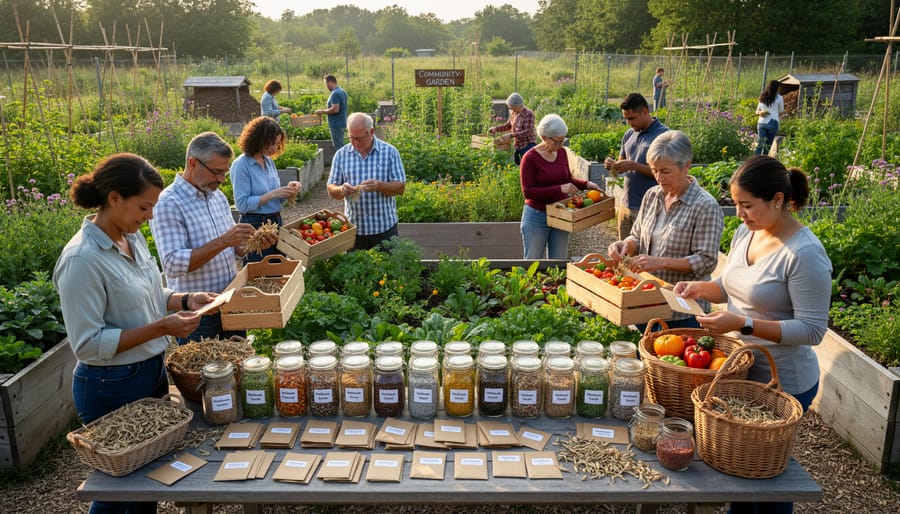
Community Supported Agriculture transforms this precarious model by spreading risk across an entire community. When you purchase a CSA share before the growing season begins, you provide farmers with stable upfront capital for seeds, equipment, and labor. This financial commitment means farmers can focus on growing exceptional food rather than constantly worrying about whether they’ll earn enough to survive another season. You become a genuine partner in the farming operation, sharing both abundant harvests and challenging years. The result is a more resilient local food system where farmers can invest in soil health, experiment with diverse crops, and build sustainable businesses that nourish communities for generations.
What Income Risks Really Mean for Your CSA Farmer
When you buy tomatoes at the grocery store, the produce manager simply orders more from their distributor if they run low. But your CSA farmer doesn’t have that safety net. They’re growing everything themselves, and that creates a fundamentally different kind of financial pressure.
Income risk for farmers means their annual earnings depend entirely on what actually grows in their fields. Unlike conventional agriculture, where large-scale operations can absorb losses across hundreds or thousands of acres, most CSA farms operate on smaller acreages where every crop matters. A late spring frost can wipe out fruit blossoms. A summer drought can stunt tomato production by half. An unexpected pest invasion can decimate an entire planting of greens.
The CSA model exists partly to address these realities. While conventional farmers might sell to multiple buyers and adjust their income strategy throughout the season, CSA farmers commit to feeding a specific number of families with whatever they harvest. They can’t call up a wholesaler to fill gaps in their share boxes.
Consider this: A conventional farmer losing their lettuce crop to pests might switch focus to other buyers or crops. A CSA farmer still needs to provide weekly shares to members who’ve already paid. Weather extremes are becoming more unpredictable, making planning even harder. Too much rain encourages fungal diseases. Too little means costly irrigation and stressed plants.
Then there’s timing. Crops need to mature when members expect them. If spring arrives late, those early greens everyone anticipates might be delayed, leaving farmers scrambling to fill boxes with limited variety. These aren’t just agricultural challenges; they’re direct threats to a farmer’s livelihood and ability to pay bills, purchase seeds for next season, and support their family. Understanding these pressures helps us appreciate why the partnership between farmer and member matters so deeply.
The Four Biggest Income Threats Facing CSA Farms
Weather Extremes and Climate Unpredictability
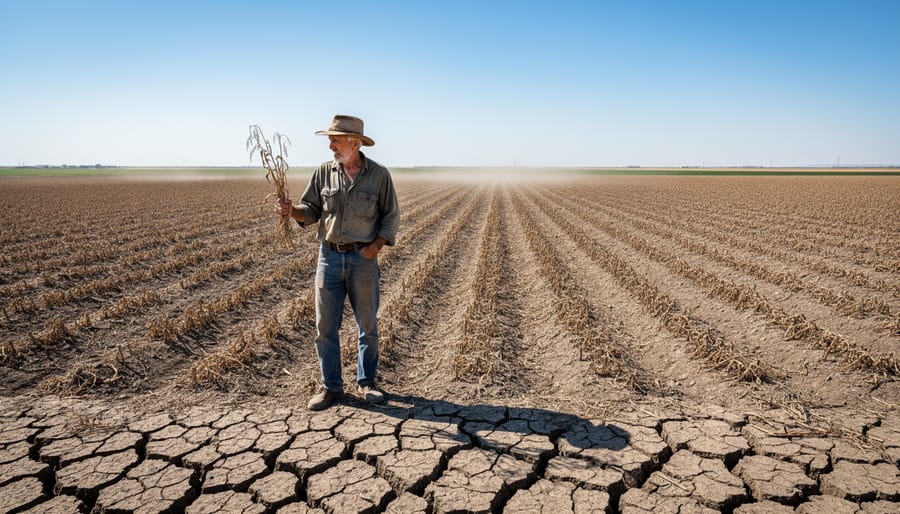
Mother Nature doesn’t follow business plans. A single late spring frost can wipe out fruit blossoms, turning a promising apple harvest into near-total loss. Unexpected heat waves stress vegetables, causing crops to bolt prematurely or simply wither. Droughts reduce yields dramatically, while floods can destroy entire plantings in hours.
Take Sarah from Meadowbrook Farm, who experienced this firsthand when an August deluge flooded her low-lying fields. She lost nearly 60% of her late summer vegetables—tomatoes, peppers, and squash—representing thousands of dollars in projected income. “We had pre-sold those crops through our CSA,” she shares, “but the income we’d counted on vanished overnight.”
These weather extremes are becoming increasingly unpredictable, making traditional farming income projections feel like guesswork. For small organic farms operating on tight margins, a single catastrophic weather event can threaten an entire season’s viability. This vulnerability underscores why the CSA model’s risk-sharing approach matters so deeply for farming sustainability.
The Pre-Season Investment Gamble
Picture this: it’s February, snow still blankets the ground, and farmers are already investing thousands of dollars. Seeds need ordering, equipment requires maintenance, and greenhouse heating bills start climbing. They’re hiring workers, purchasing compost, and planning crop rotations—all without a single dollar of income.
This pre-season investment typically ranges from $15,000 to $50,000 for small to mid-sized operations, depending on farm size and production goals. Understanding CSA farm economics reveals just how crucial early member sign-ups become.
When enrollment falls short of projections, farmers face tough decisions. Do they scale back plantings, potentially disappointing members with smaller shares? Take on debt to cover gaps? Or dip into personal savings meant for winter months?
Unlike traditional businesses that can adjust inventory based on demand, farming requires commitment months in advance. Those seeds go in the ground whether 50 or 100 members sign up, creating a financial tightrope that makes planning incredibly challenging.
Labor Costs and Workforce Challenges
Managing labor is one of the trickiest aspects of running a small farm. Unlike traditional businesses with steady workflows, farms experience dramatic seasonal shifts—you might need ten helpers during June harvest but only two in February. Finding reliable workers who understand sustainable practices takes time and effort, yet predicting exactly when you’ll need them depends on weather patterns that change yearly.
Labor costs can quickly eat into thin profit margins. When unexpected frost damages crops or drought delays planting, you still need to pay your team fairly. Many successful CSA farmers have found creative solutions, like offering work-share programs where members exchange labor for their produce shares. This builds community while managing costs. Others cross-train workers in multiple tasks, ensuring year-round employment that benefits everyone. Building a skilled, dependable team requires investment, but it’s essential for maintaining the quality and consistency your members expect.
Market Competition and Member Retention
Even with a committed member base, CSA farmers face competition from farmers markets, grocery stores, and meal delivery services that offer greater flexibility. Members can choose to opt out between seasons if their circumstances change, creating uncertainty in year-to-year planning. Life events like moves, financial changes, or dietary shifts mean retention isn’t guaranteed, even when members love their farm.
Successful farmers build loyalty through consistent communication, quality produce, and community connection. Full Circle Farm in Washington state maintains an impressive 85% retention rate by offering flexible pickup options and engaging members through regular farm updates. Creating a strong farm identity helps members see their subscription as more than just vegetables—it becomes a valued relationship. Consider offering mid-season surveys to understand member needs, providing recipe ideas to inspire cooking creativity, and hosting farm events that deepen emotional connections. These efforts transform casual subscribers into devoted advocates who return season after season.
How Risk-Sharing Creates Predictable Income
Here’s where the CSA approach transforms everything. The risk-sharing model tackles income uncertainty head-on by flipping the traditional farming payment structure upside down.
Instead of waiting months to see if their harvest will sell, CSA farmers receive payments from members at the beginning of the season. This upfront commitment creates an immediate operating budget that farmers can count on. They know exactly how much money they have to purchase seeds, repair equipment, hire help, and cover essential expenses. No more sleepless nights wondering if the bills will get paid.
Think of it like a farmers’ version of a subscription service, but with much deeper meaning. When members pay in advance, they’re not just buying vegetables—they’re investing in their local food system and saying, “We believe in you, and we’re in this together.” This vote of confidence means everything to farmers who’ve spent years building their skills and nurturing their land.
The magic happens because everyone understands the deal from day one. Members know that some weeks might bring an abundance of tomatoes, while others feature more greens. If the cucumber crop struggles due to unexpected weather, members don’t demand refunds. Instead, they appreciate the extra zucchini and summer squash that thrived. This shared understanding removes the pressure farmers face in conventional markets, where imperfect produce often gets rejected.
Take the example of Green Valley Farm in Ontario. Owner Maria Chen shares how CSA membership transformed her operation: “Before CSA, I’d worry constantly about market day sales. Now, I start each season knowing I have 85 families counting on me, and I’ve already got the funds to make it happen. I can focus on growing the best food possible instead of scrambling to make ends meet.”
This financial stability ripples outward, benefiting the entire community. Farmers can experiment with new varieties, invest in soil health, and plan for long-term sustainability. Members enjoy fresher, more diverse produce while knowing their food dollars directly support local agriculture. Everyone wins when risk becomes something shared rather than shouldered alone.
What You’re Really Signing Up For as a CSA Member
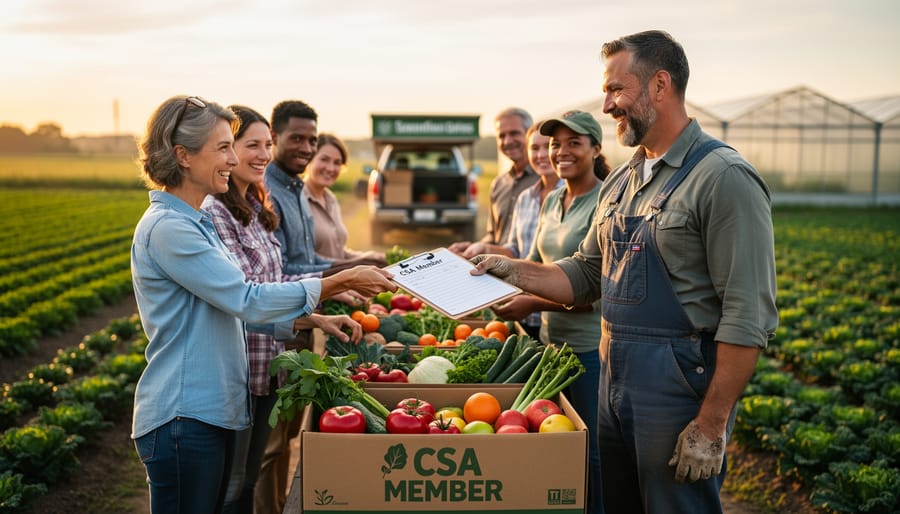
When you join a CSA, you’re not simply purchasing vegetables—you’re entering into a partnership between farmers and communities that thrives on shared commitment and realistic expectations.
Think of it this way: as a CSA member, you’re investing in the farm’s entire season before the first seed goes into the ground. Your upfront payment gives farmers the financial security to buy seeds, prepare fields, and cover early-season expenses without depending on uncertain market conditions. In return, you’re agreeing to share in whatever the season brings—the triumphs and the challenges alike.
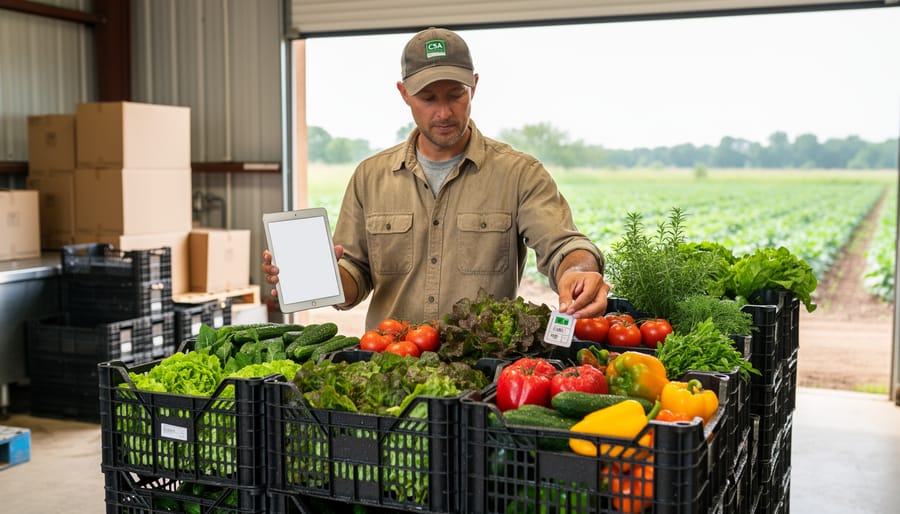
In practice, this means your weekly box will reflect the farm’s actual harvest. During peak summer months, you might receive an abundance of tomatoes, zucchini, and peppers that has you frantically searching for new recipes. Come early spring or late fall, your share might feature more root vegetables and hearty greens. Some weeks you’ll get exactly what you expected; other weeks might surprise you with an unfamiliar vegetable or a substitution when weather affects a particular crop.
This variability isn’t a flaw in the system—it’s the whole point. You’re experiencing real farming, not a curated grocery store experience. When a late frost damages the lettuce crop, you might receive extra kale instead. When cucumbers go crazy in July, everyone celebrates the bounty together.
This shared-risk model means you’re actively supporting your farmer through unpredictable seasons, knowing they’re working tirelessly to provide you with the best possible harvest. You become invested in the farm’s success story, learning about seasonal eating, discovering new vegetables, and developing a deeper connection to how your food is grown.
By embracing this partnership mindset, you transform from a passive consumer into an active participant in sustainable, local agriculture—experiencing the authentic rhythm of farm life alongside the people who grow your food.
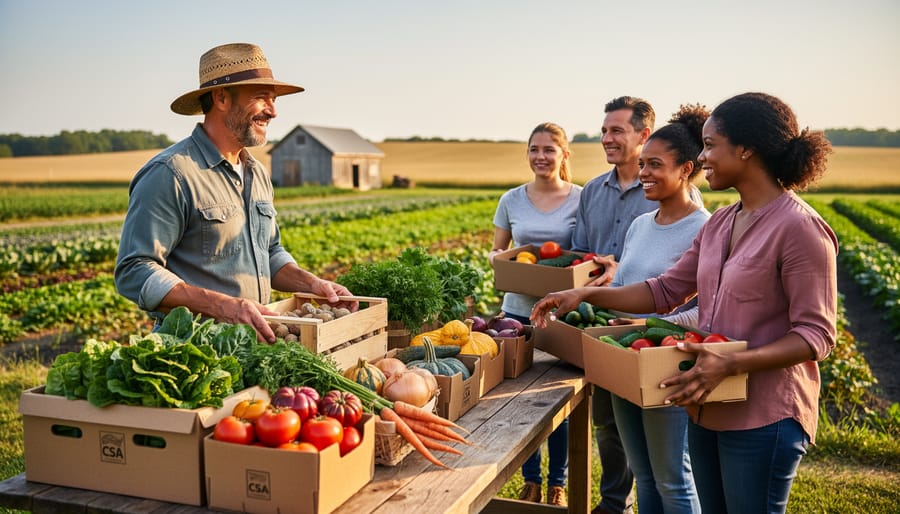
Real Farmer Story: How One CSA Survived a Devastating Drought
When the summer of 2019 brought record-breaking heat and minimal rainfall to Green Valley Farm in northern California, third-generation farmer Maria Chen watched her carefully tended vegetable beds wither despite daily irrigation. Wells were running dangerously low, and the municipal water district had imposed strict restrictions. Maria faced an agonizing choice: purchase expensive trucked-in water or accept significant crop losses that could devastate her income for the year.
Instead of shouldering this burden alone, Maria opened up to her 85 CSA members through a heartfelt email explaining the situation. She shared photos of the parched fields, detailed the irrigation challenges, and honestly discussed what members could expect in the coming weeks. The response overwhelmed her.
Members immediately rallied, organizing a fundraiser that raised $8,000 toward emergency water costs. Several members with agricultural backgrounds volunteered weekend hours to help implement water-saving measures like installing drip irrigation and applying mulch. Others spread the word on social media, bringing in 20 new member sign-ups for the following season.
“I prepared myself for cancellations and complaints,” Maria recalls. “Instead, my members reminded me why CSA exists. They understood that supporting local farms means being there during the tough seasons, not just the abundant ones.”
The farm survived that summer with about 60 percent of typical yields, but no members cancelled their shares. Many told Maria they appreciated the smaller boxes because it helped them understand the reality of farming and deepened their connection to where their food comes from. That drought year, paradoxically, became the strongest bonding experience between Maria and her community, proving that CSA membership is truly a partnership built on mutual support and shared responsibility.
Simple Ways You Can Support Your Farmer’s Income Stability
Supporting your local farmer’s income stability doesn’t require grand gestures—small, thoughtful actions make a real difference. When you sign up for your CSA share early in the season, you’re giving farmers the financial security they need to purchase seeds, plan crop rotations, and invest in infrastructure before the growing season begins. This early commitment helps them avoid risky short-term loans and make confident decisions about what to plant.
If possible, consider paying for your share upfront or in larger installments rather than weekly payments. This approach provides farmers with crucial cash flow during the expensive spring months when they’re spending money but not yet harvesting. Many farms offer small discounts for upfront payment, creating a win-win situation.
Becoming a farm advocate is equally valuable. Recruit friends, family, and coworkers to join your CSA by sharing your experiences on social media or hosting a farm dinner party featuring your weekly harvest. Every new member strengthens the farm’s financial foundation and builds community resilience.
Flexibility goes a long way in supporting income stability. When you’re open to receiving whatever’s thriving that week instead of expecting specific items, you help farmers reduce waste and maximize their harvest value. Surplus zucchini or an abundance of greens might not be your first choice, but your willingness to accept them helps the farm avoid financial losses.
Volunteering during harvest time or work days reduces labor costs while deepening your connection to where your food comes from. Whether you can spare two hours or a whole day, your hands-on help directly impacts the farm’s bottom line. Finally, leave positive reviews online and recommend your farm to local restaurants or institutions looking for fresh produce suppliers—word-of-mouth remains the most powerful marketing tool for small farms.
When you join a CSA, you’re doing something truly meaningful—you’re stepping beyond a simple transaction and entering into a partnership that strengthens your entire community. This isn’t just about filling your kitchen with fresh, organic vegetables each week. It’s about investing in a farming model that honors the land, supports the people who tend it, and creates food systems built to last.
The beauty of CSA lies in its honesty about what farming really involves. Weather doesn’t always cooperate. Pests can be persistent. Markets fluctuate. By sharing these realities with your farmer, you’re helping them face uncertainties with confidence rather than fear. Your upfront commitment gives them the breathing room to farm thoughtfully, invest in soil health, and make decisions based on what’s best for the land rather than what’s merely profitable.
Think of your CSA membership as an investment with returns that compound in unexpected ways. Yes, you’ll enjoy incredibly fresh produce that nourishes your body. But you’ll also gain connection to the source of your food, understanding of seasonal rhythms, and the satisfaction of knowing your money directly supports someone’s livelihood and dream.
The farmers who feed us deserve stability and respect for the essential work they do. When you embrace the full CSA partnership—celebrating abundant harvests and understanding leaner weeks—you become part of the solution to farming’s income challenges. Together, we’re building food systems where both farmers and eaters can truly thrive.