Yearly Archives

128 Articles

How Community Supported Agriculture Builds Food Security When Systems Fail

Posted by darrell on
0
CSA Fundamentals and Benefits
How Community Supported Agriculture Builds Food Security When Systems Fail

Community Supported Agriculture represents something extraordinary: a living, breathing office of food systems resilience that exists not in government buildings, but in the fields, farmers markets, and neighborhoods where you live. While institutions debate policy frameworks, CSA farms are already building the infrastructure that protects communities from supply chain disruptions, climate uncertainty, and food insecurity.

Picture your local CSA farmer as a resilience officer working on the front lines. When a Sarah Martinez in Vermont lost 40% of her tomato crop to unexpected flooding, her diversified CSA model meant members still received abundant weekly shares of lettuce, root vegetables, and herbs. This isn’t just farming—it’s risk distribution in action. Each CSA share you purchase funds a system designed to absorb shocks that would cripple conventional food chains.

The resilience mechanism works through three interconnected principles: agricultural diversity creates backup options when single crops fail, local distribution networks eliminate vulnerable transportation dependencies, and direct farmer-member relationships enable rapid adaptation to changing conditions. When the pandemic emptied grocery shelves in 2020, CSA farms expanded output within weeks because the infrastructure already existed.

Understanding this connection between institutional concepts and grassroots practice matters because resilience isn’t theoretical—it’s the food on your table during the next crisis. Whether you’re a researcher analyzing food security systems, a consumer worried about supply stability, or an aspiring farmer seeking viable models, recognizing CSA as practical resilience architecture transforms how you engage with local food. The office of food systems resilience isn’t something to study from a distance. It’s something you join, one weekly vegetable box at a time.

What Is an Office of Food Systems Resilience?

In traditional governmental and organizational contexts, an “office of food systems resilience” refers to a dedicated department or initiative focused on strengthening the stability and adaptability of local food networks. These offices typically coordinate strategies to ensure communities can access nutritious food during disruptions like extreme weather, supply chain breakdowns, or economic challenges. They work on policy development, infrastructure support, and connecting various stakeholders in the food system.

Here’s the fascinating part: Community Supported Agriculture farms function as decentralized, grassroots versions of these offices. Instead of operating from a bureaucratic structure, CSA farms embody food systems resilience through their daily operations and relationships with members. They’re living laboratories of sustainable agriculture practices that directly strengthen local food security.

CSA farms build resilience through four core principles. First, diversification means growing multiple crop varieties rather than relying on single products, protecting both farmers and members from total crop failures. If aphids damage the lettuce, there’s still kale, carrots, and tomatoes thriving in the fields.

Second, localization keeps food production close to consumers, dramatically reducing vulnerability to distant supply chain disruptions. Your weekly vegetables travel miles, not thousands of miles, from farm to table.

Third, relationship-building creates direct connections between farmers and eaters. These personal bonds foster mutual support and shared investment in each other’s success. Members understand seasonal challenges, while farmers gain loyal customers who stick with them through tough years.

Finally, adaptive capacity allows CSA farmers to respond quickly to changing conditions. Without corporate red tape, they can shift planting schedules, try new varieties, or adjust distribution methods based on immediate needs and feedback.

Together, these principles transform individual CSA farms into community anchors that quietly but powerfully strengthen food system resilience from the ground up, one harvest share at a time.

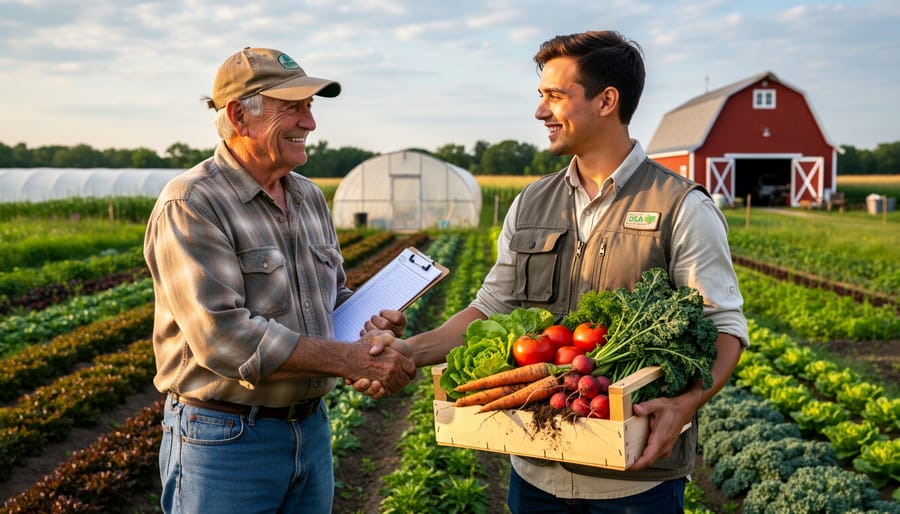
Wooden basket filled with diverse fresh vegetables including greens, carrots, and tomatoes from local farm
CSA harvest boxes deliver diverse seasonal produce directly from local farms, eliminating long supply chains and strengthening food security.

How CSA Farms Strengthen Local Food Security

Reduced Dependence on Long Supply Chains

Community Supported Agriculture dramatically shortens the distance between farm and table, typically eliminating the complex web of intermediaries that conventional food systems rely upon. Instead of produce traveling through multiple distribution centers, warehouses, and retail chains, your vegetables might journey just a few miles from field to pickup location.

This simplified pathway creates remarkable stability. When fuel prices spike or transportation strikes disrupt grocery store deliveries, CSA members continue receiving their weekly shares. The direct farm-to-consumer model doesn’t depend on interstate trucking networks or cross-country shipping routes that can be affected by weather events, infrastructure failures, or labor disputes.

Consider Sarah Chen’s organic farm in Vermont, which maintained consistent deliveries throughout regional supply disruptions that left supermarket shelves empty. Her 200 CSA members received fresh produce while conventional distribution channels struggled to recover.

This resilience extends beyond crisis situations. By reducing dependence on fossil fuel-intensive transportation, CSA farms protect members from the cascading price increases that ripple through long supply chains. You’re investing in a food source that remains accessible and affordable regardless of external economic pressures, building genuine food security right in your community.

Direct Producer-Consumer Relationships Build Trust and Transparency

When you join a CSA program, you’re not just buying vegetables—you’re building a relationship that transforms how you think about food. This direct connection between you and your farmer creates a level of accountability and trust that simply doesn’t exist in conventional food systems.

Knowing exactly where your food comes from and who grows it opens doors to ongoing education. CSA farmers often share weekly newsletters explaining what’s growing, how weather affects crops, and tips for preparing less familiar vegetables. This knowledge exchange helps you become a more informed eater and supports your journey toward sustainable living.

During challenging times, these relationships prove invaluable. When supply chains faltered during recent crises, CSA members continued receiving fresh produce while grocery store shelves sat empty. The mutual support network—farmers committed to feeding their community, members invested in their farmer’s success—creates resilience that withstands disruption.

Take Maria Santos, who started her small organic farm five years ago with just ten CSA members. When unexpected late frosts threatened her early crops, her members rallied, helping with emergency frost protection and accepting adjusted share contents without complaint. Today, her thriving operation serves 150 families, and many of those original members have become close friends. Maria credits this loyalty network with keeping her farm viable during difficult seasons.

This reciprocal relationship—where both parties understand and support each other’s needs—forms the backbone of genuine food system resilience at the grassroots level.

Farmer talking with CSA members in vegetable field during farm visit
Direct relationships between CSA farmers and members build trust, transparency, and mutual support during both abundant harvests and challenging seasons.

Crop Diversity Protects Against Single-Point Failures

Community Supported Agriculture farms embrace crop diversity as a cornerstone of their resilience strategy. While industrial operations often dedicate hundreds of acres to a single crop, CSA farms typically cultivate 40 or more different varieties throughout the growing season. This approach creates natural insurance against the unexpected challenges that inevitably arise.

When disease strikes one crop or weather patterns favor certain plants over others, CSA farmers have multiple backup options already growing in their fields. A late frost might damage early tomatoes, but leafy greens and root vegetables keep the harvest boxes full. If market prices plummet for one vegetable, the farm’s income remains stable through its diverse portfolio.

Take Green Valley Farm, which grows 52 crop varieties annually. Last season, their cucumber crop failed due to bacterial wilt, but members hardly noticed because zucchini, summer squash, and beans thrived. This built-in redundancy means CSA members receive consistent weekly shares regardless of individual crop performance, while farmers avoid the financial devastation that monoculture operations face when their single crop fails.

Financial Resilience Through Shared Risk

Community Supported Agriculture operates on a unique shared risk model that strengthens both farmers and communities. Members pay upfront at the beginning of the growing season, providing farmers with crucial capital when they need it most—before planting seeds, purchasing supplies, or making equipment repairs.

This pre-season funding model creates a financial cushion that helps farmers weather unpredictable challenges like droughts, floods, or pest outbreaks. Instead of shouldering these risks alone, farmers share them with their members. When heavy rains damage the tomato crop, members understand they’ll receive fewer tomatoes that week. Conversely, when conditions favor bumper crops of zucchini or lettuce, everyone celebrates the abundance together.

Take the example of Green Valley Farm in Ontario, where early payment from 75 member families allowed farmer Maria Chen to install a greenhouse. When an unexpected late frost hit in May, her protected seedlings survived while neighboring farms lost entire crops. Her CSA members still received their weekly shares, demonstrating how shared investment builds genuine resilience.

This arrangement transforms the traditional farmer-consumer relationship into a partnership where both parties invest in long-term food security rather than short-term transactions.

Real-World Examples of CSA Resilience in Action

When the pandemic brought grocery store disruptions and uncertainty in 2020, members of Green Valley CSA in Vermont experienced something remarkable: they never missed a weekly harvest. While supermarket shelves emptied and supply chains faltered, the farm quickly adapted by implementing contactless pickup stations and pre-packed boxes. Member retention soared to 98%, and the farm added 150 new families to their waiting list. Farmer Sarah Chen shares that this crisis actually strengthened their community, with members volunteering to help elderly neighbors collect their shares and creating a rotating harvest crew when migrant workers couldn’t travel.

The 2022 drought in California’s Central Valley tested Three Sisters Farm differently. When water restrictions threatened their crops, CSA members rallied in unexpected ways. The farm transparently shared their irrigation challenges through weekly newsletters, explaining which crops might be affected. Members voted to accept smaller, more diverse boxes rather than cancel shares. The farm pivoted to drought-resistant varieties like amaranth and tepary beans, introducing members to traditional crops that thrive in arid conditions. By season’s end, the farm maintained 85% of projected yields and educated hundreds of families about climate-adaptive agriculture. Member Tom Rivera notes that receiving those resilient crop varieties actually inspired his own backyard garden transformation.

During the 2021 economic downturn, Riverside Community Farm in Ohio faced a different challenge when 40% of members requested payment plan modifications. Instead of reducing membership, the farm created a flexible payment system with seasonal installments and introduced a work-share program. Members could contribute farm labor in exchange for reduced costs, while simultaneously learning sustainable farming techniques. Twenty families participated in work-shares, and several members later started their own market gardens. The farm not only retained nearly all members but built deeper connections through hands-on involvement.

These stories illustrate how CSA models create built-in flexibility during crises. The direct farmer-member relationship enables rapid communication, creative problem-solving, and mutual support that conventional food systems simply can’t match. When challenges arise, CSA communities don’t just survive—they innovate together and often emerge stronger than before.

What You Can Do: Building Personal Food Resilience Through CSA

Choosing the Right CSA for Your Needs

Finding the right CSA starts with understanding your household’s needs and values. When choosing a CSA, ask farmers about their growing practices, particularly their approach to soil health, water conservation, and biodiversity. These factors directly impact food systems resilience.

Key questions to consider: What percentage of crops are grown organically? Do they save seeds or source heirloom varieties? How do they handle unexpected weather events or crop failures? Understanding their distribution methods matters too. Does the farm offer flexible pickup locations, home delivery, or farm visits? Can members swap items they don’t use?

Look for farms that demonstrate commitment to resilience through diversified crops, community education programs, and transparent communication. Many successful CSA farmers share their challenges openly, building trust through honesty about seasonal variations and harvest realities.

Don’t hesitate to visit potential farms before committing. Walking the fields, meeting the growers, and seeing their practices firsthand provides invaluable insight. Consider starting with a half-share or trial period to ensure the partnership fits your lifestyle and supports genuine food system resilience in your community.

Becoming an Active Member, Not Just a Consumer

Joining a CSA isn’t just about picking up your weekly produce box. The most rewarding experiences come when you dive deeper into the farming community. Many CSA farms welcome volunteers for harvest days, where you can get your hands in the soil alongside farmers and learn firsthand about organic growing practices. These opportunities transform passive consumers into active participants who truly understand where their food comes from.

Consider participating in a work share program, where you exchange a few hours of farm labor each week for a reduced membership fee. Members often find these experiences therapeutic and educational, gaining practical skills they can apply in their own gardens. Farm events like seasonal celebrations, potlucks, and workshops create natural gathering spaces where you’ll connect with like-minded neighbors who share your values around sustainable food.

This deeper engagement strengthens community resilience while enriching your own life. Sarah, a third-year CSA member, shares: “Volunteering during strawberry season changed everything for me. I made friends, learned pruning techniques, and now I feel like I’m part of something bigger than just buying groceries.”

Start small by attending one farm event this season, then explore volunteer opportunities that fit your schedule.

Supporting Policy and Community Initiatives

You can strengthen your local food system by engaging with community-based initiatives that make fresh, locally grown food accessible to everyone. Farmers markets serve as vital gathering spaces where you can connect directly with growers, learn about seasonal produce, and support agricultural diversity in your region. By shopping at these markets regularly, you’re helping small-scale farmers sustain their operations while enjoying the freshest ingredients.

Community gardens offer hands-on opportunities to grow food alongside neighbors, sharing knowledge and resources while building skills in sustainable gardening practices. These spaces often welcome beginners and provide a low-barrier entry point for those curious about growing their own organic vegetables.

Local food policy councils bring together farmers, consumers, and community leaders to identify challenges and create solutions that benefit everyone in the food system. Participating in public meetings or joining working groups allows you to contribute your perspective and learn how food moves from farm to table in your area. These collaborative efforts help shape a more resilient food future without requiring specialized expertise—just genuine interest in supporting local agriculture and food access for all.

Every time you purchase a CSA share, you’re making a powerful investment that ripples far beyond your kitchen table. You’re strengthening the safety net of local food systems, supporting farmers who steward the land responsibly, and building genuine resilience against supply chain disruptions and climate uncertainty. These individual choices, when multiplied across communities, create the collective action that transforms our food landscape from fragile to flourishing.

The beauty of CSA membership lies in its simplicity. While policymakers and researchers discuss food systems resilience in boardrooms, you can actively participate in building it right where you live. Each week’s harvest box represents a direct connection to the soil, the seasons, and the people who grow your food. This connection isn’t just sentimental; it’s the foundation of true food security.

Ready to take that first step? Finding your local CSA farm is easier than you might think. Search online directories, visit farmers markets, or ask neighbors who already participate. Many farms offer farm tours, workshare programs, and flexible payment plans to make membership accessible. Your journey toward resilient, community-centered food starts with a single conversation with a farmer. Reach out today and become part of the solution.

Why Your Organic Seed Potatoes Matter More Than You Think

Posted by darrell on
0
Organic Farming and Cultivation
Why Your Organic Seed Potatoes Matter More Than You Think

Select certified organic seed potatoes from reputable suppliers who test for diseases like late blight and potato virus Y, ensuring your crop starts with the healthiest possible foundation. Store your seed potatoes in a cool, dark place between 38-45°F with good air circulation for 2-3 weeks before planting to encourage proper sprouting and vigor.

Save your best-performing tubers each season by choosing plants that produce abundant, uniform potatoes and show strong disease resistance throughout the growing season. This simple selection process, practiced by generations of farmers, gradually adapts varieties to your specific soil conditions and local climate while preserving genetic diversity that commercial agriculture often overlooks.

The difference between ordinary potatoes and true seed potatoes matters more than most gardeners realize. Seed potatoes carry the living blueprint of varieties developed over centuries, some dating back to indigenous cultivation practices in the Andes Mountains. When you choose organic seed stock, you’re participating in a vital chain of preservation that keeps heirloom varieties alive and maintains alternatives to the limited commercial varieties dominating grocery store shelves.

Your seed potato choices directly impact your harvest quality, disease resistance, and long-term garden sustainability. Organic certification guarantees these seeds were grown without synthetic pesticides or fungicides, meaning they’ve already proven their natural resilience. Whether you’re planting a backyard garden bed or managing a small farm operation, understanding proper seed selection and storage transforms your potato patch from a casual hobby into a meaningful contribution to food security and agricultural biodiversity.

What Makes Organic Seed Potatoes Different

Organic seed potatoes with visible sprouts on wooden surface
Certified organic seed potatoes with healthy sprouts ready for planting demonstrate the quality difference that proper selection and storage provide.

Certification Standards You Should Know

When shopping for organic seed potatoes, understanding certification standards helps you make informed decisions. The USDA organic certification requirements ensure your seed potatoes meet strict guidelines that protect both soil health and your final harvest.

Certified organic seed potatoes cannot be treated with synthetic fungicides, chemical sprout inhibitors, or conventional pesticides. This means no chlorpropham (a common sprout suppressant) or synthetic seed treatments. The potatoes must be grown in soil that’s been free from prohibited substances for at least three years, using only approved organic fertilizers and pest management techniques.

The certification guarantees that growers receive seed stock cultivated through natural methods like crop rotation, composting, and biological pest control. This matters because healthier seed potatoes, free from chemical residues, typically produce more vigorous plants with stronger disease resistance. For home gardeners and small farmers, choosing certified organic seed potatoes means you’re starting with genetics that haven’t been compromised by synthetic treatments, giving your crop the best foundation for success while supporting sustainable agriculture practices that benefit the broader ecosystem.

Disease-Free vs. Disease-Resistant Varieties

When shopping for organic seed potatoes, you’ll encounter two important terms that aren’t interchangeable: disease-free certification and disease-resistant varieties. Understanding both will set you up for a thriving potato harvest.

Disease-free certification means your seed potatoes have been inspected and tested to ensure they’re not carrying common potato diseases like late blight, bacterial ring rot, or viruses. This certification is crucial because many potato diseases live inside the tuber without visible symptoms, ready to spread throughout your garden once planted. Think of it as a clean bill of health for your starting material.

Disease-resistant varieties, on the other hand, refer to the potato’s genetic makeup. These varieties have been bred to naturally fight off or tolerate specific diseases. For example, some varieties resist late blight better than others, giving you an extra layer of protection.

Here’s the key: you want both. Starting with certified disease-free seed potatoes of a disease-resistant variety gives you the best chance of success, especially in organic systems where synthetic pesticides aren’t an option. Sarah Chen, an organic farmer in Vermont, learned this firsthand. After struggling with recurring disease issues, she switched to certified disease-free, resistant varieties and saw her yields increase by forty percent. Smart seed selection truly makes all the difference.

The Crisis Facing Organic Seed Potato Diversity

Walk into any garden center today, and you’ll likely find the same handful of potato varieties: Yukon Gold, Russet, perhaps a Red Pontiac. But just a century ago, gardeners could choose from hundreds of distinct potato varieties, each with unique flavors, textures, and growing characteristics. This narrowing selection reflects a quiet shift happening in our food system, one that affects everyone who cares about what ends up on their plate.

The diversity of potato varieties available as organic seed has been steadily declining over recent decades. Many treasured heirloom varieties that once thrived in home gardens and small farms are becoming increasingly difficult to find. When farmers like Tom Henderson in Ontario searched for certified organic seed potatoes beyond the standard commercial varieties, he discovered that thoughtful organic seed selection required persistence and networking with other growers.

Why does this matter? Each potato variety carries genetic traits adapted to specific conditions. Some resist particular diseases, others handle drought better, and many possess flavors you simply can’t find in supermarket bins. As our climate becomes less predictable, having access to diverse potato genetics isn’t just about preserving culinary heritage; it’s about ensuring food security. If one variety fails in changing conditions, others may thrive.

The good news is that passionate growers and seed savers are working to reverse this trend. Small seed companies and community seed libraries are preserving rare varieties, while home gardeners are rediscovering the satisfaction of growing something truly unique. By choosing to grow and save diverse potato varieties, you’re participating in something bigger than your backyard garden.

Multiple wooden crates displaying diverse heirloom potato varieties in various colors
Diverse heirloom potato varieties represent the genetic diversity that organic seed preservation efforts aim to protect for future generations.

How Seed Preservation Works for Potatoes

Selecting the Best Seed Stock

Choosing the right potatoes to save as seed stock makes all the difference in building a resilient, productive garden year after year. Start by observing your plants throughout the growing season, marking the healthiest, most vigorous performers with a stake or flag. Look for disease-free plants with robust foliage and strong stems that showed good resistance to pests and environmental stresses.

When harvest time arrives, select tubers from your best-performing plants. Ideal seed potatoes are typically egg to medium-sized, about 1.5 to 3 inches in diameter. While larger potatoes are tempting, medium-sized tubers often produce more consistent results and are easier to cut for planting. Avoid saving potatoes from plants that showed signs of disease, stunted growth, or poor yields, as these traits can carry forward.

Consider variety performance carefully. Did certain varieties thrive in your specific microclimate and soil conditions? These local champions deserve priority in your seed-saving efforts. Organic farmer Maria Santos from Vermont shares her approach: “I always save seed from the variety that gave me the most abundant, beautiful harvest. Over five years, my saved Kennebecs have adapted beautifully to my clay-heavy soil.” This selection process gradually improves your seed stock’s adaptation to your unique growing conditions, creating a more sustainable and successful potato crop.

Storage Conditions That Prevent Disease

Proper storage creates the foundation for disease-free seed potatoes and successful planting seasons. Think of it as giving your seed stock a cozy winter retreat where they can rest and stay healthy until spring arrives.

Temperature control is your first priority. Store organic seed potatoes between 38-40°F, which keeps them dormant without triggering sprouting or encouraging rot. A basement, root cellar, or insulated garage often works perfectly. Avoid temperatures below 32°F, as freezing damages the cellular structure, or above 50°F, which prompts premature sprouting and weakens the tubers.

Humidity matters just as much as temperature. Aim for 90-95% relative humidity to prevent shriveling while avoiding condensation that invites fungal diseases. If your storage area feels too dry, place shallow pans of water nearby or lightly mist the surrounding air, not the potatoes themselves. Conversely, excessive moisture requires better ventilation to keep diseases at bay.

Complete darkness preserves quality by preventing the development of solanine, a toxic compound that turns potatoes green. Even brief light exposure can compromise your seed stock, so store them in opaque containers or covered bins.

Ventilation keeps air circulating without creating drafts. Good airflow prevents moisture buildup and removes ethylene gas naturally released during storage. Use slatted wooden crates or mesh bags rather than sealed plastic containers, and arrange them with space between layers.

Regular monitoring catches problems early. Check your seed potatoes monthly, removing any showing soft spots, unusual odors, or disease symptoms. This simple practice has helped countless organic farmers, like Minnesota grower Sarah Chen, maintain 98% viability rates season after season through attentive storage management.

Improvement Through Selection and Adaptation

Farmer's hands selecting quality seed potatoes from harvest
Careful selection of healthy seed stock by experienced growers ensures disease-free potatoes and improved varieties adapted to local conditions.

What to Select For in Your Climate

Your local climate plays a starring role in determining which seed potato varieties will thrive in your garden. Start by observing your growing season length. Short-season gardeners in northern regions should prioritize early-maturing varieties that can produce a full crop before the first frost. Conversely, if you’re blessed with a longer growing season, you have more flexibility to experiment with mid-season and late varieties.

Water availability matters tremendously. In drought-prone areas, seek out varieties known for producing decent yields with less moisture. Some heritage varieties have adapted to specific regional conditions over generations, making them natural champions for water-wise gardening. Cold-hardy varieties are essential for gardeners facing unpredictable spring weather or early autumn frosts.
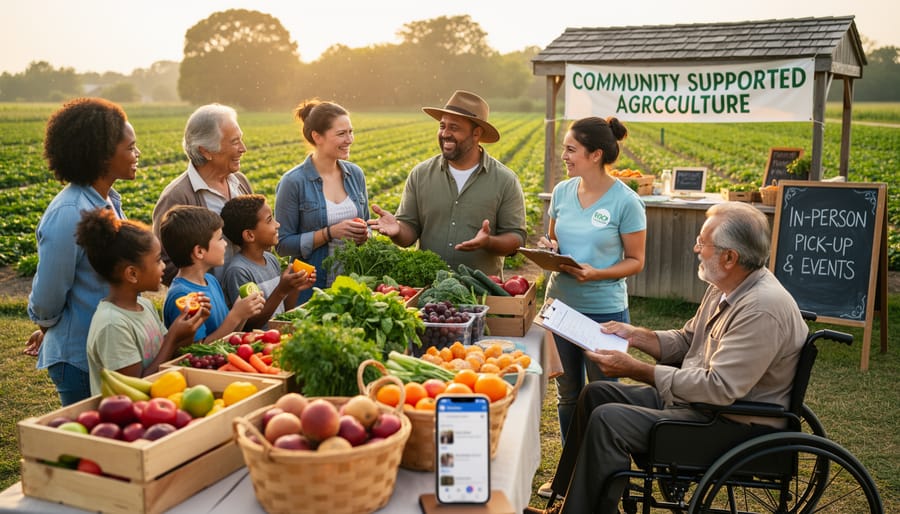
Pay attention to disease pressures common in your area too. If late blight regularly visits your region, choosing resistant varieties can save your crop. Many organic farmers have found success by implementing climate adaptation strategies that match varieties to their specific microclimates.

Talk to neighboring gardeners and local seed savers about what performs well in your area. Their experience is invaluable for identifying varieties that consistently deliver in your unique conditions, helping you build a resilient, productive potato patch year after year.

Keeping Records for Better Results

Good record-keeping transforms your seed potato selection from guesswork into an organized improvement program. Start simple by creating a garden journal or spreadsheet to track essential information from each growing season. Note which potato plants produced the most tubers, showed disease resistance, or thrived in challenging weather conditions. Include details like planting dates, harvest weights, and any pest or disease observations.

Many successful organic growers use a color-coded tagging system during the growing season, marking their best-performing plants with ribbons or stakes. This makes it easy to identify which potatoes to save for next year’s seed stock. Take photos throughout the season to document growth patterns and any issues that arise.

Sarah Chen, an organic farmer in Vermont, credits her detailed records for helping her develop a potato variety perfectly suited to her microclimate. “After five years of tracking performance, I identified three plants that consistently outperformed the rest. Now my entire seed stock comes from those superior genetics,” she shares.

Your records become increasingly valuable over time, revealing patterns and helping you make smarter selection decisions. Even basic notes about what worked and what didn’t will guide your seed-saving journey toward better harvests each year.

Sourcing Quality Organic Seed Potatoes

Finding quality organic seed potatoes starts with identifying certified suppliers who prioritize disease-free stock and genetic integrity. Look for vendors displaying USDA Organic certification or equivalent regional standards, ensuring your seed potatoes meet stringent growing requirements without synthetic chemicals or treatments.

Timing matters significantly when sourcing seed potatoes. Place orders in late winter (January through February) for spring planting, as popular varieties sell out quickly. Fall plantings require ordering by late summer. Early ordering also gives you first pick of freshly harvested, properly stored tubers with optimal sprouting potential.

When evaluating suppliers, check for transparent growing practices and willingness to share information about variety origins, disease testing protocols, and storage conditions. Reputable suppliers provide detailed variety descriptions, including days to maturity, flavor profiles, and regional adaptability. Read customer reviews focusing on seed viability, shipping quality, and customer service responsiveness.

Local seed savers and regional seed libraries offer treasure troves of adapted varieties with proven performance in your climate. Connect with these passionate growers through farmers markets, agricultural extension offices, or online gardening communities. Many heritage variety enthusiasts happily share knowledge alongside seeds, offering invaluable growing tips specific to your area.

Specialty suppliers focusing exclusively on potatoes typically maintain broader variety selections than general seed companies. These dedicated growers often preserve rare heirlooms and experiment with disease-resistant breeding lines. Building relationships with reliable organic seed sources ensures consistent access to quality stock year after year.

Consider joining regional seed exchanges or potato-growing associations where members share experiences and sometimes trade varieties. These networks provide community support while expanding your access to diverse, locally-adapted organic seed potatoes. Remember, investing in quality seed potatoes from trustworthy sources pays dividends through healthier plants, better yields, and superior flavor.

Real Farmers Making a Difference

Meet Tom Stearns, co-founder of High Mowing Organic Seeds in Vermont, who’s been championing organic seed potato preservation for over two decades. What started as a small operation has grown into a mission-driven company that maintains dozens of certified organic potato varieties, including rare heirlooms that were nearly lost to time. Tom’s approach focuses on rigorous selection, saving only the healthiest tubers from disease-free plants each season.

The challenge? Building a sustainable system when organic seed potatoes cost more to produce and face stricter regulations than conventional alternatives. Tom’s team overcame this by creating detailed growing protocols and partnering with dedicated growers who understand the long game. They test varieties across different climates, ensuring farmers from Maine to Montana can find potatoes suited to their region. The impact ripples outward: home gardeners now have access to unique varieties like Rose Gold and Purple Viking, while small farms can source reliable organic seed that performs year after year.

Across the country in Washington’s Skagit Valley, the Organic Seed Alliance works directly with farmers to improve potato genetics through participatory plant breeding. Their approach brings growers into the selection process, letting them choose traits that matter most in real-world conditions: disease resistance, storage quality, and flavor.

One participating farmer, Maria Chen, helped develop a late blight-resistant variety specifically adapted to Pacific Northwest conditions. She spent five years selecting and replanting the strongest performers from her fields. The result? A robust potato that thrives in her cool, wet climate without synthetic fungicides. Maria now shares seed with neighboring farms, creating a local network of growers who support each other’s success.

Both stories illustrate how dedication to organic seed potato preservation creates lasting change. These farmers aren’t just growing food; they’re stewarding genetic diversity, proving that sustainable practices can meet modern agricultural challenges while keeping precious varieties alive for future generations.

Every choice we make as consumers, gardeners, and community members contributes to the bigger picture of food security and environmental health. By choosing organic seed potatoes, you’re casting a vote for biodiversity, soil health, and resilient farming practices. Whether you’re purchasing certified organic seed potatoes from local growers, starting your own small-scale preservation project in your backyard, or simply asking questions at farmers’ markets about seed sources, you’re part of a growing movement.

Consider supporting farmers who prioritize variety preservation and organic methods. Many started just like you, with curiosity and a few seed potatoes. Share heirloom varieties with friends and neighbors, creating a local seed network that strengthens community food resilience. Even small steps matter: storing a portion of your harvest for next season’s planting or choosing suppliers committed to sustainable agriculture creates ripple effects far beyond your garden.

The future of our food system depends on collective action. Your informed decisions today help preserve genetic diversity, support ethical farming practices, and ensure that future generations can enjoy the incredible variety and nutritional benefits that organic seed potatoes offer.

Why Saving Seed Microbiomes Could Be the Key to Our Food Future

Posted by darrell on
0
Seed Preservation and Biodiversity
Why Saving Seed Microbiomes Could Be the Key to Our Food Future

Every seed carries an invisible guardian—a community of beneficial bacteria, fungi, and microorganisms that determines whether that seed will thrive or struggle. This hidden ecosystem, known as the seed microbiome, plays a crucial role in plant health, disease resistance, and crop resilience that most gardeners and farmers never see. Yet modern agricultural practices, including chemical seed treatments and monoculture farming, are steadily eroding these microscopic allies, threatening both food security and biodiversity.

The seed microbiome works like a plant’s first immune system, inherited from parent plants and passed to the next generation. These beneficial microbes colonize seedlings immediately upon germination, helping them absorb nutrients, fight off pathogens, and adapt to environmental stress. When we preserve seed microbiomes, we’re not just saving genetic diversity—we’re protecting generations of microbial knowledge that helps plants survive droughts, resist pests, and flourish in their local environments.

For farmers practicing sustainable agriculture and home gardeners committed to organic methods, understanding seed microbiomes opens new possibilities for growing healthier, more resilient plants without synthetic inputs. The encouraging news? You can actively participate in preserving these vital microbial communities through simple seed-saving practices and thoughtful growing techniques. By maintaining diverse seed microbiomes in your garden or farm, you become part of a growing movement protecting agricultural biodiversity from the ground up—or more accurately, from the seed out.

What Is a Seed Microbiome?

The Living Armor Around Every Seed

Every seed carries invisible allies on its journey from soil to sprout. These beneficial microbes—bacteria, fungi, and other tiny organisms—form a protective living coating around seeds, creating nature’s first line of defense for the next generation of plants.

Think of this microbial armor as a seed’s personal security team and nutrition crew combined. These microscopic helpers actively guard against harmful pathogens that might otherwise cause rot or disease during the vulnerable germination period. At the same time, they produce compounds that signal the seed when conditions are right for sprouting, essentially whispering “it’s time to grow.”

Once germination begins, these microbes continue their supportive role. They help break down nutrients in the surrounding soil, making essential minerals more accessible to tender young roots. Some microbes even produce natural growth hormones that give seedlings a stronger start. This partnership is especially valuable in organic farming systems, where farmers rely on natural processes rather than synthetic treatments.

What’s fascinating is that many of these beneficial microbes have co-evolved with specific plant species over thousands of years, creating perfectly matched partnerships. When we preserve seed microbiomes, we’re maintaining these ancient relationships that help plants thrive naturally and resist environmental stresses.

Extreme close-up of seeds showing surface texture and microbial coating
Seeds carry complex communities of beneficial microorganisms on their surfaces, forming a protective living armor that supports germination and early plant growth.

Where Seed Microbes Come From

Seeds acquire their microscopic companions through several fascinating pathways, creating a unique microbial signature that passes from generation to generation. The parent plant serves as the primary source, transferring beneficial bacteria and fungi directly through flowers, developing fruits, and ultimately into the seeds themselves. This vertical transmission ensures that valuable microbial partners travel with seeds to new locations.

The surrounding environment also plays a crucial role in shaping seed microbiomes. Soil microorganisms can colonize seeds during development and after they fall to the ground. Pollinators like bees and butterflies unknowingly act as microbial messengers, carrying microbes from flower to flower as they forage. Even wind, rain, and other environmental factors contribute to the diverse community of microorganisms that call seeds home.

What’s truly remarkable is how this natural system has evolved over millions of years to benefit both plants and microbes. When you save seeds from your garden or support local farmers who practice seed saving, you’re helping preserve these ancient relationships. Understanding where seed microbes originate helps us appreciate why maintaining diverse, healthy growing environments matters so much for sustainable agriculture and the preservation of these invisible yet vital partnerships.

Why Seed Microbiomes Matter for Biodiversity

The Diversity We’re Losing

Over the past century, we’ve witnessed a quiet but significant loss in the microbial diversity that once thrived on our seeds. Modern industrial agriculture has fundamentally changed the relationship between seeds and their microscopic partners.

Think of it this way: conventional seed treatment processes often involve chemical fungicides and pesticides that sterilize seed surfaces, eliminating harmful pathogens but also wiping out beneficial microbes that have co-evolved with plants for thousands of years. While this approach addresses immediate disease concerns, it’s like using antibiotics that kill both bad and good bacteria in our bodies.

The shift toward monoculture farming has compounded this problem. When we grow massive fields of genetically uniform crops year after year, we’re essentially creating a microbial desert. Compare this to traditional farming practices where diverse crop rotations and heirloom varieties maintained rich communities of beneficial bacteria and fungi on seeds passed down through generations.

Take the example of heritage corn varieties grown by indigenous communities in Mexico. Studies have shown these seeds carry incredibly diverse microbial communities that help plants resist drought and diseases. In contrast, commercially treated hybrid seeds often start with minimal beneficial microbes, making plants more dependent on synthetic fertilizers and pesticides.

Small-scale farmers are noticing these differences too. Maria Chen, an organic vegetable grower in Vermont, shared how her saved tomato seeds seem more vigorous than store-bought alternatives, likely because they’ve developed relationships with beneficial soil microbes specific to her farm’s ecosystem. This real-world observation reflects what scientists are discovering in laboratories worldwide.

What Happens When Microbiomes Disappear

When seed microbiomes disappear, plants lose their invisible allies, and the consequences ripple through our entire food system. Think of it like removing the foundation from a house—everything becomes less stable.

Without their beneficial microbes, plants struggle to access nutrients in the soil, even when those nutrients are present. Seeds that once germinated reliably in challenging conditions now fail to sprout. This means reduced crop yields and plants that require more water, fertilizer, and care to survive. For farmers working with tight margins, this translates to increased costs and decreased resilience.

Disease susceptibility skyrockets when protective microbes vanish. These microscopic defenders normally crowd out harmful pathogens and produce natural antibiotics that keep plants healthy. Without them, crops become sitting ducks for fungal infections, bacterial diseases, and pest attacks. Many organic growers have noticed that heirloom varieties saved for generations suddenly seem more vulnerable than they remember—often because their seed microbiomes have been compromised through improper storage or modern seed treatments.

Perhaps most concerning is the quiet loss of traditional crop varieties. Many heritage seeds have been passed down through families for decades, carrying unique microbiomes adapted to specific regions and growing conditions. When these microbiomes disappear, the seeds lose their special characteristics—drought tolerance, flavor profiles, or pest resistance—that made them valuable in the first place.

The good news? Gardeners and small-scale farmers are discovering that by understanding and protecting seed microbiomes, they can restore some of this lost resilience and preserve biodiversity for future generations.

How Traditional Farmers Have Been Preserving Seed Microbiomes All Along

Ancient Wisdom Meets Modern Science

For generations, farmers have instinctively protected something scientists are only now beginning to understand: the invisible microbial communities that coat every seed. Our grandparents didn’t know about beneficial bacteria and fungi, but their traditional seed saving methods naturally preserved these vital organisms.

When seeds are saved in cool, dry conditions and handled gently, their microbiome remains intact. This age-old practice aligns perfectly with modern research showing that harsh chemical treatments and high-heat processing can destroy up to 90 percent of beneficial seed microbes.

Maria Chen, a third-generation organic farmer in Ontario, shares her experience: “My grandmother always stored seeds in clay pots with dried herbs. I thought it was just tradition, but now I realize the herbs created the perfect moisture balance to keep the microbes alive. My seeds germinate faster and produce stronger plants than anything I could buy.”

Indigenous communities have long understood this connection. Their practice of fermenting tomato seeds before storage, for instance, actually enhances beneficial bacteria while eliminating pathogens. Modern scientists have confirmed this method creates an ideal environment for protective microorganisms.

These time-tested techniques offer practical solutions for today’s gardeners. By combining ancestral knowledge with scientific understanding, we can preserve not just seeds, but the complete living systems that make plants resilient and biodiverse ecosystems thrive.

Traditional farmer holding collection of colorful heirloom seeds in cloth pouch
Traditional seed saving practices have preserved not just genetic diversity but also the beneficial microbial communities that protect heritage crop varieties.

Success Story: A Community Seed Bank Bringing Back Heritage Varieties

In the Okanagan Valley of British Columbia, the Seeds of Diversity community seed bank has achieved remarkable success in preserving heirloom seeds while protecting their beneficial microbiomes. Starting in 2018, local farmers began storing their heritage tomato, bean, and squash seeds using traditional methods that maintain the protective bacterial and fungal communities naturally present on seed surfaces.

The results have been impressive. Farmers reported a 40% increase in germination rates compared to commercially cleaned seeds, along with stronger seedlings that required less water and showed better resistance to early-season blight. One participating farmer, Maria Chen, discovered that her grandmother’s heritage tomato variety, stored with its intact microbiome, produced plants that naturally repelled aphids without any intervention.

The project expanded to include over 50 families who now exchange seeds at quarterly gatherings, carefully maintaining storage conditions that preserve these invisible microbial partners. Their collective efforts have brought back 23 locally adapted varieties that had nearly disappeared from the region, proving that community-led conservation can deliver both biodiversity benefits and practical farming advantages.

Modern Threats to Seed Microbiomes

Chemical Seed Treatments

While chemical seed treatments protect crops from diseases and pests, they come with an unintended consequence: they wipe out the beneficial microbes living on and around seeds. Most conventional seeds receive a coating of fungicides, insecticides, or both before planting. These chemicals don’t discriminate between harmful pathogens and helpful bacteria or fungi that naturally support plant growth, disease resistance, and soil health.

When you plant chemically treated seeds, you’re essentially starting with a blank microbial slate. The protective bacteria that would normally help seedlings access nutrients, ward off diseases, and establish strong root systems are gone. This creates a dependency on synthetic fertilizers and additional chemical interventions throughout the growing season.

For organic farmers and home gardeners, this presents a real challenge. Many find success by sourcing untreated, organic seeds and allowing nature’s microscopic helpers to do their job. One small-scale farmer in Vermont shared how switching to untreated heirloom seeds reduced her fungal disease problems over three seasons as beneficial microbes reestablished themselves in her soil. The key is understanding that those invisible microorganisms aren’t just passengers on seeds—they’re essential partners in creating resilient, thriving plants naturally.

Storage and Distribution Challenges

Modern seed handling practices can significantly disrupt the delicate microbial communities living on and within seeds. When seeds are processed for commercial distribution, they often undergo chemical treatments, temperature extremes during storage, and extended periods in climate-controlled facilities. These conditions may eliminate beneficial microbes that naturally protect seeds and help them thrive.

Long-distance shipping adds another layer of stress. Seeds traveling from large-scale producers to garden centers can spend weeks in transit, experiencing humidity fluctuations and temperature changes that further deplete their microbial diversity. Industrial seed cleaning processes, while effective at removing debris and pathogens, can also strip away helpful bacteria and fungi.

The good news? Small-scale seed savers and local growers are making a difference. Sarah Martinez, an organic farmer in Vermont, shares her success preserving seed microbiomes by storing seeds in breathable cloth bags with a small amount of their native soil. This simple technique maintains moisture balance and keeps beneficial microbes alive through winter storage.

For home gardeners, sourcing seeds from local producers or seed libraries helps ensure you’re getting seeds with robust microbial communities adapted to your region’s conditions.

How You Can Help Preserve Seed Microbiomes

Start Saving Seeds from Your Garden

Ready to become a seed-saving champion while protecting those precious microbes? It’s easier than you might think! Let’s start with the basics: timing is everything. Wait until your plants are fully mature before harvesting seeds, as this ensures the beneficial bacteria and fungi have properly colonized the seed surface.

For dry-seeded crops like beans, lettuce, and flowers, simply allow the seed pods to dry completely on the plant. Collect them on a sunny day, then spread them on a clean screen or paper for a week of additional drying. Store in paper envelopes (never plastic, which traps moisture and disrupts the microbiome) in a cool, dark place.

Wet-seeded crops like tomatoes and cucumbers require a special fermentation process that actually enhances their microbiome. Here’s how: scoop out the seeds and surrounding gel into a jar, add a small amount of water, and let it sit at room temperature for 2-3 days. You’ll notice a layer of mold forming on top—don’t worry, that’s exactly what should happen! This fermentation mimics natural decomposition, allowing beneficial microbes to thrive while eliminating seed-borne diseases. After fermentation, rinse the seeds thoroughly and dry them on a screen.

Sarah Mitchell, an organic gardener from Vermont, noticed her tomato yields increased by 30 percent after three seasons of saving fermented seeds, crediting the robust microbiome for healthier, more resilient plants.

Hands demonstrating seed fermentation process in glass jar with tomato seeds
Simple fermentation techniques allow home gardeners to save seeds while preserving their beneficial microbiome for future plantings.

Choose Organic and Untreated Seeds

When shopping for seeds, prioritize organic and untreated seeds to ensure their beneficial microbiomes remain intact. Chemical seed treatments, commonly used in conventional agriculture, can destroy the natural microbial communities that help plants thrive. Look for certified organic seeds from reputable suppliers who avoid synthetic fungicides and pesticides.

Consider supporting seed libraries in your community, where gardeners share locally adapted varieties that carry region-specific microbes. These seeds have often been saved and grown in your area for generations, making them particularly well-suited to local conditions.

Connecting with local seed savers is another fantastic way to access untreated varieties while building community connections. Attend seed swaps, join gardening groups, or visit farmers markets to meet growers who save their own seeds. These passionate individuals often share valuable knowledge about which varieties perform best in your area.

Many small-scale seed companies specialize in heirloom and open-pollinated varieties that haven’t been chemically treated. By choosing these sources, you’re not only protecting seed microbiomes but also supporting businesses committed to preserving agricultural biodiversity for future generations.

Support Your Soil Microbiome Too

Just as seeds harbor beneficial microbes, the soil beneath your feet teems with microbial life that directly influences seed health. Healthy soil creates healthy seeds, making soil care essential for preserving beneficial seed microbiomes. When you nourish your soil’s microbial community, you’re supporting the entire plant lifecycle from germination through seed production.

Composting is your secret weapon here. Adding finished compost to your garden beds introduces diverse beneficial bacteria and fungi that colonize plant roots and eventually make their way into developing seeds. Think of it as building a thriving underground city that supports plant health across generations.

Cover cropping between growing seasons prevents soil erosion while feeding soil microbes. Legumes like clover and vetch add nitrogen, while deeper-rooted covers like daikon radish break up compacted soil, creating channels for air, water, and microbial movement. Minnesota farmer Sarah Chen shared how her winter rye cover crops transformed her seed-saving operation, producing vigorous seedlings with stronger disease resistance each year.

Avoid chemical fertilizers and pesticides that disrupt delicate microbial balance. Instead, embrace practices like mulching, crop rotation, and minimal tillage to maintain the living soil ecosystem that supports robust seed microbiomes for future harvests.

The Future of Seed Microbiome Research

The science of seed microbiomes is experiencing remarkable momentum, opening doors to innovations that could reshape how we approach farming and food production. Researchers worldwide are establishing seed biobanks, carefully preserving not just plant genetics but also the beneficial microbial communities that have co-evolved with heritage and heirloom varieties over centuries. These living libraries serve as insurance policies for agricultural biodiversity, protecting valuable microbial partnerships that might otherwise disappear.

One particularly exciting development involves mapping the microbiomes of crop varieties from different regions and climates. Scientists are discovering that seeds from drought-resistant plants often harbor unique bacteria and fungi that help their offspring survive water stress. This knowledge is already being applied practically. For instance, several organic farms in California have begun using seed treatments derived from microbiome research, seeing improved germination rates and healthier seedlings without synthetic inputs.

Technology is making this research more accessible too. New DNA sequencing methods allow even small-scale farmers to understand what microbes live in their seeds, enabling them to make informed decisions about seed saving and sharing. Some community seed libraries are partnering with universities to document the microbiomes of locally adapted varieties, creating valuable regional databases.

The implications for food security are profound. As climate patterns shift, understanding and preserving seed microbiomes gives us tools to develop more resilient crops naturally. Home gardeners and small farmers play crucial roles in this effort simply by growing diverse varieties and saving seeds using traditional methods that maintain microbial health. Each saved seed becomes part of a larger conservation movement, protecting both plant diversity and the invisible microbial partners that sustain agricultural ecosystems.

The future of sustainable agriculture lives in something as small as a seed—and the invisible community thriving within it. By understanding and protecting seed microbiomes, you’re contributing to something much bigger than your backyard garden. You’re helping preserve biodiversity, strengthen food systems, and support the health of our planet for generations to come.

Every seed you save, every time you choose organic produce from your local CSA, and every garden you tend with sustainable practices, you’re casting a vote for a healthier world. These individual actions ripple outward, joining a growing movement of farmers, gardeners, and conscious consumers who recognize that real change starts at the soil level.

The organic farming community has shown us that when we work with nature rather than against it, incredible things happen. Seed microbiomes are nature’s original support system, and by protecting them, we’re honoring the wisdom that sustainable growers have championed for decades.

Start today. Save seeds from your healthiest plants. Support farms practicing organic methods. Share what you’ve learned with fellow gardening enthusiasts. Together, we’re not just growing food—we’re cultivating a movement that recognizes the power of the smallest life forms to create the biggest impact.

How Homemade Kimchi Transforms Your Gut Health From the Inside Out

Posted by darrell on
0
Consumer Health and Nutrition
How Homemade Kimchi Transforms Your Gut Health From the Inside Out

Your gut contains trillions of microorganisms that influence everything from digestion to immunity, and the living bacteria in kimchi can profoundly enhance this internal ecosystem. This traditional Korean fermented food delivers powerful probiotic strains like Lactobacillus plantarum and Leuconostoc mesenteroides directly to your digestive tract, where they help crowd out harmful bacteria, strengthen your intestinal barrier, and even produce vitamins your body needs.

Unlike shelf-stable pickles or pasteurized products, genuine fermented kimchi contains billions of active cultures per serving. These beneficial microbes survive the journey through your stomach acid to colonize your intestines, supporting diverse gut flora that scientists now link to reduced inflammation, improved mental health, and stronger immune function.

The connection between fermented foods and wellness runs deeper than probiotics alone. Kimchi provides prebiotic fiber from cabbage and vegetables that feeds your existing gut bacteria, creating a synergistic effect. The fermentation process also breaks down compounds that can cause digestive discomfort while increasing nutrient bioavailability, making vitamins and minerals easier for your body to absorb.

Sourcing matters tremendously. Mass-produced kimchi often undergoes heat treatment that kills beneficial bacteria, while organic, traditionally fermented versions from local producers maintain their microbial potency. Understanding how to identify quality kimchi and incorporate it meaningfully into your daily routine can transform your digestive wellness while supporting sustainable food systems that prioritize living, nutrient-dense ingredients over industrial convenience.

What Makes Kimchi a Microbiome Powerhouse

Glass jar of fermenting kimchi with visible layers of cabbage and fermentation bubbles
Homemade kimchi fermenting in a glass jar showcases the active probiotic cultures that support gut health.

The Living Cultures Inside Every Batch

Every spoonful of traditionally fermented kimchi contains billions of beneficial bacteria working to support your digestive health. The most abundant strains include Lactobacillus plantarum, which helps break down food and produce vitamins, and Leuconostoc mesenteroides, known for creating that signature tangy flavor while strengthening your gut lining.

What makes kimchi special is the diversity of these living cultures. Unlike single-strain supplements, fermented vegetables naturally develop multiple probiotic species that work together. Lactobacillus brevis supports your immune system, while Weissella species help maintain the proper pH balance in your digestive tract. These friendly bacteria also produce short-chain fatty acids that reduce inflammation and improve nutrient absorption.

The key to getting these benefits is choosing organic, unpasteurized kimchi. Heat treatment kills the beneficial bacteria, so look for refrigerated versions from local farms or farmers’ markets. Many small-scale organic farmers are now crafting kimchi using their own cabbage and radishes, ensuring the vegetables haven’t been exposed to pesticides that could interfere with the fermentation process. When you support these local producers, you’re getting fresher, more potent probiotics while strengthening sustainable food systems in your community.

Why Organic Ingredients Make a Difference

When you choose organic ingredients for your kimchi, you’re setting the stage for a healthier fermentation process right from the start. Pesticide-free cabbages, radishes, and other organic vegetables provide a cleaner environment where beneficial bacteria can thrive without chemical interference. Research shows that pesticide residues can actually disrupt the growth of probiotic strains during fermentation, reducing the diversity of microorganisms in your final product.

Organic produce also tends to carry more naturally occurring beneficial bacteria on its surface, which contributes to a richer starter culture for fermentation. These native microbes work alongside the salt and natural sugars in your vegetables to create that complex ecosystem of probiotics that makes kimchi so powerful for gut health.

Local organic farmers often harvest vegetables at peak ripeness too, meaning higher nutrient density. When you ferment nutrient-rich ingredients, you’re creating a probiotic food that delivers both live cultures and the vitamins, minerals, and fiber your gut microbiome needs to flourish. It’s a simple choice that makes a real difference in the quality of your fermented foods.

The Science Behind Kimchi and Your Gut Microbiome

Building a Diverse Bacterial Community

When you eat kimchi, you’re introducing billions of beneficial bacteria into your digestive system, particularly strains of Lactobacillus and other lactic acid bacteria that naturally develop during fermentation. Think of it like planting a garden—these friendly microbes settle into your gut and begin to flourish, creating a thriving ecosystem that leaves less room for harmful bacteria to take hold.

This process, called competitive exclusion, is one of kimchi’s greatest gifts to your digestive health. The beneficial bacteria from kimchi actively compete for nutrients and attachment sites along your intestinal walls, effectively crowding out potentially harmful microbes. They also produce natural antimicrobial compounds that further discourage unwanted bacterial growth.

Beyond just adding good bacteria, kimchi promotes gut microbiome diversity—a key marker of digestive wellness. A diverse bacterial community is more resilient, better equipped to handle dietary changes, and more effective at supporting your immune system. The various vegetable ingredients in kimchi, especially when made with organically grown produce, also provide prebiotics—the fiber compounds that feed your beneficial bacteria and help them thrive long after you’ve enjoyed that last spicy, tangy bite.

Beyond Digestion: Whole-Body Benefits

While kimchi’s impact on digestive health is well-documented, its benefits extend far beyond your stomach. The beneficial bacteria in this fermented superfood work throughout your entire system, creating ripple effects that support overall wellness.

Your immune system gets a significant boost from regular kimchi consumption. About 70% of your immune cells actually live in your gut, so when you feed them probiotic-rich foods, you’re essentially fortifying your body’s natural defense system. The living cultures in kimchi help train these immune cells to distinguish between helpful and harmful bacteria, improving your body’s response to potential threats.

Kimchi also excels at inflammation reduction thanks to compounds found in fermented cabbage and the various organic vegetables used in traditional recipes. This anti-inflammatory action may help with everything from joint discomfort to skin health.

Another often-overlooked benefit is enhanced nutrient absorption. When your gut microbiome is balanced and healthy, your body becomes more efficient at extracting vitamins and minerals from the foods you eat. Those organic vegetables from your CSA box deliver even more nutritional value when your digestive system is functioning optimally, making kimchi a perfect companion to your farm-fresh produce.

Making Your Own Kimchi: A Farm-to-Jar Journey

Farmer holding freshly harvested organic napa cabbage in vegetable field
Organic napa cabbage grown without pesticides provides the foundation for nutrient-rich kimchi with diverse beneficial bacteria.

Sourcing Organic Vegetables for Maximum Benefits

The quality of your kimchi starts with the vegetables you choose, and there’s no better source than local CSA farms or farmers markets. When shopping for kimchi ingredients, timing matters. Fall and winter napa cabbage tends to be sweeter and crisper, making it ideal for fermentation. Look for heads that feel heavy for their size with tightly packed, vibrant green outer leaves—these indicate freshness and nutrient density.

At your local farmers market, chat with growers about their practices. Organic vegetables grown in healthy, living soil contain more beneficial microbes that contribute to your kimchi’s probiotic diversity. Don’t worry about minor blemishes or irregular shapes; these are signs of chemical-free growing methods and won’t affect fermentation quality.

For daikon radishes and carrots, choose firm specimens without soft spots. Green onions should have crisp, bright green tops. Since you’ll be eating these vegetables raw and fermented, organic really matters—you’re preserving everything, including any pesticide residues from conventional farming.

Consider buying direct from farms through CSA subscriptions. Many farmers harvest vegetables the same day you pick them up, ensuring maximum freshness and microbial vitality. This farm-to-fermentation approach gives you the best possible foundation for creating gut-healthy kimchi while supporting your local agricultural community.

Simple Steps to Start Fermenting

Making your own kimchi at home is surprisingly simple and incredibly rewarding. Start by gathering your ingredients: napa cabbage, Korean chili flakes (gochugaru), garlic, ginger, sea salt, and optional additions like radish or green onions. Choose organic produce whenever possible to avoid pesticides that might interfere with beneficial fermentation bacteria.

Begin by salting your quartered cabbage for about two hours to draw out moisture and create the perfect environment for fermentation. Rinse thoroughly, then prepare your spice paste by mixing gochugaru, minced garlic, grated ginger, and a bit of salt. Massage this paste between each cabbage leaf, pack everything tightly into a clean jar, and press down to release air bubbles.

Leave your jar at room temperature for three to five days, pressing down daily to keep vegetables submerged in their brine. You’ll notice bubbling as fermentation begins, which means those beneficial microbes are hard at work. Once it reaches your preferred tanginess, move it to the refrigerator to slow fermentation.

Common troubleshooting tip: If your kimchi seems dry, simply add a saltwater brine to keep everything covered. This prevents mold and ensures even fermentation throughout.

Creating the Right Environment for Good Bacteria

Creating the perfect home for beneficial bacteria during kimchi fermentation is simpler than you might think. Start with clean, organic vegetables and let them ferment at room temperature, ideally between 65-75°F. During the first 3-5 days, lactobacillus bacteria naturally present on the vegetables begin converting sugars into lactic acid, which creates an acidic environment that keeps harmful bacteria away. This is your fermentation sweet spot. Once you see bubbles forming and smell that signature tangy aroma, move your kimchi to the refrigerator to slow the process. The cold preserves those probiotic powerhouses while preventing over-fermentation. Remember, you’re working with nature here, not against it. Using organically grown cabbage and ingredients means you’re starting with produce that hasn’t been treated with chemicals that might interfere with good bacteria growth. Think of it as creating a thriving neighborhood where beneficial microbes can flourish naturally.

Incorporating Kimchi Into Your Daily Routine

How Much Kimchi Does Your Gut Need

Good news for kimchi lovers—you don’t need massive amounts to reap gut health benefits! Most nutritionists recommend starting with 1-2 tablespoons per day, gradually increasing to about half a cup daily as your digestive system adjusts to the probiotics. This modest serving delivers billions of beneficial bacteria without overwhelming your gut or loading up on sodium.

For beginners, try incorporating kimchi into meals 3-4 times weekly. Listen to your body—some people thrive on daily servings, while others prefer every other day. The key is consistency rather than quantity. Organic, locally fermented kimchi from your CSA or farmers market offers the most active cultures, as these artisanal batches haven’t been pasteurized like many store-bought versions. Sarah Chen, an organic farmer in Oregon, notes that her customers report the best results when they make kimchi part of their regular routine, pairing it with seasonal vegetables for maximum digestive support. Remember, fermented foods work best alongside a diverse, plant-rich diet rather than as a standalone solution.

Bowl of kimchi fried rice with fried egg photographed from above
Incorporating kimchi into everyday meals like fried rice makes it easy to enjoy the probiotic benefits daily.

Easy Ways to Enjoy Kimchi Beyond the Jar

Getting kimchi into your daily routine doesn’t require fancy recipes or culinary expertise. Start simple by adding a forkful to your morning scrambled eggs or omelet for a probiotic breakfast boost with a flavorful kick. Layer it into grilled cheese sandwiches or quesadillas, where the melting cheese balances kimchi’s tangy bite perfectly.

For lunch, toss chopped kimchi into grain bowls with quinoa or brown rice, roasted vegetables, and a protein of your choice. The fermented cabbage adds complexity without extra effort. Mix it into tuna or chicken salad for sandwiches that pack extra nutrition and zing.

Dinner becomes more interesting when you top baked potatoes, burgers, or tacos with kimchi instead of traditional condiments. Even pizza lovers can experiment by sprinkling it over slices fresh from the oven.

If you’re feeling adventurous, blend kimchi into dips like hummus or cream cheese spreads for crackers and crudités. The beauty of kimchi lies in its versatility—start with small amounts and adjust to your taste preferences. Remember, you’re not just adding flavor; you’re feeding your gut microbiome with every delicious bite, supporting your digestive health through simple, sustainable food choices.

Farmer Spotlight: Growing Kimchi Ingredients the Organic Way

Meet Sarah Chen, a third-generation farmer who’s transformed her family’s 15-acre farm into a thriving CSA operation specializing in Korean vegetables for kimchi. Her journey into organic farming began when she noticed that her grandmother’s homemade kimchi tasted different depending on where the vegetables came from.

“I realized that soil health directly impacts the quality of fermentation,” Sarah explains while walking through rows of vibrant napa cabbage. “When vegetables are grown in nutrient-rich, living soil, they develop stronger cell structures and higher levels of natural beneficial bacteria, which creates better conditions for lacto-fermentation.”

Sarah practices a careful four-year crop rotation system, alternating her kimchi vegetables with nitrogen-fixing cover crops like clover and vetch. This approach naturally enriches the soil without synthetic fertilizers. Between growing seasons, she adds compost made from vegetable scraps and aged manure, creating a thriving ecosystem of microorganisms that mirror the beneficial bacteria found in fermented foods.

Her farm grows traditional kimchi staples including napa cabbage, Korean radish, green onions, and garlic. She’s discovered that organic methods produce vegetables with more complex flavor profiles. “The slower growth rate in organic farming allows vegetables to develop deeper flavors and more concentrated nutrients,” she notes. “My CSA members tell me the difference is noticeable in their finished kimchi.”

One key insight Sarah shares is timing the harvest. “We pick vegetables at peak maturity in cooler weather, which gives them a natural crispness that holds up beautifully during fermentation.” She also avoids washing vegetables too aggressively before delivery, preserving some of the beneficial soil microbes that can contribute to the fermentation process.

For aspiring kimchi gardeners, Sarah recommends starting small with napa cabbage and daikon radish. “These crops are forgiving and respond well to organic methods. Focus on building healthy soil first, and the vegetables will take care of themselves.”

Other Fermented Foods That Support Gut Health

While kimchi deserves its spotlight in the fermented foods family, creating a thriving gut microbiome is all about diversity. Think of your digestive system as a garden—the more varied the plantings, the healthier the ecosystem. Each fermented food brings its own unique community of beneficial bacteria to the table.

Sauerkraut, kimchi’s European cousin, offers Lactobacillus plantarum and other strains that complement those found in kimchi. Made simply from cabbage and salt, it’s wonderfully accessible for home fermenters and pairs beautifully with local organic cabbage from your CSA box.

Kombucha introduces beneficial yeasts alongside bacteria, creating a fizzy probiotic drink that supports gut health from a different angle. When sourced from local organic producers, you’re getting living cultures without the industrial processing that can diminish beneficial microbes.

Kefir, whether made from dairy or water, provides an entirely different spectrum of probiotic strains—sometimes up to 60 varieties in a single serving. This fermented beverage has been shown to support digestive health and immune function.

The beauty of exploring various fermented foods for gut health is that each one contributes unique bacterial strains, creating a more resilient and diverse microbiome. Rotate these foods throughout your week, sourcing organic options when possible to avoid pesticides that can harm beneficial gut bacteria. Your digestive system will thank you for the variety.

The journey to better gut health through kimchi beautifully illustrates how personal wellness connects to sustainable food systems. By choosing organic, locally fermented foods, you’re not just nourishing your microbiome with billions of beneficial bacteria—you’re supporting farmers who steward the land responsibly and keep harmful chemicals out of your food chain.

Starting your kimchi journey doesn’t require a complete lifestyle overhaul. Begin by visiting your local farmers market to find fresh, organic cabbage and vegetables from nearby growers. Many CSA programs now include fermented foods in their seasonal shares, making it easier than ever to access quality kimchi while directly supporting sustainable agriculture. If you’re feeling adventurous, try making a small batch at home using locally sourced produce.

Remember, every jar of organic kimchi you choose creates a ripple effect. You’re investing in your digestive health, reducing your environmental footprint, and helping local farmers thrive. This simple act of mindful eating transforms you from a passive consumer into an active participant in building a more sustainable food system. Your gut—and your community—will thank you for it.

Your Seeds Are Dying (Here’s How to Keep Them Alive for Years)

Posted by darrell on
0
Seed Preservation and Biodiversity
Your Seeds Are Dying (Here’s How to Keep Them Alive for Years)

Test your seeds before planting season by placing ten seeds between damp paper towels in a sealed plastic bag, then counting how many sprout within 7-14 days. If fewer than five germinate, your seed stock has dropped below 50% viability and needs replacement. This simple germination test costs nothing and saves you from disappointing harvests.

Store seeds in airtight glass jars with silica gel packets in a cool, dark location where temperatures stay between 32-41°F. Every 10-degree increase in storage temperature cuts seed life in half, while excess moisture triggers premature germination or fungal growth that destroys entire seed collections.

Prioritize fresh seeds for short-lived varieties like onions, parsnips, and lettuce, which lose viability within 1-2 years even under perfect conditions. Meanwhile, tomatoes, beans, and squash maintain strong germination rates for 4-6 years when properly stored, making them ideal candidates for long-term seed saving.

Label every container with variety name and harvest date, then rotate your seed inventory using the oldest stock first. This prevents the heartbreak of discovering your carefully saved heirloom seeds have silently failed after years in storage.

Understanding seed viability transforms your gardening from guesswork into precision. The difference between 90% germination and 40% germination means the difference between abundant harvests and patchy, disappointing rows. When small-scale farmer Maria Rodriguez tested her three-year-old pepper seeds before spring planting, she discovered only 30% viability and avoided wasting precious garden space, instead sourcing fresh seeds that delivered her best harvest yet.

What Seed Viability Actually Means (And Why It’s Not Just About Age)

Close-up of various vegetable seeds on wooden surface showing different conditions
Different seed varieties exhibit varying lifespans and viability characteristics depending on their type and storage conditions.

The Hidden Factor: Genetic Integrity

When you plant tomato seeds expecting juicy heirlooms but get something entirely different, you’ve encountered a genetic integrity issue. Think of genetic integrity as a seed’s biological blueprint—it determines whether your Cherokee Purple tomatoes will actually produce those distinctive dark fruits or if years of cross-pollination have altered their DNA.

For seed savers and organic farmers, maintaining genetic integrity isn’t just about predictability. It’s about preserving heirloom varieties that have been carefully cultivated over generations. These heritage seeds carry unique traits like drought resistance, specific flavor profiles, and regional adaptations that commercial hybrids simply can’t replicate.

The challenge comes from contamination—when different varieties cross-pollinate or seeds get mixed during storage. At our CSA farm, we learned this lesson when our Brandywine tomatoes started showing hybrid characteristics after planting them too close to other varieties. Now we maintain isolation distances and practice careful seed selection.

To protect genetic integrity, focus on proper plant spacing during the growing season, hand-pollinate when necessary, and source seeds from reputable suppliers who follow strict protocols. Keep detailed records of seed sources and growing conditions. This attention to detail ensures that when you save seeds from this year’s harvest, next season’s plants will be true to their heritage—producing the same reliable characteristics that made you fall in love with that variety in the first place.

The Three Silent Killers of Seed Viability

Mason jars containing seeds showing effects of different storage conditions
Environmental factors like moisture and temperature dramatically affect how long seeds remain viable in storage.

Moisture: The Fastest Way to Lose Your Seeds

Moisture is perhaps the most critical factor affecting seed viability, and it works against you faster than you might think. When seeds absorb moisture from humid air, they interpret this as a signal to start germinating. This premature awakening depletes their stored energy reserves, leaving them unable to sprout when you actually want them to. Even worse, excess moisture creates the perfect environment for mold and fungal growth, which can destroy an entire seed collection in just weeks.

The sweet spot for most vegetable and flower seeds is maintaining moisture content between 4-8%. At this level, seeds remain dormant and their metabolic processes stay in hibernation mode. Think of it like this: for every 1% increase in seed moisture content above 8%, you can cut storage life in half. That’s a dramatic difference that can mean the gap between five-year viability and less than one year.

Different seed types have varying moisture tolerances. Beans and peas can handle slightly higher moisture levels (around 8-9%), while tiny seeds like lettuce and carrots need to stay closer to 5-6%. One experienced organic farmer shared that after switching to silica gel packets in his storage containers, his germination rates jumped from 60% to over 90% the following season. Consider investing in a simple moisture meter to monitor your storage conditions, and always ensure seeds are completely dry before sealing them away.

Temperature Swings That Ruin Everything

Think of seeds as living time capsules—they’re just waiting for the right moment to burst into life. But here’s the catch: temperature swings are their worst enemy. Every 10°F increase in storage temperature roughly halves seed viability, speeding up the aging process dramatically. When seeds get warm, their metabolism kicks into overdrive, burning through precious energy reserves they need for germination.

The sweet spot for most seeds? A consistent 32-41°F, which you can achieve in a standard refrigerator. This cool environment puts seeds into a gentle dormancy, slowing down deterioration without freezing and damaging delicate cell structures. Freezers (0°F or below) work wonderfully for long-term storage of properly dried seeds, keeping them viable for years or even decades.

The real killer isn’t just heat—it’s inconsistency. Moving seeds from hot to cold and back again creates condensation, introducing moisture that triggers premature germination or mold. Local farmer Maria Torres learned this the hard way when her garage-stored heirloom tomato seeds failed after one summer. Now she keeps everything in a dedicated mini-fridge, and her germination rates have soared to 95 percent, even with three-year-old varieties. Consistency truly makes all the difference.

Why Oxygen Matters More Than You Think

You might not think much about the air around your seeds, but oxygen plays a surprisingly big role in their lifespan. When seeds breathe—yes, even dormant seeds respire slightly—they interact with oxygen in a process called oxidation. Think of it like a very slow burn that gradually breaks down the seed’s internal structures, particularly the fats and proteins essential for germination.

Over time, this oxidation damages cell membranes and genetic material, making it harder for seeds to sprout successfully. The good news? Reducing oxygen exposure dramatically slows this aging process. Many experienced seed savers use vacuum-sealed containers or oxygen absorber packets to create low-oxygen environments, effectively putting their seeds into deeper dormancy. Combined with cool, dry storage conditions, limiting oxygen exposure can extend seed viability by years—sometimes even decades. Understanding this simple chemistry empowers you to preserve your heirloom varieties and maintain strong germination rates season after season.

Simple Tests to Check If Your Seeds Are Still Good

Overhead view of hands conducting paper towel seed germination test
The simple paper towel germination test allows gardeners to accurately assess seed viability before planting season.

The Paper Towel Test That Never Fails

Testing your seeds at home is easier than you might think, and all you need are supplies from your kitchen drawer. Here’s how to conduct a reliable germination test that’ll tell you exactly which seed packets are worth planting this season.

Start by gathering paper towels, a dinner plate, and a resealable plastic bag. Count out ten seeds from the packet you’re testing—this number makes calculating percentages simple. Dampen a paper towel until it’s moist but not dripping, then lay it flat on your plate. Arrange your seeds in a single layer on one half of the towel, keeping them spaced apart. Fold the other half over to cover them, then slide everything into the plastic bag. This creates a mini greenhouse that maintains consistent moisture.

Place your setup somewhere warm, around 70-75°F, away from direct sunlight. Check daily to ensure the paper towel stays damp, adding water if needed. Most vegetable seeds will sprout within 5-10 days, though some varieties take longer.

Now comes the exciting part—counting your results. After the expected germination period passes, count how many seeds sprouted healthy roots or shoots. If seven out of ten germinated, that’s 70% viability. Anything above 80% is excellent for planting, 50-80% means you’ll need to sow more densely, and below 50% suggests it’s time to order fresh seeds.

One organic farmer I know tests all her saved tomato seeds this way each February, ensuring she never wastes precious garden space on duds.

Quick Visual Checks Before You Plant

Before investing time in formal germination tests, a quick visual inspection can save you from planting duds. Healthy seeds typically have vibrant, uniform coloring and feel firm to the touch. Dead or compromised seeds often reveal themselves through telltale signs that even beginners can spot.

Start by examining seed color. Discolored, faded, or unusually dark seeds may indicate aging or moisture damage. Tomato and pepper seeds, for example, should maintain a creamy-white to pale yellow appearance. If they’ve turned brown or gray, their viability is questionable.

Next, check for physical damage. Cracked seed coats, hollow or shriveled shells, and insect damage are red flags. Gently press larger seeds between your fingers—viable seeds feel solid and plump, while dead ones often feel papery or collapse easily.

Watch for mold or fuzzy growth, which signals excessive moisture exposure and likely renders seeds unusable. Any musty odor is another warning sign of deterioration.

Finally, perform the float test as a quick preliminary check. Place seeds in water—those that sink are generally viable, while floaters are often hollow or damaged. This simple visual screening helps you prioritize which seeds deserve proper germination testing and which belong in your compost pile instead.

Storage Protocols That Actually Work

The Mason Jar Method for Home Gardeners

You don’t need fancy equipment to preserve seed viability at home. The mason jar method remains one of the most effective seed storage systems for backyard gardeners and small-scale seed savers.

Start with clean, dry glass jars with tight-fitting lids. Wide-mouth mason jars work perfectly because they’re easy to access and create an airtight seal. Before storing seeds, ensure they’re completely dry by leaving them at room temperature for several days after harvest.

Drop one or two food-grade silica gel packets into each jar to control moisture levels. These inexpensive packets absorb excess humidity that can trigger premature germination or mold growth. You can purchase them at craft stores or reuse packets from vitamin bottles and packaged goods.

Label each jar clearly with the seed variety, harvest date, and germination rate if you’ve tested it. This simple step prevents confusion during planting season and helps you track which seeds need replacing.

Store your jars in a cool, dark location like a basement or closet. Consistent temperatures between 32-41°F work best, though a cool pantry will suffice for many varieties. This straightforward approach has helped countless home gardeners maintain viable seeds for years while spending minimal money.

Organized mason jar seed storage system with labels on wooden shelving
A well-organized seed storage system using mason jars and desiccant packets can maintain seed viability for years.

Small Farm Seed Banking Basics

Managing a diverse seed collection for your CSA farm requires thoughtful organization from the start. Think of your seed bank as a living library where each variety tells a story and deserves proper cataloging.

Start by designating a dedicated storage space with consistent cool temperatures between 32-41°F and humidity below 40%. Label everything clearly with variety name, harvest date, and expected viability period. Simple spreadsheet tracking works wonders for inventory management, noting quantities, germination test results, and planned grow-out schedules.

Group seeds by family and viability requirements. Short-lived seeds like parsnips and onions need annual attention, while tomatoes and brassicas can last five years or more under proper conditions. Use airtight containers with desiccant packets, checking moisture levels quarterly with a simple humidity meter.

Sarah Chen, who runs Green Valley Farm in Vermont, transformed her seed saving operation by implementing monthly inventory checks and a color-coded labeling system. “I stopped losing varieties to poor record-keeping once I committed to updating my spreadsheet after every seed cleaning session,” she shares. Her farm now maintains 150 heirloom varieties with 90% germination rates.

Schedule annual germination tests for your core production varieties, typically conducting them 6-8 weeks before planting season. This proactive approach ensures you’re never caught off-guard by declining viability when it’s time to start seedlings.

When to Use the Freezer (And When Not To)

For truly long-term storage beyond five years, freezing can be a game-changer for certain seeds. Before freezing, ensure seeds are properly dried to 6-8% moisture content, as any residual moisture can form ice crystals that damage cells. Place dried seeds in airtight, moisture-proof containers like glass jars with rubber seals or vacuum-sealed bags.

Seeds that thrive in freezer storage include tomatoes, peppers, lettuce, and most vegetables from the brassica family. These can maintain viability for 10-15 years when frozen. However, some seeds don’t appreciate the deep freeze. Onions, parsnips, and certain short-lived seeds may not show significant benefit and are better stored in cool, dry conditions for shorter periods.

One successful seed saver from a Vermont CSA shared how freezing heirloom tomato seeds helped preserve rare varieties for over a decade, maintaining 80% germination rates. When you’re ready to plant, allow frozen seeds to gradually return to room temperature before opening containers. This prevents condensation that could compromise your carefully preserved genetics.

How Long Different Seeds Actually Last

Understanding how long your seeds remain viable helps you plan purchases, avoid disappointing germination rates, and save money by not replacing seeds unnecessarily. Seed longevity varies dramatically depending on the plant species, so let’s break it down into practical categories.

Short-lived seeds (1-2 years) require the most attention in your storage system. Onions, parsnips, and parsley top this list, along with salsify and scorzonera. These seeds lose viability quickly even under ideal conditions. Sarah Martinez, who runs a successful CSA operation in Vermont, learned this lesson the hard way when her carefully stored parsnip seeds failed to germinate after just 18 months. Now she purchases these varieties fresh each season and marks them clearly in her seed inventory.

Medium-lived seeds (3-5 years) include many garden favorites that form the backbone of most organic operations. Carrots, beans, peas, lettuce, spinach, and most brassicas like broccoli, cabbage, and kale fall into this category. Tomatoes, peppers, eggplants, and squash also maintain good germination rates for three to five years when stored properly. These varieties offer flexibility for seed saving and purchasing in bulk during sales without immediate pressure to use everything.

Long-lived seeds (5+ years) are the champions of seed storage, sometimes remaining viable for a decade or more. Cucumbers, melons, and beets lead this category, with cucumber seeds documented to germinate successfully after ten years under optimal conditions. Radishes and turnips also demonstrate impressive longevity. These seeds provide excellent opportunities for building a diverse seed bank without constant replenishment.

Remember that these timelines assume proper storage conditions with cool temperatures, low humidity, and darkness. Seeds stored in hot garages or damp basements may fail much sooner. When working with older seeds, conduct germination tests before committing them to prime growing space, ensuring your time and soil investments yield the harvests you’re counting on.

Protecting Genetic Integrity: Beyond Just Staying Alive

Keeping your seeds viable is only half the battle—protecting their genetic integrity ensures future generations inherit the true characteristics of your beloved heirloom varieties. Cross-contamination can happen more easily than you might think, turning your prized Cherokee Purple tomatoes into something unrecognizable over a few seasons.

Understanding isolation distances is crucial for maintaining genetic purity. Different plant families require varying amounts of space to prevent unwanted cross-pollination. Squash and cucumbers, notorious wanderers in the plant world, need at least half a mile between varieties if you want pure seed. Tomatoes, being mostly self-pollinating, are more forgiving at just 10-20 feet. Corn, however, demands serious respect—plan for at least 400 feet between different varieties, or stagger planting times by three weeks.

Sarah Martinez, a small-scale organic farmer in Ontario, learned this lesson when her carefully preserved Glass Gem corn crossed with a neighbor’s sweet corn. “Now I use temporal isolation,” she explains. “I plant my seed-saving varieties early and my eating varieties late. It’s simple but effective.”

Harvesting timing matters too. Wait until seeds are fully mature on the plant—tomatoes should be overripe, beans dried and rattling in their pods, and lettuce showing fluffy seed heads. Premature harvesting often results in immature seeds that won’t germinate reliably.

Storage organization prevents accidental mixing. Label everything clearly with variety name and harvest date. Store different varieties in separate, clearly marked containers. Consider using a simple cataloging system—even a notebook works wonders for tracking your collection.

These careful seed saving practices preserve the agricultural heritage entrusted to us, ensuring future gardeners can enjoy these time-tested varieties exactly as nature intended.

Farmer Success Story: How One CSA Maintains a 95% Germination Rate

When Maria Santos started Green Valley CSA five years ago, she faced a frustrating problem that nearly derailed her first season. Despite purchasing quality organic seeds, her germination rates hovered around 65%, leaving gaps in her planting beds and disappointed CSA members waiting for their weekly boxes.

“I was storing seeds in my barn, thinking the cool temperature was enough,” Maria recalls. “I didn’t realize that humidity was wreaking havoc on viability, especially during our wet springs.”

The turning point came when Maria invested in a simple seed storage system and committed to regular testing protocols. She purchased affordable humidity-controlled containers and a small refrigerator dedicated solely to seed storage. Every January, three months before planting season, she conducts germination tests on a sample from each seed variety.

“I lay out ten seeds from each packet on damp paper towels, seal them in plastic bags, and wait seven to ten days,” she explains. “It takes maybe two hours total, but that small time investment has transformed my operation.”

Maria also maintains detailed records in a simple notebook, tracking which seed suppliers consistently deliver high viability and which varieties perform best in her climate. When a batch tests below 85% germination, she either purchases fresh seeds or adjusts her seeding density to compensate.

The results speak for themselves. Green Valley CSA now maintains a 95% germination rate across all crops, which means predictable harvests and happier members. Maria’s seed budget has actually decreased because she wastes less on failed plantings and can confidently save seeds from her best performers.

“The protocols seemed intimidating at first,” Maria admits, “but they’ve become second nature. Now I can’t imagine farming any other way. When you know your seeds are viable, you can plan with confidence and focus your energy on growing great food instead of troubleshooting poor germination.”

Your Seed Viability Action Plan

Ready to preserve your seeds with confidence? Here’s your practical roadmap to get started, whether you’re launching a new collection or upgrading your current setup.

Start with a viability baseline. Test a sample from each seed variety you currently have using the simple paper towel method. This takes just 7-14 days and reveals exactly where you stand. Mark your calendar to complete this assessment before spring planting season, so you’ll know which varieties need replacing.

Next, organize your storage environment. Within the first month, invest in airtight containers and food-grade desiccant packets. Transform a cool, dark closet or basement corner into your seed sanctuary. A small investment now prevents years of disappointment later.

Create your record-keeping system by month two. Whether you prefer a simple notebook or spreadsheet, document collection dates, germination test results, and storage conditions for each variety. One CSA farmer in Vermont credits her detailed records with identifying storage problems early, saving an entire season’s seed collection worth over $800.

For seasonal timing, test winter-stored seeds each February and March. Collect and dry seeds during your harvest months, typically July through October. Run follow-up germination tests in early autumn to verify your drying and storage methods worked before winter storage begins.

Priority actions include replacing seeds showing below 50 percent germination rates immediately, upgrading any seeds stored in paper envelopes to moisture-proof containers, and establishing a rotation schedule to use older seeds first. Remember, even small steps toward better seed viability multiply into healthier gardens and more resilient food systems for your community.

Taking control of your seed viability isn’t just a gardening skill—it’s an act of empowerment that connects you directly to food security and agricultural heritage. By implementing the simple testing and storage protocols we’ve covered, you’re joining a global community of seed savers who understand that viable seeds mean resilient gardens, thriving farms, and preserved biodiversity.

The beauty of these practices lies in their accessibility. You don’t need expensive equipment or specialized training to test germination rates or create proper storage conditions. A few basic supplies, attention to detail, and commitment to climate-resilient seed storage can transform your seed-saving efforts from hopeful guesswork into reliable science.

Consider Sarah, a small-scale farmer in Ontario, who increased her heirloom tomato germination from 40% to 95% simply by controlling moisture and temperature in her storage area. Her success demonstrates what’s possible when we apply these straightforward principles.

Now it’s your turn. Start small—test a handful of your oldest seeds this week. Assess your current storage setup and make one improvement. Label and date your seed packets. Each small action builds toward larger goals: reducing dependence on commercial seed sources, preserving rare varieties, and ensuring your garden’s future productivity.

Your seeds carry stories, genetics, and potential harvests waiting to unfold. Give them the care they deserve, and they’ll reward you season after season.

How a Local Farm Directory Transforms the Way Fresh Food Reaches Your Table

Posted by darrell on
0
Local Food Systems and Distribution
How a Local Farm Directory Transforms the Way Fresh Food Reaches Your Table

Finding the right local farms to partner with can transform your food business or household purchasing habits overnight. A comprehensive local farm directory serves as your direct connection to fresh, seasonal produce while solving the persistent challenges of sourcing reliability, quality consistency, and sustainable supply chains.

Local farm directories bridge the gap between growers and buyers by consolidating verified farm information, seasonal availability schedules, and delivery logistics into one accessible platform. Rather than making dozens of phone calls or driving rural routes hoping to find suppliers, you gain instant access to farms that match your specific needs—whether you’re stocking a restaurant, managing a food hub, or simply planning your family’s weekly produce box.

The real power lies in solving distribution headaches that have historically kept local food economically challenging. These directories typically include details about minimum order quantities, delivery radius, accepted payment methods, and even harvest calendars that help you plan purchases around peak freshness. Many feature direct messaging systems that eliminate communication barriers and allow you to build relationships with farmers before committing to large orders.

For retailers and food hub operators, directories reduce the time spent vetting suppliers from weeks to hours. You’ll discover farms offering everything from certified organic vegetables to pasture-raised meats, all with transparent growing practices and clear pricing structures. This efficiency makes local sourcing financially viable even for smaller operations working with tight margins, while connecting environmentally conscious consumers to the sustainable agriculture movement they want to support.

What Makes Farm-to-Retail Distribution Different From Traditional Food Logistics

Local food distribution operates on a completely different rhythm than the industrial food system most of us take for granted. While conventional supply chains move massive volumes from distant farms through centralized warehouses to retail shelves, direct farm-to-retail connections require a more nimble, relationship-based approach.

The biggest difference? Scale and timing. Small-scale farmers might harvest 50 pounds of heirloom tomatoes on Tuesday morning that need to reach customers by Wednesday afternoon, not pallets of produce shipped cross-country with week-long shelf lives. This creates a unique challenge where freshness is paramount, but quantities don’t justify dedicated delivery trucks or complex logistics networks.

Seasonal variability adds another layer of complexity. A farm directory in June might list twenty producers with strawberries, while December offerings shift entirely to root vegetables and greenhouse greens. Retailers working with local farms need to adapt their inventory planning constantly, unlike ordering year-round iceberg lettuce from industrial suppliers.

Then there’s the geography puzzle. Instead of one warehouse servicing multiple stores, retailers often coordinate pickups from several small farms scattered across a region. Each farm operates on its own schedule, with different harvest days and available pickup windows.

Traditional food logistics prioritize efficiency through standardization, but local food systems thrive on diversity and flexibility. A farm might offer three varieties of winter squash one week and surprise everyone with late-season peppers the next. This unpredictability, while challenging, is also what makes local food exciting and truly seasonal.

Successfully navigating these differences requires better communication tools, which is exactly where modern farm directories become invaluable for connecting all the moving pieces.

Farmer and grocery store worker transferring fresh produce in wooden crates at store loading dock
Direct connections between local farms and retailers create shorter supply chains and fresher produce for consumers.

The Local Farm Directory: Your Digital Bridge Between Field and Store

Connecting Retailers With Nearby Producers

Local farm directories serve as powerful matchmaking tools for retailers seeking fresh, locally sourced products. These digital platforms eliminate the guesswork by allowing grocery stores, restaurants, and food cooperatives to search for farms based on specific geographic parameters. Within minutes, a restaurant owner can identify all certified organic vegetable producers within a 50-mile radius, complete with detailed profiles showing what’s currently in season and ready for harvest.

The real magic happens when retailers can view real-time product availability calendars. Instead of making dozens of phone calls, buyers simply log into the directory to see which farms have heirloom tomatoes available this week or can supply 100 pounds of sweet corn by Friday. This transparency saves countless hours and reduces the frustration of missed connections.

Take Sarah Martinez, who manages procurement for a small grocery chain in Vermont. Before discovering her regional farm directory, she spent entire mornings coordinating with suppliers. Now, she connects directly with twelve local farms through the platform, building relationships that go beyond transactions. “I know the farmers by name, understand their growing practices, and can plan my inventory around their harvest schedules,” she shares. “It’s transformed how we operate.”

These directories often include messaging features, allowing retailers to negotiate prices, arrange delivery schedules, and ask specific questions about growing methods. This direct communication builds trust and creates partnerships that benefit both businesses, strengthening the entire local food economy while ensuring customers receive the freshest possible products.

Farmer using smartphone farm directory app while working in crop field
Modern farm directories connect producers directly with local retailers through easy-to-use digital platforms accessible right from the field.

Real-Time Inventory and Seasonal Planning Tools

Managing seasonal produce is one of the biggest challenges for retailers working with local farms. Modern farm directories have evolved beyond simple contact lists to include powerful planning features that make seasonal coordination much easier. These platforms now offer real-time harvest schedules and product availability updates, helping you know exactly what’s coming and when.

Many directories integrate modern distribution technology that sends automatic notifications when crops are ready for harvest or when availability changes due to weather conditions. This transparency eliminates guesswork and reduces waste from over-ordering or missed opportunities.

Planning tools within these directories let you visualize seasonal patterns across multiple farms, making it easier to diversify your supply chain. For example, Green Valley Market in Ontario used their directory’s planning dashboard to coordinate with three different berry farms, ensuring continuous strawberry supply from May through September rather than depending on a single source.

The best directories also include historical data, helping you anticipate next year’s availability and plan promotional campaigns around peak harvest times. This forward-thinking approach transforms seasonal fluctuations from a headache into an opportunity for featuring the freshest local produce at the right moment.

Building Trust Through Transparency

Local farm directories create transparency that helps retailers build trust with both farmers and customers. These platforms showcase detailed farming practices, from organic certifications to soil health methods, giving you the information needed to make confident sourcing decisions. When a directory lists whether a farm uses regenerative practices or holds USDA organic certification, you can quickly verify claims and match products with your values.

Many directories feature farm stories that go beyond basic listings. You’ll discover the farmer’s journey, their growing philosophy, and what makes their operation unique. This narrative depth becomes invaluable when communicating value to your customers. Instead of simply selling tomatoes, you can share the story of the third-generation farmer who uses heirloom seeds and natural pest management.

This transparency streamlines your vetting process while providing ready-made marketing content. Retailers report that sharing these authentic farm stories increases customer loyalty and justifies premium pricing, turning local sourcing from a logistical challenge into a competitive advantage.

Solving the Biggest Headaches in Local Distribution Logistics

Coordinating Multiple Pickup and Delivery Points

Managing pickups from multiple farms can quickly become a logistical puzzle, but local farm directories are stepping up to simplify the process. Modern directories incorporate smart scheduling tools that allow food hubs and retailers to coordinate collection times across various farms, reducing duplicate trips and fuel costs.

Many platforms now feature interactive maps showing farm locations alongside their harvest schedules, making route planning surprisingly straightforward. Instead of calling each farmer individually, buyers can view consolidated availability and create efficient pickup routes that minimize travel time. Some directories even integrate with mapping software to suggest the most fuel-efficient paths.

Aggregation hubs have become game-changers in this system. Directories help identify central collection points where multiple small-scale farmers can drop off their harvests, which buyers then collect in a single stop. This approach works beautifully for farmers like Maria Gonzalez, who started bringing her organic vegetables to a shared hub coordinated through her regional farm directory. She now saves three hours weekly on delivery runs while reaching more customers than ever before.

These coordination features transform what used to be a time-consuming challenge into a manageable system, making local food distribution economically viable for everyone involved while supporting sustainable farming practices.

Managing Communication Between Multiple Parties

Coordinating deliveries between farms, distributors, and buyers can quickly become overwhelming when everyone relies on scattered phone calls, text messages, and emails. Think about Sarah, a food hub manager who once juggled orders from fifteen farms using sticky notes and voicemail—mistakes were inevitable, and time was constantly wasted clarifying details.

Centralized farm directory platforms transform this chaos into smooth operations. Instead of playing phone tag, all parties access a single messaging hub where order details, delivery schedules, and product availability updates live in one searchable location. When a restaurant changes their order from twenty to thirty pounds of tomatoes, the system instantly notifies the farm and updates inventory counts automatically.

These platforms also maintain order histories and communication trails, eliminating the “he said, she said” confusion that leads to delivery mishaps. Buyers can track their requests from placement to delivery, while farmers receive organized order summaries rather than deciphering handwritten notes or unclear voicemails.

The result? Fewer wrong deliveries, happier customers, and more time for everyone to focus on what they do best—whether that’s growing exceptional produce or serving delicious meals. For small-scale operations especially, this efficiency breakthrough makes local food distribution genuinely sustainable.

Scaling Without Losing the Local Connection

As your retail business grows, maintaining those valuable farm partnerships shouldn’t mean drowning in spreadsheets and phone calls. Farm directories act as your centralized command center, allowing you to connect with dozens of producers while keeping track of seasonal availability, delivery schedules, and order histories all in one place. Think of how Sarah’s Market expanded from three farm suppliers to fifteen within a year, simply because their directory system automated the communication and ordering process that would have otherwise required hiring additional staff. The beauty of these platforms is that they scale with you, whether you’re a small grocery store adding a few farms or a regional chain building relationships across multiple counties. By partnering with local food hubs through directory systems, retailers maintain that personal touch customers love while enjoying the efficiency of modern technology, proving you can grow your business without losing your community roots.

Success Story: How One Regional Grocery Chain Cut Distribution Costs While Supporting 40 Local Farms

When Mountain Fresh Markets faced rising distribution costs and inconsistent produce supplies across their seven stores, manager Sarah Chen knew something had to change. Their traditional wholesale supplier relationships weren’t meeting customer demand for truly local products, yet coordinating directly with individual farms felt overwhelming.

Sarah discovered a regional farm directory designed specifically for distribution logistics. Within three months, the results transformed their entire operation.

The directory’s mapping feature helped Sarah identify 40 farms within a 50-mile radius of their distribution center. Instead of produce traveling hundreds of miles through multiple handlers, Mountain Fresh established direct relationships with nearby growers. The impact was immediate: distribution costs dropped 28 percent in the first year, primarily by eliminating middleman markups and reducing fuel expenses.

But the challenges weren’t insignificant. Coordinating harvest schedules, minimum order quantities, and delivery logistics with dozens of small farms initially seemed daunting. The directory’s communication tools became essential, allowing Sarah to send batch orders, track availability in real-time, and plan efficient pickup routes. Some farmers adjusted their planting schedules based on Mountain Fresh’s projected needs, creating stability for both parties.

The produce quality improvement surprised even Sarah. Tomatoes reached shelves within 24 hours of harvest instead of five days. Customer complaints about wilted greens virtually disappeared. Sales of local produce increased 45 percent as shoppers noticed the difference.

For the farmers, having a reliable retail partner meant financial security. Third-generation farmer Tom Rodriguez shared that his guaranteed orders from Mountain Fresh allowed him to hire two full-time employees and expand his organic acreage by three acres.

Sarah’s advice for other retailers? Start small with five to ten farms, build relationships gradually, and use the directory’s data to identify complementary growing seasons. The investment in direct relationships pays dividends through lower costs, better quality, and customers who become passionate advocates for your local food mission.

Group of local farmers and grocery store managers collaborating at produce delivery truck
Successful farm-to-retail partnerships built through local directories benefit farmers, retailers, and communities alike.

Getting Started: Building an Efficient Local Distribution Network

For Retailers Looking to Source Locally

Getting started with local farm directories is simpler than you might think. Begin by searching directories specific to your region, filtering results by product type, growing practices, and delivery capabilities. Look for farms certified organic or those practicing sustainable methods that align with your customers’ values.

When evaluating potential farm partners, schedule farm visits to see operations firsthand and discuss production volumes, harvest schedules, and quality standards. Ask about their experience with wholesale accounts and whether they can meet your consistency requirements. Many successful retailers find that starting with 2-3 reliable farms builds a strong foundation before expanding.

Establish clear ordering systems early on. Some farms prefer weekly order confirmations via email, while others use online portals or phone orders. Set up delivery schedules that work for both parties, whether that’s farm pickup, delivery to your location, or meeting at a food hub.

Planning for seasonal changes is essential in local sourcing. Work with farmers during winter months to understand their crop rotations and plan your product offerings accordingly. Consider preserving peak-season produce through freezing or canning partnerships. Building these relationships creates supply chain resilience while supporting your community’s agricultural economy.

For Farms Ready to Supply Retail Markets

Ready to connect with retail partners? Your directory profile is your digital handshake with potential buyers, so make it count. Start with high-quality photos of your farm and products—retailers want to see what they’re getting. Be specific about what you grow, your farming methods, and any certifications you hold.

Set realistic availability windows in your profile. Nothing damages retail relationships faster than promising produce you can’t deliver. Update your inventory weekly, especially during seasonal transitions. Include minimum order quantities and lead times to help buyers plan accordingly.

Communication is everything in retail partnerships. Respond promptly to inquiries and be upfront about your capacity. Consider Emma’s Farm in Vermont, which built lasting relationships with five local grocers by maintaining transparent communication and consistently delivering quality produce on schedule.

Coordinate deliveries efficiently by grouping orders geographically or partnering with other farms for shared transport. Many successful farms designate specific delivery days for retail accounts, reducing fuel costs and streamlining operations. Remember, reliability builds trust—and trust builds long-term partnerships that sustain your farm business through every season.

Creating Community Food Hubs as Distribution Centers

Food hubs are transforming how small farms reach consumers by serving as central collection and distribution points. By consulting local farm directories, these community hubs can identify participating farms, coordinate harvest schedules, and aggregate products from multiple growers into single deliveries. This collaborative approach makes efficient local distribution possible, reducing transportation costs and enabling smaller farms to access markets previously out of reach. Retailers benefit too, gaining access to diverse local products through one reliable source rather than managing relationships with dozens of individual farms.

Local farm directories aren’t just databases—they’re powerful tools that bring sustainable food systems to life. By connecting farmers with retailers, restaurants, and food hubs, these directories transform the complex challenge of local food distribution into something manageable and efficient. They turn good intentions about supporting local agriculture into real, actionable partnerships that benefit everyone involved.

If you haven’t explored your local farm directory yet, now’s the perfect time to start. Whether you’re a farmer looking to expand your market reach, a retailer seeking reliable local suppliers, or a food hub coordinator building distribution networks, these directories offer the connections you need to succeed. Take that first step—search for farms in your area, reach out to potential partners, and discover how straightforward farm-to-retail relationships can be.

The future of our food system depends on these local connections. When we make it easier for farmers and buyers to find each other, we build resilient communities with thriving local economies and fresh, sustainable food for everyone. Your local farm directory is the bridge that makes this vision possible.

How Your Farm Can Become a Wildlife Haven (While Growing Better Food)

Posted by darrell on
0
Agroecology and Ecosystem Practices
How Your Farm Can Become a Wildlife Haven (While Growing Better Food)

The soil beneath your feet contains more living organisms than there are people on Earth—and every one of them plays a role in growing the food that nourishes your family. When farms work with nature instead of against it, they create thriving ecosystems where beneficial insects pollinate crops, earthworms build fertile soil, and diverse plant life naturally suppresses pests and diseases.

This interconnected web of life, known as biodiversity, isn’t just beautiful—it’s the foundation of resilient food production. Conventional agriculture often simplifies landscapes into single-crop fields, but agroecological approaches embrace complexity. By intentionally fostering biodiversity on farms and in gardens, we create systems that require fewer chemical inputs, withstand extreme weather better, and produce more nutritious food.

The connection between ecology and food production matters for everyone who eats. Farmers who integrate native plantings see pest problems drop by 40-60% without spraying. Home gardeners who companion plant attract pollinators that increase yields. CSA members who support biodiverse farms invest in landscapes that sequester carbon, filter water, and provide habitat for declining species.

Whether you’re managing acres or a backyard plot, understanding how biodiversity supports agriculture empowers you to make choices that benefit both your harvest and the environment. The strategies ahead translate ecological principles into practical actions—from beginner-friendly flower strips to advanced crop rotation systems—all designed to help you cultivate abundance while nurturing the living systems that make it possible.

Why Biodiversity Matters for Your Growing Space

The Hidden Workforce in Your Soil

Beneath your feet lies an entire universe of life working tirelessly to create the foundation of productive farming. Every handful of healthy soil contains billions of microorganisms—bacteria, fungi, protozoa, and nematodes—alongside larger creatures like earthworms and beneficial insects. These tiny workers break down organic matter, cycle nutrients, improve soil structure, and even protect plants from diseases.

Mycorrhizal fungi, for instance, form partnerships with plant roots, extending their reach for water and nutrients while receiving sugars in return. Earthworms act as nature’s tillers, creating channels that improve drainage and aeration. Beneficial bacteria convert atmospheric nitrogen into forms plants can actually use.

Unfortunately, repeated tilling, synthetic pesticides, and monoculture farming can severely diminish this underground workforce. When soil life declines, farmers become increasingly dependent on external inputs to maintain productivity. The good news? regenerative soil practices can restore this biodiversity relatively quickly. Simple steps like adding compost, reducing tillage, and planting cover crops create the conditions these organisms need to thrive, gradually rebuilding the natural fertility that makes chemical inputs unnecessary and growing truly nutritious food possible.

Close-up of rich dark soil with visible earthworms held in hands showing soil biodiversity
Healthy soil teems with earthworms, beneficial microbes, and fungi that form the foundation of productive agroecological systems.

Nature’s Pest Control Team

When you create the right habitat on your farm or garden, nature’s own pest control team shows up ready to work—for free! Beneficial insects like ladybugs, lacewings, and parasitic wasps feast on aphids, caterpillars, and other crop-damaging pests. A single ladybug can consume up to 5,000 aphids in its lifetime, making these spotted helpers invaluable allies.

Birds play a starring role too. Bluebirds, chickadees, and wrens devour countless insects daily, especially during nesting season when feeding hungry chicks. At Green Valley Farm in Ontario, the owners installed nest boxes throughout their fields and noticed a 40% reduction in caterpillar damage to their brassicas within two seasons.

Ground beetles patrol at night, hunting slugs and soil-dwelling pests, while bats can consume thousands of mosquitoes and moths in a single evening. The key is providing what these helpers need: diverse plantings for shelter, water sources, and importantly, avoiding broad-spectrum pesticides that harm friends and foes alike. By welcoming nature’s pest control team, you reduce reliance on interventions while supporting a thriving, balanced ecosystem.

Simple Agroecological Practices That Invite Wildlife Back

Plant Diverse Crops and Native Companions

Moving beyond monoculture transforms your farm into a thriving ecosystem. Polyculture—growing multiple crops together—mimics nature’s diversity and strengthens your land through agroecosystem approaches. When you combine this with companion planting and native hedgerows, you create beneficial habitat while actually boosting your harvests.

Consider the classic Three Sisters combination used by Indigenous farmers for centuries: corn provides structure for climbing beans, which fix nitrogen in the soil, while squash spreads below to suppress weeds and retain moisture. This simple polyculture reduces pest pressure and improves soil health naturally.

Native hedgerows along field edges work double duty. In the Pacific Northwest, planting serviceberry, oceanspray, and red-flowering currant attracts pollinators and beneficial insects that prey on crop pests. Midwest farmers find success with native prairie strips featuring coneflowers, black-eyed Susans, and little bluestem grass. These perennial borders provide year-round habitat for birds and insects that keep pest populations in check.

Companion planting within your vegetable beds offers immediate benefits. Plant basil among tomatoes to deter aphids, or interplant carrots with onions to confuse carrot flies. Marigolds scattered throughout gardens repel numerous pests while adding cheerful color.

Sarah Chen, a Manitoba market gardener, increased her yields by 30 percent after establishing native wildflower strips and diversifying her plantings. The secret? More pollinators and predatory insects meant healthier crops with fewer inputs. Start small—even a single hedgerow or companion planting experiment can make a measurable difference.

Diverse vegetable garden with native wildflower hedgerow creating wildlife habitat along field edge
Integrating native wildflowers and diverse crops creates habitat corridors that attract pollinators and beneficial insects while improving yields.

Create Habitat Corridors and Wild Edges

One of the simplest yet most impactful ways to support biodiversity is creating habitat corridors that connect isolated wildlife populations. Start by resisting the urge to mow everything. Leave strips of unmowed grass and wildflowers along field edges, between garden beds, or around your property perimeter. These wild edges become highways for beneficial insects, small mammals, and pollinators moving through the landscape.

Brush piles might look messy to some, but they’re five-star hotels for wildlife. Stack fallen branches, twigs, and leaves in quiet corners of your property. These piles provide shelter for ground-nesting bees, toads, beneficial beetles, and birds that help control pest populations naturally.

Installing bee hotels is another easy win. These simple structures made from hollow stems, drilled wood blocks, or bundled paper tubes give solitary bees safe nesting sites. Mount them in sunny, sheltered spots near flowering plants for best results.

Field margins deserve special attention. Maintain buffer zones of native grasses and perennials between cultivated areas. These margins reduce soil erosion, filter runoff, and create essential corridors. On her Vermont farm, Sarah Chen discovered that maintaining 10-foot wildflower margins increased her squash pollination rates by 40 percent while attracting pest-eating predatory insects.

The beauty of these practices is their scalability. Whether you have a backyard garden or several acres, every corridor counts in rebuilding the ecological web that supports healthy food production.

Eliminate (or Reduce) Chemical Inputs

Chemical pesticides and synthetic fertilizers might seem like quick fixes, but they’re actually working against nature’s balance. These inputs kill off beneficial insects like pollinators and pest predators, disrupt soil microbe communities, and can contaminate nearby water sources. The good news? There are gentler, more effective alternatives that work with your ecosystem instead of against it.

Start building healthy soil with compost, which feeds beneficial microorganisms and improves nutrient availability naturally. Consider cover crops like clover or vetch between growing seasons—they fix nitrogen, prevent erosion, and provide habitat for beneficial insects. It’s like giving your soil a nutritious meal and a cozy blanket all at once.

For pest management, try biological controls first. Encourage natural predators by planting diverse flowering species that attract ladybugs, lacewings, and parasitic wasps. Local farmer Maria Rodriguez reduced her pest problems by 70% simply by adding native wildflower borders around her vegetable beds. She noticed more birds and beneficial insects arrived within weeks.

When intervention is needed, opt for organic-approved options like neem oil or insecticidal soaps, which break down quickly and target specific pests. Remember, a few nibbled leaves aren’t failures—they’re signs of a living, breathing ecosystem supporting your crops.

Add Water Features for Life

Water is the ultimate magnet for life on your farm. Even a modest pond, shallow swale, or simple birdbath can transform your farm’s biodiversity almost overnight. These water features create vital drinking spots for pollinators, birds, amphibians, and beneficial insects while establishing cooler microclimates that protect plants during heat waves.

Ponds become thriving ecosystems supporting dragonflies that devour mosquitoes and aphids, frogs that control pests, and birds that spread seeds across your property. Swales, those gentle depressions that capture rainwater, do double duty by preventing erosion while creating moisture-rich zones where diverse plant communities flourish. The bonus? These water management strategies reduce irrigation needs naturally.

Start small if a full pond feels overwhelming. A shallow dish refreshed weekly attracts butterflies and bees. As one Ontario CSA farmer discovered, adding a small wildlife pond brought back native frogs within weeks, and those frogs now keep slug populations in check throughout her vegetable beds. The surrounding moisture also extended her growing season by moderating temperature extremes, proving that welcoming water means welcoming abundance.

Small farm pond with vegetation and dragonflies showing wildlife habitat creation
Farm ponds attract diverse wildlife including beneficial insects, amphibians, and birds while improving the farm’s microclimate and water management.

Real Farms Making It Work: Success Stories

From Monoculture to Wildlife Magnet

When Sarah Martinez inherited her family’s 40-acre property in Oregon five years ago, it was a typical grass seed monoculture with bare soil between rows and hardly a bird in sight. Today, her farm buzzes with pollinators, hosts nesting songbirds, and produces a diverse harvest of vegetables, herbs, and flowers for her thriving CSA program.

Sarah’s transformation began with small steps. She started by planting hedgerows along her field borders using native shrubs like Oregon grape and red-flowering currant. These corridors became highways for beneficial insects and shelter for wildlife. Next, she introduced cover crops between growing seasons, rotating crimson clover, vetch, and buckwheat to feed the soil and provide habitat.

The real magic happened when Sarah divided her land into smaller plots, creating a patchwork of vegetables, perennial flowers, and permanent beetle banks—slightly raised strips of native grasses that harbor predatory beetles and ground beetles that feast on crop pests. She also installed three small ponds that now attract dragonflies, frogs, and even the occasional heron.

The results speak for themselves. Sarah’s pest problems decreased by roughly 60 percent within three years, reducing her need for any interventions. Soil health improved dramatically, and crop yields increased by 35 percent. But perhaps most rewarding, she says, is watching families at weekly CSA pickups spot butterflies and listen to the chorus of birdsong that now fills her fields.

The Urban Garden That Feeds Families and Butterflies

In the heart of Portland, Oregon, the Cully Grove Community Garden proves that even a quarter-acre plot can become a thriving ecosystem that nourishes both people and wildlife. What started as an abandoned lot now produces over 2,000 pounds of organic vegetables annually while supporting more than forty butterfly species and countless pollinators.

The garden’s coordinator, Maria Chen, discovered that mixing food crops with native plants created unexpected benefits. “We planted milkweed between our tomato rows for monarch butterflies,” she explains. “Not only did we attract monarchs, but beneficial insects helped control aphids naturally, reducing our pest problems by half.” The garden now features strategic plantings of native wildflowers, herbs, and grasses around raised vegetable beds, creating corridors that connect to nearby green spaces.

Twenty local families tend individual plots while sharing communal areas dedicated to pollinator habitat. Members embrace a no-pesticide pledge and practice companion planting techniques that enhance biodiversity. A small pond lined with native cattails provides water for birds and habitat for frogs that feast on garden pests. The garden also maintains three different composting systems, turning neighborhood food scraps into rich soil while educating visitors about closing nutrient loops.

This approach demonstrates how small-scale urban agriculture can integrate conservation seamlessly with food production. The key lies in viewing your garden not as separate beds but as an interconnected ecosystem where every plant serves multiple purposes, supporting both your dinner table and the creatures that make healthy soil and pollination possible.

Measuring Your Biodiversity Impact

You don’t need fancy equipment or scientific training to track the biodiversity progress on your land. Simple, consistent observation methods can reveal remarkable changes over time and help you celebrate your conservation wins.

Start with an observation journal. Set aside 15 minutes each week to walk your property and record what you see. Note bird species, insect activity, flowering plants, and wildlife signs. Sarah Martinez, who runs a small CSA in Oregon, discovered she’d gone from spotting three butterfly species to twelve within just two growing seasons by keeping weekly notes. Her simple spiral notebook became a treasured record of her farm’s ecological transformation.

Photo documentation offers powerful visual proof of change. Take pictures from the same spots throughout the seasons. Capture flowering hedgerows, pond edges, and pollinator patches. These images tell stories that numbers sometimes can’t, showing how bare areas transform into thriving habitats. Set phone reminders for monthly photo walks to maintain consistency.

Community science apps like iNaturalist make species identification surprisingly easy. Simply snap a photo, and the app helps identify plants, insects, birds, and other organisms while contributing your observations to global biodiversity databases. It’s gardening education and citizen science rolled into one satisfying package.

Try basic species counts during peak activity times. Count different bird species visiting your space during morning hours, or tally pollinator types on a flowering patch for ten minutes. These simple metrics, tracked monthly or seasonally, reveal meaningful trends without requiring expertise.

Remember, the goal isn’t scientific perfection but rather developing awareness and documenting positive change. Your observations connect you more deeply to the land while providing motivation to continue your biodiversity-friendly practices.

Getting Your Community Involved

Your farm’s biodiversity conservation efforts gain tremendous momentum when your community becomes active partners in the work. Many CSA members and farmers market customers feel passionate about environmental stewardship but aren’t sure how to contribute meaningfully. By creating opportunities for hands-on involvement, you strengthen community food systems while expanding the impact of your conservation practices.

Seasonal farm tours offer an excellent entry point for community engagement. Consider hosting quarterly biodiversity walks where visitors can observe pollinator activity in wildflower strips, identify beneficial insects in your crops, or explore riparian buffer zones. These educational experiences help people understand the connection between healthy ecosystems and the food on their plates. One organic vegetable farm in Ontario found that after implementing monthly habitat tours, CSA membership renewals increased by thirty percent as members felt more invested in the farm’s mission.

Volunteer days focused on specific conservation projects create deeper connections. Organize events around planting hedgerows, building bird boxes, or maintaining pollinator meadows. Provide clear instructions and all necessary materials, making participation easy for families with children. Many farms successfully combine work sessions with potluck lunches featuring farm produce, transforming conservation efforts into community celebrations.

Educational workshops extend learning beyond the farm visit. Partner with local naturalists or conservation organizations to offer classes on native plant identification, composting techniques, or backyard habitat creation. These programs empower participants to implement biodiversity practices in their own spaces, multiplying your conservation impact throughout the community. When people understand the why behind your practices, they become enthusiastic advocates who share your farm’s story with others.

Embracing agroecological biodiversity practices isn’t just good farming—it’s a return to the wisdom of working with nature rather than against it. These approaches align perfectly with the Community Supported Agriculture model, where local, sustainable, and community-focused farming creates a powerful cycle of regeneration. When you cultivate diverse crops, welcome beneficial insects, and nurture healthy soil ecosystems, you’re not just growing food—you’re growing resilience, flavor, and nutrition while actively healing the land for future generations.

The beauty of this approach is that it works at any scale. Whether you’re managing a full CSA operation or tending a backyard garden, every step toward biodiversity makes a measurable difference. You’ve seen throughout this article that these practices produce healthier food, support wildlife, reduce dependency on external inputs, and create farms that can weather climate challenges. That’s the triple win: better for your soil, better for your community, and better for your pocket.

Ready to begin your biodiversity journey? Start small and build momentum. Choose just one or two practices that resonate with you—maybe planting a pollinator strip along your field edge or adding cover crops to your rotation. Observe what happens, celebrate the small victories when you spot your first ladybug colony or notice improved soil structure, and then expand from there. Every diverse planting, every habitat you create, every chemical you replace with a natural alternative is a vote for a healthier food system. Your land is waiting to show you what’s possible.

How Zone Planning Protects Your Harvest Year-Round

Posted by darrell on
0
Seasonal Planning and Management
How Zone Planning Protects Your Harvest Year-Round

Map your growing space by identifying microclimates first—note where frost settles earliest, which areas receive morning versus afternoon sun, and where wind protection naturally occurs. This single observation step, done over a few weeks in early spring and fall, reveals exactly where to place season-extending infrastructure for maximum impact.

Designate zones based on what each crop needs rather than arbitrary grid patterns. Group cold-hardy greens near unheated hoophouses in Zone 1, place heat-loving tomatoes and peppers in your warmest southern exposure for Zone 2, and reserve frost-prone low spots for summer-only crops in Zone 3. Sarah Chen, a third-year CSA farmer in Ontario, increased her spring harvest by three weeks simply by moving her lettuce production 30 feet uphill away from a cold-air pocket.

Integrate year-round growing strategies by planning infrastructure investments zone by zone rather than all at once. Start with one 100-square-foot hoophouse in your most favorable microclimate, validate its performance through a full season, then expand to additional zones only after proving the concept works for your specific site conditions.

Position water access and tool storage at zone boundaries to serve multiple growing areas efficiently. Running a single water line between Zone 1 and Zone 2 eliminates duplicate infrastructure costs while maintaining quick access during critical transplanting and irrigation windows. This strategic placement saves both initial investment and daily walking time during peak season.

What Zone Planning Really Means for Season Extension

Most growers know their USDA hardiness zone, that number that tells you which perennials will survive your winters. But zone planning for season extension goes far deeper than simply checking if you’re in zone 5 or zone 7. It’s about strategically dividing your farm or garden into distinct growing areas, each designed with specific infrastructure, microclimates, and purposes that work together to keep you harvesting year-round.

Think of zone planning as creating a patchwork of controlled environments across your property. One zone might feature a heated greenhouse for winter greens, while another utilizes low tunnels for shoulder-season crops, and yet another relies on strategic windbreaks and south-facing slopes to naturally extend your outdoor growing window. Similar to permaculture zone planning, which organizes activities by frequency of use and maintenance needs, season extension zone planning arranges your growing spaces by climate modification and harvest timing.

The real power comes from intentional microclimate creation. By carefully placing infrastructure like hoop houses, cold frames, row covers, and thermal mass elements, you’re essentially building multiple growing zones within your single hardiness zone. A well-planned zone system might give you four distinct harvest windows where you previously had one.

Sarah Chen, who runs a half-acre CSA in Vermont, explains it perfectly: “Before zone planning, I had a garden. After implementing it, I had a year-round production system. My heated zone feeds winter CSA shares, my unheated hoophouses bridge the shoulder seasons, and my outdoor zones handle summer abundance.”

This approach transforms reactive gardening into proactive production planning, letting you promise customers fresh greens in February and extend tomato harvests well into November.

Aerial view of vegetable farm showing different growing zones including greenhouse, covered beds, and open fields
A well-organized farm layout with distinct growing zones allows for strategic season extension and year-round production.

Mapping Your Farm or Garden Into Functional Zones

The Protection Zone: Where Your Season Extenders Live

Think of your protection zone as your farm’s insurance policy against unpredictable weather. This dedicated area houses your season-extending infrastructure, from simple row covers to more permanent high tunnels, giving you control when Mother Nature has other plans.

When designating your protection zone, prioritize level ground with excellent drainage. Nothing sabotages a high tunnel faster than pooling water or uneven settling. Orient structures east to west to maximize sunlight exposure throughout the day, especially crucial during those short winter months when every ray counts.

Space matters more than you might think. Leave adequate walking room between structures for comfortable access with wheelbarrows and harvest crates. Many beginning growers make the mistake of cramming tunnels too close together, creating shaded areas and maintenance headaches. Plan for at least four feet between smaller structures and six to eight feet around high tunnels.

Consider your workflow when positioning protective structures. Place cold frames near your propagation area for easy transplant hardening-off. Position row cover storage within quick reach of beds where you’ll deploy them. Jamie Rodriguez, who runs a thriving market garden in Vermont, shares this tip: “I keep my row covers in a weatherproof bin right at the edge of my protection zone. When an unexpected frost threatens, I can cover three beds in under ten minutes.”

Start small if you’re new to season extension. A few well-placed cold frames teach you invaluable lessons before investing in larger infrastructure.

The Transition Zone: Your Spring and Fall Workhorses

The transition zone is where your farm really starts earning its keep during those unpredictable shoulder seasons. This middle ground between your protected high tunnels and open fields offers the perfect environment for hardy crops that can handle some temperature swings but benefit from a bit of shelter.

Think of this zone as your quick hoops, low tunnels, or even just areas with strategic windbreaks and southern exposure. During spring, these spaces warm up faster than open fields, giving you a crucial two to three week jump on planting crops like spinach, lettuce, peas, and radishes. Come fall, they provide that extra protection needed to keep harvesting well into November or beyond.

This is succession planting heaven. Sarah Chen, a market gardener in Michigan, credits her transition zones with doubling her salad green production. She plants new rows every two weeks from March through October, rotating between her quick hoops and low tunnel areas as temperatures shift.

The beauty of transition zones is their flexibility. You can adjust coverage based on weather forecasts, adding or removing row covers as needed. Focus on crops that mature quickly and tolerate light frosts. This strategic middle ground keeps your harvest flowing when your customers need fresh produce most.

Matching Infrastructure to Each Zone’s Purpose

Simple Season Extenders That Fit Any Budget

You don’t need fancy equipment to start extending your growing season. Many beginning farmers and home gardeners achieve impressive results with simple, affordable tools that pay for themselves quickly.

Row covers are your most versatile first investment. These lightweight fabric blankets protect crops from frost while allowing light and water through. Simply drape them over plants or suspend them on wire hoops for 4-7 degrees of frost protection. They’re reusable for several seasons and cost just pennies per square foot.

Low tunnels take season extension up a notch without breaking the bank. Using PVC hoops or bent wire covered with plastic sheeting, you can create mini greenhouses right over your beds. They trap heat during the day and provide 8-10 degrees of protection. Market gardener Maria Chen started with three low tunnels in her first year and grew salad greens through December in zone 6, adding three months to her CSA season.

Cold frames offer the most permanent budget-friendly option. Built from salvaged windows and scrap lumber, these ground-level boxes create warm microclimates perfect for hardening off seedlings or growing cold-hardy crops through winter. Position them on your south-facing beds for maximum solar gain.

Start with one method in a small test area. Your success will guide expansion decisions as your farm grows.

Interior of high tunnel greenhouse with rows of green vegetables in raised beds
High tunnels serve as protection zones where season-sensitive crops can thrive during shoulder seasons and winter months.

When to Invest in Permanent Structures

Permanent structures represent a significant investment, but they can transform your growing operation from seasonal to year-round. The decision to build hinges on your production goals, climate, and financial capacity.

High tunnels offer the best entry point for most growers. These unheated hoop houses extend seasons by 4-6 weeks on each end and typically pay for themselves within 2-3 years for CSA operations. Position them in your warmest zone to maximize early spring production and late fall harvests. Many farmers report doubling their income potential once they add even a single 30-foot tunnel.

Greenhouses with heating systems require careful ROI analysis. If you’re growing high-value crops like microgreens, salad greens, or tomatoes for winter markets, heated structures can generate substantial winter income. However, heating costs vary dramatically by region. Northern growers should calculate heating expenses based on worst-case scenarios, not averages.

Consider Sarah Chen’s experience at Green Valley Farm. She installed two high tunnels in her Zone 1 area, closest to utilities and daily access. Within 18 months, the tunnels paid for themselves through extended tomato sales and early spring transplant production. She waited three more years before investing in a heated greenhouse, ensuring she had established markets for winter crops first.

Start small and prove the concept. Many successful growers begin with a single high tunnel, master its management, then expand. This approach minimizes risk while building the skills and market connections needed to justify larger infrastructure investments.

Planning Crop Rotation Within Your Zones

Zone planning and crop rotation work hand-in-hand to keep your soil healthy and your harvest baskets full throughout the growing season. Think of your zones as neighborhoods where different plant families take turns residing, each one contributing to the soil in unique ways while taking what they need.

Start by mapping out a rotation schedule for each zone based on its specific characteristics. Your warm Zone 1 (heated greenhouse or hoophouse) might host early spring tomatoes, followed by fall lettuce, then winter spinach. Meanwhile, your Zone 3 outdoor beds could rotate from spring peas to summer squash, then finish with cold-hardy kale under row covers. This strategic sequencing maximizes your infrastructure investment while preventing soil depletion.

The beauty of integrating crop rotation strategies within zones is that you can plan succession plantings more effectively. Heavy feeders like tomatoes and brassicas follow soil-building legumes, while root vegetables help break up compacted soil for the next crop. Track which plant families occupy each zone annually, ensuring you rotate through all major groups over a three to four-year cycle.

Sarah Chen, who runs a two-acre CSA in Ontario, credits zone-based rotation with eliminating her pest problems. “When I stopped growing the same crops in the same hoophouse year after year, my disease pressure dropped dramatically,” she shares. “Now my Zone 1 space rotates between nightshades, cucurbits, and greens seasonally, and the soil just keeps getting better.”

Create a simple calendar noting when each zone transitions between crops. Plan your succession plantings two weeks before harvest to minimize downtime. This approach keeps zones productive while giving soil the diversity it craves, ultimately delivering consistent harvests for your customers throughout the year.

Real-World Zone Planning Success Story

Meet Sarah Chen, owner of Sunset Ridge CSA in Oregon’s Willamette Valley, where zone planning transformed her four-acre farm from a three-season operation into a year-round success story.

When Sarah started her CSA in 2018, she struggled with the classic challenge: strong summer production but disappointing spring and fall harvests. Her 80 members received abundant shares in July and August, but early and late season boxes felt sparse.

“I realized my infrastructure was randomly placed,” Sarah explains. “My high tunnel sat in a low spot that collected frost, and my coldframes were too far from my water source to make winter growing practical.”

Sarah redesigned her farm using zone planning principles. She divided her property into three distinct zones based on microclimate and season extension potential. Zone 1, her warmest south-facing slope near the barn, became home to four connected caterpillar tunnels for early spring greens and late fall crops. Zone 2, with moderate sun exposure, housed her main field production. Zone 3, a cooler northern section, became her summer storage crop area.

The infrastructure investment was strategic rather than overwhelming. Sarah started with two 30-foot caterpillar tunnels in year one, adding two more in year two. She installed a drip irrigation line specifically serving Zone 1, making winter growing manageable.

The results speak volumes. Sarah now harvests salad greens from March through November, extending her season by eight weeks. Winter shares featuring tunnel-grown kale, spinach, and Asian greens became so popular she added a winter CSA option.

“My spring shares are now comparable to summer boxes in value,” Sarah notes. Member retention jumped from 65 percent to 89 percent, and she increased share prices by 15 percent to reflect the extended season.

The biggest challenge? Learning to manage multiple microclimates simultaneously. Sarah recommends starting small, mastering one zone before expanding, and keeping detailed harvest records to guide future infrastructure decisions.

Common Zone Planning Mistakes to Avoid

Even experienced growers stumble when first organizing their zones. Learning from these common pitfalls can save you considerable time and resources.

Many farmers initially overcomplicate their zone systems, creating too many categories that become confusing to manage. Sarah Martinez, who runs a thriving CSA in Vermont, admits she started with seven different zones. “I quickly realized three or four zones work much better,” she shares. “Keep it simple, especially in your first season. You can always refine later.”

Underestimating water access ranks among the most costly mistakes. Placing your most productive zones far from water sources creates unnecessary labor and can stress plants during critical growth periods. Plan your irrigation infrastructure before finalizing zone locations. Consider that hauling hoses hundreds of feet multiple times daily becomes exhausting quickly.

Infrastructure placement requires thoughtful consideration too. Position cold frames, hoop houses, and wash stations where they’re genuinely useful, not just where space exists. Tom Chen, a market gardener in Oregon, initially placed his packing shed at the field’s edge for aesthetic reasons. “Moving it centrally cut my harvest-to-cooler time in half,” he notes. “Sometimes function trumps form.”

Don’t forget maintenance pathways between zones. Cramming growing areas together without adequate access routes makes weeding, harvesting, and equipment movement frustrating. Leave at least three feet between major zones for comfortable passage with wheelbarrows and tools.

Remember, your zone plan should simplify your work, not complicate it. Start conservatively, observe how you actually use your space throughout a season, and adjust accordingly. The best zone plan emerges through practical experience and honest evaluation.

Your First Steps Toward Zone-Based Season Extension

Ready to transform your growing season? Here’s your practical roadmap to get started with zone-based season extension, even if you’re working with limited resources.

Begin by walking your land during different times of day. Note where morning sun hits first, which areas hold frost longest, and where wind patterns create sheltered pockets. Sketch a simple map marking these microclimates—this becomes your planning foundation.

Next, identify your warmest zone. This might be a south-facing wall, a naturally protected corner, or anywhere that seems to wake up earlier in spring. Start here with a single season extension tool: even a basic row cover supported by wire hoops can add 2-4 weeks to your growing window.

Choose one cool-season crop you already grow successfully—lettuce, spinach, or kale work beautifully—and plant it in your protected zone two weeks earlier than normal. Track the results. This small experiment builds confidence and provides data for next season.

As you gain experience, gradually add infrastructure. A cold frame next season, perhaps low tunnels the year after. Each addition teaches you more about managing protected environments.

Consider integrating zone planning into your broader farm strategy using a CSA planning checklist to coordinate harvest timing with member expectations.

Remember farmer Maria’s wisdom: “I started with just one 4×8 cold frame. Three years later, I’m harvesting greens year-round.” Start small, observe carefully, and let success guide your expansion.

Thoughtful zone planning transforms season extension from a collection of random techniques into a cohesive, efficient system. By strategically organizing your growing space—clustering cold-hardy crops in unheated areas, positioning high-value plants near heated zones, and creating microclimates that work with your infrastructure—you’ll build a resilient operation that produces through every season. Remember Sarah’s story? Her careful mapping turned a struggling farm into a thriving year-round business, proving that smart planning pays dividends.

The beauty of zone planning lies in its scalability. Whether you’re working with a single cold frame or managing multiple hoophouses, the principles remain the same: understand your microclimates, match crops to conditions, and think systematically. Start small, observe how your zones perform, and adjust as you learn what works on your specific site.

As you implement these strategies to maximize year-round harvests, remember that successful season extension isn’t about fighting winter—it’s about working intelligently within your environment. Your zones become partners in production, each contributing to a reliable, profitable harvest calendar that keeps customers satisfied and your farm financially stable throughout the year.

Why Fair Wages and Worker Dignity Matter More Than Your Organic Label

Posted by darrell on
0
Regenerative Agriculture Insights
Why Fair Wages and Worker Dignity Matter More Than Your Organic Label

Look beyond the soil when choosing where to buy your vegetables. The same farms that nurture the earth through organic regenerative practices don’t always extend that care to the people harvesting your food. While these farms rebuild soil health, sequester carbon, and eliminate synthetic pesticides, the uncomfortable truth is that environmental sustainability and fair labor practices don’t automatically go hand in hand.

The good news? A growing movement of regenerative farmers is proving that healing the land and honoring farmworkers are inseparable goals. These pioneers understand that true regeneration means living wages, safe working conditions, and decision-making power for everyone who tends the fields. They’re creating farm models where workers aren’t just laborers but valued partners in the agricultural ecosystem.

You have real power to support this shift. Every time you choose where to spend your food dollars, you’re casting a vote for the kind of agriculture you want to see flourish. The challenge lies in identifying which farms walk the talk on both environmental and social justice, and understanding how these two commitments strengthen each other.

This guide will help you recognize farms that practice genuine equity alongside regenerative methods, share inspiring stories from farmers who’ve built thriving, fair operations, and give you practical steps to support agricultural systems that regenerate both land and community. Because the future of farming depends on caring for soil and people with equal dedication.

The Missing Piece in Regenerative Agriculture

What Makes Regenerative Farming Different

While organic certification focuses primarily on what farmers don’t use—synthetic pesticides, GMOs, and chemical fertilizers—regenerative farming principles go several steps further. This approach asks not just “what are we avoiding?” but “what are we actively healing and improving?”

Regenerative farming treats the entire farm as a living ecosystem where soil health, water cycles, biodiversity, and carbon sequestration work together. Farmers using these methods might employ practices like cover cropping, rotational grazing, composting, and minimal tillage to actually rebuild topsoil rather than simply maintaining it.

But here’s what truly sets regenerative agriculture apart: it recognizes that people are part of the ecosystem too. A farm can restore watersheds and sequester carbon while exploiting workers or excluding community voices—that’s not genuinely regenerative. The most forward-thinking farmers understand that human wellbeing, fair labor practices, and community connection are just as essential as environmental restoration. When we support farms that honor both land and people, we’re investing in a food system that regenerates everything it touches.

Why Labor Issues Get Overlooked

The regenerative agriculture movement has captured hearts and minds with its promise of healing the soil and reversing climate change. Beautiful photos of lush pastures and thriving ecosystems dominate social media feeds and marketing materials. But here’s the reality: it’s easier to talk about carbon sequestration than uncomfortable conversations about wages and working conditions.

Farm economics play a significant role in this oversight. Many small-scale regenerative operations operate on razor-thin margins, making it genuinely challenging to provide competitive wages and benefits. This financial pressure creates a difficult situation where passionate farmers committed to environmental stewardship struggle to extend that same care to their workforce.

The marketing narrative around regenerative farming naturally gravitates toward tangible environmental wins because they’re measurable and visually compelling. Soil carbon levels, biodiversity counts, and water retention make for compelling stories. Social equity, however, requires deeper examination of power dynamics, compensation structures, and worker voices – topics that don’t translate as easily into Instagram-worthy content.

Additionally, many regenerative farms rely on volunteer labor, apprenticeships, or “work-trade” arrangements that can blur the lines between educational opportunities and fair employment practices. Without intentional focus on equity, these well-meaning models can inadvertently perpetuate exploitation.

The Real Cost of Your Organic Produce

Farmworkers harvesting fresh produce in an organic field during golden hour
Farmworkers are the backbone of organic agriculture, yet their contributions and wellbeing often go unrecognized in conversations about sustainable food.

Common Labor Challenges in Organic Farming

While organic and regenerative farms shine in environmental stewardship, they sometimes face the same labor challenges as conventional agriculture. Understanding these issues helps us support farms working toward truly holistic sustainability.

Seasonal work instability remains a significant concern. Many organic farms depend on seasonal employees during planting and harvest, leaving workers without steady income during slower months. This unpredictability makes it difficult for farmworkers to plan their lives and support their families year-round.

Housing conditions vary widely across farms. Some smaller operations struggle to provide adequate living quarters for workers, particularly during peak seasons when temporary help arrives. Rural locations can compound this challenge, as affordable housing options may be limited in the surrounding community.

Wage disparities persist even within the organic sector. While some farms pay living wages and offer benefits, others operate on tight margins and compensate workers at minimum wage or piece-rate systems that don’t always reflect the physically demanding nature of farm labor.

Benefits like health insurance, paid time off, and retirement contributions remain rare, especially on smaller farms where financial constraints are real. This gap leaves many farmworkers vulnerable during illness or injury.

Limited worker voice in farm decisions is another challenge worth addressing. When farmworkers lack opportunities to share input on working conditions, safety protocols, or operational practices, farms miss valuable perspectives from the people most intimately connected to daily operations. Creating space for worker feedback strengthens farm communities and improves outcomes for everyone involved.

Why ‘Organic’ Doesn’t Automatically Mean Fair

When you pick up a bundle of organic carrots at your local market, you’re making a choice for environmental health—but what about the people who grew them? Here’s something many consumers don’t realize: organic certification focuses exclusively on what goes into the soil and onto plants, not who’s doing the planting, weeding, or harvesting.

The USDA organic label verifies that farmers avoid synthetic pesticides and GMOs, use approved fertilizers, and follow specific land management practices. It’s a rigorous standard for environmental stewardship. However, it doesn’t require fair wages, safe working conditions, or benefits for farmworkers. A farm can maintain pristine organic soil while paying minimum wage with no healthcare coverage, and still earn that coveted green seal.

This doesn’t mean organic farmers are intentionally ignoring labor issues. Many small-scale organic growers genuinely care about their teams and create wonderful working environments. The point is simply that your organic purchase alone doesn’t guarantee it. Understanding this gap helps you ask better questions and seek out farms that prioritize both environmental and social sustainability—because truly regenerative farming should nurture people as carefully as it nurtures the land.

Farms That Are Getting It Right

Worker-Owned Cooperatives and Profit-Sharing Models

Some pioneering regenerative farms are reimagining labor relationships through worker-owned cooperatives and profit-sharing arrangements. These models transform employees into stakeholders, creating powerful incentives to care for soil health and long-term farm sustainability.

At cooperative farms, workers collectively own and govern the operation, making decisions about regenerative practices together. This shared ownership means everyone benefits when healthy soils produce better yields and when customers value the farm’s ecological methods. One Pennsylvania cooperative found that worker-owners took extra care with compost management and cover cropping because they directly profited from improved soil fertility.

Profit-sharing models offer similar benefits without full ownership transfer. Farms like Dancing Roots Farm in Oregon allocate a percentage of annual profits to their crew, rewarding the careful attention that regenerative agriculture requires. Workers report feeling genuinely invested in outcomes, from monitoring beneficial insects to maintaining biodiversity corridors.

These arrangements also improve economic resilience for farmworkers, addressing agriculture’s persistent income inequality. When a regenerative farm succeeds through premium pricing or expanded market access, workers share in that prosperity. This creates stable, dignified livelihoods while ensuring the people doing the hands-on work have real motivation to nurture the land for generations to come.

Farm workers and owners meeting together at outdoor table in collaborative setting
Worker-owned cooperatives and collaborative farm models demonstrate how social equity can be integrated into regenerative agriculture practices.

Year-Round Employment and Living Wages

Several pioneering farms have cracked the code on providing stable, well-paying jobs throughout all four seasons. At Singing Frogs Farm in California, farmer Paul Kaiser restructured his 3-acre operation around intensive market gardening techniques that require consistent labor year-round. By succession planting and diversifying crops, he maintains employment for his team with wages starting at $18 per hour plus health benefits.

Similarly, Muddy Boots Farm in Vermont transformed their business model by adding value-added products like fermented vegetables and winter storage crops. Owner Amy Ivy explains that processing these products during slower months keeps her crew of four employed full-time, earning living wages that reflect the local cost of living.

The economics work through strategic planning. These farmers maximize land productivity per square foot rather than per acre, allowing smaller operations to generate sufficient revenue. They’ve also built strong customer relationships through CSA programs and farmers markets, ensuring reliable income streams that support fair compensation.

Many successful farms combine crop production with educational workshops and agritourism, creating diverse revenue sources that sustain year-round employment. This approach proves that treating workers fairly isn’t just ethical but economically viable when farms think creatively about their business models.

Creating Pathways to Farm Ownership

Breaking down barriers to farm ownership is transforming the agricultural landscape and creating opportunities for the next generation of regenerative farmers. Several innovative programs are helping farmworkers build the skills, capital, and connections needed to own their own land.

The Agriculture and Land-Based Training Association (ALBA) in California stands out as a pioneering example. This nonprofit provides farmworker families with comprehensive business training, access to farmland, and technical support. Over the past two decades, ALBA has helped launch more than 200 Latino farm businesses, with graduates farming over 1,000 acres organically. Maria Gonzalez, an ALBA graduate, now runs a thriving five-acre organic farm that supplies local restaurants and farmers markets. “I went from picking strawberries to growing my own vegetables and building equity for my children,” she shares.

Similar initiatives like the New Entry Sustainable Farming Project in Massachusetts and the Hmong American Farmers Association in Minnesota offer incubator farm programs, land lease opportunities, and culturally specific support. These programs recognize that democratizing land access isn’t just about fairness—it strengthens local food systems by welcoming diverse knowledge and farming traditions. When farmworkers become owners, they build generational wealth while stewarding land with regenerative practices they’ve helped develop.

Consumer and farmer exchanging fresh vegetables at farmers market
Direct relationships between consumers and farmers create opportunities for meaningful conversations about labor practices and social equity.

What You Can Do as a Consumer

Questions to Ask Your CSA or Farmers Market Vendor

Striking up a conversation with your farmers market vendor or CSA farmer is a wonderful way to learn about the values behind your food. Approach these questions with genuine curiosity and an open heart—most farmers love sharing their story!

Start with appreciation: “I’m really interested in how your farm operates. Can you tell me a bit about your team?” This opens the door naturally. Follow up with, “How do you approach fair compensation for your workers?” Listen for details about living wages, benefits, or profit-sharing arrangements.

You might ask, “What does a typical day look like for farmworkers during harvest season?” This reveals working conditions without putting anyone on the spot. If you’re curious about growth opportunities, try: “Do you offer training or skill development for your team members?”

Questions about community impact work well too: “How does your farm support the local community beyond providing food?” Some farms partner with workforce development programs or offer apprenticeships for aspiring farmers.

Remember, farmers juggling market sales may have limited time for lengthy conversations. Consider visiting during slower moments or attending farm tours where deeper discussions naturally unfold. Your thoughtful questions show you value both the produce and the people who grow it, encouraging farms to prioritize social equity alongside environmental stewardship.

Certifications and Labels That Include Labor Standards

Several meaningful certifications help consumers identify farms that prioritize both environmental sustainability and fair labor practices. Food Justice Certified stands out as a comprehensive label that verifies living wages, safe working conditions, and community empowerment alongside regenerative farming methods. This certification particularly supports farmworkers’ voices in the verification process, ensuring authentic accountability.

Fair Trade USA has expanded beyond coffee and chocolate to include domestic produce, guaranteeing fair wages and worker welfare protections. The Agricultural Justice Project (AJP) offers another robust option, with standards covering everything from employment conditions to community relations. These certifications require third-party audits and regular renewals, providing reliable assurance for conscious consumers.

When shopping, look for these labels at farmers markets, food co-ops, and CSA programs. While certification can be expensive for smaller farms, many practice these principles without official labels. Don’t hesitate to ask farmers directly about their labor practices during market visits or farm tours. Supporting certified operations creates market demand that encourages more farms to adopt equitable practices, strengthening the connection between environmental health and social justice in our food system.

Supporting Policy Changes and Community Initiatives

Your purchasing power matters, but real change happens when we advocate beyond the farmers market. Consider joining or starting a local food policy council in your community—these grassroots groups shape regulations that affect farmworker conditions, from wage standards to housing requirements. You can also support farmworker-led organizations like the Coalition of Immokalee Workers or Food Chain Workers Alliance, which fight for dignity and fair treatment in agricultural settings.

Attend town halls and county meetings to voice support for policies that protect agricultural workers, including heat safety standards and pesticide exposure protections. Many regenerative farmers have shared success stories about how community advocacy helped them secure grants for worker housing improvements or health benefits programs. Write to your representatives about farm labor reform, and consider volunteering with organizations that provide legal aid, healthcare access, or education programs for farm families. When consumers and farmers work together on policy initiatives, we create lasting systemic change that extends far beyond individual farm practices. Even small actions, like signing petitions or sharing information on social media, amplify the voices of those working to feed us sustainably and ethically.

Building a Truly Regenerative Food System

Why Healthy Workers Mean Healthier Soil

Here’s a truth that regenerative farmers understand deeply: healthy soil doesn’t start with compost or cover crops—it starts with the people tending the land. When farm workers receive fair wages, stable employment, and safe working conditions, they develop a genuine stake in the farm’s long-term success. This investment translates directly into better care for the soil and crops.

Consider Maria, a farmhand at Green Valley Organics who’s been with the operation for eight years. With reliable year-round employment and health benefits, she’s learned to spot early signs of soil compaction and pest pressure, saving the farm thousands in potential losses. Her expertise wouldn’t exist without job security that encourages her to stay and grow.

Farms practicing regenerative practices recognize that rushed, stressed workers make mistakes—trampling delicate cover crops, misapplying amendments, or overlooking the subtle signs that soil biology is struggling. Conversely, workers who feel valued bring attention to detail that regenerative systems demand. They’re more likely to suggest improvements, notice patterns, and embrace the patient, observant approach that healthy ecosystems require. When we invest in people, we’re simultaneously investing in the land’s capacity to heal and thrive.

The Connection Between Food Justice and Climate Resilience

When farming communities prioritize fair wages, safe working conditions, and inclusive decision-making, they create stronger foundations for weathering climate challenges. Workers who feel valued and respected are more invested in the land’s long-term health, bringing innovative solutions and traditional knowledge to the table. Take Maria’s story at Green Valley Farm in Oregon, where transitioning to worker ownership transformed their resilience. When unexpected droughts hit, the team collaboratively redesigned their water management system, drawing on the diverse experiences of farmhands from different agricultural backgrounds.

Equitable farms also retain skilled workers longer, building institutional knowledge that proves invaluable during climate emergencies. These experienced teams can quickly adapt practices, from adjusting planting schedules to implementing emergency soil protection measures. Additionally, farms investing in their people tend to invest in infrastructure improvements, better equipment, and continued education about climate adaptation strategies.

This connection between social justice and environmental resilience strengthens sustainable food systems overall. When farmers and workers share equitably in both challenges and successes, they’re motivated to implement the kind of long-term regenerative practices our changing climate demands. Supporting these farms through your food choices means backing operations built to endure.

True regenerative agriculture goes beyond healing the soil—it must also regenerate the communities that tend it. When we choose farms that prioritize fair wages, safe working conditions, and equitable ownership models alongside carbon sequestration and biodiversity, we’re voting for a food system that values people as much as it values the planet. Every purchase from your local farmers market, every CSA membership, every conversation with a farmer is a powerful statement about the future you want to see.

Consider the story of Maria, who went from seasonal farmhand to co-owner at a worker-owned cooperative farm in Vermont. Her farm now not only builds healthy soil through cover cropping and compost, but also builds community wealth through profit-sharing and leadership development. This is what regeneration looks like when it includes everyone.

Your food choices ripple outward in ways you might not immediately see. Supporting farms that treat workers well creates jobs that allow people to stay in rural communities, raises standards across the agricultural sector, and demonstrates that ethical practices are economically viable. Look for farms that openly share their labor practices, offer living wages, and create pathways for advancement.

Start by visiting a local regenerative farm this season. Ask questions about their team, their values, and their vision. Join a CSA that aligns with your principles. Engage with farmers at markets and learn their stories. Together, we can cultivate a food system that truly nourishes everyone—from seed to soil to soul.

How Indigenous Communities Perfected Plant Breeding Centuries Before Modern Science

Posted by darrell on
0
Cultural Agriculture Practices
How Indigenous Communities Perfected Plant Breeding Centuries Before Modern Science

Select parent plants displaying your most desired traits—whether drought tolerance, exceptional flavor, or disease resistance—and save their seeds season after season. This simple act, practiced by indigenous farmers for millennia, allows plants to adapt naturally to your specific microclimate, soil conditions, and growing practices. Within three to five generations, you’ll notice remarkable improvements as your plants become uniquely suited to your garden’s environment.

Observe how traditional plant breeding differs fundamentally from laboratory genetic modification. Indigenous methods rely on careful observation, patient selection, and allowing plants to cross-pollinate naturally within your growing space. When you save seeds from the earliest-ripening tomatoes or the most cold-hardy lettuce, you’re actively shaping future generations to thrive in your exact conditions—no scientific equipment required.

Implement the “grow-out” technique used by Native American seed keepers for centuries: plant significantly more specimens than you need, then rigorously select only the top performers for seed saving. Remove plants showing weakness, pest susceptibility, or undesirable characteristics before they flower, ensuring only your strongest genetics move forward. This intensive selection process accelerates adaptation and creates locally resilient varieties.

Join the growing community of farmers and gardeners reclaiming this ancient wisdom. Sarah Martinez, a New Mexico CSA farmer, developed her own drought-resistant bean variety through just four seasons of dedicated selection, reducing her irrigation needs by forty percent while maintaining abundant harvests. Her success demonstrates how accessible and powerful these time-tested techniques remain for modern growers seeking sustainable, locally adapted crops.

What Indigenous Plant Breeding Really Means

Indigenous plant breeding is a time-honored approach that works with nature rather than against it. At its core, this method involves carefully observing plants in your own garden or farm, identifying those with desirable traits, and saving seeds from the best performers year after year. It’s essentially guided natural selection, where farmers and gardeners become partners with their plants.

Unlike modern industrial breeding that often happens in controlled laboratory settings or distant research facilities, indigenous breeding takes place right where you’re growing. You’re selecting varieties that thrive in your specific soil, climate, and growing conditions. This might mean choosing the tomato that ripened earliest in your short growing season, the squash that resisted local pests without chemicals, or the beans that produced abundantly despite that unusual dry spell.

The beauty of this approach lies in its sustainability and accessibility. You don’t need expensive equipment or specialized scientific knowledge to begin. Instead, you rely on careful observation, patience, and a genuine connection to your plants. Over multiple seasons, you’re essentially creating varieties perfectly adapted to your unique environment.

This method aligns beautifully with CSA values and organic farming principles. By saving and selecting seeds from plants that naturally resist pests and diseases in your conditions, you reduce the need for external inputs. You’re building resilience into your crops while maintaining genetic diversity, something increasingly important as our climate shifts.

Maria, a CSA farmer in Vermont, shared how she developed her own cold-hardy kale variety over seven seasons simply by saving seeds from plants that survived early frosts. Today, her variety extends her harvest season by nearly three weeks, delighting CSA members with fresh greens well into November.

Time-Tested Selection Methods That Still Work Today

Saving Seeds from the Best Performers

The heart of plant breeding lies in careful observation and selection. Each growing season, walk through your garden or field with a critical eye, identifying plants that truly shine. Look for those producing the sweetest tomatoes, the crispiest lettuce, or peppers with exceptional heat and flavor. Pay attention to plants that resist common diseases while their neighbors struggle, or those that keep producing long after others have finished.

Mark your star performers early in the season with stakes, ribbons, or tags so you can easily find them at harvest time. This practice, deeply rooted in traditional seed saving practices, allows you to gradually improve your crops year after year.

When saving seeds, let fruits fully ripen on the plant, even past the eating stage. For tomatoes and cucumbers, scoop out seeds and ferment them in water for a few days to remove germination inhibitors. Rinse thoroughly and dry on screens or plates. For beans and peas, simply let pods dry completely on the plant before harvesting.

Store your carefully selected seeds in paper envelopes labeled with the plant’s standout characteristics and the year. Keep them in a cool, dry location. Sarah Chen, a CSA farmer in British Columbia, credits this simple selection method with developing her now-famous drought-tolerant kale variety over just five seasons, proving that patient observation yields remarkable results for growers of all scales.

Growing Plants in Diverse Environments

Indigenous farmers were masters at reading their landscapes, and they used this knowledge brilliantly when developing resilient crop varieties. Rather than creating uniform growing conditions, these agricultural pioneers intentionally planted seeds across different microclimates—from sunny hilltops to shaded valleys, moist lowlands to well-drained slopes.

This strategic approach allowed plants to naturally adapt to varying conditions over generations. A corn variety might develop drought tolerance when grown on dry hillsides while its siblings in the valley became better at handling moisture. Farmers would then save seeds from plants that thrived in each specific location, gradually creating a collection of locally adapted varieties.

Take Maria Gonzales, a small-scale organic farmer in New Mexico, who revived this practice with heirloom beans. She planted the same variety across her farm’s three distinct zones—a sunny terrace, a partially shaded area, and a cooler north-facing slope. After five seasons of saving seeds from the best performers in each location, she now has three wonderfully adapted bean varieties that consistently outperform commercially available seeds in their respective areas. This time-tested method costs nothing but patience and observation, making it perfect for home gardeners and CSA farms looking to develop truly local varieties.

Community Knowledge Sharing and Seed Exchange

Indigenous plant breeding thrived through vibrant community collaboration, where knowledge flowed as freely as the seeds themselves. Through seed exchange networks, neighboring villages and distant communities shared their best varieties, creating a living library of genetic diversity. When a farmer discovered corn that resisted local pests or beans that thrived in drought, those seeds traveled along trade routes, carrying generations of accumulated wisdom.

These exchanges weren’t just about physical seeds. They included detailed observations about growing conditions, harvest timing, and companion planting relationships that made each variety successful. Elders taught younger generations to recognize desirable traits and preserve them through careful selection. This collective approach meant that plant improvements benefited entire regions rather than individual farms.

Today, you can embrace this tradition by participating in local seed swaps or joining heritage seed preservation groups. Share your garden successes with neighbors, document what works in your microclimate, and contribute to the collective knowledge that strengthens food security for everyone.

Crops Transformed by Indigenous Expertise

From Wild Teosinte to Modern Corn

Thousands of years ago, indigenous farmers in what’s now Mexico looked at a scrubby wild grass called teosinte and saw potential. This humble plant had tiny seed heads with just a handful of hard kernels, nothing like the plump corn cobs we know today. But through careful observation and patient selection, these agricultural pioneers began saving seeds from plants that showed desirable traits like larger kernels, more seeds per stalk, and easier-to-harvest ears.

Generation after generation, Mesoamerican communities shared seeds and knowledge, gradually transforming teosinte into maize. They selected plants that produced sweeter kernels, grew taller, and adapted to different climates and elevations. This remarkable achievement happened without laboratories or scientific equipment, just keen observation and deep understanding of plant behavior.

The result? One of humanity’s most successful breeding projects. Modern corn now feeds billions worldwide and comes in countless varieties, from blue corn in the Southwest to rainbow-colored heirloom types. This ancient success story reminds us that sustainable plant breeding doesn’t require complex technology. Instead, it relies on patience, observation, and respect for the natural variation within plant populations. Today’s organic farmers and gardeners can still use these time-tested principles to develop crops perfectly suited to their local conditions.

Hands holding multiple colorful heirloom corn cobs showing genetic diversity
Indigenous farmers developed remarkable diversity in corn varieties through centuries of careful seed selection and breeding practices.

Potato Diversity in the Andes

High in the Andes Mountains, indigenous farmers have been practicing plant breeding for over 8,000 years, creating an incredible legacy of potato diversity. These skilled cultivators developed more than 4,000 distinct potato varieties, each perfectly suited to specific microclimates and elevations ranging from sea level to 15,000 feet.

What makes this achievement remarkable is how farmers worked with nature rather than against it. They carefully observed which plants thrived in particular conditions, selecting seeds from the strongest performers season after season. Some varieties flourish in freezing highland temperatures, while others excel in warmer valley climates. Certain potatoes resist frost damage, others tolerate drought, and many possess natural defenses against local pests and diseases.

This patient, observational approach offers valuable lessons for today’s organic growers. Andean farmers didn’t need laboratories or complex technology. Instead, they relied on deep knowledge of their land, careful seed saving, and community collaboration to share successful varieties. Their methods prove that sustainable plant breeding can happen right in your own garden or farm, adapting crops to your unique growing conditions while preserving agricultural biodiversity for future generations.

The Three Sisters and Companion Breeding

Indigenous farmers across North America developed one of agriculture’s most elegant examples of companion breeding: the Three Sisters. Over centuries, they carefully selected corn varieties that grew tall and sturdy, providing natural trellises. They bred climbing bean varieties that could grip those corn stalks while fixing nitrogen in the soil to nourish their companions. Squash plants were developed with broad leaves that shaded the ground, retaining moisture and suppressing weeds.

This wasn’t accidental. These farmers observed how plants interacted and deliberately saved seeds from individuals that performed best together. They selected corn with strong stalks that wouldn’t topple under bean weight, beans with moderate vigor that wouldn’t overwhelm the corn, and squash varieties that thrived in partial shade.

Today, many small-scale farmers are rediscovering these time-tested combinations. Sarah Chen, who runs a community-supported agriculture program in Wisconsin, reports that planting heritage Three Sisters varieties reduced her fertilizer needs by forty percent while increasing overall yield per square foot. You can start this tradition in your own garden by choosing open-pollinated varieties specifically suited to companion planting and saving seeds from your most successful plant partnerships each season.

Overhead view of corn, beans, and squash growing together in traditional Three Sisters garden
The Three Sisters companion planting system demonstrates how indigenous farmers bred complementary crop varieties to grow together in harmony.

Why These Methods Matter for Your CSA or Garden

Building Resilience Without Chemicals

When you breed plants that naturally fend off pests and diseases, you’re essentially teaching your garden to protect itself. This approach, practiced by indigenous farmers for centuries, means selecting seeds from the strongest, healthiest plants each season—those that thrived despite pest pressure or disease challenges.

Over time, this creates varieties with built-in defenses. Instead of reaching for sprays or treatments, you’re growing plants with natural pest resistance already coded into their genetics. Think of it as building a stronger immune system for your crops.

Local CSA farmer Maria Rodriguez shares her experience: “After five years of saving seeds from my most robust tomato plants, I noticed fewer aphid problems and virtually no blight. My plants simply became tougher.” This resilience means less work, lower costs, and healthier produce for your family or customers.

The process is surprisingly simple. Observe which plants stay healthy when others struggle, save their seeds, and plant them next season. Each generation becomes stronger and better adapted to your specific growing conditions and local pest populations.

Creating Locally Adapted Varieties

Indigenous plant breeding techniques excel at creating varieties that thrive in your unique microclimate and soil conditions. Rather than forcing plants to adapt to your garden, these time-tested methods work with nature’s wisdom to develop crops that feel right at home.

The beauty of traditional breeding lies in its simplicity and effectiveness. By saving seeds from your best-performing plants year after year, you’re essentially teaching your crops to flourish in your specific environment. Those tomatoes that ripened earliest? Save their seeds. That squash plant that shrugged off the summer drought? It’s your breeding stock for next season.

Indigenous farmers have been perfecting climate-adapted varieties for thousands of years through careful observation and selection. They notice which plants handle their growing season’s quirks, whether that’s late spring frosts, intense summer heat, or early fall rains. This attention to detail creates resilient varieties that require fewer inputs and less fussing.

Starting your own breeding program doesn’t require scientific equipment or specialized knowledge. Begin by growing diverse varieties of your favorite crops, then observe closely throughout the season. Note which plants thrive without extra water, resist local pests, or produce abundantly. Save seeds only from these champions. Within just a few generations, you’ll notice remarkable improvements in vigor and productivity. Your plants will essentially become custom-tailored to your garden’s unique personality, creating a sustainable cycle of continuous improvement.

CSA farmer selecting seeds and examining plants in diverse vegetable garden
Modern CSA farmers apply time-tested indigenous seed selection methods to develop locally adapted crop varieties for their communities.

Getting Started with Indigenous-Inspired Plant Selection

Ready to bring indigenous-inspired plant selection into your growing space? The beauty of these traditional methods is that you can start small and scale up as you learn. Begin by observing your existing plants with fresh eyes. Which tomatoes consistently produce well despite that dry spell in August? Which beans seem unfazed by pests that attack their neighbors? These resilient performers are your foundation.

Start your selection journey by saving seeds from your top three to five best-performing plants of each variety you grow. Look beyond just yield—consider flavor, disease resistance, and how well plants handle your specific climate challenges. Keep detailed notes about what makes these plants special. Did they ripen earlier? Handle heat stress better? Produce reliably even during that unexpected cold snap?

For CSA farmers and market gardeners, designate a small breeding plot where you can grow out saved seeds and observe second-generation results. This doesn’t require fancy equipment or extensive land—even a 10×10 foot area can yield valuable insights. Home gardeners can dedicate a corner of their garden or a few containers to this experimentation.

Connect with other growers in your region who are working with the same varieties. Seed swaps and local gardening groups offer opportunities to share genetics that are already adapted to your area’s conditions. Many experienced farmers find that collaborating accelerates their learning curve significantly.

Maria Rodriguez, a CSA farmer in New Mexico, started with just one heirloom squash variety five years ago. By consistently selecting seeds from plants that thrived in her high-desert conditions, she now grows a uniquely adapted strain that her customers request specifically. Her advice? “Start simple, stay consistent, and trust what your land tells you.”

Remember, indigenous plant breeding is a long-term relationship with your seeds and soil. Even small steps today create stronger, more resilient crops for tomorrow.

Farmer Success Story: Reviving Heritage Varieties at Sundown Valley Farm

When Maria Chen took over Sundown Valley Farm in 2017, she inherited fields that had grown the same hybrid tomato varieties for decades. Today, her thriving 15-acre CSA operation showcases over thirty unique vegetable varieties, each perfectly adapted to her region’s challenging clay soil and unpredictable spring weather.

Maria’s journey into indigenous selection methods began with frustration. Commercial seeds consistently underperformed in her microclimate, and she was tired of fighting against nature. She decided to let nature guide her instead.

Her approach was beautifully simple. Each season, Maria planted diverse open-pollinated varieties and carefully observed which plants thrived without extra intervention. She saved seeds only from the strongest performers, those that naturally resisted local pests, tolerated her heavy soil, and produced abundantly despite weather extremes.

The results speak for themselves. After just four growing seasons, Maria’s cherry tomatoes now ripen two weeks earlier than standard varieties, crucial for her short season. Her Romano beans developed remarkable drought tolerance during the region’s dry summers. Most impressive is her signature butternut squash, which members rave about for its exceptional sweetness and storage quality lasting well into March.

The biggest challenge was patience. Maria admits the first two years felt uncertain as she watched some plants fail completely. She also faced skepticism from neighboring farmers who questioned abandoning proven commercial varieties.

Her advice for others is refreshingly practical: start small with one or two crops you know well. Keep detailed notes about which individual plants perform best under stress. Most importantly, trust the process and remember that you’re not just growing vegetables but creating a living legacy adapted specifically to your land. Maria now shares her unique seeds with other CSA farmers, spreading locally adapted resilience throughout her farming community.

Indigenous plant breeding practices offer us a roadmap toward more resilient, sustainable agriculture. These time-tested methods, refined over countless generations, remind us that working with nature rather than against it yields the most nourishing results. By observing how plants adapt to local conditions, saving seeds from our strongest performers, and sharing knowledge within our communities, we honor the wisdom of those who came before us.

You can become part of this living tradition right in your own garden. Start by joining a Community Supported Agriculture program where farmers are already embracing these sustainable approaches. Many CSA farms offer seed saving workshops and opportunities to learn hands-on techniques directly from experienced growers. Consider participating in local seed swaps or seed libraries to access regionally adapted varieties while connecting with fellow gardening enthusiasts.

Each seed you save and plant carries forward this precious heritage. By choosing to grow food using indigenous-inspired methods, you’re not just cultivating plants but nurturing a more sustainable future for your community and the planet. The journey begins with a single seed and your willingness to learn from the wisdom already growing around you.