How to Choose Procurement and Logistics Systems for Your CSA: A Buying Guide
 darrell on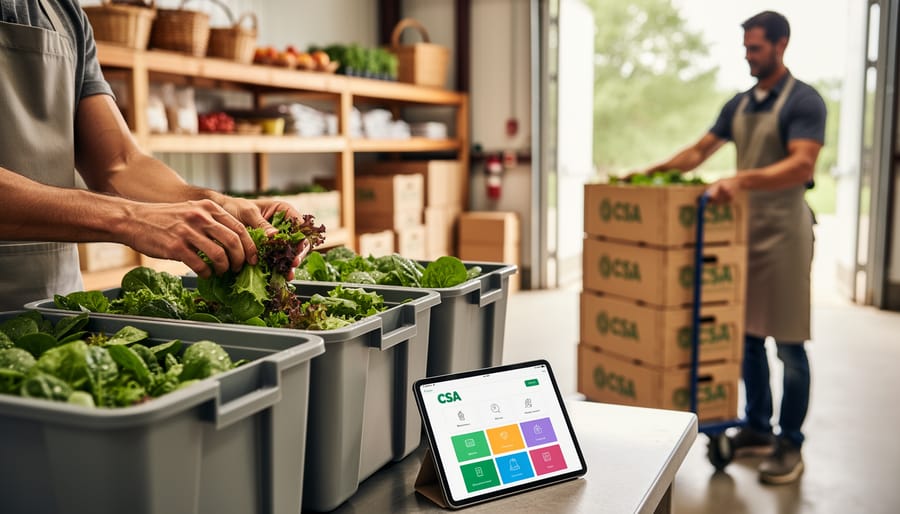
Efficient procurement and logistics management stands as the backbone of a successful CSA operation, directly determining whether members receive fresh produce on time and whether your farm stays profitable. The right system connects sourcing decisions, inventory tracking, and delivery coordination into a streamlined process that saves hours each week while reducing waste and ensuring consistent quality for your shareholders.
Most CSA farmers juggle procurement and logistics without a formal system, relying on memory and paper lists until the chaos of peak season overwhelms them. Orders get duplicated, supplies arrive late, delivery routes become inefficient, and produce sits too long before reaching members. The financial impact hits hard: one mid-sized CSA in Vermont calculated they lost nearly $8,000 in 2025 from spoilage and missed deliveries before implementing basic inventory management.
The good news? You don’t need enterprise-level software or complex tracking systems to see dramatic improvements. CSA operations of every size can benefit from structured approaches that match their volume, budget, and technical comfort level. Small farms serving 30 members need different tools than larger operations coordinating multiple pickup sites for 300 shareholders.
This guide walks through the procurement and logistics systems available in 2026, comparing their costs, complexity, and suitability for different farm sizes. You’ll learn which factors matter most when choosing your approach, discover practical recommendations based on your operation’s scale, and avoid the common mistakes that drain time and money from CSA businesses.
Key Factors to Consider When Choosing Procurement and Logistics Solutions
Scale and Complexity of Operations
The scale of your CSA operation determines whether a simple notebook and weekly truck run suffice or whether you need inventory software and coordinated delivery routes. A 25-member farm selling lettuce, tomatoes, and herbs can track supplies on a single spreadsheet and pack boxes in a few hours. Once you grow to 100 members offering fifteen crops plus occasional add-ons, you’re managing multiple plantings, staggered harvests, variable yields, and different delivery windows, suddenly you need clear procurement schedules, standardized packing procedures, and reliable reusable bins to move produce efficiently.
Product variety amplifies complexity faster than member count alone. Offering storage crops, value-added items, and seasonal extras means juggling diverse suppliers, varied shelf lives, and changing packing requirements week to week. A farm delivering only vegetables to nearby drop points faces different logistics than one coordinating eggs, bread, and dairy from partner farms across a twenty-mile radius. Match your procurement and logistics approach to your actual operational demands, not to what you hope to achieve someday.
Budget and Resource Availability
Every CSA faces the tension between what procurement and logistics systems *could* do and what the farm can realistically afford right now. The smartest approach isn’t choosing the cheapest option or the most feature-rich platform, it’s matching investment to actual operational pain points and available resources.
Start by calculating your true costs: staff hours spent on manual ordering, tracking errors that lead to waste or emergency purchases, delivery inefficiencies that burn fuel and time. A $50-per-month software subscription might seem expensive until you realize it eliminates six hours of weekly administrative work, effectively paying for itself at typical farm labor rates.
Consider infrastructure realistically. Do you have reliable internet for cloud-based systems? Adequate storage for bulk purchasing? A delivery vehicle that can handle route optimization? These foundational requirements often matter more than the management system itself.
Labor availability shapes everything. If you’re already stretched thin during peak season, a complex system requiring daily data entry will fail regardless of its capabilities. Sometimes the right choice is a simpler approach that your current team can actually maintain consistently, rather than an advanced solution that sits unused.
Technology Integration Needs
Technology comfort level plays a surprisingly large role in whether a procurement system actually gets used. A farmer who dreads screen time won’t maintain a sophisticated farm management platform, no matter how many features it offers. Conversely, a tech-savvy operator might waste hours on manual spreadsheets that digital tools could automate in minutes.
Start by honestly assessing your current technology habits. If you already use email, online banking, and smartphone apps comfortably, transitioning to farm management software will feel natural. If computers frustrate you, a hybrid approach works better, perhaps a simple inventory app paired with paper ordering forms you’re already familiar with.
Consider your staff’s abilities too. A system requiring daily tablet updates fails if seasonal workers struggle with the interface or lack reliable devices. The best technology matches your team’s real-world capabilities, not theoretical ideals.
Integration with existing tools matters equally. Will your procurement system sync with your accounting software? Can it export data for tax preparation? Standalone systems that require duplicate data entry create more work than they save, defeating the purpose entirely.
Types of Procurement and Logistics Systems Compared
Manual and Spreadsheet-Based Systems
Manual spreadsheet-based systems remain popular among small CSA farms because they require minimal upfront investment and work well for straightforward operations. You can track seed orders, supplies, and harvest quantities using free tools like Google Sheets or Excel, creating custom templates that match your workflow. Many farmers keep paper logs in the field for immediate recording, then transfer details to digital spreadsheets weekly.
These systems shine when operations are simple. A CSA serving thirty members can easily manage procurement by listing supplier contacts, order dates, quantities, and costs in one spreadsheet, while another tracks what goes into each week’s boxes. You control the format completely and can access records without internet connectivity if you maintain offline backups.
The main limitation appears as your operation grows. Manual entry takes considerable time and invites errors when you’re juggling harvest, packing, and delivery. Tracking inventory across multiple storage locations becomes cumbersome without automated updates, making smart warehousing practices harder to maintain. Spreadsheets also lack built-in member communication features, requiring separate emails or texts for delivery updates. If you’re comfortable with basic formulas and disciplined about weekly updates, this approach can serve you well through your first few seasons before scaling demands more integrated solutions.
Farm Management Software Platforms
Farm management software platforms offer CSA operators a centralized hub for handling procurement, inventory, and member logistics through a single digital interface. These systems typically combine supplier ordering tools with real-time inventory tracking, automated member communications, and delivery route planning. Popular platforms like Harvie, LocalLine, and Farmigo allow you to manage everything from seed orders to share box packing lists without switching between spreadsheets.
The main advantage is automation. Instead of manually updating harvest quantities and member allocations, the software adjusts inventory as you pack boxes and flags when you need to reorder supplies. Many platforms generate delivery manifests, send pickup reminders to members, and track payments in one workflow. This drastically cuts administrative time once you’re past the initial setup.
The tradeoff is cost and learning curve. Monthly fees typically run $50 to $300 depending on member count and features, and your team needs time to master the system. Tech-savvy operations with 50 or more members usually see the fastest return on investment, while smaller farms may find the upfront effort outweighs the efficiency gains until they expand.

Hybrid Approaches
Many CSA operators find their sweet spot by blending traditional methods with targeted digital upgrades rather than committing to an all-or-nothing approach. This strategy lets you maintain familiar workflows while solving specific pain points with technology.
A common hybrid model uses spreadsheets for procurement planning and inventory tracking while adopting specialized apps for member communication and delivery scheduling. For instance, you might keep supplier orders and seasonal planting schedules in Excel but use a mobile app like Harvie or LocalLine to automate harvest tracking and member notifications about box contents.
Another effective combination pairs paper-based field logs with cloud-based accounting software. Farmers often prefer handwritten notes during harvest and planting but appreciate QuickBooks or FreshBooks for invoicing members and tracking expenses. This approach preserves the convenience of clipboard-and-pencil fieldwork while ensuring clean financial records.
The key advantage is flexibility. You can add digital tools incrementally as your comfort grows and specific needs become clear, avoiding both the learning curve of comprehensive platforms and the limitations of purely manual systems. Start by digitizing your biggest bottleneck, whether that’s member billing, delivery route planning, or supplier coordination.
Cooperative and Network-Based Systems
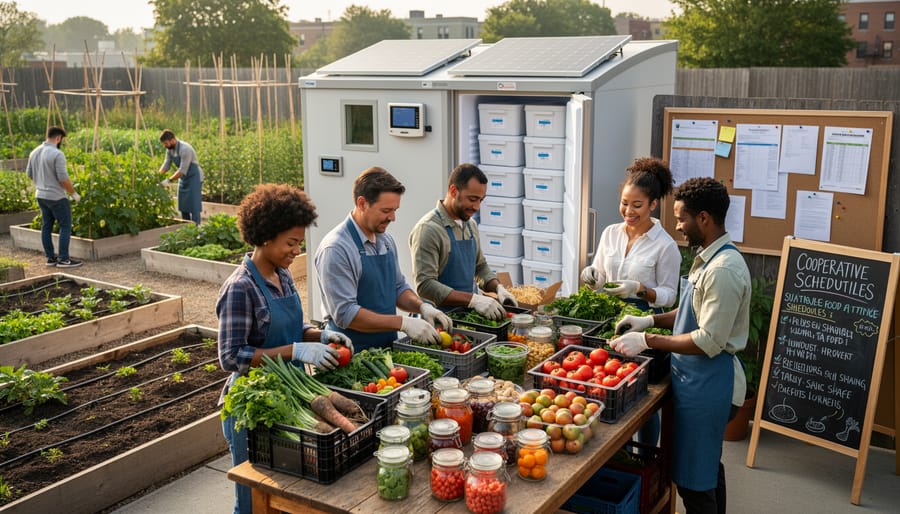
Partnering with neighboring CSA farms transforms procurement and logistics from isolated challenges into shared opportunities. In cooperative networks, multiple farms pool their purchasing power to negotiate better prices on seeds, soil amendments, and packaging materials. A group of five CSAs ordering boxes together, for example, can cut packaging costs by 30% compared to individual purchases.
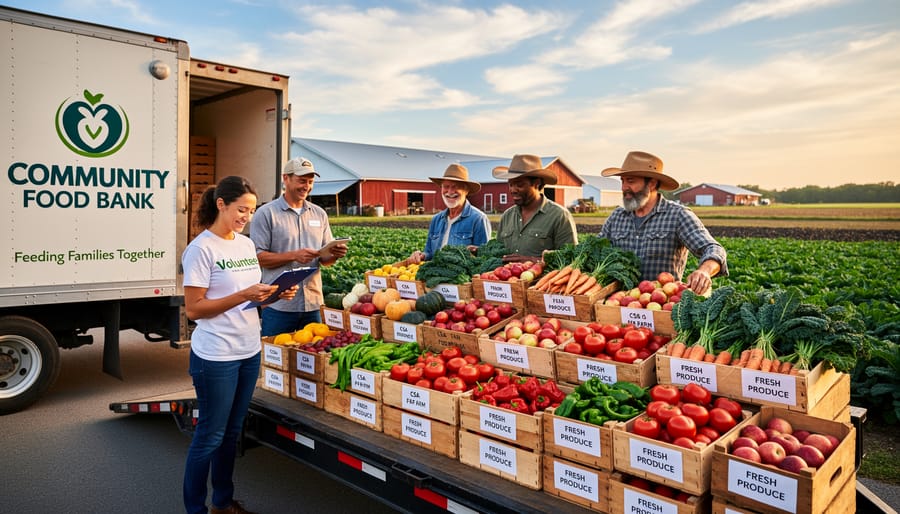
Distribution hubs serve as central collection points where farms drop off shares and members pick up from multiple CSAs at once. This reduces each farm’s delivery radius and fuel costs while offering members more variety. Some networks rotate truck usage weekly, so one farm handles all deliveries while others focus on production.
Food hubs and regional aggregators provide another model, managing procurement logistics for multiple farms through shared warehouse space, cold storage, and transportation routes. You pay a percentage of sales (typically 15-25%) but gain professional logistics management and access to institutional buyers alongside CSA sales.
The trade-off is coordination overhead. Networks require regular communication, standardized packaging, and aligned delivery schedules. Start small with one or two trusted farms before expanding your cooperative relationships.
Recommendations for Different CSA Models
For Small-Scale CSAs (Under 50 Members)
For farms serving fewer than 50 members, simplicity is your best friend. A basic spreadsheet paired with a paper checklist can handle most procurement tracking without overwhelming you during peak season. Keep one master sheet listing your seed suppliers, packaging vendors, and recurring inputs with contact details and typical order sizes. Update it after each purchase rather than trying to reconstruct everything at tax time.
For delivery logistics, a shared Google Sheet or simple email system works well to communicate pickup times and box contents. Many small CSAs successfully use a single central pickup location, your farm gate or a community spot, which eliminates complex routing and keeps fuel costs minimal. Invest in durable, stackable CSA crates rather than disposable boxes; the upfront cost pays back quickly through reuse and easier handling.
Track inventory with physical counts weekly rather than elaborate software. A whiteboard in your packing shed showing what’s ready to harvest and what needs ordering keeps the whole team aligned without logins or training.
For Mid-Size CSAs (50-200 Members)
Mid-size CSA operations hit a sweet spot where basic systems start creaking but full enterprise software feels like overkill. At this scale, you’re juggling enough volume that manual tracking becomes error-prone, yet you still need solutions you can actually manage without a dedicated IT person.
A dedicated farm management platform makes sense here, look for systems like Harvie, Local Line, or Farmigo that handle member management, delivery routing, and basic inventory tracking in one place. These typically run $100-300 monthly but save 10-15 hours weekly in administrative time. The payoff comes from automated packing lists, integrated member communications, and delivery route optimization.
For procurement, establish standing orders with key suppliers rather than ordering week-to-week. Create a seasonal procurement calendar that anticipates needs three months ahead, accounting for planting schedules and typical yields. Many mid-size CSAs benefit from joining a regional growers cooperative for bulk purchasing power on seeds, packaging materials, and storage supplies.
Keep one manual backup system, a simple spreadsheet tracking critical suppliers and delivery commitments. When your software hiccups during peak season, you’ll thank yourself for maintaining that safety net.
For Large or Multi-Farm CSAs (200+ Members)
Large CSA operations face coordination challenges that manual methods can’t handle efficiently. With multiple farms, hundreds of members, and complex delivery routes, you need robust systems that prevent bottlenecks and ensure accurate fulfillment.
Invest in comprehensive farm management software that handles multi-location inventory, automated ordering, route optimization, and member portal integration. Platforms like Harvie, Local Line, or Farmigo are built for this scale and can consolidate procurement data across partner farms while managing different distribution sites. Expect annual software costs of $2,000-$5,000, but the labor savings and reduced errors typically justify this investment within the first season.
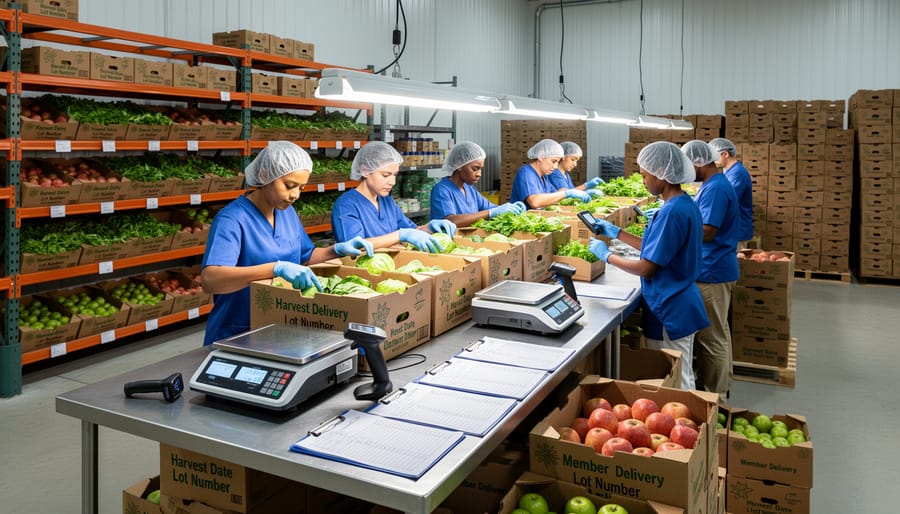
Consider establishing a centralized packing and distribution hub rather than managing pickup points individually. Some multi-farm CSAs lease warehouse space where partner farms deliver consolidated orders, then pack and route member shares from one location. This streamlines logistics dramatically and allows you to employ dedicated packing staff rather than pulling farmers away from field work.
Implement barcode scanning or RFID tracking for procurement items and packed shares to maintain accuracy at scale. Springfield Valley Collective, a seven-farm CSA with 320 members, reduced packing errors by 87% after adopting scanning technology.
Build formal procurement agreements with partner farms that specify delivery windows, quality standards, and communication protocols. Weekly coordination meetings become essential to synchronize supply with member demand and adjust for crop fluctuations across multiple growing sites.
Common Mistakes to Avoid
Starting with overly complex technology is one of the most expensive mistakes new CSA operators make. Many farmers invest thousands in comprehensive farm management software before they’ve established their basic procurement workflows, only to find themselves overwhelmed by features they don’t need while still struggling with fundamental inventory issues. Begin with simple systems, even a well-organized spreadsheet, and add technology only when manual processes become genuine bottlenecks. You’ll save money and avoid the frustration of learning complicated software while simultaneously learning the rhythms of CSA operations.
Neglecting seasonal planning creates procurement chaos throughout the growing season. CSA operations have predictable seasonal patterns, yet many managers fail to plan procurement needs around planting schedules, harvest windows, and peak delivery periods. This oversight leads to last-minute scrambles for packaging supplies during harvest rushes, emergency orders that cost more, and missed opportunities to negotiate better prices through advance bulk purchasing. Map out your entire season’s procurement needs in winter, identify critical supply delivery dates, and build relationships with vendors who understand agricultural timelines.
Here are additional pitfalls that undermine CSA procurement and logistics efficiency:
- Poor inventory tracking that leads to over-ordering supplies while running out of essential items at critical moments
- Inadequate member communication about delivery changes, leaving subscribers confused and frustrated when logistics shift
- No buffer capacity for handling crop failures or unexpected surpluses, forcing rushed decisions about alternative sourcing or storage
- Ignoring storage capacity limitations when planning procurement, resulting in spoilage and wasted resources
- Failing to standardize box sizes and packaging, which complicates packing procedures and increases labor time
- Underestimating delivery logistics complexity, particularly fuel costs, route efficiency, and time requirements
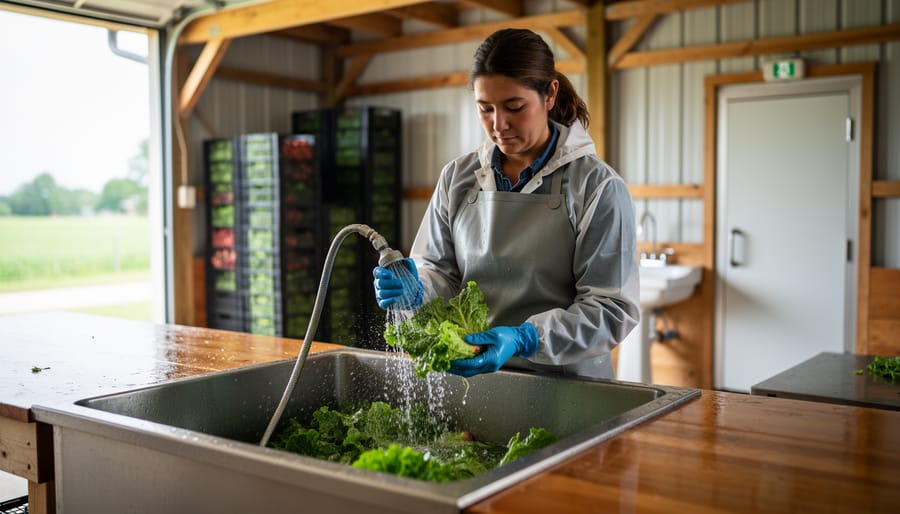
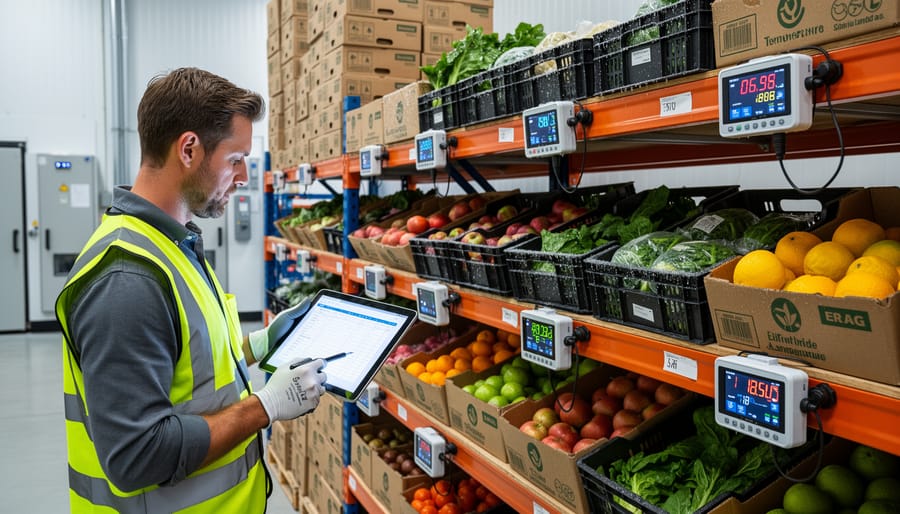
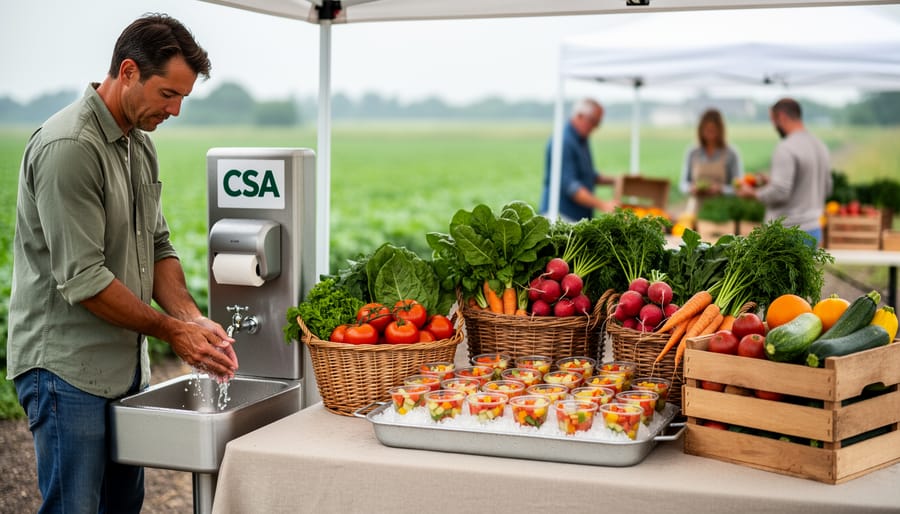
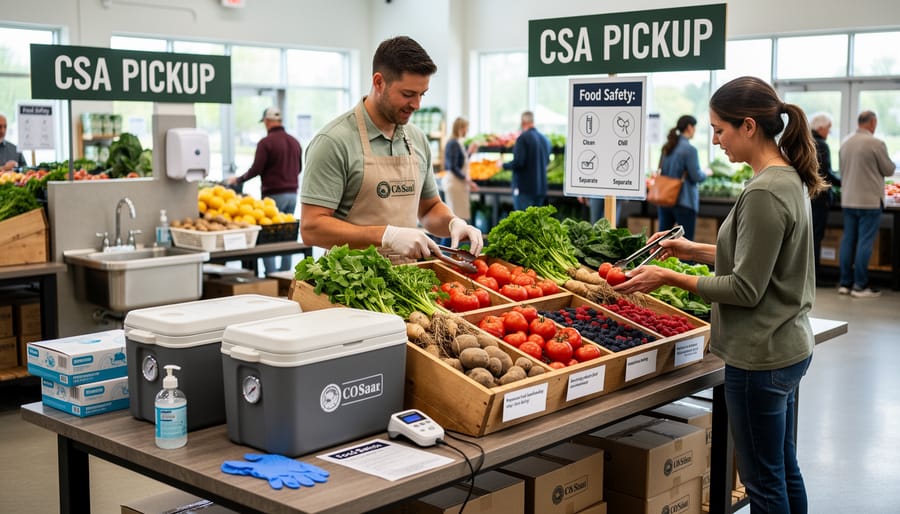
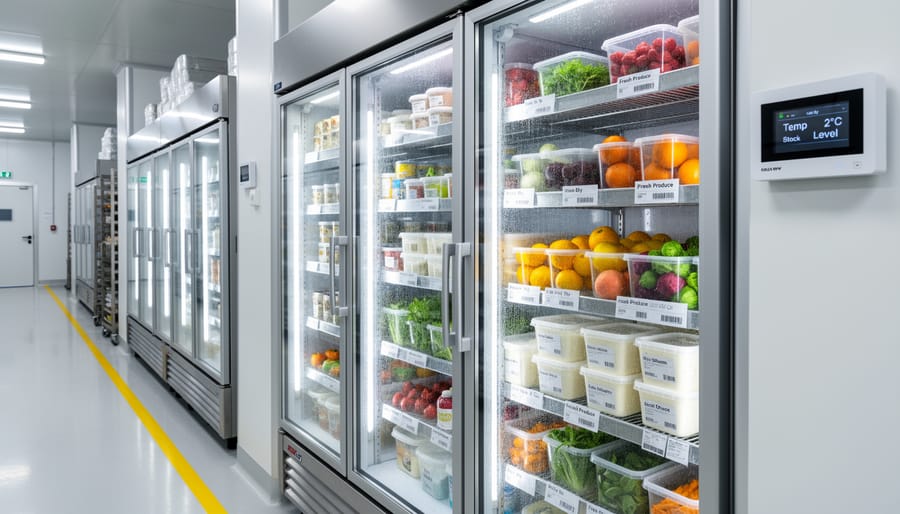
Another critical error is not investing in proper systems to keep produce fresh throughout the procurement and delivery chain. Farmers sometimes focus entirely on growing beautiful vegetables while neglecting the cold storage, washing stations, and packing facilities that preserve quality from harvest to member pickup. Without adequate infrastructure for handling produce properly, even the best procurement planning won’t prevent quality deterioration that disappoints members.
Finally, trying to manage everything alone without building a support network limits your problem-solving capacity. Connect with other CSA operators to share vendor recommendations, discuss common procurement challenges, and learn from their mistakes rather than repeating them yourself.
Real-World Success: How Green Valley CSA Streamlined Their Operations
Sarah Chen started Green Valley CSA in 2019 with 35 members and a simple dream: connect her community with fresh, organic vegetables grown on her family’s 8-acre farm outside Portland. By year three, she’d grown to 120 members, but her procurement and delivery system hadn’t kept pace.
“I was spending twelve hours a week just managing supplies orders and coordinating deliveries,” Sarah recalls. “I’d forget to order twine until we were harvesting tomatoes, or I’d buy way too much of something because I couldn’t remember what we had left from last season.”
Her delivery chaos was worse. Members received inconsistent communication about pickup times. Some weeks Sarah would pack boxes at 5 AM to hit three different drop points, only to find members hadn’t shown up because they forgot their day.
The breaking point came when a seed order arrived three weeks late because Sarah had written the supplier’s email incorrectly in her notebook. She missed her broccoli planting window entirely.
Sarah started small. She adopted a basic farm management software that cost $40 monthly and let her track inventory, automate member emails, and plan procurement around her planting calendar. She consolidated her three pickup locations to one central spot with extended hours, which cut her delivery time from eight hours to three.
Within one season, the changes paid off. Sarah reduced her supply costs by 18% because she could see exactly what she had in stock before reordering. Her weekly administrative time dropped from twelve hours to four. Member retention jumped from 67% to 89%, with surveys showing that consistent communication made the biggest difference.
“I’m not naturally organized,” Sarah admits. “But having a system that works with how I farm, not against it, gave me back the time to actually grow food.”
Frequently Asked Questions
Starting with simple improvements to your existing system usually works better than a complete overhaul. Many CSA managers wonder whether they need specialized software or if their current spreadsheets will suffice. The answers depend heavily on your farm’s size, growth plans, and how much time you’re currently spending on procurement and logistics tasks.
What’s a realistic budget for procurement and logistics software?
Entry-level farm management platforms typically cost $20-50 monthly for small CSAs, while comprehensive systems range from $100-300 monthly for mid-size operations. Many farms start with free spreadsheet templates and upgrade only when manual tracking becomes a bottleneck.
How much time should I expect to spend on procurement planning each week?
Small CSAs generally need 2-4 hours weekly for procurement tasks, while larger operations might require 8-12 hours. This includes supplier communication, inventory checks, order placement, and delivery coordination.
Can I switch systems mid-season without disrupting member deliveries?
Transitioning between seasons is safest, but gradual mid-season changes work if you run systems in parallel for 2-3 weeks. Start by testing the new approach with one aspect like delivery route planning before moving procurement tracking over.
Which software platforms do CSA farmers recommend most?
Harvie, Local Line, and Farmigo consistently receive positive feedback from CSA operators for their balance of features and usability. However, the best choice depends on whether you prioritize member management, route optimization, or supplier integration.
The transition process itself needs careful planning. Keep backup records in your old system for at least one full growing season after switching, since you’ll often need to reference previous years’ procurement patterns and delivery data. Train any staff or family members helping with logistics before fully committing to a new approach.
Budget concerns shouldn’t force you into systems that don’t fit your operation. Free or low-cost options can work excellently for years if they match your workflow and scale. The key is choosing tools that save you more time than they cost to learn and maintain, allowing you to focus energy on growing quality produce rather than wrestling with overly complex logistics platforms.
Key buying factors
When selecting procurement and logistics systems for your CSA, prioritize solutions that match your current operational scale rather than overbuilding for hypothetical growth. A 30-member farm doesn’t need enterprise software, while a 150-member operation will outgrow spreadsheets quickly.
Budget realistically for total costs. Initial software fees are just the start. Factor in training time, hardware needs, ongoing subscription costs, and potential integration expenses. Many farms underestimate the labor hours required to transition systems.
Evaluate ease of use for your actual team. The best system is the one your staff will consistently use. If you have volunteers handling deliveries or rotating crew members managing inventory, complex platforms create bottlenecks. Test interfaces before committing.
Check integration capabilities with tools you already use. Your procurement system should connect with accounting software, member management platforms, and mobile apps for delivery tracking. Isolated systems create duplicate data entry and errors.
Finally, assess vendor support quality. CSA operations have seasonal peaks when you can’t afford system downtime. Choose providers with responsive support, clear documentation, and active user communities.
Choosing the right procurement and logistics approach for your CSA operation isn’t about finding the perfect system from day one. It’s about selecting solutions that work for where you are now while leaving space to adapt as your farm grows and member needs evolve.
Start small. Pick one area that currently drains your time or creates the most friction, maybe it’s coordinating deliveries, tracking seed orders, or managing member communication. Improve that single piece of your operation first, then build from there. This focused approach prevents overwhelm and lets you measure what actually makes a difference before investing more resources.
Remember that sustainable operations support sustainable farming. When you spend less time wrestling with spreadsheets or scrambling to source last-minute supplies, you have more energy for what matters most: growing nutrient-dense food and building relationships with your members. Efficient procurement and logistics systems don’t just save hours; they reduce stress during peak season and help you maintain the farming practices that drew you to CSA in the first place.
Connect with other CSA farmers in your region. They’ve already navigated these challenges and can share what worked, what flopped, and which investments paid off. Local farming networks and CSA coalitions offer practical wisdom you won’t find in any software demo. Your best procurement strategy might come from a conversation at the farmers market, not a sales pitch.
The systems you choose today shape the farm you’ll be running tomorrow. Choose wisely, start simply, and grow deliberately.